智能手表

Search documents
中国银河证券:AI需求持续高景气 AR、折叠机有望高增
Zhi Tong Cai Jing· 2025-09-04 01:40
Core Insights - The smartphone market is expected to see increased penetration of AI phones in the mid-range segment due to streamlined edge models and upgraded chip computing power, with the first foldable phone anticipated in 2026 to stimulate demand in the foldable market [1] - The AR market is transitioning from niche products to mainstream computing terminals, with smart glasses projected to become the next major computing device after smartphones, driving rapid growth in related components [1] - Global cloud providers are maintaining high investments in AI, with Chinese internet companies also increasing their investments, leading to a surge in GPU demand and subsequently boosting the demand for PCBs and passive components [1] Industry Data Tracking - In Q2 2025, global smartphone shipments reached 295 million units, a year-on-year increase of 1.0%, with Samsung leading the market, followed by Apple, Xiaomi, vivo, and Transsion; the low-end Android market is under pressure, affecting overall market growth [1] - The Chinese smartphone market has underperformed expectations, primarily due to subsidies failing to stimulate demand; IDC has revised the global smartphone shipment growth rate for 2025 from 0.6% to 1.0% [1] - The global smartwatch market has shown signs of recovery after five consecutive quarters of decline, with Chinese brands like Huawei, Xiaomi, and Little Genius playing a significant role in this recovery [1] - In Q2 2025, global semiconductor sales reached $175.9 billion, a year-on-year increase of 23%, driven by demand from the US and China, with the top five NAND Flash manufacturers seeing a 22% quarter-on-quarter revenue increase [1] - SMIC, a leading domestic wafer foundry, added 18,000 pieces of capacity (equivalent to 8-inch wafers) in Q2, reaching a total capacity of 991,300 pieces per month by the end of Q2, with a utilization rate of 92.5%, up 2.9 percentage points quarter-on-quarter [1] Sector Tracking - In August, the semiconductor industry index rose by 27.22%, the electronics industry index increased by 24.79%, and the CSI 300 index grew by 10.33% [2] - Year-to-date, the semiconductor industry index has increased by 36.66%, the electronics industry index by 38.34%, and the CSI 300 index by 14.28% [2] - In August, the digital chip design sector surged by 39.86%, the analog chip design sector rose by 16.46%, and the integrated circuit packaging and testing sector increased by 16.99% [2] - Year-to-date, the digital chip design sector has grown by 56.50%, the analog chip design sector by 25.31%, and the integrated circuit packaging and testing sector by 8.68% [2]

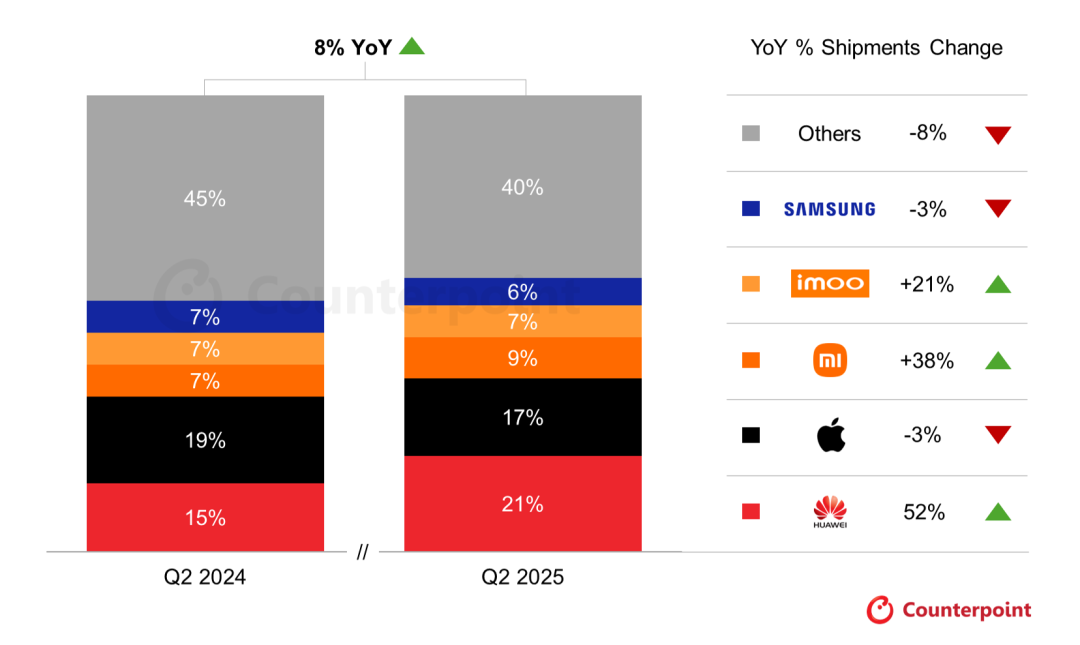
Counterpoint:Q2全球智能手表出货量同比增长8% 华为登顶全球第一
Zhi Tong Cai Jing· 2025-09-04 01:31
Group 1 - Huawei's smartwatch shipments surpassed Apple's for the first time in Q2 2025, making Huawei the global leader in smartwatch shipments [1] - Global smartwatch shipments grew by 8% year-on-year in Q2 2025, marking the first recovery after five consecutive quarters of decline, with the Chinese market playing a significant role in this growth [1] - Huawei achieved a 52% year-on-year increase in shipments, driven by a diverse product range and strong domestic market momentum, with over 75% of its shipments concentrated in China [1] Group 2 - Apple's smartwatch shipments have declined for seven consecutive quarters, losing its top position in the global market, but it remains a leader in the high-end smartwatch segment due to its iOS ecosystem and strong user loyalty [4] - Xiaomi and Little Genius saw significant growth in shipments, with Xiaomi excelling in the budget smartwatch market and Little Genius dominating the children's smartwatch segment [4] - The Chinese market has become the largest for high-end smartwatch shipments in Q2 2025, benefiting from affordable options, government subsidies, and integration with local application ecosystems [6] Group 3 - The global smartwatch market is expected to continue recovering, with an estimated annual growth rate of around 7%, driven by functional upgrades and the application of AI technology [6] - The decline of Apple and Samsung indicates that brand loyalty alone is insufficient for competitiveness; consumers now expect tangible value experiences [6] - The second half of 2025 will be crucial for Apple and Samsung to regain growth momentum, contingent on significant functional breakthroughs in their upcoming smartwatch models [6]


2025年6月中国电动手表进口数量和进口金额分别为64万只和0.46亿美元
Chan Ye Xin Xi Wang· 2025-08-28 01:13
Core Insights - The report by Zhiyan Consulting highlights a decline in the import of electric watches in China, with a total of 640,000 units imported in June 2025, representing a year-on-year decrease of 12.3% [1] - The import value of electric watches in the same period was $4.6 million, showing a year-on-year decline of 14.6% [1] Industry Overview - Zhiyan Consulting is recognized as a leading industry consulting firm in China, specializing in in-depth industry research and providing comprehensive consulting services for investment decisions [1] - The firm has been dedicated to the industry research field for over a decade, offering a range of services including industry research reports, business plans, feasibility studies, and customized consulting solutions [1]

电子行业周报:Amazfit产业链迎来业绩拐点-20250820
Shanghai Aijian Securities· 2025-08-20 11:40
Investment Rating - The report rates the electronic industry as "Outperform the Market" [1] Core Insights - The electronic industry index increased by 7.02% this week, outperforming the CSI 300 index which rose by 2.37% [2] - The smart wearable market, particularly smartwatches, is experiencing significant growth, with the global market expected to reach $28.72 billion in 2024, a year-on-year increase of 16.65% [7][17] - Huami Technology's strategic shift towards self-research and development, moving away from reliance on Xiaomi, has led to a notable revenue increase, achieving a year-on-year growth of 46.2% in Q2 2025 [6][9] Summary by Sections 1. Huami Technology's "De-Xiaomi" Strategy - Huami Technology has implemented a "De-Xiaomi" strategy to reduce dependency on Xiaomi, transitioning from an OEM to a brand owner, which has improved product margins and self-developed product ratios [6][9] - The introduction of self-developed chips has allowed Huami to enhance its product offerings, leading to a significant increase in sales of its Amazfit smartwatch series [9][10] 2. Smartwatch Market Landscape - The smartwatch market is characterized by a fragmented competitive landscape, with Huami holding a 4% share of global shipments in 2022, ranking seventh [7][19] - The Chinese smartwatch market is expected to grow at a CAGR of 6.75%, reaching $4.74 billion by 2029 [17][18] 3. Smartwatch Industry Chain - The smartwatch ecosystem operates on a collaborative architecture involving hardware, interaction, connectivity, and software layers, driving product innovation and market expansion [8][24] - Key components include batteries, chips, and sensors, which are essential for enhancing performance and user experience [25][26] 4. Market Performance Overview - The SW electronic industry index has shown strong performance, with passive components leading the gains at +12.32% [2][40] - Notable individual stock performances include significant increases for companies like Geberit (+48.2%) and Shanghai Hejing (+45.4%) [43]

陷入瓶颈还是黎明前的黑暗,聊聊智能手表芯片
3 6 Ke· 2025-08-18 12:12
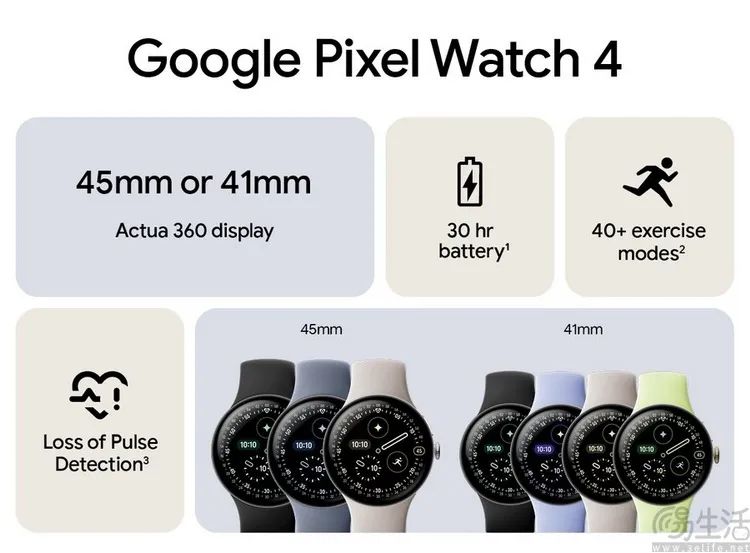
Core Insights - Google is set to release a new lineup of products, including the Pixel 10 series smartphones and the Pixel Watch 4 smartwatch, with significant information about the latter recently leaked [1] Hardware Improvements - The Pixel Watch 4 features a new screen with a peak brightness of 3000 nits, a 50% increase compared to its predecessor [4] - The smartwatch may include a "heart rate drop" detection algorithm, indicating advancements in health monitoring capabilities [4] Hardware Limitations - The Pixel Watch 4 does not feature any upgrades in the main control unit, continuing to use the Qualcomm Snapdragon W5+ Gen1 platform, which is considered outdated [6] - The typical battery life is only 40 hours, lacking energy-saving technologies seen in competitors like OPPO [6] - The design remains unchanged across three generations, leading to consumer disappointment [6] Market Context - The current Android smartwatch market is limited to the Snapdragon W5+ Gen1 due to Samsung's non-availability of its Exynos W1000 [8] - Future improvements are anticipated with the Snapdragon W5 Gen2, which is expected to utilize a 3nm process and offer better performance for health monitoring algorithms [10] Future Developments - Google is reportedly developing its own smartwatch control unit, codenamed "NPT," which may include a Cortex-A78 core and multiple Cortex-A55 cores [12] - Qualcomm and Google have announced plans for a new Wear OS ecosystem that will support RISC-V architecture, potentially allowing for more diverse hardware compatibility [14][15] Competitive Landscape - Domestic manufacturers like Huawei, OPPO, and Xiaomi have the capability to develop their own chips and may leverage this opportunity to enhance their smartwatch offerings [17] - Xiaomi's recent advancements in low-power control units suggest a potential for high-end smartwatch development, especially if Wear OS limitations are lifted [19]

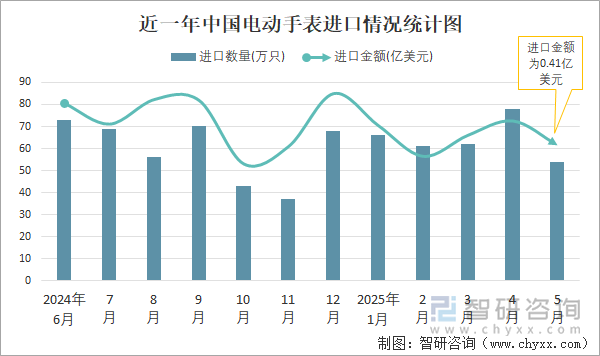
2025年5月中国电动手表进口数量和进口金额分别为54万只和0.41亿美元
Chan Ye Xin Xi Wang· 2025-08-01 03:18
Group 1 - In May 2025, China's import quantity of electric watches was 540,000 units, representing a year-on-year decrease of 18.3% [1] - The import value for electric watches in May 2025 was $41 million, which reflects a year-on-year decline of 26.9% [1] - The data is sourced from China Customs and organized by Zhiyan Consulting [3]
东方证券:智能手表行业持续成长 AI功能及运动需求打开空间
Zhi Tong Cai Jing· 2025-07-30 06:00
Core Viewpoint - The smart watch industry is expected to open up growth opportunities driven by AI applications and demand for sports scenarios, despite some investor skepticism regarding future growth potential [1] Group 1: AI Integration in Smart Watches - AI applications are gradually being implemented in smart watches, enhancing user interaction through AI voice assistants and improving health and sports monitoring capabilities [2] - The demand for high-end smart watches is anticipated to grow as AI features become more prevalent, with shipments of smart watches equipped with advanced operating systems expected to reach 100 million units by 2027, reflecting a compound annual growth rate of 14% from 2024 to 2027 [2] Group 2: Demand for Sports Watches - The demand for sports watches is strong, with significant differentiation in functionality, particularly for outdoor activities and specialized health monitoring [3] - The average price of sports watches is notably higher, with global average prices around $514 in Q1 2024, compared to approximately $190 for the overall wearable wristband market, indicating a trend towards high-end products [3] - The performance of leading sports watch companies, such as Garmin, demonstrates the ongoing growth in the sports watch market [3]

日本:从几个产品,看中国制造的现状
Xin Lang Cai Jing· 2025-07-13 18:23
Core Insights - The article discusses the current state of the Japanese retail market, particularly focusing on the Yodobashi Camera, a leading electronics retailer in Japan, and highlights the prevalence of Chinese brands disguised as Japanese products [1][3][5][7]. Group 1: Retail Environment - Yodobashi Camera is one of Japan's top three electronics sales platforms, with the highest single-store sales in the retail sector [1]. - The store's layout is criticized for its overwhelming visual clutter, which detracts from the overall aesthetic experience [3]. - The shopping experience is compared to other Japanese stores like Don Quijote, known for their dense product displays [3]. Group 2: Market Dynamics - Despite the dominance of Chinese manufacturing, there remains a consumer belief in the superiority of Japanese products, as evidenced by continued purchases of Japanese-branded items like toilet seats [5][7]. - The global smart toilet seat market was valued at approximately $4.5 billion in 2024, with China accounting for 70% of production [5]. - Many products in Yodobashi Camera are actually Chinese brands marketed under Japanese names, reflecting a trend of "brand masquerading" [7][9]. Group 3: Technology and Brand Ownership - REGZA, originally a Toshiba brand, is now owned by China's Hisense, which acquired 95% of Toshiba's TV business in 2017 [9]. - Lenovo's acquisition of NEC's PC business has increased its market share in Japan to 27%, making it the leading player in the Japanese PC market [10]. - The article notes that even high-profile endorsements, such as those by Japanese celebrity Kimura Takuya for Huawei products, indicate a shift in brand perception in Japan [11][13]. Group 4: Consumer Behavior and Market Share - Huawei holds a 15% market share in Japan's smartwatch market, ranking second behind Apple, which has a 58% share [13]. - The article highlights that Japanese consumers are relatively reserved in leaving product reviews, with Huawei's GT 5 Pro smartwatch receiving 255 reviews on Amazon Japan, which is considered significant [15][19]. - The competitive landscape in the smartwatch market shows that Huawei and Apple dominate the high-end segment, while Xiaomi leads in the mid-range [23][26]. Group 5: Manufacturing and Competitive Landscape - The article discusses the evolution of Chinese manufacturing capabilities, emphasizing the transition from low-end imitation to technological leadership in various sectors, including smartphones and drones [34][35]. - China's dominance in the consumer drone market is noted, with over 90% market share, showcasing its rapid technological advancements [35]. - The article concludes that China's manufacturing prowess has surpassed Japan's, particularly in hardware sectors, indicating a significant shift in global manufacturing dynamics [36].

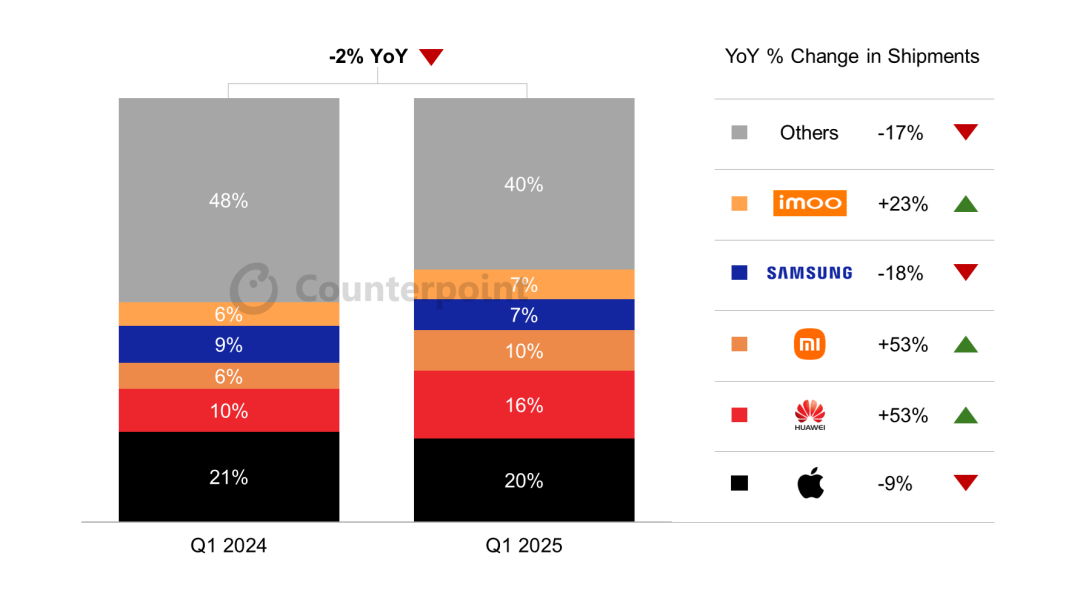
Counterpoint Research:Q1全球智能手表出货量同比下降2% 已连续第五个季度出现下滑
智通财经网· 2025-07-04 07:21
Core Insights - Global smartwatch shipments declined by 2% year-on-year in Q1 2025, marking the fifth consecutive quarter of decline, primarily due to a slowdown in the Indian market and a decrease in Apple smartwatch shipments [1][3] - In contrast, the Chinese market saw a significant increase of 37% in shipments year-on-year, achieving the highest market share since Q4 2020, driven by strong performance from domestic brands [1][3] Company Performance - Apple remains the market leader despite a six-quarter decline in shipments, benefiting from an expanding iOS user base [3] - Huawei and Xiaomi experienced significant growth in shipments, attributed to strong domestic performance, a diverse product portfolio, and competitive pricing strategies targeting the mid-to-high-end market [3] - Samsung's previous generation products underperformed in major global markets, resulting in an 18% year-on-year decline in quarterly shipments [3] Market Trends - There is a notable shift in consumer preferences towards higher price segments, with shipments in the $100 to $200 range increasing by 21%, indicating a rising demand for products with enhanced health and fitness features [5] - Conversely, entry-level products (under $100) saw a 17% year-on-year decline, suggesting consumers are willing to pay a premium for accuracy, stability, and ecosystem compatibility [5] - The children's smartwatch segment continues to grow significantly, with brands like Xiaotiancai leading due to high cost-performance ratios and rich functionalities [5] Future Outlook - The global smartwatch market is expected to recover at a moderate pace of approximately 3% in 2025, driven by advancements in product capabilities, including the integration of AI features and next-generation health sensors [5] - Changing consumer behavior is shifting focus from novelty to product functionality, long-term value, and ecosystem compatibility, leading to a preference for reliable devices that support health, productivity, and lifestyle goals [5]

早报|雷军回应质疑:诋毁本身就是一种仰望/消息称iPhone 17不会改名/马斯克版微信官宣
Sou Hu Cai Jing· 2025-06-03 02:00
Group 1 - Lei Jun, founder of Xiaomi, stated that the delivery volume of the Xiaomi SU7 model exceeded 28,000 units in May 2025, and he commented that "slander is itself a form of admiration" [5] - Lei Jun's statement is speculated to be a response to Huawei's executive Yu Chengdong's remarks about the marketing capabilities of companies from other industries that have successfully sold cars [5] - Yu Chengdong claimed that despite the quality and performance of Huawei's products being superior, they are outsold by these other companies due to their strong marketing abilities [5] Group 2 - Apple is not expected to rename the iPhone 17, despite speculation about significant changes to its operating system naming conventions [6][7] - Analyst Mark Gurman noted that changing the iPhone naming convention could surprise consumers who are accustomed to the current system, as it may make older models seem outdated [6][7] Group 3 - Apple's global smartwatch market share has decreased from 28% in Q4 2024 to 20% in Q1 2025, representing a 9% year-over-year decline, although it remains the leading brand [8][14] - In Q1 2025, China accounted for 29% of global smartwatch shipments, experiencing a 40% year-over-year growth, driven by brands like Huawei, iQOO, and Xiaomi [14] Group 4 - A report highlighted that China's AI capabilities are rapidly advancing, with DeepSeek's latest model ranking second globally, just behind OpenAI [13][15] - The report indicated that several Chinese AI labs are adopting an "open weights" strategy, with DeepSeek's R1 series solidifying its leading position in the market [15] Group 5 - The CEO of Anthropic warned that AI could replace up to half of white-collar jobs in the next five years, potentially raising unemployment rates to between 10% and 20% [20][22] - He emphasized the need for policymakers to prepare for the societal impacts of AI, as many people are unaware of the imminent changes [22] Group 6 - Faraday Future's CEO Jia Yueting announced that the FX Super One model will have its global online launch on July 17, 2025, following a private event on June 29, 2025 [25] - The FX Super One is expected to be a pure electric vehicle, with plans for a version featuring a super AI hybrid electric drive system [25]