
机械工业

Search documents
2025机械工业经济运行数据发布:稳中向好向新向优
Yang Shi Xin Wen· 2026-02-05 03:19
Group 1 - The core viewpoint of the articles indicates that the Chinese machinery industry is experiencing stable growth supported by government policies, with a notable increase in production and sales in 2025 [1][2] - In 2025, the added value of large-scale enterprises in the machinery industry grew by 8.2% year-on-year, surpassing the national industrial and manufacturing growth rates by 2.3 and 1.8 percentage points respectively [1] - The automotive manufacturing sector led the growth with an impressive increase of 11.5% in 2025, while all five major categories of the machinery industry reported positive growth [1] Group 2 - In 2025, 85 out of 122 monitored major machinery products saw an increase in production compared to 2024, reflecting a robust production landscape [1] - The total import and export trade volume of the machinery industry reached a record high of $1.27 trillion in 2025, marking an 8.4% year-on-year growth [1] - Experts predict that favorable conditions for high-quality development in the machinery industry will continue to accumulate, with expectations for stable operations and reasonable growth in 2026, estimating a growth rate of around 5.5% for major indicators [2]
机械工业年度成绩单发布:利润转正、外贸总额创新高
Di Yi Cai Jing· 2026-02-05 03:16
机械工业应收账款持续快速增长,占营业收入、流动资产的比重上升。 不过,叶定达谈到,受供需结构性矛盾影响、市场竞争激烈,机械产品价格持续下行。行业利润率继续下滑,2025年机械工业营业收入利润率为 5.14%,较上年下滑0.04个百分点,低于同期全国工业0.17个百分点。化解行业供需结构性矛盾、综合治理"内卷"任务依然艰巨。 外贸方面,2025年面对严峻复杂的国际环境与外贸形势,机械工业顶住压力、有效应对,对外贸易实现较快增长,总额再创新高,展现出较强韧性。 全年机械工业完成货物贸易进出口总额1.27万亿美元,同比增长8.4%。 2025年,机械工业规模以上企业增加值同比增长8.2%,增速高于全国工业和制造业2.3和1.8个百分点。实现营业收入33.2万亿元,总量创新高。实现利 润总额1.7万亿元,增速由上年的下降转为增长,同比增长5.9%。 2月5日,中国机械工业联合会召开2025年全年机械工业经济运行形势信息发布会,发布了上述数据。 中国机械工业联合会副会长叶定达在发布会上表示,2025年机械工业经济运行呈高位趋缓、稳中有进态势,行业表现出向新、向优的特点。今年支撑 行业高质量发展的有利条件也在不断积累和增 ...


拼万亿级产业,江苏“十三太保”也很上头!
Xin Lang Cai Jing· 2026-01-16 13:38
Core Insights - The article emphasizes the significance of trillion-level industries as a marker of regional strength and economic development in Jiangsu, which is recognized as a top performer in China's economic landscape [1][6] - Jiangsu's government officials are actively planning and competing to establish "trillion-level cities" and industries, highlighting the strategic importance of these sectors in the province's economic growth [1][6] Group 1: Industry Development Plans - Nanjing aims to become the first city in Jiangsu with a software industry exceeding one trillion yuan by 2025, leveraging its strengths in communication, electricity, and security software [1][6] - Nantong has established six key industrial clusters, with its shipbuilding and marine engineering sectors accounting for 10% and 25% of the national market, respectively, and expects its marine industry to surpass one trillion yuan by 2025 [1][6] - Changzhou's new energy industry is nearing 900 billion yuan, with a target to exceed 1.2 trillion yuan by 2030, focusing on enhancing vehicle production and brand recognition [2][7] Group 2: Existing Trillion-Level Industries - Suzhou has three trillion-level industries in electronic information, equipment manufacturing, and advanced materials, while also maintaining a reserve of 11 industries exceeding 100 billion yuan [2][7] - Wuxi's mechanical industry has reached a trillion yuan, with a focus on smart and high-end manufacturing driving growth in sectors like CNC machine tools and aerospace [2][7] Group 3: Strategic Importance of Trillion-Level Industries - The emphasis on trillion-level industries is driven by the need for scale in a global competitive landscape, which directly impacts regional influence and risk resilience [3][8] - Landmark industries are expected to drive collaborative upgrades across the industrial chain, fostering a self-reinforcing innovation ecosystem [4][9] - The construction of landmark industries will reshape regional economic geography, enhancing cross-regional collaboration and urban integration [4][9] Group 4: Jiangsu's Industrial Cluster Strategy - Jiangsu is focusing on industrial cluster development, with a strategy to cultivate leading enterprises and enhance collaborative innovation within the industrial chain [5][9] - The province has 14 national-level advanced manufacturing clusters, the highest in the country, with a significant portion of industrial revenue coming from its "1650" industrial system [5][9] - The "14th Five-Year Plan" includes goals to strengthen advantages in new-generation information technology, new energy, and high-end equipment, aiming to create internationally competitive strategic emerging industry clusters [5][10]
明年起我国调整部分商品关税,将带来哪些影响?
Sou Hu Cai Jing· 2025-12-30 00:24
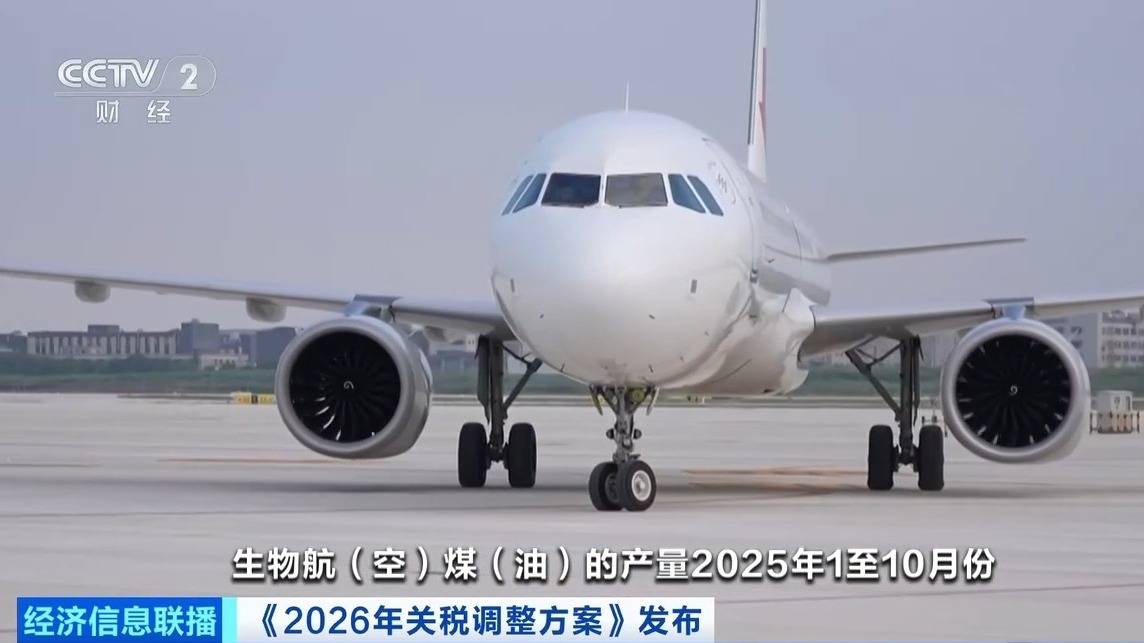
Group 1 - The State Council's Tariff Policy Adjustment Plan for 2026 will adjust import tariff rates and categories for certain goods starting January 1, 2026, impacting key components, advanced materials, energy resources, and intelligent bionic robots [1] - The adjustment in tariffs for bio-aviation kerosene shows a significant increase in production, with a fourfold growth from January to October 2025 compared to 2024, indicating the petrochemical industry's potential for green and low-carbon transformation [3] - The addition of tariff categories for intelligent bionic robots and cleaning robots will help the industry and companies accurately grasp trade data and assess overseas market trends [5] Group 2 - Targeted adjustments to tariffs on urgently needed equipment and intermediate products, including important recyclable raw materials, will support the development of relevant industries by reducing costs [7]
数智水平提升 机械工业强基拓新增动能
Jing Ji Ri Bao· 2025-12-26 00:03
Core Viewpoint - The mechanical industry is a foundational and strategic sector for national economic development, achieving significant progress in scale, foreign trade, and innovation capabilities during the "14th Five-Year Plan" period, laying a solid foundation for new industrialization [1] Group 1: Achievements and Developments - The first commercial supercritical carbon dioxide power generation unit has successfully commenced operation, achieving over 85% efficiency improvement compared to existing technologies [2] - The mechanical industry has shown steady growth during the "14th Five-Year Plan," with enhanced resilience in supply chains and significant improvements in the supply capacity of major technical equipment [2] - By the end of 2024, the number of large-scale enterprises in the mechanical industry is expected to increase from 92,000 to 132,000, with the industry's share of national industrial output rising from 24.1% to 25.8% [3] Group 2: Global Expansion - The launch of the "BYD Changsha" roll-on/roll-off cargo ship marks a new phase for the export of electric vehicles from China to Europe, indicating deepening global integration of the mechanical industry [4] - The mechanical industry has achieved a historic leap in foreign trade, with exports and imports exceeding $1 trillion for four consecutive years, projected to reach $1.17 trillion in 2024 [4] Group 3: Digital and Intelligent Transformation - The launch of the first open robot leasing platform in Shanghai signifies a shift towards ecological and convenient rental models in the robotics industry, reflecting the digital and intelligent transformation of the mechanical sector [7] - By 2024, over 90% of the mechanical industry is expected to adopt digital design tools, with more than 80 companies recognized as top-level smart factories [7] Group 4: Strategic Directions - The mechanical industry is encouraged to enhance its digital capabilities and accelerate the transition towards high-end, intelligent, green, and integrated development [8] - The integration of artificial intelligence into the industrialization process is seen as a key driver for innovation and optimization of the industrial structure [9]
机械工业强基拓新增动能
Jing Ji Ri Bao· 2025-12-25 22:05
Core Viewpoint - The mechanical industry is a foundational and strategic sector for national economic development, achieving significant progress in scale, foreign trade, and innovation capabilities during the "14th Five-Year Plan" period, laying a solid foundation for new industrialization [1][2]. Group 1: Industry Achievements - The first commercial supercritical carbon dioxide power generation unit has been successfully operated in Guizhou, achieving over 85% efficiency improvement compared to existing technologies [2]. - The mechanical industry has shown steady growth during challenging times, with enhanced resilience in supply chains and significant improvements in the supply capacity of major technical equipment [2]. - By the end of 2024, the number of large-scale enterprises in the mechanical industry is expected to increase from 92,000 to 132,000, with the industry's share of national industrial output rising from 24.1% to 25.8% [3]. Group 2: Global Expansion - The launch of the "BYD Changsha" roll-on/roll-off cargo ship marks the beginning of regular exports of electric vehicles to Europe, indicating a deepening global layout of China's mechanical industry [4]. - The mechanical industry has achieved a historic leap in foreign trade, with exports and imports exceeding $1 trillion for four consecutive years, projected to reach $1.17 trillion in 2024 [4]. Group 3: Digital and Intelligent Transformation - The launch of the first open robot leasing platform in Shanghai signifies a shift towards an ecological model in the robot rental industry, with plans to expand coverage to over 200 cities by 2026 [7]. - The mechanical industry's digital transformation is evident, with over 90% of enterprises expected to adopt digital design tools by 2024, and significant advancements in smart factories and high-precision machining technologies [7]. Group 4: Strategic Recommendations - To enhance the mechanical industry's digital capabilities, it is recommended to fully integrate new information technologies like artificial intelligence, promoting a transition towards high-end, intelligent, green, and integrated manufacturing [8]. - The focus should be on developing service-oriented manufacturing and deepening the integration of manufacturing and service sectors to boost value creation in the industry [8].
用实绩实效彰显使命担当——习近平总书记重要指示为做好中央企业工作指明方向
Xin Hua She· 2025-12-23 14:20
Core Insights - The important directives from General Secretary Xi Jinping provide clear guidance for central enterprises to enhance their contributions to national development and modernization efforts [1][2][3] Group 1: Central Enterprises' Role and Responsibilities - Central enterprises have reached a total asset value of 90 trillion yuan, significantly supporting the national economy through high-quality development [1] - The emphasis on technological innovation and emergency response capabilities highlights the commitment of central enterprises to national interests and public welfare [1][2] - Central enterprises are expected to better serve the national agenda, focusing on high-quality economic development and social responsibility [2][3] Group 2: Industry-Specific Developments - The aerospace sector, represented by the China Academy of Launch Vehicle Technology, aims to deepen research in cutting-edge technologies to achieve the goal of becoming a space power [2] - The mechanical industry, as a backbone of the real economy, is tasked with ensuring industrial safety and promoting technological advancements [2] - The automotive industry, particularly China Changan Automobile Group, is focused on reforming its mechanisms to enhance competitiveness and develop core technologies [4] Group 3: Energy Sector Initiatives - China National Petroleum Corporation has achieved significant oil production milestones, emphasizing energy security and the need for a balanced approach to development and safety [4] - The company is committed to enhancing domestic oil and gas supply capabilities while expanding into renewable energy and international cooperation [4] Group 4: Governance and Leadership - Strengthening the leadership of the Communist Party is deemed essential for the success of central enterprises, ensuring that political and operational responsibilities are aligned [5]
徐念沙:机械工业挺起制造强国脊梁
Jing Ji Ri Bao· 2025-12-22 00:07
Core Viewpoint - The mechanical industry has achieved significant progress during the "14th Five-Year Plan" period, laying a solid foundation for high-quality development and setting the stage for the upcoming "15th Five-Year Plan" [1][4]. Group 1: Industry Growth and Scale - The number of large-scale enterprises in the mechanical industry increased from 92,000 at the end of the "13th Five-Year Plan" to 137,000 by October 2025 [1]. - The total assets of these enterprises grew from 26.5 trillion yuan to 41.7 trillion yuan [1]. - In 2024, the operating revenue of large-scale enterprises is expected to exceed 31.5 trillion yuan, accounting for 22.9% of the national industrial revenue, an increase of 1.4 percentage points compared to the end of the "13th Five-Year Plan" [1]. - The import and export volume of the mechanical industry has exceeded 1 trillion USD for five consecutive years, reaching 1.17 trillion USD in 2024 [1]. Group 2: Innovation and R&D - R&D expenditure in the mechanical industry has shown a steady increase since 2020, with a total of 763.56 billion yuan expected in 2024, representing an investment intensity of 2.4% [2]. - By September 2025, there are 527 champion enterprises and over 5,000 "specialized, refined, distinctive, and innovative" small giants in the mechanical industry [2]. Group 3: Industrial Foundation and Upgrades - The industry has made strides in achieving self-sufficiency in core components, with breakthroughs in technologies such as wind power gearboxes and high-performance fasteners for high-speed rail and nuclear power [2]. - The quality of mechanical products has improved, with the national supervision sampling pass rate rising from 87.5% in 2021 to 92.1% in 2024 [3]. - The digital design tool penetration rate in the mechanical industry exceeded 90% by 2024, with over 80 enterprises recognized as excellent smart factories [3]. Group 4: Strategic Directions for Future Development - The industry aims to strengthen innovation-driven development, focusing on overcoming key core technologies and enhancing the safety and resilience of supply chains [4][5]. - There is a push for structural adjustments to foster new productive forces, emphasizing the integration of artificial intelligence and promoting high-end, intelligent, green, and integrated transformations [4][5]. - The industry will enhance its international competitiveness by fostering collaboration among enterprises and promoting the "going out" strategy for Chinese equipment, technology, standards, and services [5].
机械工业挺起制造强国脊梁
Jing Ji Ri Bao· 2025-12-21 21:56
Core Insights - The mechanical industry is a foundational and strategic sector for national economic development, achieving significant progress in scale, innovation, and international competitiveness during the "14th Five-Year Plan" period, laying a solid foundation for the new "15th Five-Year Plan" journey [1][4] Industry Scale and Growth - The number of enterprises above designated size increased from 92,000 at the end of the "13th Five-Year Plan" to 137,000 by October 2025, with total assets rising from 26.5 trillion yuan to 41.7 trillion yuan [1] - In 2024, the operating income of enterprises above designated size is expected to exceed 31.5 trillion yuan, accounting for 22.9% of national industrial output, an increase of 1.4 percentage points from the end of the "13th Five-Year Plan" [1] - The import and export volume of the mechanical industry has exceeded 1 trillion USD for five consecutive years, reaching 1.17 trillion USD in 2024, with a year-on-year growth of 7.6% in the first ten months of 2025 [1] Innovation and R&D - R&D expenditure in the mechanical industry has shown a steady increase since 2020, with a total of 763.56 billion yuan expected in 2024, representing an intensity of 2.4% [2] - By September 2025, there are 527 champion enterprises and over 5,000 "specialized, refined, distinctive, and innovative" small giants in the mechanical industry, with specialized enterprises exceeding 40,000, accounting for over 30% of the national total [2] Supply Chain Resilience - The supply capacity of major technical equipment has significantly improved, with breakthroughs in key areas such as neutron detection equipment and heavy-duty gas turbines [3] - The quality of mechanical products has improved, with the national supervision sampling pass rate rising from 87.5% in 2021 to 92.1% in 2024 [3] - The digital design tool penetration rate in the mechanical industry exceeded 90% by 2024, with over 80 enterprises recognized as excellent smart factories [3] Strategic Directions for the "15th Five-Year Plan" - The industry aims to strengthen innovation-driven development, focusing on overcoming key core technologies and enhancing the safety and resilience of supply chains [4][5] - There is a push for structural adjustments to foster new productive forces, emphasizing the integration of new technologies such as artificial intelligence and the development of strategic emerging industries [5] - The industry will optimize its layout to enhance competitiveness, fostering high-quality small and medium-sized enterprises and advanced manufacturing clusters [6]
我国机械工业规模以上企业数量达13.7万家
Ren Min Ri Bao· 2025-12-20 21:57
Industry Overview - The number of large-scale enterprises in the machinery industry increased from 99,000 in 2020 to 132,000 in 2024, reaching 137,000 by the end of October this year [1] - The industry has shown steady growth, with an average annual increase in value added of 7.1% since the start of the 14th Five-Year Plan, and a growth rate of 8.7% in the first three quarters of this year, both exceeding the national average for industrial and manufacturing sectors [1] Revenue and Trade - The industry's operating revenue is projected to exceed 30 trillion yuan for the first time in 2024, reaching 31.5 trillion yuan, accounting for 22.9% of the national industrial total [1] - The total import and export volume of goods in the machinery industry has surpassed 1 trillion USD for four consecutive years during the 14th Five-Year Plan, becoming a significant driver of industry growth [1] - In the first ten months of this year, the total import and export volume of goods in the industry reached 1.03 trillion USD, representing a year-on-year growth of 7.6% [1]