潮玩零售

Search documents
名创优品调高全年营收预期,旗下潮玩品牌二季度营收增超八成
Feng Huang Wang· 2025-08-21 23:11
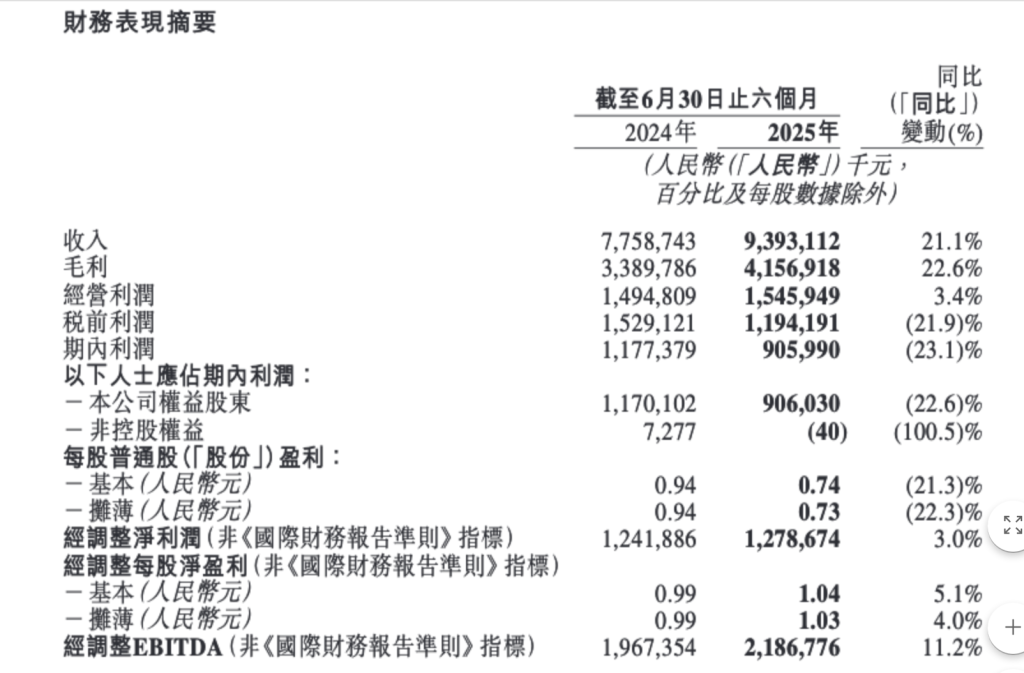
Core Insights - Miniso Group reported a total revenue of 9.39 billion RMB for the first half of 2025, representing a year-on-year growth of 21.1% [1][2] - The company expects its full-year revenue for 2025 to grow by no less than 25%, exceeding previous guidance [1][4] Financial Performance - Gross profit for the first half of 2025 was 4.16 billion RMB, with a gross margin of 44.3% [1][2] - Adjusted net profit for the same period was 1.28 billion RMB, reflecting a 3% increase year-on-year [1][2] - The company announced a mid-term dividend of $0.29 per ADS, with share buybacks and dividends totaling approximately 1.07 billion RMB, accounting for 84% of adjusted net profit [1] Revenue Drivers - Revenue growth was driven by a 11.4% increase in domestic sales, a 29.4% increase in overseas sales, and a 73% increase in revenue from the TOP TOY brand [1][3] - TOP TOY brand revenue reached 400 million RMB in Q2 2025, marking an 87% year-on-year increase [3] Store Expansion and Market Focus - As of June 30, 2025, Miniso had a total of 7,612 stores globally, with 4,305 in mainland China and 3,307 overseas [3] - The company is focusing on high-potential commercial areas for new store openings, particularly in the U.S., where new stores are performing significantly better than older ones [4] Future Outlook - Management is optimistic about accelerating growth, projecting Q3 revenue growth of 25% to 28% [4] - The company aims to maintain a stable and rapid pace of signing new artist collaborations, having already signed nine toy artists [4]

名创优品:大店来救场,IP 零售又 “回血” 了?
Xin Lang Cai Jing· 2025-08-21 15:32
Core Viewpoint - Miniso's Q2 2025 performance exceeded market expectations, driven by the closure of inefficient stores and the conversion of small stores to larger formats, resulting in positive same-store sales growth [1][2][5] Revenue Performance - Total revenue for Q2 2025 reached 4.97 billion yuan, a year-on-year increase of 23%, surpassing the company's previous guidance of 18%-21% [2][8] - Domestic revenue amounted to 2.84 billion yuan, growing by 13.6% year-on-year, while Top Toy achieved 400 million yuan in revenue, marking an impressive 87% increase [2][8] - Overseas revenue was 1.94 billion yuan, reflecting a year-on-year growth of 28.6%, although the growth rate showed a quarter-on-quarter decline [3][9] Store Expansion - After closing many low-efficiency stores in the first quarter, Miniso added 30 new stores in Q2, primarily in lower-tier markets [3][10] - The overseas segment saw a net addition of 94 stores, with a focus on increasing the proportion of direct-operated stores to 17.5% [3][10] Same-Store Sales - Domestic same-store sales turned positive, driven by the "large store + IP product upgrade" strategy, which significantly increased the average transaction value [3][11] - In overseas markets, same-store sales in key regions like the U.S. and Mexico began to show improvement from April onwards [4][11] Profitability Metrics - Gross margin slightly improved by 0.4 percentage points to 44.3%, attributed to a higher proportion of self-developed products and localized sourcing [4][11] - Sales expense ratio increased by 2.6 percentage points to 23.1%, but the growth rate showed a decline compared to the previous quarter [4][11] Financial Summary - Adjusted net profit for Q2 reached 690 million yuan, exceeding market expectations [4][11] - The company anticipates a compound annual growth rate (CAGR) of over 20% for overall revenue from 2025 to 2027, with a current implied PE ratio of around 17x for 2025 [7][8]
名创优品华南首家MINISO LAND开业 IP产品占比近九成
Zheng Quan Shi Bao Wang· 2025-08-19 03:52
Group 1 - MINISO opened its first MINISO LAND store in South China on August 17, 2023, located on Beijing Road Pedestrian Street in Guangzhou, attracting over 10,000 visitors on opening day [1] - The store features a three-story standalone building with a total area of 1,200 square meters, designed around the "amusement park" theme [1] - Since its soft opening on July 5, 2025, the store has launched 16 product lines, with 6 being first releases, and IP sales accounting for 84.43% of total sales [1] Group 2 - MINISO has established 12 MINISO LAND and 1 MINISO SPACE stores in key cities across China, with the global flagship store in Shanghai achieving over 100 million yuan in sales within 9 months [2] - The MINISO SPACE in Nanjing has become the first Chinese IP space to enter a global luxury shopping district [2] - The CEO of MINISO stated that the company will continue to inject new momentum into Guangzhou's development as an international consumption center through the synergy of super IPs and super scenes [2]
地产富二代进军潮玩业、2.2亿港元收购上市公司 26岁地产富二代“走到台前”
Di Yi Cai Jing· 2025-08-14 11:08
Group 1 - A 26-year-old heiress, Wang Kaily, is acquiring a publicly listed company, China New Retail Supply Chain Group Limited, for 2.23 billion HKD, which represents 75% of the company's total issued share capital [1][2] - The acquisition is facilitated by Wanjiang Capital Limited, which was established in the British Virgin Islands and is wholly owned by Wang Kaily [1] - Wang Kaily is the daughter of Wang Zhenhua, the founder of New城控股, and her involvement in this acquisition marks her emergence in the business world [2][3] Group 2 - Wang Kaily has an academic background with degrees from prestigious institutions, including a Bachelor's degree from Peking University and a Master's degree from the University of Sydney [3][4] - She has also co-founded a trendy toy company, Mitaki, which opened its first store in Changzhou in June this year [4] - The acquisition and her entrepreneurial ventures indicate a strategic move by the Wang family to diversify their business interests beyond real estate [1][4]

泡泡玛特泰国新店被指撞脸名创优品,双方回应
凤凰网财经· 2025-08-11 13:47
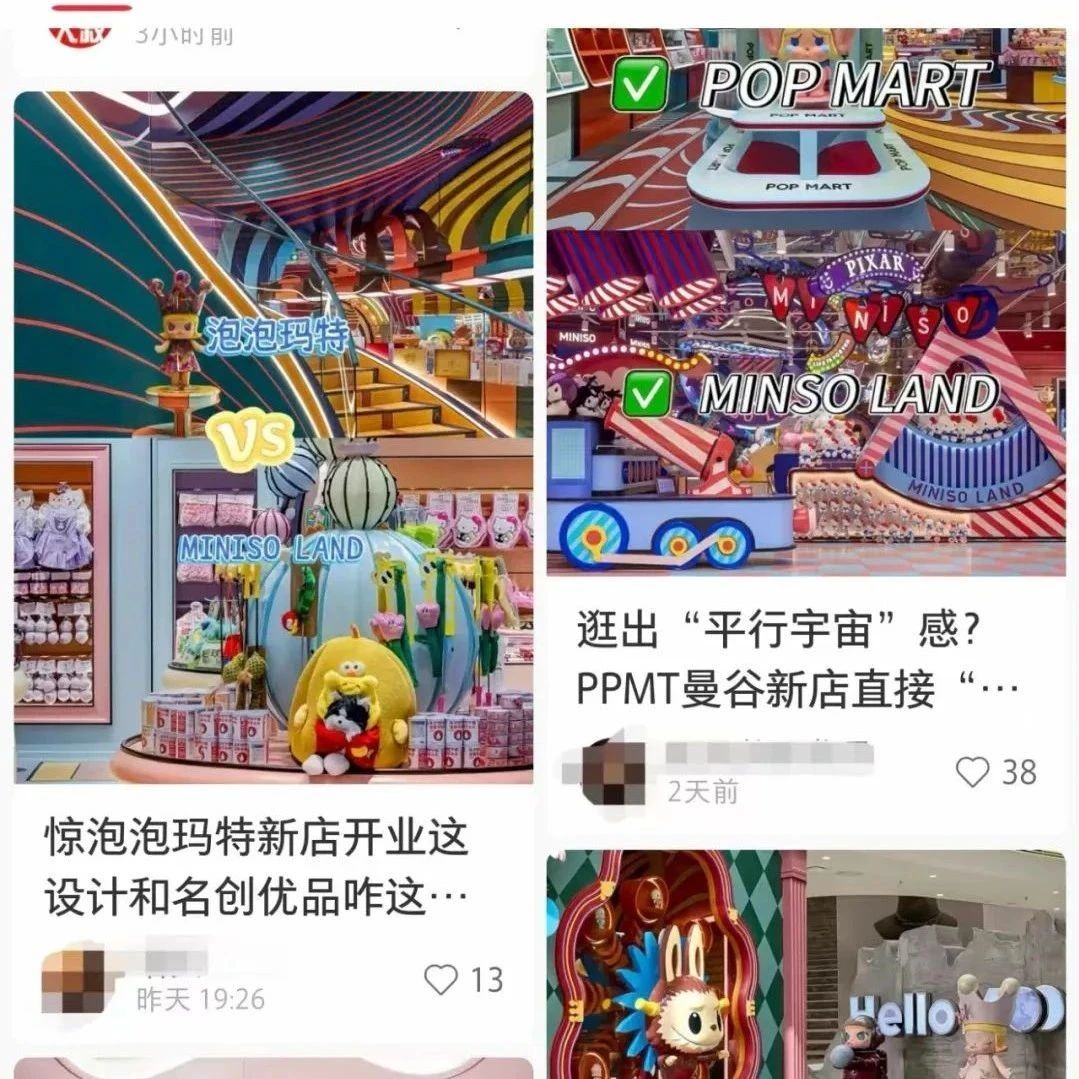
Core Viewpoint - The controversy surrounding Pop Mart's new flagship store in Thailand, which has been accused of resembling Miniso's store design, highlights the competitive dynamics and potential brand identity issues within the retail sector in Southeast Asia [1][9]. Group 1: Store Opening and Design - Pop Mart opened its largest global flagship store in Bangkok's ICONSIAM shopping center on August 8, covering an area of 760 square meters, inspired by Thai traditional culture and local elements [1]. - The store's design incorporates Thailand's unique "water culture" and traditional architectural language, aiming to create an inclusive atmosphere [1]. Group 2: Accusations of Similarity - Social media users have pointed out similarities between Pop Mart's new store and Miniso's MINISOLAND store in Shanghai, suggesting that Pop Mart's design may have been copied [1]. - Comparisons show both stores utilize similar vibrant color schemes and layout designs, leading to accusations of "Ctrl+V style copying" [1]. Group 3: Company Responses and Previous Issues - In response to the allegations, Pop Mart's customer service indicated that the matter is being addressed by relevant departments, while Miniso stated they would follow up if the claims are substantiated [9]. - This incident is not the first controversy for Pop Mart; a previous issue involved a social media influencer who claimed to have received products from other brands after purchasing blind boxes from Pop Mart [9]. Group 4: Financial Performance - According to Pop Mart's financial report, the company achieved a revenue of 13.04 billion yuan in 2024, marking a year-on-year increase of 106.9%, with overseas revenue reaching 5.07 billion yuan, a significant growth of 375% [9]. - The company emphasizes Thailand as a crucial part of its strategic expansion in Southeast Asia [9]. Group 5: Miniso's Market Position - Miniso opened its TOPTOY store in Bangkok's Siam Center in October 2024, with blind boxes contributing approximately 7% to its sales, and related IP products accounting for nearly 30% of total sales [10].

潮玩场景“商战“?泡泡玛特泰国新店被指“撞脸”名创优品
Zhong Guo Jing Ying Bao· 2025-08-11 12:19
Core Viewpoint - The recent controversy between Pop Mart and Miniso highlights the competitive landscape in the trendy toy market, with allegations of design similarities between their flagship stores in Thailand and Shanghai [1][2]. Group 1: Company Strategies - Miniso adopts a direct sales model in high-potential markets like the US and India, while using an agency model in regions like Europe and Southeast Asia, partnering with local retail firms [2]. - Pop Mart's flagship store in Thailand spans over 760 square meters, showcasing local cultural elements and a vibrant design aimed at creating an immersive experience for consumers [2]. - Miniso's MINISO LAND flagship store covers nearly 2000 square meters, featuring narrative layouts and interactive elements to establish a new IP-themed amusement park [2]. Group 2: Market Trends - The current consumer trend is shifting towards an "experience economy," where immersive shopping experiences are prioritized, making store design and location critical for brand competitiveness [3]. - The design of retail spaces serves as a significant symbol for brands, enhancing their perceived value and long-term brand equity in local markets [3].

泡泡玛特泰国店陷“撞脸”名创优品争议
2 1 Shi Ji Jing Ji Bao Dao· 2025-08-11 09:24
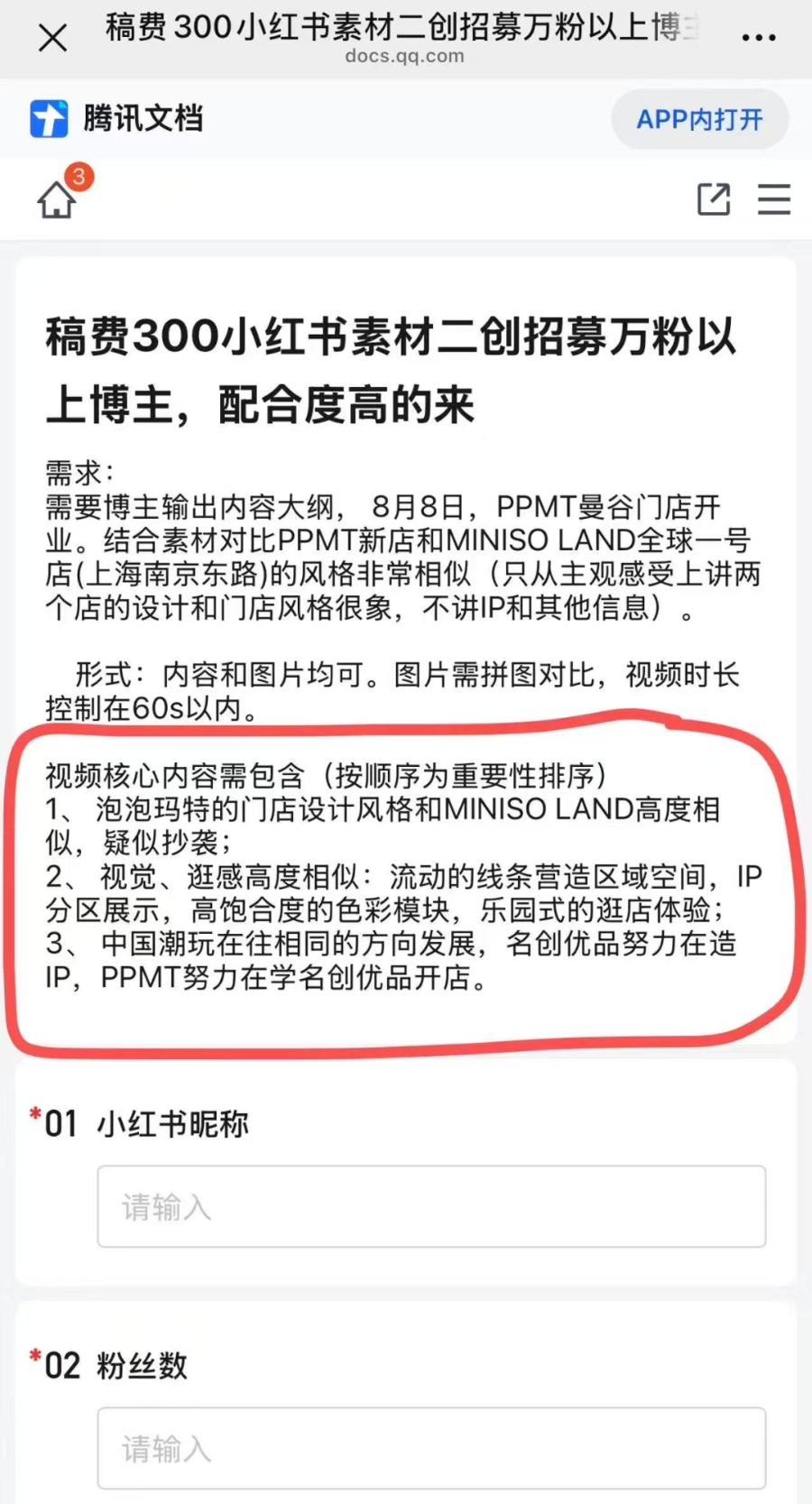
Group 1 - The controversy surrounding Pop Mart's store in Thailand being accused of resembling Miniso's MINISOLAND has gained significant attention on social media [1] - Pop Mart's customer service confirmed that relevant departments are handling the situation, while Miniso's staff stated that the issue has been logged for follow-up [1] - Allegations surfaced that individuals are being paid 300 yuan per post to promote the narrative of "suspected plagiarism" regarding the store designs [1] Group 2 - Miniso is actively transforming into an IP economy and accelerating its overseas expansion, having opened its TOPTOY brand store in Bangkok in October 2024 [5] - In 2024, Miniso reported total revenue of 17 billion yuan, a year-on-year increase of 22.8%, with an adjusted net profit of 2.72 billion yuan, up 15.4% [5] - Pop Mart's revenue reached 13.04 billion yuan in 2024, reflecting a remarkable year-on-year growth of 106.9%, with a net profit of 3.4 billion yuan, up 185.9% [5]
泡泡玛特泰国新店陷“撞脸”名创优品?双方回应来了
2 1 Shi Ji Jing Ji Bao Dao· 2025-08-11 05:49
Core Viewpoint - The controversy surrounding Pop Mart's new flagship store in Thailand, which has been accused of copying Miniso's store design, has gained significant attention on social media [2][3]. Group 1: Company Developments - Pop Mart opened its largest global flagship store in Bangkok's ICONSIAM shopping center on August 8, covering an area of 760 square meters and inspired by Thai traditional culture [3]. - The store design incorporates local elements, reflecting Thailand's unique "water culture" and traditional architectural language [3]. - Pop Mart reported a revenue of 13.04 billion yuan for 2024, representing a year-on-year growth of 106.9%, with overseas revenue reaching 5.07 billion yuan, a staggering increase of 375% [4]. Group 2: Industry Context - Miniso had previously opened its TOPTOY brand store in Bangkok's Siam Center in October 2024, indicating its active presence in the Southeast Asian market [4]. - Miniso's blind box products contribute approximately 7% to its sales, with overall IP derivative products accounting for nearly 30% of total sales [4]. - The incident is not the first controversy for Pop Mart, as it faced criticism from a popular influencer regarding product authenticity, which has raised consumer trust issues [4].
泡泡玛特泰国新店“撞脸”名创优品?潮玩品牌海外扩张提速
Xin Lang Cai Jing· 2025-08-11 03:14
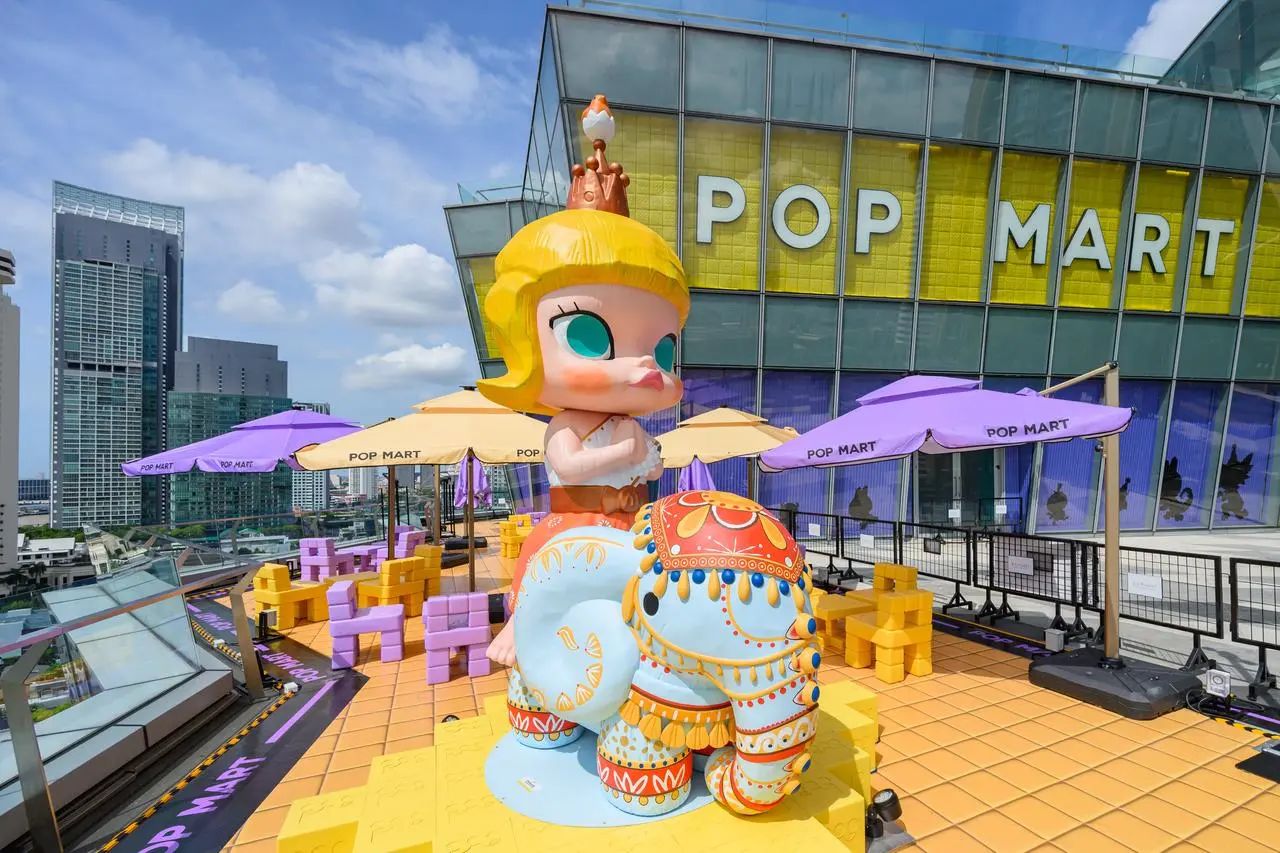
8月11日,泡泡玛特泰国店被指"撞脸"名创优品的话题,登上热搜。 社交媒体网友截图 目前,泡泡玛特和名创优品都尚未对此作出官方回应。 泡泡玛特表示,泰国是品牌在东南亚战略布局中的重要一站。旗舰店开业前,泡泡玛特在泰国已掀起多轮潮玩热潮。 据此前媒体报道,泡泡玛特2023年9月在泰国首家线下实体店正式开业,开业当天凌晨就有人通宵排队,当天开业首日销量就突破了200万人民币。 8月8日,泡泡玛特在泰国曼谷ICONSIAM购物中心开出全球最大品牌旗舰店,760平方米的超大沉浸式空间,将艺术、文化和生活方式融合一体。 据泡泡玛特官微发布,该店整体空间分为两层,首层MEGA区以MOLLY与THE MONSTERS的大型产品为打卡点,另设有潮玩专区、POP BEAN互动区。 店内还特别设立了泡泡玛特全球首家海外咖啡空间POP MART CAFÉ。此外,户外广场放置了身高4米的巨型Molly Thailand Limited装置,身穿泰国当地特色 服装,骑着大象。 泡泡玛特表示,泰国旗舰店延续了空间布局上的品牌美学,在设计细节上充分展现本土文化特色。旗舰店以泰国传统文化为设计灵感,融合大量在地元素。 不过,泰国新店的店面设 ...
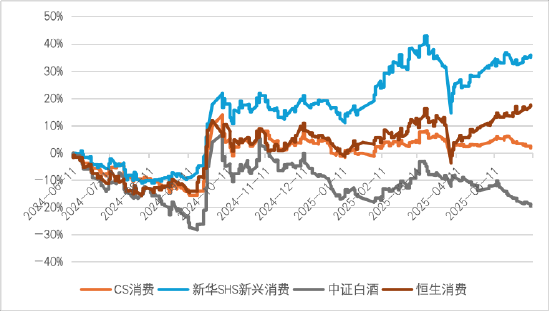
天价LABUBU引热新消费!如何解读Z世代的财富密码?
Xin Lang Ji Jin· 2025-08-08 07:17
Group 1: LABUBU's Market Performance - LABUBU's unique mint green collectible sold for 1.08 million yuan at an auction, highlighting its exclusivity and high demand [1] - The company's market value reached 347.5 billion HKD, with its founder Wang Ning becoming the new richest person in Henan with a net worth of 20.3 billion USD [1] - The secondary market for LABUBU products shows significant price premiums, with the hidden variant "Ben Wo" averaging 1,200 yuan, over 10 times its original price [1] Group 2: New Consumption Trends - The rise of new consumption reflects a shift from traditional value-for-money and functionality to quality and personal satisfaction, driven by technological advancements and new business models [2] - New consumption is characterized by a "consumption grading" phenomenon, where consumers are willing to pay for quality at lower prices and justified premiums [5] - The Z generation's consumption behavior, emphasizing value and quality, is a key driver of the new consumption wave [5] Group 3: Supply Side Dynamics - The supply side benefits from ongoing infrastructure improvements and increased digital R&D investments, leading to an intelligent upgrade in consumer goods [7] - Historical insights from Japan's consumption changes in the 1990s provide valuable lessons for understanding current new consumption trends [7] Group 4: Market Outlook - The current liquidity-driven environment favors high-growth assets, making new consumption a focal point for investment [8] - Performance validation through fundamental research shows promising growth potential in new consumption companies, with one leading Hong Kong stock projected to achieve a net profit of 3.125 billion yuan in 2024, a 188.77% increase [8] - New consumption is seen as a consensus direction for funds, with opportunities in both Hong Kong and A-share markets [8]