
电子消费品

Search documents
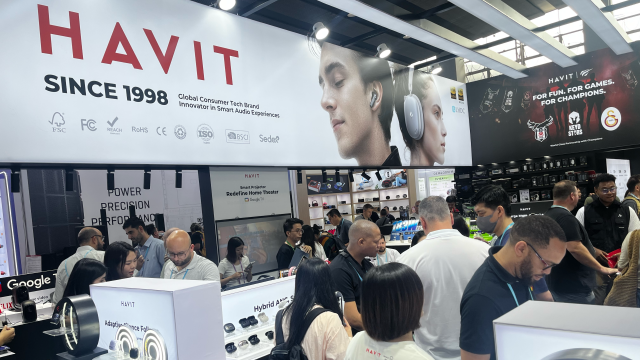
从巴西头号电竞耳机到触控投影,广交会见证中国品牌价值提升|广交会现场
Di Yi Cai Jing· 2025-10-19 08:21
Core Insights - Technological innovation is increasingly becoming the core driving force behind the growth of domestic brands in China [1] - The 138th Canton Fair highlights the trend of advanced manufacturing and the importance of technology in product development [1] - Companies are focusing on creating differentiated products to attract consumers willing to pay a premium [3][7] Industry Trends - The electronic consumer goods sector is expected to achieve a new balance between price, quality, and brand building, leading to a healthier market structure [1] - There is a noticeable trend of foreign customers upgrading their consumption from low-end to high-end products, reflecting a shift towards more integrated and higher-performing offerings [5] - Companies are encouraged to focus on niche consumer segments and understand their usage scenarios to uncover new application directions [5] Product Development - Companies are advised to broaden their perspectives and integrate technologies from other industries to create new product forms [3] - Successful differentiation in consumer perception can lead to a penetration rate five times that of ordinary brands, indicating sustainable growth potential [3] - Innovative products showcased at the Canton Fair include a desktop projector with interactive features, demonstrating a shift from passive display tools to intelligent interactive partners [6] Brand Building - Increasing brand exposure and implementing multi-channel marketing strategies are crucial for brand development [7] - Companies should explore consumer preferences and adopt differentiated marketing strategies to address core pain points, enhancing brand recognition [7] - Continuous investment in R&D, comprehensive brand marketing, and localized marketing efforts have contributed to significant sales growth for companies [8]

青海发布首张3H高原认证证书
Xin Hua Wang· 2025-10-17 11:56
Core Viewpoint - The Qinghai Provincial Market Supervision Administration has introduced the first voluntary certification based on the extreme environment of the Tibetan Plateau, focusing on the quality performance of textile products in harsh conditions [1] Group 1: Certification Overview - The 3H (High altitude, High UV radiation, Harsh cold) certification is a quality certification system designed for products in extreme environments, applicable across various sectors including equipment manufacturing, low-altitude economy, industrial consumer goods, agricultural products, and services [1] - The certification categorizes altitude levels into 2000m, 3000m, 4000m, and above, with differentiated technical standards for industries such as automotive, photovoltaic, home appliances, textiles, and low-altitude equipment [1] Group 2: Industry Implications - The certification emphasizes the assessment of specific product features, such as the charging and discharging efficiency of battery systems in electric vehicles under low temperature and low pressure conditions, and the color fastness and mechanical performance retention of outdoor textiles after extensive UV exposure [1] - Data from inspections and research indicate that certain home appliances, automobiles, and electronic consumer goods exhibit varying degrees of environmental adaptability deficiencies in the Tibetan Plateau, highlighting the significance of the 3H certification system in enhancing the manufacturing standards in China [1]
注意!2025下半年,中国或将会出现4大降价潮,早做准备!
Sou Hu Cai Jing· 2025-10-08 01:52
Core Viewpoint - The article discusses the anticipated price reductions in four major consumer sectors in China during the second half of 2025, driven by various market dynamics and economic conditions [1]. Group 1: New Energy Vehicles - The average price of new energy vehicles in China has already decreased by 7.3% in the first half of 2025, with further reductions expected to range from 2% to 8% in the second half [2][3]. - Key factors driving this price drop include a 23% reduction in battery costs since 2023, a low utilization rate of 68% in production capacity, and improved efficiency in battery recycling [3][3]. Group 2: Real Estate - A regional decline in housing prices is expected, particularly in second and third-tier cities, with anticipated reductions of 5% to 10% [4][8]. - Contributing factors include a reversal in supply-demand dynamics, significant debt repayment pressures on real estate companies, and a declining birth rate impacting future housing demand [7][8]. Group 3: Electronic Consumer Goods - Prices for electronic products such as smartphones and laptops are projected to drop by 12% to 18% and 15% to 20%, respectively, in the latter half of 2025 [9][10]. - This decline is attributed to an oversupply of semiconductors, rapid technological advancements leading to clearance of older models, and a softening demand for consumer electronics [10][10]. Group 4: Travel Services - Domestic travel service prices are expected to decrease by 10% to 20% as the market stabilizes post-pandemic [11][12]. - Factors influencing this trend include an oversaturation of the tourism market, a shift in consumer focus towards value for money, and the diversification of travel destinations [12][12].
时也、运也、命也?“小双环”蜕变记!
市值风云· 2025-09-24 10:07
Core Viewpoint - The company has transformed from a small parts manufacturer into a significant player in the automotive components and electronic consumer goods sectors, focusing on both power transmission and touch display businesses [4][7]. Group 1: Power Transmission Business - The company has rapidly developed a product line centered on new energy reducers and components for new energy transmission systems [5]. - It maintains stability in its product offerings related to automotive engine balance shaft assemblies and both automatic and manual transmission components [5]. - New products, such as integrated robotic joint modules, are injecting new growth momentum into the company's development [5]. Group 2: Touch Display Business - The company employs a major client strategy and has become a supplier for well-known industry players like Corning, Innolux, BOE, Quanta Computer, Compal, Foxconn, and Huaqin Communications [6]. - Its products are used in renowned electronic brands, including Amazon, Lenovo tablets, Acer laptops, and Microsoft tablets/laptops [6]. - In the automotive touch screen segment, the company collaborates with brands like Geely, Zeekr, and Great Wall, developing high-value-added products such as dual-screen, triple-screen, and curved screens for vehicle dashboards [6]. Group 3: Overall Business Strategy - The company operates across two major fields: automotive components and electronic consumer products, positioning itself as a versatile player in these industries [7].

感受科技带来的生活品质提升
Xi An Ri Bao· 2025-09-22 02:53
Group 1 - The event "Smart Connection for a Brilliant Future" in Xi'an showcases electronic consumer products, automotive exhibitions, and cultural tourism, aiming to enhance consumer experience and promote local industries [1][2] - The electronic consumer products section features 25 brands including Huawei, Xiaomi, and DJI, presenting a wide range of products from smartphones to smart home devices, highlighting the integration of technology in daily life [1][2] - The automotive section includes 28 car manufacturers, offering various types of vehicles and exclusive promotions such as cash discounts and subsidies, enhancing consumer purchasing power [2] Group 2 - The event serves as a platform for companies to display their latest products and technologies, fostering interaction between industries and consumers, and promoting a vibrant consumption atmosphere in the city [2][3] - Since the beginning of the year, the city's old-for-new consumption program has provided subsidies totaling 4.749 billion, benefiting over 5.723 million consumers and driving consumption worth 46.654 billion [2] - The city’s business bureau plans to continue innovating consumption scenarios and enriching consumption formats to stimulate consumer potential and enhance the city's attractiveness [3]
中国汽车“带货”中国芯片
Di Yi Cai Jing· 2025-09-18 01:27
Core Insights - Chinese brands are demonstrating resilience in the face of a "weak peak season" threat in the fourth quarter of the year, with exports growing by 6.9% in the first eight months and 4.8% in August [2][5] - The shift towards non-American exports and the growth of private enterprises are key factors behind this performance [2][4] - The trend of "exporting" not just products but also brands, technology, and capital is becoming a new growth point for Chinese companies [4][8] Export Performance - In August, China's exports to the EU and Japan increased by 10.4% and 6.7% respectively, with ASEAN exports growing by 22.5% [5] - The Trade Desk's insights indicate that the upcoming holiday shopping season will see consumers making more rational purchasing decisions, with many planning to complete their shopping before Black Friday [3][6] Brand Strategy and Market Diversification - Chinese brands are increasingly diversifying their market strategies to mitigate risks associated with U.S. tariffs, focusing on Europe, Japan, and the Asia-Pacific region [6][7] - The trend of simultaneous market expansion is becoming more common, with companies leveraging successful experiences in one market to explore opportunities in others [7][8] Technological Innovation and Product Quality - Chinese brands are showcasing significant craftsmanship and technological innovation, particularly in AI and robotics, enhancing their competitiveness in the global market [4][8] - The shift from low-end manufacturing to high-end products is driving the internationalization of Chinese brands, although challenges remain in brand recognition compared to established international brands [9] Consumer Perception and Brand Value - There is a growing recognition of the importance of brand value and consumer trust in overseas markets, with Chinese brands moving towards establishing a local presence and identity [8][9] - The challenge lies in balancing the perception of value for money with the need to convey brand philosophy and values to international consumers [8][9]

中国汽车“带货”中国芯片
第一财经· 2025-09-18 01:16
Core Viewpoint - The resilience of Chinese brands is highlighted in the face of the "not-so-busy" fourth quarter in the European and American markets, with a notable increase in exports and a shift towards diversified market strategies [3][4][9]. Export Growth and Market Dynamics - In the first eight months of the year, China's goods exports grew by 6.9%, with August's export growth reaching 4.8%, driven by non-American exports and private enterprises [3][4]. - The Trade Desk's insights indicate that despite demand contraction, Chinese companies are increasing investments in marketing and brand building, showcasing strong craftsmanship and technological innovation [3][6]. - The U.S. holiday retail sales are projected to grow by only 1.2% in 2025, marking the lowest growth since 2009, with a significant decline compared to the previous year [5]. Competitive Edge of Chinese Electronics - At the 2025 Berlin International Consumer Electronics Show, around 764 Chinese companies participated, representing nearly 40% of exhibitors, indicating strong competitiveness in the electronics sector [6]. - Chinese brands are not only relying on manufacturing and logistics advantages but are also gaining premium capabilities in high-end markets, becoming significant choices for global consumers during the shopping season [6][12]. Diversification Strategies - Chinese brands have initiated diversification strategies in response to increased tariffs from the U.S., with exports to the EU and Japan growing by 10.4% and 6.7% respectively in August [9][10]. - The shift towards non-American markets is evident, with companies increasingly focusing on Europe and Asia-Pacific to mitigate trade war risks [10][11]. Brand Value and Consumer Trust - Chinese brands are transitioning from merely exporting products to establishing brand value and recognition in overseas markets, moving towards a model where they are seen as local international brands [12][13]. - The challenge remains for Chinese brands to balance value-for-money propositions with the need to convey brand values and ideologies to gain trust from overseas consumers [13][14].
中国品牌不惧“旺季不旺” 中国汽车还能“带货”芯片
Di Yi Cai Jing· 2025-09-17 14:08
Group 1 - The core viewpoint is that despite the challenges in the US and European markets, Chinese brands are demonstrating resilience and adaptability in their export strategies [1][5] - China's goods exports increased by 6.9% in the first eight months of the year, with August's export growth reaching 4.8%, driven by non-US exports and private enterprise exports [1][4] - The Trade Desk's insights indicate that Chinese companies are increasing investments in marketing and brand building, showcasing strong craftsmanship and technological innovation in AI and robotics [1][3] Group 2 - The automotive sector is enhancing the global recognition of Chinese chips, with companies like Naxin Micro seeing over 10% of their revenue coming from overseas by 2024 [3][5] - Chinese brands are diversifying their export markets, with significant growth in exports to the EU and ASEAN, indicating a shift away from reliance on the US market [4][5] - The trend of early preparation for the holiday shopping season reflects a more rational consumer mindset, with half of US consumers planning to complete their purchases before Black Friday [2][5] Group 3 - Chinese brands are transitioning from merely exporting products to establishing themselves as international brands, focusing on brand value and consumer trust [7][8] - The global expansion of Chinese manufacturing is evolving from low-end to high-end products, enhancing brand internationalization [8] - There is a notable difference in consumer perceptions between Chinese fast-moving consumer goods and international brands, highlighting the need for greater cultural understanding and marketing efforts [8]
中国品牌不惧“旺季不旺”,中国汽车还能“带货”芯片
Di Yi Cai Jing· 2025-09-17 14:01
Group 1: Market Trends and Performance - China's exports grew by 6.9% in the first eight months of the year, with August's export growth reaching 4.8%, driven by non-U.S. exports and private enterprises [1] - The global economic pressure is expected to lead to a gradual decline in export growth in the fourth quarter, with a focus on the impact of external demand on production [2] - Despite challenges, Chinese electronic consumer goods maintain strong competitiveness, with approximately 764 Chinese companies participating in the 2025 IFA, accounting for nearly 40% of exhibitors [2][3] Group 2: Brand Strategy and Innovation - Chinese brands are increasingly integrating AI technology and showcasing craftsmanship and technological innovation, enhancing their competitiveness in high-end markets [3] - The shift from product export to brand export is evident, with companies leveraging long-term R&D and industry cluster advantages to expand globally [3] - Chinese brands are transitioning from relying solely on supply chain advantages to establishing brand value and recognition in overseas markets [7] Group 3: Diversification and Market Expansion - Chinese brands have initiated diversification strategies in response to increased tariffs from the U.S., with exports to the EU and Japan growing by 10.4% and 6.7% respectively in August [4] - The trade transfer effect is strengthening, allowing for continued growth in non-U.S. exports, which is crucial for mitigating external economic fluctuations [5] - Companies are now more confident in exploring multiple markets simultaneously, moving away from a single-market focus [6] Group 4: Consumer Behavior and Brand Perception - There is a noticeable shift in consumer behavior towards more rational purchasing decisions, with many planning to complete their holiday shopping earlier [2] - Chinese brands are increasingly recognized for their value and ideology, which is essential for gaining trust and acceptance in overseas markets [7][8] - The perception of Chinese fast-moving consumer goods and cultural brands still lags behind international brands, indicating a need for greater efforts in brand recognition and cultural understanding [8]
深圳外贸保持较强韧劲,前7个月规模仍居内地外贸城市首位
Nan Fang Du Shi Bao· 2025-08-19 05:09
Core Insights - Shenzhen's foreign trade has shown resilience in 2023, with total imports and exports reaching 2.58 trillion yuan in the first seven months, maintaining the same level as the previous year and ranking first among mainland cities in foreign trade [1][2] Group 1: Trade Performance - Exports totaled 1.56 trillion yuan, while imports reached 1.02 trillion yuan, marking a 9.4% increase [1] - In July alone, Shenzhen's total trade was 415.94 billion yuan, a 6.2% increase year-on-year, with exports hitting a record monthly high of 255.62 billion yuan, up 4.7% [1] Group 2: Trade Composition - General trade accounted for over half of the total trade, with 1.42 trillion yuan in imports and exports, representing 54.9% of the total [1] - Bonded logistics saw a 13.7% increase, totaling 699.28 billion yuan, making up 27.1% of the total trade [1] - Processing trade contributed 451.19 billion yuan, accounting for 17.5% [1] Group 3: Trade Partners - Trade with major partners such as Hong Kong, Taiwan, the EU, South Korea, and Japan grew, totaling 1.22 trillion yuan, a 10% increase, representing 47.2% of total trade [1] Group 4: Enterprise Contributions - Private enterprises accounted for 1.8 trillion yuan in trade, making up 69.8% of the total [2] - Foreign-invested enterprises saw an 11.3% increase in trade, totaling 678.58 billion yuan, representing 26.3% [2] - State-owned enterprises contributed 99.14 billion yuan [2] Group 5: Export Highlights - The traditional electronics and strategic emerging industries maintained strong export performance, with mechanical and electrical products totaling 1.17 trillion yuan, a 4.4% increase, accounting for 74.7% of exports [2] - Key products included computers and components (179.51 billion yuan, up 10.8%) and audio-visual equipment (50.27 billion yuan, up 5.5%) [2] - Emerging industries like lithium batteries and pure electric vehicles saw exports grow by 37.9% and 21.7%, respectively, while integrated circuits reached 133.93 billion yuan, a 40.9% increase [2] Group 6: Import Highlights - Imports of mechanical and electrical products reached 836.56 billion yuan, a 14.7% increase, accounting for 82.1% of total imports [2] - Integrated circuits were imported at 454.69 billion yuan, up 19.6%, while computer components like graphics cards and servers surged by 47.8% to 184.4 billion yuan [2] - Agricultural product imports totaled 59.16 billion yuan, a 7.7% increase, representing 5.8% of total imports [2]