起重机制造

Search documents
美报告承认:检查了92台中国起重机,安全得很
Xin Lang Cai Jing· 2025-12-29 09:37
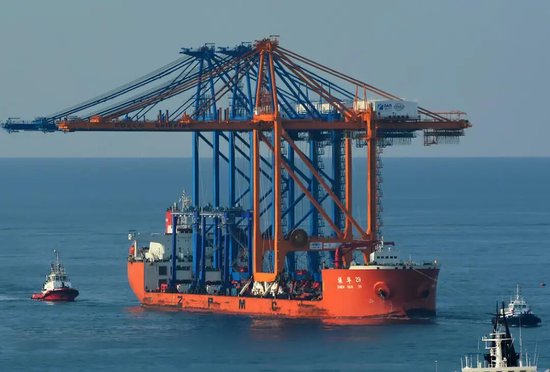
Core Viewpoint - The journey of the "Zhenhua 29" cargo ship symbolizes the peak of globalization, which may be coming to an end due to rising tensions in U.S.-China trade relations, particularly concerning Chinese-manufactured port cranes viewed as a national security threat by the U.S. government [1][12]. Group 1: Shipping Journey and Logistics - The "Zhenhua 29" completed one of the longest shipping routes globally, taking three and a half months and covering nearly 20,000 nautical miles, transporting five giant port cranes from Shanghai to various ports in the U.S. and Jamaica [1][11]. - The ship's first stop was Gulfport, Mississippi, after a journey that included navigating through the Indian Ocean and crossing the Atlantic Ocean, highlighting the complexities and dangers of transporting such large equipment [5][16]. - The ship's route was complicated by restrictions at the Panama Canal, requiring it to take a longer path to accommodate the cranes' extended arms [14][15]. Group 2: Industry Context and Market Dynamics - China currently accounts for over 70% of global port crane production, with approximately 80% of cranes used in U.S. ports sourced from China [6][17]. - The U.S. government has proposed a 100% tariff on Chinese-manufactured port cranes, citing national security concerns, which could disrupt supply chains and increase global shipping costs [9][20]. - The U.S. port and terminal operators have expressed that the popularity of Chinese cranes is due to their availability and lower prices, and the proposed tariffs may not effectively address the underlying supply issues [10][20]. Group 3: Political and Economic Implications - U.S. officials have raised unfounded security concerns about the technology in Chinese cranes, suggesting they could be used for espionage, which has been refuted by Chinese officials and contradicted by U.S. Coast Guard inspections that found no security vulnerabilities [8][12][18]. - The U.S. has been criticized for its unilateral and protectionist measures, which may ultimately harm global trade and supply chain stability rather than revitalize its domestic manufacturing sector [10][20].


美国报告披露:检查了92台中国起重机,没发现任何安全问题
Guan Cha Zhe Wang· 2025-12-29 06:17
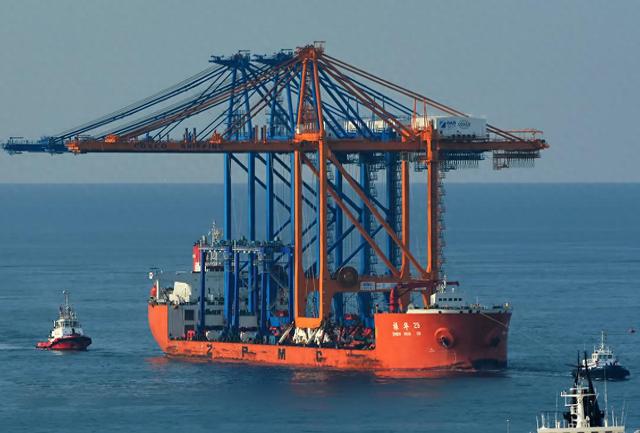
Core Viewpoint - The journey of the "Zhenhua 29" cargo ship symbolizes the peak of globalization, which may be coming to an end due to rising tensions in U.S.-China trade relations, particularly concerning Chinese-manufactured port cranes [1][5]. Group 1: Shipping Journey and Logistics - The "Zhenhua 29" completed one of the longest shipping routes globally, taking three and a half months to travel nearly 20,000 nautical miles from Shanghai to various ports in the U.S. and Jamaica [1]. - The ship's route included a detour around the Cape of Good Hope due to severe weather conditions, highlighting the challenges of transporting large cranes across oceans [4]. - The ship is owned by Shanghai Zhenhua Heavy Industries (ZPMC), the world's largest manufacturer of port cranes, which produces hundreds of cranes annually at its facility in Changxing Island [4][7]. Group 2: U.S.-China Trade Relations - The U.S. government views Chinese port cranes as a national security threat, despite a lack of evidence to support these claims, as confirmed by inspections that found no security vulnerabilities [1][6]. - The Biden administration has proposed tariffs of 100% on Chinese-manufactured port cranes, citing concerns over technology transfer and intellectual property [6][7]. - U.S. port operators have expressed that high tariffs could disrupt supply chains and increase shipping costs, as Chinese cranes are favored for their availability and lower prices [7]. Group 3: Industry Impact and Future Outlook - China currently accounts for over 70% of global port crane production, with approximately 80% of U.S. port cranes sourced from China [5]. - The U.S. has lost domestic crane manufacturing capacity over the past few decades, and establishing sufficient production capabilities in the U.S. could take around ten years [7]. - The Chinese government has defended its crane manufacturing industry as a result of technological innovation and market competition, arguing that U.S. claims lack factual basis and economic rationale [7].
美飞行器成功发射,搭载“轮椅使用者”进入太空;加速进化Booster K1完成首批量产交付丨智能制造日报
创业邦· 2025-12-22 03:11
Group 1 - XCMG's intelligent factory can customize over 1,200 types of cranes, with overseas orders increasing from 5% in 2020 to over 50% now, indicating a shift from traditional mass production to mass customization [2] - The company has developed a platform for manufacturing cranes over 1,000 tons, utilizing modular design and cloud collaboration to meet personalized market demands [2] - XCMG has achieved a 55% reduction in overall order delivery cycle through six online systems that centralize and visualize the entire process from order receipt to product delivery [2] Group 2 - Blue Origin's New Shepard spacecraft successfully launched six crew members into space, including the first wheelchair user, marking a significant milestone in space accessibility [2] - Accelerator Evolution's Booster K1 has completed its first batch of mass production deliveries, with nearly 1,000 units shipped globally, and over 40% of sales coming from international markets [2] - China successfully launched the Communication Technology Test Satellite No. 23 using the Long March 5 rocket, which is intended for multi-band, high-speed satellite communication technology verification [2]

“我们的征程是星辰大海” 豫企出海记
He Nan Ri Bao· 2025-11-17 23:27
Core Viewpoint - The article highlights the active international expansion of Chinese companies, particularly from Henan province, showcasing their efforts in embracing globalization and enhancing their global presence through various strategies and innovations [7][11][18]. Group 1: Company Expansion Stories - Thinking of international markets, companies like SiNian Foods have successfully entered overseas markets, with their products now available in 149 Sam's Club locations across 15 states in the U.S. by 2025 [8][9]. - The beverage brand Mixue has opened over 53,000 stores globally, with more than 4,700 located overseas, significantly impacting the global beverage market [9]. - Weihu Group has expanded its international footprint, exporting products to over 170 countries and regions, with a focus on internationalization, digitalization, and green development [9][10]. Group 2: Economic Trends and Data - In the first ten months of the year, Henan province exported machinery and electrical products worth 317.23 billion yuan, a 28.6% increase, accounting for 65% of the province's total exports [11]. - The export of "new three types" products reached 23.35 billion yuan, with electric vehicle exports alone growing by 254.4% [11]. - The number of companies in Henan with import and export achievements increased by 3,600 from 2020, with a target of adding over 1,000 more in the current year [17]. Group 3: Strategic Developments - Companies are increasingly focusing on supply chain management to support their overseas operations, as seen with Mixue establishing localized warehousing and distribution networks in four countries [12]. - The shift from merely exporting products to exporting entire ecosystems, such as the complete set of equipment for tunnel construction, marks a significant evolution in export strategies [12]. - The emphasis on strategic planning, brand empowerment, and compliance reflects the growing strength and scale of Henan enterprises in the global market [18].


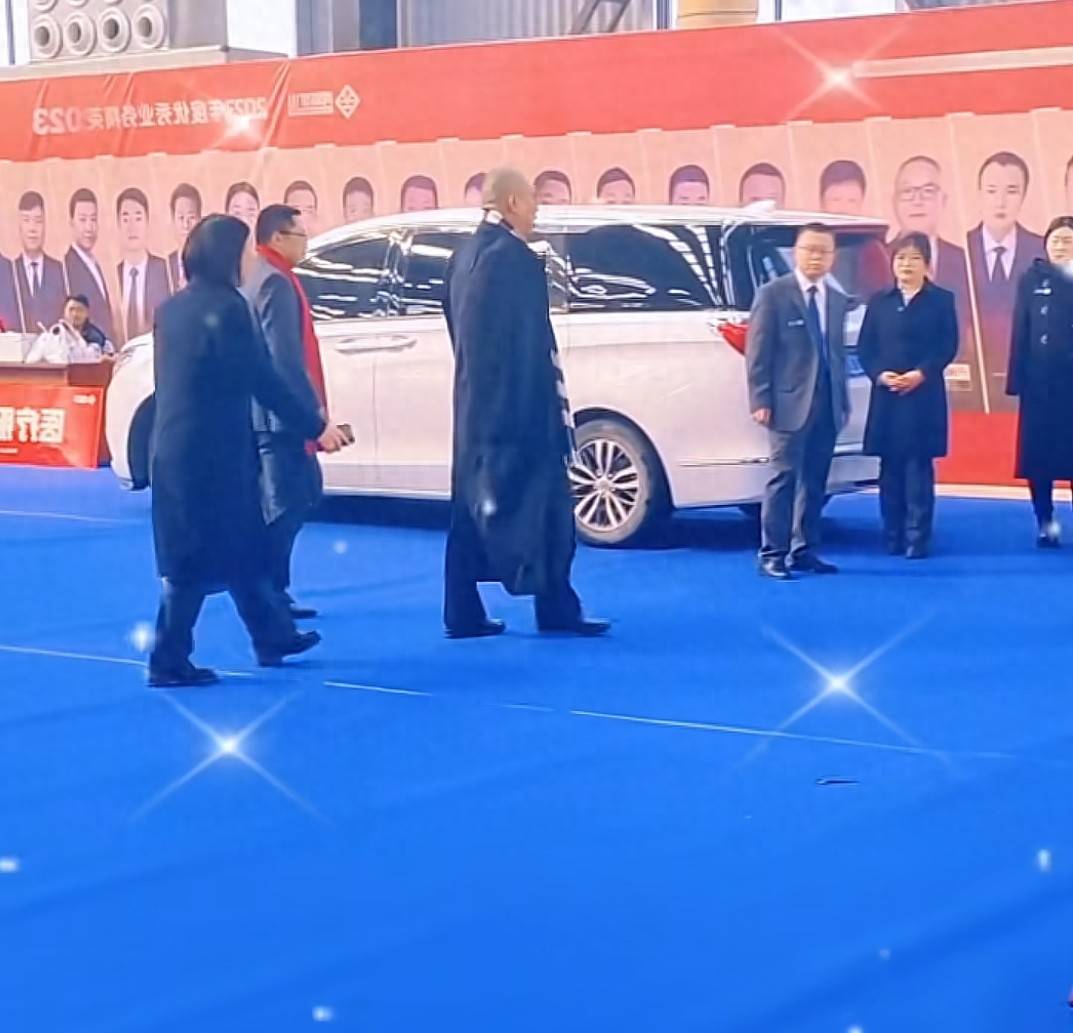
河南企业家身穿长款大衣出席宴席 步履铿锵宛如霸道总裁驾临上海滩
Sou Hu Cai Jing· 2025-11-04 09:04
Core Insights - The article highlights the achievements and entrepreneurial journey of Cui Peijun, founder of Henan Mining Group, emphasizing his significant contributions to the company and society [10][11][12]. Company Overview - Cui Peijun founded Henan Mining Crane Co., Ltd. in 2002 with an investment of 25 million yuan, responding to a call from his hometown [10]. - The company has grown rapidly, achieving sales revenue of over 101.86 billion yuan in 2023 and paying taxes of 29.5 billion yuan [10]. - The workforce has expanded to over 3,100 employees, with an annual output value of 3 billion yuan and tax contributions nearing 200 million yuan [10]. Entrepreneurial Journey - Cui Peijun's early life was marked by hardship, starting work at 14 in Shanghai selling glasses, and later transitioning to jack and crane repairs [10]. - He established a crane sales outlet at 17 and founded "Jingbao Anti-corrosion Engineering Co., Ltd." at 22, followed by a crane equipment factory at 25 [10]. Social Contributions - Cui has funded the education of 319 students over 22 years and is known for his employee welfare initiatives, earning the title "most generous boss on the internet" [11]. - In 2024, he plans to distribute 2.6 billion yuan in profits and issue 170 million yuan in year-end bonuses [11]. - He has donated over 5 million yuan to support safety initiatives and serves as the honorary principal of Changyuan No. 1 Middle School [11]. Honors and Recognition - Cui Peijun has received multiple accolades, including the "Top 100 Model Figures in National Entrepreneurship" and "Labor Model of Henan Province" [13]. - He was named one of the "Top Ten Economic Figures of the Year in Henan Province" and included in the "China Good People List" in 2018 [13]. - He is also a member of the 12th Committee of the Henan Provincial Political Consultative Conference [13].
美USTR计划对部分起重机征收100%关税,对龙门起重机等征收最高150%额外关税
第一财经· 2025-10-11 04:29
Core Viewpoint - The U.S. Trade Representative (USTR) announced modifications to measures aimed at restoring the U.S. shipbuilding industry, reflecting public feedback and consultations with petitioners and advisory committees [3][4]. Group 1: Modifications to Measures - The USTR has changed the calculation basis for service fees of foreign-built vehicle transport vessels to $46 per net ton, effective from October 14, 2025 [3]. - A clause allowing the suspension of LNG export licenses without meeting certain restrictions on foreign-built vessels has been removed, retroactive to April 17, 2025 [3]. - A 100% tariff will be imposed on certain shore cranes and cargo handling equipment [3]. Group 2: Proposed Further Modifications - The USTR proposed additional modifications, including fee exemptions for certain long-term leased ethane and LPG transport vessels [4]. - Additional tariffs of up to 150% will be levied on certain cargo handling equipment, such as rubber-tired gantry cranes and their components [4]. - The deadline for submitting written comments on the proposed modifications is set for November 12, 2025 [5]. Group 3: Industry Reactions - A senior logistics industry professional indicated that the USTR's Section 301 investigation was initiated over a year ago by domestic companies and is now progressing through the necessary processes [5]. - The USTR's measures are expected to impact cranes and frames, although previous considerations for container tariffs have been abandoned [6]. - The Chinese Ministry of Commerce expressed strong dissatisfaction and opposition to the U.S. measures, labeling them as unilateral and protectionist, which disrupts global supply chains and violates WTO rules [6].

美USTR计划对部分起重机征收100%关税,对龙门起重机等征收最高150%额外关税
Di Yi Cai Jing· 2025-10-11 01:47
Core Points - The USTR announced modifications to measures aimed at restoring the U.S. shipbuilding industry, including a 100% tariff on certain shore cranes and cargo handling equipment [1][2] Group 1: USTR Modifications - USTR is modifying the calculation basis for service fees for foreign-built vehicle transport vessels, setting the fee at $46 per net ton, effective from October 14, 2025 [1] - A clause allowing the suspension of LNG export licenses under certain conditions has been removed, retroactive to April 17, 2025 [1] - A 100% tariff will be imposed on certain shore cranes and cargo handling equipment [1] Group 2: Proposed Further Modifications - USTR proposed additional modifications, including fee exemptions for certain long-term leased ethane and LPG transport vessels [2] - Additional tariffs of up to 150% will be applied to certain cargo handling equipment, such as rubber-tired gantry cranes and their components [2] - Payment of certain service fees may be delayed until December 10, 2025, during the public comment period on these proposed modifications [2] Group 3: Industry Reactions - A senior logistics industry professional indicated that the USTR 301 investigation was initiated over a year ago by U.S. domestic companies [3] - The USTR's measures are seen as unilateral and protectionist, with significant opposition from various industry representatives during recent hearings [3] - The Chinese Ministry of Commerce expressed strong dissatisfaction and opposition to the U.S. measures, highlighting their discriminatory nature and potential disruption to global supply chains [3][4]
河南矿山董事长发1000万中秋礼金;威海冷库火灾调查结果公布;哈马斯高层亲赴埃及,将与以色列谈判丨每经早参
Mei Ri Jing Ji Xin Wen· 2025-10-05 23:13
Group 1 - Henan Mining Crane Co., Ltd. held its 12th Mid-Autumn Filial Culture Festival, inviting over 19,000 participants and hosting thousands of banquet tables each day [2][14] - The founder, Cui Peijun, presented 600 yuan in holiday gifts and flowers to each employee's parents, with a total gift distribution exceeding 10 million yuan [2][14] - Cui Peijun emphasized that the event, held for over a decade, is not a publicity stunt but a genuine celebration with employees and their families [2][15] Group 2 - The State Development and Reform Commission allocated 200 million yuan for disaster recovery efforts in Guangdong and Hainan following Typhoon "Maidum" [5] - The National Food and Strategic Reserves Administration dispatched 30,000 emergency relief items to support disaster relief efforts in affected areas [6] Group 3 - As of August 31, 2025, there are 5,435 listed companies in China's stock market, with the majority being A-share companies [7] - The manufacturing sector accounts for 68% of the total number of listed companies, representing 56% of the market capitalization [7] Group 4 - The fire incident at a cold storage facility in Weihai resulted in 9 fatalities and direct economic losses of 27.84 million yuan, with 13 individuals facing criminal charges [8][11] Group 5 - Sunshine Power submitted a listing application to the Hong Kong Stock Exchange, with CICC as the exclusive sponsor, aiming to enhance brand influence and raise capital [17] - Novo Holdings announced the establishment of the world's largest quantum-focused venture capital fund, raising approximately 300 million euros, which is expected to foster innovation in the quantum technology sector [18]

哈马斯高层亲赴埃及 将与以色列谈判;河南矿山董事长发1000万中秋礼金;腾讯混元图像3.0盲测登顶丨每经早参
Mei Ri Jing Ji Xin Wen· 2025-10-05 22:40
Group 1 - The National Development and Reform Commission has allocated 200 million yuan for disaster recovery efforts in Guangdong and Hainan following Typhoon "Maidum" [5] - The National Food and Strategic Reserves Administration has dispatched 30,000 emergency relief supplies to support disaster relief efforts in affected areas [6] Group 2 - As of August 31, 2025, there are 5,435 listed companies in China's stock market, with 2,286 on the Shanghai Stock Exchange, 2,875 on the Shenzhen Stock Exchange, and 274 on the Beijing Stock Exchange [7] - The manufacturing sector accounts for 68% of the total number of listed companies, representing 56% of the market capitalization [7] Group 3 - Sunshine Power has submitted a listing application to the Hong Kong Stock Exchange, with China International Capital Corporation as the exclusive sponsor [18] - The establishment of the world's largest quantum-focused venture capital fund, "55 North," led by Novo Holdings, aims to promote innovation in the quantum technology sector [19]

1000万元!60岁董事长又给员工父母发中秋礼金了 还要宴请1.9万多人
Mei Ri Jing Ji Xin Wen· 2025-10-05 08:45
Core Points - The company hosted the 12th Mid-Autumn Filial Culture Festival, inviting over 19,000 participants, including employees, their parents, and partners [1] - The founder, Cui Peijun, distributed 600 yuan in holiday cash and flowers to each employee's parent, totaling over 10 million yuan in cash [1] - The company plans to distribute over 100 million yuan to employees from a projected net profit of 260 million yuan in 2024 [1] - In January 2023, the company awarded over 73 million yuan in year-end bonuses, with individual bonuses ranging from 1 million to 5 million yuan [3][2] Company Overview - Founded in 2002 by Cui Peijun, the company specializes in the research, production, and sales of various cranes and related products, including over 110 types of lifting machinery [3][5] - The company ranks 30th in the 2024 list of top 100 private enterprises in Henan [5] - Major clients include large state-owned enterprises in sectors such as aerospace, automotive, steel, and petrochemicals [5] Leadership and Culture - Cui Peijun emphasizes a friendly work environment, allowing flexible attendance and valuing employee contributions [2] - The company has a history of generous cash bonuses, with a notable event in January 2023 where employees participated in a cash counting competition, distributing over 12 million yuan [2][3] - Cui Peijun is also involved in charitable activities, including establishing a scholarship fund to support impoverished students [6][7]