
软件业

Search documents
博思软件:12月22日召开董事会会议
Mei Ri Jing Ji Xin Wen· 2025-12-22 11:28
Group 1 - The core point of the article highlights that Bosi Software (SZ 300525) announced a board meeting to discuss the use of idle funds for cash management on December 22, 2025 [1] - For the first half of 2025, Bosi Software's revenue composition is entirely from the software industry, accounting for 100.0% [1] - As of the report, Bosi Software has a market capitalization of 10.3 billion yuan [1] Group 2 - The article also notes a significant increase in sales for the new energy heavy truck sector, with November sales experiencing a year-on-year growth of 178% [1] - The demand for these trucks is so high that customers are directly visiting factories to expedite orders, indicating a rare market situation [1]

我市各区深入贯彻落实市委十五届十二次全会精神——
Nan Jing Ri Bao· 2025-12-15 03:40
Core Insights - The articles collectively highlight the strategic planning and development goals for various districts in Nanjing during the "15th Five-Year Plan" period, emphasizing modernization, economic growth, and social development initiatives. Group 1: Economic and Social Development Goals - The city aims to implement the spirit of the 20th Central Committee and the important speeches of General Secretary Xi Jinping, focusing on systematic planning for economic and social development during the "15th Five-Year Plan" period [1] - Each district is mobilizing efforts to enhance their roles in economic development, with specific targets for innovation, reform, and urban functionality [2][4][9] Group 2: District-Specific Initiatives - Xuanwu District plans to enhance its international influence and urban functionality, focusing on comprehensive development across various sectors [2][3] - Qinhuai District aims to create a high-quality development model through innovation and cultural empowerment, establishing a modern industrial system [4][5] - Jianye District is set to focus on innovation, culture, and internationalization, with a target GDP of 1,120.1 billion yuan and a projected financial industry value added of 460 billion yuan [7][8] - Gulou District anticipates reaching a GDP of over 2,200 billion yuan by 2025, with significant advancements in technology and environmental quality [9][10] - Qixia District emphasizes regional integration and a competitive modern industrial system, aiming for a high-quality urban environment [11][12] - Yuhua District is focused on building a modern industrial stronghold with a projected software business revenue of 3,500 billion yuan, supporting the development of a trillion-level software industry cluster [13][14]
达华智能:11月21日召开董事会会议
Mei Ri Jing Ji Xin Wen· 2025-11-21 11:34
Group 1 - The core viewpoint of the article highlights that Dahua Intelligent (SZ 002512) held its ninth meeting of the fifth board on November 21, 2025, to discuss amendments to the company's articles of association [1] - For the first half of 2025, Dahua Intelligent's revenue composition was 81.1% from electronic component manufacturing, 15.45% from software, and 3.45% from other sources [1] - As of the report date, Dahua Intelligent's market capitalization was 5.7 billion yuan [1]

春晖智控:11月14日召开董事会会议
Mei Ri Jing Ji Xin Wen· 2025-11-14 12:56
Group 1 - The core point of the article is that Chunhui Zhikong (SZ 300943) held its 13th meeting of the 9th board of directors on November 14, 2025, via communication to review the audit report and related documents for a transaction [1] - For the year 2024, Chunhui Zhikong's revenue composition is 95.34% from manufacturing and 4.66% from software [1] - As of the report date, Chunhui Zhikong has a market capitalization of 3.9 billion yuan [1]

春晖智控:10月24日召开董事会会议
Mei Ri Jing Ji Xin Wen· 2025-10-27 16:48
Group 1 - The core point of the article is that Chunhui Zhikong (SZ 300943) announced the convening of its 11th meeting of the 9th board of directors on October 24, 2025, to review the proposal for the 2025 Q3 report [1] - For the year 2024, Chunhui Zhikong's revenue composition is 95.34% from manufacturing and 4.66% from software [1] - As of the report date, Chunhui Zhikong has a market capitalization of 3.6 billion yuan [1]
富达国际:高市早苗任日本首相几成定局,日股仍有上升潜力
2 1 Shi Ji Jing Ji Bao Dao· 2025-10-20 13:43
Group 1: Political and Economic Context - The new leader of Japan's ruling Liberal Democratic Party, Sanae Takaichi, supports fiscal stimulus and loose monetary policy, which is expected to benefit the Japanese stock market and pose a downside risk to the yen [1] - Following a period of uncertainty, Takaichi is likely to become Japan's first female Prime Minister, which has reignited market enthusiasm for the "Takaichi trade," leading to a significant rise in the Nikkei 225 index by 3.37% [1] - Despite political changes, the framework supporting Japan's economic growth remains solid, and the country is unlikely to revert to deflation [2] Group 2: Inflation and Economic Growth - Japan is transitioning from a deflationary environment to a moderate inflation scenario, with core inflation expected to exceed 3% by early 2025 and decline to around 2% by the end of next year [2] - The shift towards inflation is increasingly driven by wage growth and coordinated policies between the government and the central bank, rather than solely by rising costs [2][3] Group 3: Corporate Governance and Shareholder Returns - Corporate governance reforms are reshaping Japanese companies' capital allocation and shareholder return attitudes, with a significant increase in share buybacks projected for the 2024 fiscal year, up nearly 90% year-on-year [6] - Japanese companies are increasingly focusing on improving capital efficiency and enhancing communication with investors, leading to a structural growth theme in the stock market [6][7] - The average return on equity for Japanese companies is expected to rise from 6%-8% in the 2000s to 10% by the 2026 fiscal year and potentially 11% by the 2028 fiscal year [7] Group 4: Sector-Specific Opportunities - The banking sector is benefiting from a favorable environment characterized by strong net interest margins and low borrowing costs, leading to improved profitability and return on equity [8] - The construction industry is also showing promising investment prospects, with contractors focusing on high-margin projects and improving profit margins due to a tight labor market [8] - Digital transformation remains a key structural growth theme, with Japanese companies accelerating automation to address labor challenges posed by an aging population [9]
特朗普:将“派兵”旧金山让它“再次伟大” 加州州长:没人让你来
Xin Hua She· 2025-10-20 11:03
Core Viewpoint - President Trump announced plans to send the National Guard to San Francisco, claiming the city was once "great" and needs to be restored [1] Group 1: Government Actions - The Trump administration has previously deployed the National Guard to major cities including Los Angeles, Washington D.C., and Memphis to assist with controversial immigration enforcement actions since June [1] - Recent deployments to Chicago and Portland faced legal challenges, resulting in federal judges halting these actions [1] Group 2: Local Reactions - California Governor Gavin Newsom refuted Trump's claim that San Francisco residents welcome federal troops, stating that "no one wants you here" on social media [1] - Nationwide protests against Trump's policies, including immigration and tariffs, occurred, with millions participating, although the atmosphere in San Francisco during the protests was peaceful [1]
一则消息,直线拉升!
Zhong Guo Ji Jin Bao· 2025-10-15 01:46
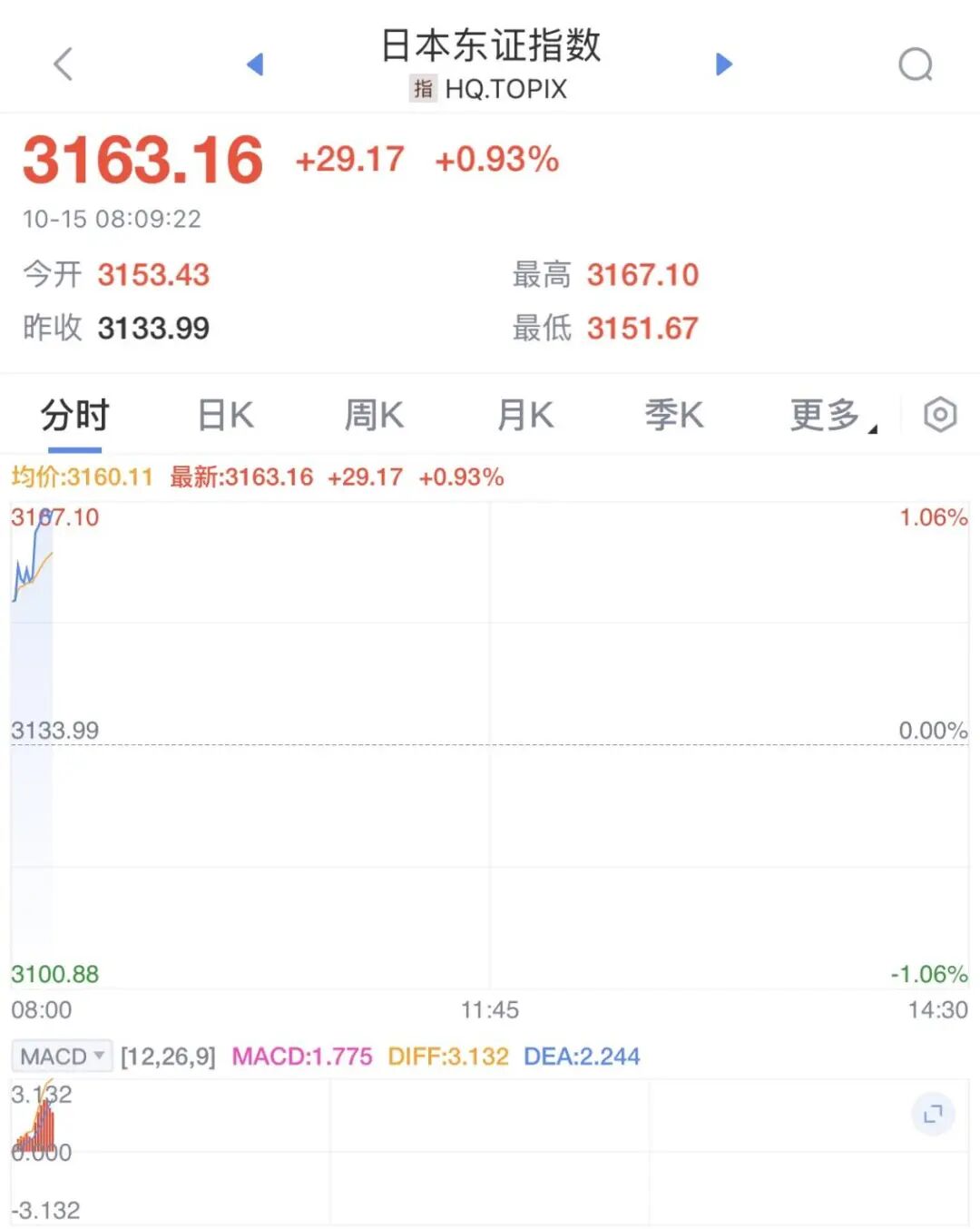
Group 1 - Japanese stock market opened high with the Tokyo Stock Exchange index rising over 1% [1][2] - Key stocks such as Aeon, Mazda, and Konami Group showed significant gains [1][3] - The current economic situation differs from the Abe administration, with inflation being the primary concern rather than deflation [4] Group 2 - The Japanese Finance Minister, Kato Katsunobu, noted a recent weakening of the yen and emphasized the importance of stable exchange rates reflecting fundamentals [4] - The South Korean Composite Index also rose over 1%, reaching 3604.85 points, driven by positive market sentiment regarding U.S.-Korea relations [4] - U.S. Treasury Secretary confirmed a planned meeting with Asian leaders in South Korea, which is expected to ease global trade tensions [4]

新华财经晚报:国家发展改革委下达今年第四批690亿元超长期特别国债支持消费品以旧换新资金
Xin Hua Cai Jing· 2025-09-30 13:35
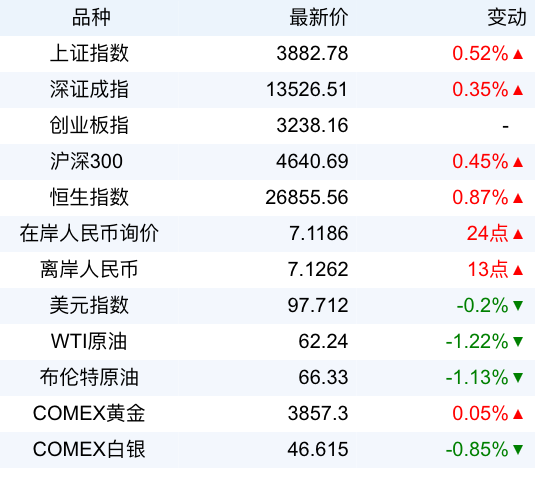
Domestic News - The National Development and Reform Commission has allocated 69 billion yuan in special long-term bonds to support the consumption of old goods for new ones, completing the annual allocation of 300 billion yuan in central funds [1] - The Ministry of Finance and the Ministry of Commerce have issued a notice to support pilot projects for new consumption formats, encouraging collaboration between quality consumer resources and well-known IPs [2] - The National Financial Supervision Administration has released guidelines for the high-quality development of health insurance, focusing on enhancing sustainability and regulatory oversight [2] Economic Indicators - In the first eight months of 2025, the software industry reported a revenue of 96,409 billion yuan, a year-on-year increase of 12.6%, with total profits reaching 13,186 billion yuan, up 13.0% [3] - The manufacturing Purchasing Managers' Index (PMI) for September was recorded at 49.8%, an increase of 0.4 percentage points from the previous month, indicating continued improvement in manufacturing activity [3] Market Overview - The Shanghai Composite Index closed at 3,882.78, up 0.52%, while the Shenzhen Component Index rose by 0.35% to 13,526.51 [8] - The onshore RMB was quoted at 7.1186, appreciating by 24 points, while the offshore RMB stood at 7.1262, up by 13 points [8]
美股前瞻 | 三大股指期货齐涨,市场聚焦今晚鲍威尔讲话
智通财经网· 2025-09-23 12:32
Market Overview - US stock index futures are all up, with Dow futures rising by 0.16%, S&P 500 futures up by 0.01%, and Nasdaq futures also up by 0.01% [1] - European indices show positive movement, with Germany's DAX up by 0.34%, UK's FTSE 100 up by 0.16%, France's CAC 40 up by 0.87%, and the Euro Stoxx 50 up by 0.63% [2][3] - WTI crude oil increased by 1.11% to $62.97 per barrel, while Brent crude oil rose by 0.89% to $67.16 per barrel [3][4] Federal Reserve and Bond Market - US Treasury bonds are on track for their first increase in five trading days, with traders anticipating signals of potential rate cuts from upcoming speeches by Federal Reserve officials [5] - The 10-year Treasury yield has decreased by 2 basis points to 4.13%, reflecting market uncertainty regarding future Fed policy [5] Investment Trends - Investors are significantly shifting towards US municipal bonds, with inflows reaching the highest level since 2007, while US stock funds saw outflows of approximately $20 billion [7] - Goldman Sachs has raised its year-end target for the S&P 500 index from 6,600 to 6,800 points, citing a more dovish Fed stance and resilient corporate earnings [6] Company News - Orsted is set to resume construction on its offshore wind project after a federal judge halted a previous shutdown order [8] - Micron Technology is expected to report strong earnings, with analysts raising their price targets significantly ahead of its quarterly report [9] - UBS has settled a long-standing tax evasion case in France for €8.35 billion, significantly lower than the initial fine of €4.5 billion [10] - Boeing is in the final stages of negotiations for a large order from China, potentially involving up to 500 aircraft [11] - Oracle has appointed dual CEOs to accelerate leadership transition amid strong growth in its cloud business [12] - Apple’s stock has rebounded significantly, driven by strong demand for the new iPhone series, prompting analysts to raise their price targets [13] - Nvidia reassured clients that its $100 billion deal with OpenAI will not affect its relationships with other customers [14]


