
运输设备制造

Search documents
中集集团9月16日斥资187.24万港元回购23.58万股
Zhi Tong Cai Jing· 2025-09-16 09:22
Core Viewpoint - CIMC Group (000039)(02039) announced a share buyback plan, indicating confidence in its stock value and future prospects [1] Summary by Categories Company Actions - The company will repurchase 235,800 shares at a total cost of HKD 1.8724 million [1] - The buyback price ranges from HKD 7.89 to HKD 8.00 per share [1]

2025年上半年铁路、船舶、航空航天和其他运输设备制造业企业有6470个,同比增长6.85%
Chan Ye Xin Xi Wang· 2025-08-27 03:14
Core Insights - The report indicates that the number of enterprises in the railway, shipbuilding, aerospace, and other transportation equipment manufacturing industries reached 6,470 by the first half of 2025, an increase of 415 enterprises compared to the same period last year, representing a year-on-year growth of 6.85% [1] Industry Overview - The transportation equipment manufacturing sector includes railway, shipbuilding, aerospace, and other related industries, which are classified as large-scale industrial enterprises with annual main business income exceeding 20 million yuan [1] - The proportion of these enterprises in the total industrial enterprises is 1.24% [1] Market Research - The report titled "2025-2031 China Transportation Equipment Industry Market Competition Situation and Development Prospects" was published by Zhiyan Consulting, a leading industry consulting firm in China [2] - Zhiyan Consulting has been engaged in industry research for over a decade, providing in-depth industry reports, business plans, feasibility studies, and customized services [2]


“星链计划”开挂,中集车辆靠差异化反内卷
2 1 Shi Ji Jing Ji Bao Dao· 2025-08-26 12:53
Core Viewpoint - In the first half of 2025, CIMC Vehicles faced mixed results due to a complex global macroeconomic environment and weak demand in the North American market, leading to a revenue decline of 8.85% year-on-year to 9.753 billion yuan and a net profit drop of 28.48% to 403 million yuan [1] Revenue and Profit Performance - Revenue from the North American market decreased by 30.51% to 2.563 billion yuan, impacted by tariff policies and declining end-user demand [1] - Despite the challenges in North America, the company's overall gross margin remained at 15%, supported by strong performance in the Chinese market [2] Starlink Plan and Operational Efficiency - The "Starlink Plan," initiated in early 2023, aims to integrate production resources and enhance market share, sales, and profitability [2] - The plan has led to a 21% increase in overall production and a 20% rise in per capita output, with direct labor and manufacturing costs per semi-trailer decreasing by 15% [3] Growth in Domestic and Global Markets - The sales volume of semi-trailers in China increased by 10%, with revenue rising by 11% and gross margin improving by 2.4 percentage points [1] - The Southern global market, including Thailand, Vietnam, and Australia, saw a 13% increase in sales volume and a 4.6 percentage point rise in gross margin [1] New Initiatives and Future Outlook - The "雄起计划" (Rising Plan) has been integrated into the "唯有星链" (Only Starlink) plan, focusing on the liquid tank vehicle sector, resulting in a 30% year-on-year revenue growth in this area [4] - The company is accelerating the development of pure electric head-trailer products, with plans to launch prototypes for short-distance heavy-load engineering scenarios in 2025 [7]
2025年7月经济数据点评:经济平稳运行还需结构性支持
BOHAI SECURITIES· 2025-08-19 10:14
Economic Data Overview - In July 2025, the industrial added value for large-scale enterprises grew by 5.7% year-on-year, below the expected 6.0% and previous value of 6.8%[1] - The total retail sales of consumer goods increased by 3.7% year-on-year, compared to an expected 4.6% and a prior value of 4.8%[1] - Fixed asset investment showed a cumulative year-on-year growth of 1.6%, lower than the expected 2.7% and previous 2.8%[1] Industrial Production Insights - The industrial production growth rate slowed due to "anti-involution" and extreme weather, aligning with seasonal patterns[2] - The electrical machinery and electronic equipment sectors maintained double-digit growth despite a decline, while the automotive sector saw significant downturns[2] - Service sector production index showed resilience with a year-on-year growth rate of 5.8%, slightly down from June[2] Consumer Trends - The year-on-year growth rate of retail sales declined due to demand front-loading and reduced subsidy impacts, particularly in automotive consumption[3] - Restaurant consumption saw a slight recovery, but overall levels remained low, while travel-related services benefited from summer travel[3] - Future consumption growth is expected to stabilize unless stronger supportive policies are introduced[3] Investment Challenges - Fixed asset investment growth has declined for four consecutive months, with manufacturing investment dropping by 5.4 percentage points to -0.3% year-on-year[4] - Infrastructure investment growth fell by 7.3 percentage points to -2.0% year-on-year, affected by high base effects and adverse weather[4] - Despite current challenges, infrastructure investment is anticipated to rebound in the third quarter with accelerated issuance of special bonds[4] Real Estate Sector Analysis - Real estate investment saw an expanded year-on-year decline of 4.1 percentage points to -17.0%, with both construction and completion phases experiencing downturns[5] - Sales continue to be constrained by demand limitations, despite policy relaxations in major cities[5] - The sector remains in a bottoming phase, with future recovery dependent on effective supply-side policies[5]
Compared to Estimates, Wabtec (WAB) Q2 Earnings: A Look at Key Metrics
ZACKS· 2025-07-24 18:30
Core Insights - Westinghouse Air Brake Technologies (WAB) reported revenue of $2.71 billion for the quarter ended June 2025, reflecting a year-over-year increase of 2.3% [1] - The earnings per share (EPS) for the quarter was $2.27, up from $1.96 in the same quarter last year, indicating a positive trend in profitability [1] - The reported revenue was below the Zacks Consensus Estimate of $2.77 billion by 2.38%, while the EPS exceeded the consensus estimate of $2.18 by 4.13% [1] Financial Performance Metrics - WAB's backlog totaled $21.83 billion, slightly below the two-analyst average estimate of $22.34 billion [4] - The backlog for the Transit Group was $4.69 billion, surpassing the average estimate of $4.42 billion [4] - The backlog for the Freight Group was $17.14 billion, which was lower than the average estimate of $17.92 billion [4] Segment Performance - Sales to external customers in the Transit Segment reached $787 million, exceeding the four-analyst average estimate of $762.91 million, representing a year-over-year increase of 8.7% [4] - Sales to external customers in the Freight Segment were $1.92 billion, falling short of the estimated $2.01 billion, reflecting a slight decline of 0.1% compared to the previous year [4] - Adjusted income from operations in the Freight Segment was $480 million, compared to the average estimate of $487.43 million, while the Transit Segment reported an adjusted income of $120 million, exceeding the estimate of $104.42 million [4] Stock Performance - WAB's shares have returned +5.2% over the past month, slightly underperforming the Zacks S&P 500 composite's +5.7% change [3] - The stock currently holds a Zacks Rank 2 (Buy), suggesting potential for outperformance in the near term [3]

我国5辆车年赚300亿,德国技术垄断被打破,只租不卖,卡西方脖子
Sou Hu Cai Jing· 2025-07-19 00:20
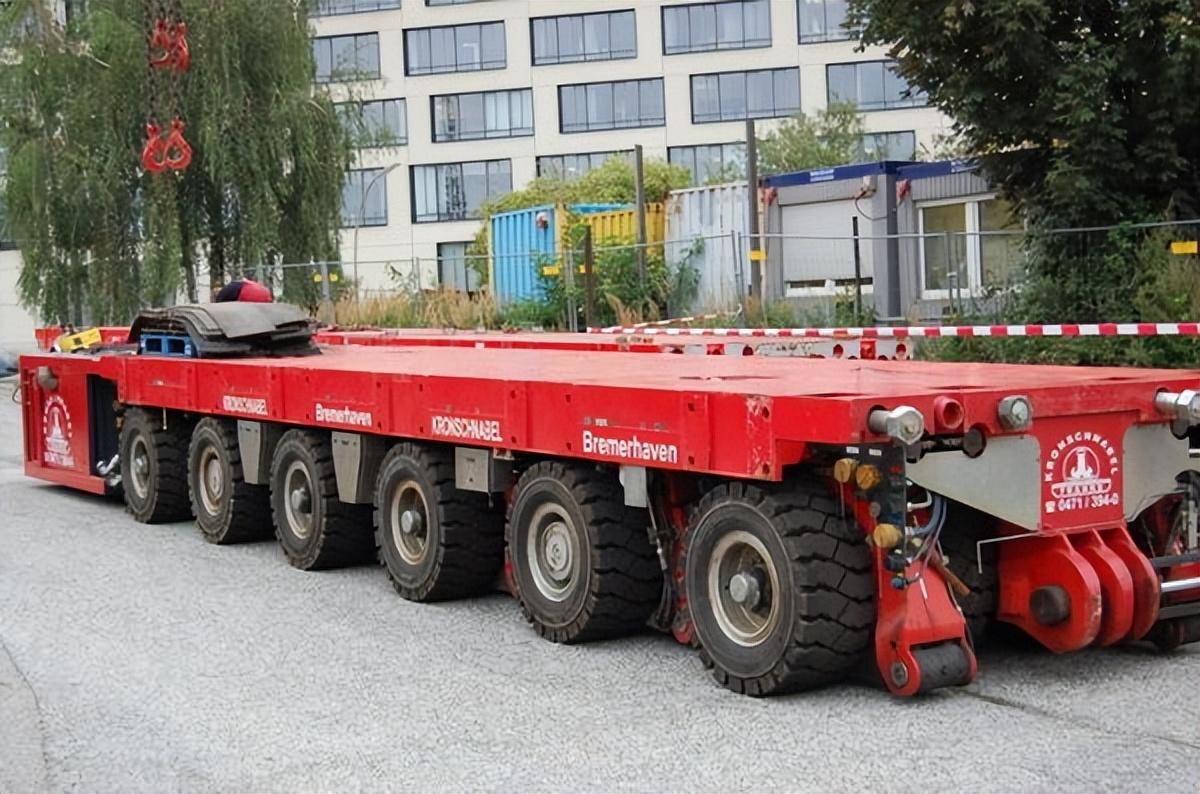
Core Viewpoint - China's self-developed SPMT (Self-Propelled Modular Transporter) has achieved a leading position in the heavy transport sector, showcasing advanced engineering capabilities and generating significant rental income for the country [2][11]. Development Journey - The SPMT development program was officially launched in 2007, starting from scratch without any reference designs, data, or experience [4]. - The first SPMT with a Chinese label was produced in 2009, marking a significant milestone in China's heavy transport capabilities [7]. - The second generation of SPMT was introduced in 2014, featuring a modular design and intelligent computer systems, enhancing its operational flexibility [6]. Technological Advancements - The third generation of SPMT was unveiled in 2019, integrating the BeiDou satellite navigation system, enabling features like unmanned driving, obstacle avoidance, and intelligent path planning [9]. - The current SPMT can reach a maximum load capacity of 50,000 tons, with a vehicle length exceeding 100 meters and 1,152 wheels, each capable of supporting 30 tons [9]. Strategic Positioning - China has adopted a "rent, not sell" strategy for its SPMT technology, reflecting a commitment to maintaining control over core technologies [9]. - The SPMT has demonstrated its practical value in various projects, significantly reducing labor costs and time for complex tasks [9]. Future Prospects - The development of the fourth generation of SPMT, which will incorporate AI technology, is already underway, indicating ongoing innovation in this sector [9].
2025年5月经济数据点评:“两重””两新”持续发力,经济呈现较强韧性
Chengtong Securities· 2025-06-17 08:41
Group 1: Economic Resilience - In May, industrial production year-on-year growth decreased from 6.1% to 5.8%, maintaining a high growth rate, with a month-on-month growth of 0.61%[1] - Government bond net financing reached 6.3 trillion yuan in the first five months, an increase of 3.8 trillion yuan year-on-year[1] - M2 and social financing balances maintained year-on-year growth rates of 7.9% and 8.7%, respectively, indicating strong monetary support[1] Group 2: Investment Trends - Total infrastructure investment year-on-year growth decreased from 10.9% to 10.4%, still above the 2024 annual rate of 9.2%[2] - Manufacturing investment year-on-year growth was 8.5%, slightly down by 0.3 percentage points from the previous month, but still at a high level[2] - Public utility investment, including electricity, grew by 25.4% year-on-year, while water conservancy investment increased by 7.2%[2] Group 3: Real Estate Market - Real estate investment fell by 10.7% year-on-year, with the decline expanding by 0.4 percentage points compared to the previous month[2] - The area of newly started construction decreased by 22.8% year-on-year, indicating significant contraction in the sector[2] - The price index for second-hand homes in 70 large and medium-sized cities fell by 0.5% month-on-month, with the decline widening compared to the previous month[2] Group 4: Consumer Spending - In May, retail sales of consumer goods grew by 6.4% year-on-year, exceeding the market expectation of 4.9%[3] - The "trade-in" policy significantly boosted consumption, with home appliance and audio-visual equipment sales increasing by 53% year-on-year[3] - Social financing increased by 2.29 trillion yuan, surpassing the expected 2.05 trillion yuan, indicating robust financial support for the economy[3]
上海,一季度成绩单出炉
Zheng Quan Shi Bao· 2025-04-23 14:10
Group 1 - Shanghai's GDP reached 1.27 trillion yuan in Q1, with a year-on-year growth of 5.1% [1] - The information transmission, software, and IT services sector contributed over 60% to the city's GDP growth, with a value added of 172.61 billion yuan, growing 13.0% year-on-year [1] - The financial sector added 218.33 billion yuan, with a year-on-year growth of 9.4%, contributing 4.3 percentage points above the overall GDP growth rate [1] Group 2 - Shanghai's industrial production accelerated, with an industrial value added growth of 3.6% and total industrial output growth of 3.5%, an increase of 2.8 percentage points compared to the previous year [1] - Key industries such as computer, communication, and electronic equipment manufacturing saw a production value increase of 23.3%, while transportation equipment manufacturing grew by 22.6% [1] - The three leading industries—artificial intelligence, biomedicine, and integrated circuits—saw a manufacturing output growth of 7.2%, outpacing the overall industrial output growth by 3.7 percentage points [2] Group 3 - The artificial intelligence manufacturing sector grew by 13.2%, integrated circuits by 8.9%, and biomedicine by 2.8% [2] - New industrial products showed rapid growth, with industrial robot production increasing by 18.6% and semiconductor storage disk production by 18.4% [2] - Investment in emerging sectors like integrated circuits and biomedicine surged, with electronic information product manufacturing investment up by 37.6% and biomedicine investment by 17.6%, driving overall manufacturing investment growth of 23.4% [2]
