
软件

Search documents
城堡证券:软件股惨遭抛售之际,散户正以“前所未见”速度抄底
Jin Rong Jie· 2026-02-18 17:52
Group 1 - The core viewpoint of the article highlights that Wall Street is rapidly repricing software manufacturer stocks due to threats posed by AI tools, leading to a surge in retail investor buying activity [1] - According to Scott Rubner, head of equity and equity derivatives strategy at Castle Securities, retail traders are purchasing software stocks at record levels, with net nominal value on their platform reaching unprecedented heights since tracking began in 2017 [1] - The scale, persistence, and breadth of buying activity have significantly exceeded previous peaks, indicating that retail investors are becoming a major source of incremental demand as early as 2026 [1] Group 2 - The article notes that a sell-off has affected a wide range of stocks, from small software developers to large wealth management firms, following the launch of a productivity tool tailored for internal legal teams by Anthropic PBC [1]
昨夜,美股突然逆袭上涨,巴菲特又减仓苹果,怎么应对?
Sou Hu Cai Jing· 2026-02-18 11:31
Group 1 - The U.S. stock market experienced a dramatic reversal, with the Nasdaq index initially down by 1.29% and the Dow Jones dropping by 330 points before recovering, closing with the Dow up and the Nasdaq gaining 0.14% [1] - Goldman Sachs' research report indicated that while artificial intelligence has some negative impacts on businesses, Wall Street analysts have raised earnings expectations for the software industry, which helped ease market sentiment [1] - Comments from Federal Reserve officials, such as the San Francisco Fed President suggesting there is about 75 basis points of room for rate cuts before reaching neutral rates, contributed to the market's recovery [1] Group 2 - The U.S. stock market has shown limited upward movement over the past three months, remaining in a high-level consolidation phase due to stagnation in innovation from large tech companies [2] - The previous bull market was driven by tech companies launching disruptive products, but the current lack of exciting developments has led to a cautious outlook on the market [2] - There is a belief that if large tech companies do not achieve breakthroughs in innovation, there could be a risk of a temporary burst of the tech bubble, suggesting a watchful approach to investing in U.S. stocks [2] Group 3 - Berkshire Hathaway significantly reduced its holdings in Amazon and has been cutting back on Apple for three consecutive quarters, although the reduction in Apple's holding percentage is minimal [4] - The reduction in Berkshire's stake in U.S. Bank was substantial, decreasing from 1.03 billion shares to 517 million shares, representing a 50% cut [4] - Despite the reduction in holdings, Apple remains the largest position in Berkshire's portfolio, indicating its continued importance [5] Group 4 - Investment strategies of notable investors like Warren Buffett and Duan Yongping differ significantly from those of ordinary investors, making it challenging for retail investors to replicate their actions [5] - Duan Yongping has made a significant bet on AI, increasing his stake in Nvidia by 6.6393 million shares, making it the third-largest position in his portfolio [5] - There is a perception that A-shares in China's tech sector may offer more potential and growth compared to U.S. tech stocks, reflecting a shift in focus towards Chinese technology innovation [5]

摩根大通交易台:“先卖再问”的美股AI抛售潮即将结束,抄底软件股的时候到了
Hua Er Jie Jian Wen· 2026-02-18 03:42
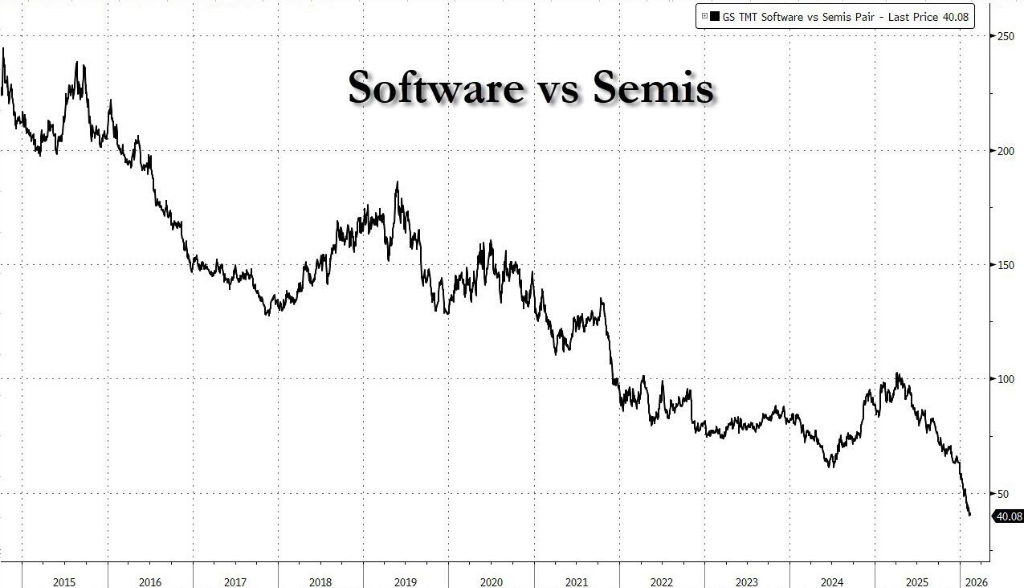
Group 1 - The core narrative in the recent U.S. stock market revolves around the "AI replacement risk," leading to significant volatility in financial and industrial sectors, with a massive influx of capital into semiconductors and indiscriminate selling of software stocks [1] - JPMorgan's trading desk reports that extreme market sentiment regarding AI replacement is nearing its end, suggesting a buying opportunity for undervalued software stocks and assets immune to AI disruption [1][8] - The semiconductor sector shows a high position concentration at +4 standard deviations, while the software sector is at a low of -3.5 standard deviations, marking a historical extreme in position differences [1] Group 2 - In the software industry, the negative narrative is difficult to disprove, as companies struggle to demonstrate that AI will not disrupt them in the coming years. Analysts recommend a "barbell strategy" to invest in top software companies with strong free cash flow while avoiding overvalued stocks [3] - The wealth management and life sciences sectors are experiencing profit expansion despite recent stock declines. Analysts believe that AI will enhance profit margins in wealth management rather than replace client relationships [4] - The logistics sector is facing significant fear due to AI advancements, particularly after a competitor's announcement of an AI platform that dramatically increases freight scheduling efficiency, leading to a 25% drop in CHRW's stock [5] Group 3 - In Japan's IT services market, the reliance on system integrators and a talent shortage means that AI is unlikely to replace outsourcing in the short term, instead serving to alleviate talent shortages and enhance profit margins for system integrators [6][7] - JPMorgan's trading team suggests a strategy to go long on a basket of severely mispriced stocks that are immune to AI disruption, indicating a potential bottoming opportunity for large tech stocks [8]
美股反弹,苹果涨超3%
Di Yi Cai Jing Zi Xun· 2026-02-18 01:02
Group 1 - The core viewpoint of the article highlights that the U.S. stock market is currently facing a situation where the fundamentals are strong, but the technical indicators are weak, leading to a lack of upward momentum in major indices like the S&P 500, which has been unable to break through the 7000-point level despite positive economic data [3][8] - The technology sector has seen a decline of 6% in the S&P 500 this year, contrasting with gains in other sectors such as energy (+21%), materials (+16%), and consumer staples (+16%), indicating a shift in investor focus towards more reasonably valued sectors [5][9] - Concerns over excessive capital expenditures in AI by major tech companies, with commitments exceeding $500 billion by 2026 from firms like Google, Amazon, and Meta, are causing market anxiety and leading to sell-offs in tech stocks [3][5][6] Group 2 - Amazon's recent earnings report revealed a significant drop in free cash flow by 71%, which, combined with a projected capital expenditure of up to $200 billion for AI infrastructure, has led to a post-earnings stock price drop of over 11% [6][5] - The market is increasingly focused on the sustainability of profits rather than short-term earnings, as evidenced by the software sector's decline of approximately 24% over the past three months, despite a 5% increase in profit forecasts for the next two years [9][8] - The overall capital expenditure for major cloud service providers in the U.S. is projected to reach $660 billion by 2026, significantly impacting investor confidence as this growth is expected to come at the expense of share buybacks, which have already seen a 7% year-over-year decline in the S&P 500 [9][10]

巴菲特的最后一手棋
Shang Hai Zheng Quan Bao· 2026-02-18 01:01
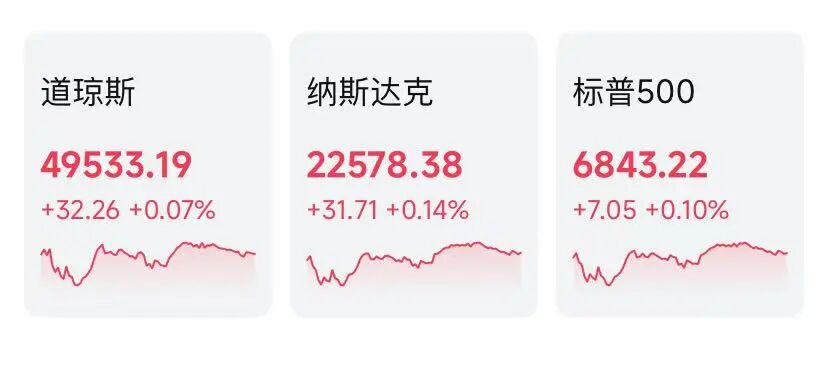
Market Overview - On February 17, US stocks experienced volatility under the backdrop of "AI narrative divergence," with the S&P 500 index briefly falling nearly 1% before closing up 0.1% [1] - The software sector remains under pressure, with the iShares expanded technology software industry ETF down 23.23% year-to-date, as investors worry that AI may disrupt existing software business models [1][5] - Major tech companies like Microsoft and Meta face scrutiny over high capital expenditures, yet the market still recognizes their leading positions in AI infrastructure development [1] Berkshire Hathaway's 13F Filing - Berkshire Hathaway disclosed its latest 13F filing to the SEC, showing continued adjustments in its tech holdings during Warren Buffett's final quarter as CEO [1][7] - Berkshire reduced its stake in Apple by over 10.29 million shares, a 4.32% decrease from the previous quarter, resulting in a market value reduction of approximately $2.8 billion [7][8] - This marks the third consecutive quarter of Apple share reductions, although it remains Berkshire's largest holding [7] Other Holdings Adjustments - Berkshire also sold nearly 50.8 million shares of Bank of America, reducing its stake by 8.94%, with the holding now accounting for 10.38% of its portfolio [7][8] - Amazon's share in Berkshire's portfolio dropped significantly from 0.82% to 0.19%, a decrease of over 77.2% in share quantity [8] - The only new position taken by Berkshire in the fourth quarter was in The New York Times, acquiring 5.0657 million shares valued at over $350 million [10] Sector Performance - The Dow Jones Industrial Average rose 0.07% to 49,533.19 points, while the S&P 500 and Nasdaq increased by 0.1% and 0.14%, respectively [3] - Apple shares rose over 3%, and Nike increased by more than 2%, leading the Dow [5] - The semiconductor sector showed mixed results, with the Philadelphia Semiconductor Index down 0.02% [5] Economic Data - ADP Research reported that the average weekly new job additions in the US increased to 10,250, marking the third consecutive week of growth [5]





美股反弹,苹果涨超3%,标普500始终难上7000点,美股开始还“AI债”?
Di Yi Cai Jing· 2026-02-18 00:16
Core Viewpoint - The U.S. stock market is currently facing a dilemma characterized by "good fundamentals but poor technicals," with concerns over technology stocks and their capital expenditures in AI [3]. Group 1: Market Performance - After a significant drop last week, the U.S. stock market stabilized on the first trading day post-long weekend, with the S&P 500 closing at 6843.22 points, up 0.10% [2]. - The S&P 500 technology sector has declined by 6% this year, while sectors like energy, materials, and consumer staples have seen gains of 21%, 16%, and 16% respectively [5]. - The S&P 500 index has been unable to break the 7000-point barrier, reflecting ongoing concerns from institutional investors regarding technology stocks [8]. Group 2: Technology Sector Concerns - Major technology companies, including Google, Amazon, and Meta, have committed to spending over $500 billion on AI by 2026, raising investor concerns about the sustainability of such capital expenditures [3][5]. - Amazon's recent earnings report showed a significant drop in free cash flow by 71%, leading to a post-earnings stock drop of over 11% due to fears surrounding its high capital spending plans [6]. - Meta's financing strategy, involving a $27 billion private debt issuance for data center construction, has raised alarms about potential risks if the AI bubble bursts [6][7]. Group 3: Investor Sentiment and Future Outlook - Institutional investors have been selling off technology stocks, while retail investors are buying the dips, indicating a divergence in market sentiment [8]. - Despite the current market volatility, the overall earnings performance of the S&P 500 remains strong, with approximately 75% of companies reporting earnings growth of about 12% year-over-year [8][10]. - Concerns about the sustainability of profits and the impact of AI on traditional industries are leading to a compression in valuations, even as earnings forecasts for the next two years remain positive [9].



深夜,英伟达、苹果强势上涨
财联社· 2026-02-17 23:40
Market Overview - On February 17, US stocks opened lower but closed higher, with all three major indices posting slight gains. The Dow Jones increased by 0.07% to 49,533.19 points, the S&P 500 rose by 0.1% to 6,843.22 points, and the Nasdaq Composite gained 0.14% to 22,578.38 points [1][2]. Sector Performance - Among the eleven sectors of the S&P 500, four sectors rose while seven declined. The real estate and financial sectors led the gains, while the energy and consumer staples sectors lagged. Concerns over AI tools potentially replacing certain software companies contributed to market volatility [3][4]. Technology Sector Insights - Software stocks faced pressure, with notable declines in AppLovin (-3.66%), ServiceTitan (-2.86%), and Datadog (-2.11%). The iShares Expanded Tech-Software Sector ETF (IGV) fell by 2.19%, marking a year-to-date decline of 23.23% [3][4]. - Analysts suggest that the current market narrative is disconnected from solid mid-term fundamentals, with companies needing to demonstrate long-term business moats during earnings season [4]. Notable Stock Movements - Major tech stocks showed mixed performance: Nvidia rose by 1.2%, Apple by 3.17%, while Google and Microsoft fell by over 1%. Amazon ended a nine-day losing streak with a gain of 1.19% [4][5]. Company News - Nvidia and Meta Platforms announced a multi-year strategic partnership, with Meta set to deploy millions of Nvidia chips, marking a significant collaboration in AI infrastructure [7]. - Apple is accelerating the development of three new wearable devices, including smart glasses and an AI-enabled pendant, as part of its strategy to transition towards AI-driven hardware [8]. - Berkshire Hathaway reduced its stake in Apple by 4.3%, now holding 227.9 million shares, while increasing its holdings in Chevron [9]. - Strategy announced the purchase of 2,486 bitcoins for approximately $168.4 million, bringing its total holdings to 717,131 bitcoins [10]. - Palo Alto Networks reported Q2 revenue of $2.6 billion, exceeding analyst expectations, and raised its full-year revenue guidance to $11.28-11.31 billion [11]. - CNDS reported Q4 revenue of $1.44 billion, slightly above market expectations, and provided future revenue and EPS guidance that met analyst forecasts [12].


华尔街见闻早餐FM-Radio | 2026年2月18日
Hua Er Jie Jian Wen· 2026-02-17 23:39
Market Overview - Concerns about AI persist, leading to significant fluctuations in the US stock market, with the S&P 500 dropping nearly 1% intraday before closing up 0.1% [2] - The software stock ETF fell by 2.2%, while Apple rose over 3% and Oracle dropped more than 3.8% [2] - US Treasury yields saw a slight increase, with the 10-year yield rising by 1 basis point and the 2-year yield up over 3 basis points [2] - The dollar exhibited a "V" shaped movement, rising nearly 0.5% intraday, while the British pound dropped about 1% due to a five-year high unemployment rate in the UK [2] - Gold prices fell 2.2%, dropping below $4900 per ounce, and COMEX silver futures declined over 5.7% [2] Key News - Apple is accelerating the development of three new wearable devices: AI glasses, a pendant, and a camera version of AirPods, with plans to integrate them with Siri [5] - Meta is increasing its investment in Nvidia, planning to deploy millions of chips over the coming years and will use Nvidia's Grace CPU for the first time [15] - Berkshire Hathaway has reduced its holdings in Apple and Bank of America while initiating a position in The New York Times [15] - Hillhouse Capital has increased its positions in Pinduoduo and Alibaba while reducing holdings in Baidu and Webull, indicating a more concentrated portfolio [16] International Developments - Iran's foreign minister announced an agreement on "guiding principles" for negotiations with the US, leading to a nearly 3% drop in Brent crude oil prices [13] - Former President Trump announced a $550 billion investment in Japan, focusing on oil, power generation, and critical minerals [13] - Anthropic has released the Sonnet 4.6 model, which operates computers nearly as well as flagship models but is priced at only one-fifth of the cost [14] - BHP reported a nearly 30% increase in profits, with copper business surpassing iron ore as the largest profit source for the first time [21]

深夜惊魂,美股深V大逆转
Zhong Guo Ji Jin Bao· 2026-02-17 23:32
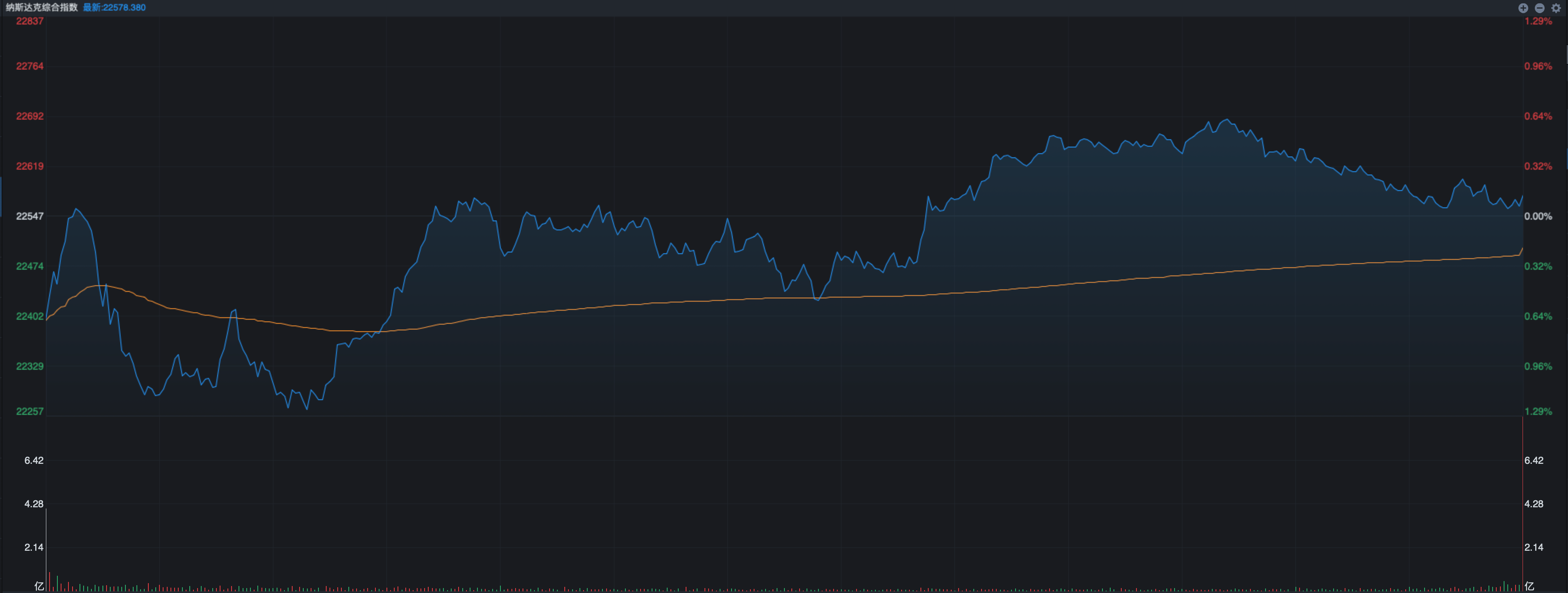
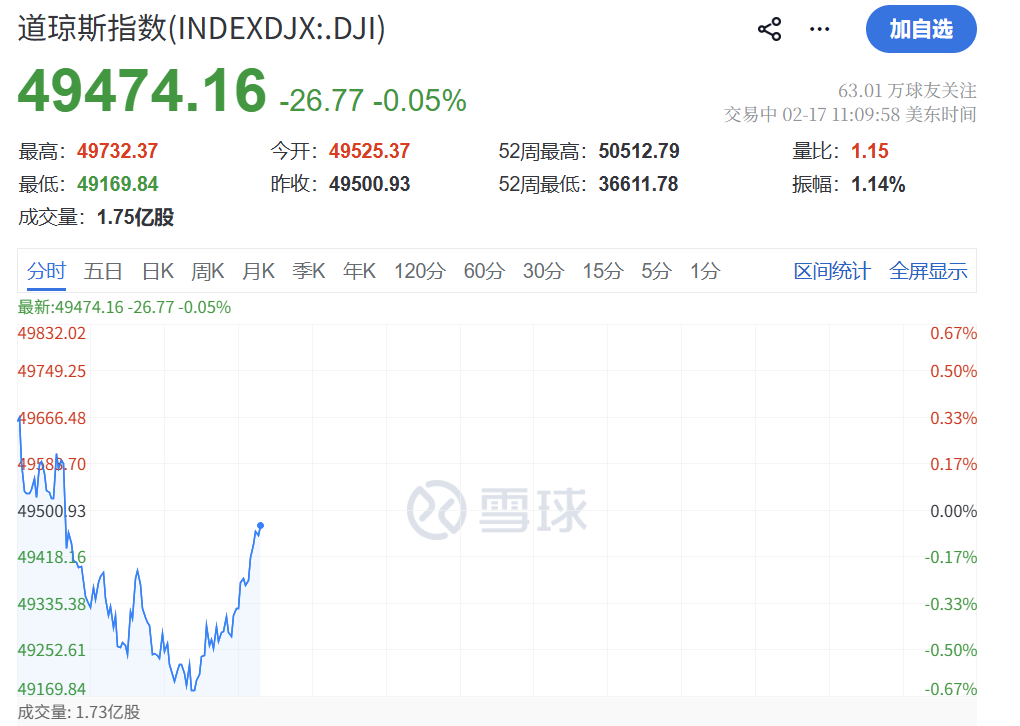
【导读】深V走势 中国基金报记者 泰勒 大家好啊,今晚不平静呀,泰勒稿子一度重写。一起看看发生了什么事情。 美股深"V" 2月17日晚间,美股盘初,科技巨头的抛售一度令股市承压。近期,对人工智能前景的持续焦虑不仅重创了科技板块,还波及了多个行业的数十 家公司。比特币延续了2月份的跌势,黄金价格也录得下跌。 其中,道指跌一度超300点,纳指一度跌超1.2%。截至发稿,跌幅有所收窄,美股上演深"V"走势。 | 最高: 22559.71 | 今开: 22394.76 | 52周最高: 24019.99 | 量比:1.33 | | --- | --- | --- | --- | | 最低: 22256.76 | 昨收:22546.67 | 52周最低: 14784.03 | 振幅: 1.34 | | 出六旦、20 10/70 | | | | | | 分时 五日 日K 周K 月K 季K 年K 120分 60分 30分 15分 5分 1分 | 区间统计 全屏显示 | | | --- | --- | --- | --- | | 最新:22517.61 -29.06 -0.13% | | | | | 22836.58 | | ...
凌晨,大反转!美联储,突传重磅!
Xin Lang Cai Jing· 2026-02-17 23:29
美股上演大逆转。 隔夜美股市场,三大指数盘初全线跳水,纳指一度大跌超1%,随后集体拉升、翻红,大型科技股涨跌 不一,苹果大涨超3%。高盛在最新的报告中指出,尽管市场担忧人工智能(AI)带来的颠覆性影响, 但华尔街分析师仍在提高对软件行业的收益预期,缓解了市场对AI冲击的担忧情绪。 与此同时,美联储官员们的最新讲话也备受市场关注。北京时间2月18日凌晨,美国旧金山联储主席玛 丽·戴利(Mary Daly)表示,达到中性利率之前,美联储大约还有75个基点的降息空间;美联储理事迈 克尔·巴尔(Michael Barr)表示,前景暗示美联储将在一段时间内维持利率不变;美国芝加哥联储主席 古尔斯比(Goolsbee)则表示,如果通胀率持续下降,未来美联储仍有多次降息的空间。 美股大逆转 美东时间2月17日,巴尔表示,在看到更多证据证明通胀正朝着2%目标回落之前,利率应在"一段时间 内"维持不变。 据美联储官网发布的讲话稿,巴尔认为,基于当前形势和现有数据,美联储在评估即将公布的数据、经 济前景变化以及风险平衡之际,未来一段时间维持利率稳定可能是合适的做法。 美东时间2月17日,美股市场上演大逆转,道指盘初一度跌超300 ...