即时零售

Search documents
十六位美团骑手受邀观礼阅兵,美团员工代表参加受阅方队
Jing Ji Guan Cha Wang· 2025-09-03 13:11
Group 1 - The event commemorating the 80th anniversary of the victory in the Chinese People's Anti-Japanese War and the World Anti-Fascist War was held at Tiananmen Square, Beijing, with participation from Meituan riders and employees [2] - Meituan riders, including veterans and community service participants, were recognized for their contributions both in their daily work and in emergency situations [4][5] - The initiative "Beautiful Chaoyang Knights" was launched in 2019, promoting community service and responsible riding among Meituan riders [4] Group 2 - Meituan riders have received support from various sectors, enhancing their ability to create personal and social value through their work [5] - High Feng, a Meituan rider and party branch secretary, emphasizes the importance of community service and the impact of support from society on their work [5][11] - The participation of Meituan employees in the military parade reflects the company's commitment to social responsibility and community engagement [15][17]


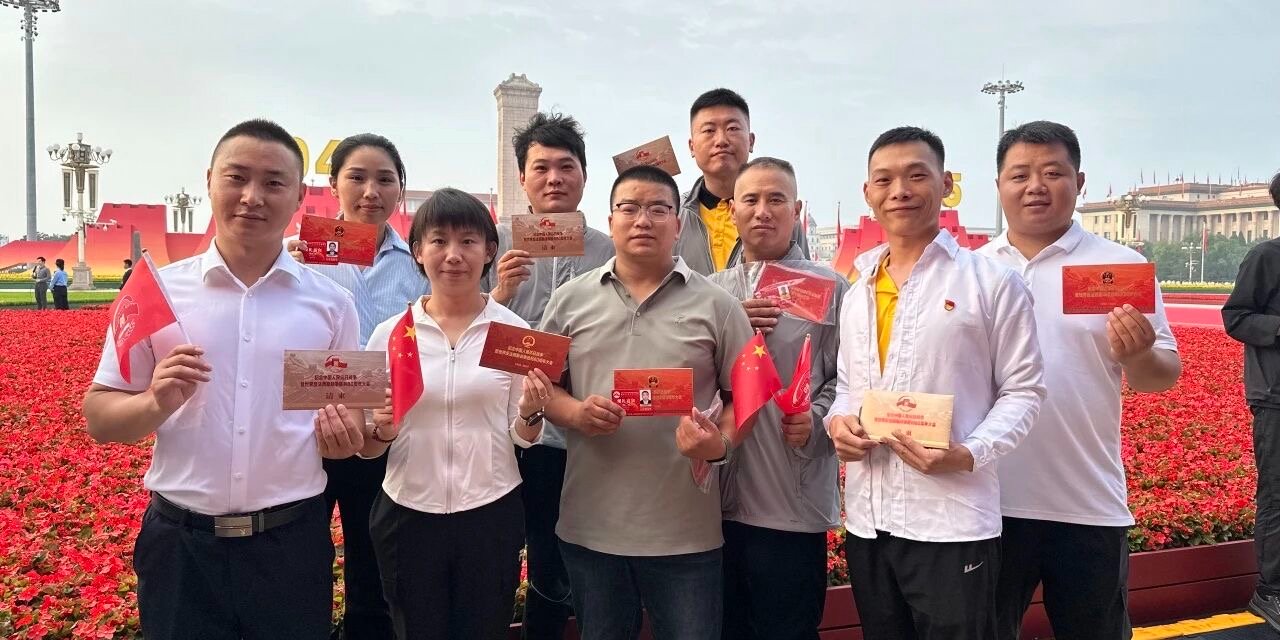
美团:16位骑手受邀观礼阅兵,员工代表参加受阅方队
Xin Jing Bao· 2025-09-03 12:45
Core Viewpoint - The event commemorating the 80th anniversary of the victory in the Chinese People's Anti-Japanese War and the World Anti-Fascist War was held in Beijing, with participation from Meituan riders and employees, highlighting their contributions to society and community service [1][11]. Group 1: Participation and Contributions - Sixteen Meituan riders from various regions attended the ceremony, including veterans and those who have performed heroic acts in emergencies [2]. - Riders like Liu Jian and Chang Kai actively engage in community service, promoting safe riding and environmental initiatives, reflecting a collective commitment to societal contributions [2][3]. - The support from the community has empowered riders to create personal and social value through their work [3]. Group 2: Recognition and Representation - Meituan riders and employees were recognized for their roles, with some participating in the military parade, symbolizing their dedication and service [11][12]. - Employees like Fan Na, who has previously participated in national events, represent the spirit of Meituan and its commitment to serving customers [11]. - CEO Wang Xing shared his experiences from the event, emphasizing the significance of the moment for the company and its employees [11].
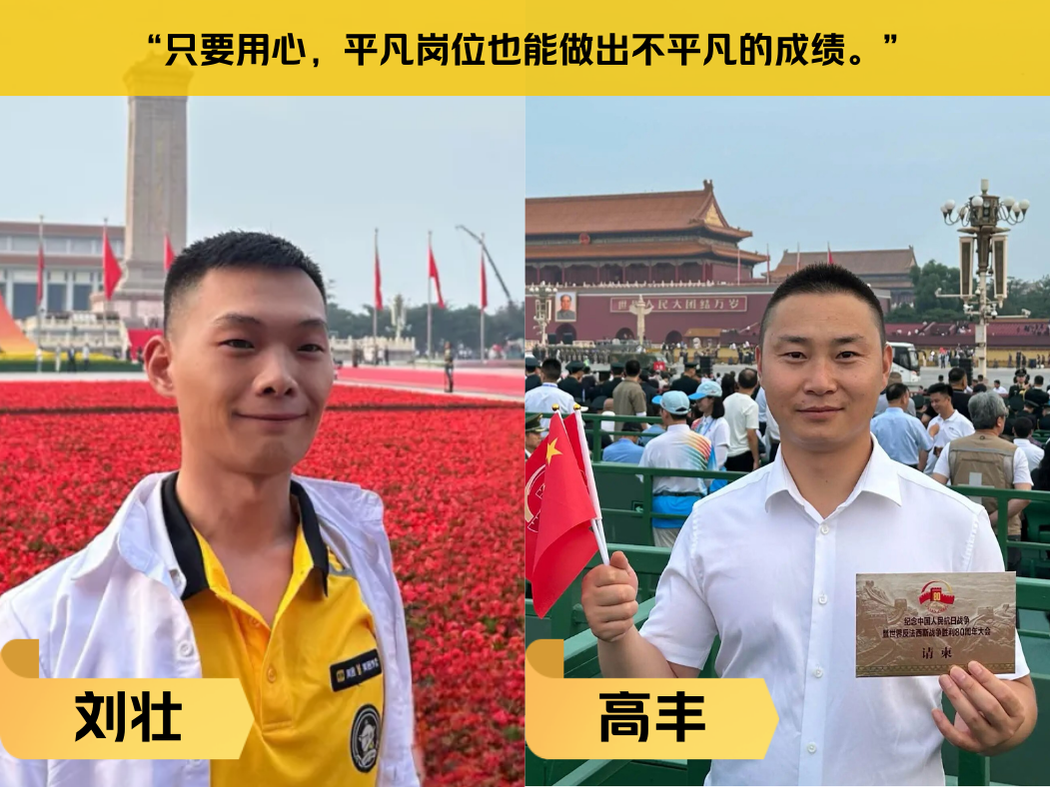
十六位美团骑手受邀观礼阅兵,美团员工代表参加受阅方队
经济观察报· 2025-09-03 12:15
Core Viewpoint - The article highlights the participation of Meituan riders and employees in the commemoration of the 80th anniversary of the victory in the Chinese People's Anti-Japanese War and the World Anti-Fascist War, showcasing their contributions to society and the community [1][9]. Group 1: Contributions of Meituan Riders - Meituan riders, including veterans and community service advocates, were invited to witness the commemorative event, emphasizing their role as service providers and community contributors [1]. - Liu Jian, a rider known for his heroic actions during a traffic accident, exemplifies the spirit of community service among riders, encouraging others to contribute positively to society [3]. - The "Beautiful Chaoyang Knight" project initiated in 2019 has fostered a culture of community service among riders, promoting adherence to traffic regulations and environmental governance [3]. Group 2: Personal Stories and Impact - Rider Lian Shuangpeng's story illustrates the personal sacrifices made by riders, as he raised funds for his son's medical treatment through his work, highlighting the importance of their roles in family support [4]. - Gao Feng, a rider and party branch secretary, actively engages in community infrastructure checks post-delivery, demonstrating the ongoing commitment of riders to serve the community [3]. Group 3: Employee Participation - Meituan employees, including Fan Na from the customer service department, also participated in the event, representing the company's dedication to service and community involvement [7][9]. - The presence of Meituan's CEO Wang Xing at the event further underscores the company's commitment to recognizing and celebrating the contributions of its employees and riders [9].

谁在流血,谁在偷笑?三大巨头财报揭示即时零售残酷“三国杀”硝烟正浓丨鱼眼·观察
Sou Hu Cai Jing· 2025-09-02 05:45
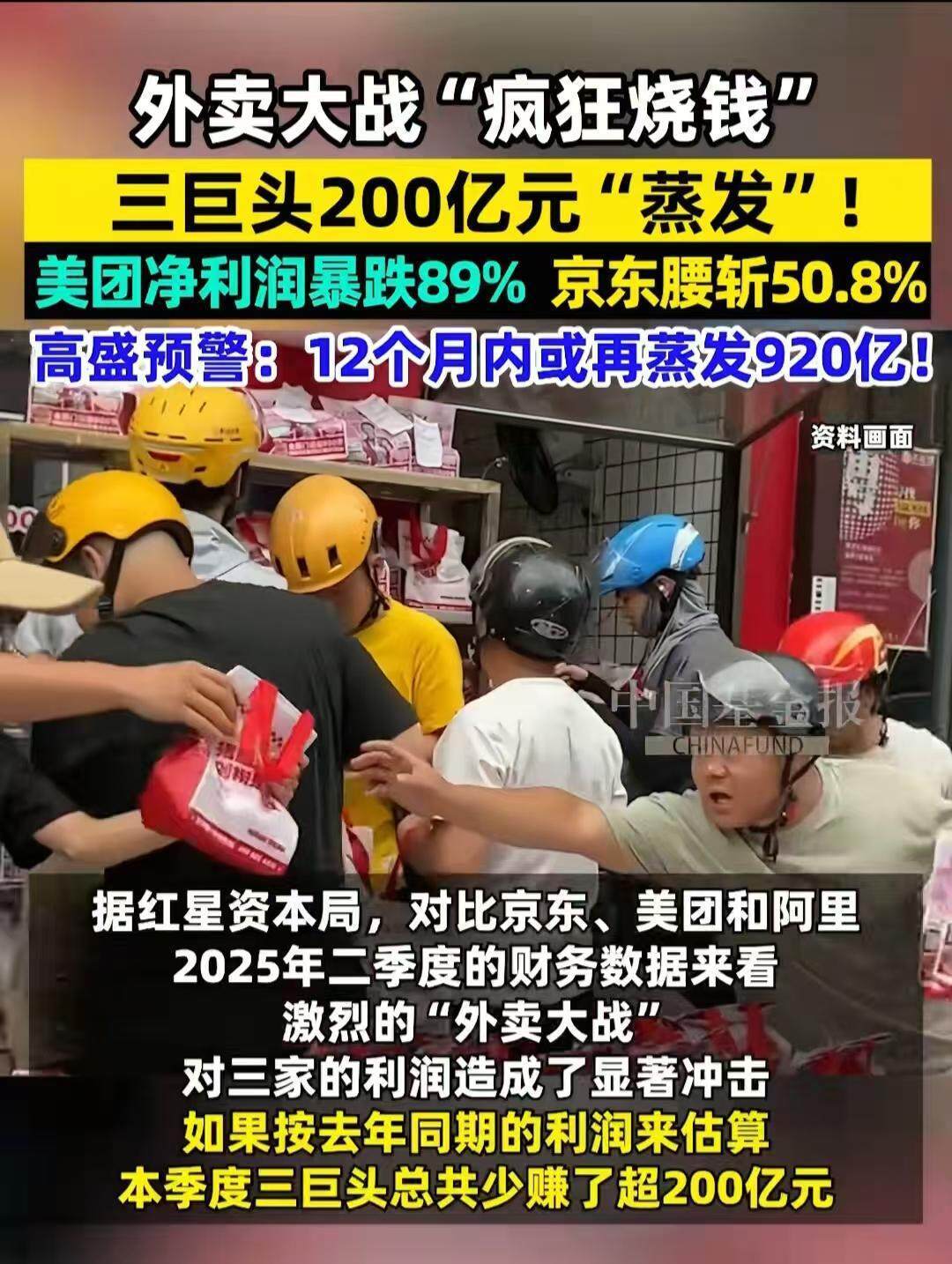
Core Insights - The competitive landscape of instant retail is intensifying, with Meituan, JD.com, and Alibaba engaged in a fierce battle, leading to significant market restructuring [1][2]. Financial Performance - Meituan reported revenue of 91.84 billion yuan, a year-on-year increase of 11.7%, but its operating profit plummeted by 98% to 226 million yuan, with adjusted net profit down 89% to 1.493 billion yuan, far below market expectations [2][4]. - JD.com achieved revenue of 356.7 billion yuan, reflecting a strong year-on-year growth of 22.4%, but its net profit fell by 49% to 7.4 billion yuan [2][5]. - Alibaba's revenue reached 247.6 billion yuan, a 2% year-on-year increase, with net profit of 33.5 billion yuan, down 12% but within expected ranges, leading to a 12.9% surge in its stock price [2][5]. Competitive Strategies - Meituan's aggressive entry into the instant retail sector with the launch of "Meituan Flash Purchase" in April 2023 has intensified competition [4]. - JD.com responded by enhancing its delivery services and committing to full social security payments for delivery personnel, while also accepting significant losses to gain market share [5][7]. - Alibaba initiated a 50 billion yuan subsidy plan to boost its "Taobao Flash Purchase" service, leveraging its vast user base to increase order volumes [5][7]. Market Dynamics - The competition has shifted from price wars to a focus on supply chain efficiency and user experience, with companies needing to integrate local supply chains and improve delivery responsiveness [8]. - The instant retail sector is characterized by low profit margins, with major players struggling to achieve profitability despite significant market shares [8]. - The market is transitioning from growth to a focus on capturing existing market share, as the natural growth of the food delivery sector stabilizes [8]. Future Outlook - Meituan's CEO emphasized the need for rational competition to create value, reflecting on the challenges faced in the current competitive environment [8]. - The ongoing battle will likely require companies to establish a competitive edge through efficiency and user experience rather than relying solely on subsidies [8].


云计算+AI+即时零售三箭齐发,阿里迎来历史新拐点?
美股IPO· 2025-09-01 14:29
Core Viewpoint - Analysts generally believe that Alibaba has entered a period of investment return realization, expecting continuous double-digit revenue growth over the next 12-24 months, with profit growth accelerating as losses in instant retail narrow [1][4]. Group 1: Cloud Computing Business - Alibaba Cloud's revenue reached 33.4 billion RMB in Q1, a year-on-year increase of 26%, significantly exceeding market expectations of 20-25% [5]. - AI-related revenue now accounts for over 20% of external cloud revenue, maintaining triple-digit growth for eight consecutive quarters [5][6]. - The growth is driven by strong demand for AI inference and vertical industry model training, as well as increased penetration of AI in traditional computing and storage services [6][7]. - Management plans to invest 380 billion RMB in AI and cloud infrastructure over the next three years to capture more market share [7]. Group 2: Instant Retail Business - The launch of Taobao Flash Purchase in late April has established a leading position in the competitive market, with monthly active users increasing by 200% to 300 million since April [8]. - Daily average orders peaked at 120 million in August, with a stable weekly average of about 80 million [8]. - Management aims to reduce unit economic losses by half in the short term through improved customer retention and fulfillment efficiency [8]. Group 3: Customer Management Revenue (CMR) - Concerns about a slowdown in CMR growth post-September have been alleviated, with analysts noting that advertising demand has been boosted by the integration of tools and increased traffic from instant retail [9]. - CMR is expected to maintain resilient growth despite high comparative bases, supported by improved monetization rates from the flash purchase business [9][10]. Group 4: Profitability and Valuation - While target prices have been raised, earnings expectations for FY2026 have been lowered due to initial investment costs in the flash purchase business, with HSBC reducing its EPS forecast by 14% [10]. - Analysts believe that short-term profitability pressure is acceptable, as Alibaba has sufficient financial resources for strategic investments [10]. - The valuation recovery potential remains significant as losses in the flash purchase business narrow and cloud business continues to grow [10].

云计算+AI+即时零售三箭齐发,阿里迎来历史新拐点?
Hua Er Jie Jian Wen· 2025-09-01 13:45
Core Viewpoint - Alibaba's recent quarterly report has led major investment banks to express optimism about the company's future, highlighting accelerated growth in cloud services, synergies from flash sales, and sustainable growth prospects in Customer Management Revenue (CMR) [1] Cloud Computing AI Business - Alibaba's cloud computing revenue reached 33.4 billion RMB, a year-on-year increase of 26%, significantly exceeding market expectations of 20-25% [2] - AI-related revenue has maintained triple-digit growth for eight consecutive quarters, now accounting for over 20% of external cloud revenue [2][3] - The growth is driven by strong demand for AI inference and vertical industry model training, as well as increased penetration of AI in traditional computing and storage services [3] Instant Retail Business - The flash sales business launched in late April has shown substantial synergy effects, with monthly active users increasing by 200% to 300 million and daily order volume reaching 80 million [4] - Analysts note that the flash sales business has begun to generate significant synergies, enhancing user engagement and expanding the supply chain [4][5] CMR Growth - Concerns about a potential slowdown in CMR growth have been alleviated, with analysts noting that advertising demand has been boosted by the integration of new tools and increased traffic from flash sales [6] - CMR is expected to maintain resilience despite high comparative bases, with predictions of high single-digit growth in the coming quarters [6] Profitability and Investment Outlook - While target prices have been raised, earnings forecasts for fiscal year 2026 have been lowered due to initial investment costs in the flash sales business, with adjustments of 14% by HSBC and 13% by JPMorgan [7] - Analysts believe that the short-term profitability pressure is justified, as Alibaba has sufficient financial resources for strategic investments [7] - The long-term outlook remains positive, with expectations of sustainable double-digit profit growth driven by cloud and e-commerce business acceleration [7]
即时零售巨头鏖战,抖音旁观?
3 6 Ke· 2025-09-01 08:28
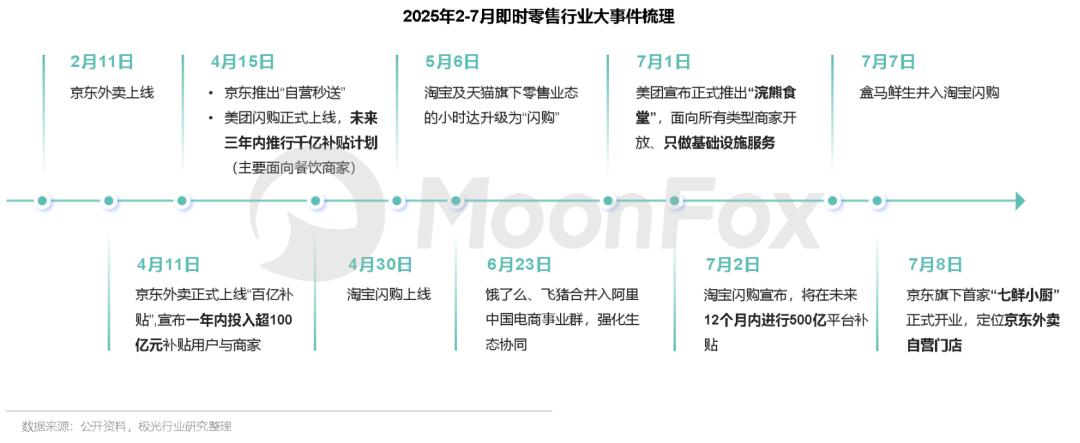
Core Viewpoint - The competition among major players in the instant retail sector, including JD, Alibaba, and Meituan, is intensifying, characterized by aggressive subsidy strategies and a focus on establishing a robust retail infrastructure, while Douyin adopts a more cautious and strategic approach, potentially waiting for the right moment to enter the fray [1][8][12]. Group 1: Instant Retail Market Dynamics - The growth rate of social retail sales has dropped to 3.5% in 2024, while the penetration rate of instant retail has rapidly increased, with GMV growing by 19.5%, three times the growth rate of online retail [1]. - Major platforms are moving beyond simple traffic acquisition to deeper engagement, including building offline infrastructure and enhancing supply chain integration to improve efficiency and reduce costs [7][11]. - The competition has evolved from basic price subsidies to a more complex battle involving supply chain optimization and multi-channel collaboration among platforms [7][12]. Group 2: Major Players' Strategies - Meituan has established a strong ecosystem with 30,000 lightning warehouses, achieving over 150 million daily orders through its "Meituan Flash Purchase" service [4]. - Alibaba has upgraded its "hourly delivery" service to "Taobao Flash Purchase," rapidly increasing daily orders to 80 million through subsidies and strategic placement on the app [4]. - JD focuses on "quality delivery" by leveraging its supply chain and Dada's delivery capabilities, introducing a "second delivery warehouse" model [5]. Group 3: Douyin's Position and Strategy - Douyin has chosen to observe the subsidy war rather than directly participate, indicating a strategic decision based on its strengths and weaknesses [8][11]. - Douyin's instant retail efforts are divided into "hourly delivery" and "next-day delivery," targeting high-demand categories and expanding its service area through partnerships with logistics providers [8][9]. - The platform aims to enhance its logistics capabilities and build a more efficient ecosystem rather than engage in costly subsidy wars, focusing on long-term growth metrics like category penetration and user experience [12][14].


从红蓝黄三大平台竞速看即时零售重构万亿消费生态-申万宏源
Sou Hu Cai Jing· 2025-08-31 17:45
Core Insights - The instant retail industry is transforming the consumption ecosystem with a focus on "30-minute delivery" and comprehensive category coverage, with major players like Meituan, Alibaba (Taobao Flash Purchase), and JD (Seconds Delivery) competing on differentiated strategies. The industry scale is expected to reach 3.8 trillion yuan by 2029, but risks such as subsidy withdrawal and slower-than-expected consumer recovery should be monitored [1][2][3] Industry Overview - Instant retail is characterized by its ability to meet "immediate demand" through a model of "online ordering + offline delivery," distinguishing itself from traditional e-commerce and community e-commerce. The rise of smaller households (17.8% single-person households) and a young consumer base (72% aged 18-35) are driving high-frequency instant consumption, with 66% of consumers willing to pay a premium for convenience [1][2][3] Market Size and Competitive Landscape - The non-food instant retail market is projected to reach 751.5 billion yuan in 2024, growing to 1.6 trillion yuan by 2029 (CAGR of 16%). When combined with the food delivery market (2.2 trillion yuan, CAGR of 7%), the total market size will reach 3.8 trillion yuan. Competition is concentrated among Meituan, Alibaba, and JD, each leveraging their strengths in merchant resources, user engagement, and delivery efficiency [2][3][4] Differentiated Strategies - Meituan focuses on a "flash warehouse + rider network + digital operations" model, aiming for over 30,000 flash warehouses by 2024 and achieving daily orders exceeding 150 million. Alibaba integrates Ele.me's 4 million riders with Taobao's traffic, while JD emphasizes quality delivery with a 40% merchant approval rate and low commission rates to attract quality merchants [2][3][4] Future Trends - The industry is shifting from price competition to a focus on "quality + efficiency," with lower-tier markets becoming new battlegrounds as rural income growth outpaces urban areas. The product range is expanding from food to include electronics and fresh produce. Investment opportunities are seen in companies with supply chain and fulfillment advantages, such as Alibaba, JD, and Meituan [3][4][5] Consumer Behavior - The demand for convenience and the willingness to pay for it are driving the growth of instant retail. The average household size is declining, leading to a shift in consumption patterns towards on-demand purchasing. In 2023, 47% of consumers reported purchasing on demand, and 29% indicated a preference for immediate replenishment [1][2][3][4] Supply Chain and Technology - The growth of instant retail is supported by an increasing number of delivery riders, which reached 0.12 billion in 2023, and advancements in technology such as AI scheduling and unmanned delivery systems. For instance, Meituan's drone deliveries exceeded 450,000 orders in a year, showcasing the efficiency improvements in the sector [1][2][3][4] Investment Recommendations - Companies with strong supply chain capabilities, precise user operations, and efficient instant delivery systems are expected to lead the industry. The market is projected to expand significantly, with major platforms investing heavily to cultivate the market and create a competitive environment that fosters healthy growth [3][4][5]


节日消费助推即时零售火热,美团七夕非餐饮即时零售日订单超2700万单
Sou Hu Cai Jing· 2025-08-31 17:08
Core Insights - On Qixi Festival, Meituan's non-food instant retail order volume reached a record high of 27 million, driven by the "Flash Purchase Gifts" demand [1][4] - The overall gift consumption scale for Meituan's flash purchase also hit a new peak, with significant increases in sales across various categories including flowers, electronics, beauty products, and jewelry [1][4] Group 1: Sales Performance - The sales of flowers on Meituan reached a new high, with significant growth in high-priced categories such as digital products, beauty care, and jewelry [4] - On Qixi Festival, sales of electric shavers and children's smartwatches increased by over 6 times year-on-year, while neck massagers saw a growth of over 3 times [4] - Sales of gold jewelry increased by over 6 times, and pearl jewelry grew by 4 times, indicating a strong demand for premium gifts [4] Group 2: Consumer Behavior - Consumers are shifting from traditional gifts like flowers and chocolates to a more diversified and quality-oriented approach, leading to a dual increase in order volume and average transaction value [4] - The trend of instant retail is becoming an important growth driver for brands and retailers, with over 500 brands experiencing multiple-fold growth in sales on the platform [4]

蒋凡详解淘宝闪购战略,阿里重构万亿大消费生态
格隆汇APP· 2025-08-31 07:57
Core Viewpoint - Alibaba is leveraging its high-frequency business model through Taobao Flash Purchase to solidify its core e-commerce landscape and reconstruct competitive barriers in the ecosystem [3][24]. User Dimension - Taobao Flash Purchase has achieved a peak daily order volume of 120 million and a monthly active user count exceeding 300 million, marking a 200% increase since its launch [2][6]. - The platform has significantly boosted user engagement, with a 25% year-on-year increase in monthly active buyers on the Taobao app, driven by the high-frequency consumption model [6][7]. - The 88VIP membership has surpassed 53 million users, enhancing cross-business member benefits and creating a comprehensive coverage of user needs [7][8]. Supply Dimension - The strategic integration of Taobao, Ele.me, and Fliggy into Alibaba's China E-commerce Group has established a unique "three-dimensional retail network" that combines B2C e-commerce, local retail, and self-operated supply chains [8][9]. - The Flash Purchase model has expanded to over 50,000 "flash warehouses," with a 360% year-on-year increase in order volume, showcasing the efficiency of Alibaba's supply chain integration [9][10]. - The collaboration between self-operated supply chains and instant retail has improved product quality and fulfillment efficiency, with online orders from Hema increasing by 70% after integrating with Flash Purchase [9][10]. Efficiency Dimension - Alibaba is restructuring the cost model of instant retail by optimizing user structure, order structure, cross-business collaboration, and leveraging technology and data capabilities [12][13]. - The transition from new customer subsidies to repeat purchases indicates a significant improvement in user retention, enhancing the platform's marketing efficiency [13][14]. - The integration of various business units has led to a reduction in fulfillment costs and improved operational efficiency, creating a sustainable economic model [15][16]. Strategic Dimension - The anticipated 1 trillion yuan transaction increment from Flash Purchase reflects Alibaba's strategic intent to redefine the relationship between distant and immediate retail, establishing a comprehensive consumption ecosystem [18][24]. - The integration of online and offline shopping experiences is transforming Taobao into a full-spectrum consumption platform, enhancing user engagement and market reach [19][20]. - Alibaba's competitive advantage lies in its ability to create a multi-faceted retail network that combines various business models, making it difficult for competitors to replicate [22][24].