
海运

Search documents
德翔海运(02510):业绩超预期,公司信心充足,未来船队快速扩张
Shenwan Hongyuan Securities· 2025-08-28 07:48
Investment Rating - The report maintains a "Buy" rating for 德翔海运 (02510) [2][8][20] Core Views - The company reported a revenue of USD 641 million for the first half of 2025, representing a year-on-year growth of 18.67%. The net profit attributable to shareholders was USD 189 million, a significant increase of 221.96% year-on-year. This growth is attributed to increased market demand and higher freight rates due to changes in shipping routes [7][8] - The company is expanding its fleet rapidly, with 11 vessels on order, which will enhance its operational capacity significantly. The new vessels are expected to be delivered between 2024 and 2027 [7][8] - The report highlights a favorable market outlook due to limited new ship orders and an aging fleet, which is expected to constrain supply and support freight rates in the medium to long term [7][8] Financial Summary - Revenue projections for 德翔海运 are as follows: - 2023: 875 million - 2024: 1,340 million - 2025E: 1,351 million - 2026E: 1,299 million - 2027E: 1,539 million - Net profit attributable to shareholders is projected to be: - 2023: 21 million - 2024: 366 million - 2025E: 378 million - 2026E: 334 million - 2027E: 449 million - The report maintains profit forecasts for 2025-2027, with net profits expected to be USD 378 million, USD 334 million, and USD 449 million respectively [6][11][7]
韩国现代商船航线重组:丹吉尔升级为北非战略枢纽门户
Shang Wu Bu Wang Zhan· 2025-08-28 06:54
Group 1 - HMM (Hyundai Merchant Marine) announced a deep restructuring of its international shipping network, introducing two new routes: Mediterranean Route 2 (MD2) and Korea-Middle East-South Pacific Route (KMP) [1][2] - The restructuring positions Morocco as a strategic hub for the Northwest African market, with Tangier port identified as a key gateway [1][2] - The MD2 route will connect major Asian ports with important hubs in Western Mediterranean countries, including Spain, Italy, France, and Morocco, with its maiden voyage scheduled for September 7, 2027 [2] Group 2 - The KMP route aims to enhance maritime transport links between the Middle East, Asia, and the US West Coast, with its first sailing set for September 4, 2025 [2] - The restructuring is part of HMM's broader strategy to optimize its global logistics network, involving the reconfiguration of existing routes [2] - The return leg of the MD2 route will provide fast connections from the Western Mediterranean to Busan and central China, while also opening intermodal access to Southeast Asia through Singapore [2]
非洲本土海运公司努力实现航运自主
Shang Wu Bu Wang Zhan· 2025-08-27 15:39
Core Insights - The article discusses the challenges faced by local shipping companies in Africa as they strive for maritime autonomy against international shipping giants [1][2][3] Group 1: Shipping Costs and Market Dynamics - African countries spend hundreds of billions of dollars annually on international shipping services, with Nigeria alone averaging $5-6 billion in shipping costs from 2018 to 2019 [1] - Between 2016 and 2021, shipping costs accounted for an average of 13.7% of the CIF (Cost, Insurance, and Freight) price of imported goods, significantly impacting trade patterns in Africa [1] - Container ship calls at African ports increased by 20% from mid-2018 to mid-2023, indicating a positive growth outlook for maritime shipping in the region, with an expected annual growth rate of 2.1% in container freight volume until 2027 [1] Group 2: Dominance of International Shipping Companies - The African shipping market is primarily dominated by large European and Asian shipping companies, including Mediterranean Shipping Company, Maersk, CMA CGM, COSCO, and Hapag-Lloyd, which leverage economies of scale to enhance market share and reduce operational costs [2] - These international giants employ anti-competitive strategies such as forming strategic alliances and mergers to maintain their monopolistic positions [2] Group 3: Local Shipping Companies and Initiatives - Despite the dominance of international players, several African countries maintain state-owned shipping fleets, including Ethiopia, Egypt, Algeria, Tunisia, Tanzania, and Angola, which provide cargo and passenger transport services [2] - Nigeria has the largest shipping fleet in Africa, comprising 291 vessels with a total deadweight tonnage of 7.94 million tons, and has established a Cabotage Vessel Financing Fund to support maritime industry development [2] - Morocco plans to establish a fleet of approximately 100 large transport vessels by 2040, while Guinea has recently launched GUITRAM to capture market share in bauxite export shipping [2] Group 4: Strategic Recommendations for Local Companies - To compete effectively against international shipping giants, local companies should optimize fleet deployment, diversify funding sources, and enhance governance within the maritime sector [3] - Local shipping firms are advised to focus on niche markets, develop coastal and regional transport between African nations, and target specialized markets such as roll-on/roll-off and refrigerated transport to avoid direct competition with larger international companies [4]
新航线为中印尼合作再添新通道
Jing Ji Ri Bao· 2025-08-26 21:44
Core Viewpoint - The launch of the direct shipping route between Batam Island, Indonesia, and Yangpu Port, China, signifies an expansion of maritime connectivity between China and Southeast Asia, enhancing regional trade and logistics efficiency [1][2]. Group 1: Shipping Route and Economic Impact - The new direct shipping route will shorten travel time and reduce logistics costs, benefiting trade between China and Indonesia as well as the broader region [1][2]. - Batam Island's strategic location at the intersection of Indonesia, Singapore, and Malaysia positions it as a key area for regional cooperation and industrial development [1]. - The port's container throughput reached approximately 670,000 TEUs last year, indicating its growing capacity and importance in international trade [1]. Group 2: Local Business Opportunities - The new route provides significant cost savings and efficiency improvements for local businesses, such as the ecological green oil company, which sees enhanced competitiveness in the Chinese market [2]. - The shipping route will reduce the transportation time for coconut products from Indonesia to Hainan from about 20 days to 6 days, decreasing loss rates and improving product quality [2]. - The route will facilitate regular connections between Batam, Yangpu, and Kota Kinabalu, Malaysia, and link to mainline vessels heading to North and South America, creating a fast passage for Indonesian goods to the Americas [2]. Group 3: Regional Economic Integration - The launch of the shipping route is expected to foster deeper economic integration and cooperation between China and Indonesia, with China being Indonesia's largest trading partner and a major source of investment [2][3]. - The route is anticipated to create more opportunities for regional economic collaboration and prosperity as it develops [3].
Eimskip: Second quarter 2025 results
Globenewswire· 2025-08-26 16:42
Core Insights - The company reported solid results in Q2 2025, driven by strong volume in container liner services and high activity in logistics, although global freight rates significantly declined, impacting margins in the forwarding segment [1][4]. Financial Performance - Revenue for Q2 2025 was EUR 201.1 million, a decrease of EUR 6.1 million or 2.9% compared to Q2 2024 [2]. - Total expenses amounted to EUR 179.9 million, down by EUR 3.8 million or 2.0% year-on-year, with salary expenses increasing by EUR 3.8 million, reflecting a 10.0% rise due to collective wage increases [2]. - EBITDA for the quarter was EUR 21.2 million, a decline of 9.8% from EUR 23.5 million in the same period last year, resulting in an EBITDA margin of 10.5%, down from 11.3% [2][3]. - Net earnings were EUR 4.5 million, compared to EUR 7.9 million in the same quarter last year, primarily affected by lower results from affiliates due to the weakening of the US dollar against the euro [2]. Operational Highlights - The liner system experienced strong volume growth of 7.9% compared to previous quarters, although revenue growth did not keep pace due to lower average prices [6]. - Logistics and agency segments showed good results with increased activity in trucking and growing volume in warehousing, despite lower terminal activities compared to the same period last year [4][6]. - The company decided to sell the vessel Lagarfoss and temporarily reduce the fleet by one vessel in response to changing market conditions, including rising operational costs [5]. Strategic Developments - Starting September 1, the company will add weekly calls to Rotterdam, enhancing connectivity for exports from Iceland and the Faroe Islands [6]. - The company remains optimistic for the upcoming months, anticipating sustained strong volumes in the liner system and solid performance in logistics, with expectations of somewhat higher volumes in international forwarding despite lower global freight rates [10]. Corporate Social Responsibility - The company emphasizes corporate social responsibility, having sponsored the Football Association of Iceland and supported women's football initiatives [8]. - The company graduated its fifth class from the international leadership program, with a total of 157 employees participating, highlighting its commitment to equal opportunities in leadership roles [9].


欧美跌跌不休、中东澳新大涨,海运价分化如何影响外贸人
第一财经· 2025-08-25 15:34
Core Viewpoint - The international shipping market is undergoing adjustments, with most freight rates declining, while emerging markets are showing strong growth, particularly in the Middle East and Australia/New Zealand routes, which are experiencing price increases despite the overall downturn in the market [3][8]. Freight Rate Trends - The Shanghai Export Container Freight Index dropped to 1415.36 points, a decrease of 3.1% [3]. - European routes have seen a continuous decline since June 13, with rates dropping to $1668 per TEU, down 8.4% [5]. - U.S. routes experienced a decline after a brief increase on July 11, with rates for West and East Coast ports at $1644 per FEU and $2613 per FEU, down 6.5% and 3.9% respectively [6]. - Despite falling rates, business volume for some companies, particularly those focused on Europe, is increasing due to stable demand and seasonal peaks expected in September [6][7]. Regional Price Dynamics - In contrast to the declining rates in Europe and the U.S., the Middle East and Australia/New Zealand routes are seeing price increases. The rate to the Persian Gulf reached $1479 per TEU, up 7.1% [8]. - The demand for 40-foot containers in the Middle East has surged, with prices rising from $1100 in July to over $2000 [9]. - The Australian and New Zealand routes have maintained a stable upward trend, with rates increasing by approximately 85% from $686 per TEU in June to $1267 per TEU [10]. Export Performance - In the first seven months, exports of electromechanical products grew by 9.3%, accounting for 60% of total exports, indicating a shift towards higher value-added products [11]. - The Chinese government emphasizes the importance of maintaining stable foreign trade amidst global uncertainties, with a focus on high-quality development to counteract various risks [12].
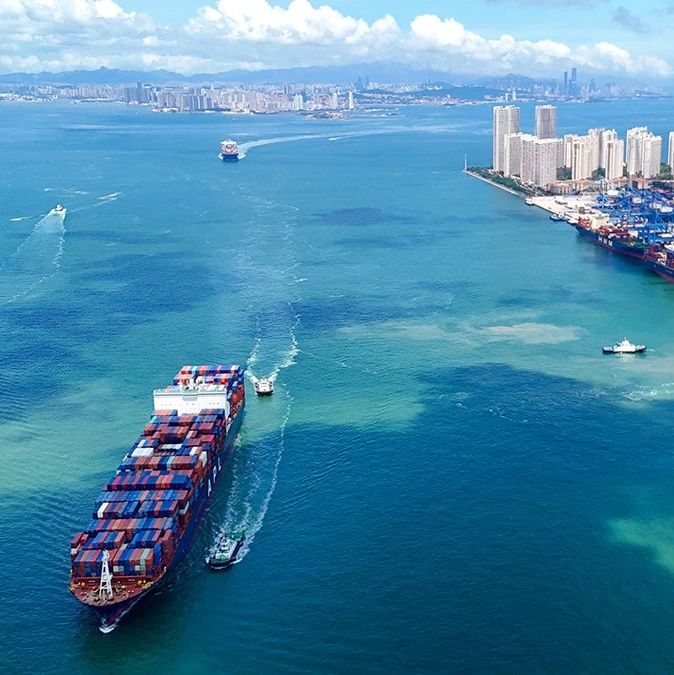
欧美跌跌不休、中东澳新大涨 海运价分化如何影响外贸人
Di Yi Cai Jing· 2025-08-25 15:15
Group 1: Market Overview - The international shipping market is experiencing adjustments, with most freight rates declining. The Shanghai Export Containerized Freight Index was reported at 1415.36 points, down 3.1% from the previous period, indicating a weak supply-demand balance amid increasing uncertainties such as tariffs [1] - Despite the overall decline in freight rates, emerging markets are showing strong growth, particularly in the Middle East and Australia/New Zealand routes, which are experiencing price increases [1] Group 2: Freight Rate Trends - European shipping rates have been on a continuous decline since June 13, with the rate from Shanghai to Europe at $1668/TEU, down 8.4% [2] - U.S. shipping rates have also decreased, with rates to the West and East coasts at $1644/FEU and $2613/FEU, down 6.5% and 3.9% respectively [2] - The decline in European rates is attributed to a recovering economy and demand, as indicated by a PMI of 51.1 in August, while U.S. rates are affected by high tariffs leading to weak demand [2][3] Group 3: Business Insights - A logistics company reported an increase in business volume despite falling rates, attributing this to strong demand for exports to Europe and the upcoming peak shipping season [3] - However, there are concerns regarding inventory restrictions from major clients like Amazon, which could further compress domestic freight forwarding space [3] Group 4: Regional Freight Rate Increases - In contrast to the declining rates in Europe and the U.S., freight rates to the Middle East and Australia/New Zealand are rising. The rate to the Persian Gulf is $1479/TEU, up 7.1% [5] - The demand for larger containers, particularly for high-end equipment, is driving up rates, with 40-foot container rates reportedly exceeding $2000 [5][6] - The Australian and New Zealand routes have maintained stable upward trends, with rates increasing by 85% compared to June [6] Group 5: Future Outlook - The traditional FOB business is expected to shrink, while logistics for high-tech products and overseas projects are seen as key growth areas [7] - The export of electromechanical products has increased by 9.3%, indicating a shift towards higher value-added goods [7] - The Chinese government is committed to expanding high-level openness and ensuring quality development in response to global trade uncertainties [7]
德翔海运(02510)发布中期业绩 股东应占利润1.89亿美元 同比增加221.96%
智通财经网· 2025-08-25 13:19
Core Viewpoint - 德翔海运 (02510) reported a significant increase in revenue and profit for the six months ending June 30, 2025, indicating strong financial performance and growth potential [1] Financial Performance - The company achieved revenue of $641 million, representing an 18.67% year-on-year increase [1] - The profit attributable to equity shareholders was $189 million, showing a substantial increase of 221.96% compared to the previous year [1] - Basic earnings per share were reported at $0.113 [1]
德翔海运发布中期业绩 股东应占利润1.89亿美元 同比增加221.96%
Zhi Tong Cai Jing· 2025-08-25 13:15
Group 1 - The company,德翔海运, reported revenue of $641 million for the six months ending June 30, 2025, representing an increase of 18.67% year-on-year [1] - The profit attributable to equity shareholders reached $189 million, marking a significant increase of 221.96% compared to the previous year [1] - The basic earnings per share were reported at $0.113 [1]
德翔海运(02510.HK)中期权益股东应占利润约1.89亿美元 同比增加约222.0%
Ge Long Hui· 2025-08-25 13:04
格隆汇8月25日丨德翔海运(02510.HK)发布公告,截至2025年6月30日止六个月,公司收入约为641.4百 万美元,增加约18.7%。截至2025年6月30日止六个月的毛利约为127.1百万美元,增加约170.1%。公司 权益股东应占利润约为188.7百万美元,增加约222.0%。 ...