
生物制造

Search documents
学习规划建议每日问答丨为什么要全链条推动集成电路、工业母机、高端仪器、基础软件、先进材料、生物制造等重点领域关键核心技术攻关取得决定性突破
Xin Hua She· 2025-11-29 03:30
Core Viewpoint - The article emphasizes the importance of overcoming "bottleneck" technologies in key areas such as integrated circuits, industrial mother machines, high-end instruments, basic software, advanced materials, and biomanufacturing to ensure national security and promote high-quality economic development [1][2][3]. Group 1: Importance of Key Core Technologies - Key core technologies are crucial for national security and high-quality economic development, necessitating enhanced capabilities in technology breakthroughs [1]. - Accelerating breakthroughs in these areas is essential for achieving competitive advantages and ensuring self-reliance in strategic industries [2]. Group 2: Challenges in Fundamental Research - The root cause of "bottleneck" technology issues lies in inadequate foundational theoretical research, which must be addressed to strengthen the basis for technological innovation and industrial development [3]. - There is a need to focus on original and disruptive innovations rather than merely imitative ones to avoid falling into a cycle of "catch-up" [3]. Group 3: Collaborative Framework for Technology Advancement - A collaborative framework is necessary to leverage the advantages of a new type of national system, integrating government, market, and social forces to enhance research and development efforts [4]. - Emphasizing mission-oriented approaches and incentivizing researchers to focus on national strategic needs will drive high-quality and original technological innovations [4].
中泰国际李迅雷解读“十五五”三大亮点:科技自强、提振消费与全国统一大市场
Xin Lang Zheng Quan· 2025-11-28 10:35
Core Insights - The upcoming "14th Five-Year Plan" will focus on high-quality development, emphasizing technological self-reliance, boosting consumption, and building a unified national market [1][3] Group 1: Technological Self-Reliance - The first major highlight of the "14th Five-Year Plan" is to accelerate technological self-reliance, focusing on key areas such as integrated circuits, industrial mother machines, high-end instruments, and biomanufacturing [3] - The development of these industries is expected to provide substantial structural investment opportunities for investors [3] Group 2: Domestic Market and Consumption - The second highlight is the construction of a strong domestic market aimed at significantly boosting consumption [3] - New consumption sectors such as health and elderly care, as well as smart living, are projected to show immense potential due to changes in population structure and consumption habits [3] Group 3: Unified National Market - The third highlight involves the construction of a unified national market, which aims to eliminate barriers that hinder its development [3] - This initiative is expected to optimize the business environment and create favorable conditions for improving corporate profitability [3] Group 4: Economic Outlook - Looking ahead to the first year of the "14th Five-Year Plan," it is anticipated that proactive fiscal policies will continue to support stable economic operations [3] - The deep integration and application of emerging technologies like artificial intelligence are expected to inject new momentum into economic development [3] - Under the guidance of the new plan, China's economic development is expected to enter a phase characterized by higher quality, greater efficiency, and enhanced sustainability [3]

从“样品”到“产品”再到“产业” 全场景畅通的未来产业发展新模式逐渐成熟
Yang Shi Wang· 2025-11-28 06:36
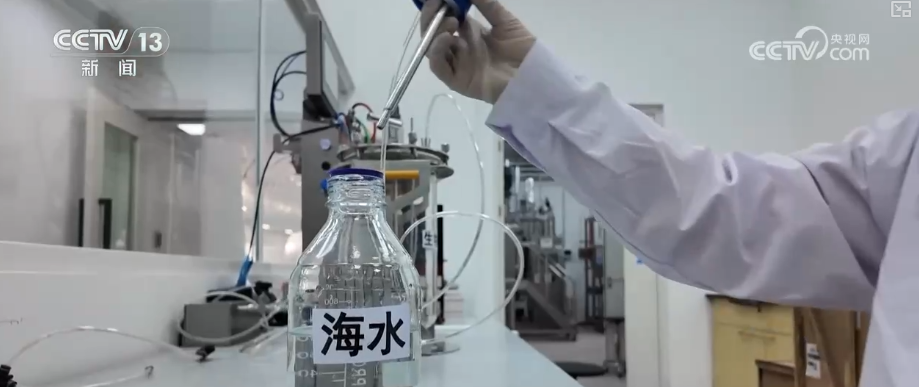
Core Viewpoint - The article discusses China's latest development in artificial marine carbon cycling systems, which utilize electrocatalysis to capture dissolved carbon dioxide from seawater and convert it into a nutrient for microorganisms, ultimately producing green materials for plastic products [1][3]. Group 1: Technology and Innovation - The artificial marine carbon cycling system has been operational in real seawater for over 500 hours, achieving a carbon dioxide capture efficiency exceeding 70% [3]. - The system converts carbon dioxide into polybutylene succinate, a green raw material used in everyday plastic products like straws and beverage bottles [3]. - The article highlights various innovative applications in biological manufacturing, such as using yeast for plant component production and bacteria for synthesizing smart adhesive alternatives [3]. Group 2: Industry Development and Ecosystem - Shenzhen's innovation model promotes collaboration between research and entrepreneurship, facilitating the transition from laboratory samples to market-ready products [9][10]. - The local ecosystem supports startups from inception to growth, with 121 companies established within the last decade successfully going public, including 87 on A-shares and 34 on Hong Kong stocks [17]. - The article emphasizes the importance of a complete innovation and entrepreneurship ecosystem, which has led to significant achievements in the biomanufacturing sector [17]. Group 3: Future Prospects - The biomanufacturing sector in China is entering a critical development phase, with investment in synthetic biology manufacturing reaching nearly 30 billion annually during the 14th Five-Year Plan [21]. - Experts suggest that the focus should be on building an innovation system for biomanufacturing and cultivating landmark products in emerging fields such as bio-based materials and biomedicine [21].
杭州加速打造全国科技成果概念验证之都
Hang Zhou Ri Bao· 2025-11-28 02:28
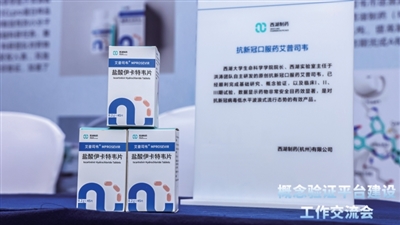
Core Insights - Hangzhou is accelerating the industrialization of scientific and technological achievements by addressing the "first kilometer" of results transformation through concept validation [3] - The city has established a comprehensive service system for technology innovation and industrial integration, focusing on four distinctive models: investment-driven, demand-driven, application-driven, and platform-accelerated [3][9] Investment-Driven Model - Early-stage capital is crucial for transforming scientific results, as it provides the necessary funding for projects that are in their infancy and carry high risks [4] - The investment-driven model combines "preliminary validation + equity investment," where initial funding is converted into equity upon successful validation, encouraging further social capital investment [4] Demand-Driven Model - The demand-driven model allows market needs to guide project selection and validation, significantly reducing the time from research to product readiness [6] - Projects validated under this model often originate from the market demands of upstream and downstream industry clients, creating a positive cycle of "market-research-benefit-research" [6] Application-Driven Model - The application-driven model focuses on finding real-world scenarios for technology validation, which is essential for successful commercialization [7] - This model emphasizes collaboration with initial scene partners to share the validation process, enhancing the likelihood of successful technology transfer [7] Platform-Accelerated Model - The platform-accelerated model aims to cultivate hard technology achievements through a full-chain service system that includes evaluation, selection, transformation, financing, and commercialization [9] - Concept validation centers in Hangzhou are increasingly involved in the initial stages of transformation, providing comprehensive support including funding, facilities, and technical resources [9] Future Outlook - Hangzhou's technology bureau plans to continue leveraging concept validation centers as engines for innovation, aiming to enhance the city's role as a hub for scientific and technological achievement transformation [10]
天津“十五五”规划建议:加快推动信创、生物医药、新能源、新材料、航空航天等成长为支柱产业
Zheng Quan Shi Bao Wang· 2025-11-27 23:59
Core Viewpoint - The Tianjin Municipal Committee emphasizes the development of advanced manufacturing, focusing on high-end, intelligent, and green directions, while promoting new industrialization and upgrading traditional industries [1] Group 1: Advanced Manufacturing Development - The plan aims to enhance competitiveness in industries such as petrochemicals, automotive, equipment manufacturing, and metallurgy through intelligent and green manufacturing [1] - There is a strong push for the large-scale application of new technologies, products, and scenarios, particularly in emerging industries like biomedicine, new energy, and aerospace [1] Group 2: Future Industry Layout - The strategy includes exploring viable business models, market regulation rules, and risk-sharing mechanisms to promote sectors like biomanufacturing, low-dimensional materials, and hydrogen energy [1] - The initiative aims to establish new economic growth points through innovations in brain-machine interfaces, embodied intelligence, and advanced computing [1] Group 3: Consumer Goods Manufacturing - The plan also focuses on actively developing the terminal consumer goods manufacturing sector and cultivating advanced manufacturing brands [1] - There is an emphasis on improving quality infrastructure and standard systems, alongside strengthening environmental and safety regulations [1]
小菌种“撬动”大制造
Zheng Quan Ri Bao Zhi Sheng· 2025-11-27 16:07
Core Insights - The article discusses the transformative potential of biomanufacturing, which utilizes microorganisms to create sustainable products, thereby reducing reliance on fossil fuels and minimizing environmental impact [1][2][4]. Group 1: Biomanufacturing Overview - Biomanufacturing is defined as a process where microorganisms convert renewable resources into valuable products, such as biodegradable plastics and high-performance materials [2][3]. - The shift from traditional petrochemical-based production to biomanufacturing is seen as essential for achieving a more sustainable industrial model [2][4]. Group 2: Economic Impact and Market Potential - The biomanufacturing industry in China is approaching a total scale of nearly 1 trillion yuan, driven by policy support and capital investment [6]. - Utilizing agricultural waste, such as crop straw, could potentially generate over 1 million tons of biodegradable plastic annually, creating a market worth hundreds of billions [5][6]. Group 3: Industry Development and Collaboration - Companies like Kasei Biotech are forming strategic partnerships to develop biobased materials, demonstrating a collaborative approach to building a competitive biomanufacturing ecosystem [7]. - The integration of biomanufacturing in various sectors, including healthcare and consumer products, is expanding, with companies innovating in areas like biodegradable medical materials and low-sugar food products [8]. Group 4: Challenges and Barriers - The biomanufacturing sector faces challenges in scaling up from laboratory to industrial production, particularly in optimizing microbial strains and production processes [9][10]. - Regulatory hurdles and slow approval processes for genetically engineered strains hinder the speed of innovation and market entry for new biomanufactured products [9][10].

Pre独角兽企业:上海北京储备多,集成电路赛道最集聚|言叶知新
Di Yi Cai Jing Zi Xun· 2025-11-27 12:08
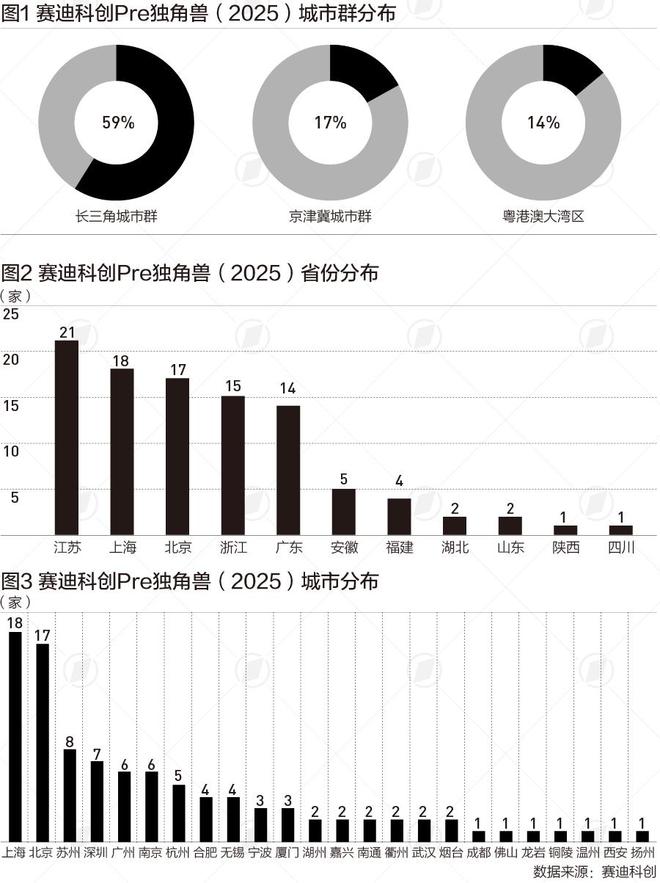
Core Insights - Pre-unicorns are crucial for optimizing regional industrial structures and enhancing urban technological innovation capabilities [1] - The "Pre-unicorn (2025)" report by CCID Consulting indicates that three major city clusters account for 90% of Pre-unicorn companies, which are distributed across 13 sectors including integrated circuits, biomanufacturing, autonomous driving, new energy, artificial intelligence, robotics, and commercial aerospace [1][2] Regional Distribution Characteristics - The report highlights a significant regional concentration of Pre-unicorns: 59 in the Yangtze River Delta, 17 in the Beijing-Tianjin-Hebei region (mainly in Beijing), and 14 in the Guangdong-Hong Kong-Macau Greater Bay Area (mainly in Shenzhen and Guangzhou) [2] - The top five provinces with the most Pre-unicorns are Jiangsu (21), Shanghai (18), Beijing (17), Zhejiang (15), and Guangdong (14) [2] - A total of 24 cities have Pre-unicorns, with Shanghai and Beijing leading, followed by Suzhou (8), Shenzhen (7), Guangzhou (6), and Nanjing (6) [2] Sector Distribution of Companies - The report emphasizes the high growth potential and hard technology focus of Pre-unicorns, with significant representation in integrated circuits (36 companies) and biomanufacturing (14 companies), together accounting for 50% of the total Pre-unicorns [6] - The total valuations for integrated circuits and biomanufacturing are approximately $24.89 billion and $9.87 billion, respectively, making up 49.56% of the total valuation of Pre-unicorns [6] Integrated Circuit Sector - In the integrated circuit sector, Shanghai has 11 companies, followed by Nanjing (4), with Suzhou, Shenzhen, Guangzhou, and Hangzhou each having 3 [7] - Shanghai's advantages include a complete industrial chain from chip design to high-end equipment, supported by national investment and financial center status [7] - Shenzhen offers rapid prototyping capabilities, while Suzhou and Nanjing leverage local and foreign enterprises for efficient collaboration in chip production [7] Biomanufacturing Sector - The biomanufacturing sector is led by Beijing and Shanghai, with rapid development in cities like Suzhou, Guangzhou, and Hangzhou, totaling 14 companies [8] - Shanghai has established a comprehensive biomanufacturing ecosystem, facilitating the growth of Pre-unicorns through full industry chain support [8] Other Sectors - The autonomous driving sector includes 9 companies spread across various cities, indicating a broad geographic distribution [8] - The new energy sector shows a trend of multiple cities participating, with 9 companies, including 3 in Suzhou and others in Beijing, Guangzhou, and several other cities [8]
知识产权审判“严保护”,济南法院为科技创新保驾护航
Qi Lu Wan Bao· 2025-11-27 07:27
Core Viewpoint - The Shandong Provincial High People's Court emphasizes the importance of intellectual property protection in driving technological innovation and high-quality development, highlighting the court's role in supporting the growth of new productive forces through judicial services [1] Group 1: Judicial Services and Innovation Support - The Jinan Court has handled 3,006 technology-related intellectual property cases in the past three years, providing robust judicial support for high-quality development in the province [1] - The court has introduced policies to promote innovation and strengthen the construction of a technology innovation hub, focusing on high-end intelligent equipment patents and other significant technology cases [1][2] - A specialized team of judges and technical investigators has been established to address technical facts and legal issues in intellectual property cases, ensuring a unified political, legal, and social effect in case handling [2] Group 2: Case Handling and Compensation - The court has processed various types of intellectual property cases, including 185 invention patent cases, 731 utility model patent cases, and 1,680 computer software cases over the last three years [2] - A punitive compensation system for intellectual property violations has been implemented, resulting in a total compensation of 63.84 million yuan, aligning judicial compensation with market economic values [3] Group 3: Collaborative Efforts and Digital Innovation - The Jinan Court has signed a framework agreement with provincial intellectual property protection departments to enhance collaborative protection, mediating 251 technology-related intellectual property cases [4] - The court has adopted digital tools for evidence management, including the use of "smart 3D evidence" and AI applications for copyright cases, promoting a more efficient judicial process [4] - Efforts to create a market-oriented and law-based environment for technological innovation include organizing seminars and collaborative meetings with various departments to strengthen intellectual property protection [4]
华熙生物董事长赵燕:厚植合成生物平台,深耕衰老干预核心物质创新
Zhong Guo Zheng Quan Bao· 2025-11-25 16:08
Core Insights - The company is actively adjusting its operations and organizational structure to enhance its long-term competitiveness through technological innovation, focusing on synthetic biology as a core strategic direction [1][2][4] - The company has seen a profit growth of 55.63% year-on-year in Q3 2025, indicating the effectiveness of its reform measures [2] - The company aims to build a comprehensive ecosystem for its C-end business, which is crucial for validating technological innovations and meeting consumer needs [3][4] Group 1: Strategic Adjustments and Financial Performance - The company has implemented strategic adjustments that have led to a profit growth of 55.63% in Q3 2025, with a net profit of 0.32 billion and revenue of 9.03 billion [2] - The adjustments have resulted in a decrease in sales expense ratio to 34.26%, the lowest in five years, demonstrating effective cost control [3] - The company is focusing on C-end business as a key area for adjustment, emphasizing the need to understand consumer demands for resource allocation [2][3] Group 2: Research and Development Focus - The company is concentrating on glycoscience and cell biology, aiming to provide systematic solutions for delaying aging [4][5] - The synthetic biology system is supported by two core platforms: a biocatalyst library and a pilot transformation platform, which facilitate rapid development and industrialization of new molecules [5][6] - The company has developed a comprehensive research and transformation platform that integrates scientific research, pilot verification, and industrial application [4][5] Group 3: Pilot Platform and AI Integration - The pilot platform is a critical infrastructure for validating and scaling new materials, enabling the transition from laboratory research to market-ready products [7][8] - The company has invested in a pilot transformation platform in Tianjin, equipped with fermentation systems and production lines to support the scaling of biomanufacturing [7][8] - The integration of AI is aimed at enhancing the efficiency of the pilot platform, although the primary role remains with the scientific and engineering systems [7][9] Group 4: Future Directions and Industry Impact - The company plans to deepen its "pilot foundation, AI efficiency" model to solidify its position in the biomanufacturing sector [9] - The open and shared mechanism of the pilot platform is becoming a vital part of China's technological innovation system, supporting both the company's growth and the broader industry ecosystem [8][9] - The company aims to create an open, efficient, and sustainable synthetic biology innovation platform to drive future growth [6][9]

长三角领跑“Pre独角兽”百强榜单,集成电路赛道占比最高
Xin Hua Cai Jing· 2025-11-25 13:57
Core Insights - The "Pre-Unicorn" list by CCID focuses on innovative tech companies with high growth potential that have not yet reached a valuation of $1 billion and are not publicly listed, indicating their potential to become "Unicorns" in the next 3-5 years [1] Group 1: Regional Distribution - The "Pre-Unicorn" companies are concentrated in three major city clusters: Yangtze River Delta, Beijing-Tianjin-Hebei, and Guangdong-Hong Kong-Macau Greater Bay Area, with 90% of the companies located in these regions [2] - The Yangtze River Delta leads with 59 companies, followed by Beijing-Tianjin-Hebei with 17, and Guangdong-Hong Kong-Macau with 14 [2] - Shanghai, as the leading city in the Yangtze River Delta, focuses on "hard technology" breakthroughs and has implemented policies to support key industries like integrated circuits, biomedicine, and artificial intelligence [2] Group 2: Provincial Performance - Jiangsu province has the highest number of "Pre-Unicorn" companies with 21, followed by Shanghai with 18, and Beijing with 17 [3] - Other notable provinces include Zhejiang with 15 and Guangdong with 14, while several other provinces also have companies on the list [3] - The distribution of "Pre-Unicorn" companies spans 24 cities, with Shanghai and Beijing in the top tier, followed by Suzhou, Shenzhen, and Guangzhou in the second tier [3] Group 3: Core Sectors - The "Pre-Unicorn" companies are primarily involved in hard technology sectors, including integrated circuits, biomanufacturing, autonomous driving, new energy, artificial intelligence, and robotics [4] - The integrated circuit sector is the most prominent, with 36 companies, accounting for a significant portion of the total valuation of "Pre-Unicorn" companies [4] - The biomanufacturing sector follows with 14 companies, showcasing China's advancements in areas like antibody drugs and cell therapy [5] Group 4: Sector Analysis - The autonomous driving sector is transitioning from technology validation to commercialization, with 9 companies involved and a broad distribution across multiple cities [6] - The new energy sector is characterized by China's leading position globally, with significant production in solar components and battery installations, also featuring 9 companies [6]