
航天科技

Search documents
太空算力争夺赛开打
3 6 Ke· 2025-11-10 03:36
Core Insights - The article discusses the growing interest of AI companies in space computing, highlighting recent developments in space computing capabilities and infrastructure [1][2] Group 1: Space Computing Developments - The "Zero Carbon Space Computing Center" developed by Guoxing Aerospace has achieved a single satellite computing power of 744 TOPS and a constellation capability of 5 POPS, making it the strongest space computing capability globally [1] - NVIDIA has sent its H100 GPU to space, while Elon Musk announced plans to expand Starlink V3 satellites to create a space data center, aiming for 100 GW of data center deployment annually within 4-5 years [1] - Google has initiated the "Sun Catcher Project," planning to launch two prototype satellites with Trillium TPUs by early 2027, positioning space as a potential optimal location for scaling AI computing [1] Group 2: Advantages of Space Computing - Space computing allows satellites to perform data preprocessing and AI training in orbit, significantly improving real-time decision-making efficiency compared to traditional ground-based processing [2] - The deployment of data centers in space offers low operational costs, high power generation efficiency, and rapid deployment capabilities, addressing energy bottlenecks faced by terrestrial data centers [2][3] Group 3: Technological and Operational Benefits - High-orbit space data centers can utilize solar energy 24/7 with an efficiency of up to 95%, which is five times more efficient than ground-based systems [3] - The extreme cold of deep space (-270°C) allows for simpler thermal management, reducing the need for complex cooling systems [3] - Space data centers can be modularly assembled, and light travels faster in a vacuum than through standard fiber optics, enhancing deployment speed and flexibility [3] Group 4: Industry Progress and Future Outlook - China is leading in space computing deployment, with the "Three-Body Computing Constellation" set to launch over 50 satellites by 2025, aiming for a total computing power of 1000P by around 2030 [3] - The transition from "ground-based sensing and computing" to "space-based sensing and computing" is underway, creating a global space computing network [3] - Companies like Putian Technology are heavily involved in the "Three-Body Computing Constellation," contributing to key areas such as inter-satellite communication and ground station construction [3][4] Group 5: Key Companies in the Sector - Holoway is a core manufacturer in satellite measurement, addressing challenges in high-precision measurement and rapid validation for satellite mass production [4] - Shanghai Huanxun is a key supplier for the communication subsystem of the Qianfan Constellation, responsible for satellite communication payloads and ground station support [4] - Zhenlei Technology is a core supplier of satellite internet chips and components, collaborating with various research institutions and enterprises in the industry [5]
太空AI:为什么马斯克、亚马逊、谷歌一致看好太空数据中心?
2025-11-10 03:34
Summary of Space AI and Data Center Developments Industry Overview - The focus is on the emerging field of space AI and the construction of space data centers, driven by the increasing demand for AI computing power and the limitations faced by terrestrial data centers [1][2][3]. Key Points and Arguments 1. **Resource Limitations on Earth**: The demand for AI computing power is growing exponentially, with current consumption nearing 3% to 5% of global electricity. Traditional data centers face significant challenges related to energy, land, and cooling resources [2][3]. 2. **Energy Advantages in Space**: Solar radiation in space is over 1.3 times stronger than on Earth, allowing for continuous energy supply and efficient cooling due to the vacuum environment. This results in lower operational costs compared to ground facilities [1][2][3]. 3. **Low Earth Orbit (LEO) Satellite Networks**: LEO satellites provide global coverage and low-latency data transmission, facilitating large-scale distributed computing and enhancing overall network efficiency [2][3]. 4. **Technological Innovations**: The application of perovskite solar cells is expected to significantly reduce energy costs, while advancements in laser communication technology are enhancing satellite capabilities [2][11]. Company-Specific Strategies 1. **SpaceX**: - Utilizing the Starlink project to create a decentralized computing network with thousands of satellites acting as edge computing nodes. - Each V3 satellite has a data throughput exceeding 1 Tbps, supporting global low-latency connections [5][6]. 2. **Amazon (AWS)**: - Aiming to establish large data centers in orbit to replace some terrestrial facilities, leveraging continuous solar energy to optimize costs and improve service quality [8][9]. 3. **Google**: - Collaborating with Planet to adapt TPU chips for space environments and accelerate platform deployment, reducing reliance on terrestrial energy [8][9]. 4. **China's Initiatives**: - Institutions like Beiyou and Zhujiang Laboratory are actively developing space data centers, with projects like the TianSuan Alliance and various satellite launches to validate computing and internet technologies in space [10][12]. Global Development Status - The construction of space data centers is becoming a competitive frontier globally, with startups like Spark Cloud deploying advanced computing hardware in space and companies like Longsida planning data storage systems on the moon [7][10]. Advantages of Space Data Centers 1. **Energy Supply**: Space data centers can harness nearly continuous solar energy, which is crucial as ground data centers' energy consumption is projected to double by 2030 [12][13]. 2. **Cooling Efficiency**: Space allows for passive heat dissipation, significantly improving cooling efficiency compared to traditional water-cooling methods used on Earth [12][13]. 3. **Reduced Hidden Costs**: Space operations eliminate the need for land permits, construction materials, and grid access, leading to lower long-term maintenance costs [12][13]. Emerging Technologies and Participants - The development of space information infrastructure involves various technologies, including reusable launch vehicles, satellite manufacturing, and advanced communication systems. Companies like Hisense and Huawei are contributing to laser communication product development [11][12]. Future Prospects - The space data center sector is expected to see significant advancements, with ongoing projects like the "Three-Body Constellation" and "TianSuan Alliance" planning to deploy thousands of satellites to enhance computing capabilities and applications in space [17].


欧航局成功发射“哨兵-1D”卫星
Xin Hua She· 2025-11-05 10:02
Core Points - The European Space Agency (ESA) successfully launched the "Sentinel-1D" Earth observation satellite as part of the Copernicus program, using an Ariane 6 rocket from French Guiana [1] - The Sentinel-1 satellite system consists of two satellites equipped with advanced radar instruments, capable of providing images of the Earth's surface in various weather conditions, day and night [1] - The Sentinel-1A satellite was launched in 2014, followed by Sentinel-1B in 2016, and Sentinel-1C is set to replace the malfunctioning Sentinel-1B by December 2024 [1] - The Sentinel-1D satellite aims to replace the aging Sentinel-1A and will work in conjunction with Sentinel-1C to generate timely data [1] - Both satellites are equipped with C-band synthetic aperture radar for high-resolution imaging and an Automatic Identification System (AIS) to enhance ship detection and tracking capabilities [1] - The simultaneous operation of both satellites will allow for more frequent AIS observations, and Sentinel-1D is compatible with the Galileo navigation system and other global satellite navigation systems [1] Industry Overview - The Copernicus program aims to integrate satellite observation capabilities across European countries, forming a comprehensive observation network to provide data on the atmosphere, oceans, and land environments [2]
国台办回应网友给神舟21小鼠取名
Xin Lang Cai Jing· 2025-11-05 03:30
Core Viewpoint - The recent space mission involving four mice aboard the Shenzhou 21 spacecraft has sparked significant interest among netizens across the Taiwan Strait, highlighting the pride and anticipation regarding China's advancements in space technology [1] Group 1: Space Exploration Achievements - China's space program has achieved remarkable milestones over the years, showcasing its capabilities on a global scale [1] - The journey of the mice to the Chinese space station serves as a testament to the collaborative interest in space exploration shared by people on both sides of the Taiwan Strait [1] Group 2: Public Engagement - The creative naming of the "space mice" by netizens reflects a unique way for the public to engage with and celebrate advancements in space technology [1] - The event has fostered a sense of shared pride and excitement among the people regarding the progress of mainland China's aerospace endeavors [1]
他秘密提出“雅典娜计划”:彻底重组NASA,和中国竞争
Guan Cha Zhe Wang· 2025-11-05 03:22
Core Viewpoint - The competition for the NASA Administrator position is intensifying, with Jared Isaacman proposing significant reforms to enhance U.S. competitiveness in space against China, while current acting Administrator Sean Duffy also seeks to be confirmed [1][5]. Group 1: Proposed Reforms by Jared Isaacman - Isaacman aims to restructure NASA through his "Athena Plan," focusing on maintaining U.S. leadership in space, unlocking orbital economies, and accelerating transformative discoveries [1][3]. - He suggests outsourcing certain NASA tasks to private companies and proposes a "science as a service" model, where NASA would purchase scientific data from commercial entities instead of building its own satellite network [3][4]. - Isaacman recommends halting funding for climate science missions, allowing the academic community to determine research directions independently [3][4]. Group 2: Specific Changes Suggested - In relation to the Artemis program, Isaacman believes NASA should stop developing the Space Launch System (SLS) rocket and cancel plans for the Gateway space station in lunar orbit [3][4]. - He questions the cost-effectiveness of contracts at NASA's Jet Propulsion Laboratory (JPL) and suggests a review of the agency's performance metrics [3][4]. - The "Athena Plan" proposes consolidating NASA's operational control into the Johnson Space Center in Texas and streamlining the agency's headquarters [4][5]. Group 3: Industry Reactions and Challenges - Some NASA experts argue that the agency requires comprehensive reforms to effectively operate in the new space era and enhance U.S.-China space competition capabilities [5]. - Critics assert that Isaacman's approach treats NASA like a business rather than a government agency, misunderstanding the nature of scientific funding [5]. - There are concerns that many of Isaacman's proposals would require Congressional approval, which could hinder their implementation [5][6]. Group 4: Current Context and Implications - The ongoing internal turmoil at NASA is seen as a potential threat to the U.S. goal of landing astronauts on the Moon by 2027, especially with the looming competition from China [8]. - The outcome of the leadership battle between Isaacman and Duffy may not resolve the challenges facing NASA, regardless of who ultimately leads the agency [8].


逐梦苍穹 再聚天宫
Jing Ji Ri Bao· 2025-11-04 22:15
Core Points - The Shenzhou 21 manned spacecraft successfully docked with the Tianhe core module of the space station, achieving a record docking time of approximately 3.5 hours, significantly shorter than the previous 6.5 hours for earlier missions [2] - The rapid docking was made possible through advancements in launch and orbit control, optimized trajectory design, and enhanced system adaptability, which collectively improve mission flexibility and emergency response capabilities [2] - The Long March 2F rocket, which is the only active manned launch vehicle in China, underwent nearly 20 technical improvements to enhance reliability and safety, ensuring precise and stable flight [3] - The escape system of the Long March 2F rocket is designed to ensure astronaut safety, capable of rapidly detaching the crew capsule from the rocket in case of a critical failure [3] - The spacecraft's sealing components and astronaut suits have undergone rigorous testing to ensure reliability under various conditions, including fatigue and environmental stress [4] - Successful manned space missions rely on the efficient collaboration of multiple systems, including energy supply, information communication, and precise docking systems [5] - The power supply system faced unprecedented challenges during the rapid docking, requiring quick stabilization and energy provision for maneuvering [5] - A robust measurement and control communication system, comprising global ground stations and data relay satellites, ensures real-time data transmission and command execution between the ground and the spacecraft [6] - The docking mechanism has evolved to a controlled damping buffer system, enhancing adaptability and reliability during the final docking phase [6]
太空烧烤摊正式营业!中国航天员在空间站吃上烤鸡翅了!
Huan Qiu Wang Zi Xun· 2025-11-04 01:50
Core Insights - The introduction of a space oven on the Chinese space station has allowed astronauts to enjoy barbecued food, marking a significant advancement in space cuisine [1][2] - The variety of food available to astronauts has expanded to over 190 types, enhancing their dining experience during missions [1] - The evolution of space food from basic rations to gourmet options reflects China's technological advancements and commitment to improving astronaut welfare [1] Summary by Categories Technological Advancements - The space oven represents a breakthrough in space food technology, enabling the preparation of various grilled foods such as chicken wings, skewers, and steaks [1] - The success of this initiative is attributed to precise control of the environmental system and stable support from the energy system for high-power equipment [1] Astronaut Welfare - The focus on providing enjoyable meals for astronauts emphasizes the importance of their quality of life during missions, beyond just completing scientific tasks [2] - The diverse menu includes main dishes, desserts, and snacks, ensuring that astronauts have a varied and satisfying diet [1] National Pride and Innovation - The ability to prepare and enjoy barbecued food in space symbolizes China's self-reliance and innovative spirit in the aerospace sector [2] - The initiative has garnered positive public sentiment, showcasing the achievements of China's space program [2]
洲际航天科技:附属公司港航科将在深圳设立人工智能卫星应用技术中心
Xin Lang Cai Jing· 2025-11-03 23:41
Core Viewpoint - The company is establishing an Artificial Intelligence Satellite Application Technology Center in Shenzhen to realign its aerospace business focus on advanced AI applications in satellite technology [1] Group 1: Company Developments - The wholly-owned subsidiary, Hong Kong Aerospace Technology (Shenzhen) Co., Ltd., will lead the establishment of the new center [1] - The center will concentrate on intelligent decision-making using satellite remote sensing data and AI processing and analysis of satellite data [1] Group 2: Technological Focus - The center aims to promote brain-like chips and digital twin autonomous cognitive upgrades for satellite AI operations [1] - It will also work on quantum collaborative computing for satellite constellations, focusing on autonomous control and fault tolerance [1] - The development includes an AI system that integrates communication, energy, and computing constraints for satellite swarm collaboration [1]

视频丨宇宙级全家福,中国有7张了!
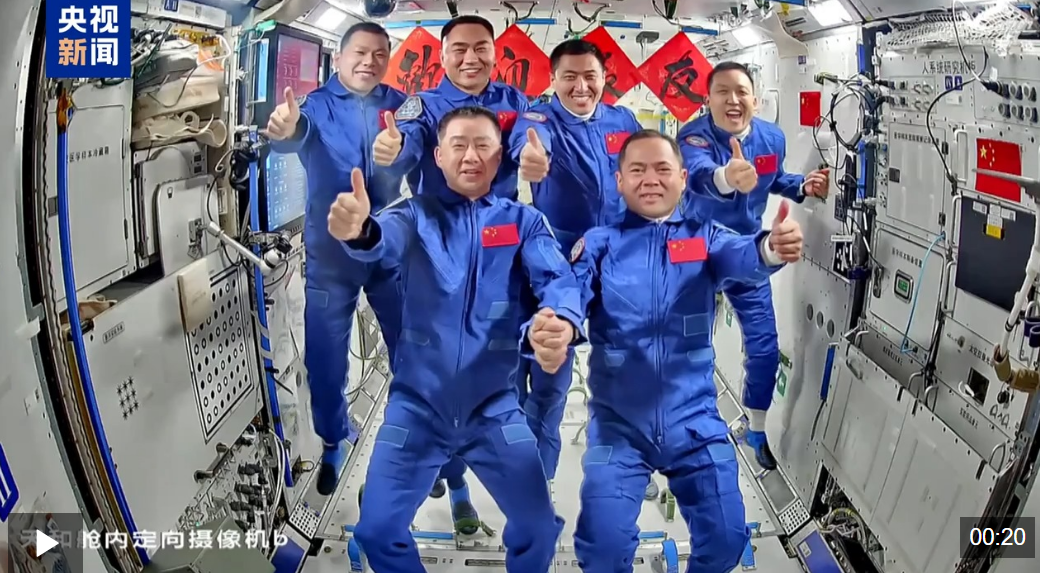
Yang Shi Xin Wen Ke Hu Duan· 2025-11-02 10:17
Group 1 - The Shenzhou-20 and Shenzhou-21 crews successfully met in space, capturing the seventh "family photo" in space history [1] - This event marks a significant milestone in China's space exploration efforts, showcasing the achievements of Chinese astronauts [1][3] Group 2 - The article reflects on the seven reunion moments of Chinese astronauts, highlighting the joy and camaraderie among them [3]
SpaceX公司向美航空航天局提交“精简版”登月计划
Sou Hu Cai Jing· 2025-11-01 12:56
Group 1 - SpaceX has submitted a "streamlined" lunar landing plan to NASA in response to the agency's dissatisfaction with the company's progress on crewed lunar lander development [1][3] - The company has achieved 49 "milestone" research and development results and plans to conduct a long-duration flight test of its next-generation heavy-lift rocket, Starship, next year [3] - NASA's acting administrator has criticized SpaceX for delays in the development of the crewed lunar lander and has allowed competitors like Blue Origin to participate in the lunar lander bidding process [5] Group 2 - The Artemis lunar program was announced by the U.S. in 2019, with the first unmanned lunar flyby test, Artemis 1, executed in November 2022; however, crewed missions have faced multiple delays due to significant technological development setbacks [7] - SpaceX was awarded a contract worth approximately $2.9 billion by NASA in 2021 to develop and manufacture the lunar lander [7]
