
卫生用品

Search documents
黄子韬控股的朵薇卫生巾有异物?此前称引入AI污点检测技术
Nan Fang Du Shi Bao· 2025-06-17 14:42
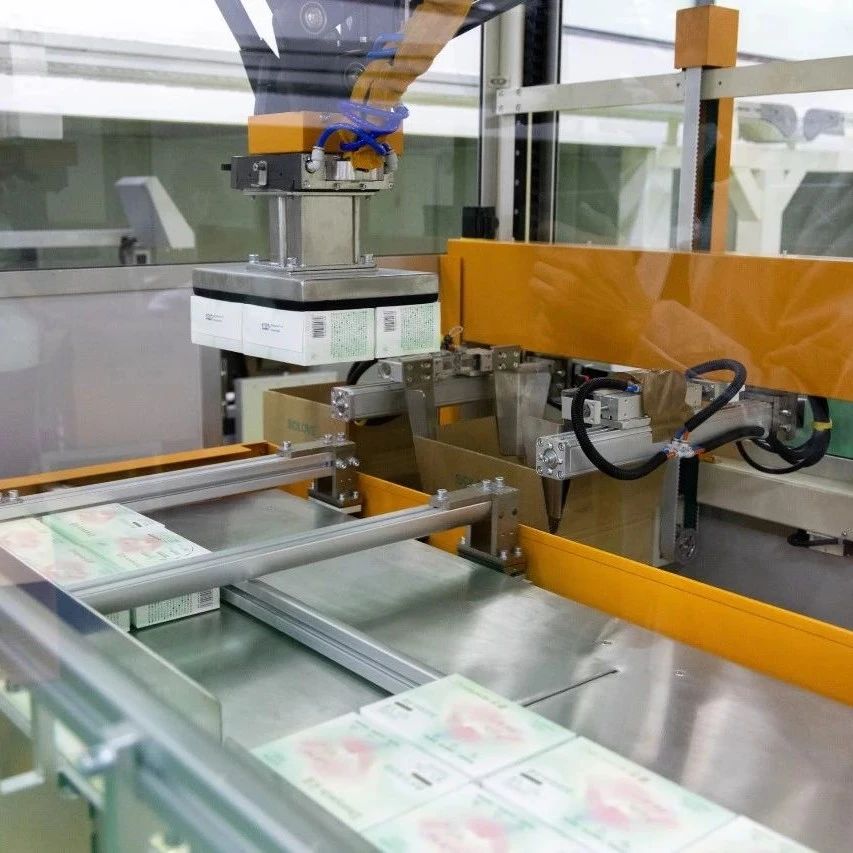
Core Viewpoint - A consumer complaint regarding black foreign objects found in the Dovey brand sanitary napkins, owned by celebrity Huang Zitao, has gained significant attention on social media, leading to a public relations challenge for the brand [1][2]. Group 1: Consumer Complaint Details - The consumer posted images showing black spots on the sanitary napkin and claimed that the product was sent back to the manufacturer, which acknowledged receipt on June 9. However, the quality inspection report provided was dated April of the same year, raising concerns about its relevance to the product in question [2]. - The inspection report indicated that the tested Dovey sample had a production date of March 18, 2025, but it remains unclear if this sample corresponds to the batch purchased by the consumer [2]. - The customer service response suggested that the black spots were due to "baking scorch," but later indicated that the inspection was not yet complete, leading to further confusion [2][6]. Group 2: Company Background and Operations - Dovey, under Zhejiang Dovey Care Products Co., Ltd., was acquired by Huang Zitao in April 2023, who announced the acquisition through a live stream. He stated that all previous versions of Dovey sanitary napkins were discontinued and that the factory underwent renovations to improve automation, achieving a 90% automation rate [6][8]. - Dovey claims to have implemented an AI stain detection system in its production line, boasting a waste rate of only 2%. This is a common practice among leading sanitary napkin brands, which often highlight their use of advanced visual inspection systems to ensure product quality [8]. - The company has stated that its fully automated production line includes stain detection equipment, although further details on the detection capabilities were not provided at the time of reporting [8].


东方甄选加入卫生巾战局
虎嗅APP· 2025-06-17 13:12
Core Viewpoint - The launch of Oriental Selection's self-operated sanitary napkin marks a significant expansion into the fast-moving consumer goods (FMCG) sector, particularly in women's health products, reflecting a strategic shift from agricultural products to essential consumer needs [7][11]. Product Launch and Sales Performance - Oriental Selection officially launched its first self-operated sanitary napkin product on June 16, with sales channels limited to its app and mini-program, requiring a paid membership for purchase [1][2]. - Within 14 hours of launch, the product achieved sales exceeding 300,000 packages, indicating strong market demand [1]. Product Specifications and Quality Assurance - The initial product line includes two sizes (240mm and 290mm) and offers five combination sales modes, with prices ranging from 68.6 yuan to 188.8 yuan, translating to an estimated per-piece price of 0.8 yuan for members and 0.93 yuan for non-members [1]. - The sanitary napkins are marketed as "100% pure cotton," with all components, including wings, made from Xinjiang cotton, and they exceed national standards for various safety and quality metrics [5][6]. Market Context and Competitive Landscape - The timing of Oriental Selection's entry into the sanitary napkin market follows a successful sales event by the brand Duo Wei, which sold 500,000 units in 30 minutes, highlighting a competitive landscape characterized by rapid sales and high consumer interest [4]. - The Chinese sanitary napkin market is described as entering a "Warring States" period, with a mix of international giants and local brands competing fiercely, alongside emerging e-commerce platforms [8][9]. Consumer Insights and Market Dynamics - The average annual expenditure on sanitary napkins for Chinese women is approximately 300 yuan, representing only 0.3% of total annual consumption, yet it can constitute a significant portion of monthly expenses for low-income groups [10]. - The market has seen a shift in consumer expectations, with increased sensitivity to price, safety, and brand trust, driven by recent controversies surrounding product quality and safety [9][10]. Strategic Implications for Oriental Selection - The entry into the sanitary napkin market is not merely a product expansion but a strategic move to enhance customer loyalty and engagement, as sanitary napkins are high-frequency, high-margin products that can drive app activity and repeat purchases [6][7]. - Oriental Selection's direct-to-consumer model, which connects factories to consumers, presents a potential shift in the industry towards more efficient and accessible supply chains, challenging traditional brand reliance on distributors [10].
豪悦护理实控人一致行动人拟减持 2020年上市募16.6亿
Zhong Guo Jing Ji Wang· 2025-06-17 03:26
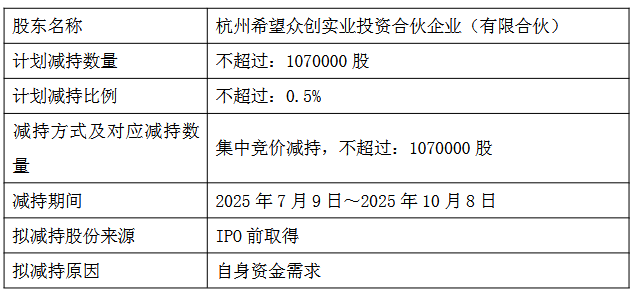
Core Viewpoint - The announcement from Haoyue Care (605009.SH) regarding the share reduction plan by its shareholder, Hangzhou Hope Venture Capital Partnership, indicates a planned reduction of up to 1,070,000 shares, representing 0.50% of the total share capital, due to the shareholder's funding needs [1][2]. Shareholder Reduction Plan - Shareholder Name: Hangzhou Hope Venture Capital Partnership [2] - Planned Reduction Quantity: Up to 1,070,000 shares [2] - Planned Reduction Ratio: Up to 0.50% of total share capital [2] - Reduction Method: Centralized bidding [2] - Reduction Period: From July 9, 2025, to October 8, 2025 [2] - Reason for Reduction: Personal funding needs [2] Shareholding Structure - Hangzhou Hope Venture holds a total of 8,746,181 shares, accounting for 4.06% of the total share capital [2][3]. - The controlling shareholders, including Li Zhibiao, Zhu Weili, and Li Shiyuan, collectively hold 144,383,979 shares, representing 67.00% of the total share capital [3][4]. - Li Zhibiao holds 75,030,319 shares (34.82%), Zhu Weili holds 47,489,042 shares (22.04%), and Li Shiyuan holds 13,118,437 shares (6.09%) [3]. Company Background - Haoyue Care was listed on the Shanghai Stock Exchange on September 11, 2020, raising a total of 1,660,474,200.00 yuan, with a net amount of 1,548,664,607.82 yuan after deducting issuance costs [5]. - The funds raised are allocated for various projects, including the construction of a new production base and research and development support [5]. - The company has a history of dividend distribution, with a cash dividend of 8.5 yuan per 10 shares planned for 2025 [5].

遥望科技谢如栋重启制造:一把卫生巾行业的“手术刀”,重构消费产业逻辑
36氪未来消费· 2025-06-13 09:41
Core Viewpoint - The article discusses the rapid success of the sanitary napkin brand "Duo Wei," driven by innovative strategies in supply chain management and consumer trust, marking a significant shift in the consumer goods industry from "attention economy" to "trust economy" [3][10][30] Group 1: Brand Success and Market Impact - "Duo Wei" achieved remarkable sales, with 50,000 sanitary napkin sets sold out in just 30 minutes during its first live stream, generating 54.58 million yuan in sales within 14 days, and later reaching the top position in the Douyin personal care category [3][9][26] - The phenomenon surrounding "Duo Wei" reflects a broader trend in the consumer goods sector, where new brands are emerging and rapidly gaining market share, termed the "Duo Wei phenomenon" [4][9] - The brand's success is attributed to its unique approach to addressing consumer trust issues and leveraging celebrity endorsements, particularly from Huang Zitao, which significantly boosted its visibility and credibility [25][29] Group 2: Supply Chain and Production Innovations - The CEO of Yaowang Technology, Xie Ruidong, emphasizes the importance of building a transparent supply chain to restore consumer trust, implementing a "transparent factory" model that allows public access and live streaming of production processes [11][13] - "Duo Wei" has adopted stringent production standards, achieving "medical-grade" quality across 17 testing parameters, which positions it as a leader in quality assurance within the sanitary napkin industry [13][21] - The brand has opted for self-built factories to maintain control over production quality and responsiveness to consumer feedback, significantly reducing the product development cycle by over 50% [17][19] Group 3: Industry Challenges and Opportunities - The consumer goods industry is facing a transition from a long-standing bull market to a period of adjustment, with many new brands struggling to survive due to rising customer acquisition costs and market saturation [9][30] - Despite these challenges, the shift towards rational consumption presents opportunities for brands that can effectively build trust and demonstrate product quality, as seen with "Duo Wei" [10][30] - The article highlights the need for brands to innovate beyond traditional marketing strategies, focusing on product quality and consumer trust as key competitive advantages in a challenging market environment [10][30]

朵薇之后,卫生巾市场怎么样了?
21世纪经济报道· 2025-06-10 15:11
Core Insights - The emergence of Duowei sanitary napkins has disrupted the market, achieving a rapid rise to the top three in just 14 days, challenging established international brands [1][11] - The driving forces behind this success are rooted in extreme transparency and complete control over production, leading to a significant shift in the sanitary napkin market [1][11] Group 1: Duowei's "Hardcore" DNA - Duowei's rise is based on two core strategies: building transparent factories and maintaining 100% self-built production capacity, creating a unique competitive barrier [3] - The concept of a transparent factory serves as a foundation for trust, allowing consumers to monitor the production process and alleviating long-standing anxieties regarding product safety [3][4] - Self-built production enables better quality control and agile market response, with a reported 50% reduction in the average cycle from concept to mass production [4] Group 2: The Catfish Effect - Duowei's success has triggered a significant transformation in the sanitary napkin industry, reshaping trust mechanisms and driving an upgrade in the supply chain [5][6] - The proactive inspection rate for sanitary napkin products surged by 217% in Q2 2025, reflecting the industry's response to the pressure for transparency [6] - The concept of "transparent factories" is becoming a new industry standard, with major players like Dongfang Zhenxuan adopting similar transparency measures [6][7] Group 3: Redefining Standards - The emergence of Duowei has forced the industry to redefine competition rules, shifting focus from marketing and traffic to product safety and reliability [10] - The industry may see a split between "self-built" brands emphasizing deep control and "transparent outsourcing" brands focusing on standard output [10] - Ultimately, the goal of this transformation is to create a more regulated, safe, and trustworthy market environment for consumers [10][11]
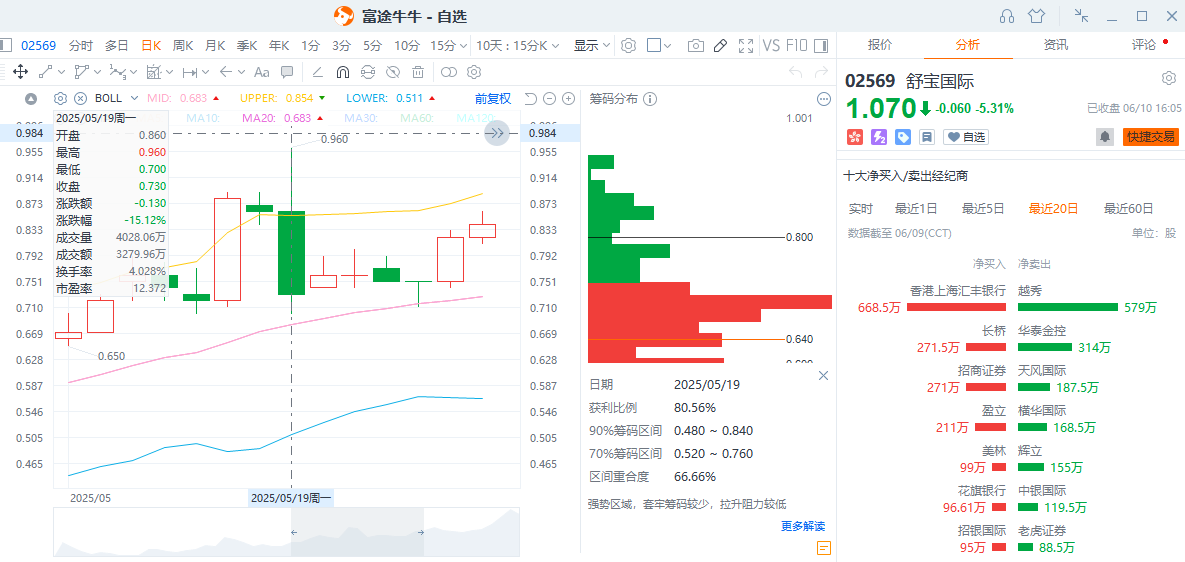
10亿市值舒宝国际(02569):110%涨幅后筹码或将继续进攻?
智通财经网· 2025-06-10 11:30
Core Viewpoint - Shubao International (02569) has gained significant attention in the Hong Kong capital market, with its stock price rising 110% from the IPO price of HKD 0.51 to HKD 1.07, resulting in a market capitalization of approximately HKD 1.07 billion [2] Group 1: Stock Performance - The stock experienced a "four rises and four falls" pattern since its listing, indicating volatility in its trading performance [3] - In the first phase from March 27 to April 24, the stock achieved a 48.98% increase over 18 trading days, with a peak rise of over 56% on the first trading day [4][5] - The second phase from April 28 to May 15 saw a 25.71% increase over 12 trading days, with signs of increased control by mainstream funds as the average daily trading volume decreased [7] - The third phase from May 16 to May 28 showed no net change in stock price despite fluctuations, indicating a strategy to attract new investments while maintaining control [9] - The fourth phase from May 29 to June 9 resulted in a 28.41% increase, with a further decrease in trading volume and turnover rate, suggesting deeper control by mainstream funds [11] Group 2: Company Overview - Shubao International, established in 2010 and headquartered in Fujian, specializes in the research, production, and sales of disposable hygiene products, focusing on baby care, women's care, and adult incontinence [14] - The company is the second-largest exporter of disposable baby care products to Russia, holding a market share of approximately 3.7% in 2023 [14] - In 2024, Shubao International reported revenue of approximately CNY 753 million, a year-on-year increase of 15.01%, although growth has slowed compared to previous years [14] - The baby care segment remains the primary revenue driver, contributing CNY 468 million in 2023, with over CNY 300 million from the Russian market [14] Group 3: Market Potential - The women's care segment is showing growth potential, with the company targeting lower-tier markets through platforms like Pinduoduo and Douyin, achieving a 37% repurchase rate for its menstrual pants [15] - The global women's hygiene products market is projected to reach approximately USD 89.29 billion by 2033, with a compound annual growth rate of about 7.8% from 2024 to 2033 [15] - The adult incontinence market presents significant opportunities, with over 42 million individuals aged 60 and above in China affected, yet the market penetration remains below 5% [16] - Shubao International's strategic focus on emerging consumer segments aligns with current market preferences for high-growth stocks in the Hong Kong market [16]
可靠股份董事长前妻再要求审议关联交易,离婚一年在董事会投了10次反对或弃权票
Sou Hu Cai Jing· 2025-06-09 14:07
Core Viewpoint - The ongoing conflict between the former couple, Jin Liwei and Bao Jia, over the management and operations of Reliable Co., Ltd. has intensified following their divorce, with Bao Jia frequently opposing board decisions and raising concerns about related party transactions [2][3][7]. Group 1: Shareholding and Management Changes - In February 2024, Bao Jia received approximately 29.13% of Reliable Co.'s shares, valued at around 1.3 billion yuan, after the divorce, while Jin Liwei regained management control as the general manager [2][6]. - Following the divorce, Jin Liwei became the sole controlling shareholder, holding 30.13% directly and an additional 3.38% indirectly, while Bao Jia held 29.13% directly and 0.74% indirectly [6][7]. Group 2: Board Disputes and Related Party Transactions - Bao Jia has voted against or abstained on at least 10 board resolutions since the divorce, raising issues such as imprudent investments and violations of related party transaction regulations [2][7]. - In April 2024, Bao Jia opposed a proposal regarding related party transactions with Hanggang Company, citing that the transaction amount exceeded regulatory thresholds without board approval [4][7]. - On June 6, 2024, Bao Jia's request to convene a temporary shareholders' meeting to discuss related party transactions was rejected by the board, with only her voting in favor [3][4]. Group 3: Financial Performance - In the first quarter of 2024, Reliable Co. reported revenues of approximately 280 million yuan, a decrease of 0.98% year-on-year, and a net profit attributable to shareholders of about 18.59 million yuan, a slight increase of 1.41% [8].

黄子韬卫生巾上线20天 ,单平台销售额达5458万,品牌工厂负责人:年底产能将扩大3倍
Sou Hu Cai Jing· 2025-06-07 12:59
Core Insights - The newly launched Duowei sanitary napkin, co-founded by celebrity Huang Zitao, has experienced high demand, ranking third in sales on Douyin within 20 days of its release, with total sales reaching 54.58 million yuan [1][2] - The factory responsible for Duowei has added a new production line to meet increasing demand, which is expected to enhance production capacity by 30% [1][5] - The collaboration between Huang Zitao, a well-known artist, and MCN agency Yaowang Technology is seen as a strategic move to boost brand visibility and market competitiveness [1][2] Sales Performance - Duowei sanitary napkin achieved a sales figure of 54.58 million yuan shortly after its launch, surpassing established brands like Sofy and Whisper [1] - The product's popularity is attributed to Huang Zitao's extensive fan base and the effective marketing strategies employed [1][2] Production Capacity Expansion - The factory has been operating at full capacity since the product launch, with plans to further increase production capabilities [3][4] - A new production line was introduced on June 6, which will allow for dedicated production of specific sizes, improving efficiency and product stability [4][6] - By the end of 2025, the overall production capacity is projected to expand by 2.5 to 3 times [2][11] Quality Control and Safety - All production lines, including the new one, will be equipped with cameras for real-time monitoring to ensure transparency and quality control [8] - The factory adheres to strict production standards and inspection processes to maintain product quality [8] Market Expansion Plans - Duowei is currently available only online, but plans are in place to enter offline retail channels, with discussions ongoing with major supermarkets [10] - The company aims to diversify its product offerings and enhance production based on consumer feedback [11]

豪悦护理(605009):婴裤主业修复+洁婷品牌发力,打开成长空间
Shenwan Hongyuan Securities· 2025-06-04 03:05
上 市 公 司 美容护理 相关研究 证券分析师 2025 年 06 月 04 日 豪悦护理 (605009) ——婴裤主业修复+洁婷品牌发力,打开成长空间 报告原因:有新的信息需要补充 买入(维持) | 市场数据: | 2025 年 06 月 03 日 | | --- | --- | | 收盘价(元) | 65.25 | | 一年内最高/最低(元) | 71.96/31.39 | | 市净率 | 3.0 | | 股息率%(分红/股价) | 2.61 | | 流通 A 股市值(百万元) | 10,049 | | 上证指数/深证成指 | 3,361.98/10,057.17 | | 注:"股息率"以最近一年已公布分红计算 | | | 基础数据: | 2025 年 03 月 31 日 | | --- | --- | | 每股净资产(元) | 21.99 | | 资产负债率% | 34.41 | | 总股本/流通 A 股(百万) | 154/154 | | 流通 B 股/H 股(百万) | -/- | 一年内股价与大盘对比走势: 06-03 07-03 08-03 09-03 10-03 11-03 12-03 01 ...
豪悦护理20250530
2025-06-02 15:44
Summary of the Conference Call for 豪悦护理 Company Overview - 豪悦护理 officially consolidated 思宝护理 in January 2025, which owns brands such as 洁婷, 美月健, and 全因爱. This move aims to expand the company's proprietary brand product matrix, creating a dual-driven growth model of OEM and proprietary brands [2][4]. Core Insights and Arguments - 豪悦护理 has significant advantages in OEM business, particularly in baby hygiene products and diapers. The company has stabilized its production share through collaborations with multiple brands and benefits from domestic brands focusing on brand operations and foreign brands' increasing demand for composite core products [2][5]. - The company is one of the earliest in China to produce and develop composite core diapers and women's sanitary napkins, with R&D investment exceeding that of peers, showcasing a notable technological advantage [2][5]. - Through technological empowerment, 豪悦护理 has launched high-priced new products under the 洁婷 brand, such as the 双优磁悬浮立体护围 and 吸引力 products, and is accelerating new product promotion with financial support [2][6]. - For the year 2025, the consolidation of 思宝护理 is expected to significantly enhance 豪悦护理's apparent growth rate, with market consensus estimating a valuation of approximately 20 times PE, corresponding to a profit growth rate of about 25%, indicating strong valuation digestion capability [2][7]. - Post-2026, as team integration deepens, the headquarters will further empower 洁婷 in product technology and production efficiency, gradually revealing its growth potential and improving profitability [2][7]. Additional Important Points - 洁婷 currently has a low profit base but ample room for cost improvement. The introduction of high-end products is expected to enhance profit elasticity. Despite a potential short-term decline in new consumer valuations, the recommendation rating for 豪悦 remains positive [3][7]. - Recent acquisitions include the purchase of 花王's Hefei factory and an intention to acquire 大王's Nantong factory, although the latter has not yet been completed. These acquisitions have expanded the company's proprietary brand product matrix and reinforced the dual-driven growth structure of OEM and proprietary brands [4].