快餐

Search documents
洋品牌卖股权复盘:一招鲜打遍全球哑火 引中资狂飙下沉市场
Di Yi Cai Jing· 2025-11-14 09:14
星巴克中国之后,COSTA咖啡也与中国买家联系在一起。据外媒报道,瑞幸咖啡的大股东大钲资本被 指有意竞购Costa咖啡,相关讨论尚处于早期阶段。 不过记者向大钲资本方面求证,后者未对市场传言作出回应。 在此之前,星巴克刚刚宣布与博裕投资成立合资企业,共同运营星巴克在中国市场的零售业务,博裕投 资将持有合资企业至多60%股权。而在本周,CPE源峰也宣布与汉堡王的股东成立合资企业,交易完成 后持有汉堡王中国约83%股权。 从达美乐,麦当劳,星巴克到汉堡王,多家国际巨头都在通过引入中资股东、出让控股权等方式,重塑 在华发展路径。这一趋势的背后,是外资品牌在存量竞争时代对"风险外包"与增长效率的权衡。 "卖身"后狂飙下沉市场 最早将中国业务"卖身"中资的是百胜集团。2016年,肯德基、必胜客等品牌的母公司百胜,将其中国业 务出售给春华资本集团及蚂蚁金融服务集团。 在此之后的几年,百胜中国稳步发展,并向下沉市场扩张。2025年前3季度,肯德基净增992家店,共 1.26万家。其中,三线及以下城市门店占比近4成。百胜中国旗下的肯悦咖啡也在开拓下沉市场,截至 2025年三季度,其门店总数已经突破了1800家。 2017年, ...

不止糖葫芦,奶茶、烘焙以及汉堡也裹上了奶皮子
东京烘焙职业人· 2025-11-14 08:33
Core Viewpoint - The article highlights the rapid rise of "Nai Pi Zi Tang Hu Lu" (milk skin candied hawthorn) as a trending dessert in China, driven by its unique flavor and visual appeal, leading to significant consumer demand and market opportunities [6][11][25]. Group 1: Product Popularity - "Nai Pi Zi Tang Hu Lu" has become a top trending product, with social media buzz generating over 600 million views on platforms like Douyin [7][11]. - The product's price has surged, with offline sales reaching 48 yuan per skewer and online prices being speculated at 99 yuan, indicating high demand despite the elevated cost [11][14]. - Long queues at stores across cities like Shanghai and Nanjing reflect the product's popularity, with some consumers waiting up to 70 minutes to purchase [9][10]. Group 2: Product Innovation - The product features two key upgrades: a layer of milk skin made from fresh milk that enhances flavor and texture, and the introduction of various innovative fillings beyond traditional hawthorn [15][18]. - The combination of flavors and textures creates a multi-layered taste experience, appealing to consumers' desire for both taste and aesthetics [19][20]. - The visual appeal of the product, with vibrant colors and creative shapes, enhances its marketability as a "photo-worthy" item [23][24]. Group 3: Market Expansion - The success of "Nai Pi Zi Tang Hu Lu" has prompted other food and beverage brands to explore "Nai Pi Zi" as a core element in their product lines, leading to a diverse range of offerings [25][26]. - Tea brands have successfully integrated milk skin into their products, resulting in significant sales increases, such as a 60% rise in sales for a new product combining milk skin and hawthorn [26][29]. - The baking sector is also innovating with milk skin, creating products like milk skin cakes and rolls that cater to consumer preferences for unique flavors and textures [34][36]. Group 4: Underlying Factors for Success - The article attributes the rise of milk skin products to low innovation costs and a well-established supply chain, making it easier for brands to experiment with new offerings [55][56]. - The unique taste and clean ingredient profile of milk skin resonate with consumers seeking natural and additive-free products, enhancing its appeal [65][66]. - The versatility of milk skin allows for various consumption methods, from direct eating to incorporation in drinks and desserts, contributing to its popularity [67][68]. Group 5: Challenges Ahead - The lack of standardized definitions for "Nai Pi Zi" poses challenges for industry-wide consistency and scalability [76][78]. - High production costs, with approximately 3 kilograms of milk needed to produce 1 kilogram of milk skin, limit widespread adoption [79][80]. - The high-fat content of milk skin may conflict with current health trends, and the reliance on novelty may hinder long-term consumer loyalty [82][83]. Conclusion - The "Nai Pi Zi" phenomenon illustrates the potential for local ingredients to drive market trends, suggesting a replicable model for future product innovations in the food industry [88][89].

CPE源峰3.5亿美元收购汉堡王中国 快餐市场格局生变与资本棋局再起
Xin Lang Zheng Quan· 2025-11-14 02:27
Core Viewpoint - CPE Yuanfeng has announced a strategic partnership with Burger King to establish a joint venture, "Burger King China," with an initial investment of $350 million, granting CPE approximately 83% ownership, marking a significant shift in control of an international fast-food brand to a local Chinese investment firm [1][2]. Group 1: Transaction Overview - CPE Yuanfeng's acquisition reflects a strategic move by long-term capital to invest in core assets within the consumer sector, with a 20-year exclusive development agreement for Burger King in China [2]. - The $350 million investment will primarily support the expansion of Burger King China, including restaurant openings, marketing, menu innovation, and operational improvements [2]. - CPE Yuanfeng has a strong track record, managing over 150 billion RMB in assets and investing in over 300 companies, with a focus on the chain consumer service sector [2]. Group 2: Challenges Faced by Burger King China - Despite being a strong global brand, Burger King has struggled to scale in China, with only about 1,250 stores compared to competitors like KFC and McDonald's, which have over 12,000 and 8,000 stores respectively [3]. - The growth rate of new store openings has significantly declined, with only 22 new stores opened by mid-October 2025, and over 50 closures in the last 90 days, indicating a need for asset optimization [3][4]. - Burger King's market strategy has been limited, focusing heavily on high-tier cities, which has led to intense competition and high rental costs without sufficient scale to mitigate expenses [3]. Group 3: CPE Yuanfeng's Empowerment Strategy - CPE Yuanfeng aims to leverage its experience in the consumer sector to replicate past successes, with plans to expand Burger King's store count in China to over 4,000 by 2035, requiring nearly 300 new stores annually [6]. - The empowerment strategy will focus on product upgrades, brand marketing, store expansion, online channel restructuring, digital system development, and financial optimization [6]. Group 4: Market Dynamics and Future Outlook - The acquisition is part of a broader trend where local capital is taking control of foreign brands' operations in China, as seen with Starbucks' recent stake sale [7]. - The CEO of RBI acknowledged that CPE Yuanfeng is an ideal partner to help Burger King China enter a new phase, reflecting confidence in local capital's operational capabilities [7]. - However, CPE Yuanfeng will face challenges in addressing existing issues such as low profitability for franchisees and optimizing the supply chain [7][8]. - Burger King must rethink its brand positioning to compete effectively in both high-tier cities and lower-tier markets against local brands [8].
财经观察:“K型”分化严重,如何影响美国人生活
Huan Qiu Shi Bao· 2025-11-13 22:45
Group 1 - The term "K-shaped economy" describes the significant disparity in economic recovery among different social classes in the U.S., where some experience rapid recovery while others face stagnation or decline [2][7]. - In Seattle, the median household income has risen from $180,000 in 2019 to approximately $230,000 by 2025, while the median home price has surged to $1.6 million, highlighting the growing wealth gap [2][3]. - The consumption patterns of Coca-Cola reflect this economic divide, with sales growth driven by high-end products, while low-income consumers are increasingly shopping at discount stores [5][8]. Group 2 - Fast food chains like McDonald's are witnessing a decline in low-income customer visits, prompting them to introduce more special offers to attract this demographic [5][6]. - The automotive market shows a similar trend, with new car sales averaging over $50,000, while loan defaults and repossessions are rising among lower-income consumers [6][7]. - Airlines and hotel chains report a growing demand for premium services, with Delta Airlines noting that first-class and business-class revenues are expected to surpass economy class [6][7]. Group 3 - The economic policies post-pandemic, including unconventional monetary policies, have exacerbated wealth inequality, benefiting the affluent while low-income families face rising costs [7][10]. - The spending habits of the top 10% of income earners account for 49.7% of total consumer spending, the highest since 1989, indicating a growing reliance on this demographic for economic growth [9][10]. - The current economic climate has led to a pessimistic outlook among the general population regarding employment and the labor market, with concerns about long-term structural inequality [10].
韩国炸鸡外卖超140元人民币!“炸鸡通胀”引热议
Sou Hu Cai Jing· 2025-11-13 15:37
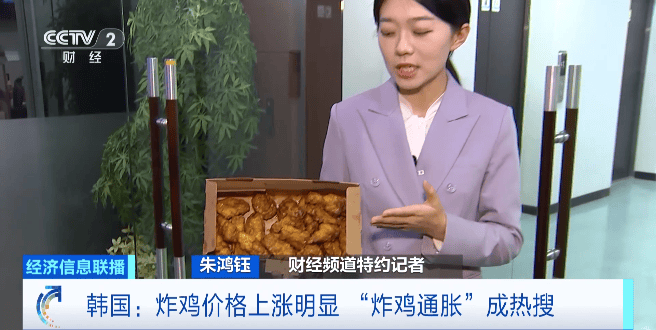
Core Viewpoint - The rising prices of fried chicken in South Korea have sparked discussions about "fried chicken inflation," with delivery prices reaching over 140 RMB, significantly impacting consumer choices [1][3]. Group 1: Price Increases - The average price of fried chicken has increased by 6.3% since October last year, driven by rising costs of ingredients such as cooking oil, flour, and chicken, as well as increased logistics and labor costs [3]. - Popular fried chicken brands are now charging over 100 RMB per serving, with some consumers reporting total costs for delivery reaching up to 146 RMB [3]. Group 2: Consumer Behavior Changes - Some consumers are opting for traditional markets or picking up their orders in-store to save on delivery fees [5]. - There is a noticeable increase in sales of frozen fried chicken products, with a reported annual growth rate of over 20% in the last three years [5].
外资餐饮品牌正加速拥抱中国资本 汉堡王与麦当劳的中国东家皆有“中信渊源”
Mei Ri Jing Ji Xin Wen· 2025-11-13 14:48
Core Insights - The partnership between CPE Yuanfeng and RBI to form Burger King China highlights the struggles of Burger King in the Chinese market, where it has seen stagnant growth compared to competitors like KFC and McDonald's [1][2][4] - The shift in competitive dynamics in China emphasizes the importance of local operational capabilities over foreign brand prestige, leading to increased collaboration between foreign brands and local investors [2][10] Group 1: Market Performance - Burger King has approximately 1,250 stores in China, a decrease from 1,300 in 2019, indicating a net loss of about 50 stores over six years [1] - In contrast, KFC has over 12,000 stores in China, with a net increase of over 5,000 since 2019, while McDonald's is expected to reach 6,820 stores by 2024, adding 1,000 more by 2025 [1][4] - Local brand Tasting has surged from under 1,000 stores to nearly 9,000, showcasing the rapid growth of domestic competitors [1] Group 2: Strategic Shifts - The collaboration with CPE Yuanfeng, which will hold about 83% of the new joint venture, reflects a strategic pivot for Burger King to enhance its local market presence [1][7] - CPE Yuanfeng plans to inject $350 million into Burger King China to support expansion, marketing, menu innovation, and operational improvements [7] - The historical context shows that Burger King entered China late, missing the initial growth phase of Western fast food, which was dominated by KFC and McDonald's [4][5] Group 3: Operational Challenges - Burger King's initial strategy in China focused on a direct management model without franchising, leading to slower growth and a disconnect with local consumer preferences [4][5] - The company has faced challenges in adapting to the fast-changing Chinese market due to remote management practices and a high-end positioning that did not align with local demand [4][5][9] - The acquisition of Burger King China by CPE Yuanfeng is seen as a move to leverage local insights and operational expertise to revitalize the brand [10][11] Group 4: Investment Trends - The trend of Chinese investment firms acquiring foreign brands is driven by the established brand trust and consumer base these brands possess, which reduces the risk compared to building local brands from scratch [10][11] - Financially, the valuation of foreign brands in China presents attractive opportunities for local investors, as seen with Starbucks and other brands [10] - The potential for independent listings of foreign brands' Chinese operations creates significant investment opportunities, as demonstrated by Yum China's successful split from Yum Brands [11]

外资,开始躺平收租了
Sou Hu Cai Jing· 2025-11-13 11:12
Core Insights - Starbucks has officially announced a partnership with Boyu Capital to establish a joint venture for its retail operations in China, with Boyu holding up to 60% equity and Starbucks retaining 40%, based on a valuation of approximately $4 billion [1][2] Group 1: Market Dynamics - The Chinese market has shifted from a blue ocean to a highly competitive red ocean, making it increasingly difficult for foreign companies to generate profits [5][11] - Starbucks reported an 11% decline in same-store sales in Q2 of fiscal year 2024, with both average transaction value and volume decreasing, leading to significant pressure on the company [5][6] - Other foreign brands, such as Decathlon, are also facing challenges from local competitors and e-commerce, resulting in slowed growth [5][6] Group 2: Strategic Shifts - Many foreign companies are opting to relinquish control and introduce local capital, transforming their operations into a rental model, which allows them to lock in profits while minimizing operational risks [4][10] - The trend of foreign companies transitioning to a "rent-seeking" model reflects a broader strategy of financial conversion, allowing them to maintain brand presence while securing cash flow [10][11] Group 3: Local Market Adaptation - Successful local operations, as seen with Yum China, demonstrate that localized strategies can lead to impressive financial performance, with innovative product offerings tailored to local tastes [6][7] - The complexity of managing operations in China has increased, prompting foreign companies to hand over operational control to local teams who are more adept at navigating the market [8][9] Group 4: Brand Value and Profitability - The core asset for foreign companies in China is their brand, which can generate significant revenue through licensing and brand management agreements, often resulting in high margins [9][10] - For instance, McDonald's receives a franchise fee of 3% to 5% of sales from its Chinese operations, translating to an estimated annual income of $2 to $4 billion based on 2023 sales figures [9][10] Group 5: Future Implications - The shift towards a rental model signifies the end of an era where foreign companies could easily dominate the Chinese market solely based on brand and capital advantages [10][11] - This transition indicates that local capital and operational capabilities are becoming increasingly important in managing global brands within China [11][12]
洋快餐集体卖身中国资本,汉堡王交出控股权,新东家10年冲4000店
Sou Hu Cai Jing· 2025-11-13 02:35
Core Insights - Burger King's presence in the Chinese market has been lackluster compared to competitors like KFC and McDonald's, with a significant gap in social media engagement and store count [1][5][8] - The company has announced a strategic partnership with CPE Yuanfeng, which will acquire approximately 83% of Burger King China, aiming to enhance its market position [1][17] - The fast-food landscape in China is becoming increasingly competitive, with local brands gaining traction and international brands needing to adapt to local tastes and preferences [20][25] Group 1: Market Position and Performance - As of September 2023, Burger King China has around 1,300 stores, significantly trailing behind KFC's 11,648 and McDonald's over 7,000 [5] - Burger King's average annual sales per store in China is approximately $40,000, starkly lower than $380,000 in France and $120,000 in South Korea [5] - The brand's late entry into the Chinese market in 2005, 15 years after KFC and McDonald's, has contributed to its struggles [3] Group 2: Consumer Trends and Preferences - The younger generation, particularly Gen Z, is shifting their fast-food preferences towards value and quality, with 85% of young consumers willing to spend no more than 30 yuan on fast food [9][10] - Burger King's traditional offerings have not resonated well with Chinese consumers, leading to a need for more localized menu options [10][12] Group 3: Strategic Moves and Future Plans - The partnership with CPE Yuanfeng will inject $350 million into Burger King China, with plans to expand the store count to over 4,000 by 2035 [17] - Other international brands, such as Starbucks and McDonald's, have also pursued similar strategies of local partnerships to enhance their market presence [16][14] - The competitive landscape is intensifying, with McDonald's and KFC planning to open hundreds of new stores, while local brands like Wallace and Tastin are rapidly expanding [20][25]
打工人吃不起麻辣烫,小老板们也不赚钱
3 6 Ke· 2025-11-13 00:49
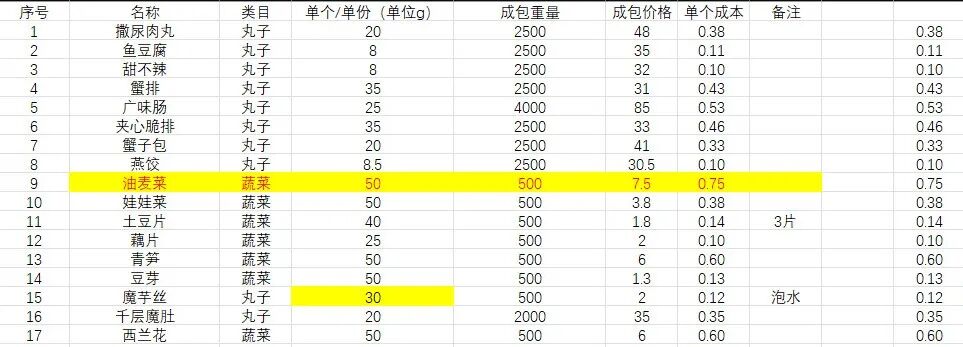
Core Insights - The recent controversy over the high prices of ingredients at Yang Guofu Spicy Hotpot has sparked consumer outrage, highlighting the disconnect between consumer expectations and the actual pricing structure of the business [1][2] - The rising costs of labor, rent, and operational expenses have led to increased prices in the spicy hotpot industry, challenging the perception that chain restaurants should inherently lower costs [2][4] - The shift to a weight-based pricing model has transformed spicy hotpot from a budget-friendly option to a more premium dining experience, which may not align with consumer expectations [18][22] Group 1: Pricing and Consumer Reactions - Consumers are shocked by the high prices of ingredients, with reports of prices like 31.8 yuan per pound for bean sprouts, leading to a backlash against the perceived lack of transparency in pricing [1][2] - The pricing model, which allows customers to choose from a wide variety of ingredients, has resulted in higher average spending per visit, but has also led to complaints about the perceived value [1][18] - The outrage reflects a broader dissatisfaction with the rising costs of dining out, particularly for what was traditionally considered a low-cost meal option [1][22] Group 2: Operational Challenges - The operational complexity of running a spicy hotpot restaurant requires a significant workforce, with an average of 2.5 employees needed just to manage the workload effectively [2][3] - Labor costs are substantial, with monthly wages for staff in first-tier cities reaching at least 20,000 yuan, contributing to the overall high operational costs [4][5] - The preparation of ingredients is labor-intensive, requiring extensive pre-processing and constant monitoring of inventory, which adds to the operational burden [2][3] Group 3: Cost Structure and Profitability - The average cost of ingredients for a bowl of spicy hotpot is estimated to be between 8-10 yuan, with a gross margin of 50-60%, but net profits are significantly lower after accounting for operational costs [5][19] - In ideal conditions, a restaurant could achieve a net profit of around 27,000 yuan per month, but this is contingent on maintaining high sales volumes [5][19] - Variability in operational costs across different regions leads to inconsistent pricing, with some locations able to offer lower prices due to reduced rent and labor costs [7][19] Group 4: Franchise Dynamics - Franchisees face significant financial pressures, with high initial investments and ongoing costs that can lead to substantial losses if sales do not meet expectations [9][10] - The requirement to purchase supplies exclusively from the franchisor often results in higher costs for franchisees, limiting their ability to manage expenses effectively [10][19] - The franchise model has created a situation where many operators feel they are working primarily to benefit the brand rather than achieving their own financial success [9][20]
汉堡王“解约”土耳其团队,找蜜雪股东救场
阿尔法工场研究院· 2025-11-13 00:07
Core Viewpoint - CPE Yuanfeng is investing $350 million into Burger King China to establish a joint venture, aiming to expand the brand's presence in the Chinese market significantly by increasing the number of stores from approximately 1,250 to over 4,000 by 2035 [4][5][16]. Group 1: Investment and Partnership - CPE Yuanfeng will hold about 83% of the joint venture, while Restaurant Brands International (RBI) will retain approximately 17% [5]. - The partnership includes a 20-year master development agreement granting exclusive rights to develop the Burger King brand in China [5]. - CPE Yuanfeng, established in 2008, has a total asset management scale exceeding 150 billion yuan and has previously invested in several successful consumer brands [8][10]. Group 2: Market Performance and Challenges - Burger King has been underperforming in China, with a system sales figure of $700 million (approximately 5 billion yuan) in 2024, ranking eighth among its top international markets [15]. - The average sales per store in China were only $400,000 (around 2.9 million yuan), the lowest among the top ten international markets [15]. - Compared to competitors like KFC and McDonald's, Burger King's market entry was delayed, and its expansion has been slower due to its mid-to-high-end positioning [15][16]. Group 3: Strategic Direction - The collaboration with CPE Yuanfeng reflects RBI's urgent need to revitalize Burger King's business in China [12][16]. - The management team of Burger King China has been localized, with new executives from major international food brands, indicating a shift towards more localized operations [16]. - Future strategies will focus on product development and brand marketing to find market breakthroughs [17].