
电子商务

Search documents
高物价、收入下滑,美国关税政策不断加剧自身民生压力
Ren Min Ri Bao· 2026-01-15 01:06
Core Insights - The U.S. tariff policy is exacerbating domestic economic pressures, leading to declining consumer confidence and increased inflation [3][4][6] - A recent survey indicates that the consumer confidence index for December 2025 is at 53.3, significantly down from 74 in December 2024, reflecting growing concerns over economic stability [3][4] - The holiday shopping season saw a 26% average price increase for popular gifts compared to the previous year, with specific categories like home goods and electronics experiencing even higher price hikes [3][5] Consumer Impact - Many American families are feeling the financial strain from tariff policies, leading to reduced purchasing power during the holiday season [4][5] - A survey revealed that 87% of respondents believe grocery prices have risen, and about two-thirds reported increased expenses for utilities and holiday gifts [4][6] - Approximately 40% of families have cut back on the number of gifts purchased, and nearly one-third have reduced the number of gift recipients due to rising costs [5][6] Tariff Effects on Pricing - The majority of tariff costs (70.5%) are being passed on to consumers, with retailers absorbing the remaining 29.5% [6] - Retailers are incorporating tariff costs into product pricing, leading to higher expenses for consumers [6][7] - The analysis indicates that from March to September 2025, imported goods prices rose by about 4%, while domestic goods saw a 2% increase due to tariffs [6][7] Broader Economic Implications - The ongoing tariff policy is expected to suppress overall demand in the U.S., with a forecast of continued pressure on trade volumes and slowing household consumption growth [7] - The OECD has reported that the value of imported goods subject to tariffs has significantly decreased compared to non-tariffed imports, indicating a broader economic impact [7]


Gemini推出购物功能,AI重塑消费入口的1000天
36氪· 2026-01-15 00:27
Core Viewpoint - The article discusses the ongoing competition among tech giants in the AI and e-commerce sectors, highlighting how AI is reshaping the shopping experience and the dynamics of market competition [4][5][6]. Group 1: AI Integration in E-commerce - Walmart and Google announced a partnership to integrate Walmart's products into Google's Gemini, allowing users to browse and purchase items directly through AI chat interfaces [4]. - OpenAI's ChatGPT introduced the "Instant Checkout" feature, enabling users to complete purchases without leaving the chat interface, marking a significant shift in the shopping process [5][9]. - On Black Friday 2025, AI-driven shopping led to a record online spending of $11.8 billion in the U.S., reflecting a 9.1% increase from the previous year, indicating AI's growing influence in consumer behavior [5]. Group 2: Competitive Landscape - The competition is evolving from search engines to e-commerce platforms, with major players like Google, OpenAI, and retail giants vying for control over transaction entry points [5][6]. - Amazon is taking measures to restrict AI companies from accessing its platform data, indicating its concern over losing control of the shopping process [17][18]. - Shopify is adopting a collaborative approach, allowing AI tools to assist in transactions while ensuring that the final payment process remains within its ecosystem [19][20]. Group 3: Challenges and Future Outlook - Despite advancements, AI shopping functionalities are still in early stages, with issues like "hallucination" affecting the reliability of product recommendations [21]. - The article suggests that the ongoing technological transformation will lead to a redefinition of the boundaries between search, transaction, and decision-making processes, rather than a complete replacement of existing systems [21][22]. - The competition among tech companies is expected to result in a landscape where no single entity can dominate, emphasizing the need for adaptability and innovation [22].



美国关税政策不断加剧自身民生压力
Sou Hu Cai Jing· 2026-01-14 23:33
Group 1 - The core viewpoint of the articles highlights the ongoing impact of U.S. tariff policies on both the U.S. economy and global economy, with consumer confidence significantly declining due to rising prices and inflationary pressures [1][2][4] - The University of Michigan's preliminary consumer confidence index for December 2025 is reported at 53.3, down from 74 in December of the previous year, indicating a lack of confidence among consumers [1] - A report from the "Foundation for Consumer Advocacy" indicates that popular holiday gift prices increased by an average of 26% compared to the previous year, with specific categories like home goods and kitchen items rising by 38% and electronics by 34% [1] Group 2 - Many American families are feeling the financial strain from tariff policies, leading to reduced purchasing power during the holiday season, which is typically a peak time for consumer spending [2] - A recent poll shows that 87% of respondents believe grocery prices have risen, with about two-thirds reporting increased expenses for utilities and holiday gifts [2] - The impact of tariffs is evident as 45% of surveyed consumers feel pressured in their holiday shopping plans due to these policies [3] Group 3 - The majority of tariff costs are being passed on to consumers, with 70.5% of the tariff burden transferred to them, while retailers absorb the remaining 29.5% [3] - The Harvard Business School's pricing lab analysis indicates that from March to September 2025, import prices rose by approximately 4% and domestic goods by 2% due to tariffs [4] - The OECD's latest economic outlook suggests that the imposition of tariffs is suppressing overall demand in the U.S., leading to a forecasted slowdown in household consumption growth and prolonged inflation [4]
美国关税政策不断加剧自身民生压力(深度观察)
Sou Hu Cai Jing· 2026-01-14 22:52
Group 1: Consumer Confidence and Spending - The University of Michigan's survey indicates a decline in the U.S. consumer confidence index, with a preliminary value of 53.3 for December 2025, down from 74 in December 2024 [2] - High prices and declining incomes are causing frustration among consumers, leading to concerns about economic stability [2] - A report from consumer advocacy organizations shows that popular holiday gifts saw an average price increase of 26% compared to the previous year, with home and kitchen goods rising by 38% and electronics by 34% [2] Group 2: Impact of Tariff Policies - Tariff policies are identified as a major factor affecting retail prices and consumer spending, with 45% of surveyed consumers feeling pressured in their holiday shopping plans due to tariffs [4] - The majority of tariff costs (70.5%) are passed on to consumers, with retailers absorbing the remaining 29.5% [4] - The U.S. government's claim that tariff costs will be borne by other countries is contradicted by evidence showing that tariffs are increasing the financial burden on American households [5] Group 3: Consumer Behavior Changes - Many consumers, particularly those from middle and low-income households, are becoming more cautious in their spending, focusing on value for money [3] - Approximately 87% of respondents in a recent poll reported that grocery prices have risen, with about half seeking lower-priced items or postponing large purchases [3] - To cope with rising costs, 40% of families are reducing the number of gifts they buy, and nearly one-third are cutting back on the number of gift recipients [4]

银之杰预计去年业绩再亏损 此前四年累计亏6.51亿元
Xin Lang Cai Jing· 2026-01-14 12:58
Group 1 - The company, Yinzhijie, announced a projected net loss for the fiscal year 2025, marking its fourth consecutive year of losses since 2021 [1] - Cumulative net losses from 2021 to 2024 amount to 651 million yuan, with a net loss of 59.4 million yuan reported for the first three quarters of 2025, showing a slight reduction in losses year-on-year [1] - The company's main business areas include financial information technology, mobile information services, and e-commerce, with significant revenue declines in financial information technology (down 42.41%) and mobile information services (down 30.54%) [1] Group 2 - Since May 2024, the company has had no controlling shareholder or actual controller, as the previous control agreement expired and was not renewed [2] - In September 2024, the former shareholders signed a share transfer agreement to transfer 49.46 million shares (7% of total shares) to Zhuo Haihang, the founder of a stock data app, indicating a potential strategic partnership to expand financial technology services [2] - The company denied rumors of a backdoor listing related to this share transfer, emphasizing its stable governance and long-term development considerations [2]

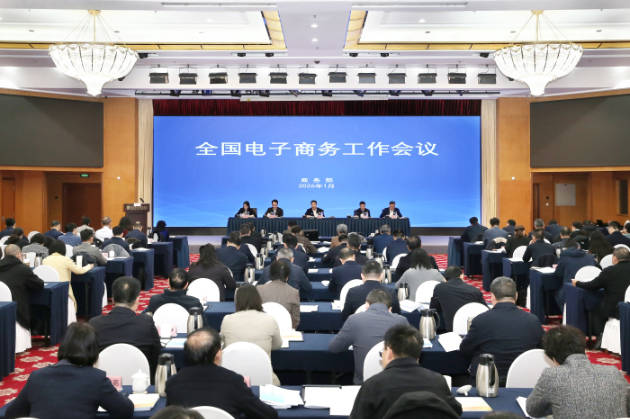
全国电子商务工作会议召开!部署2026年重点工作
Sou Hu Cai Jing· 2026-01-14 12:33
Group 1 - The national e-commerce work conference was held in Beijing on January 13-14, focusing on the achievements of the 14th Five-Year Plan and planning for key tasks in 2026 [2] - The Ministry of Commerce has implemented a series of policies to promote high-quality development in e-commerce, optimizing the development environment and enhancing digital consumption, rural e-commerce, and cross-border e-commerce [2] - Digital consumption has expanded significantly, with an overall scale exceeding 23.8 trillion yuan, maintaining China's position as the world's largest online retail market for 13 consecutive years [2] - The integration of digital and real economies has deepened, with over 1,500 industry e-commerce matching events covering nearly 10,000 enterprises, effectively empowering traditional industry upgrades [2] - The number of e-commerce partner countries in the "Silk Road E-commerce" initiative has increased to 36, promoting global sharing of China's e-commerce market [2] - E-commerce has created over 78 million jobs and has contributed to an annual growth of nearly 20% in express delivery business volume [2] Group 2 - The 15th Five-Year Plan period is crucial for achieving socialist modernization, with 2026 marking the beginning of this phase [3] - The conference emphasized four key areas for development: strengthening leadership and top-level design, driving innovation, optimizing the development environment, and expanding open cooperation [3] - The focus is on achieving high-quality development, high-level openness, and efficient governance in e-commerce [3]
京东启动首届AI影视创作大赛,最高奖金10万元
Xin Lang Cai Jing· 2026-01-14 12:07
Core Insights - JD.com has launched its first AI Film Creation Competition, inviting users to create videos using AI technology in conjunction with the "Ma Honghong" IP character and other brand images [1][3] - Participants must submit original AI-generated short films of at least 15 seconds, with no restrictions on the AI tools used, as long as AIGC technology is significantly applied [1][3] - The competition features a prize structure that includes a total potential cash reward of up to 100,000 yuan for individuals, with specific awards for the top three entries and additional prizes for creative use of the "Ma Honghong" character [1][3] Prize Structure - The competition's prize consists of a base prize, a special creative award for the Year of the Horse, and brand bonuses, with the first-place winner receiving 50,000 yuan, second place 30,000 yuan, and third place 20,000 yuan [1][3] - An additional special creative award of 10,000 yuan is available for participants who incorporate the "Ma Honghong" character in their submissions, with registration for this award starting on January 19 [1][3] Evaluation Mechanism - The evaluation of entries will be based on two equal components: 50% weight from video content performance data, automatically scored by the platform based on views, and 50% from feedback by a professional jury [2][4] - The jury will consist of external directors, university experts, and members of the JD AI Film Creation Competition organizing committee, assessing entries on aesthetic creativity, thematic creativity, AI technology execution, and originality [2][4] - All submitted works will undergo a compliance screening within 48 hours, after which they will be publicly displayed to accumulate view data, with winners announced on February 6 [2][4]

亚马逊将就反垄断罚款提出上诉 即便金额已被削减
Xin Lang Cai Jing· 2026-01-14 07:43
据报道,美国电商巨头亚马逊将就意大利法院削减反垄断罚款的判决提出上诉,该公司坚持认为根本不 应当被处罚。 据报道,美国电商巨头亚马逊将就意大利法院削减反垄断罚款的判决提出上诉,该公司坚持认为根本不 应当被处罚。 报道称意大利监管机构亦将对削减罚款的判决提起上诉。反垄断当局拒绝置评,亚马逊未立即回应置评 请求。 报道称意大利监管机构亦将对削减罚款的判决提起上诉。反垄断当局拒绝置评,亚马逊未立即回应置评 请求。 责任编辑:王许宁 责任编辑:王许宁 意大利反垄断机构周一宣布,将2021年对亚马逊滥用市场支配地位、限制电商物流服务竞争开出的11.3 亿欧元罚金下调至7.524亿欧元(约合8.763亿美元)。此项调整基于去年九月大区行政法院的裁决结 果。 意大利反垄断机构周一宣布,将2021年对亚马逊滥用市场支配地位、限制电商物流服务竞争开出的11.3 亿欧元罚金下调至7.524亿欧元(约合8.763亿美元)。此项调整基于去年九月大区行政法院的裁决结 果。 ...
小摩:京东集团-SW(09618)今年营收微调至年增4% 得益于非电子产品等增长动能
智通财经网· 2026-01-14 07:33
Group 1 - The core viewpoint of the article indicates that JPMorgan forecasts JD Group's revenue for Q4 of last year to grow by 2% year-on-year, slightly better than their previous prediction of 1% [1] - The report suggests that JD's comprehensive product and platform marketing revenue pressure is lower than expected, with projected revenue growth exceeding 10% year-on-year [1] - JD's adjusted net profit for the period is estimated to be around 1 billion RMB [1] Group 2 - JPMorgan has slightly adjusted JD's revenue forecast for this year to a 4% year-on-year increase, driven mainly by growth in non-electronic products and home appliances [1] - The adjusted earnings per share have been modified to reflect Alibaba's commitment to instant retail market share and JD's plans to accelerate its international business, particularly Joybuy in Europe [1] - Following these updates, JPMorgan anticipates JD's adjusted earnings per share growth rate to be approximately 20% annually by 2026 [1]
阿里巴巴-W(09988.HK)午后涨幅扩大
Mei Ri Jing Ji Xin Wen· 2026-01-14 06:07
每经AI快讯,阿里巴巴-W(09988.HK)午后涨幅扩大,截至发稿涨5.88%,报169.3港元,成交额291.5亿 港元。 (文章来源:每日经济新闻) ...

