
人工智能相关产品和服务

Search documents
联想集团披露2025/26财年三季报:AI业务占总收入比例达32%
Bei Jing Shang Bao· 2026-02-13 13:09
Core Viewpoint - Lenovo Group reported a record high revenue of $22.2 billion for the third quarter of the fiscal year 2025/26, marking an 18% year-on-year growth [1] Group Summaries - The revenue from Lenovo's artificial intelligence segment grew by 72% year-on-year, accounting for 32% of the total revenue [1] - In the smart devices sector, Lenovo achieved a global market share of 25.3% in personal computers, becoming the only supplier in nearly 30 years to maintain a market share above 25% for two consecutive quarters [1] - Smartphone sales and activation volumes reached historical highs during this quarter [1] - Revenue from the infrastructure solutions business increased by 31% year-on-year, while revenue from solution services grew by 18% [1]

DLSM外汇平台:美联储立场与AI投资力度,能否支撑牛市延续?
Sou Hu Cai Jing· 2026-02-10 05:44
Group 1 - The U.S. stock market is under scrutiny for its ability to maintain double-digit percentage gains in 2026 after achieving this for three consecutive years from 2023 to 2025, with corporate earnings growth, Federal Reserve policy, and capital expenditure in artificial intelligence being the three core variables influencing market direction [1][3] - Historical data shows that since 1950, there have been seven instances of the U.S. stock market entering its fourth year of a bull market, with six of those years resulting in positive returns and an average gain of 12.8%, providing some support for optimistic expectations, although current market conditions differ significantly from past cycles [3] - The consensus expectation for 2026 is that the earnings growth rate of S&P 500 constituents will remain high but will slow compared to the previous two years, with a target year-end index level of 7400 points, implying a potential gain of about 7%, which is below historical averages [3] Group 2 - The Federal Reserve's policy path is another critical variable, with expectations of two potential interest rate cuts in 2026, influenced by inflation and employment data, and the nomination of Kevin Warsh as the next Fed Chair, who advocates for a combination of rate cuts and balance sheet reduction [3] - Investment in the artificial intelligence sector is on the rise, with major tech companies increasing their capital expenditure plans, such as Oracle raising its annual budget from $35 billion to $50 billion, a 42% increase, which supports industries like semiconductors and cloud computing [4] - The forward P/E ratio of the S&P 500 is at a historically high level, indicating limited market resilience to negative shocks, with geopolitical risks and economic data fluctuations potentially triggering short-term adjustments [4] Group 3 - Emerging market stocks are trading at a forward P/E ratio that is approximately 40% lower than U.S. stocks, which is below the long-term average, suggesting potential valuation recovery in the context of a weaker dollar and global capital reallocation [4] - The outlook for the U.S. stock market in 2026 is expected to be characterized by range-bound trading and structural differentiation rather than the broad-based rallies seen in the previous two years, necessitating flexibility in sector selection and risk exposure management to navigate increased market volatility [4]


赵一德与科大讯飞公司董事长刘庆峰一行座谈
Shan Xi Ri Bao· 2026-02-06 23:24
Core Viewpoint - The meeting between the Secretary of the Provincial Party Committee and the Chairman of iFlytek emphasizes the importance of artificial intelligence in driving high-quality development in Shaanxi province, with a focus on collaboration in various sectors [1] Group 1: Government Initiatives - Shaanxi province is committed to implementing the "Artificial Intelligence +" initiative to enhance productivity and support modernization efforts [1] - The provincial government aims to create a favorable business environment to facilitate the development of companies like iFlytek in the region [1] Group 2: Company Strategy - iFlytek is recognized as a leading company in intelligent voice and artificial intelligence, with a solid foundation for cooperation with Shaanxi [1] - The company plans to leverage Shaanxi's rich educational resources and industrial base to expand its operations in areas such as computing power applications, big data talent cultivation, and urban governance [1]

重点企业为何青睐上海徐汇?“四个度”道出“招大引强”实效
Zhong Guo Fa Zhan Wang· 2026-01-28 04:56
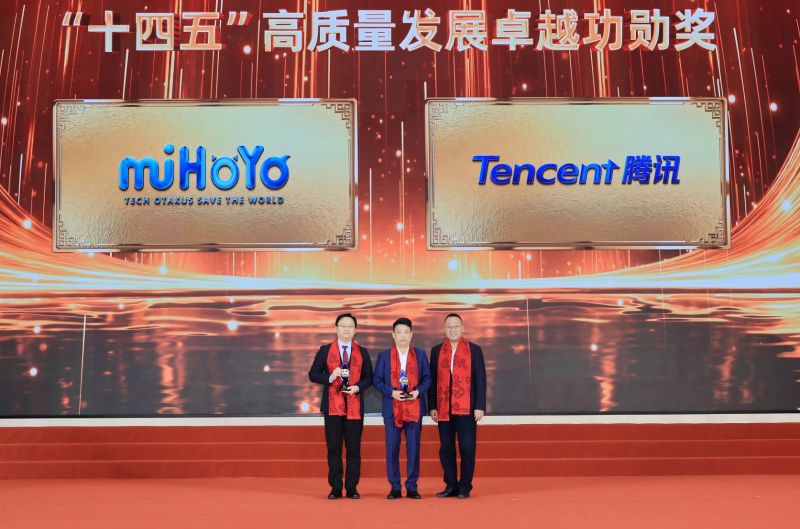
Group 1 - The core message highlights the successful attraction of global high-quality foreign investment in Xuhui, Shanghai, contributing to the region's economic prosperity and growth [2] - The Xuhui District's GDP has achieved a historic leap, crossing two "hundred billion" thresholds during the 14th Five-Year Plan period [2] - Tencent and Mihayou were awarded the "14th Five-Year High-Quality Development Outstanding Contribution Award" for their significant contributions to the economic development of Xuhui [2] Group 2 - MiniMax, a young tech company based in Xuhui, set a record for the fastest AI IPO globally and plans to continue its deep involvement in the AI ecosystem in the region [3] - Ten foreign companies, including 3M China and Mettler-Toledo, received the Foreign Investment Achievement Award for their long-term contributions to the local economy [3] - The newly released "Xuhui District Action Plan for Accelerating the Creation of a First-Class Business Environment (2026)" includes 22 tasks and 96 detailed measures to enhance the business environment [3] Group 3 - The Xuhui District government held a roundtable meeting to gather feedback from high-level executives on business development challenges and policy implementation after the release of the business environment 9.0 plan [4]

新晋万亿之城进击AI,“斜杠城市”温州下一站
2 1 Shi Ji Jing Ji Bao Dao· 2026-01-21 10:39
Core Viewpoint - Wenzhou is emerging as a "slash city" with a projected GDP exceeding 1 trillion yuan by 2025, marking it as China's 28th trillion-yuan city and the third in Zhejiang province, while also aiming to become a national leader in AI application development [1][2]. Economic Growth and Development Goals - Wenzhou's GDP has grown at an average annual rate of 6.5% during the first four years of the 14th Five-Year Plan, moving from 30th to 28th in national GDP rankings, and its resident population increased from 9.57 million to 9.85 million [1]. - The city aims to enhance its urban circle capabilities and establish itself as a significant regional center in the southeast coastal area, with a focus on high-quality development [1][6]. Innovation and AI Development - Wenzhou is prioritizing innovation, particularly in artificial intelligence, with plans to integrate AI into various sectors such as manufacturing, energy, healthcare, and finance [2][5]. - The city has seen a 14% annual increase in R&D expenditure, with a significant expansion of incubator spaces [3]. Strategic Planning and Implementation - The city has outlined nine key tasks for the next five years, focusing on building a modern industrial system, expanding domestic demand, and enhancing the urban circle's development [3]. - Wenzhou plans to establish a comprehensive "3412" work system to support AI development, emphasizing data integration and infrastructure [4]. Urban Circle and Regional Integration - Wenzhou aims to enhance its urban circle's capacity to drive regional development, connecting with the Yangtze River Delta and the Guangdong-Hong Kong-Macao Greater Bay Area [6][7]. - The city is leveraging its global trade networks and unique advantages to expand its influence in emerging markets [7].
【UNforex财经事件】年初风险资产偏强 企业盈利与AI投资延续牛市逻辑
Sou Hu Cai Jing· 2026-01-02 05:16
Group 1 - The core viewpoint is that global major risk assets continue to show a strong trend at the beginning of 2026, driven by expectations of artificial intelligence capital expenditure, robust corporate earnings, and the Federal Reserve's policy direction [1][2] - The S&P 500 index recorded an annual increase of over 16% in 2025, maintaining a bull market structure since October 2022, despite a high interest rate environment [1] - Institutions are optimistic about corporate profit growth in 2026, with expectations that the overall profit growth of S&P 500 constituents may exceed 15%, indicating a broader industry expansion rather than being concentrated in a few tech giants [1][3] Group 2 - In the artificial intelligence sector, infrastructure investment and application scenario expansion are viewed as medium-term support, as long as there are no signs of systemic cuts in AI investment by companies [2] - The path of interest rates remains a significant factor influencing market sentiment, with expectations that the Federal Reserve may further ease in 2026, especially if the economy slows moderately and inflation continues to decline [2] - The Bank of England has lowered its benchmark interest rate to 3.75% and emphasized a cautious approach to future rate cuts, indicating that the pound's performance will depend more on dollar fluctuations than solely on UK factors [3] Group 3 - The current market is in a phase of "support with verification needed," where the upward potential of risk assets coexists with volatility risks until corporate earnings, AI investment sustainability, and policy direction become clearer [3] - The combination of resilient corporate earnings, AI investment expectations, and major central bank policy tendencies is driving the synchronized strength of global risk assets at the beginning of the year [3] - Despite the overall stability in the market, there are multiple uncertainties in 2026, including mid-term elections, international relations, and policy communication risks, which may lead to structural differentiation in asset performance [3]
社评:国际资本为何纷纷“加仓中国”
Sou Hu Cai Jing· 2025-12-14 16:30
Group 1 - The core viewpoint of the articles emphasizes the significant return of international capital to the Chinese market, particularly in the artificial intelligence sector, reflecting a strong interest in China's economic prospects and stability [1][2][4] - The Chinese government is actively promoting policies to support the development of the artificial intelligence industry, indicating a commitment to enhancing its attractiveness to global resources [1][2] - The International Monetary Fund (IMF) and World Bank have raised their economic growth forecasts for China, highlighting the country's resilience in exports and stable domestic demand [2][3] Group 2 - China's comprehensive advantages in economic development, including a complete industrial system and strong supporting capabilities, enable rapid innovation and market application of new technologies [3][4] - The global interest in Chinese assets reflects a broader judgment on China's future growth potential amidst a fragile global economic recovery [4] - China's strategy of greater openness and deeper reforms is seen as a long-term commitment to economic growth, aiming to create win-win scenarios through cooperation [4]
分析师:甲骨文面临AI泡沫质疑 债务风险尤其令人担忧
Ge Long Hui A P P· 2025-12-10 10:29
Core Viewpoint - Oracle's strong earnings outlook has shifted dramatically in just one quarter, with the stock price plummeting 33% since reaching an all-time high on September 10, amid rising concerns in the AI sector regarding capital expenditures and potential circular trading arrangements [1] Company Summary - Oracle is set to release its earnings report after the market closes, following a significant decline in stock price [1] - The company has stretched its balance sheet to the limit, resulting in negative free cash flow and a high leverage ratio, raising concerns among investors [1] - The risk associated with Oracle's debt has become a major worry, with hundreds of billions of dollars in bonds issued through direct debt and indirectly supported projects in recent months [1] - The cost of insurance against Oracle's debt default has surged to its highest level since March 2009, indicating heightened investor anxiety [1] Industry Summary - The AI sector is currently facing a wave of skepticism, primarily due to substantial capital expenditures and the nature of some partnership arrangements [1] - Analysts suggest that the uncertainty surrounding Oracle's financial situation outweighs any potential positive outcomes from its upcoming quarterly earnings report [1]

世贸组织报告显示明年全球贸易前景不容乐观
Jing Ji Ri Bao· 2025-10-23 00:47
Core Insights - The World Trade Organization's latest report highlights the complexities and uncertainties facing global trade, predicting a strong performance in the first half of the year but a bleak outlook for the second half and into 2026 [1] Trade Volume and Growth Forecast - Global merchandise trade volume is expected to grow by 2.4% in 2025, with a significant slowdown to 0.5% in 2026, primarily due to trade policy uncertainties [2] - In the first half of 2025, U.S. companies engaged in stockpiling goods in anticipation of rising tariffs, leading to an unexpected surge in imports, particularly in machinery, equipment, and non-durable goods [2] - The short-term boost in global merchandise trade volume, which saw a year-on-year increase of 4.9%, is not sustainable, with North American trade flows expected to negatively impact growth in 2025 and 2026 [2] Artificial Intelligence Trade Growth - Trade in artificial intelligence-related goods saw a year-on-year increase of over 20% in the first half of 2025, significantly outpacing other categories and driving overall trade growth [3] - The growth in AI-related trade is attributed to investments in digital infrastructure and is not limited to developed countries, with emerging markets also playing a crucial role [3] - AI technology is reshaping trade dynamics by enhancing innovation and industrial upgrades, allowing emerging markets to better participate in international trade [3] Service Trade Trends - Global service trade grew by 5% year-on-year in the first half of 2025, a slowdown from previous years, with expectations of continued deceleration due to economic growth slowdowns and geopolitical tensions [4] - Despite current challenges, the long-term outlook for service trade remains optimistic, particularly with the rise of digital services as emerging markets develop economically [4] Trade Policy Impact - Trade policy uncertainties are impacting global trade by affecting corporate investment, consumer spending, and supply chain stability, leading to increased costs [4] - The report emphasizes the need for transparent and coordinated trade policies to enhance business confidence and promote trade investment [5] Recommendations for Trade Development - The report suggests several measures to address current trade challenges, including enhancing policy transparency, coordinating trade policies, and supporting developing countries to improve their trade competitiveness [5] - Promoting digital economy development and green trade initiatives are also highlighted as essential for sustainable global trade growth [5]
明年全球贸易前景不容乐观
Jing Ji Ri Bao· 2025-10-22 22:10
Core Insights - The World Trade Organization's latest report indicates that while global trade showed strong performance in the first half of the year, the outlook for the second half and into 2026 is pessimistic due to rising tariffs and increased trade policy uncertainty [1] Group 1: Global Trade Performance - Global merchandise trade volume is projected to grow by 2.4% in 2025, but the growth rate is expected to drop to 0.5% in 2026, primarily due to trade policy uncertainty [2] - In the first quarter of 2025, U.S. imports surged beyond expectations as companies stockpiled goods in anticipation of future tariff increases, leading to a 4.9% year-on-year increase in global merchandise trade volume [2] Group 2: Artificial Intelligence Trade Growth - Trade in artificial intelligence-related goods grew by over 20% year-on-year in the first half of 2025, significantly outpacing other goods and becoming a key driver of trade growth [3] - The growth in AI-related trade is attributed to investments in digital infrastructure and includes contributions from both developed and emerging markets, with East Asia remaining a major supply chain hub [3] Group 3: Service Trade Trends - Global service trade grew by 5% year-on-year in the first half of 2025, a slowdown compared to previous years, with expectations of continued deceleration in 2025 and 2026 due to economic slowdown and geopolitical tensions [4] - Despite the current slowdown, there is optimism for long-term growth in service trade, particularly driven by the development of the digital economy and increasing demand from emerging markets [4] Group 4: Trade Policy Uncertainty - Trade policy uncertainty impacts global trade by affecting business investment, consumer spending, supply chain stability, and trade costs, leading to a more cautious approach from companies [4] Group 5: Recommendations for Trade Development - To address the challenges facing global trade, measures such as enhancing trade policy transparency, improving policy coordination, and supporting developing countries' trade competitiveness are recommended [5] - Promoting digital economy development and green trade initiatives are also suggested to facilitate trade and ensure sustainable growth [5]