激光雷达

Search documents
美国激光雷达最后希望暴雷,CEO被罢免CFO跑路,现金流岌岌可危
3 6 Ke· 2025-12-01 09:24
Core Viewpoint - Luminar's market value has plummeted from a peak of $5 billion to approximately $70 million in less than three years, revealing significant operational and financial challenges [2][3][14] Financial Situation - Luminar announced a 25% workforce reduction to mitigate losses, with only $72 million in cash and securities remaining, which may only last until Q1 of next year without new financing [3][6] - The company has also faced debt defaults, indicating severe financial distress [5][6] - The recent departure of the CFO, who was instrumental in Luminar's IPO, suggests a lack of confidence in the company's financial health [6][14] Business Operations - Despite initial success in securing partnerships with major automotive companies, Luminar has struggled to convert these into profitable business outcomes, with only a few models actually utilizing their lidar technology [12][14] - The company's strategy of selling lidar units below cost to gain market share has not proven sustainable, leading to further financial strain [14][16] Technological Challenges - Luminar's choice of technology, specifically the 1550nm wavelength and 2D scanning structure, has made it difficult to compete with other players in the market who have adopted more cost-effective solutions [18][21] - Competitors using the 905nm wavelength have gained significant market share, with companies like Hesai and RoboSense dominating the ADAS and Robotaxi markets [23][25] Market Position - The company faces a challenging environment in the U.S. market, where the perception of lidar technology has been diminished, particularly by industry leaders like Tesla [25] - The potential for new opportunities in the lidar market may be overshadowed by the advancements made by Chinese competitors, who are rapidly gaining ground [25]

速腾聚创诉灵明光子,涉及激光雷达芯片
Di Yi Cai Jing· 2025-12-01 05:06
Core Viewpoint - Shenzhen SUTENG Juchuang Technology Co., Ltd. has filed a lawsuit against Shenzhen Lingming Photon Technology Co., Ltd. for alleged infringement of trade secrets related to its self-developed SPAD chip technology [1] Group 1: Legal Action - SUTENG Juchuang has submitted a case application to the Shenzhen Intermediate People's Court in Guangdong Province, awaiting court acceptance [1] - The lawsuit is based on accusations of trade secret infringement concerning the SPAD chip technology [1] - SUTENG Juchuang demands that Lingming Photon cease the manufacturing and sale of the involved chip products [1] Group 2: Product Information - The SPAD chip is referred to as the "digital heart" of LiDAR technology [1] - SUTENG Juchuang has previously launched a digital all-solid-state LiDAR E platform based on its SPAD-SoC chip, which has passed automotive certification and achieved mass production [1] Group 3: Company Responses - Lingming Photon has stated that it has not received any related correspondence regarding the lawsuit [1] - SUTENG Juchuang has not commented on the details of the lawsuit [1]
速腾聚创诉灵明光子 涉及激光雷达芯片
Di Yi Cai Jing· 2025-12-01 04:59
Core Viewpoint - Shenzhen SUTENG Juchuang Technology Co., Ltd. has filed a lawsuit against Shenzhen Lingming Photon Technology Co., Ltd. for alleged infringement of trade secrets related to its self-developed SPAD chip technology [3] Group 1: Company Actions - SUTENG Juchuang submitted a lawsuit application to the Shenzhen Intermediate People's Court in November, claiming that Lingming Photon infringed upon its SPAD chip technology secrets [3] - The lawsuit seeks to stop Lingming Photon from manufacturing and selling the involved chip products [3] Group 2: Industry Context - The SPAD chip is referred to as the "digital heart" of LiDAR technology, indicating its significance in the automotive and technology sectors [1] - SUTENG Juchuang has previously launched a digital all-solid-state LiDAR E platform based on its SPAD-SoC chip, which has achieved automotive certification and mass production [1]
东吴证券晨会纪要-20251201
Soochow Securities· 2025-12-01 02:01
Macro Strategy - The core viewpoint indicates that in 2026, China's economy is expected to grow steadily, with inflation gradually improving and corporate profits likely to continue rising after a turning point in 2025. Global liquidity is anticipated to remain loose, and the relationship between China and the US may stabilize in the short term but could experience increased volatility in the long term. The AI industry trend is expected to drive changes in both upstream supply and downstream demand within the technology-related industrial chain [1][7]. - The overall preference ranking for major asset classes is stocks > commodities (industrial products) > gold > exchange rates > bonds [1][7]. - The macroeconomic outlook for 2026 predicts a 4.9% growth in China's economy, with investment recovery and a slight increase in CPI by 0.5% while PPI is expected to decline by 0.9% [1][7]. Fixed Income Strategy - The credit bond market is characterized by both opportunities and risks in supply and demand, with three main strategies focusing on liquidity, the pace of economic recovery, and regulatory policy changes [2][9]. - The strategy suggests a defensive approach with a focus on short to medium-term credit bonds while selectively engaging in long-term bonds for potential trading opportunities [2][9]. - The city investment bond sector is expected to maintain a "zero tolerance" regulatory stance, with ongoing adjustments to meet new development models, leading to a tight balance in financing [2][9]. Industry Insights Starry Technology (星宸科技) - Starry Technology is a leading global smart security chip company, focusing on the development and sales of smart security chips across three main areas: smart security, smart IoT, and smart automotive [11]. - The company is expected to achieve revenue of 2.354 billion yuan and a net profit of 256 million yuan in 2024, with a research and development expense ratio of 25.59% and a gross margin of 35.79% [11]. - Starry Technology holds a leading market share in IPC SoC and NVR SoC, with respective market shares of 36.5% and 38.7% in 2021 [11]. Zhongli Co., Ltd. (中力股份) - Zhongli Co., Ltd. is a global leader in electric forklifts, focusing on the green and intelligent development of material handling [12]. - The company is projected to achieve net profits of 910 million yuan, 1 billion yuan, and 1.13 billion yuan from 2025 to 2027, with corresponding PE ratios of 16, 15, and 13 times [12][13]. - The company benefits from the industry's electrification trend and is well-positioned for growth in the context of automation and intelligent logistics solutions [12][13]. Suzhou Keda (苏州科达) - Suzhou Keda is actively expanding its overseas market presence, particularly in line with the Belt and Road Initiative, and is involved in various international safety and information projects [14]. - The company is leveraging AI technology to enhance its product offerings, including smart video surveillance and communication systems [14]. - Despite short-term pressures on performance, the company is expected to recover as it capitalizes on AI integration and overseas expansion [14]. Sutech (速腾聚创) - Sutech has shown significant improvement in gross margins, particularly in its robotics segment, which is expected to enter a high-growth phase [15][16]. - The company reported a revenue of 4.07 billion yuan in Q3 2025, with a notable increase in sales from its robotics products [15][16]. - The focus on product iteration and market expansion positions Sutech for long-term growth potential in the robotics industry [15][16].
中金:维持速腾聚创(02498)跑赢行业评级 目标价47港元
智通财经网· 2025-12-01 01:53
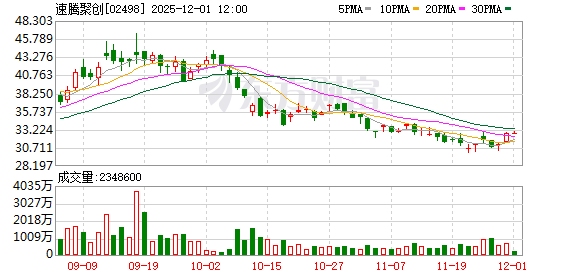
Core Viewpoint - The report from CICC expresses optimism about Suton Ju Chuang (02498) benefiting from rapid growth in downstream demand due to its digital product advantages, maintaining an outperform rating and a target price of HKD 47.00, which corresponds to 10.9x and 7.1x P/S for 2025/2026, indicating a 43% upside from the current stock price [1] Group 1: Financial Performance - In Q3 2025, the company achieved revenue of CNY 407 million, aligning with CICC's previous expectations [2] - The gross margin improved year-on-year, increasing by 6.5 percentage points to 23.9% in Q3 2025 [2] - The robotics sector showed remarkable performance, with laser radar sales in this field growing by 393.1% year-on-year and revenue increasing by 157.8% [2] - The company aims to achieve profitability in Q4 2025 [2] Group 2: ADAS Business - The EM platform's digital products have gained customer recognition, with 13 automakers securing 56 model designations [3] - The EMX platform, targeting L2+, has received 49 model designations and is expected to enter mass production in 2026, potentially becoming a key support for the ADAS business [3] - The EM4 platform has been adopted in several models, including Zeekr 9X and Zhiji LS6/LS9, and is anticipated to be a core configuration for L3 vehicles [3] - The company has secured multiple model designations from 12 overseas and joint venture brands, including major European and North American electric vehicle manufacturers, with order volumes exceeding 500,000 units [3] Group 3: Robotics and Other Businesses - The company has partnered with Didi to equip its next-generation Robotaxi with 10 units of its automotive-grade digital laser radar [4] - The company is entering the lawn mowing robot market with E1R and Airy, having established partnerships with several top 5 industry clients, with large-scale production set to begin in Q4 2025 [4] - In urban delivery, the company collaborates with 90% of leading global clients, and the newly launched Fairy has been commercialized on the New Stone Unmanned Vehicle X3 [4] - In October, the company introduced Active Camera 2, enhancing its embodied intelligence layout [4]
速腾聚创 10 月份月出货量创历史新高;2025 年4 季度起势头料将更为强劲,重申“增持”评级
2025-12-01 01:29
Summary of the Conference Call Transcript Company Overview - **Company**: 速腾聚创 (Suteng Juchuang) - **Stock Code**: 2498.HK - **Industry**: Laser Radar and Robotics Key Points and Arguments 1. **Record Monthly Shipment**: In October, the company achieved a record monthly shipment of 120,000 laser radars, driven by strong orders in Advanced Driver Assistance Systems (ADAS) and lawn mowing robots [1][5][9] 2. **Future Growth Projections**: The management expects robust growth in laser radar orders starting from Q4 2025, with projected shipments of 455,000 units in 2025 and 2.26 million units in 2026, representing year-on-year revenue growth of 58% and 68% respectively [1][5][9] 3. **New Client Contracts**: The company has secured new contracts with multiple clients, including BYD, Zeekr, and several joint ventures, for 56 vehicle models, enhancing its market position in the ADAS sector [5][9] 4. **Robotics Sector Expansion**: Significant progress has been made in the robotics sector, with large-scale production of lawn mowing robots set to begin in Q4 2025 and new partnerships for autonomous taxi services with Didi Chuxing [1][5][9] 5. **Profitability Outlook**: The company is expected to achieve profitability starting from Q4 2025, with a projected adjusted net profit of 187 million yuan in 2026 and 491 million yuan in 2027 [1][9][21] 6. **Investment Rating**: The company maintains a "Buy" rating with a target price of 53 HKD by December 2026, based on a 5x forward price-to-sales ratio [1][9][10][21] 7. **Market Positioning**: Despite underperforming the Hang Seng Index by 22 percentage points since Q4, the company has outperformed its main competitor, Hesai Technology, by 19 percentage points [5][9] 8. **Revenue Forecast Adjustments**: Revenue estimates for 2025 have been revised down by 9.7% to 2,003 million yuan, while 2026 estimates have been increased by 4.2% to 3,363 million yuan [3][16] Additional Important Information 1. **Market Penetration**: The penetration rate of ADAS laser radars in China is projected to reach 20% in 2025 and 30% in 2026, indicating a growing market opportunity [5][9] 2. **High Margin Products**: The company anticipates that high-margin products will increase their contribution to revenue from 4% in 2024 to 38% in 2026, which will enhance overall profitability [5][9] 3. **Risks**: Key risks include potential delays or cancellations of contracts, intense industry competition, sustained pressure on prices and margins, and geopolitical tensions [23][21] This summary encapsulates the essential insights from the conference call, highlighting the company's performance, future outlook, and strategic positioning within the laser radar and robotics industry.
“潮货出海、优品入潮”供应链合作启动
Nan Fang Du Shi Bao· 2025-11-30 23:08
11月29日,以"根脉亲 家国兴"为主题的第二十三届国际潮团联谊年会在潮州国际会展中心开幕。来自 全球165个潮人社团的近1800名代表跨越山海、齐聚一堂,在归乡之旅中寻根脉、叙乡情、兴家国、谋 未来。活动现场,有海外潮商代表告诉南都记者,他希望此次归潮的海外潮人,可以多了解项目,挖掘 回潮州投资的机遇。"不单单是联谊乡情,也要趁这个机会共谋发展。" 寻根脉:"潮人精神"驰骋海内外商海 "潮人精神"和"潮人力量",作为海内外潮人的宝贵特质,在本次潮团联谊年会上被多次提及。 "潮团之潮,源于潮州。"广东凯普生物科技股份有限公司董事长管乔中在分享中表示,他之所以选择将 企业总部设在潮州,是因为在创业过程中,始终感受到来自家乡的鼎力支持。"我们或许行业不同、规 模各异,但都有同一个梦想,那就是:实业报效家国,文化凝聚世界。" "无论走到哪里,我始终记得自己从韩江边来。"深圳市速腾聚创科技有限公司董事长兼首席科学家邱纯 鑫在年会开幕式上分享了自己的创业故事。"大家现在看到的智能电动汽车,每两至三台车上的激光雷 达,就有一台是我们生产的。"在邱纯鑫看来,潮商品格,就是他们面对技术难题时的韧性,是敢于在 全球竞争中亮剑的 ...
速腾聚创(2498.HK):数字化新产品进入量产落地阶段
Ge Long Hui· 2025-11-29 20:12
Core Viewpoint - The company has successfully delivered new digital lidar products and reported a third-quarter revenue of 407 million yuan, with a net profit loss of 101 million yuan, but shows potential for improvement in gross margin and profitability in the upcoming quarters [1] Group 1: ADAS Business - The ADAS digital product matrix has entered a delivery phase, with a significant increase in the number of designated models, laying the foundation for scale delivery [2] - The company has received designations from 13 automakers for 56 vehicle models, with the EMX platform achieving 49 designations since its launch [2] - The EM4 radar, recognized as an industry leader, has been installed in several models and is expected to become a core configuration under L3 regulations [2] Group 2: Robotaxi Business - The EM4+E1 digital combination scheme is accelerating penetration into the L4 market, with a recent designation for a new generation Robotaxi model from Didi [2] - The product features a high-redundancy perception scheme, indicating its entry into high-reliability application scenarios [2] - The demand for lidar products is expected to strengthen as the autonomous driving industry commercializes, positioning the Robotaxi business as a key growth driver [2] Group 3: Robotics Business - The robotics business is entering a rapid growth phase, with digital radar and AC platform products achieving breakthroughs in multiple scenarios [3] - The company’s products are being applied in leading autonomous driving manufacturers' models, with increasing demand in lawn mowing robots and unmanned agricultural machinery [3] - The introduction of the AC2 product enhances six-dimensional motion perception and three-dimensional spatial information support for robotics applications [3] Group 4: Financial Forecast and Valuation - The company maintains revenue forecasts of 2.4 billion, 3.73 billion, and 5.14 billion yuan for 2025, 2026, and 2027 respectively, with net profit forecasts of -150 million, 190 million, and 510 million yuan [3] - The target price is set at 51.48 HKD, reflecting a premium based on comparable companies and the anticipated rapid growth in digital lidar deliveries [4]
速腾聚创(02498.HK)2025年三季度业绩点评:毛利率显著修复 机器人产品起量
Ge Long Hui· 2025-11-29 20:12
Core Viewpoint - The company reported a revenue of 407 million yuan for Q3 2025, showing a year-on-year decline of 1.6% and a quarter-on-quarter decline of 10.6%, while adjusted net loss narrowed to 64.57 million yuan from 69.41 million yuan in the same period last year [1][2]. Revenue Performance - ADAS product revenue decreased by 25.7% to 245 million yuan, while robot product revenue increased by 157.8% to 142 million yuan [1]. - Total sales of LiDAR units reached 185,600, marking a year-on-year increase of 34.0% and a quarter-on-quarter increase of 17.3% [1]. Profitability - The gross margin for ADAS LiDAR products improved to 18.1%, up 4.0 percentage points year-on-year, indicating effective cost reduction through self-developed SOC chips [2]. - R&D expenses rose by 18.5% to 180 million yuan, driven by increased investment in new product development [2]. Market Expansion - The company has secured 32 automotive clients with 144 model designations as of Q3 2025, including new partnerships with major Japanese and North American clients [2]. - The company is optimistic about revenue contributions from overseas collaborations starting in 2026 [2]. Robotics Business - The robotics segment is becoming a growth driver, with new digital products like E1R and Airy entering mass production [3]. - The company is enhancing its presence in the robotics field through integrated technologies and has been recognized for its innovative solutions [3]. Profit Forecast and Investment Rating - The company maintains its profit forecasts for 2025-2027, expecting net profits of -228 million, 58 million, and 379 million yuan respectively [3]. - The company is viewed positively for its long-term growth potential, maintaining a "buy" rating [3].

深夜全线爆发,白银创历史新高
Zheng Quan Shi Bao· 2025-11-28 23:03
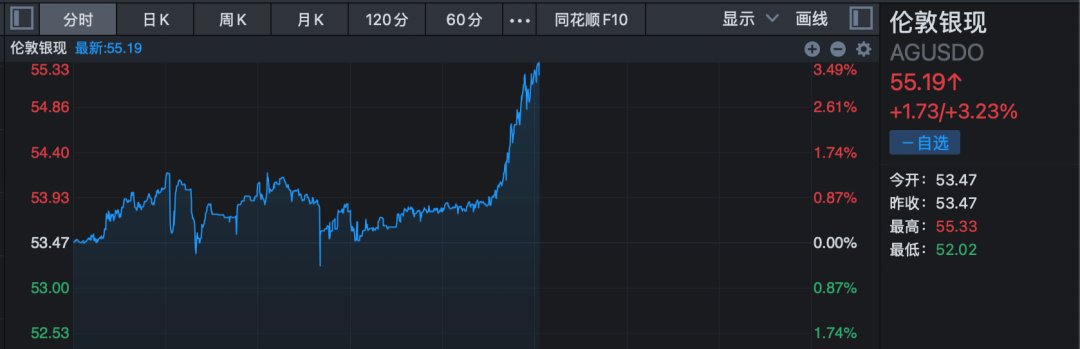
Market Overview - US stock indices opened higher, with the Dow Jones Industrial Average at 47,604.20, up 0.37%, the Nasdaq at 23,273.50, up 0.25%, and the S&P 500 at 6,829.45, also up 0.25% [4] - Technology stocks surged, particularly storage chip companies, with Micron Technology rising over 2% and Western Digital increasing nearly 1% due to a global supply-demand imbalance in the DRAM market driven by surging AI computing needs [4] - The Nasdaq China Golden Dragon Index rose nearly 1%, with popular Chinese concept stocks generally increasing [4] Precious Metals - Spot gold rose to over $4,200 per ounce, gaining more than 1% in a single day [1] - Spot silver increased by 3.23%, reaching a new historical high of $55.19 per ounce [1][2] Base Metals - Base metals experienced a significant rally, with London tin rising nearly 3% and New York copper increasing by 2% [2] - Other metals such as aluminum and zinc also saw price increases [2][3] Company Performance - Bawang Tea reported a total GMV of 7.93 billion yuan and net income of 3.208 billion yuan for Q3 2025, with a registered user base of 222 million, reflecting a 36.7% year-on-year growth [5][6] - Pony.ai announced a revenue of 181 million yuan for Q3 2025, a 72% increase year-on-year, with its Robotaxi business revenue growing by 89.5% [6] - NIO delivered 87,100 vehicles in Q3 2025, a 40.8% increase year-on-year, with revenue reaching 21.79 billion yuan, up 16.7% [7] - Hesai Technology launched new high-performance chips and advanced lidar technology during a recent event [7]