
国际贸易

Search documents
中国贸促会:前三季度全国贸促系统优惠原产地证书签证金额和份数大幅双增长
Zheng Quan Ri Bao Wang· 2025-10-31 13:08
Core Insights - The China Council for the Promotion of International Trade reported a significant increase in the issuance of various certificates, indicating strong resilience in China's foreign trade during the first three quarters of 2025 [1] Group 1: Certificate Issuance - From January to September 2025, a total of 6.1532 million certificates were issued, representing a year-on-year growth of 17.64% [1] - The total value of non-preferential certificates amounted to $264.467 billion, with 3.3305 million certificates issued, reflecting a 5.10% increase in issuance [1] - Preferential certificates saw a total value of $75.545 billion, with 2.2884 million certificates issued, marking a substantial year-on-year growth of 38.62% in value and 47.25% in quantity [1] Group 2: RCEP Certificates - The issuance of RCEP certificates from January to September 2025 totaled $7.08 billion, showing a year-on-year increase of 24.01% [1] - The number of RCEP certificates issued reached 242,500, which is a 25.57% increase compared to the previous year [1] Group 3: Market Dynamics - The significant growth in both the value and quantity of preferential certificates indicates that Chinese foreign trade enterprises are actively adapting and innovating in response to complex external environments [1] - The expansion of China's foreign trade "circle of friends" and the accumulation of new advantages and momentum are expected to provide strong support for the stable development of foreign trade in the next phase [1]
商务部:将持续推进自贸谈判 大力推动双向市场开放、削减非关税壁垒
智通财经网· 2025-10-31 06:27
Core Viewpoint - The Chinese government emphasizes the importance of green trade as a key driver for economic growth and a response to global climate change, while also addressing challenges such as unilateralism and protectionism [1][4][20]. Group 1: Global Governance and Cooperation - China actively participates in global governance related to green trade through platforms like the G20, BRICS, and APEC, sharing its practices and proposals [1][8]. - The "Digital Economy and Green Development International Trade Cooperation Framework Initiative" has received positive responses from over 50 economies, indicating its popularity [1][8]. - China has committed to reducing tariffs on environmental products to below 5% as part of its APEC commitments [1][8]. Group 2: Free Trade Agreements and Standards - Recent free trade agreements, such as the China-ASEAN Free Trade Area 3.0, include chapters on green economy and prioritize green trade [2][9]. - Ongoing negotiations with countries like Switzerland, South Korea, and Peru also incorporate environmental protection and green industry cooperation [2][9]. - The government aims to enhance the "green content" of its free trade agreements and create a fair and transparent market environment [2][9]. Group 3: Domestic Reforms and Standards Alignment - The Ministry of Commerce is working to align domestic standards with international green standards, focusing on environmental standards and product certification [2][10]. - Efforts are underway to improve the green product standard, certification, and labeling systems, facilitating better integration of Chinese green products into global markets [2][10]. Group 4: Implementation of Green Trade Policies - The "Implementation Opinions" on expanding green trade aim to enhance the green development capabilities of foreign trade enterprises through training and best practice sharing [5][26]. - The government encourages the development of sustainable fuel trade and the exploration of remanufactured products for import and export [5][26]. - A public service platform for green trade is being established to improve third-party green service capabilities [5][26]. Group 5: Financial Support and Infrastructure - Financial policies are being strengthened to support green trade, including enhancing export credit insurance for green industries [6][31]. - The establishment of a carbon footprint database and a carbon pricing mechanism is underway to support green trade initiatives [6][31]. Group 6: International Collaboration and Standards - China is committed to participating in international discussions on carbon trade rules and aims to establish inclusive and fair international green trade regulations [6][20]. - The government is actively involved in the development of international standards for carbon emissions and green products, enhancing its role in global governance [6][24]. Group 7: Market Trends and Characteristics - Green low-carbon products are becoming a new driving force for foreign trade, with significant growth in exports of wind power, solar products, and electric vehicles [20][21]. - The shift from merely selling products to providing integrated solutions, including technology and services, is evident in international markets [22][34]. Group 8: Support for SMEs - The government is focused on helping small and medium-sized enterprises (SMEs) navigate the challenges of green transformation through enhanced public services and training [26][27]. - Initiatives include organizing trade promotion activities and establishing a platform for sharing best practices among SMEs [26][27].
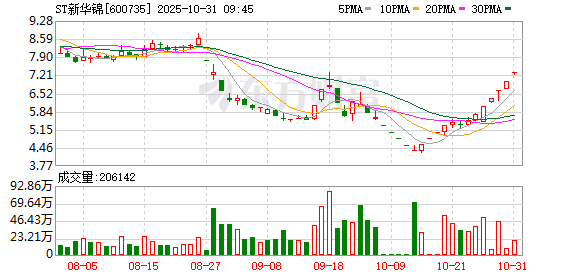
ST新华锦连收5个涨停板
Zheng Quan Shi Bao Wang· 2025-10-31 01:45
Core Viewpoint - ST Xinhua Jin has experienced a significant surge in stock price, achieving five consecutive daily limit-ups, with a total increase of 27.75% during this period [2] Recent Stock Performance - As of 9:25 AM, the stock price reached 7.32 yuan, with a turnover rate of 0.20% and a trading volume of 835,700 shares, amounting to a transaction value of 6.12 million yuan [2] - The stock's limit-up order amount was 67.58 million yuan, indicating strong buying interest [2] - The stock has been listed on the Dragon and Tiger List due to a cumulative closing price deviation of 12% over three consecutive trading days, with a net selling amount of 2.44 million yuan from the leading brokerage firms [2] Financial Performance - In the third quarter, the company reported a total revenue of 1.025 billion yuan, a year-on-year decrease of 21.53% [2] - The net profit for the same period was 16.44 million yuan, reflecting a year-on-year decline of 60.93% [2] - The basic earnings per share were reported at 0.0383 yuan, with a weighted average return on equity of 1.36% [2] Company Background - Shandong Xinhua Jin International Co., Ltd. was established on November 28, 1993, with a registered capital of 428.78 million yuan [2]


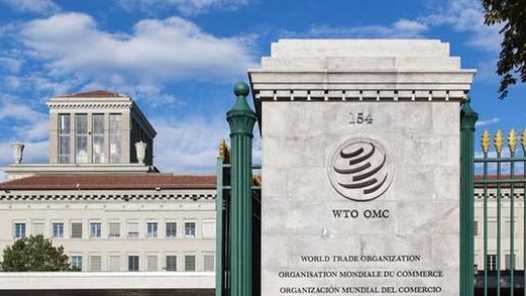
8个月后,特朗普政府悄悄补缴WTO会费
Di Yi Cai Jing· 2025-10-30 10:04
Core Points - The U.S. has resolved an eight-month deadlock with the WTO by paying approximately $25.7 million in overdue fees, despite previous criticisms of the organization by the Trump administration [1][3] - The payment ensures that the U.S. is no longer subject to administrative measures for overdue fees, which could have included various penalties [3][6] - The U.S. is still not restoring the WTO's appellate body, which has been paralyzed since 2019 due to the U.S. blocking the appointment of new judges [3][5] Financial Obligations - The U.S. is required to pay 11% of the WTO's annual budget, which is approximately 205 million Swiss Francs (around $25.7 million) for 2024 [3] - The overdue fees had significant implications for the WTO's operations, leading to budget constraints and a reduction in technical assistance to developing countries [6][7] U.S. Participation in WTO - Despite the payment, the U.S. continues to undermine the WTO's dispute resolution capabilities by blocking the selection of appellate body members [4][5] - The U.S. is engaging in WTO technical work at an administrative level, indicating a selective approach to participation rather than a fundamental strategy shift [6][7] - Experts suggest that the U.S. payment is more about maintaining control over the WTO rather than a genuine commitment to reforming the organization [6][7]
28国驻华外交官访桂探寻合作发展新机遇
Guang Xi Ri Bao· 2025-10-30 02:21
Core Insights - A delegation of diplomats from 28 countries, including Argentina, Croatia, Cameroon, Kenya, Jordan, Colombia, and South Korea, gathered in Guangxi for a three-day visit to explore development dynamics and cooperation opportunities [1] - The visit included an examination of the China-ASEAN Featured Commodity Gathering Center, which aims to create a "365-day never-ending Expo" through a combination of online digital platforms and offline immersive trade experiences [1] - The event also featured the opening of the 12th China-ASEAN (Nanning) Drama Week, themed "Silk Road Sets Sail in the New Era," showcasing diverse artistic expressions to build cultural bridges [1] Group 1 - The delegation's visit highlights Guangxi's open advantages built on the Western Land-Sea New Corridor [1] - The China-ASEAN Featured Commodity Gathering Center serves as an efficient trade bridge for both ASEAN and African countries, with potential in agricultural trade for Cameroon [1] - The drama week aims to enhance bilateral relations through cultural exchanges, marking the 45th anniversary of diplomatic relations between Colombia and China [1] Group 2 - The delegation plans to visit various sites, including the China-ASEAN Artificial Intelligence Application Cooperation Center and the Beibu Gulf Port Smart Port Innovation Center, to experience Guangxi's technological empowerment and ecological cultural charm [2]
制度创新结硕果——中国(新疆)自由贸易试验区成立2周年观察
Xin Hua Wang· 2025-10-29 14:32
Core Insights - The China (Xinjiang) Free Trade Zone has achieved significant results in its two years of establishment, with a completion rate of 81.5% for reform pilot tasks and over 44,000 registered enterprises, contributing to over 40% of Xinjiang's total foreign trade value [1][14] - The Free Trade Zone has become a driving force for high-level opening up in Xinjiang, injecting new vitality into the region's economic and social high-quality development [1] Trade Facilitation - Trade facilitation measures have led to significant improvements in logistics and customs processes, reducing customs clearance time from 3 hours to 1 hour, and enabling faster access to markets like Almaty, Kazakhstan [3][4] - In the first three quarters of this year, Xinjiang's total foreign trade value reached 393.14 billion yuan, reflecting a year-on-year growth of 22.1% [6] Industrial System Development - The innovative regulatory models in the Free Trade Zone, particularly in bonded supervision, have enabled companies to overcome previous challenges related to high tariffs and slow customs processes, enhancing competitiveness [7] - The Free Trade Zone is fostering an open industrial system, pushing the industrial chain towards higher value chains [8] Market Environment Optimization - The establishment of the Urumqi Immigration Service Center has streamlined foreign-related business processes, reducing processing times significantly, thus enhancing the overall business environment [10][12] - The Free Trade Zone has attracted numerous key business associations, enterprises, and foreign investments by continuously optimizing the business environment [12][14] Regional Development and Cooperation - The three areas within the Free Trade Zone—Urumqi, Kashgar, and Horgos—are developing complementary functions and promoting coordinated opening-up, enhancing cross-border economic cooperation [14] - The Xinjiang Free Trade Zone aims to leverage its advantages to become a new high ground for reform and opening up, especially as the region celebrates its 70th anniversary [14]
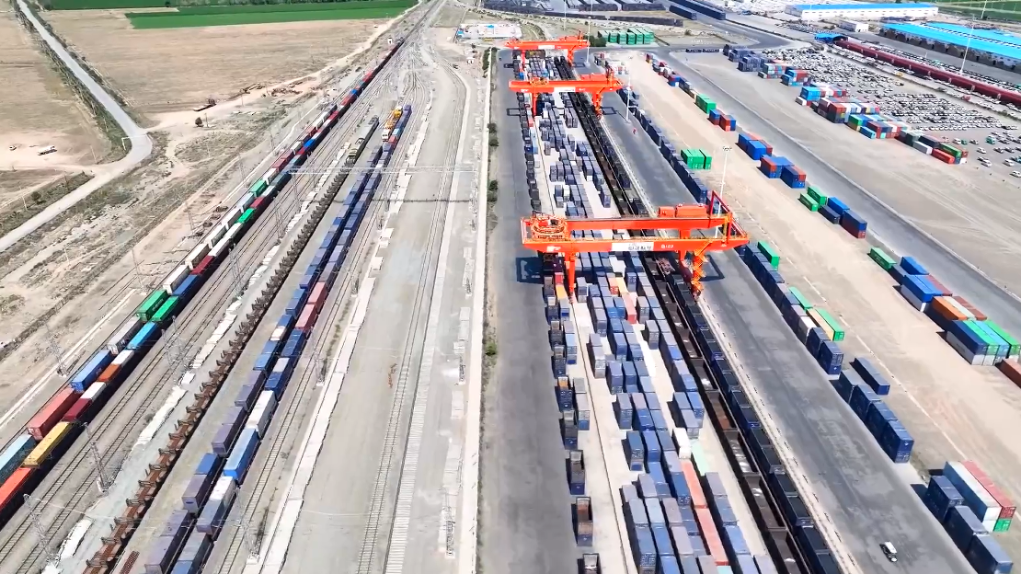
武汉市浩物国际贸易有限公司成立 注册资本500万人民币
Sou Hu Cai Jing· 2025-10-29 05:13
Core Viewpoint - Wuhan Haowu International Trade Co., Ltd. has been established with a registered capital of 5 million RMB, focusing on various trade and automotive services [1] Company Summary - The company is legally represented by Jiao Yi and has a registered capital of 5 million RMB [1] - The business scope includes domestic trade agency, import and export agency, and international freight forwarding [1] - The company also engages in the sale of automobiles, new energy vehicles, and automotive parts [1] - Additional services include vehicle rental, technical consulting, and battery sales [1] Industry Summary - The establishment of the company reflects growth in the international trade and automotive sectors, particularly in new energy vehicles [1] - The diverse range of services indicates a strategic positioning to capitalize on the increasing demand for automotive and technology-related services [1]
美媒研究报告披露:与美国达成的贸易协议令东南亚四国获利甚微,回报或不及美国
Sou Hu Cai Jing· 2025-10-29 04:31
Core Insights - The recent trade agreements between the U.S. and four Southeast Asian countries are expected to yield minimal benefits for these ASEAN members, potentially less than the gains for the U.S. [1] Group 1: Trade Agreements Overview - The U.S. announced trade agreements with Cambodia and Malaysia, along with a framework arrangement with Thailand and Vietnam, aimed at expanding market access for U.S. goods [1] - The agreements include commitments from the ASEAN countries to purchase U.S. agricultural products, energy products, and aircraft, while ensuring supply channels for critical minerals [1] Group 2: Impact on ASEAN Countries - According to Bloomberg Economics, the agreements may signal a negative outlook for other countries seeking substantial reductions in "reciprocal tariffs" [3] - Even if the U.S. were to eliminate all products on the potential tariff exemption list, it would only cover less than 1% of total imports from Cambodia, 3% from Malaysia, 3.5% from Thailand, and 2.7% from Vietnam [3] - The agreements reference a limited potential tariff exemption list published by the U.S. last September, which includes products that are either already exempt from tariffs or subject to additional conditions [3] Group 3: Negotiation Dynamics - The limited scope of the exemption list may hinder substantial tariff reductions for ASEAN exports to the U.S. [3] - The U.S. government's focus on critical minerals could provide Malaysia, Thailand, and Vietnam with opportunities to enhance their negotiation positions [3]
广西助力企业把握自贸区3.0版发展机遇
Guang Xi Ri Bao· 2025-10-29 04:21
Core Viewpoint - The event "Embrace Free Trade 3.0, Co-create a New Future" marks the launch of activities related to the signing of the China-ASEAN Free Trade Area 3.0 upgrade protocol in Guangxi, aimed at enhancing regional economic cooperation and seizing new market opportunities in ASEAN [1] Group 1: Event Overview - The launch ceremony took place in Nanning on October 28, focusing on deepening Guangxi's integration with the China-ASEAN Free Trade Area 3.0 [1] - The event aims to assist enterprises in leveraging the new round of regional trade rule upgrades for development opportunities [1] Group 2: Government Initiatives - The Guangxi Autonomous Region's Commerce Department plans to introduce supporting measures to enhance policy interpretation and training for enterprises [1] - There will be a focus on improving companies' ability to apply new trade rules, particularly for small and medium-sized enterprises [1] Group 3: New Services and Support - The China-ASEAN Free Trade Area 3.0 Guangxi Enterprise Outbound Service Station was inaugurated to provide comprehensive consulting services, including policy interpretation and market expansion [1] - Following the launch, a seminar titled "Decoding the New Dividends of Free Trade 3.0 to Empower Guangxi Enterprises in Expanding into ASEAN" was held, featuring expert insights on new opportunities and changes [1]
海南苗人人国际贸易有限公司成立 注册资本100万人民币
Sou Hu Cai Jing· 2025-10-28 11:12
Core Insights - Hainan Miaorenren International Trade Co., Ltd. has been established with a registered capital of 1 million RMB, and the legal representative is Sun Jiandong [1] Company Overview - The company is engaged in various business activities including import and export agency, domestic trade agency, and sales of electronic products, household appliances, communication equipment, and smart devices [1] - The business scope also includes retail of daily chemical products, cosmetics, personal hygiene products, toys, and various daily necessities [1] - Additional services offered by the company include enterprise management, information consulting (excluding licensed consulting services), market marketing planning, and international shipping agency [1]