
航空器

Search documents
国家统计局:国际油价波动对中国输入影响还需观察
21世纪经济报道· 2026-03-16 12:15
Core Viewpoint - The overall trend of industrial producer prices (PPI) in China is showing a narrowing decline, with a year-on-year decrease of 0.9% in February, which is a 0.5 percentage point improvement from the previous month, marking the third consecutive month of narrowing decline [4]. Group 1: PPI Trends - In February, the PPI increased by 0.4% month-on-month, maintaining the same growth rate as the previous month [4]. - The average PPI for January-February decreased by 1.2% compared to the same period last year [4]. Group 2: Factors Influencing PPI - The narrowing decline in PPI is attributed to several factors, including expanded demand in certain domestic industries, growth in new economic drivers, and rising prices of some international bulk commodities [4]. - The demand for high-end equipment has increased due to industrial upgrades, leading to a 7.7% year-on-year price increase in aircraft manufacturing in February, closely related to the development of domestic commercial aviation [4]. - The development of artificial intelligence and green transformation has also driven price increases, with electronic components and specialized materials rising by 4.9% year-on-year, and biomass fuel processing prices increasing by 3.2% [4]. Group 3: Market Competition and Price Improvement - Optimized market competition has led to price improvements in certain industries, with the price declines in cement manufacturing and black metal smelting narrowing by 1.5 and 0.3 percentage points, respectively [5]. - The prices in the non-ferrous metal smelting and rolling industry increased by 22.1% year-on-year, significantly contributing to the recovery of industrial producer prices [5]. Group 4: External Factors and Future Outlook - Geopolitical conflicts in the Middle East have led to fluctuations in international oil prices, raising market concerns; however, China's energy supply security is strong, providing a solid foundation to cope with external market volatility [6]. - The government aims to continue expanding domestic demand, optimizing supply, and promoting the construction of a unified national market to facilitate the return of industrial prices to a reasonable range and improve economic circulation [6].

暂时出境修理政策实施两年海南减免关税超4000万元
Zhong Guo Xin Wen Wang· 2026-01-16 01:35
Core Viewpoint - The temporary export repair policy in Hainan has resulted in over 40 million yuan in tax exemptions, significantly benefiting enterprises by reducing maintenance costs [1] Group 1: Policy Implementation - The policy has been in effect for two years, allowing certain aircraft and vessels to be exempt from customs duties upon re-entry after temporary export for repairs [1] - A total of 30.6 billion yuan in repair fees has been processed by Haikou Customs under this policy [1] Group 2: Benefits to Enterprises - The policy has provided substantial benefits to companies, with 706 shipments enjoying the tax exemption, leading to a significant reduction in maintenance support costs [1] - Haikou Customs is enhancing risk assessment and tax monitoring to ensure compliance and effective management of the policy [1] Group 3: Future Measures - To continue leveraging the policy's benefits, Haikou Customs is improving communication with enterprises and ensuring a smooth process from qualification application to port clearance [1]
海南产经新观察:海关“三个聚力”助推高水平开放
Zhong Guo Xin Wen Wang· 2025-11-25 05:36
Core Insights - The construction of Hainan Free Trade Port has led to significant increases in foreign trade, with an average annual growth rate of 25.1% since 2020, indicating a continuous improvement in trade openness and convenience [1] Group 1: Policy Implementation and Economic Impact - Hainan's customs have implemented several policies to support high-level openness and quality development, including zero tariffs on three lists of imports, which have totaled 27.2 billion yuan in value and resulted in tax reductions of 5.15 billion yuan [1] - The processing and value-added tax exemption policy has been expanded to the entire island, benefiting 129 enterprises with a total domestic sales value of 11.1 billion yuan and tax reductions of 860 million yuan [1] - The "temporary export repair" and "temporary import repair" policies have shown positive results, with over 100 aircraft repaired under customs supervision and a total value of 2.7 billion yuan benefiting from the temporary export repair policy [2] Group 2: Innovation in Customs Regulation - Customs have introduced innovative regulatory measures for Hainan's key industries, such as seed industry revitalization and duty-free shopping, with seven innovative measures filed with the General Administration of Customs and 18 results selected as integrated innovation cases [2] - The duty-free shopping sector has seen over 210 billion yuan in monitored sales since 2020, with recent policy upgrades enhancing the variety of goods and allowing more purchases for departing travelers, resulting in monitored sales of 1.57 billion yuan in just 20 days [3] Group 3: Trade Facilitation and Logistics Efficiency - The customs have implemented over a hundred measures to optimize the business environment and promote cross-border trade facilitation, significantly benefiting key parks and industries [3] - The introduction of the "three same, three trace" regulatory model in the Yangpu Free Trade Port Area has reduced customs clearance times for food and raw materials by 70% [4] - The overall customs clearance time for imports and exports has been reduced by nearly 70%, with the customs laboratory recognized by the World Customs Organization, enhancing its capabilities [4][5]
海南自贸港交通工具及游艇“零关税”政策
Hai Nan Ri Bao· 2025-11-11 03:39
Core Points - The article discusses the "zero tariff" policy for transportation tools and yachts in Hainan Free Trade Port, which allows eligible companies to import vessels, aircraft, and vehicles without paying import duties, VAT, and consumption tax [1][2]. Group 1: Policy Overview - The "zero tariff" policy applies to enterprises registered in Hainan Free Trade Port that have independent legal status and are engaged in transportation and tourism [2]. - The policy is specifically designed for companies whose main operations are based in Hainan Free Trade Port, particularly in the aviation sector [2]. Group 2: Eligibility and Management - Eligible companies are determined by various governmental departments, including the Hainan Provincial Department of Transportation, Culture and Tourism, and the State Taxation Administration, based on a dynamic adjustment referencing the encouraged industries directory [2]. - The transportation tools and yachts benefiting from the "zero tariff" policy are managed under a positive list system, which is subject to dynamic adjustments by the Ministry of Finance, General Administration of Customs, and State Taxation Administration according to Hainan's actual needs and regulatory conditions [2].
美媒研究报告披露:与美国达成的贸易协议令东南亚四国获利甚微,回报或不及美国
Sou Hu Cai Jing· 2025-10-29 04:31
Core Insights - The recent trade agreements between the U.S. and four Southeast Asian countries are expected to yield minimal benefits for these ASEAN members, potentially less than the gains for the U.S. [1] Group 1: Trade Agreements Overview - The U.S. announced trade agreements with Cambodia and Malaysia, along with a framework arrangement with Thailand and Vietnam, aimed at expanding market access for U.S. goods [1] - The agreements include commitments from the ASEAN countries to purchase U.S. agricultural products, energy products, and aircraft, while ensuring supply channels for critical minerals [1] Group 2: Impact on ASEAN Countries - According to Bloomberg Economics, the agreements may signal a negative outlook for other countries seeking substantial reductions in "reciprocal tariffs" [3] - Even if the U.S. were to eliminate all products on the potential tariff exemption list, it would only cover less than 1% of total imports from Cambodia, 3% from Malaysia, 3.5% from Thailand, and 2.7% from Vietnam [3] - The agreements reference a limited potential tariff exemption list published by the U.S. last September, which includes products that are either already exempt from tariffs or subject to additional conditions [3] Group 3: Negotiation Dynamics - The limited scope of the exemption list may hinder substantial tariff reductions for ASEAN exports to the U.S. [3] - The U.S. government's focus on critical minerals could provide Malaysia, Thailand, and Vietnam with opportunities to enhance their negotiation positions [3]
辽宁省航空产业发展大会在法库启幕
Ren Min Wang· 2025-10-05 01:10
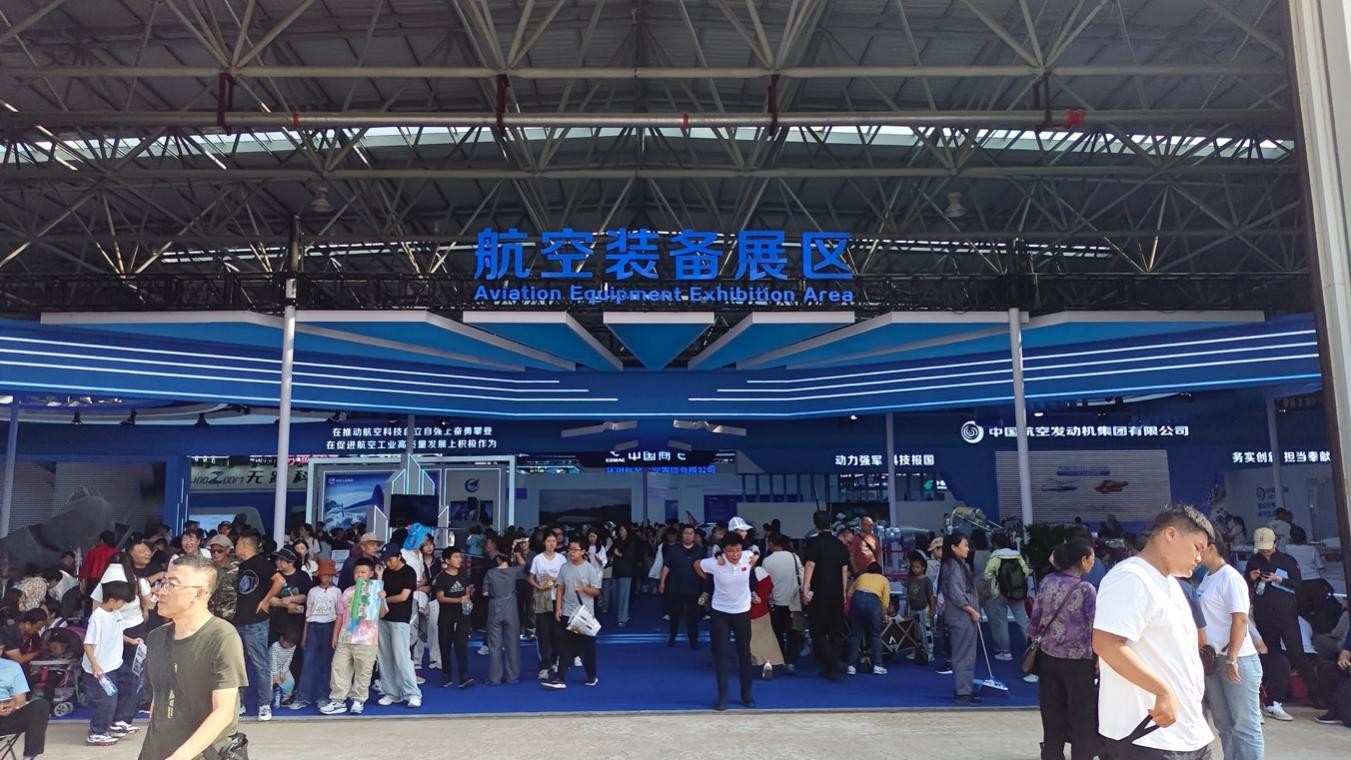
Core Insights - The 2025 Liaoning Province Aviation Industry Development Conference and Shenyang Faku International Flight Conference was held at Faku Caihu Airport, integrating a "conference + exhibition + performance" model [1] - The static exhibition area showcased over 200 domestic and international companies, covering nearly 100,000 square meters, featuring various aircraft models and low-altitude power products from major players like China Aviation Industry Corporation and China Aviation Engine Group [1] - The event marked the establishment of the "Shenyang Metropolitan Area Low-altitude Economy Cooperation Development Alliance" and launched a national low-altitude economic data element service platform to support industry development [2] Industry Developments - The opening ceremony included impressive aerial performances, highlighting the capabilities of the aviation industry in Liaoning [5] - The conference demonstrated the strength of Liaoning's aviation industry, outlining an ecological picture of low-altitude economy that encompasses manufacturing, application, and services [5] - Liaoning is leveraging its traditional aviation industrial base and using "exhibition linkage" as a means to accelerate development in the low-altitude economy sector, aiming to explore a "Liaoning path" for high-quality national low-altitude economic development [5]
50%关税剑指巴西:特朗普政治私心盖过经济账 投资者该警惕了
智通财经网· 2025-07-11 01:32
Core Viewpoint - Trump's threat to impose a 40% punitive tariff on Brazilian imports is politically motivated rather than economically driven, aimed at protecting political allies rather than addressing trade imbalances [1][4]. Group 1: Tariff Policy and Trade Relations - Trump's tariff policy primarily targets countries with trade surpluses with the U.S., but Brazil has a trade deficit with the U.S., making the situation unique [1][2]. - In 2024, the U.S. exported $93.4 billion worth of goods and services to Brazil while importing $60.9 billion, resulting in a trade surplus of $33 billion [2]. - The proposed tariffs would create a significant disparity, as the U.S. would be imposing high tariffs on a country with which it has a trade surplus, contradicting its own trade policy principles [2][3]. Group 2: Political Implications - Brazilian President Lula has stated he will not yield to Trump's demands regarding the investigation into former President Bolsonaro, indicating potential for retaliatory tariffs from Brazil [3][4]. - Trump's approach marks a shift in using tariffs as a political tool, potentially setting a precedent for targeting other countries based on domestic political issues [4][5]. - The evolving tariff strategy suggests that tariffs may increasingly be used as a means of political leverage rather than solely for economic objectives [5].
黑龙江:支持航空装备整机做强做优做大
news flash· 2025-07-03 11:36
Core Viewpoint - Heilongjiang Province is implementing policies to support the high-quality development of the aerospace industry, particularly focusing on strengthening and expanding the aircraft manufacturing sector [1] Group 1: Policy Support - The Heilongjiang Provincial Government has issued several policy measures aimed at promoting the aerospace industry [1] - The policies encourage aviation companies to accelerate the certification of aircraft and engine products through independent research and project introduction [1] Group 2: Financial Incentives - Companies that obtain type certification or production licenses for aircraft and aircraft engines will receive a one-time reward equal to 50% of the annual sales revenue from the certified products [1] - The maximum reward for a single model of aircraft is 10 million yuan, while for aircraft engines, it is 5 million yuan [1]
黑龙江出台17条新政支持航空航天产业
news flash· 2025-07-03 11:32
Core Viewpoint - Heilongjiang Province has introduced policies to support the high-quality development of the aerospace industry, focusing on enhancing the strength and market presence of aviation equipment manufacturers [1] Group 1: Support for Aviation Equipment - The province will support aviation companies in accelerating airworthiness certification and market expansion through independent research and project introduction [1] - Companies that obtain type certification or production licenses for aircraft and aircraft engines will receive a one-time reward of 50% of the annual sales revenue from the certified products, with a maximum reward of 10 million yuan for each aircraft model and 5 million yuan for each engine model [1] Group 2: Support for Major Scientific Infrastructure - The province will provide support for the construction of major scientific infrastructure in the aerospace field, with annual rewards of up to 10 million yuan based on research support capabilities, open sharing, and local transformation of scientific achievements [1] - Companies that successfully launch satellites will receive a reward of 5% of the sales price, with a maximum of 1 million yuan per device and a total annual reward cap of 20 million yuan per company [1]