
电子信息

Search documents
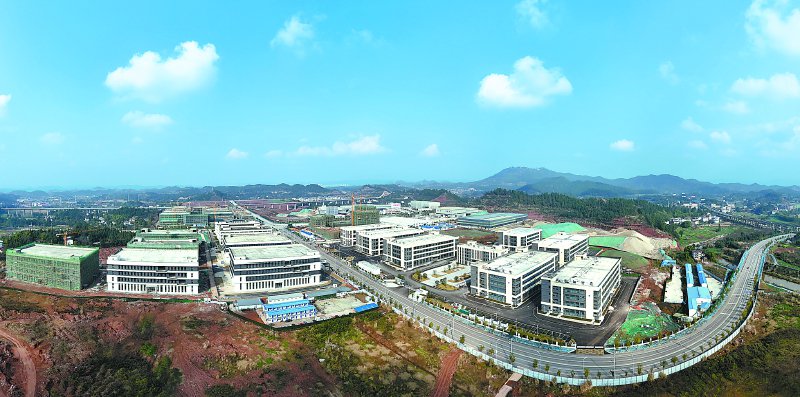
四川省蓬安县做强工业硬支撑
Xin Lang Cai Jing· 2026-01-10 05:04
Core Insights - The article discusses the strategic development of Peng'an County in Sichuan Province, focusing on industrial growth through the "industry-driven county, industrial-strength county" strategy during the 14th Five-Year Plan period [1] Group 1: Industrial Development Strategy - Peng'an County is concentrating on three major industries: agricultural product processing, machinery and auto parts, and electronic information, aiming to enhance industrial clusters through chain extension and strengthening [1] - The county has implemented a "chain leader system" to address issues of industrial dispersion and insufficient enterprise collaboration, leading to the formation of integrated industrial chains in various sectors [1] Group 2: Economic Transition and Support - The county is shifting its industrial economy from scale expansion to quality and efficiency improvement, establishing special funds to support technological upgrades, equipment renewal, and digital transformation [1] - A gradient cultivation system for technology-based SMEs, specialized and innovative enterprises, and high-tech companies has been developed, resulting in the establishment of 7 national high-tech enterprises and 8 provincial "specialized and innovative" enterprises during the 14th Five-Year Plan [1] Group 3: Business Environment and Financial Support - Peng'an County is enhancing the business environment through reforms in "delegating power, streamlining administration, and improving services," which has significantly improved service efficiency [2] - The county has introduced a dual-driven mechanism of "enterprise support + government services," resolving over 3,000 issues for businesses and promoting inclusive financial products, helping companies secure nearly 230 million yuan in financing over the past three years [2]

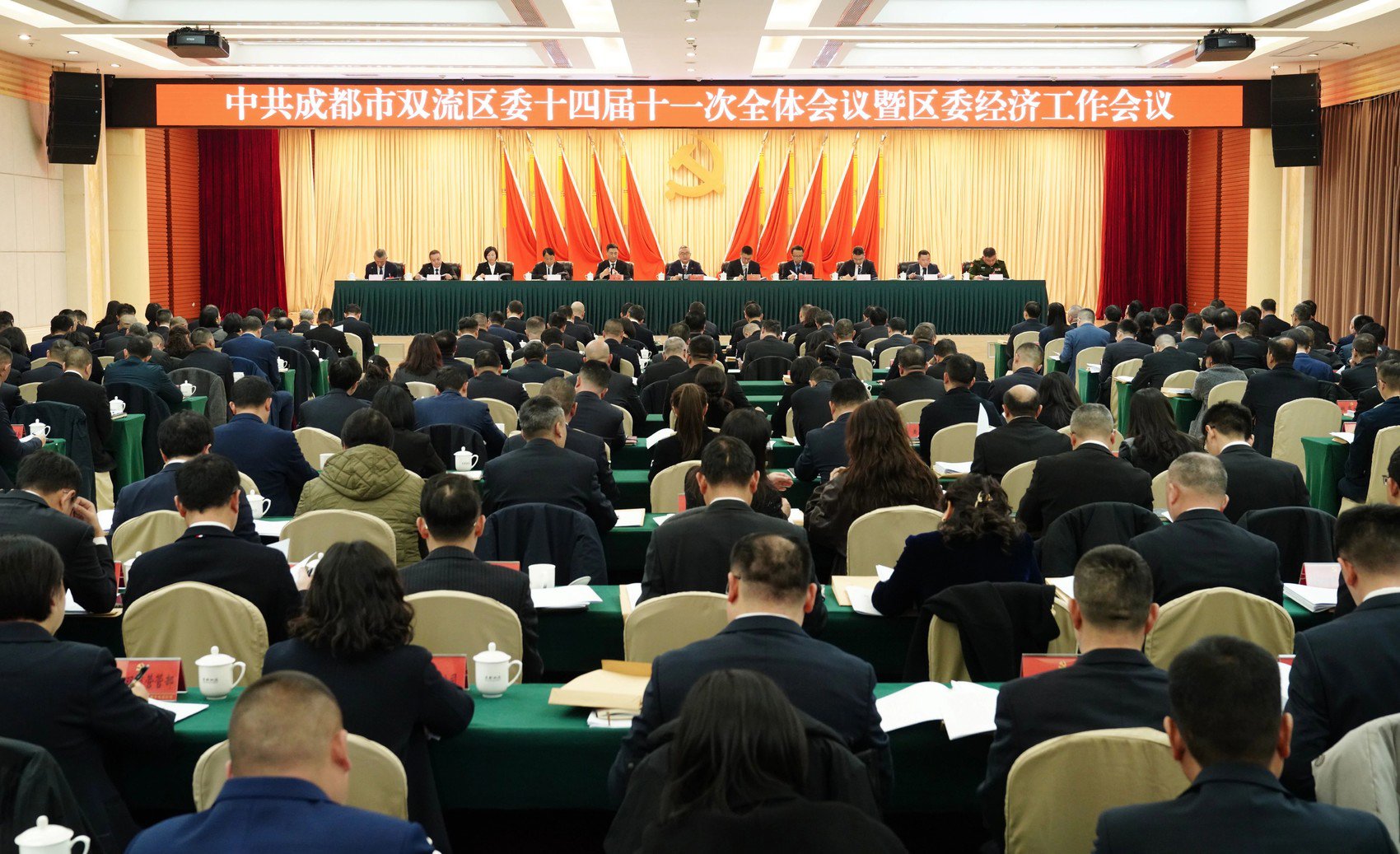
双流区委全会上,“场景”与“耐心资本”缘何成为热词?
Xin Lang Cai Jing· 2026-01-10 03:00
Core Insights - The Chengdu Shuangliu District Committee's recent meeting emphasized the importance of "scenarios" and "patient capital" as key paths for cultivating new productive forces in the innovation airport [1][2] - The successful commercialization of the world's first "super carbon No. 1" generator, developed in Shuangliu, exemplifies the challenges of transforming technological achievements into practical productivity, highlighting the need for both innovative scenarios and long-term investment [2] Group 1 - The meeting proposed to promote the transformation of scientific and technological achievements into real productivity, optimize multi-channel achievement connections, innovate localized scenario support, and cultivate a patient capital ecosystem [2][3] - The strategic focus on scenario innovation aligns with national and local development plans, including the "14th Five-Year Plan" and the State Council's implementation opinions on accelerating scenario cultivation and application [3] - Shuangliu has released a "Smart Shuangliu Scenario Innovation Demand List," actively identifying 22 specific needs, supported by its substantial industrial clusters in electronic information and aerospace manufacturing [3] Group 2 - The Shuangliu District plans to implement policies such as "ranking and commanding," deploy 30 core technology research projects, establish a 1 billion yuan technology innovation fund, and promote open sharing of research resources [3] - The focus will be on organized research and transformation, targeting leading industries such as semiconductors, aerospace, and future energy, to facilitate deep integration of technological and industrial innovation [3] - The goal is to drive the local transformation of significant research achievements, such as supercritical carbon dioxide power generation, and nurture a batch of "gazelle" and potential unicorn enterprises [3]
去年海南规上工业增加值快速增长
Hai Nan Ri Bao· 2026-01-09 23:24
Core Insights - Hainan's industrial added value saw a rapid growth of 10.4% year-on-year from January to November, ranking among the top two in the country, with high-tech manufacturing increasing by 33.2% [2][3] Group 1: Industrial Growth - The province's industrial sector achieved significant integration of technological and industrial innovation, with "Deep Sea No. 1" recognized as a national leading intelligent factory [2] - Seven advanced intelligent factories and nine basic intelligent factories were newly cultivated in the province [2] - The establishment of a technology innovation consortium in the refining industry and the acceleration of high-level platform construction for new drug screening and safety evaluation were noted [2] Group 2: Cross-Regional Cooperation - The collaboration in advanced manufacturing between Hunan and Hainan led to the establishment of an industrial park, attracting 30 projects, with 11 already under construction [3] - The provincial industrial and information technology department signed over 200 projects with a total value exceeding 100 billion, including international investments from the UAE and Japan [3] Group 3: Enterprise Development - The province saw the addition of one national key "little giant" enterprise and two "little giant" enterprises, along with 129 provincial specialized and innovative enterprises and 432 innovative enterprises [3] - The establishment of new national and provincial characteristic industrial clusters was also reported, promoting the launch of a specialized board in Hainan's regional equity market [3] Group 4: City-Level Contributions - Haikou's industrial added value grew by 21.4%, contributing approximately 70% to the province's overall industrial growth [3] - Other cities like Danzhou, Chengmai, and Wanning also reported double-digit growth in industrial added value from January to November [3]

成渝地区双城经济圈不断提升发展能级 巴山蜀水共潮生
Ren Min Ri Bao· 2026-01-09 22:53
Core Viewpoint - The Chengdu-Chongqing economic circle is becoming a significant growth pole for high-quality development in China, with a population increase from 96 million to over 98 million and GDP share rising from 6.3% to 6.5% compared to 2019 [1] Group 1: Strategic Positioning and Collaboration - The Chengdu Supercomputing Center collaborates with Chongqing University to enhance computing power services, establishing over 1,700 application scenarios [2] - The integration of Chengdu and Chongqing aims to leverage their respective strengths, with Sichuan excelling in research and talent, while Chongqing has a robust manufacturing base [5] - A comprehensive development plan has been established to guide the integration of the two regions, focusing on becoming a major economic and technological center [5][6] Group 2: Infrastructure and Energy Projects - The 1000 kV ultra-high voltage AC project is a key initiative, capable of delivering 35 billion kWh of electricity annually, equivalent to the annual consumption of nearly 10 million households [10] - Major infrastructure projects, including the Chengdu-Chongqing high-speed rail and gas pipelines, are accelerating development and connectivity [10] Group 3: Agricultural and Technological Innovation - The establishment of an agricultural technology innovation alliance has led to the successful introduction of over 20 bean varieties in Sichuan, significantly increasing yields [12] - The integration of technology in traditional industries is evident, with advancements in robotics and biotechnology enhancing productivity and innovation [13][14] Group 4: Reform and Open Market Initiatives - The Chengdu High Bamboo New Area is pioneering cross-provincial tax management services, facilitating smoother business operations [21][23] - The establishment of the Chengdu Financial Court and joint river management offices exemplifies innovative governance and environmental cooperation [24][25] Group 5: Public Services and Quality of Life - The mutual recognition of professional qualifications between Sichuan and Chongqing has streamlined the process for talent mobility [29] - Public services have been enhanced, with over 355 high-frequency matters now manageable across provincial lines, improving efficiency in healthcare and library services [30] Group 6: Cultural and Tourism Development - The collaboration in cultural tourism, particularly in the stone carving arts, is fostering regional tourism growth and enhancing cultural exchange [34] - The joint promotion of tourism resources has led to increased visitor engagement in both cities, showcasing the cultural richness of the region [34]
智能化变革探索未来制造模式
Jing Ji Ri Bao· 2026-01-09 22:07
Core Viewpoint - China's smart manufacturing is transitioning from digitization and networking to intelligence, with the establishment of leading smart factories as a benchmark for global development [1] Group 1: Overview of Leading Smart Factories - The Ministry of Industry and Information Technology and six other departments announced the first batch of 15 leading smart factories, covering key industries such as equipment manufacturing, raw materials, electronic information, and consumer goods [1][2] - Leading smart factories integrate new information technologies, advanced manufacturing techniques, and lean management concepts, representing the highest standards of China's manufacturing intelligence [1][2] Group 2: Importance and Impact - Building leading smart factories is crucial for the digital transformation and intelligent reform of the manufacturing industry, serving as a benchmark for future manufacturing models and enhancing global competitiveness [1][4] - These factories can accelerate the transition from "factor-driven" to "innovation-driven" manufacturing, addressing traditional industry pain points and fostering a more resilient supply chain [4] Group 3: Technological and Economic Standards - Leading smart factories must have at least 60% of their AI technology application scenarios, significantly higher than the 20% requirement for excellent-level factories [7] - They are required to cover five key areas: factory construction, research and design, production operations, production management, and operational management [7] Group 4: Case Studies and Achievements - Xuzhou Heavy Machinery Co., Ltd. was selected for its mobile crane smart factory project, which emphasizes global customization and agile response, integrating 5G, digital twins, and industrial internet [2] - SAIC-GM-Wuling's island-style smart factory has improved manufacturing efficiency by 30%, with a comprehensive equipment utilization rate of 98.8% and a 43% reduction in product development cycles [5] Group 5: Future Directions and Recommendations - The first batch of leading smart factories should focus on consolidating advantages while achieving higher quality development, emphasizing continuous technological innovation and the deep application of core technologies [6][8] - A multi-faceted promotion system involving policy guidance, enterprise responsibility, and ecological collaboration is essential for fostering more leading smart factories from excellent-level ones [8]
深科技:截至2025年12月31日股东户数为225560户
Zheng Quan Ri Bao· 2026-01-09 14:21
(文章来源:证券日报) 证券日报网讯 1月9日,深科技在互动平台回答投资者提问时表示,截至2025年12月31日,公司股东户 数为225560户。 ...

上海发布三年行动方案 支持先进制造业转型升级
Xin Hua Cai Jing· 2026-01-09 12:39
Core Viewpoint - Shanghai aims to enhance its advanced manufacturing sector through a three-year action plan (2026-2028), targeting the establishment of over 600 manufacturing enterprises with annual output value exceeding 1 billion yuan by 2028 [1][2]. Group 1: Structural Optimization and Upgrading - The action plan includes 17 specific measures to optimize traditional industries, such as promoting petrochemical companies to shift from oil to chemical products and enhancing the production of specialty steel and lightweight alloys in the steel and non-ferrous metal sectors [1]. - Light industry companies, including cosmetics and food manufacturers, are encouraged to lead new consumption trends through ecological design, aiming to produce more domestic products [1]. - Support for major technological equipment and new materials will be provided, with funding up to 30% of the product sales contract amount, capped at 20 million yuan [1]. Group 2: Development of Key and Emerging Industries - The plan emphasizes the growth of next-generation electronic information, smart connected vehicles, high-end equipment, advanced materials, green low-carbon industries, and fashionable consumer goods [1]. - Companies are encouraged to invest in emerging fields such as low-altitude economy, commercial aerospace, embodied intelligence, biomanufacturing, and smart terminals, aiming to overcome bottlenecks in the large-scale development of innovative products like eVTOLs and humanoid robots [1]. Group 3: Green Transition and Resource Support - The action plan promotes a green transition by guiding companies to develop low-carbon products and conduct ESG evaluations [2]. - Financial support will be enhanced, with lower interest rates and longer loan terms for manufacturing loans, and subsidies for key components and raw materials loans ranging from 0.8% to 1.3% [2]. - The establishment of over 100 national-level green factories by 2028 is targeted, with a one-time reward of 200,000 yuan for first-time recognition [2].
江西省市场监管局:链上提质 赋能产业核心竞争力
Zhong Guo Zhi Liang Xin Wen Wang· 2026-01-09 08:14
Core Insights - The manufacturing quality competitiveness index in Jiangxi Province reached 85.74 during the 14th Five-Year Plan period, with a product quality compliance rate of 93.35% and a public service quality satisfaction score of 80.88 [1] Group 1: Quality Improvement Initiatives - Jiangxi Province has implemented a "Quality Strong Enterprise" initiative, resulting in the appointment of 15,456 chief quality officers to enhance product quality and promote a "quality-first" development strategy [1] - The province has recognized key enterprises such as Jinko Solar and awarded nominations for the China Quality Award to two companies and two individuals [1] - A total of 1,697 enterprises have benefited from innovative financial products like "Gan Quality Loan," securing over 19.2 billion yuan in credit to support quality improvements [1] Group 2: Quality Chain Projects - The Jiangxi market regulatory authority has initiated quality chain projects to strengthen core competitiveness in key industries, aligning with the "1269" action plan for manufacturing modernization [1] - Three projects, including those in copper, electronic information, and modern furniture, have been selected as national quality chain key projects, promoting resource sharing and collaboration [1] - A total of 89 quality chain projects have been implemented, addressing 1,175 quality issues and enhancing the competitiveness of key industries [1] Group 3: Quality County Development - The province is promoting a "Quality Strong County" strategy, with 25 counties implementing tailored quality improvement plans, leading to recognition for outstanding performance [2] - Three counties have been selected as innovative pilot projects for national quality strong county development, focusing on agricultural and industrial quality enhancement [2] - The initiative aims to create regional quality development advantages through unique quality improvement activities [2] Group 4: Quality Infrastructure and Standards - Jiangxi Province has established over 1,700 public measurement standards and developed 10 national standard material specifications, enhancing the quality infrastructure [3] - The province has approved 2,462 national standards and participated in the formulation of 74 international standards, significantly impacting industry development and consumer upgrades [3] - A total of 118 one-stop service stations for quality infrastructure have been established, improving public access to quality technical services [3]
中国航发与中国电子签署战略合作协议
Ge Long Hui A P P· 2026-01-09 04:17
Core Viewpoint - China Aviation Engine Corporation (中国航发) and China Electronics (中国电子) signed a strategic cooperation agreement to enhance collaboration in technology research and development, digital transformation, and industrial chain synergy, aiming to integrate electronic information technology with the aviation engine industry [1]. Group 1 - The strategic cooperation agreement was signed on January 8 [1] - The collaboration will focus on deep cooperation in technology R&D, digital transformation, and industrial chain coordination [1] - The goal is to promote the integration of electronic information technology with the aviation engine industry [1]

广西做优做强工业经济
Jing Ji Ri Bao· 2026-01-09 03:01
经济日报南宁1月8日讯(记者童政、臧潇)近年来,广西坚定不移实施工业强桂战略,着力扩投 资、调结构、增效益,做优做强工业经济,在工业经济总量提升、产业结构优化、数智化与绿色化转型 方面成效显著,构建起体现广西特色与优势的现代化产业体系。 "十四五"期间,广西工业经济实现跨越式增长。2025年,广西规模以上工业总产值预计达2.7万亿 元,5年增长9000亿元;工业增加值占地区生产总值比重超27%,5年提升近4个百分点,工业成为全区 经济发展的"压舱石"。 目前,广西已形成十大千亿元级支柱产业。其中,有色金属产业产值5年实现翻番,2025年预计突 破4500亿元;钢铁、食品2个产业产值超3000亿元,造纸与木材加工、石化化工、机械、电力4个产业产 值超2000亿元,汽车、电子信息、建材3个产业产值超1000亿元。 在数智化与绿色化转型方面,广西实施"智改数转""人工智能+制造"行动。"十四五"期间,全区累 计推动5000多家企业实施"智改数转"、近万家企业完成数字化诊断,新增国家级绿色工厂105家、绿色 园区11个,3个园区入选首批国家级零碳园区建设名单。 广西壮族自治区工业和信息化厅党组书记、厅长袁煌说,广西将 ...