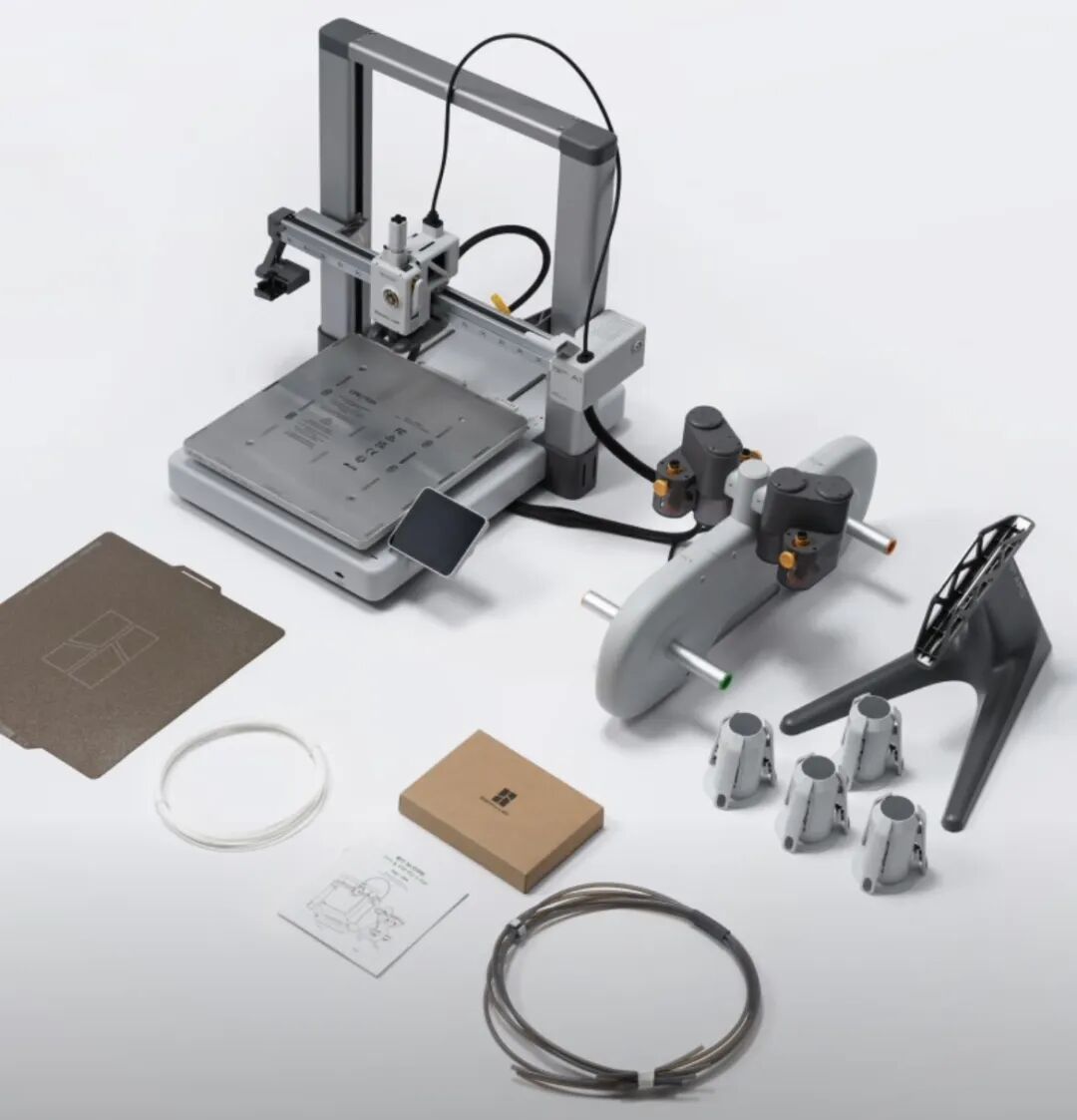
3D打印

Search documents
7家消费公司拿到新钱;霸王茶姬三季度GMV79.3亿元;2026年我国即时零售规模将破万亿|创投大视野
36氪未来消费· 2025-11-29 12:23
Group 1: Investment and Financing Activities - "Bixing Coffee" completed a Series B financing round of several tens of millions, led by Suzhou Agricultural Development Industry Science and Technology Fund, following previous rounds in 2022 and 2024 [4][5] - "Tuozhu Technology" is nearing completion of a new financing round with a valuation potentially reaching $10 billion, although the company has denied the accuracy of this information [6] - "Ruiyun Cold Chain" recently completed an A+ round financing of nearly 100 million RMB, aimed at enhancing cold chain logistics efficiency through digitalization [7] - "TianTian BaiYing" completed a Series A financing round of several tens of millions, focusing on providing intelligent maintenance services to B-end clients [8] - "Laimou Technology" completed a Series A+ financing round of several tens of millions, marking its fourth round of financing since 2025 [9] - "Hypershell" completed two financing rounds totaling $70 million, with a post-investment valuation approaching $400 million [10] - "Smart Doubling Digital Human" received strategic investment from Zhiyuan Robotics [11][12] Group 2: Company Performance and Market Trends - "Bawang Tea Ji" reported a GMV of 79.3 billion RMB in Q3 2025, with a year-on-year decline of 4.5%, while overseas GMV grew by 75.3% [13][14] - "Mandi International" submitted an IPO application to Hong Kong Stock Exchange, aiming to become the first stock focused on hair loss prevention, with a projected revenue growth from 9.82 billion RMB in 2022 to 14.55 billion RMB in 2024 [15] - "Jasmine Milk White" has expanded its overseas presence, opening new stores in Indonesia and the US, with total stores exceeding 2000 globally [16][17] - "Lucky Coffee" announced its global store count surpassed 10,000, achieving rapid growth in the coffee market [18] Group 3: Industry Insights and Future Projections - The instant retail market in China is projected to exceed 1 trillion RMB by 2026, with a compound annual growth rate of 12.6% during the 14th Five-Year Plan period [21] - Global luxury goods consumption is expected to grow at a rate between -1% and 1% in 2025, with a recovery anticipated in 2026 [22] - High-net-worth individuals are shifting their gift-giving behavior, with travel becoming the preferred way to celebrate success, rising from 50% in 2024 to 64% in 2025 [23]


人均 “第一”,深圳 3D 打印 “四大天王” 有多卷?
Nan Fang Du Shi Bao· 2025-11-29 12:02
Core Insights - Shenzhen 3D printing companies are intensifying competition, with Chuangxiang Sanwei and Tuozhu Technology leading the charge as they aim for market dominance and public listing [2][5][10] Company Developments - Chuangxiang Sanwei submitted its main board listing application to the Hong Kong Stock Exchange in August 2025, aiming to become the first consumer-grade 3D printing stock in Hong Kong [2] - Tuozhu Technology opened its first flagship store in Shenzhen, featuring a wall made of 28 3D printers, attracting significant industry attention [2] - DJI invested several hundred million yuan in another competitor, Smart派, which holds the title for the highest shipment volume in the global consumer-grade light-curing 3D printer market [5][10] Investment Landscape - Tencent has invested in both Chuangxiang Sanwei and Tuozhu Technology, indicating a strong interest in the sector [5] - Tuozhu Technology's valuation may reach 10 billion USD, although its founder denied any ongoing financing [5] - Snapmaker, another Shenzhen 3D printing company, completed a B round of financing in 2025, attracting new investors like Meituan and Hillhouse Capital [6] Market Positioning - Each of the "Four Kings" in Shenzhen's 3D printing market claims a leading position in specific segments, creating a differentiated competitive landscape [7] - Tuozhu Technology achieved sales of 5.5 to 6 billion CNY in 2024, maintaining its status as the global leader in desktop 3D printer sales [7][8] - Chuangxiang Sanwei, established in 2014, is recognized for its cumulative shipment volume, although its annual shipments decreased to 700,000 units in 2024, capturing 16.9% of the market [8] Competitive Dynamics - The competition is characterized by a struggle for technological talent and market resources, with Tuozhu's team originating from DJI's core development group [10][11] - The rivalry has intensified with DJI's investment in Smart派, which is seen as a strategic move to bolster its ecosystem [5][10] - The ongoing competition is not just about product offerings but also involves talent retention and the establishment of technological barriers [11]


浙江首个民用无人机试飞运行基地001牌照落地杭州;全球最大3D打印工厂将落地深圳丨智能制造日报
创业邦· 2025-11-29 03:22
Group 1 - The world's largest 3D printing factory will be established in Shenzhen, with Huina Technology planning to deploy 15,000 TuoZhu 3D printers by Q1 2026, making it the largest globally [2] - Nvidia's CEO Jensen Huang emphasized that Nvidia's GPUs are irreplaceable and that the AI market is vast and rapidly growing, requiring continuous innovation to maintain a competitive edge [2] - The first civil drone test flight operation base in Zhejiang has received the 001 license, covering 102 acres and providing comprehensive services for R&D, flight verification, and training [2] Group 2 - TSMC's advanced packaging plant in Chiayi is set to begin mass production next year, with plans to expand by adding approximately six 3D packaging plants in the future [2]



投资人现场“抢投”:3D打印迎来“iPhone时刻”
2 1 Shi Ji Jing Ji Bao Dao· 2025-11-28 13:20
Core Insights - The 3D printing industry is experiencing rapid growth, with a projected market size of $115 billion by 2030, indicating a strong upward trend [1][5][8] - Investment interest in the 3D printing sector is increasing, as evidenced by multiple financing events and strategic investments from major companies like DJI and Meituan [8][9][10] Industry Overview - The Guangdong cultural industry is leveraging technology to transition from scale growth to quality and efficiency improvements [3] - The consumer-grade 3D printing market is entering a significant phase, referred to as the "iPhone moment," where it is moving from niche to mainstream [4][5] - Major players in the consumer-grade 3D printing market, such as Smart派, hold a substantial market share, with four Shenzhen companies controlling 90% of the entry-level 3D printer market [4][5] Company Highlights - Smart派, a leading brand in consumer-grade light-curing 3D printing, achieved a revenue of over 1.6 billion yuan in 2024, with a forecast of 2.5 billion yuan for the year [5] - The company has rapidly expanded its product line since its inception in 2015, focusing on both light-curing and FDM technologies [5][6] - Jinshi 3D, another key player, has entered the 3D printing sector and is positioned to enhance technological capabilities within the industry [6] Investment Trends - The 3D printing sector has seen 45 public financing events in 2023, indicating a shift from technology development to large-scale application [8][9] - Shenzhen is leading in financing activities, with a robust ecosystem that includes various companies across the 3D printing spectrum [10] - The investment landscape is characterized by a focus on both consumer-grade brands and upstream core technologies, reflecting a search for long-term value [10][11] Future Outlook - The integration of generative AI in 3D design is expected to lower barriers to entry and expand application scenarios, further intensifying competition [7] - The market is still in its early stages, with ample room for growth despite increasing competition [11][12] - The combination of cultural and technological advancements is anticipated to drive further growth in the Guangdong cultural industry [12]
从线上走向实体:影石、拓竹和徕芬,深圳新制造为何爱开店?
Nan Fang Du Shi Bao· 2025-11-28 13:03
Core Insights - A new commercial landscape is emerging in Shenzhen, where "internet celebrity hardware" is transitioning from online platforms to physical retail spaces, marking a collective experiment in rebuilding trust in hard-tech consumer products [1][2] - Companies like Insta360, Bambu Lab, and Leifeng are opening flagship stores in key locations, indicating a shift from online dominance to a focus on offline experiences and brand ecosystems [1][10] Group 1: Company Strategies - Insta360, Bambu Lab, and Leifeng represent three distinct paths in Shenzhen's new manufacturing landscape, focusing on local market penetration, broadening consumer reach, and establishing long-term brand presence [2][10] - Leifeng has invested over 1 billion yuan in advertising from 2022 to 2024, with a significant portion allocated to the 2023 Double Eleven shopping festival, highlighting the reliance on online marketing strategies [2][3] - Bambu Lab emphasizes product and ecosystem quality over aggressive marketing, aiming to create a community around its 3D printing technology [2][10] Group 2: Consumer Experience - For high-ticket personal care products like those from Leifeng, the in-store experience is crucial for consumer decision-making, as tactile and sensory feedback cannot be fully conveyed online [3][9] - Leifeng's flagship store in Shenzhen integrates sales, experience, and after-sales services, allowing customers to test products and receive personalized services [5][10] - Bambu Lab's store features interactive displays, allowing consumers to see and experience 3D printing technology firsthand, addressing trust issues associated with complex tech products [7][10] Group 3: Market Trends - The shift towards offline experiences is driven by the realization that online traffic alone cannot sustain growth, prompting brands to explore experiential retail as a new growth avenue [2][9] - The presence of high-end stores in Shenzhen's core shopping districts serves as a testament to brand strength and long-term investment commitment [10][12] - The trend indicates a broader movement in the consumer market towards hard-tech products, which are gaining popularity as they offer tangible benefits and experiences [14][15] Group 4: Investment Implications - The investment landscape is evolving, with a greater emphasis on companies that possess technological barriers, efficient supply chains, and strong brand potential, rather than just online traffic metrics [15][16] - The establishment of flagship stores is seen as a critical test of a brand's product strength, cash flow, and operational capabilities [15][16] - The success of brands like Leifeng, Bambu Lab, and Insta360 in physical retail is paving the way for a new narrative in consumer investment, focusing on comprehensive strength rather than just online success [16][17]

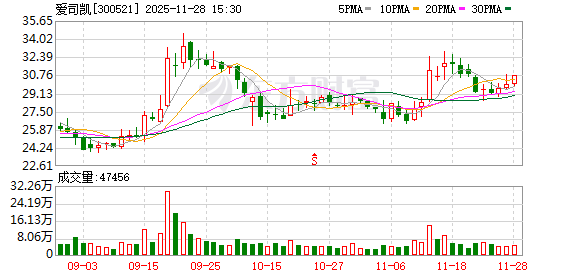
爱司凯:公司已完成多激光金属打印头的各个模块测试和联机优化调试
Zheng Quan Ri Bao· 2025-11-28 08:40
Core Viewpoint - The company has completed testing and optimization of its multi-laser metal printing heads, which are now in the pilot production stage for 3D metal printing equipment [2] Group 1: Company Developments - The company has successfully tested and optimized various modules of its multi-laser metal printing head [2] - The multi-laser metal printing head has passed production tests for machine parts, marking it as a critical component for 3D metal printing equipment [2] - The product is now in the pilot stage, with trial production of metal shoe molds already initiated [2] Group 2: Application and Market Potential - The multi-laser printing head is designed for applications requiring high production efficiency and cost-effectiveness, particularly in industries such as 3C digital and shoe molds [2] - The technology allows for the placement of higher density printing heads across various size formats, meeting diverse application needs [2]

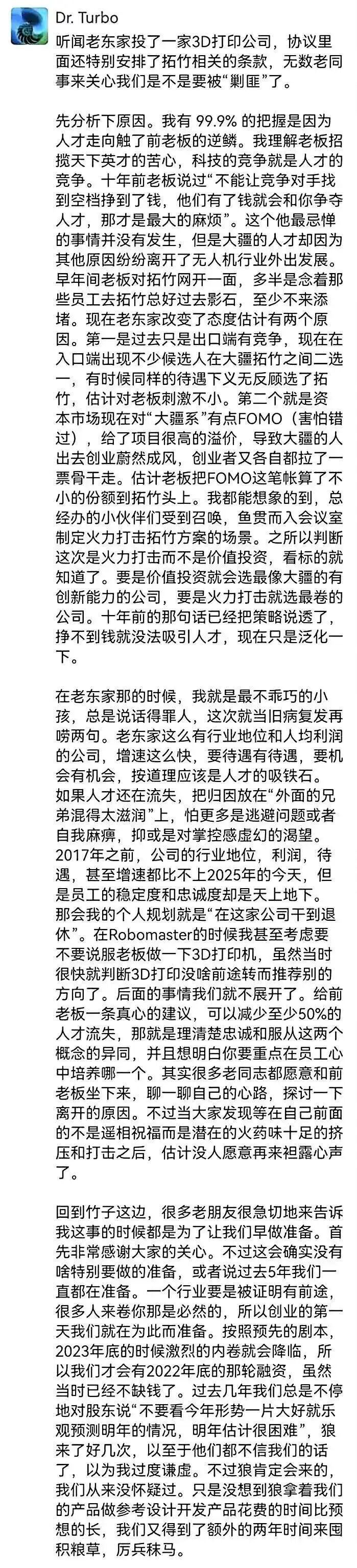
大疆撕扯“小大疆”
3 6 Ke· 2025-11-28 08:15
Core Insights - The rivalry between DJI and its former employees who have founded new companies, particularly Tuo Zhu, has intensified, highlighting a battle for talent, technology, and market space [1][2][19] - DJI's investment in a 3D printing company, Smart Pie, has been perceived as a direct attack on Tuo Zhu, indicating a shift from value investment to competitive aggression [1][4][19] - The emergence of "DJI alumni" companies has created a competitive landscape where these startups are increasingly attracting talent away from DJI, posing a significant threat to its market dominance [13][14][16] Company Dynamics - DJI has historically been a breeding ground for talent, with many former employees establishing successful startups that often compete directly with DJI [8][9][13] - Tuo Zhu, founded by former DJI employee Tao Ye, has rapidly grown to capture a significant market share in the 3D printing sector, achieving approximately 60 billion RMB in revenue and a 29% market share by 2024 [11][19] - The competitive landscape has shifted, with candidates increasingly choosing Tuo Zhu over DJI, even when offered similar compensation, indicating a change in the perceived value of working for each company [4][13] Market Trends - The global drone market is experiencing stagnation, with growth rates around 5% in 2023 and a decline in consumer drone sales, which poses challenges for DJI's traditional business model [16][17] - DJI is diversifying its product offerings into new areas such as robotic vacuums, panoramic cameras, and outdoor power supplies, as it seeks to find new growth avenues amidst a saturated market [17][18] - The rise of "DJI alumni" companies is creating a closed loop of talent migration, where former employees leverage their DJI experience to attract investment and build competitive startups [14][15]
全球最大3D打印工厂将落地深圳
Xin Lang Cai Jing· 2025-11-28 04:30
Core Insights -拓竹 Technology will assist Huina Technology in establishing the first super-large 3D printing factory in Shenzhen, which is set to become the largest 3D printing factory globally [1] - Huina Technology plans to deploy 15,000 units of拓竹 3D printers by the first quarter of 2026, with nearly 5,000 units already arriving and being deployed [1] - According to internal estimates from拓竹, over 70% of global 3D printing farms are equipped with their devices [1]
早新闻 | 上调A股至“超配”,国际巨头发声
Zheng Quan Shi Bao· 2025-11-27 23:48
Group 1: Market Regulation and Competition - The State Administration for Market Regulation held its fifth enterprise fair competition symposium in 2025, focusing on promoting fair competition and optimizing the business environment, engaging with foreign companies like Samsung and BMW [1] - The administration emphasized strengthening antitrust enforcement and fair competition reviews to eliminate barriers to a unified national market [1] Group 2: Intelligent Manufacturing - The 2025 World Intelligent Manufacturing Conference was held in Nanjing, where it was reported that over 7,000 advanced and 500 excellent smart factories have been established nationwide, with the total scale of the intelligent manufacturing industry exceeding 4.5 trillion yuan [2] - The Ministry of Industry and Information Technology plans to focus on intelligent manufacturing as a key direction for building a strong manufacturing nation [2] Group 3: Human Resources Development - China has established 36 national talent markets and 29 national industrial parks, enhancing the human resources service industry and creating a service system focused on employment and talent allocation [3] Group 4: 3D Printing Industry - A collaboration between Tuo Zhu Technology and Haina Technology aims to build the world's largest 3D printing factory in Shenzhen, with plans to deploy 15,000 Tuo Zhu 3D printers by Q1 2026 [4] Group 5: Nuclear Fusion Technology - A nuclear fusion technology exhibition in Beijing featured 17 companies showcasing advancements in nuclear fusion devices and components [5] Group 6: Renewable Energy Projects - The "Shagehuang" clean energy base project in Qinghai, with a total investment of nearly 73 billion yuan, has commenced construction, featuring a total power scale of 19.44 million kilowatts, with 86.4% from renewable sources [6] Group 7: Stock Market Outlook - JPMorgan has upgraded its rating for A-shares to "overweight," citing a higher probability of significant gains in the Chinese stock market next year due to multiple positive incremental drivers [7] Group 8: Company News - Various companies reported significant developments, including Anhui Construction winning projects worth 2.603 billion yuan, and Li'anlong planning a 50 million yuan investment for a 25% stake in Stofor [8]
大疆卷入新战场,这个“印钞机”行业热钱涌动
3 6 Ke· 2025-11-27 23:40
Core Insights - The consumer-grade 3D printing market is experiencing rapid growth, driven by advancements in technology and decreasing costs, making it more accessible to ordinary consumers [1][4][5] Group 1: Market Trends - The term "3D printing" has gained immense popularity on social media platforms, with over 1.3 billion views on Xiaohongshu and 10.11 billion views on Douyin, indicating a cultural trend towards showcasing 3D printed creations [2] - The consumer-grade 3D printer market is projected to grow from 4.1 million units in 2024 to 13.4 million units by 2029, with a compound annual growth rate (CAGR) of 26.6% [5] - The market size is expected to increase from $4.1 billion in 2024 to $16.9 billion by 2029, with a CAGR of 33.0% [5] Group 2: Drivers of Growth - Technological advancements, particularly in generative AI, have lowered the barriers to 3D modeling, allowing users to create models using text, images, or voice [5][6] - The price of consumer-grade 3D printers has decreased significantly, with many models now available for under 10,000 yuan, making them accessible to a broader audience [5] - Improvements in printing efficiency and material usage have enhanced the user experience, with multi-color printing times reduced from over 20 hours to approximately 5 hours [6] Group 3: Competitive Landscape - The consumer-grade 3D printing sector is characterized by intense competition, with companies like Tuozhu, Chuangxiang Sanwei, and others vying for market share [7] - Tuozhu is currently leading the market, with projected revenues of 5.5 to 6 billion yuan in 2024 and a net profit nearing 2 billion yuan [7] - The investment landscape is robust, with over 40 financing events in the 3D printing sector since 2025, indicating strong interest from venture capital [7][8] Group 4: Company Performance - Chuangxiang Sanwei is the largest provider in the consumer-grade 3D printing market, holding a 27.9% market share, with revenues increasing from 1.346 billion yuan in 2022 to 2.288 billion yuan in 2024 [12][13] - The revenue from 3D printing consumables is on the rise, with its share of total revenue increasing from 3.0% in 2022 to 11.4% in 2024 for Chuangxiang Sanwei [19][20] - The performance of consumer-grade 3D printing companies contrasts sharply with industrial-grade firms, which have not seen similar growth in revenue [14][15]