光伏发电

Search documents
晶科科技跌3.93% 2020年上市3募资共86亿元
Zhong Guo Jing Ji Wang· 2025-07-31 08:32
据此计算,晶科科技上述三次募集资金合计金额为85.95亿元。 晶科科技首次公开发行股票的发行费用总额为1.82亿元,其中,保荐和承销费用1.40亿元。 晶科科技2021年度公开发行可转换公司债券募集资金。经中国证券监督管理委员会《关于核准晶科电力 科技股份有限公司公开发行可转换公司债券的批复》(证监许可〔2021〕931号)核准,晶科科技于2021 年4月23日公开发行了3,000万张可转换公司债券,发行价格为每张100元,募集资金总额为人民币 3,000,000,000.00元,扣除各项发行费用后,实际募集资金净额为2,971,776,415.09元,上述款项已于2021 年4月29日全部到账。天健会计师事务所(特殊普通合伙)对晶科科技本次公开发行可转换公司债券的资 金到位情况进行了审验,并于2021年4月30日出具了"天健验〔2021〕191号"《验证报告》。晶科科技已 对上述募集资金进行了专户存储。 晶科科技2022年度非公开发行股票募集资金。经中国证券监督管理委员会《关于核准晶科电力科技股份 有限公司非公开发行股票的批复》(证监许可〔2022〕2963号)核准,晶科科技向特定投资者非公开发行 人民币普 ...

午间谷电蔓延20余省,光伏被精准“猎杀”?
3 6 Ke· 2025-07-31 03:11
Core Viewpoint - The recent adjustments to time-of-use electricity pricing policies across various provinces in China, particularly the designation of midday hours as low-cost periods, have significantly impacted the photovoltaic (PV) industry, leading to a decline in solar power profitability and forcing the sector to seek new avenues for revenue generation [1][5][11]. Group 1: Policy Adjustments - Multiple provinces, including Jiangsu, Anhui, and Hunan, have implemented or are in the process of finalizing time-of-use electricity pricing policies that classify midday hours as low-cost periods, with reductions in electricity prices by as much as 60% [1][5][6]. - As of now, over 20 provinces have adopted similar midday low-cost electricity policies, with some provinces setting the price as low as 0.12 yuan per kilowatt-hour [1][6][7]. Group 2: Impact on the Photovoltaic Industry - The new pricing policies have led to a significant decrease in the profitability of solar power projects, with internal rates of return (IRR) for some projects dropping from 12% to as low as 6% [10]. - The midday hours, which traditionally contribute about 40% of daily solar power generation, are now classified as low-cost periods, severely affecting the cash flow of solar power projects that lack energy storage solutions [9][10]. Group 3: Market Dynamics and Future Directions - The current time-of-use pricing mechanism is seen as an administrative measure rather than a market-driven approach, raising questions about its effectiveness in regulating the market [11]. - The photovoltaic industry is urged to transition towards a more integrated model that combines grid connection, self-consumption, and energy storage to adapt to the new pricing environment [12]. - Enhancing the capacity of the electricity grid to accommodate renewable energy sources is deemed essential for the sustainable development of the photovoltaic sector [14][15].

ST盛屯: 盛屯矿业集团股份有限公司关于公司拟签订项目投资合作协议暨关联交易的公告
Zheng Quan Zhi Xing· 2025-07-29 16:18
●为优化电源结构,增加能源供给,降低公司运营成本,公司控股子公司 Brother Mining SASU(兄弟矿业单一简易有限公司,以下简称"BMS")拟与 Green Energy International Limited(格睿绿能国际有限公司,以下简称"格睿绿能 国际")签署《光储项目投资及能源管理协议》。格睿绿能国际负责光储电站的设 计、建设及全部投资并向 BMS 提供光储发电节能服务。光储电站建成后,BMS 在 项目合作运营期限内按合同约定优惠电价将 100%全部消纳所产生的电能。协议 拟确定的电价收费模式为 10 年合作期、分阶段递减模式,10 年预计共计支付电 费约 4,806 万美元(以最终实际购买电量计算结果为准)。 证券代码:600711 证券简称:ST盛屯 公告编号:2025-033 盛屯矿业集团股份有限公司 关于公司拟签订项目投资合作协议 暨关联交易的公告 本公司董事会及全体董事保证本公告内容不存在任何虚假记载、误导性陈述 或者重大遗漏,并对其内容的真实性、准确性和完整性承担个别及连带责任。 重要内容提示: ●格睿绿能国际为深圳盛屯集团有限公司(以下简称"深圳盛屯集团")全 资孙公司, ...

“疯狂”的赴港RWA
经济观察报· 2025-07-29 14:27
Core Viewpoint - The successful tokenization financing of Real World Assets (RWA) in Hong Kong depends on the auditability and transparency of the underlying assets, as well as the understanding of digital asset logic by enterprises and their partners, particularly in areas such as on-chain issuance mechanisms, off-chain redemption arrangements, asset anchoring paths, cross-border governance structures, regulatory requirements, and information disclosure mechanisms [1][7][17]. Group 1: RWA Overview and Market Trends - RWA refers to the tokenization financing transactions of real-world assets, where the rights to the income of physical assets are represented as digital tokens on a blockchain network [3]. - The enactment of Hong Kong's Stablecoin Regulation in August has created significant opportunities for the combination of stablecoins and RWA, potentially becoming a breakthrough in the Web 3.0 era [4]. - Various industries, including real estate, renewable energy, and cultural tourism, are actively exploring the feasibility of RWA financing in Hong Kong as a new funding channel [6][11]. Group 2: Challenges and Considerations - The enthusiasm for RWA financing among real estate companies is particularly high, as they aim to tokenize stable rental income from mature commercial properties to alleviate debt pressure [7][11]. - Many intermediary institutions are presenting overly optimistic views on the ease of RWA operations, leading enterprises to underestimate the challenges related to asset scale, revenue status, and asset rights verification [8][14]. - The operational costs for RWA financing are substantial, with various preparatory tasks costing hundreds of thousands of yuan, which can lead to significant income for intermediaries if they successfully convince enterprises to pursue RWA [16]. Group 3: Compliance and Risk Management - Enterprises must ensure compliance with cross-border asset structure regulations, information disclosure requirements, and the design of on-chain and off-chain coordination mechanisms to avoid potential pitfalls [17][21]. - The lack of a unified framework for verifying the authenticity of assets on-chain and the complexities of cross-border regulation pose significant challenges for enterprises [21]. - A growing number of enterprises are recognizing the exaggerated claims of some intermediaries and are seeking professional teams with experience in Hong Kong's regulatory environment to reassess the feasibility of RWA financing [21][22].

成长空间广阔 宝莫股份上半年净利同比增超两倍
Zheng Quan Ri Bao Wang· 2025-07-28 03:02
Core Insights - The company, Baomo Co., Ltd., reported a slight decline in revenue but a significant increase in net profit for the first half of 2020, demonstrating resilience amid challenging market conditions [1][2] Financial Performance - The company achieved an operating revenue of 232 million yuan, a year-on-year decrease of 5.77% - The net profit attributable to shareholders was 13.94 million yuan, reflecting a year-on-year increase of 229.58% [1] Business Operations - Baomo Co., Ltd. focuses on the development, production, and sales of polyacrylamide, surfactants, and related chemicals, as well as photovoltaic power generation [1] - The company is a leading supplier of polyacrylamide for enhanced oil recovery and water treatment, and is transitioning towards providing integrated solutions through resource consolidation [1] Market Strategy - In response to reduced capital expenditures by major oil companies and declining market demand, the company strengthened its internal market development and deepened strategic cooperation with major players like Sinopec, PetroChina, and CNOOC [1] - The company is actively pursuing market expansion in North America, Southeast Asia, and Central Asia while maintaining stable sales in domestic oilfields [1] R&D and Product Development - The company has increased its R&D efforts in response to market and industrial transformation needs, focusing on new technologies and products, including temperature-resistant and salt-resistant polymers [2] - Key projects include the development of high-concentration polymer tests and reverse suspension water-absorbing resin, enhancing the company's core competitiveness [2] Renewable Energy Segment - The photovoltaic power generation business includes two power stations in the Liao Bei region, generating a total of 30.85 million kilowatt-hours and contributing 19.62 million yuan in revenue with a gross margin of 61.93% [2] - The stable performance of the company is attributed to its diversified business layout, which has helped mitigate the impacts of the complex macroeconomic environment and the COVID-19 pandemic [2]

走出校园 奔赴山海
Ren Min Ri Bao Hai Wai Ban· 2025-07-28 01:22
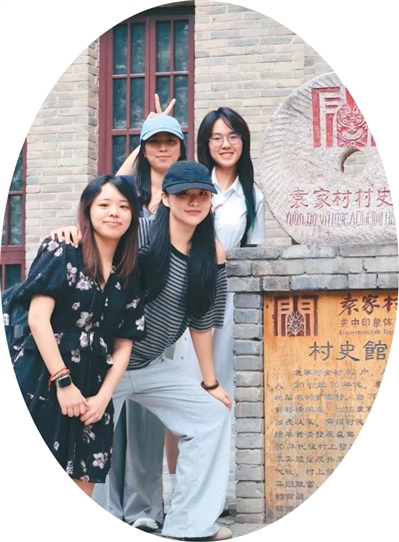
Group 1: Rural Tourism Development - The article highlights the transformation of Yuanjia Village from a poor area to a thriving rural tourism destination, with projected tourism revenue exceeding 1.2 billion yuan and 9.5 million visitors in 2024 [9][11]. - The village's development strategy included agricultural improvements in the 1970s, establishment of village-run enterprises post-reform, and a focused effort on rural tourism starting in the 2000s [11]. - The cooperative model among local businesses has led to increased per capita income for villagers and job creation for over 4,800 individuals from nearby areas [11][12]. Group 2: Cultural and Historical Significance - The article emphasizes the cultural richness of Datong, particularly through the Yungang Grottoes, which represent a significant chapter in Chinese art and history [13][14]. - Local guides and residents are actively engaged in promoting the cultural heritage of the area, enhancing the visitor experience through storytelling and education [14]. - The integration of digital technology in museums is noted as a means to revive historical narratives and engage visitors with the past [14]. Group 3: Renewable Energy and Environmental Impact - The article discusses the establishment of photovoltaic projects in the Ulan Buh Desert, which not only provide clean energy but also contribute to desertification control and local economic development [16][17]. - The shift from traditional coal-fired power generation to solar energy is highlighted as a significant reduction in emissions, supporting environmental sustainability [17]. - The development of eco-tourism in the region is facilitated by the renewable energy projects, creating new opportunities for local farmers and promoting a sustainable economic model [17]. Group 4: Border Region Development - The article reflects on the development of border areas in Xinjiang, showcasing improvements in infrastructure and tourism facilities that enhance visitor experiences [19][20]. - The presence of border defense soldiers is noted as a symbol of stability and development in these regions, contributing to national security and local growth [20]. - The narrative emphasizes the importance of historical roads in connecting communities and fostering economic integration, highlighting the role of infrastructure in regional development [19][20].
探访青海首个“零碳乡村”
Zhong Guo Xin Wen Wang· 2025-07-28 01:19
Core Insights - The article highlights the transformation of Banjian Village in Qinghai Province into China's first "zero-carbon village," showcasing the successful implementation of solar energy initiatives and sustainable practices [1][2]. Group 1: Solar Energy Development - Banjian Village established a 2 MW solar power station in 2017, which was connected to the grid by the end of that year, marking the beginning of its green energy journey [1]. - By 2023, the village developed a grid-connected microgrid that allows for self-consumption of green electricity and surplus electricity to be fed back into the grid [1][2]. Group 2: Economic Impact - Each household in Banjian Village earns an annual dividend of 2,500 RMB from selling surplus solar electricity, contributing to local economic growth [2]. - The village's initiatives have led to significant improvements in living conditions, with projects like "柴改电" (replacing firewood with electricity) enhancing sanitation and quality of life [2]. Group 3: Environmental Benefits - In 2024, Banjian Village consumed 790,000 kWh of green electricity, resulting in a reduction of 97 tons of coal consumption and a decrease of 258 tons of carbon dioxide emissions [2]. - The village has been recognized as a model for carbon neutrality, demonstrating the effectiveness of integrating renewable energy with local development [2]. Group 4: Community and Cultural Development - The rise of tourism has led to local entrepreneurship, with residents converting homes into guesthouses, generating additional income [2]. - The village has embraced technological innovations in traditional industries, such as the modernization of a distillery, which increased production efficiency and annual output value to 1.8 million RMB [2].
多点发力破解乡村“共富密码”
Xin Hua Ri Bao· 2025-07-24 23:36
Group 1 - The core viewpoint of the articles revolves around the sustainable development of village collective economies in the Houcheng Street area, emphasizing the need for innovation and collaboration among villages to overcome economic challenges [1][5][8] - In the past year, the average operating income of villages in Houcheng Street reached 14.93 million yuan, indicating significant progress, but there remains a gap compared to stronger villages in Zhangjiagang [1] - Villages have developed a "2025 Work Plan" to accelerate the implementation of economic development initiatives, aiming for greater breakthroughs in collective economic growth [1][2] Group 2 - The joint industrial land renewal project in Yuanjiaqiao Village, which includes the construction of a new 7,000 square meter standard factory, marks the first collaboration between village collectives and enterprises for industrial land updates [2][3] - The project aims to upgrade outdated single-story factories to four-story high-standard factories, increasing the land utilization rate and attracting high-quality projects in new materials and high-end equipment manufacturing [2][3] - The establishment of the Zhangjiagang Jinchang Enterprise Management Co., Ltd. by multiple villages aims to develop a new energy industrial park, with the first factory expected to generate an annual income of 4 million yuan for the villages involved [4] Group 3 - The introduction of low-risk, low-cost solar power projects is seen as a viable new path for village economies, with successful implementations already generating significant savings and income for participating villages [5][6] - The collaboration between Chen Yang Village and Zhangjiagang Meite High Polymer Materials Co., Ltd. to install solar panels is projected to save the company over 200,000 yuan annually in electricity costs while generating nearly 500,000 yuan in income for the village [6][7] Group 4 - The transformation of idle land into a popular agritourism destination, such as the Yongzhuang farm in Zhujia Dang Village, demonstrates the potential for enhancing village economies through tourism [7][8] - The farm has attracted significant visitor traffic, generating an annual rental income of 280,000 yuan for the village, highlighting the importance of developing complementary tourism resources to retain visitors [8] - Highqiao Village is also leveraging its cultural resources by renovating idle residential properties into guesthouses, aiming to enhance the overall tourism experience and economic benefits for the community [8]
光伏发电的旺季并不是夏天
Liao Ning Ri Bao· 2025-07-23 05:45
Core Viewpoint - The photovoltaic power generation efficiency is not highest in summer as commonly believed, but peaks in March and October due to the angle of sunlight and atmospheric conditions [1][2]. Group 1: Photovoltaic Power Generation Efficiency - The photovoltaic power generation at the Xishe site reached 47.85 million kWh in March 2024 and 40.09 million kWh in October, while only 36.20 million kWh in July, which is comparable to winter levels and about 15% to 20% lower than spring and autumn [1]. - The angle of sunlight hitting the photovoltaic panels is crucial for energy conversion efficiency, with spring and autumn having longer periods of optimal angles compared to summer [2]. - Air quality significantly affects photovoltaic efficiency, as haze and cloud cover can reduce sunlight intensity, while improved air quality in Fushun has indirectly enhanced photovoltaic generation [2]. Group 2: Maintenance and Operational Factors - The cleanliness of photovoltaic panels is vital for maintaining high efficiency, with clean panels potentially increasing output by about 5% compared to dirty ones [3]. - The maintenance strategy includes relying on rainwater for cleaning during spring and summer, while winter conditions help in self-cleaning through melting snow [3]. - Temperature has a minimal impact on photovoltaic efficiency under normal conditions, but extreme heat can negatively affect semiconductor performance [3].
行业周报(7.14-7.20):雅鲁藏布江下游水电工程开工,6月全国用电量同比+5.4%-20250723
Great Wall Securities· 2025-07-23 05:34
Investment Rating - The report maintains an "Outperform" rating for the industry, indicating expectations for the industry to perform better than the market in the next six months [4][63]. Core Insights - The national electricity consumption in June 2025 increased by 5.4% year-on-year, with total consumption reaching 867 billion kilowatt-hours [3][36]. - The Yarlung Tsangpo River downstream hydropower project has commenced, with a total investment of approximately 1.2 trillion yuan [3][37]. - The national power load reached a historical high of 1.5 billion kilowatts on July 16, 2025, marking a significant increase compared to previous records [3][38]. Market Performance - The Shenwan Public Utilities Index fell by 1.37% during the week of July 14-20, 2025, underperforming compared to the Shanghai Composite Index by 2.06 percentage points [2][12]. - The industry valuation as of July 18, 2025, shows a Price-to-Earnings (PE) ratio of 17.2, down from 17.43 the previous week, and a Price-to-Book (PB) ratio of 1.73, down from 1.75 [1][23][26]. Stock Performance - Top-performing stocks for the week included Mindong Electric (+6.75%), Jiufeng Energy (+5.52%), and Langfang Development (+4.79%) [2][29]. - Underperforming stocks included Wanqing Energy (-9.25%), Shaoneng Shares (-7.04%), and Huayin Electric (-6.53%) [2][29]. Industry Dynamics - The report highlights the ongoing trend of stable coal prices, with the Qinhuangdao Shanxi mixed coal price at 634 yuan per ton, reflecting a week-on-week increase of 1.6% [3][42]. - The report also notes the significant trading volumes in green certificates, with a total of 17.42 thousand wind power and 6.43 thousand photovoltaic power certificates traded from July 14 to July 20, 2025 [3][45]. Recommendations - For thermal power, the report suggests a long-term view on demand-side supply and peak regulation, with expectations for stable profit margins [7]. - For hydropower, it recommends positioning in relatively undervalued leading stocks during times of reduced risk appetite [8]. - In the green energy sector, the report advises focusing on leading companies and regions with declining electricity prices [8].