啤酒

Search documents
燕京啤酒:公司已推出10°P红枣枸杞啤酒、绿豆风味小麦、茉莉白啤等多款中式特色啤酒
Zheng Quan Ri Bao Wang· 2026-02-06 09:47
Core Viewpoint - Yanjing Beer is adapting to consumer trends by launching a variety of new products, including 10°P red date and goji berry beer, mung bean-flavored wheat beer, and jasmine white beer, which are now available under the Yanjing brand and Lion King Craft brand [1] Product Development - The company has introduced several new Chinese-style specialty beers to meet evolving consumer preferences [1] - Ongoing focus on new product research and development to provide higher quality products to consumers [1]

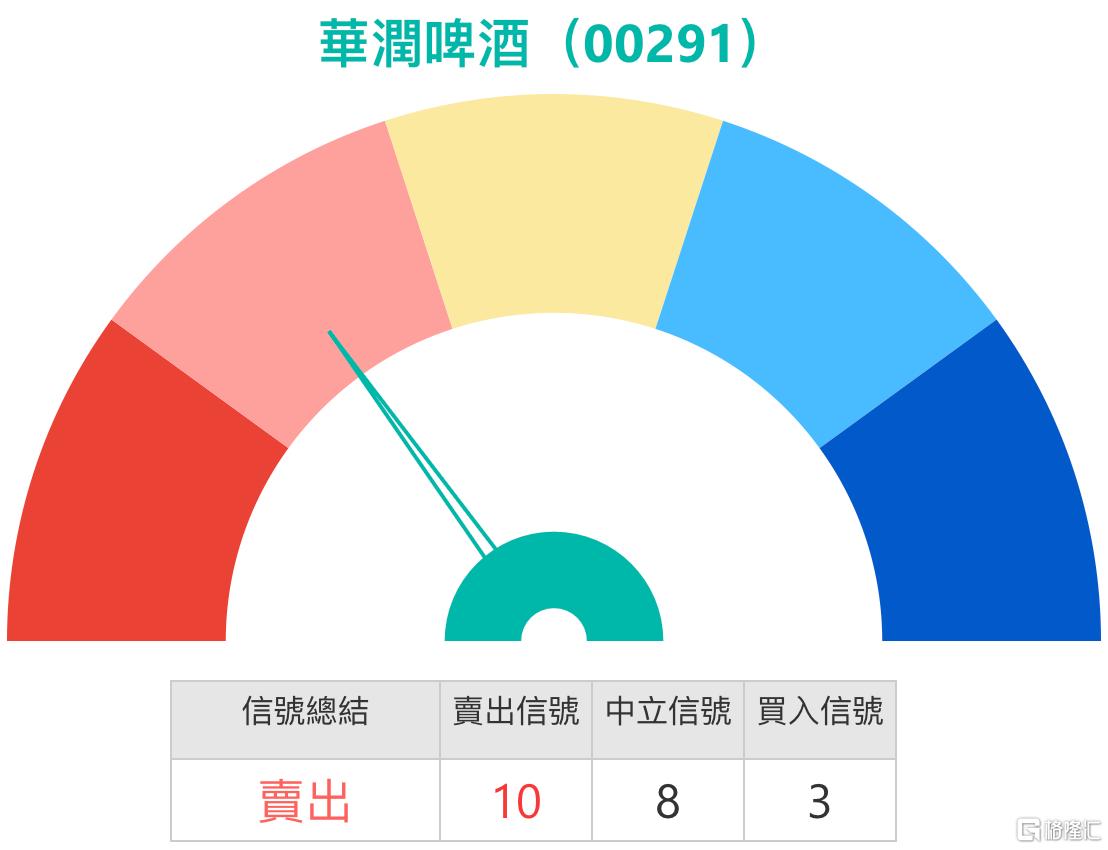
跟隨《中銀做客》佈局內需,華潤啤酒的關鍵阻力與衍生品詳解
Ge Long Hui· 2026-02-06 06:46
Core Viewpoint - China Resources Beer (00291.HK) has shown a strong independent performance in the Hong Kong stock market, with its stock price rising steadily since January, closing at 27.16 HKD on February 4, indicating potential upward momentum despite market volatility [1][2]. Technical Analysis - The stock price has successfully broken through the upper Bollinger Band, signaling a strong short-term upward momentum, supported by moving averages above MA10 (26.2 HKD) and MA30 (26.36 HKD) [1]. - However, several oscillators have indicated a "yellow light," with the Relative Strength Index (RSI) at 61, suggesting that buying pressure may be waning, and overbought conditions could lead to a price correction [2]. Support and Resistance Levels - Key resistance levels are identified at 28 HKD and 28.9 HKD, with a breakthrough at 28.1 HKD potentially leading to further gains [5]. - Support levels are established at 26.2 HKD and 25.5 HKD, with the latter being a significant buying zone that could maintain the upward trend if defended [6]. Market Sentiment and Strategy - The market sentiment is mixed, with some analysts suggesting a cautious approach due to the overbought indicators, advising investors to wait for more favorable conditions before engaging in derivative products [7]. - Various call options are available for investors, with differing risk-reward profiles, including a low street volume option from Bank of China and higher leverage options from HSBC and JPMorgan [8].


燕京啤酒:,已推出10°P红枣枸杞啤酒、绿豆风味小麦、茉莉白啤等多款中式特色啤酒
Mei Ri Jing Ji Xin Wen· 2026-02-06 03:40
Group 1 - The core viewpoint of the article is that Yanjing Beer is actively responding to consumer trends by developing new products, including traditional Chinese-style beers [1] - Yanjing Beer has launched several new products such as 10°P red date and goji berry beer, mung bean-flavored wheat beer, and jasmine white beer, which are now available under the Yanjing brand and Lion King Craft brand [1] - The company emphasizes its commitment to continuous product development to provide higher quality offerings to consumers [1]
重庆啤酒销量跑赢行业年营收147亿 与嘉威和解增厚业绩盈利涨10.43%
Chang Jiang Shang Bao· 2026-02-06 00:09
Core Viewpoint - Chongqing Brewery has reported stable revenue growth and accelerated profit despite a decline in beer production across the industry, showcasing its operational resilience through product upgrades, channel expansion, and cost optimization [1][3]. Financial Performance - In 2025, the company achieved revenue of 14.722 billion yuan, a slight increase of 0.53% year-on-year, and a net profit attributable to shareholders of 1.231 billion yuan, up 10.43% year-on-year [2][3]. - The weighted average return on equity reached 81.68%, an increase of 21.51 percentage points compared to the previous year [2]. - The company’s beer sales volume was 297.49 million hectoliters, maintaining a relative advantage in the industry [2]. Industry Context - The overall beer production among large-scale enterprises in China decreased by 1.1% year-on-year in 2025, indicating a challenging environment for the industry [3]. - Chongqing Brewery's sales volume grew by 0.68% year-on-year, outperforming the industry average, supported by continuous product structure upgrades and strategic initiatives [3]. Legal Resolution - A long-standing contract dispute with Jiawei Brewery was resolved through mediation at the end of 2025, eliminating legal risks and contributing nearly 20 million yuan to the net profit for the year [1][4][5]. - The mediation agreement included a one-time payment of 100 million yuan for price difference settlements and established a framework for future cooperation between the two companies [5][6]. Strategic Initiatives - The company has implemented the "Jiasu Yangfan" strategy, focusing on optimizing product structure, accelerating new product launches, and expanding non-traditional sales channels [3]. - Cost savings from declining raw material prices and supply chain optimization have led to an improvement in gross margin, which was 49.75% in 2023, slightly decreasing to 49.71% in 2024, and then recovering in 2025 [3].

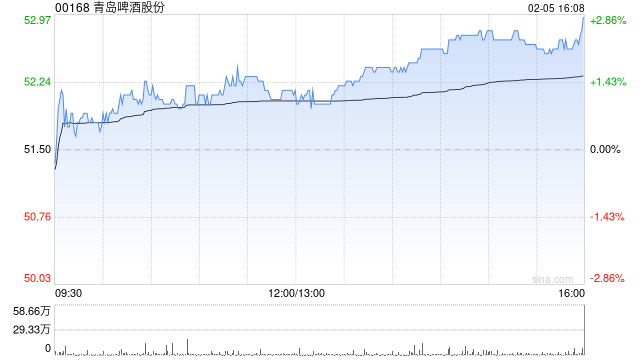
青岛啤酒股份遭摩根大通增持约128.54万股 每股作价约50.51港元
Xin Lang Cai Jing· 2026-02-05 23:40
Group 1 - Morgan Stanley increased its stake in Qingdao Beer (00168) by 1,285,412 shares at a price of HKD 50.5129 per share, totaling approximately HKD 64.9299 million [1][3] - After the increase, the total number of shares held by Morgan Stanley is approximately 33,171,000, representing a stake of 5.06% [1][3]

【重庆啤酒(600132.SH)】低基数下25Q4量价齐升,利润同比减亏——2025年业绩快报点评(陈彦彤/汪航宇/聂博雅)
光大证券研究· 2026-02-05 23:08
Summary of Key Points Core Viewpoint - The company achieved a revenue of 14.72 billion yuan in 2025, with a year-on-year growth of 0.5%, and a net profit attributable to shareholders of 1.23 billion yuan, reflecting a year-on-year increase of 10.4% [4]. Group 1: Financial Performance - In 2025, the company's sales volume increased by 0.68% year-on-year, while the average price per ton decreased by 0.18%. This growth occurred despite a challenging market environment where the beer industry saw a production decline of 1.1% [5]. - For Q4 2025, the company reported a revenue of 1.66 billion yuan, representing a year-on-year increase of 5.2%, and a net profit of -0.1 billion yuan, indicating a reduction in losses compared to the previous year [4][5]. Group 2: Strategic Initiatives - The company has focused on optimizing its product structure, accelerating new product launches, and expanding non-traditional sales channels, which has enhanced operational resilience [5]. - In Q4 2025, the company experienced a sales volume increase of 2.84% and a price increase of 1.96% year-on-year, attributed to previous efforts in non-traditional channels and product optimization [5]. Group 3: Profitability and Future Outlook - The increase in sales volume in Q4 2025 is expected to help dilute fixed costs, positively impacting gross margins. The company also reached a settlement with Jiawei, which is projected to enhance net profit by approximately 19.08 million yuan [6]. - Looking ahead to 2026, policies aimed at promoting service consumption are expected to support a recovery in on-premise consumption, with beer consumption anticipated to stabilize and improve [6].
【光大研究每日速递】20260206
光大证券研究· 2026-02-05 23:08
Group 1: Macro Insights - By 2025, China's outbound direct investment scale is expected to increase, with more small and medium-sized enterprises venturing abroad. The light manufacturing and home appliance sectors are projected to have a high proportion of overseas revenue [5] - Industries with high foreign exposure, such as light manufacturing and automotive, are likely to see better stock performance. The correlation between overseas gross margin and revenue structure indicates that rising overseas gross margins will drive business expansion [5] - Early outbound industries include machinery, basic chemicals, and electric equipment/home appliances, while accelerated outbound industries will be electronics, light manufacturing, and automotive. Outbound expansion does not necessarily lead to a decline in export growth, as it structurally benefits upstream equipment exports and investments [5] Group 2: Company-Specific Analysis - Chaohongji (002345.SZ) focuses on product research and innovation, transitioning from channel-driven to product-driven strategies. The company attracts younger consumers through low-priced IP products and enhances brand quality with high-end series like non-heritage flower silk and Palace Museum collaborations [7] - Hengli Petrochemical (600346.SH) announced its actual controller's first share buyback, acquiring 13,447,369 shares, which is 0.19% of the total share capital, with a total investment of 329.97 million yuan [8] - Qualcomm (QCOM.O) reported FY26Q1 results that met expectations, with Non-GAAP revenue of $12.252 billion, a 5% year-over-year increase. However, the guidance for FY26Q2 fell short of expectations, projecting Non-GAAP revenue between $10.2 billion and $11 billion [9] - Yum China (9987.HK) exceeded expectations in Q4 2025, achieving revenue of $2.823 billion, a 9% year-over-year increase, and operating profit of $187 million, up 25% year-over-year. Same-store sales growth accelerated, and restaurant profit margins improved [10] - Chongqing Beer (600132.SH) reported a revenue of 14.72 billion yuan for 2025, a 0.5% year-over-year increase, with a net profit of 1.23 billion yuan, up 10.4% year-over-year. Q4 2025 saw a revenue of 1.66 billion yuan, a 5.2% year-over-year increase, with a slight reduction in net profit loss [10]
重庆啤酒(600132):营收稳健增长 受益于成本红利 毛利率同步提升
Xin Lang Cai Jing· 2026-02-05 12:38
Core Viewpoint - The company reported a stable revenue growth in 2025, achieving an operating income of 14.72 billion yuan, a year-on-year increase of 0.5%, and a net profit attributable to shareholders of 1.23 billion yuan, a year-on-year increase of 10.4% [1] Group 1: Financial Performance - In Q4 2025, the company achieved an operating income of 1.66 billion yuan, a year-on-year increase of 5.2%, but reported a net profit of -0.1 billion yuan compared to -0.22 billion yuan in Q4 2024 [1] - The company’s net profit excluding non-recurring items for 2025 was 1.19 billion yuan, a year-on-year decrease of 2.8% [1] - The company’s sales volume increased by 0.68% year-on-year, outperforming the industry [1] Group 2: Strategic Initiatives - The company is actively responding to external environmental changes under the "Jia Su Yang Fan" strategy by optimizing product structure, accelerating new product layout, and expanding non-traditional beverage channels [1] - The company is focusing on deepening its "big city" plan and other key business initiatives to demonstrate operational resilience [1] Group 3: Cost Management - The company benefited from a decrease in bulk raw material costs and cost savings from supply network optimization projects, leading to an improvement in gross margin [1] - Marketing expenses increased compared to 2024 as the company intensified its market investment to consolidate and expand market share [1] Group 4: Profit Forecast - The company is expected to achieve revenues of 14.72 billion, 14.85 billion, and 15.04 billion yuan for the years 2025, 2026, and 2027, respectively, with year-on-year growth rates of 0.5%, 0.8%, and 1.3% [2] - The projected net profits attributable to shareholders for the same years are 1.23 billion, 1.25 billion, and 1.28 billion yuan, with year-on-year growth rates of 10.4%, 1.6%, and 2.6% [2]
【“十四五”北京国企成就展】北控集团交出高质量发展精彩答卷
Xin Lang Cai Jing· 2026-02-05 12:18
Core Viewpoint - The article highlights the achievements and responsibilities of Beikong Group during the "14th Five-Year Plan" period, emphasizing its role in supporting national strategies and contributing to the high-quality development of the capital city [1][3][13]. Group 1: Business Performance and Development - Beikong Group has shown continuous improvement in operational performance, optimizing its business layout and driving high-quality development through technological innovation [3][13]. - The group has successfully completed its "14th Five-Year Plan" objectives, maintaining leading positions among state-owned enterprises under municipal management [3][13]. Group 2: Leadership and Governance - The company prioritizes political construction and integrates party leadership with corporate governance, transforming its advantages into development momentum [4][13]. - Beikong Group has received recognition for its contributions to the Beijing Winter Olympics, showcasing its commitment to national strategic projects [4][13]. Group 3: Business Structure and Innovation - The company has established a robust business structure with five key sectors: urban energy, environmental protection, technology, commodities, and consumer services, enhancing its operational foundation [6][15]. - Beikong Group has increased its research and development investment to approximately 15 billion yuan over five years, achieving a compound annual growth rate of 7.5% [8][17]. Group 4: Market Position and Financial Management - The group has added one new listed company, bringing the total to nine, with significant improvements in market value and financing capabilities [9][18]. - Beikong Group is focused on cultivating quality listed resources and enhancing fund management to support its main business development [9][18]. Group 5: Risk Management and Safety - The company has optimized its internal management system, enhancing risk control and safety production, which has led to significant improvements in operational quality and efficiency [10][19]. - Beikong Group has invested over 12 billion yuan in safety measures during the "14th Five-Year Plan," achieving a qualitative leap in safety assurance capabilities [10][19].

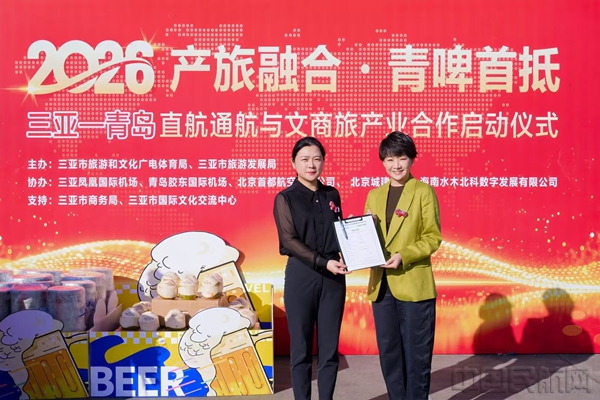
青岛—三亚航线开通 实现“南海椰香”与“黄海麦香”的跨域邂逅
Zhong Guo Min Hang Wang· 2026-02-05 12:09
Core Viewpoint - The launch of the direct flight route between Qingdao and Sanya marks a significant step in enhancing the collaboration between the two cities, facilitating the integration of tourism and commerce, and promoting regional economic development [1][3][7] Group 1: Direct Flight Launch - The direct passenger flight route from Qingdao to Sanya was successfully opened on February 3, 2023, supported by local government initiatives [3] - The flight covers a distance of 3 hours and 45 minutes, enabling easier travel between the two cities, known for their contrasting climates [3] Group 2: Economic and Trade Integration - Qingdao Airport has initiated a cold chain air freight service for Qingdao Beer, ensuring timely delivery to Sanya's supermarkets, hotels, and resorts [5] - Sanya's tropical agricultural products, such as local coconuts, are also being transported to Qingdao, enhancing the cross-regional trade of local specialties [6] Group 3: Future Development and Collaboration - The event serves as a catalyst for innovative business models in cultural and commercial tourism, aiming for deeper cooperation in resource sharing and industry integration [7] - Qingdao Airport plans to continue expanding its flight network and improve air logistics services to foster a higher level of regional collaboration [7]