职业教育

Search documents
“美食学院”,因美食而出圈(神州看点)
Ren Min Ri Bao· 2025-11-26 22:21
Group 1: Industry Development - The Luoyang snail powder industry has transformed from a street snack to a 38.24 billion yuan industry, with 49,000 physical stores nationwide and exports to over 30 countries and regions [2] - The establishment of the Luoyang Snail Powder Industry College in May 2020 has created a training base and developed programs that align with the industry chain, focusing on cultivating versatile technical talents [2][3] - The college has introduced innovations such as the "flavor wheel" for Luoyang snail powder, categorizing various flavor characteristics using professional terminology [2] Group 2: Educational Integration - The integration of education and industry is exemplified by the collaboration with Thailand's Liyu Vocational College, which aims to promote Luoyang snail powder through various initiatives, including an international entrepreneurship college [3][4] - The Zixi Bread Academy in Jiangxi has trained over 400 students since its establishment in January, offering flexible courses tailored to market demand, including short-term training programs [5][6] - The potential for entrepreneurship is supported by the academy's one-year courses and partnerships with local businesses for targeted training [7] Group 3: Employment Opportunities - The potential for employment in the baking industry is significant, with students typically receiving 2 to 3 job offers upon graduation [5] - The potential for the small lobster industry in Hubei is highlighted by its annual output value exceeding 87 billion yuan, creating over 200,000 jobs and a demand for skilled chefs [8][9] - The Qianjiang Lobster Academy was established in 2016 to address the talent gap in the lobster industry, expanding its curriculum to cover the entire industry chain and currently enrolling over 1,400 students [9]
捷安高科:11月26日召开董事会会议
Mei Ri Jing Ji Xin Wen· 2025-11-26 14:38
Group 1 - The core point of the article is that Jiean High-Tech (SZ 300845) held its 25th meeting of the fifth board of directors on November 26, 2025, to review the proposal regarding the achievement of the third vesting period of the 2022 second phase restricted stock incentive plan [1] - For the first half of 2025, Jiean High-Tech's revenue composition is as follows: 40.81% from the vocational education industry, 38.8% from the transportation industry, and 20.39% from other businesses [1] - As of the time of reporting, Jiean High-Tech has a market capitalization of 2.4 billion yuan [1]

华图山鼎:莫干山基地在2025年6月初开始规划,规模为300人
Zheng Quan Ri Bao Wang· 2025-11-24 07:45
证券日报网讯 华图山鼎(300492)11月24日发布公告,在公司回答调研者提问时表示,公司莫干山基 地在2025年6月初开始规划,规模为300人。凭借"华图"的优质口碑、基地的卓越硬件和良好设施,一个 月时间规模已扩展至500人。随后在8月、9月、10月,基地规模持续增长,目前公司莫干山基地设有学 习区共设四层,总面积约为4000平方米,共有13间教室和2间自习室,能够容纳1370名学员,未来规划 的总容量将达到1550人;住宿区有7栋楼房,335套房间,1005间宿舍,未来规划的总容量将达到1350 间,房间正在陆续交付使用中。 ...

“十四五”首都高校答卷|北京财贸职业学院:锻造新商科职教样板
Xin Jing Bao· 2025-11-24 06:09
在重大考验中,学校党建引领的成效尤为凸显。2023年涿州校区遭遇140年来最大洪峰,6000万元资产 受损严重,校党委迅速组织党员突击队投入抢险重建,保障了师生安全与教学。 五年来,形成了一批具有示范意义的成果:学校成为全国首家获批"红色金融教育基地"的高职院校;2 个党支部通过教育部"全国党建工作样板支部"验收,3个党支部入选北京高校党建工作样板支部,3个项 目入选北京高校党建引领实践创新示范项目。"一助一"工作法入选北京市党支部工作法优秀案例,获学 习强国报道。《财贸师生共上一堂廉洁文化课》作为唯一高职院校案例入选教育部廉洁教育典型,运河 贸易教育基地纳入北京市高校廉洁教育基地目录…… 2025年是"十四五"规划收官之年。在深入贯彻落实党的二十届四中全会精神、推进教育科技人才一体化 发展的时代背景下,北京财贸职业学院交出一份"十四五"亮眼答卷。 作为北京城市副中心唯一一所国家"双高校",学校积极响应北京城市副中心建设需求,持续五年发布产 业契合度报告,对接副中心生产性服务业和高品质民生需求,打造数智供应链和数智文旅专业群,推动 专业布局与区域产业深度融合。以全优成绩通过双高特高建设验收,教师队伍入选第四批 ...
“巴西红棉学堂”在里约热内卢举行揭牌暨开班仪式
人民网-国际频道 原创稿· 2025-11-24 06:01
Core Viewpoint - The establishment of the "Brazil Red Cotton School" in Rio de Janeiro aims to enhance vocational education cooperation between China and Brazil through Chinese language and vocational skills training [1][2]. Group 1: Educational Cooperation - The Brazil Red Cotton School is a new platform for talent cultivation and cultural exchange between China and Brazil, contributing to the high-quality development of the Belt and Road Initiative [1]. - The school will share Chinese vocational education experiences and systematically conduct training in Chinese language and vocational skills to support the cultivation of local skilled talent in Brazil [1][2]. - The establishment of the school marks a significant step in practical cooperation in talent training, cultural exchange, and educational collaboration between the two countries [2]. Group 2: Institutional Collaboration - A cooperation agreement was signed among Guangzhou City Vocational College, Rio de Janeiro State University, and the Brazilian Chinese Association to jointly build the Brazil Red Cotton School [2]. - The school will leverage the professional advantages of Guangzhou City Vocational College in areas such as digital commerce, art design, and multimedia to meet the demands of Brazilian industries like logistics, e-commerce, and new energy vehicles [2]. - The initiative is expected to explore a cross-cultural education model combining "craftsman academy + school" to promote vocational exchanges between the two countries [2].
生产线上做科研,头部职校探路科教融汇丨2025职教拐点⑤
2 1 Shi Ji Jing Ji Bao Dao· 2025-11-22 01:41
Core Viewpoint - The increasing emphasis on research and innovation in vocational colleges is reshaping their educational landscape, highlighting the importance of integrating scientific research with practical skills training to meet industry demands [1][2][3] Group 1: Research Development in Vocational Colleges - Vocational colleges are increasingly recognized for their research capabilities, with 22 institutions making it to the top 2% of global scientists in 2025 [1] - The Ministry of Education has initiated policies to promote organized research in higher education, leading to a surge in research activities within vocational institutions [2][3] - Guangdong vocational colleges are adopting structured research models, such as the "152" model, which integrates research into the educational process and addresses real-world industrial challenges [3][4] Group 2: Industry Collaboration and Practical Application - Vocational colleges are focusing on research projects that directly address industry needs, fostering collaboration between academia and enterprises [4][5] - Institutions like Shenzhen Information Vocational Technology University are developing market-oriented products in fields such as AI and smart manufacturing, enhancing their relevance to industry [3][4] - The shift towards practical, application-oriented research is evident, with faculty and students actively engaging in projects that yield tangible results for industries [8][9] Group 3: Systematic Support and Infrastructure - Vocational colleges are investing in infrastructure and systems to support research, including establishing technology transfer centers and collaborative platforms with industries [5][8] - Continuous investment in research capabilities is evident, with institutions reporting significant funding and successful project outcomes [5][6] - The development of a comprehensive evaluation system for research outcomes is recommended to ensure that vocational colleges align their research efforts with educational and societal needs [10]
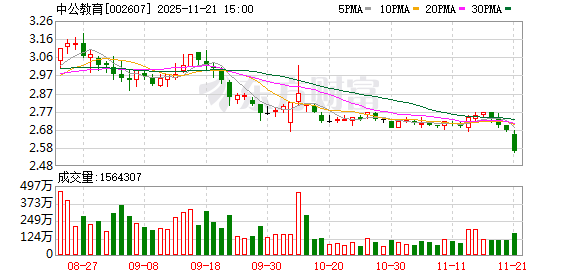
中公教育拟1.5亿元在横琴设立子公司
Bei Jing Shang Bao· 2025-11-21 11:16
Core Viewpoint - The announcement by Zhonggong Education indicates a strategic move to enhance its business operations in the Greater Bay Area by establishing a wholly-owned subsidiary in the Hengqin Guangdong-Macao Deep Cooperation Zone, aiming for sustainable development in the South China market [2]. Group 1: Company Strategy - Zhonggong Education plans to set up a wholly-owned subsidiary, Zhonggong Zhiyuan (Zhuhai Hengqin) Education Technology Co., Ltd., with a registered capital of 150 million yuan [2]. - The establishment of the new subsidiary is part of a broader strategy to deepen business collaboration and expand market presence in the South China region [2]. Group 2: Market Expansion - The move is aimed at accelerating the company's growth and enhancing its operational synergy within the Greater Bay Area [2]. - This initiative reflects the company's commitment to sustainable development and its focus on tapping into the educational market in Southern China [2].


中公教育拟斥资1.5亿元设立珠海横琴子公司 深化大湾区战略布局
Xin Lang Cai Jing· 2025-11-21 10:52
Core Viewpoint - Zhonggong Education Technology Co., Ltd. announced the establishment of a wholly-owned subsidiary in the Hengqin Guangdong-Macao Deep Cooperation Zone, with a registered capital of 150 million yuan, aiming to enhance its strategic layout in the Greater Bay Area and strengthen business collaboration in South China [1][2]. Group 1 - The board meeting was held on November 20, 2025, with all 7 directors present, and the decision to invest was unanimously approved [1]. - The new subsidiary is tentatively named "Zhonggong Zhiyuan (Zhuhai Hengqin) Education Technology Co., Ltd." and will be fully funded by Beijing Zhonggong Zhiyuan Technology Co., Ltd. [1]. - The investment aims to expand the company's education service network in the Guangdong-Hong Kong-Macao Greater Bay Area and enhance regional market competitiveness [1][2]. Group 2 - This investment is seen as a significant move for Zhonggong Education to respond to national regional development strategies and optimize its national business layout [2]. - The new subsidiary is expected to leverage Hengqin's policy and geographical advantages, becoming a core hub for Zhonggong Education's outreach in the South China market [2].
中公教育(002607.SZ)拟1.5亿元在横琴设立子公司 加速拓展华南区域市场
智通财经网· 2025-11-21 09:57
Core Viewpoint - Zhonggong Education plans to establish a wholly-owned subsidiary in the Hengqin Guangdong-Macao Deep Cooperation Zone to accelerate market expansion in South China and promote sustainable development [1] Group 1 - The new subsidiary, tentatively named Zhonggong Zhiyuan (Zhuhai Hengqin) Education Technology Co., Ltd., will have a registered capital of 150 million yuan [1] - The establishment of this subsidiary is part of the company's strategy to enhance its presence in the South China market [1]
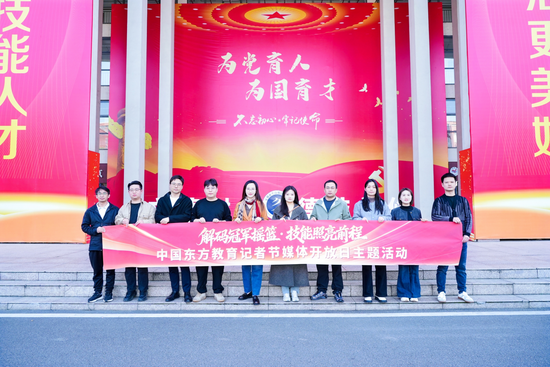
主流媒体为何齐聚中国东方教育?国赛佳绩背后是职教改革的“样本”力量
Xin Lang Zheng Quan· 2025-11-21 08:35
Core Insights - The article highlights the significant transformation in vocational education practices at China Oriental Education Group, emphasizing a shift from traditional teaching methods to a more interactive and student-centered approach [4][14] - The success of the recent national vocational skills competition serves as a validation of the group's strategic initiatives and educational reforms, showcasing the effectiveness of their "competition-driven education" model [7][9][14] Group 1: Educational Reform - The teaching methodology has evolved from a one-way transmission of knowledge to a "problem chain" and "task-driven" approach, fostering active student engagement [4] - The core mechanism of the educational model is based on applying industry standards in the classroom and using competition results as feedback for continuous improvement, creating a closed-loop system [4] Group 2: Teacher Development - The "dual-teacher" model is identified as a key solution to the challenges in vocational education, combining theoretical knowledge with practical skills [5] - The establishment of a "three-in-one" teacher development ecosystem, which includes master guidance, school-enterprise collaboration, and competition-training integration, provides a replicable path for building a strong teaching workforce [6] Group 3: Strategic Implementation - The performance of participants from the Anhui vocational education industrial park in the national competition underscores the effectiveness of the group's regional center strategy [7][9] - The nationwide layout of seven vocational education industrial parks aims to address the long-standing dilemma of balancing scale and quality in vocational education [9] Group 4: Student Success Stories - The article features individual success stories, such as those of Wang Tianxiang and Wang Zhiwei, illustrating the transformative impact of vocational education on students' lives and careers [10][13] - These narratives reflect the broader theme of vocational education enabling youth to transition from being passive recipients to active participants in their career paths [13][14]