制造业

Search documents
澄迈:今年力争数字经济核心产业营收超千亿元
Hai Nan Ri Bao· 2026-02-05 06:42
Core Insights - The article discusses the strategic development goals of Chengmai County, focusing on economic growth, investment, and digital transformation initiatives aimed at enhancing the local economy and industry [2]. Group 1: Economic Growth Targets - Chengmai aims for a GDP growth of over 7% by 2026, with local public budget revenue expected to increase by 3.6% and fixed asset investment by over 8% [2]. - The county plans to boost retail sales of consumer goods by over 8% [2]. Group 2: Investment and Development Initiatives - Chengmai will focus on attracting investments, with a target of hosting at least 200 promotional events and doubling the project signing amount compared to provincial targets [2]. - The government has allocated 100 million yuan for preliminary project work, with plans to initiate at least 200 new projects totaling over 20 billion yuan [2]. - The project reserve scale is expected to maintain over 100 billion yuan [2]. Group 3: Digital Economy and Cultural Development - Chengmai aims to become a national-level digital transformation pilot city, with core digital economy industries expected to generate over 100 billion yuan in revenue, growing by over 5% [2]. - The county plans to enhance cultural tourism, targeting 5.3 million visitors and over 4.4 billion yuan in tourism revenue, with a 30% increase in inbound tourism [2]. Group 4: Industry-Specific Goals - The oil service industry is projected to have over 300 companies with a revenue of 21 billion yuan [3]. - The manufacturing sector aims for a total output value exceeding 16 billion yuan and industrial output over 22 billion yuan [3]. - The gaming industry is expected to see over 150 companies providing services for overseas markets, with revenue reaching 4.5 billion yuan and over 400 games launched internationally [3].
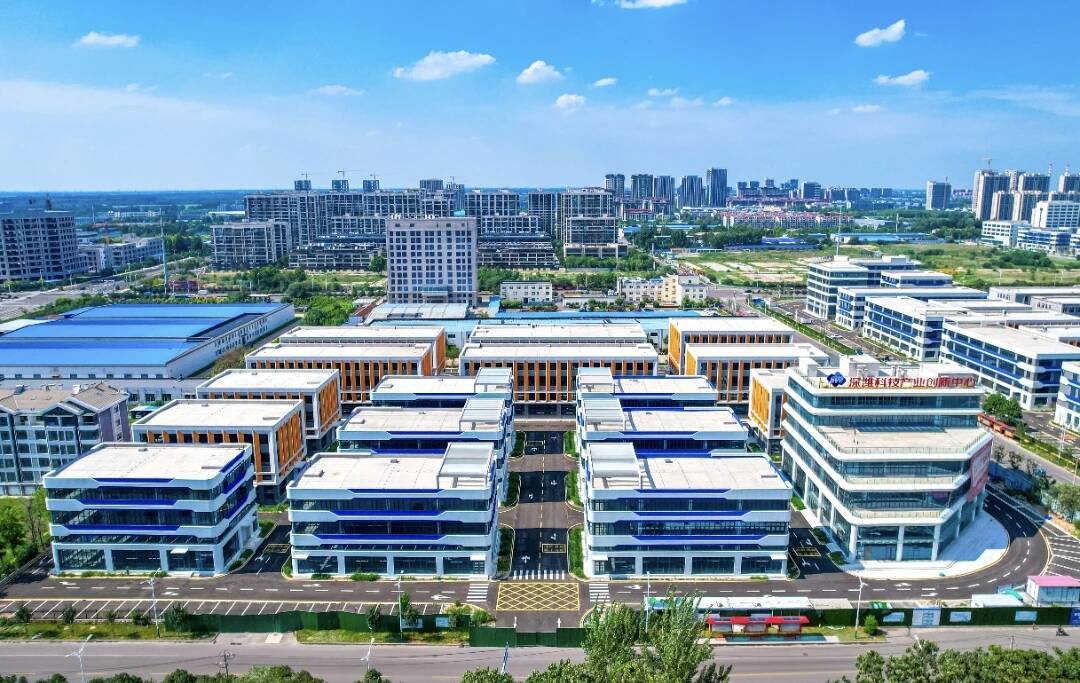
增速全市第一!潍坊经济开发区“四上”企业纳统交出亮眼答卷
Qi Lu Wan Bao· 2026-02-05 05:13
Core Insights - The "Four Up" enterprises are crucial for regional economic development, and their cultivation quality directly impacts economic vitality and sustainability [1] - In 2025, the Weifang Economic Development Zone aims to achieve significant breakthroughs in cultivating "Four Up" enterprises, with a target of adding 41 new enterprises, representing an 86% year-on-year increase [1][2] Group 1: Growth Metrics - By the end of 2025, the total number of "Four Up" enterprises in the Weifang Economic Development Zone is expected to reach 292, an increase of 97 enterprises or 49.7% compared to early 2021, with an average annual growth rate of 8.4% [2][3] - The industrial sector shows remarkable performance, with the number of enterprises reaching 110, marking a historical high [2] - The trade sector added 18 new enterprises, contributing to industry growth, while the service sector saw 4 new enterprises, enhancing modern service development [2][3] Group 2: Strategic Initiatives - The Weifang Economic Development Zone has established a comprehensive cultivation system for "Four Up" enterprises, emphasizing high-level promotion and collaboration among various departments [5] - A targeted approach is being implemented, with over 120 "quasi-Four Up" enterprises identified for potential inclusion, supported by tailored strategies for each enterprise [5][6] - Continuous improvement in service levels is prioritized, with a focus on enhancing business guidance and addressing operational challenges faced by enterprises [6]

美国“小非农”仅增2.2万不及预期,劳动力市场降温明显
Feng Huang Wang· 2026-02-04 23:32
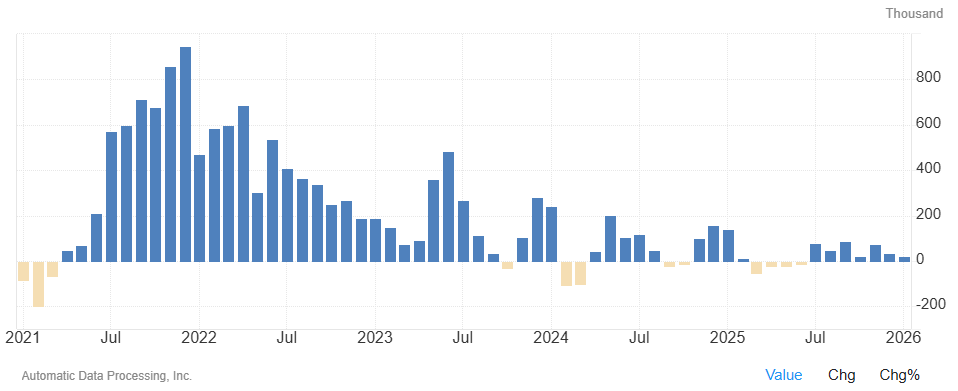
Core Viewpoint - The latest ADP report indicates a slowdown in the U.S. labor market at the beginning of 2026, with private sector job growth significantly below expectations [1][4]. Employment Data Summary - In January, the private sector added only 22,000 jobs, falling short of the anticipated 48,000 and down from 37,000 in December [1][4]. - The goods-producing sector saw a net increase of only 1,000 jobs, with construction adding 9,000 jobs, while manufacturing lost 8,000 jobs [3]. - The service sector experienced mixed results, with trade/transport/utilities adding 4,000 jobs, financial services increasing by 14,000, education and health services up by 74,000, and leisure and hospitality adding 4,000 jobs [3]. - Conversely, the information sector lost 5,000 jobs, professional/business services decreased by 57,000, and other services fell by 13,000 [3]. - Employment changes by company size showed small businesses (1-49 employees) remained stable, medium-sized businesses (50-499 employees) added 41,000 jobs, while large businesses (500+ employees) lost 18,000 jobs [3]. Economic Insights - ADP's Chief Economist Nela Richardson expressed concern over the low growth in hiring, particularly in manufacturing and professional/business services, which have been experiencing job losses since March 2024 [3]. - Despite some signs of stabilization in recent months, the weaker-than-expected job growth in January suggests continued cooling in the labor market [4]. - Wells Fargo's Senior Economist Sarah House noted that the data reflects a stagnant labor market, with no significant improvement or deterioration in hiring trends [4].

香坊区工商联:以项目为抓手精准施策
Xin Lang Cai Jing· 2026-02-04 20:31
Core Viewpoint - The article highlights the proactive measures taken by the Xiangfang District Federation of Industry and Commerce to enhance local business operations and foster economic development through innovative strategies and collaboration with various stakeholders [1] Group 1: Mechanisms and Initiatives - The establishment of the "Qin Qing Consultation Meeting" mechanism allows district leaders to engage directly with entrepreneurs, creating a framework to address issues through three lists: problems, responsibilities, and timelines [1] - This mechanism has successfully resolved dozens of issues, including land use concerns [1] Group 2: Business Development and Networking - The district federation actively seeks opportunities by leading business associations to connect with economically developed regions such as Fujian and Anhui, promoting mutual cooperation and project exchanges [1] - Efforts include facilitating local enterprises to expand their reach and attract external investments through systematic networking [1] Group 3: Educational and Market Engagement - Member enterprises are encouraged to learn from institutions like Harbin Institute of Technology and participate in events such as the Changchun Advanced Manufacturing Expo to better understand market trends and identify upgrade paths [1] - The federation leverages provincial and municipal platforms to organize various investment promotion activities, inviting foreign business partners to explore collaboration opportunities [1] Group 4: Rural Development Initiatives - The "Ten Thousand Enterprises Prosper Ten Thousand Villages" initiative promotes a model of "enterprise + cooperative + farmers" to develop local brands like "Xiangfang Rice" [1] - Female entrepreneur associations are guided to utilize e-commerce to expand agricultural support channels [1]
大类资产月度策略(2026.2):乍暖还寒试韧性,估值修复入深水-20260204
Guoxin Securities· 2026-02-04 15:25
证券研究报告 | 2026年02月04日 大类资产月度策略(2026.2) 乍暖还寒试韧性,估值修复入深水 1. 货币-信用"风火轮":双宽格局持续 信用方面,12 月我国新增社融 22075 亿元,高于万得一致调查值(18153 亿 元)。其中新增人民币贷款 9100 亿元,高于万得一致调查值(6794 亿元)。 广义货币条件指数边际改善,新增社融数据超预期,抵消高基数引发的信用 脉冲回落,金融对实体支撑坚实。当前格局延续"宽货币+宽信用"的双宽 组合,资金面趋紧风险较低,金融条件对宏观与资产表现形成托底。 2. 下一阶段大类资产价格展望 指数开门红,估值修复渐入深水区。1 月 A 股延续强势,中证 500 以 12.12% 领跑,新开户数近 500 万反映资产迁移热度。然而 2 月初受沃什"降息+缩 表"鹰派主张冲击,分母端压力陡增,贵金属剧烈回调,市场流动性边际收 缩。尽管短期拖累指数,但释放流动性有利于缓解对其它板块的吸血效应, 降低长线泡沫破裂风险。当前市场对科创及互联网板块的高资本开支容忍度 降至冰点,业绩验证阈值抬高。1 月 PMI 处于荣枯线下,经济基本面尚不支 持全面牛,市场步入去杠杆与去伪 ...
去年新设外资企业7万余家,它们在中国看到哪些机会
Di Yi Cai Jing Zi Xun· 2026-02-04 15:12
Core Insights - China is reinforcing its position as a global investment powerhouse by expanding openness and enhancing the level of investment liberalization and facilitation [2][3] - The latest report indicates that the quality of foreign investment utilization in China is steadily improving, with significant contributions to global economic prosperity [3][4] Group 1: Investment Trends - In 2025, over 70,000 new foreign-funded enterprises are expected to be established in China, representing a growth of 19.1%, with foreign capital absorption reaching 747.69 billion yuan, of which high-tech industries account for 32.3% [3] - China's outbound non-financial direct investment is projected to reach 1 trillion yuan in 2025, marking a growth of 1.6%, while the value of newly signed contracts for foreign engineering projects is expected to be 2.1 trillion yuan, an increase of 8.5% [3] Group 2: Competitive Advantages - China's comprehensive advantages in supply chains, markets, and policies have created a favorable investment environment for multinational companies, leading to significant development achievements for foreign enterprises in China [4] - The country's technological innovation capabilities rank among the top globally, with advancements in fields such as artificial intelligence and 5G providing a robust ecosystem for foreign investment [4] Group 3: Outbound Investment - Chinese enterprises are increasingly encouraged to invest abroad, contributing to tax revenue and employment growth in host countries while enhancing local industrialization and infrastructure [5] - The manufacturing sector has shown remarkable performance in outbound direct investment, with an average annual growth rate of 15% from 2020 to 2025, surpassing the overall growth rate of outbound direct investment by 10 percentage points [5] Group 4: Policy Support - The Chinese government is committed to creating a more open investment environment, implementing stable foreign investment policies, and encouraging high-quality outbound investment [8][9] - Measures include reducing the negative list for foreign investment access, promoting reinvestment by foreign enterprises, and ensuring a transparent and predictable institutional environment [8][9]
【环球财经】关税政策拖累 美国制造业进一步萎缩
Xin Hua She· 2026-02-04 14:36
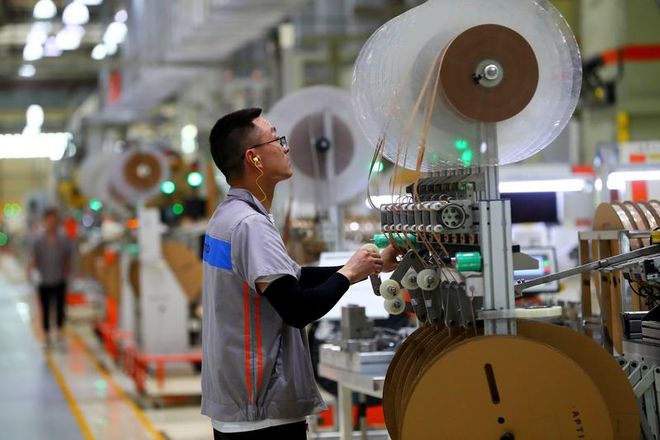
Core Insights - The article highlights the decline of the U.S. manufacturing sector, contrary to President Trump's promise of a manufacturing boom leading to a "golden age" for the country [1] Group 1: Employment Trends - U.S. federal government data indicates that since the announcement of the "liberation day" tariff plan, manufacturers have been laying off employees every month, exacerbating a trend that has seen over 200,000 jobs disappear since 2023 [1] Group 2: Causes of Decline - Long-term factors contributing to the decline of the manufacturing sector include the offshoring of U.S. manufacturing jobs and the hollowing out of the industry [1] - Tariff policies have led to increased costs for companies sourcing raw materials from overseas, forcing them to raise prices or face supply chain disruptions [1] Group 3: Company-Specific Impacts - Howard Waltz, head of Insteel Industries in North Carolina, stated that the steel tariff policy has made it increasingly difficult to obtain necessary metals from U.S. suppliers, potentially impacting the company's growth due to domestic raw material shortages [1] - NN, a metal parts manufacturer based in Charlotte, North Carolina, has reduced its workforce in the U.S. due to increased costs from import taxes on steel and aluminum, which have compounded pressures from rising gold and silver market prices [1]
耐普矿机:公司在智利和秘鲁的投资,属于制造业投资、非资源开发的投资
Zheng Quan Ri Bao· 2026-02-04 11:44
(文章来源:证券日报) 证券日报网2月4日讯 ,耐普矿机在接受调研者提问时表示,公司在智利和秘鲁的投资,属于制造业投 资、非资源开发的投资。工厂投产后,会带动当地的就业,增加政府税收,降低进口,属于当地政府支 持的行业,整体经营风险较小。 ...

多元资产月报(2026年2月):海外政治地缘扰动频发,国内春季行情有望延续-20260204
Ping An Securities· 2026-02-04 10:08
Macro Economic Background - The domestic economy shows structural recovery, with GDP growth of 5.0% in 2025, meeting the target set during the "Two Sessions" [12] - Industrial production remains resilient, with industrial added value in December 2025 rising to 5.2% year-on-year, and high-tech manufacturing and equipment manufacturing sectors outperforming with growth rates of 9.4% and 9.2% respectively [12] - Investment growth has slowed, with fixed asset investment down 3.8% year-on-year, while consumption shows mixed performance, with retail sales growth dropping to 0.9% in December 2025 [12][14] - Exports have rebounded, with a year-on-year growth of 6.6% in December 2025, particularly in high-tech products like automobiles and integrated circuits, which grew by 71.6% and 47.8% respectively [14][15] A-Share Market - In January, the A-share market experienced a "New Year Rally," leading to a spring market trend, with a significant increase in trading volume, averaging over 30 trillion yuan [9][12] - The outlook for February suggests a stable pre-holiday market, with a high likelihood of a "spring market" rally post-holiday, focusing on sectors with clear policy guidance and high earnings certainty [5][9] Fixed Income Market - The fixed income market in January saw a continuation of monetary easing, with bond yields declining [5][9] - The outlook for February indicates a focus on structural opportunities within a fluctuating market environment [5][9] Currency Exchange Rates - The US dollar index is expected to show a fluctuating pattern, while the Chinese yuan is anticipated to remain strong in the short term due to a lack of significant rebound in the dollar and strong potential settlement forces [5][9] Overseas Markets - The US bond market is expected to remain volatile, influenced by economic fundamentals and changes in interest rate expectations [5][9] - The US stock market is projected to experience fluctuations, supported by resilient economic data, but scrutiny on technology companies' earnings may increase during the earnings season [5][9] - The Hong Kong stock market is expected to remain strong, buoyed by domestic spring market dynamics and regulatory easing on IPOs [5][9] Commodities - Gold prices are facing adjustment pressure after a rapid increase, with expectations of wide fluctuations [5][9] - Oil prices are expected to remain strong in the short term due to geopolitical uncertainties and increased energy consumption during winter [5][9]
关于地缘经济的几点宏观思考
Hua Xia Shi Bao· 2026-02-04 09:01
Core Insights - Geoeconomics has evolved from an academic concept to a significant topic in global economics and policy, shifting from cooperation in globalization to competition driven by economic means [2] - The analysis by CICC Research Institute and CICC Research Department explores the implications of geoeconomic competition on macroeconomic policies and frameworks [2] Group 1: Historical Context and Policy Shifts - Since the late 1970s, economic liberalism, centered around neoclassical economics, has dominated, leading to globalization and financialization [3] - The macroeconomic policy framework has focused on controlling inflation, with a combination of inflation targeting, floating exchange rates, and trade and financial liberalization [4] - The rise of financial crises and increasing wealth disparity have prompted reflections on neoclassical economics, leading to a shift towards protectionism and increased financial regulation post-2008 financial crisis [5] Group 2: Geoeconomic Competition and Macroeconomic Policy - Geoeconomic competition emphasizes the importance of economies of scale in international trade and global supply chains, challenging traditional trade theories [6] - Technological advancements have become a core area of competition among nations, necessitating increased government involvement in research and development [7] - The non-neutrality of money may manifest in new forms, affecting economic structures and necessitating responses to supply chain risks and trade protection measures [8] Group 3: Supply Constraints and Global Trade Dynamics - The increase in supply constraints has implications for long-term economic growth, with economies of scale being a key driver of global trade expansion [9] - Geoeconomic competition has led to the use of trade protectionism and technology export restrictions, impacting the efficiency of economies of scale [10] - The competition between the U.S. and China highlights the significance of economic scale, with China as a trade surplus nation and the U.S. focusing on enhancing its manufacturing capacity [11] Group 4: Technological and Economic Shifts - The transition to green energy and the rise of the digital economy are significant trends that promote economies of scale, contrasting with the constraints imposed by geoeconomic competition [12] - The dynamics of technological advancement and innovation are critical in understanding the evolving landscape of geoeconomic competition [13] Group 5: Geoeconomic and Technological Interplay - The emergence of "geoeconomic technology" reflects the growing importance of technology in geoeconomic competition, with nations vying for dominance in strategic technologies [14] - The U.S. and China are engaged in intense competition over high-tech resources, impacting global supply chains and economic structures [15] Group 6: Fiscal Policy and Financialization - The trend of de-financialization is evident in the increasing number of financial sanctions and the rising role of fiscal policy in the global economy [18] - U.S. fiscal deficits have risen significantly, impacting monetary supply and economic demand, with implications for inflation and trade balances [19][20] - The increase in defense spending among nations reflects a shift in fiscal priorities, influencing demand without directly enhancing supply capabilities [21] Group 7: Economic Scale and Global Competition - The competition between large economies emphasizes the importance of absolute economic scale, with smaller economies facing challenges in achieving economies of scale [23] - The future of geoeconomic competition will be primarily centered around the U.S. and China, with implications for manufacturing, digital economy, and monetary finance [24] - China's manufacturing sector benefits from economies of scale, while the U.S. leverages its consumer market to influence global trade dynamics [25] Group 8: Conclusion and Future Outlook - The interplay between supply capabilities and demand dynamics is crucial for understanding the ongoing geoeconomic competition, with both nations needing to address structural weaknesses [27] - Fiscal expansion is necessary for maintaining economic stability and supporting the transition to new growth drivers in the face of geoeconomic challenges [28]