粮食种植

Search documents
降息525基点
Ge Long Hui· 2025-08-30 16:32
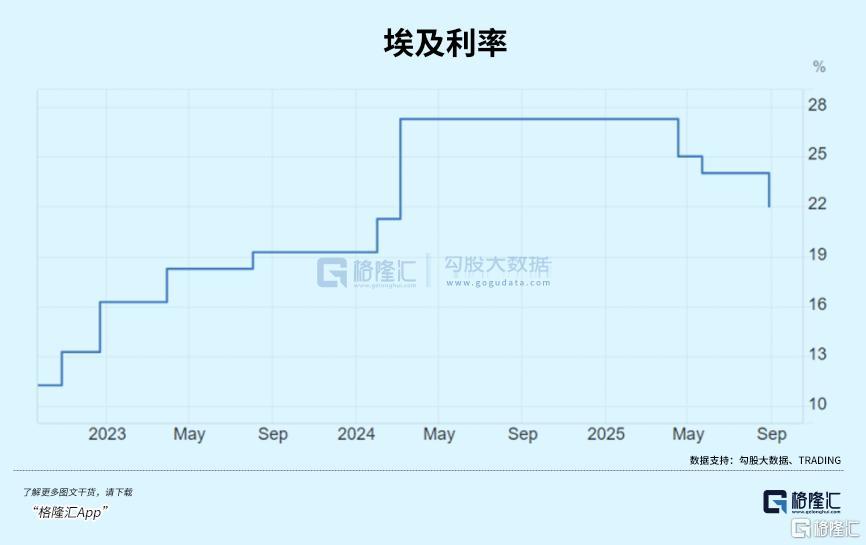
Group 1 - The global trend is shifting towards monetary easing, with Egypt being a significant participant, recently announcing a 200 basis point interest rate cut [1][2] - This marks Egypt's third consecutive rate cut this year, following reductions of 225 and 100 basis points in April and May respectively [2] - The Central Bank of Egypt attributes this easing to the stabilization of the Egyptian pound after a 50% depreciation against the dollar and an economic growth forecast of 5.4% by Q2 2025 [4] Group 2 - Egypt's inflation rate has decreased from a peak of 38.2% in 2023 to 9.4%, the lowest in three years, indicating a potential for continued monetary easing [4][56] - The country faces significant challenges, including a reliance on food imports, with over 60% of its grain sourced from Russia and Ukraine, which has been disrupted by geopolitical tensions [39][40] - Egypt's external debt obligations are substantial, with $75.6 billion due between 2024 and 2026, while government revenues are projected at only $40 billion in 2024 [48][49] Group 3 - The economic model of heavy subsidies for basic food items has led to a distorted agricultural market, with farmers losing incentive to produce due to artificially low prices [20][22] - The government spends over 90% of the cost of subsidized bread, which has been a critical measure to prevent widespread hunger [21][22] - The current economic situation is precarious, with a high poverty rate affecting 60% of the population, leading to social instability [33][36] Group 4 - The Suez Canal remains a vital economic asset, contributing 10% to Egypt's GDP, but recent geopolitical issues have reduced shipping traffic and revenue by 40% [35][45] - The government is attempting to balance debt repayment with social welfare spending, which is critical to maintaining public order [51][52] - Recent monetary policy changes aim to attract foreign investment and create a synergistic effect between monetary easing and fiscal reform [56][59]

2025年广东早稻产量同比增长1.0%
Zheng Quan Shi Bao Wang· 2025-08-28 01:52
Core Insights - Guangdong province has implemented strict measures to ensure food security and has focused on rice production, particularly early rice [1] Summary by Categories Production Data - In 2025, Guangdong's early rice production is projected to reach 5.332 million tons, an increase of 55,000 tons or 1.0% compared to 2024 [1] - The early rice production in Guangdong has remained above 5.2 million tons for five consecutive years, achieving the highest level since 2006 [1]
新季丰产可期 大豆和玉米市场难有亮点
Qi Huo Ri Bao· 2025-08-27 23:29
Core Viewpoint - The corn prices are expected to decline due to strong expectations of abundant yields in the U.S. and policy auctions, with the opening prices for new crops projected to be slightly higher than last year [1][7]. Group 1: Crop Growth Conditions - The growth conditions for soybeans and corn in Heilongjiang and Inner Mongolia are favorable due to sufficient rainfall and higher accumulated temperatures, with only minor impacts from low temperatures and pests [2][3]. - As of late August, most spring corn is at the silk stage, with some regions entering the milk stage, indicating normal or slightly advanced development [3]. Group 2: Market and Pricing Dynamics - The opening prices for new soybeans are estimated around 2 CNY per jin, while corn is projected between 0.8 to 0.85 CNY per jin, which is higher than last year's prices [2][7]. - The market sentiment among traders is cautious, with many holding back on selling due to previous experiences of missing price rebounds [5][6]. Group 3: Trade and Inventory Management - The current market for old grain is weak, with traders reducing their inventory as new crops approach, leading to a decrease in the market share of old grain [6]. - Traders are expected to actively purchase new crops once they are available, which may provide some support to market prices [1][7]. Group 4: Cost and Profitability - The cost of land leasing has decreased, which may affect farmers' pricing expectations for selling grain, with costs in some regions dropping from 12,000 CNY per mu to between 10,000 to 11,000 CNY per mu [5]. - The overall planting costs for farmers are estimated between 16,000 to 17,000 CNY per mu, which is slightly higher for farms [5].
早稻增产 助力丰收
Ren Min Ri Bao· 2025-08-27 22:19
Core Insights - The total early rice production in the country for this year is 28.513 million tons, representing a year-on-year increase of 1.2% [2] Group 1 - The increase in early rice production contributes to a stable summer grain harvest in 2025, laying a solid foundation for maintaining overall grain production for the year [2] - The data indicates a positive trend in agricultural output, which is crucial for food security [2]
(活力中国调研行)探访内蒙古兴安盟的“生态账本”与“共富路径”
Zhong Guo Xin Wen Wang· 2025-08-27 12:28
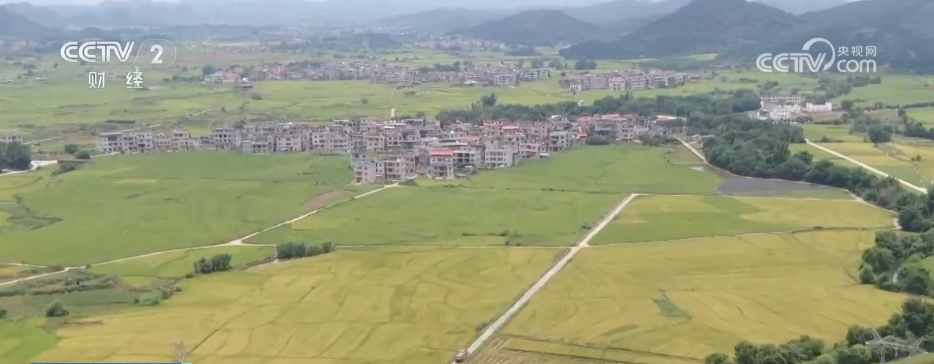
Core Viewpoint - The article highlights the ecological and economic development strategies of Xingan League, Inner Mongolia, focusing on the transformation of ecological products and the path to common prosperity through sustainable practices [1][10]. Ecological Development - Xingan League covers an area of 60,000 square kilometers, with one-third being grassland, one-third forest, and one-tenth designated as nature reserves, contributing to China's ecological security [1]. - The "Three-North" project has successfully reduced the area of sandy land from 5.03 million acres in 2020 to 3.27 million acres, effectively managing one-third of the sandy land [2]. - The forest coverage rate in Xingan League increased from 26.08% in 2021 to 26.74% in 2024, reflecting successful forest management efforts [4]. Economic Development - The area dedicated to green food raw materials in Xingan League has reached 7.4 million acres, accounting for 48.7% of Inner Mongolia's total green food raw materials, with the brand value of "Xingan League Rice" reaching 26.287 billion yuan [7]. - Innovative ecological restoration of abandoned mines has transformed them into profitable areas, contributing to local economic growth [7]. - In 2024, Xingan League is projected to receive 29.192 million tourists, a year-on-year increase of 28.80%, generating revenue of 28.538 billion yuan, up 40.91% from the previous year [10]. Carbon Trading and Ecological Products - Xingan League has engaged in carbon trading, earning 4.05 million yuan from carbon sales, with ongoing projects to develop 880,000 acres of forestry carbon sinks [9][10]. - The league has implemented innovative trading methods, generating 1.9 million yuan from a combination of 6,000 acres of artificial forest and 640,000 acres of grassland [9].

全力以赴打好秋粮“保卫战”
Jing Ji Ri Bao· 2025-08-26 21:59
Core Viewpoint - The production of autumn grain, which accounts for 75% of the total annual grain output, is crucial for achieving the national grain production target of 1.4 trillion jin this year. The current period is critical for both yield formation and disaster response, necessitating a focus on "disaster resistance and harvest maximization" as the central task for agricultural work [1][2]. Group 1: Current Situation and Challenges - The overall growth of autumn grain is stable, but high temperatures and disasters such as floods and typhoons have affected regions like Huang-Huai, Jiang-Huai, and Jiang-Han since July. Some areas are also facing pest issues, posing multiple challenges to achieving a bountiful harvest [1]. - The need for a systematic approach to strengthen agricultural disaster prevention and reduction is emphasized, including the establishment of an integrated monitoring system using satellite remote sensing and IoT devices for real-time tracking of soil moisture and pest conditions [2]. Group 2: Strategies and Long-term Measures - It is essential to implement precise field management during the critical window from late August to early September, promoting high-yield corn technology in the Huang-Huai-Hai region and focusing on late rice management in the Yangtze River basin [2]. - A long-term mechanism for disaster resistance and harvest maximization is necessary, with a focus on enhancing agricultural resilience to climate challenges, improving disaster forecasting, and integrating disaster prevention into grain security assessments [2][3].
日本新米收购预付款大幅提高 大米涨价潮恐再现
Xin Hua She· 2025-08-25 13:01
Group 1 - The core viewpoint of the articles indicates that the price of rice in Japan is expected to rise significantly due to increased prepayments for new rice by agricultural cooperatives, driven by competition among buyers and reduced production caused by extreme summer heat [1][2] - Agricultural cooperatives in major rice-producing regions, such as Niigata Prefecture, have raised the prepayment for new rice by approximately 70% compared to last year, averaging 30,000 yen (about 1,456 RMB) per 60 kilograms [1] - In Toyama Prefecture, the prepayment has increased by 60%, averaging 26,000 yen (about 1,262 RMB) per 60 kilograms, while regions like Hokkaido and Akita have also seen increases of about 10,000 yen (approximately 485 RMB) [1] Group 2 - The rise in rice prices has been ongoing since the summer of 2024, attributed to extreme heat leading to poor rice harvests [2] - A previous warning about the increased likelihood of earthquakes in the eastern Pacific Ocean led to a panic buying situation, resulting in a temporary "rice shortage" last year, although the situation improved after the new rice was harvested [2]
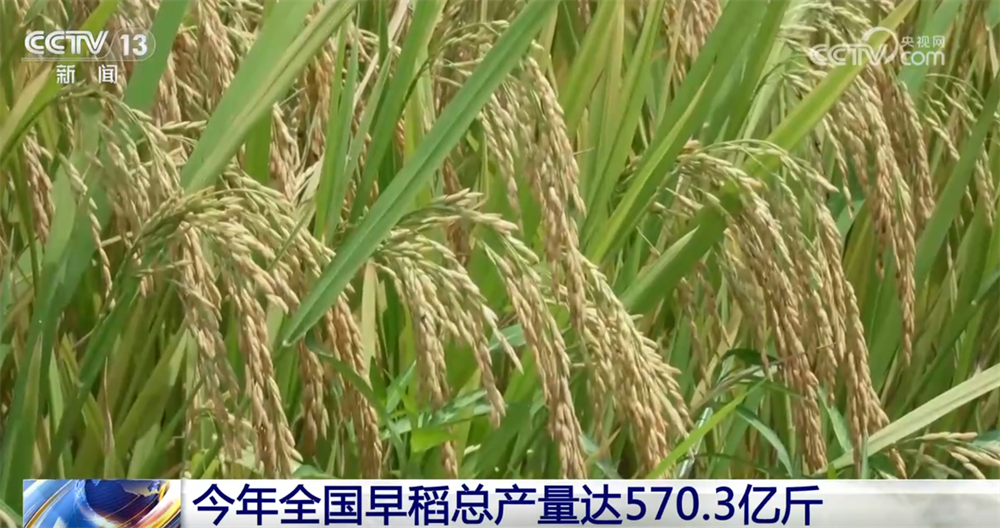
570.3亿斤,增长1.2%!2025年我国早稻实现增产 希望的田野绘就新“丰”景
Yang Shi Wang· 2025-08-22 08:14
Group 1 - The total early rice production in China for 2025 is projected to reach 57.03 billion pounds, marking an increase of 680 million pounds or 1.2% compared to the previous year [3] - The early rice yield per mu (Chinese unit of area) is expected to exceed 400 kilograms for the first time, reaching 400.8 kilograms, which represents a growth of 1.5% year-on-year [6] - The total area planted with early rice remains stable at 71.143 million mu, maintaining a consistent level around 71 million mu for six consecutive years, despite a slight decrease in some regions due to drought conditions [6] Group 2 - Major producing regions such as Jiangxi, Hunan, and Guangdong have recovered from last year's disaster-induced production declines, with early rice production increasing by 2.4%, 1.8%, and 1.0% respectively [3] - The overall stability in early rice planting area and the increase in production contribute to a solid foundation for maintaining grain production throughout the year [6]
国家统计局农村司司长魏锋华:2025年我国早稻实现增产 早稻亩产首次突破400公斤
Xin Hua Cai Jing· 2025-08-22 05:50
Core Insights - The early rice planting area in China is expected to slightly decrease in 2025, while the yield is projected to increase, resulting in a total production of 57.03 billion jin, an increase of 680 million jin or 1.2% compared to 2024 [1][3] Group 1: Planting Area and Yield - The early rice planting area in 2025 is estimated at 71.143 million mu, a decrease of 179,000 mu or 0.3% from the previous year, maintaining overall stability [1] - The average yield of early rice is projected to reach 400.8 kg per mu in 2025, marking the first time it surpasses 400 kg per mu, with an increase of 5.8 kg per mu or 1.5% from the previous year [2] Group 2: Regional Performance - In major producing provinces, early rice production is expected to recover, with Jiangxi, Hunan, and Guangdong seeing increases of 330 million jin, 260 million jin, and 110 million jin respectively, translating to growth rates of 2.4%, 1.8%, and 1.0% [3] - Non-major producing regions like Zhejiang and Fujian are also expected to see increases in early rice production, while provinces such as Anhui, Hubei, Hainan, and Yunnan may experience slight declines [3] Group 3: Supportive Policies and Conditions - The government has increased support for grain production, including raising the minimum purchase price for early indica rice to stabilize farmers' expectations and encourage planting [1] - Favorable weather conditions in key production areas have contributed to the growth and yield of early rice, with minimal natural disasters reported [2]
总产量570.3亿斤、亩产首次突破400公斤 全国早稻铺展好“丰”景
Yang Shi Wang· 2025-08-22 04:51
Group 1 - The total early rice production in China reached 57.03 billion jin this year, with the yield per mu exceeding 400 kg for the first time, indicating an increase in early rice production [1] - In 2025, early rice production is projected to be 57.03 billion jin, an increase of 680 million jin or 1.2% compared to the previous year, with significant recovery in major producing areas such as Jiangxi, Hunan, and Guangdong [3] - The early rice yield per mu in 2025 is expected to be 400.8 kg, marking a 1.5% increase from the previous year [3] Group 2 - Despite some areas experiencing drought during the spring sowing period, leading to a slight decrease in early rice planting area, overall early rice sowing area remained stable at 71.143 million mu, consistent for six consecutive years [5] - Overall, the stable production of summer grain and the increase in early rice production in 2025 provide a solid foundation for stabilizing annual grain production in China [7]