
化肥

Search documents
中国心连心化肥午前涨超4% 公司开年密集回购股份
Xin Lang Cai Jing· 2026-01-15 03:56
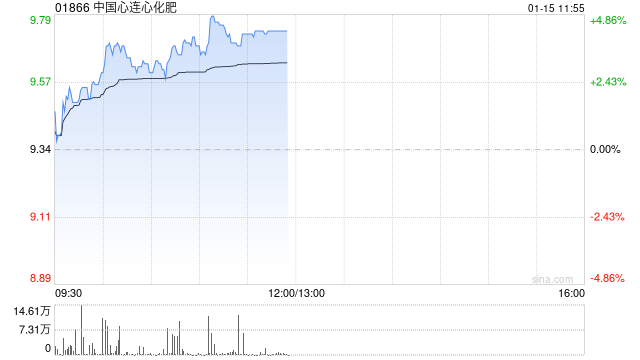
Core Viewpoint - China Heartland Fertilizer (01866) has initiated a significant share buyback program, indicating confidence in its stock value and future prospects [1][5]. Group 1: Stock Performance - The stock price of China Heartland Fertilizer increased by 4.28%, currently trading at HKD 9.74, with a trading volume of HKD 21.41 million [1][3]. Group 2: Share Buyback Actions - As of January 14, the company has spent over HKD 20 million to repurchase 2.286 million shares [5]. - On January 12, the company announced a clear share buyback plan, intending to repurchase up to 10% of its issued shares for no more than HKD 200 million starting from January 13 [5].

港股异动 | 中国心连心化肥(01866)再涨超4% 全球尿素供应或现缺口 公司开年密集回购股份
智通财经网· 2026-01-15 03:40
Group 1 - China Heartland Fertilizer (01866) has seen a stock price increase of over 4%, currently trading at 9.76 HKD with a transaction volume of 18.2161 million HKD [1] - Ongoing tensions in Iran may impact its natural gas supply, as reported by Huatai Securities [1] - From January to November 2025, China imported an average of 800,000 tons of methanol per month from the Middle East, accounting for 25-30% of domestic methanol trade volume, with port inventories remaining low compared to the same period last year [1] Group 2 - If the protests in Iran continue, it could lead to an increase in methanol prices in China and potentially create a shortage of overseas urea during the spring farming season in the Northern Hemisphere in the first half of 2026 [1] - China Heartland Fertilizer has been actively repurchasing its shares, spending over 20 million HKD to buy back 2.286 million shares as of January 14 [1] - A clear share repurchase plan was announced on January 12, indicating that the company will repurchase up to 10% of its issued shares for no more than 200 million HKD within the year starting January 13 [1]
尿素日报:库存继续去化,盘面偏强-20260114
Guan Tong Qi Huo· 2026-01-14 11:10
Report Industry Investment Rating - Not provided Core Viewpoints - Urea futures opened low and closed high, with an intraday increase of over 2%. The market is strong in the short - term, but the strength is expected to be unsustainable, and it will undergo high - level adjustments in the short term due to poor demand follow - up [1] Summary by Related Catalogs 1. Market Analysis - Urea futures opened low and closed high, rising over 2% intraday. Factory orders improved, and some factories stopped selling after being fully subscribed. The ex - factory price of small - particle urea in Shandong, Henan, and Hebei is mostly in the range of 1680 - 1720 yuan/ton. Gas - based plants are still reducing production, but the increasing proportion of coal - based plants offsets some of the winter production restrictions. Daily urea production has reached 200,000 tons since the resumption of work after New Year's Day. Agricultural dealers' fertilizer - stocking enthusiasm has increased, and industrial demand is expected to decline due to the approaching Spring Festival. The current inventory has decreased to below 1 million tons, a 3.53% decrease from the previous period [1] 2. Futures and Spot Market Conditions - **Futures**: The main urea 2605 contract opened at 1775 yuan/ton, rising over 2% intraday and closing at 1814 yuan/ton, with a change of 2.02%. The trading volume was 253,756 lots (+23,507 lots). Among the top 20 positions, long positions increased by 17,796 lots and short positions increased by 17,537 lots [2] - **Spot**: The futures market is strong, factory orders have improved, and some factories have stopped selling after being fully subscribed. The ex - factory price of small - particle urea in Shandong, Henan, and Hebei is mostly in the range of 1680 - 1720 yuan/ton [4] 3. Warehouse Receipts - On January 14, 2026, the number of urea warehouse receipts was 13,355, unchanged from the previous trading day [3] 4. Fundamental Tracking - **Basis**: The mainstream spot market quotation is stable, and the futures closing price has increased. Based on the Henan region, the basis has weakened compared to the previous trading day, with the May contract basis at - 64 yuan/ton (- 30 yuan/ton) [7] - **Supply**: On January 14, 2026, the national daily urea production was 199,100 tons, a decrease of 3,700 tons from the previous day, with an operating rate of 82.05% [9] - **Enterprise Inventory**: As of January 14, 2026, the total inventory of Chinese urea enterprises was 986,100 tons, a decrease of 36,100 tons from the previous week, a 3.53% decrease. The pre - sale order days were 6.06 days, a decrease of 0.35 days from the previous period, a 5.46% decrease [11]
化肥:做好生产保供 推动肥料创新
Zhong Guo Hua Gong Bao· 2026-01-14 08:49
Core Viewpoint - The "Work Plan for Stable Growth in the Petrochemical Industry (2025-2026)" emphasizes the importance of ensuring fertilizer production and supply stability, promoting innovation in various types of fertilizers, and achieving green and low-carbon transformation in the industry [1][2]. Group 1: Fertilizer Industry - The plan aims to optimize the management of minimum production plans for key fertilizer producers and enhance the integrated regulation system for production, transportation, storage, and sales [1]. - The nitrogen fertilizer industry is expected to see production capacities exceed 82 million tons for ammonia and 73 million tons for urea by 2025, leading to a potential oversupply situation [1]. - The industry is encouraged to focus on green and low-carbon transformation by reducing energy consumption and carbon emissions while upgrading to advanced, efficient equipment [1][2]. Group 2: Potash Fertilizer - The plan mentions the need to advance overseas oil, gas, and potash resource development through joint ventures, with significant potash resources identified in Laos [3]. - Chinese companies have established a production capacity of 3.5 million tons of potash in Laos, positioning it as a core supply base for overseas potash [3]. - The potash industry is evolving towards functional products and balanced capacity distribution, integrating services such as soil testing and smart logistics [3]. Group 3: Phosphate Fertilizer - The phosphate fertilizer industry aims to enhance resource utilization and value chain efficiency, focusing on extending, supplementing, and strengthening the industry chain [4]. - The industry is encouraged to innovate in technology, particularly in the efficient utilization of phosphate resources and the development of green production processes [4]. - The goal is to achieve comprehensive green transformation and ensure that all waste emissions meet standards while enhancing the utilization rate of by-products [4].


基本面利空预期即将来临 尿素预计短期整理
Jin Tou Wang· 2026-01-14 08:07
News Summary Core Viewpoint - The startup of Hengam's 1.1 million tons/year urea plant has been delayed due to nationwide protests and their political implications, impacting the urea supply chain [1]. Industry Insights - As of January 14, the price of small granular urea in Shandong is quoted at 1710-1740 RMB/ton, while medium granular urea from Shandong Hualu Hengsheng is priced at 1730 RMB/ton [1]. - The daily production of urea in the industry is reported at 199,400 tons, showing a decrease of 2,600 tons day-on-day, but there are expectations for supply improvement as gas companies are anticipated to resume production [1]. Institutional Perspectives - Minmetals Futures suggests that the current price gap between domestic and international markets has opened an import window, and with expectations of a recovery in operations by the end of January, bearish expectations for urea fundamentals are imminent, recommending profit-taking on high prices [2]. - Guantong Futures indicates that in the absence of significant changes in fundamentals, the market is stabilizing after previous emotional fluctuations, with prices supported by continuous inventory depletion; urea is expected to consolidate in the short term while maintaining a strong outlook in the medium to long term [2].

开年密集回购,化肥龙头心连心在周期拐点“重注”未来
Zhi Tong Cai Jing· 2026-01-14 02:44
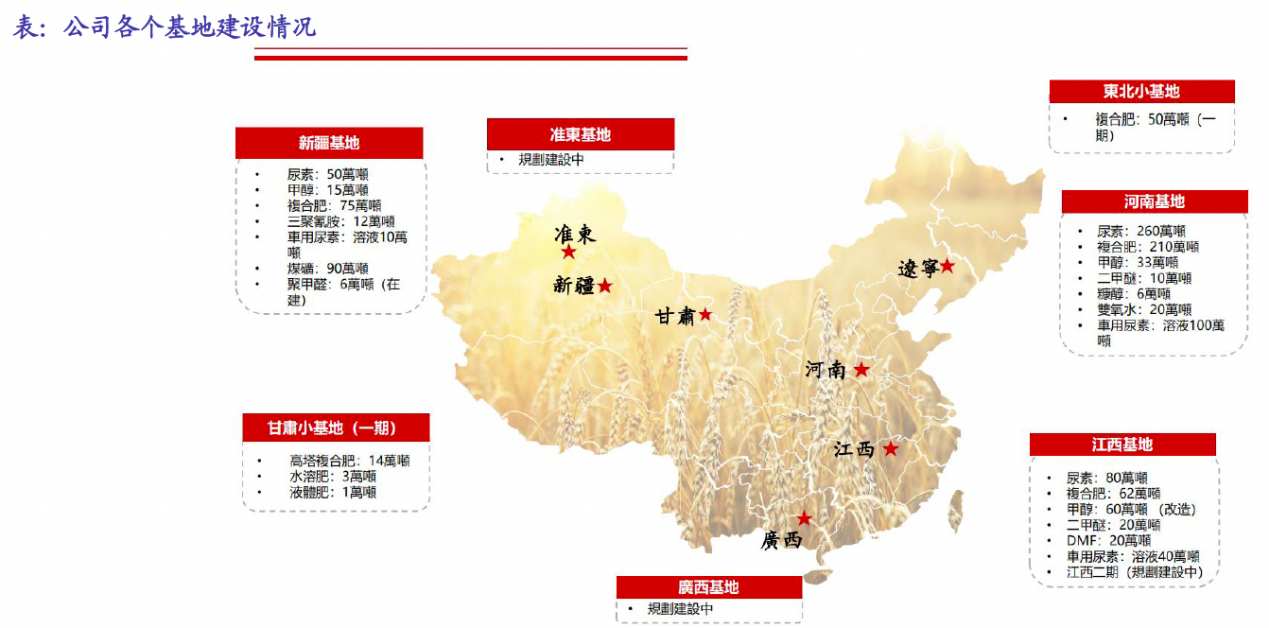
Core Viewpoint - The company, China Heart-to-Heart Fertilizer, is actively signaling its confidence in long-term growth through a series of stock buybacks, reflecting its belief in its ability to navigate industry cycles and its future growth potential [1][2]. Group 1: Stock Buyback Actions - As of the report date, the company has spent over 20 million HKD to repurchase 2.286 million shares and announced a plan to buy back up to 10% of its issued shares for no more than 200 million HKD within the year [1]. - The buyback actions are seen as a strong declaration of the company's confidence in its intrinsic value and market valuation, especially after a significant stock price increase of 135% in 2025 [2]. Group 2: Industry Context - The fertilizer industry is currently at a cyclical low, with signs of recovery becoming increasingly evident, particularly in the urea market, which has seen price increases of 20-70 CNY/ton recently [2][3]. - Factors contributing to the price rebound include demand replenishment post-holidays and the impact of policies aimed at reducing overcapacity, which are expected to support price increases in the long term [3]. Group 3: Competitive Advantages - The company benefits from a cost advantage, with its production costs consistently 10% lower than the industry average due to ongoing efficiency improvements [4]. - The company holds a significant market position, with over 10% of the national urea export volume in the first half of 2025, and is expected to benefit from increased export quotas [4]. Group 4: Future Growth Potential - New projects, such as the second phase of the Jiujiang base and the chemical new materials project in Xinxiang, are set to enhance profitability and expand production capacity, further solidifying the company's growth trajectory [5]. - The company is in a strategic phase of preparing for accelerated growth, with management confident in the company's future performance despite previous stock price increases [8].
开年密集回购,化肥龙头心连心(01866)在周期拐点“重注”未来
智通财经网· 2026-01-14 02:37
Core Viewpoint - The company, China Heart-to-Heart Fertilizer, is actively signaling strong confidence in its long-term value through a series of stock buybacks, reflecting its belief in its ability to navigate industry cycles and its growth potential [1][2]. Group 1: Stock Buyback Actions - As of the report date, the company has repurchased 2.286 million shares for over 20 million HKD and announced a plan to buy back up to 10% of its issued shares for no more than 200 million HKD within the year [1]. - The buyback actions are seen as a declaration of confidence from the management, especially in a time when the fertilizer industry is showing signs of recovery after a prolonged downturn [1][2]. Group 2: Industry Context - The fertilizer industry is currently at a cyclical low, with signs of recovery becoming more apparent. The company’s stock has risen significantly, with a 135% increase in 2025 [2]. - The domestic fertilizer market has been characterized by oversupply, but recent trends indicate a potential upward shift in prices, particularly for urea, which has seen increases of 20-70 CNY per ton [2][3]. Group 3: Market Dynamics - Factors contributing to the market recovery include post-holiday demand replenishment and policy changes aimed at reducing competition and excess capacity in the industry [3]. - The company is expected to benefit from government policies that manage export quotas, with its urea export volume accounting for over 10% of the national total in the first half of 2025 [3][4]. Group 4: Cost Management and Production Capacity - The company has achieved significant cost efficiencies, with its production costs consistently 10% lower than the industry average due to technological upgrades and high coal conversion efficiency [4]. - New projects, such as the second phase of the Jiujiang base and the chemical new materials project, are set to enhance production capacity and further reduce costs, indicating a strong growth trajectory [5][8]. Group 5: Future Growth Potential - The company is entering a phase of accelerated growth with new capacities coming online, which is expected to enhance its profitability and market position [5][8]. - The management's confidence in the company's growth potential is reflected in its decision to continue stock buybacks despite previous stock price increases, indicating a belief in substantial future price appreciation [8].
中国心连心化肥(01866.HK)1月13日回购100.70万股,耗资954.81万港元
Zheng Quan Shi Bao Wang· 2026-01-13 14:49
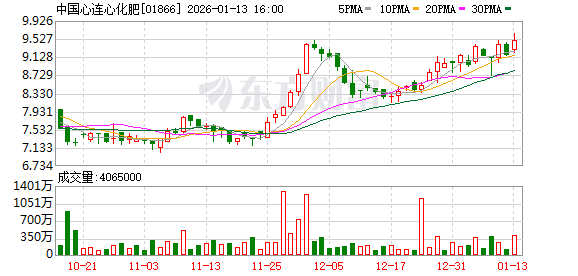
Core Viewpoint - China Heartlink Fertilizer has been actively repurchasing its shares, indicating a strategy to enhance shareholder value and confidence in its stock performance [2] Group 1: Share Buyback Details - On January 13, the company repurchased 1.007 million shares at a price range of HKD 9.330 to HKD 9.580, with a total buyback amount of HKD 9.5481 million [2] - The stock closed at HKD 9.490 on the same day, reflecting an increase of 3.49%, with a total trading volume of HKD 38.4061 million [2] - Year-to-date, the company has conducted four buybacks, totaling 2.286 million shares and an aggregate buyback amount of HKD 21.1927 million [2] Group 2: Buyback Summary Table - The buyback details are as follows: - January 13: 1.007 million shares, highest price HKD 9.580, lowest price HKD 9.330, total amount HKD 9.5481 million [2] - January 8: 0.496 million shares, highest price HKD 9.090, lowest price HKD 8.850, total amount HKD 4.4756 million [2] - January 6: 0.359 million shares, highest price HKD 9.380, lowest price HKD 9.230, total amount HKD 3.3613 million [2] - January 2: 0.424 million shares, highest price HKD 9.180, lowest price HKD 8.810, total amount HKD 3.8077 million [2]
中国心连心化肥(01866)1月13日耗资约954.81万港元回购100.7万股
智通财经网· 2026-01-13 10:42
Group 1 - The company China Heartlink Fertilizer (01866) announced a share buyback plan, intending to repurchase approximately 1.007 million shares at a cost of about HKD 9.5481 million [1]
亚钾国际:与中农控股拟签订《2026-2027年战略合作框架协议》
Sou Hu Cai Jing· 2026-01-13 09:42
Group 1 - The core viewpoint of the article is that Yara International is planning to sign a strategic cooperation framework agreement with Zhongnong Group Holdings to enhance the development of its products in the Chinese market and increase its market share in potash fertilizers [1] Group 2 - The agreement aims to strengthen collaboration, complement advantages, and ensure smooth return and distribution of the company's products in China [1] - The strategic cooperation is set for the years 2026-2027, indicating a long-term commitment to the Chinese market [1]