火锅

Search documents
老乡鸡再递表,家族企业能否赢得港股青睐?
Sou Hu Cai Jing· 2025-07-11 02:16
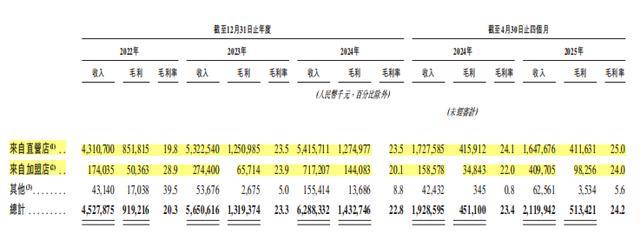
Core Viewpoint - The company Lao Xiang Ji has restarted its IPO application in Hong Kong, aiming to become the leading Chinese fast-food brand listed in the market, following a wave of new listings in the restaurant industry [1][10]. Company Overview - Lao Xiang Ji operates 1,564 stores across 58 cities in China, with 911 being directly operated and 653 franchised, predominantly in the East China region [3][4]. - The company is recognized as the only major Chinese fast-food chain with a full industry chain layout, leading in average daily sales per store and turnover rate among its peers [2][3]. Financial Performance - From 2022 to 2024, Lao Xiang Ji's revenue grew from 4.528 billion RMB to 6.288 billion RMB, with year-on-year growth rates of 58.38%, 24.8%, and 11.27% respectively [10]. - The net profit for the same period increased from 252 million RMB to 409 million RMB, with growth rates of 86.67%, 48.81%, and 9.07% [10]. - In the first four months of 2025, the company achieved a revenue of 2.12 billion RMB, reflecting a year-on-year growth of 9.9% [10]. Market Position - The Chinese fast-food market is currently dominated by non-chain restaurants, with a chain penetration rate of only 32.5%, significantly lower than the 67.9% for Western fast food [2]. - The top five Chinese fast-food brands hold a combined market share of just 3.6%, compared to 50.8% for the top five Western brands [2]. Store Performance - The average customer spending at direct-operated stores has decreased from 29.7 RMB in 2022 to 27.5 RMB in 2024, while franchise stores saw a decline from 31.5 RMB to 28.9 RMB during the same period [4]. - The turnover rate for direct-operated stores was 4.8 in early 2025, consistent with 2024, while franchise stores lagged behind at 3.3 [4]. Family Business Structure - Lao Xiang Ji is characterized as a family business, with key positions held by family members, including the CEO and other executives [5][6]. - The founder's shares have been passed to the next generation, with significant voting power concentrated among family members [6]. Rental Agreements - The company has established rental agreements with related parties, with rental liabilities recorded at 20.2133 billion RMB as of December 31, 2024 [7][8]. - Payments to related parties have been consistent, with specific amounts detailed for the years 2022 to 2025 [7][9]. Competitive Landscape - Compared to other listed companies in the sector, Lao Xiang Ji's revenue scale is larger than that of competitors like Xiao Cai Yuan and Green Tea Group, although its net profit is lower than that of Xiao Cai Yuan [10][12]. - Other competitors, such as Ba Nu and Yu Jian Xiao Mian, have lower revenue figures and are also seeking to expand through IPOs [11][12].

海底捞的“打赏码”,你扫不扫?
Jing Ji Wang· 2025-07-10 11:05
Core Viewpoint - The introduction of a tipping system at Haidilao has sparked controversy among consumers, highlighting a clash of consumption philosophies between traditional Chinese practices and Western tipping culture [3][6]. Group 1: Consumer Reactions - Many consumers express discomfort with the idea of tipping for services that they believe should be included in the already high prices of Haidilao's menu items [3][6]. - A significant majority of participants in an online poll indicated that they are unwilling to tip, with 90% of over 80,000 respondents preferring that service fees be included in the total price [6]. Group 2: Service Industry Perspectives - Some supporters of the tipping system argue that it could enhance service quality by providing a direct incentive for service staff [3]. - A restaurant industry insider noted that while Haidilao's service staff salaries are slightly higher than average, the demanding nature of the job justifies the need for a tipping mechanism as a way to reward hard work [3]. Group 3: Cultural Context - The attempt to integrate Western tipping culture into the Chinese dining experience may have overlooked the differences in consumer expectations and practices [3][4]. - In the U.S., tipping is often seen as a necessary part of the dining experience, with automatic service charges being common, contrasting sharply with the Chinese preference for clear pricing and straightforward transactions [6].


【IPO前哨】巴奴赴港上市,能否超越海底捞与呷哺呷哺?
Sou Hu Cai Jing· 2025-07-08 11:52
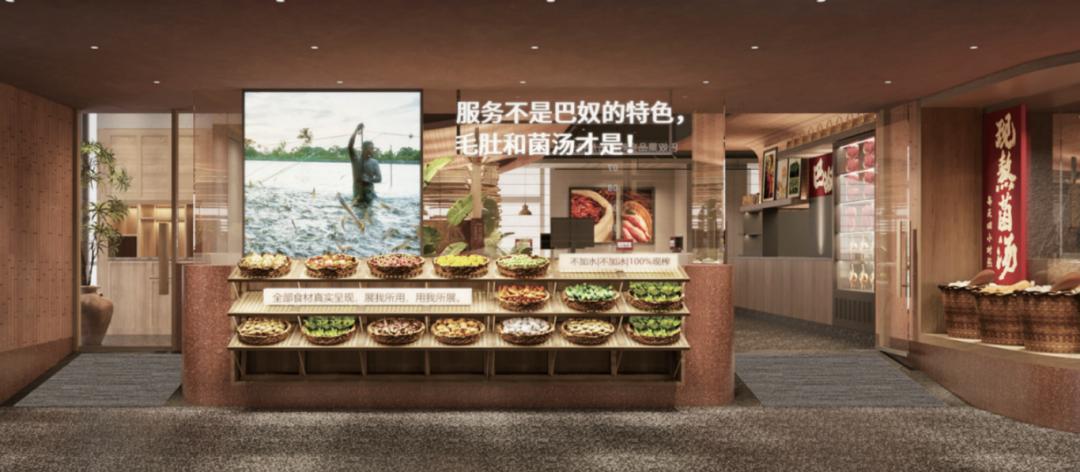
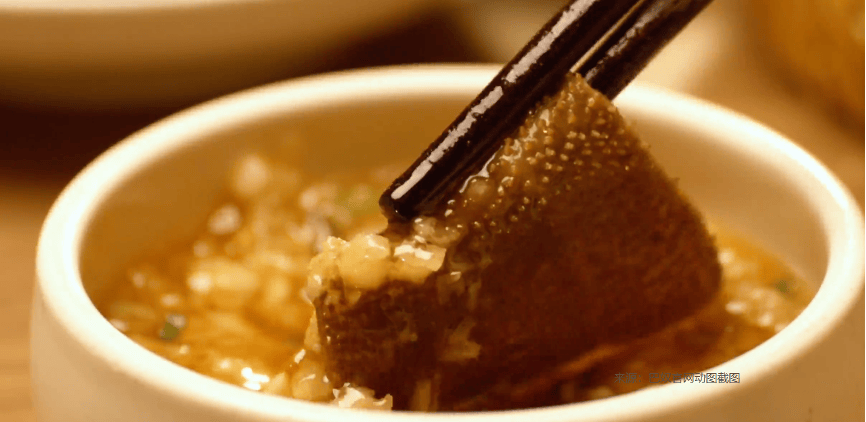
Core Viewpoint - Banu, a hotpot chain originating from Henan, has submitted an application for listing on the Hong Kong Stock Exchange to raise funds for expanding its restaurant network, enhancing digital operations, brand building, and optimizing its supply chain [2] Group 1: Company Overview - Banu was founded in 2001 in Anyang, Henan, and has expanded to 145 self-operated restaurants across 39 cities in China, with a focus on quality hotpot featuring "beef tripe + mushroom soup" as its signature dish [2] - The average consumer spending at Banu is over 120 RMB, positioning it as a premium hotpot brand compared to competitors [2] Group 2: Competitor Analysis - Haidilao, a leading hotpot chain, targets a broader audience with an average spending of 90-100 RMB and emphasizes service quality, operating 1,355 restaurants in Greater China by the end of 2024 [3][4] - Xiaobuxiang focuses on high cost-performance with an average spending of around 50 RMB, operating 757 restaurants in mainland China and 3 overseas by the end of 2024 [3][4] Group 3: Financial Performance - In 2024, Banu reported an annual revenue of 2.307 billion RMB, a year-on-year increase of 9.27%, with a pre-tax profit of 166 million RMB, reflecting an 18.18% growth [5] - Haidilao's revenue reached 42.755 billion RMB in 2024, 18.5 times that of Banu, with a pre-tax profit margin of 15.49% [6] - Xiaobuxiang faced operational challenges, with a net loss of 401 million RMB in 2024, worsening from a loss of 199 million RMB the previous year [6] Group 4: Cost Structure and Profitability - Banu's cost of materials and consumables accounted for 32.11% of its revenue in 2024, lower than Haidilao's 37.92% [8] - Banu's advertising and promotion expenses represented 4.37% of its revenue, while Haidilao relies more on brand recognition and word-of-mouth, resulting in lower advertising costs [8] Group 5: Market Positioning and Future Outlook - Banu's strategy focuses on quality and brand recognition, while Haidilao leverages scale and service excellence [9] - The success of Banu's upcoming IPO will depend on its ability to balance brand investment with scale expansion and cost optimization, as well as market confidence in its sustainable "productism" approach [9]
越下沉客单价越低,人均138元的巴奴火锅,上市路“难”在哪?
3 6 Ke· 2025-07-03 06:53
Core Viewpoint - The restaurant industry is experiencing a new wave of capital enthusiasm, with several leading brands, including Banu, preparing for IPOs in Hong Kong amidst a competitive market environment characterized by price wars and slowing growth [1][2]. Industry Overview - The restaurant sector is witnessing a surge in IPO activities, particularly in Hong Kong, with brands like Banu, Mijue Ice City, and others entering the market [1]. - The hot pot segment, represented by Banu, is facing intense competition and a slowdown in growth, raising questions about the timing of its IPO [1][2]. Company Performance - Banu's revenue has shown consistent growth over the past three years, with figures of 1.433 billion, 2.112 billion, and 2.307 billion yuan for 2022, 2023, and 2024 respectively, totaling over 5.8 billion yuan [2]. - In Q1 2025, Banu achieved a revenue of 709 million yuan, marking a 25.7% year-on-year increase [2]. - The company turned a profit in 2023 with a net profit of 102 million yuan, which increased to 123 million yuan in 2024, reflecting a 20.8% growth [2]. Profitability Concerns - Despite revenue growth, Banu's profit margins remain low, with adjusted net profit margins of 2.9%, 6.8%, and 8.5% from 2022 to 2024, significantly lower than its competitor Haidilao [3]. - The average customer spending at Banu remained high, with figures of 147 yuan, 150 yuan, and 142 yuan from 2022 to 2024, surpassing Haidilao's average of 110-120 yuan [4]. Market Strategy - Banu's high average spending has not translated into proportional profit returns, as its premium pricing strategy conflicts with the current consumer trend favoring value for money [5][6]. - The company is focusing on expanding into lower-tier cities, with 78.6% of its 145 stores located in second-tier and below cities, where it has seen higher profit margins compared to first-tier cities [12]. Competitive Landscape - Banu's operational efficiency, measured by table turnover rates, lags behind Haidilao, with Banu averaging 3.0 times per day compared to Haidilao's 4.1 times in 2024 [7]. - Unlike Haidilao's diversified strategy, Banu remains focused primarily on hot pot dining, with over 97% of its revenue coming from dine-in operations, limiting its exposure to the growing takeout market [9][10]. Future Outlook - The upcoming IPO is seen as a crucial move for Banu to raise funds for expansion and to enhance its supply chain capabilities, including the establishment of central kitchens and satellite warehouses [14]. - The company faces the challenge of maintaining customer spending levels in lower-tier markets while managing the increased operational costs associated with expansion [14].
40万家火锅店厮杀!6.9%店卖30元,8.6%飙150元,隐藏着啥变局?
Sou Hu Cai Jing· 2025-07-03 01:32
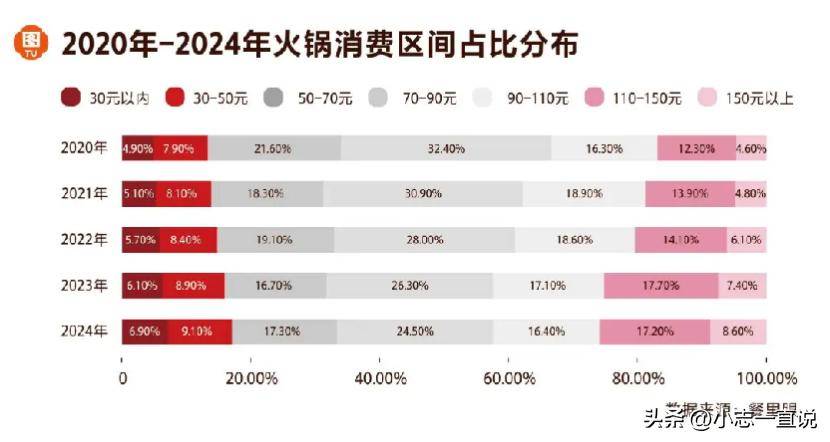
Core Insights - The Chinese hot pot industry has transformed significantly over the past 30 years, evolving from a street food to a "trillion-yuan track," with the market size exceeding 610 billion yuan in 2024, accounting for 18.3% of the total catering industry [1] - The high-end hot pot market faces a trust crisis, highlighted by controversies surrounding ingredient quality and pricing strategies, as seen with brands like Ba Nu [3] - A new high-end model is emerging, exemplified by "Shan Huan Huan," which focuses on immersive dining experiences and rare ingredients, achieving an average customer spend of 150 yuan [5] High-End Market Dynamics - The high-end hot pot sector is experiencing a trust crisis, with public skepticism regarding ingredient quality and pricing strategies [3] - The average customer spend in high-end hot pot establishments has been impacted by controversies, leading to a need for brands to rebuild consumer trust [3][5] Emerging Trends - The proportion of hot pot restaurants with an average customer spend exceeding 150 yuan has reached 8.6% in 2024, a 5.3 percentage point increase since 2019, with 90s consumers contributing 62% of the transaction volume [5] - The competition in the hot pot industry has expanded beyond traditional dining, with a 40% year-on-year growth in home hot pot delivery and a 17% penetration rate of cross-industry formats like "hot pot KTV" and "hot pot escape rooms" in first-tier cities [5] Market Structure Changes - The total number of hot pot restaurants in China is approximately 400,000 in 2024, a 12% decrease from 2020, while the market concentration of the top 50 brands has increased from 18% to 29% [5] - The shift in focus from taste to service and now to supply chain efficiency indicates a significant evolution in the industry [5] Price Competition in Lower-Tier Markets - The lower-tier market is experiencing intense price competition, with small hot pot categories growing at 33.6% in 2024, significantly outpacing the overall hot pot industry's growth of 3.7% [9] - Brands like "Wei La Xiao Huo Guo" have expanded rapidly in lower-tier cities, achieving an average customer spend of 24 yuan and growing to 800 locations in three years [9] Challenges in the Industry - The intense price competition has led to a significant increase in the number of hot pot tables being recycled, with a 140% year-on-year rise in 2024, indicating a high failure rate among new establishments [9] - The average customer spend for 6.9% of hot pot restaurants has fallen below 30 yuan, reflecting the pressures of low-price competition [9] Brand Case Studies - "Xiao Long Kan" experienced explosive growth from 12 to 1,100 locations between 2016 and 2018, but faced severe backlash due to food safety issues, leading to a significant decline in brand reputation [13][15] - "Hai Di Lao" has expanded to over 1,400 locations globally by 2024, but its average daily customer traffic has decreased by 18% from peak levels, raising concerns about sustainability [19][21] - "Xia Bo Xia Bo" faced a dramatic decline in stock price from 27.8 HKD in 2018 to 0.86 HKD in 2024, illustrating the pitfalls of blind expansion and failed diversification strategies [23][24]
“月薪5000元以下不要吃”的火锅,也去上市了
阿尔法工场研究院· 2025-07-01 11:34
Core Viewpoint - Banu International Holdings Limited, known for its high-quality hotpot, is preparing for an IPO to raise funds for store expansion, brand building, and supply chain optimization, despite facing controversies and operational challenges [2][10]. Group 1: Company Overview - Banu was founded in 2001 in Anyang, Henan, and positions itself as a premium hotpot brand with a focus on "productism" rather than "serviceism" [2][10]. - The average customer spending at Banu is projected to be 142 yuan in 2024, which is 45% higher than Haidilao's 97.5 yuan [10][11]. - Banu's revenue is approximately 2 billion yuan, significantly lower than Haidilao's over 40 billion yuan, with net profit being only 1/40th of Haidilao's [10][11]. Group 2: IPO and Fund Utilization - Banu plans to use part of the IPO proceeds for store expansion and the construction of new central kitchens, including a 10,000 square meter kitchen in Jiangsu and a 7,000 square meter kitchen in Dongguan [3][5]. - The company aims to build satellite warehouses in several provinces, with each warehouse requiring an investment of approximately 4 to 5 million yuan [5][10]. Group 3: Operational Challenges - Banu's central kitchen capacity utilization varies significantly, with the utilization rates in 2024 being 59.9% for Central China, 22% for North China, and 28.2% for South China, compared to Haidilao's over 80% [8][7]. - The company has faced issues with store expansion, opening only 3 new stores in Q1 2025, falling short of its target of 40 new stores for that year [7][10]. Group 4: Controversies and Brand Image - Banu has been involved in several controversies, including the "18 yuan for 5 slices of potato" incident and allegations of food safety issues, which have negatively impacted its brand image [11][12]. - The founder, Du Zhongbing, has made controversial statements regarding the target customer base, which have drawn criticism and may affect consumer perception [10][12]. Group 5: Capital Structure and Investor Relations - The company has undergone five rounds of financing before the IPO, with a concentrated voting power structure controlled by Du Zhongbing and his wife [14]. - There are concerns regarding capital pressure, as investors have the right to demand a buyback of shares if Banu does not complete its IPO by December 1, 2029 [14].
中国“吃货”,又捧出一个明星IPO
投中网· 2025-06-28 03:40
Core Viewpoint - The article discusses the upcoming IPO of Banu International Holdings Limited, the parent company of Banu Hotpot, highlighting its unique positioning in the competitive hotpot industry and its high-end market strategy. Company Overview - Banu Hotpot originated from a small shop in Anyang, Henan, and has expanded nationally after 11 years of establishment, emphasizing high-quality offerings with an average spending of 142 yuan per customer, positioning itself as the "Hermès of hotpot" [3][14]. - The company has maintained a low level of external investment, with only Tomato Capital holding a 7.95% stake prior to the IPO [4][17]. Financial Performance - Banu's revenue for 2022 to 2024 is projected to be 14.33 billion yuan, 21.12 billion yuan, and 23.07 billion yuan respectively, with net profits turning positive in 2023 [14]. - The average customer spending in first-tier cities was significantly higher than competitors, with figures of 183 yuan, 179 yuan, and 165 yuan over the same period [14]. - The company has seen a substantial increase in customer volume, from 9.847 million in 2022 to 16.827 million in 2024 [14]. Market Position - Banu has achieved a 3.1% market share, making it the largest quality hotpot brand in China, and the third-largest overall behind Haidilao and Xiaobuxiang [15]. - The hotpot industry is highly competitive, with the top five brands holding only 8.1% of the market share, leading to increased pressure on brands to maintain pricing and quality [23]. Expansion Plans - Banu plans to use 65% of the funds raised from the IPO (approximately 2.5 billion HKD) for store expansion, with plans to open 52, 61, and 64 new restaurants from 2026 to 2028 [26][28]. - The company has a clear strategy to balance high-end pricing with scalability, as the average hotpot spending in China has decreased to 77.4 yuan, down 8.1% year-on-year [24][25]. Recent Developments - Banu's founder made headlines earlier this year with controversial remarks about high salaries and dining choices, which have impacted the brand's image [7]. - Prior to the IPO, Banu distributed dividends of 70 million yuan to shareholders, indicating a strong financial position [29].
揭开巴奴火锅“品质”标签:开店放缓,兼职、外包员工超八成
Nan Fang Du Shi Bao· 2025-06-27 08:56
Core Viewpoint - The founder of Banu Hotpot, Du Zhongbing, made controversial statements regarding the affordability of hotpot for lower-income individuals, which he later clarified and apologized for, stating that his intention was to encourage prudent spending among those with limited financial means [2] Group 1: Company Overview - Banu Hotpot was established in 2001 and has recently surpassed 100 stores, with store counts of 86, 111, and 144 for the years 2022, 2023, and 2024 respectively [3][5] - The company reported revenues of 14.33 billion RMB, 21.11 billion RMB, and 23.07 billion RMB for the same years, indicating a revenue growth of 60.99% from 2022 to 2024 [3] - Adjusted net profits for the same periods were 0.41 billion RMB, 1.43 billion RMB, and 1.95 billion RMB, showing a continuous improvement in profitability [3] Group 2: Market Position and Challenges - Banu Hotpot's average customer spending is significantly higher than its competitors, with an average of 142 RMB per person, compared to 54.8 RMB for Xiaobai and 97.5 RMB for Haidilao [7][9] - The company faces challenges such as declining average spending per customer and slowing store growth, with a noted decrease in average revenue contribution per store [3][10] - The average customer spending has decreased by 5.33% year-on-year in 2024, with the most significant drop occurring in first-tier cities [9] Group 3: Employee Structure and Costs - Banu Hotpot has increasingly relied on part-time and outsourced employees, with 83.85% of its workforce being part-time or outsourced as of Q1 2025 [12][16] - The total employee cost for Q1 2025 was 242.76 million RMB, with 103.47 million RMB allocated to salaries and benefits for full-time employees [15][16] - The average monthly cost per outsourced employee is approximately 6,422 RMB, while the cost for full-time employees is estimated at 6,926 RMB [16]

火锅红海赛道迎来港股上市第三家,巴奴火锅IPO迎考
Zhi Tong Cai Jing· 2025-06-27 03:05
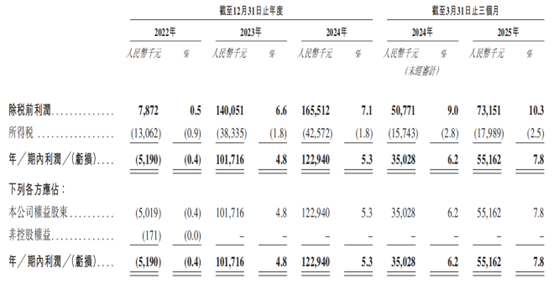
Core Viewpoint - Banu International Holdings Limited (Banu Hotpot) has submitted a listing application to the Hong Kong Stock Exchange, aiming to become the "third hotpot stock" in Hong Kong, amidst a competitive market where many leading brands are facing performance declines and store closures [1] Financial Performance - Banu has shown steady growth in both revenue and profit, with projected revenues of 1.433 billion RMB, 2.112 billion RMB, and 2.307 billion RMB for the years 2022, 2023, and 2024 respectively, and net profits of -5.19 million RMB, 102 million RMB, and 123 million RMB for the same years [2][3] - In Q1 2024, Banu achieved a revenue of 709 million RMB, a year-on-year increase of 25.7%, and a net profit of 55 million RMB, up 57.7% year-on-year [3][4] Store Expansion - The number of Banu stores increased from 83 at the beginning of 2022 to 145 by March 2025, with an average annual growth rate exceeding 30% [4] - Banu plans to build satellite warehouses in several provinces, with an estimated investment of 4 to 5 million RMB per warehouse, to enhance its supply chain capabilities [7] Market Position and Strategy - Banu is positioned as the largest hotpot brand in China's quality hotpot market by revenue, holding a market share of 3.1% in 2024, ranking third in the overall hotpot market with a share of approximately 0.4% [11] - The company aims to continue its aggressive expansion strategy, planning to open approximately 52, 61, and 64 new restaurants in China from 2026 to 2028, targeting over 210 stores by the end of 2028 [11] Consumer Trends - Despite Banu's positive performance, the overall hotpot industry is facing challenges, with some previously popular brands experiencing closures and declines [8][9] - Banu's average customer spending has shown a downward trend, with a decrease from 147 RMB in 2022 to 138 RMB in Q1 2025, indicating pricing pressures in a competitive market [6][10]
巴奴火锅叩关港交所:争议言论与高端困境下的IPO突围战
3 6 Ke· 2025-06-26 15:19
Core Viewpoint - The controversy surrounding the founder's comments on consumer demographics has not hindered the expansion of Banu Hotpot, which is preparing for an IPO to enhance its brand value and aims to open 150 new stores by 2027 despite challenges in maintaining its high-quality positioning in a price-sensitive market [1][9]. Company Development - Banu Hotpot's parent company, Banu International Holdings, submitted its main board listing application to the Hong Kong Stock Exchange, aiming to become the third hotpot chain listed after Haidilao and Xiaobuxiang [1]. - The company has transitioned from a franchise model to a direct operation model since 2013, which has led to challenges in team stability and management [4]. - Banu has expanded its presence in first-tier cities since 2018, with a current total of 145 stores across nearly 40 cities [4][10]. Market Positioning - Banu's average spending per customer has remained above 140 yuan, contrasting with competitors like Haidilao, which has seen a decline in average spending [6][8]. - Despite being the leader in the premium hotpot market with a 3.1% market share, Banu's overall market share is only 0.4%, indicating a struggle to penetrate broader consumer segments [9][10]. Financial Performance - Banu's revenue has shown growth from 14.33 billion yuan in 2022 to 23.07 billion yuan in 2024, although the growth rate has fluctuated [10]. - The company has reduced its debt levels, with total liabilities decreasing by 27.30% year-on-year, while total assets increased by 10.59% [10][12]. - Banu's net profit margin remains low at 5.3%, significantly lower than that of Haidilao, indicating challenges in profitability despite revenue growth [14]. Operational Challenges - Banu's supply chain efficiency is hindered by a limited number of central kitchens, leading to higher procurement costs compared to larger competitors [11]. - The company has faced criticism over food safety issues, which have damaged its high-end brand image and consumer trust [9][16]. - Banu's reliance on part-time employees has increased operational costs, with employee expenses rising significantly over the past few years [15]. Strategic Recommendations - To regain consumer trust and improve market positioning, Banu should consider implementing third-party quality checks and enhancing transparency in its supply chain [16]. - The company could explore new channels such as hotpot delivery and pre-prepared meals, as well as introduce more affordable sub-brands to cater to price-sensitive consumers [18]. - Balancing high-quality offerings with market realities will be crucial for Banu to navigate the competitive landscape and achieve sustainable growth [18].