Electronics

Search documents
TEL Gears Up to Report Q1 Earnings: What's in Store for the Stock?
ZACKS· 2026-01-19 17:46
Core Insights - TE Connectivity (TEL) is set to report its first-quarter fiscal 2026 earnings on January 21, with expected adjusted earnings of $2.53 per share, reflecting a 23% year-over-year growth [1][9] - The Zacks Consensus Estimate for earnings stands at $2.54 per share, indicating a 30.3% increase from the previous year [1] - TEL anticipates net sales of approximately $4.5 billion for the first quarter, representing a 17% year-over-year growth on a reported basis and 11% on an organic basis [2][9] Financial Performance Expectations - TEL's first-quarter performance is expected to benefit from strong order volumes, with reported orders of $4.7 billion in the fourth quarter of fiscal 2025, marking a 22% year-over-year increase [4] - The Transportation segment, which accounted for 50.8% of fourth-quarter sales, is positioned to gain from the industry's shift towards data connectivity and electrification [5] - The Industrial segment, making up 49.2% of fourth-quarter sales, is likely to see growth driven by demand in AI applications, Energy, and Aerospace, Defense, and Marine sectors [6] Earnings Analysis - According to the Zacks model, TEL has an Earnings ESP of 0.00% and a Zacks Rank of 1 (Strong Buy), indicating a favorable outlook for earnings performance [7]



【公告臻选】算力+智谱AI+5G+机器人+元宇宙!公司预中标约4.89亿元智算服务项目
第一财经· 2026-01-19 14:18
Core Viewpoint - The article emphasizes the importance of efficiently navigating through a large volume of announcements to identify key investment opportunities and risks, providing a streamlined approach to market analysis [1] Group 1: Selected Highlights - On January 14, a recommendation was made regarding a leading tantalum capacitor company planning to invest 1 billion yuan in a special device wafer manufacturing and testing base, resulting in a stock price increase for Hongda Electronics (300726) over three consecutive trading days [2] - On January 15, a suggestion was made about Jinmo Co., which planned to acquire molybdenum resources for 1.731 billion yuan, leading to a stock price increase with a maximum intraday rise of over 7% on January 16 and a closing increase of 3.18% on January 19 [2] - On January 18, a recommendation was made for Xinhang New Materials (301076), which produces PEEK materials widely used in military, humanoid robots, and aerospace applications, resulting in a stock price increase of 2.81% with an intraday peak rise exceeding 7% [2] Group 2: Today's Overview - A company is expected to win a smart computing service project worth approximately 489 million yuan, focusing on computing power, AI, 5G, robotics, and the metaverse [3] - Another company is developing an intelligent space computer product aimed at enhancing satellite autonomous perception, decision-making, planning, and control capabilities, relevant to low-altitude economy, commercial space, smart transportation, and spatiotemporal big data [3] - A company involved in photolithography, semiconductors, OLEDs, and electronic chemicals is undergoing a change in control to the Shanghai State-owned Assets Supervision and Administration Commission [3]

Arrow Electronics, Inc. (ARW) Partners With .Lumen
Yahoo Finance· 2026-01-19 12:27
Core Insights - Arrow Electronics, Inc. is recognized as one of the most undervalued tech stocks to consider for investment in 2026 [1] - The company has partnered with .lumen, a Romanian startup, to enhance the production of innovative glasses designed for the visually impaired [1] Partnership and Product Details - The glasses function similarly to a guide dog, utilizing AI, cameras, and haptic feedback to assist visually impaired users in navigating independently by detecting obstacles and providing vibration-based directions [2] - A six-camera setup enables real-time environmental scanning, identifying safe paths without reliance on cloud services, while edge computing ensures ultra-low latency, which is essential for dynamic environments like busy streets [2] - Arrow Electronics will support the partnership by sourcing components, optimizing engineering, managing inventory, controlling costs, and enhancing performance [3] Market Position and Analyst Insights - The glasses were presented at CES 2026, highlighting their innovative technology and potential market impact [3] - William Stein from Truist Financial has reiterated a Hold rating on Arrow Electronics' stock with a price target of $120 [3] - While Arrow Electronics shows investment potential, some analysts suggest that certain AI stocks may offer greater upside potential with less downside risk [4]

公司问答丨鼎通科技:卫星通信总成系统的CANFD连接器产品已通过客户认证 按照客户订单需求进行交付中
Ge Long Hui A P P· 2026-01-19 09:33
Core Viewpoint - The company has successfully introduced the CANFD connector for satellite communication systems into mass production, responding to customer orders and requirements [1] Group 1 - The CANFD connector product has passed customer certification [1] - The company is currently delivering the product based on customer order demands [1]

红相股份(300427.SZ)子公司不存在为SpaceX星链、“千帆星座”、“G60星座”供货的情况
Ge Long Hui· 2026-01-19 08:02
Core Viewpoint - Hongxiang Co., Ltd. (300427.SZ) has clarified that its subsidiary, Xingbo Communication, specializes in the research, development, production, sales, and service of RF/microwave devices, components, subsystems, and hybrid circuit modules, with microwave products covering frequency ranges from DC to 40GHz. The company confirmed that it does not currently supply products to SpaceX's Starlink, "Thousand Sails Constellation," or "G60 Constellation" [1] Company Overview - Hongxiang Co., Ltd. operates through its subsidiary, Xingbo Communication, focusing on RF/microwave technology [1] - The product range includes devices and components that operate within a frequency spectrum from DC to 40GHz [1] Market Position - The company has no existing supply agreements with major satellite projects such as SpaceX's Starlink or other mentioned constellations, indicating a potential area for future business development or competition [1]

Trump hits 8 European countries with tariffs: Asian and European markets fall; US stock futures tumble
The Times Of India· 2026-01-19 04:00
Market Reactions - US stock futures fell, with S&P 500 futures down about 0.7% and Nasdaq futures down 1.0% amid thin trading due to a holiday [2][5] - The dollar weakened against safe-haven currencies, slipping against the Japanese yen and the Swiss franc [2][5] - Gold and silver reached record highs as investors sought safety, while oil prices eased due to concerns over a potential trade dispute impacting global growth [2][5] European Market Sentiment - Major European indices, including EUROSTOXX 50 and Germany's DAX futures, were down 1.1% [2][5] - The European Union condemned the tariff threat from the US, viewing it as economic coercion related to Greenland [3][5] - The EU is considering retaliatory tariffs on €93 billion ($108 billion) worth of US imports, which were previously approved but suspended [3][5] Investment Dynamics - European countries hold approximately $8 trillion in US bonds and equities, nearly double that of the rest of the world combined, which could lead to repatriation of investments [3][5] - Analysts warn that leveraging capital flows could be more disruptive to markets than tariffs alone, given the current negative net international investment position of the US [3][5] Economic Data and Corporate Earnings - Investors are awaiting Chinese economic data, with growth expected to slow to 4.4% in the December quarter from 4.8% previously [3][5] - Delayed data on US core inflation and consumer spending for November is expected to influence Federal Reserve interest rate cut expectations [3][5] - Corporate earnings reports are anticipated from major companies including Netflix, Johnson & Johnson, General Electric, and Intel [3][5] Currency and Commodity Markets - The euro rose 0.1% to $1.1613, while sterling increased to $1.3387; the dollar fell 0.2% against the Swiss franc and 0.3% against the yen [3][5] - Gold prices climbed 1.5% to $4,664 an ounce, while oil prices saw a slight decline, with Brent crude down 0.5% at $63.84 a barrel and US crude off 0.4% at $59.18 [3][5]


济南将争取国家“人工智能+工业软件”中试基地项目落地建设
Qi Lu Wan Bao· 2026-01-19 02:14
Core Viewpoint - Jinan aims to implement an industrial strong city strategy by 2026, focusing on building a modern industrial system Group 1: Strengthening Advantageous Industries - The city will focus on electronic information, automotive, high-end software, and modern medicine industries, aiming to enhance scale, extend chains, and grow enterprises [2] - In the electronic information sector, Jinan plans to achieve an industry scale of 240 billion yuan by accelerating the construction of semiconductor and micro-display projects [2] - The automotive industry aims for a scale of 180 billion yuan, supporting companies like BYD and Geely in introducing high-end models and promoting collaborative development [2] - The high-end software sector targets a scale of 130 billion yuan, emphasizing the development of industrial software and AI applications [2] - The modern medicine industry, relying on key enterprises, aims for a scale of 52 billion yuan by enhancing various pharmaceutical sectors [2] Group 2: Cultivating Characteristic Industries - Jinan will focus on high-end CNC machine tools, robotics, specialized equipment, steel, advanced materials, and food and bio-manufacturing, aiming to create competitive industrial clusters [4] - The high-end CNC machine tools and robotics sector targets a scale of 55 billion yuan, with key projects like the industrial mother machine park [4] - The specialized equipment industry aims for a scale of 115 billion yuan, with support for leading companies and project expansions [4] - The steel industry will focus on green low-carbon transformation, targeting a scale of 165 billion yuan by developing high-value products [4] - The advanced materials sector aims for a scale of 35 billion yuan, promoting innovation and expansion in chemical and metal materials [4] - The food and bio-manufacturing industry targets a scale of 77.5 billion yuan, supporting innovative development of key enterprises [4]

胜宏科技:Q4业绩预告中值不及预期,静待AIPCB产能爬坡及客户导入-20260119
CMS· 2026-01-19 01:50
Investment Rating - The report maintains an "Accumulate" rating for the company [8] Core Views - The company is expected to achieve a net profit of 4.16 to 4.56 billion yuan for 2025, representing a year-on-year increase of 260.4% to 295.0% [8] - The company is positioned in key areas such as AI computing power, data centers, and high-performance computing, with several high-end products already in mass production, driving a significant upgrade in product structure towards higher value and technical complexity [8] - The Q4 performance is below market expectations, with a projected net profit of 0.92 to 1.32 billion yuan, which is a year-on-year increase of 186.1% [8] - The company is experiencing challenges due to new capacity ramp-up and increased labor costs, as well as rising expenses and supply chain dynamics [8] Financial Data Summary - Total revenue for 2023 is projected at 79.31 billion yuan, with a growth rate of 1% [10] - The company anticipates a revenue increase to 196.39 billion yuan by 2025, reflecting an 83% growth [10] - The net profit for 2023 is estimated at 6.71 billion yuan, with a projected increase to 43.57 billion yuan by 2025, indicating a 277% growth [10] - The company's return on equity (ROE) is expected to rise from 9.2% in 2023 to 36.6% in 2025 [16] - The asset-liability ratio is projected to decrease from 56.1% in 2023 to 42.3% in 2025, indicating improved financial stability [16]

电连技术1月16日获融资买入5364.95万元,融资余额5.63亿元
Xin Lang Cai Jing· 2026-01-19 01:39
Core Viewpoint - The company, 电连技术, has shown a mixed financial performance with a significant increase in revenue but a decline in net profit, indicating potential challenges in profitability despite growth in sales [2]. Group 1: Financial Performance - As of January 9, 2025, 电连技术 reported a revenue of 4.039 billion yuan for the period from January to September, representing a year-on-year growth of 21.20% [2]. - The net profit attributable to shareholders for the same period was 373 million yuan, reflecting a year-on-year decrease of 18.71% [2]. - Cumulatively, since its A-share listing, the company has distributed a total of 889 million yuan in dividends, with 430 million yuan distributed over the past three years [3]. Group 2: Shareholder and Market Activity - As of January 16, 2025, the number of shareholders for 电连技术 increased to 24,000, up by 1.28% from the previous period [2]. - The average number of circulating shares per shareholder decreased by 1.26% to 14,991 shares [2]. - On January 16, 2025, the company had a financing balance of 563 million yuan, accounting for 2.67% of its market capitalization, which is above the 70th percentile of the past year [1]. Group 3: Business Operations - 电连技术 specializes in the research, design, manufacturing, and sales of micro electrical connectors and interconnection systems, with its main revenue sources being automotive connectors (32.14%), RF connectors and cable assemblies (18.52%), electromagnetic compatibility components (17.75%), flexible boards (16.28%), and others (15.32%) [1].

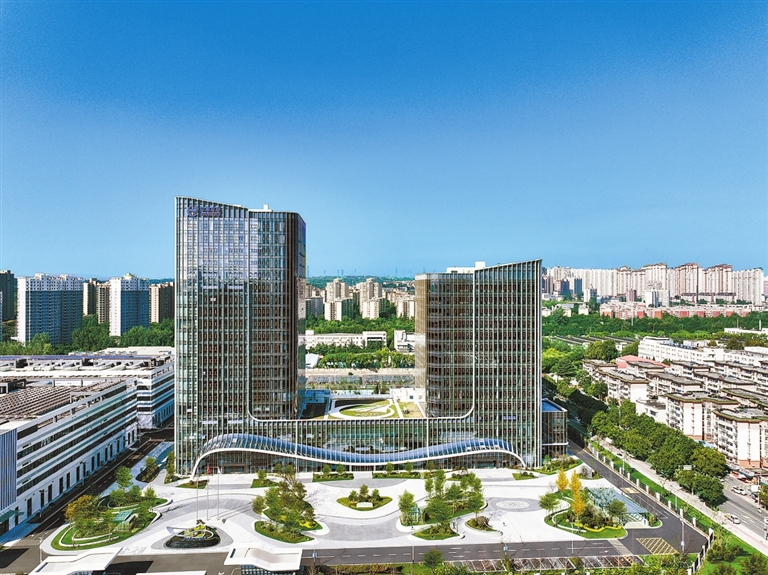
十九城产业新坐标·河南经济新方位丨 洛阳:硬核智造 连接未来 中航光电定义高端互连新高度
He Nan Ri Bao· 2026-01-19 01:37
Core Viewpoint - The establishment of the high-end interconnect technology industrial community by AVIC Optoelectronics represents a significant leap in technological innovation and is a strategic pivot for regional industrial upgrading, showcasing the integration of production, life, and ecology in a modern industrial park [1][2]. Group 1: Project Overview - The project has a total investment of 2.72 billion yuan and commenced construction in October 2023, featuring a global operation center, innovation incubation center, and smart factory [2]. - The industrial community aims to create a seamless connection between research and development, pilot testing, production, office, and leisure, forming a complete innovation ecosystem [2]. Group 2: Technological Advancements - The community showcases advanced technologies such as AGV logistics robots and automated production lines, which eliminate traditional labor-intensive models and enable real-time monitoring of equipment [4]. - The facility is designed to facilitate rapid transformation of innovative ideas into large-scale production, breaking down the functional silos typical of traditional industrial parks [4]. Group 3: Sustainability Initiatives - The park emphasizes green and low-carbon development, featuring a rooftop photovoltaic system with an annual output of 3.8 million kWh and a rainwater recycling system that converts 85% of rainwater for landscaping [5]. - The community is focused on the research and production of high-end products such as military-grade connectors and microwave photonic devices, with an expected annual production capacity of 3.15 million high-end connectors upon full operation [5]. Group 4: Strategic Importance - The industrial community is positioned as a key component of AVIC Optoelectronics' global strategic layout, aiming to fill gaps in the domestic high-end connector market and drive collaborative upgrades across the industry chain [5]. - The ambition of AVIC Optoelectronics is to transition from being a leader in China to becoming a global leader, contributing to the development of a billion-level industrial cluster [5].