
奶业

Search documents
【财经分析】9月奶价释放回暖信号 去产能和“双节”效应能否托底?
Xin Hua Cai Jing· 2025-09-26 04:48
Core Viewpoint - The dairy industry has been in a downward cycle for over three years, with intensified competition and low consumer enthusiasm, raising questions about when this trend will end. However, there are signs of price stabilization and recovery in milk prices as of September, particularly in certain regions where raw milk prices have seen significant increases [1][2]. Price Trends - Since the second half of 2022, domestic fresh milk prices have been on a downward trend, with average prices dropping from a peak of 4.38 yuan per kilogram in August 2021 to nearly 3 yuan, representing a decline of over 30% [2]. - As of September 2025, the average price of fresh milk in major producing provinces has stabilized at 3.03 yuan per kilogram, maintaining this level for three consecutive weeks, indicating a potential recovery [2][3]. Supply and Demand Dynamics - The supply-demand relationship in the fresh milk market is gradually balancing due to factors such as reduced dairy cow production capacity and increased consumption of cold drinks. This has led to a stabilization in the purchase price of fresh milk [3][4]. - Some industry participants attribute the recent price stabilization to the upcoming Mid-Autumn Festival and National Day, which has prompted dairy companies to stock up in advance [4]. Industry Adjustments - The dairy industry is undergoing significant adjustments, with a decrease in the number of dairy cows and a reduction in fresh milk production. As of 2024, the national dairy cow inventory was 6.3 million, down 4.5% year-on-year, and fresh milk production was 40.79 million tons, down 2.8% [4][5]. - The number of large-scale dairy farms has decreased from 4,600 in 2022 to 3,600 in 2024, indicating a deep adjustment period within the industry [4]. Future Outlook - Analysts suggest that the overall cost of dairy farming remains above the price of fresh milk, putting pressure on dairy farming enterprises. This has led to larger farms slowing down capacity expansion while smaller farms accelerate their exit from the market [5][6]. - With the implementation of favorable policies such as childbirth subsidies and the promotion of student milk programs, there is an expectation of marginal recovery in dairy product demand, which may improve the supply-demand balance in the raw milk market [6].
国标《生乳》《灭菌乳》2号修改单出炉 山羊乳酸度指标调整
Xin Jing Bao· 2025-09-25 17:28
Core Viewpoint - The National Health Commission and the State Administration for Market Regulation have released 32 national food safety standards and 2 amendments, focusing on the acidity indicators of goat milk to enhance the standards' applicability and meet diverse consumer demands [1][2]. Group 1: Regulatory Changes - The amendments to the national food safety standards for raw milk and sterilized milk clarify the acidity indicators for goat milk, ensuring they align with industry practices and consumer needs [1][2]. - The revised standards aim to address practical production issues in the dairy industry, enhancing the scientific and rational basis of the standards [2]. Group 2: Industry Impact - The updates to acidity indicators are expected to better accommodate the actual production conditions of different breeds, seasons, and production environments in China's dairy farming [2]. - The new requirements are designed to provide better raw material assurance for dairy processing companies, thereby improving the safety and quality of dairy products [2].
国标《生乳》《灭菌乳》2号修改单出炉,山羊乳酸度指标调整
Bei Ke Cai Jing· 2025-09-25 09:53
Core Viewpoint - The National Health Commission and the State Administration for Market Regulation of China have released 32 national food safety standards and 2 standard amendments, specifically modifying the acidity indicators for goat milk to enhance the applicability of standards while protecting the rights of farms and meeting consumer demands for diverse dairy products [1][2]. Group 1: Standard Modifications - The amendments to the national food safety standards for raw milk and sterilized milk clarify the acidity indicators for goat milk, ensuring that the standards are more aligned with actual production conditions in the dairy industry [1][2]. - The revised standards aim to address practical production issues within the industry, enhancing the scientific and rational nature of the standards, which will promote healthy development in the dairy sector [2]. Group 2: Industry Impact - The modifications are expected to better accommodate the actual production conditions of raw milk from different breeds, seasons, and production environments, reflecting the realities of China's dairy farming practices [2]. - The updated requirements are designed to provide better raw material assurance for dairy processing companies, thereby improving the safety and quality of dairy products [2].
在荆楚大地 探寻活力支点
Jin Rong Shi Bao· 2025-09-17 02:13
Group 1: Cultural and Tourism Development - The integration of historical and modern elements in tourism is exemplified by the Tang City Film and Television Base in Xiangyang, which features immersive night tours and performances, attracting significant visitor interest [2][3] - Since the launch of the night tour project, Xiangyang has converted 70% of its visitors from transit to overnight stays, increasing average tourist spending from 120 yuan to 700-800 yuan, significantly boosting local consumption [3] - Tang City has become a top tourist destination in Hubei, with an annual visitor count stabilizing around 2 million, making it one of the province's top three "internet-famous" attractions [3] Group 2: Agricultural and Employment Growth - The introduction of the Cloud Above Pastoral Dairy Farm in Nanzhang County has modernized local dairy farming, with a projected annual output value of 1.6 billion yuan and a capacity of 1,000 dairy cows by the end of the year [4] - The dairy project has spurred local entrepreneurship, with residents like Zou Weijun establishing agricultural companies to supply feed, resulting in significant profits and job creation [5] - The dairy industry's growth has led to a return of migrant workers to their hometowns, with many finding stable employment opportunities locally, enhancing the economic landscape of Nanzhang County [6] Group 3: Water Resource Management and Economic Development - The Beijing Yiqing Food Company has established a production base in Danjiangkou, leveraging the area's high-quality water resources, which has increased production capacity by 15 times compared to the previous year [7][8] - Danjiangkou's water quality meets national standards, providing clean water to over 114 million people across multiple provinces, and has become a critical resource for urban water supply [8] - The city's water economy is projected to generate over 18 billion yuan in 2024, accounting for 40% of the total city output, showcasing the successful integration of environmental resources into economic development [8][9]
9月16日起生产灭菌乳只能以生乳为原料
Xin Hua She· 2025-09-16 10:18
Core Viewpoint - The revised national food safety standard for sterilized milk, effective from September 16, 2023, mandates that sterilized milk can only be produced using raw milk, prohibiting the use of reconstituted milk [1] Industry Impact - The new standard aligns with the actual development of the dairy industry in China and meets the country's agricultural conditions [1] - Sterilized milk is a major product in China's liquid milk consumption market, and the restriction to raw milk is expected to enhance the quality of dairy products and meet consumer demand for high-quality milk [1] Quality Assurance - Data from the Ministry of Agriculture and Rural Affairs indicates that the inspection pass rate for raw milk has consistently remained above 99.9% for the past 16 years, with key nutritional and hygiene indicators reaching world-class levels [1] - The new standard is anticipated to boost the demand for raw milk from dairy companies, thereby promoting the development of domestic dairy farming and increasing farmers' income [1] Consumer Benefits - Products made from raw milk retain more natural nutrients, enhancing their freshness and quality [1] - The labeling of sterilized milk will now only indicate "pure cow (sheep) milk" or "pure cow (sheep) dairy," eliminating references to reconstituted milk, which simplifies consumer choices [1]
灭菌乳新国标今起实施 对消费者有啥影响?
Ren Min Wang· 2025-09-16 09:21
Core Viewpoint - The new national standard for sterilized milk, effective from September 16, prohibits the use of reconstituted milk as a raw material, mandating the exclusive use of fresh milk, which is expected to enhance product quality and consumer trust [1][2][3] Group 1: Regulatory Changes - The new standard specifies that both sterilized milk and pasteurized milk must be made from 100% fresh milk, eliminating reconstituted milk from these products [1][2] - Reconstituted milk, which is made by adding water to milk powder, will still be allowed in other dairy products like yogurt and milk beverages, with clear labeling to inform consumers [1][2] Group 2: Nutritional and Quality Improvements - The removal of reconstituted milk is aimed at improving the nutritional value and taste of sterilized milk, as reconstituted milk undergoes multiple heat treatments that degrade its protein and vitamin content [2] - The 2024 China Dairy Quality Report indicates a continued increase in dairy production capacity, with total milk production reaching 42.813 million tons and dairy product output at 30.546 million tons, reflecting a year-on-year growth of 6.3% and 3.1% respectively [2] Group 3: Industry Impact - The new standard is seen as a significant step towards establishing a production system based on fresh milk, highlighting the government's commitment to enhancing the dairy industry's quality and integration [3] - In the short term, the demand for fresh milk from dairy companies is expected to rise, benefiting dairy farmers and fostering a stable supply chain [3] - The new regulations are anticipated to improve the international competitiveness of China's dairy industry, ensuring that imported sterilized milk meets higher standards and enhancing the reputation of domestic dairy products [3]
事关纯牛奶,今起全面禁用
证券时报· 2025-09-16 04:15
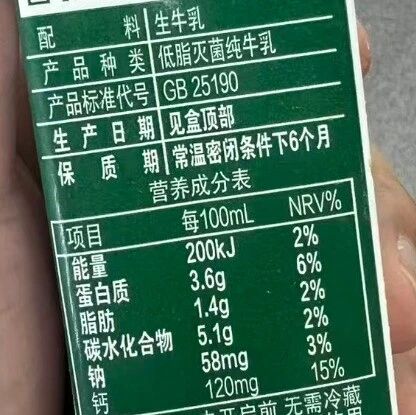
Core Viewpoint - The new national standard for sterilized milk, effective from September 16, mandates that only raw milk can be used as the sole ingredient, prohibiting the use of reconstituted milk [1][10]. Group 1: Changes in Standards - The revised national standard for sterilized milk (GB 25190-2010) includes three core changes aimed at enhancing the overall quality and standards of sterilized milk products [3]. - The prohibition of reconstituted milk is the most significant highlight of the revision, ensuring that products labeled as "sterilized milk" must be made from fresh raw milk, thus guaranteeing the purity of the product [10]. Group 2: Impact on the Dairy Industry - Industry experts believe that the implementation of the new standard will positively guide the market, encouraging dairy companies to increase the use of fresh milk, which will stabilize the dairy farming sector and enhance farmers' incomes [5]. - The new standard is expected to improve the quality of dairy products and promote consumption, aligning with consumer demand for high-quality milk [5]. Group 3: Price Implications - Concerns have been raised about potential price increases for sterilized milk following the new standard; however, industry consensus suggests that the impact on dairy product prices will be limited [6]. - Major dairy companies have indicated that they are not currently using reconstituted milk in their production of pure milk, suggesting stability in pricing [6]. Group 4: Future Outlook - According to the Ministry of Agriculture and Rural Affairs, the price of fresh milk is expected to remain stable due to factors such as the reduction in fresh milk production capacity and the implementation of the new sterilized milk standard [7].

事关纯牛奶,今起全面禁用!
券商中国· 2025-09-16 04:05
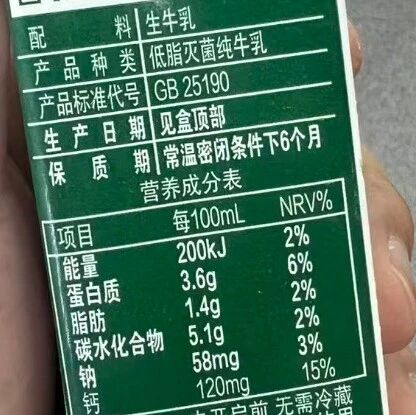
Core Viewpoint - The new national standard for sterilized milk, effective from September 16, prohibits the use of reconstituted milk, mandating that only raw milk can be used as the sole ingredient for production [2][3]. Group 1: Changes in Standards - The prohibition of reconstituted milk is the most significant change in the revised standard, ensuring that products labeled as "sterilized milk" must be made from raw milk directly obtained from cows or sheep [2]. - The revised standard strictly limits the use of raw cow (or sheep) milk as the sole ingredient, ensuring the original quality of the product and enhancing the purity of domestic milk [2]. - The labeling requirements have become more stringent, mandating that companies accurately disclose ingredient information on product packaging, thereby improving transparency for consumers [2]. Group 2: Impact on the Dairy Industry - These three modifications are expected to have a profound impact on the high-quality development of the dairy industry, contributing to the overall quality and standards of sterilized milk products [3].
鱼米之乡加速转型 湖北农业现代化势头强劲
Xiao Fei Ri Bao Wang· 2025-09-12 03:33
Core Insights - Hubei province is leveraging its agricultural resources to modernize its farming practices, focusing on circulation, branding, and smart farming to enhance productivity and economic growth [1][12]. Group 1: Agricultural Modernization - The "Shouheng City" in Xiaogan has become a major agricultural trading hub, achieving a daily trading volume of 17,000 tons and a transaction value of 150 million yuan [2]. - The establishment of a multi-layered circulation system has attracted over 3,000 leading merchants and more than 1,000 product categories, reducing costs and lowering prices by 10%-20% [2][3]. Group 2: Specialty Products - Suizhou's mushroom industry has transformed from local sales to international exports, with 30% of production going overseas, generating 367 million USD in export revenue [6][7]. - The "Suizhou Mushroom" brand has a public brand value of 20.58 billion yuan, with over 3,000 e-commerce live-streamers contributing to sales exceeding 1 billion yuan [6][7]. Group 3: Dairy Industry Development - The "Yunshang Milk Song" project in Nanzhang County is set to become the largest dairy source in the Yangtze River region, with an expected annual production of 90,000 tons of fresh milk [10][11]. - The project employs smart farming techniques, allowing one worker to manage 70 cows, significantly reducing costs by over 20 million yuan annually [10][11]. Group 4: Economic Impact and Employment - The dairy project is expected to create over 5,000 jobs and generate a total industrial chain output value of 5 billion yuan [11]. - The integration of various agricultural sectors in Hubei is enhancing the overall economic landscape, promoting sustainable development and common prosperity [12].
内蒙古:产业转型发展势头正旺
Zhong Guo Chan Ye Jing Ji Xin Xi Wang· 2025-09-04 02:40
Group 1: Energy Sector Development - Inner Mongolia is a significant energy base in China, focusing on transforming traditional industries and fostering emerging sectors [1][4] - The region is developing a "wind-solar-hydrogen-storage vehicle" industrial cluster, integrating energy production, equipment manufacturing, and application demonstration [3][4] - The "Photovoltaic Great Wall" project in Ordos effectively prevents desert encroachment while generating green electricity [3][4] Group 2: Agricultural and Ecological Innovations - The Inner Mongolia region is enhancing its agricultural sector, particularly in green livestock product processing and clean energy [2][3] - Mengcao Group is actively involved in ecological restoration, having restored nearly 33 million acres of various ecological types [2] - The dairy industry is expanding, with significant production capacities in liquid milk, milk powder, and cheese, indicating a robust modern dairy development [1][2] Group 3: Industrial Transformation and Growth - Baotou is accelerating its industrial transformation, aiming to establish wind power equipment manufacturing as a major industry cluster [2][3] - The region's non-coal industries are projected to grow at an average annual rate of over 8% from 2021 to 2024, with high-tech manufacturing and strategic emerging industries also showing strong growth [4] - The industrial economy of Inner Mongolia is expected to exceed 1 trillion yuan for the first time, reflecting a significant economic milestone [4]

