
新型储能

Search documents
国家能源局:全国已建成投运新型储能装机规模超1.3亿千瓦
Xin Hua Cai Jing· 2026-01-30 05:13
新华财经北京1月30日电(记者安娜) 国家能源局能源节约和科技装备司副司长边广琦30日说,截至 2025年底,全国已建成投运新型储能装机规模达到1.36亿千瓦/3.51亿千瓦时,与"十三五"末相比增长 超40倍,实现跨越式发展。 当日,国家能源局举行新闻发布会。边广琦是在会上作出上述表述的。 党中央、国务院高度重视新型储能发展,党的二十届四中全会明确提出"大力发展新型储能"。"国家能 源局深入贯彻落实党中央、国务院决策部署,统筹谋划、多措并举,推动新型储能发展取得扎实成效, 为构建新型能源体系和新型电力系统提供有力支撑。"边广琦在会上说。 分地域来看,华北地区装机占比最大。记者从会上了解到,华北地区已投运新型储能装机规模占全国 32.5%,西北地区占28.2%,华东地区占14.4%,南方地区占13.1%,华中地区占11.1%,东北地区占 0.7%。"过去一年里,华北、西北为新型储能主要增长区,新增装机分别为2188万千瓦、1966万千瓦, 分别占全国新增装机的35.2%、31.6%。"边广琦说。 从单站规模来看,10万千瓦以上的大型化发展趋势明显。记者从国家能源局了解到,截至2025年底,我 国10万千瓦及以 ...
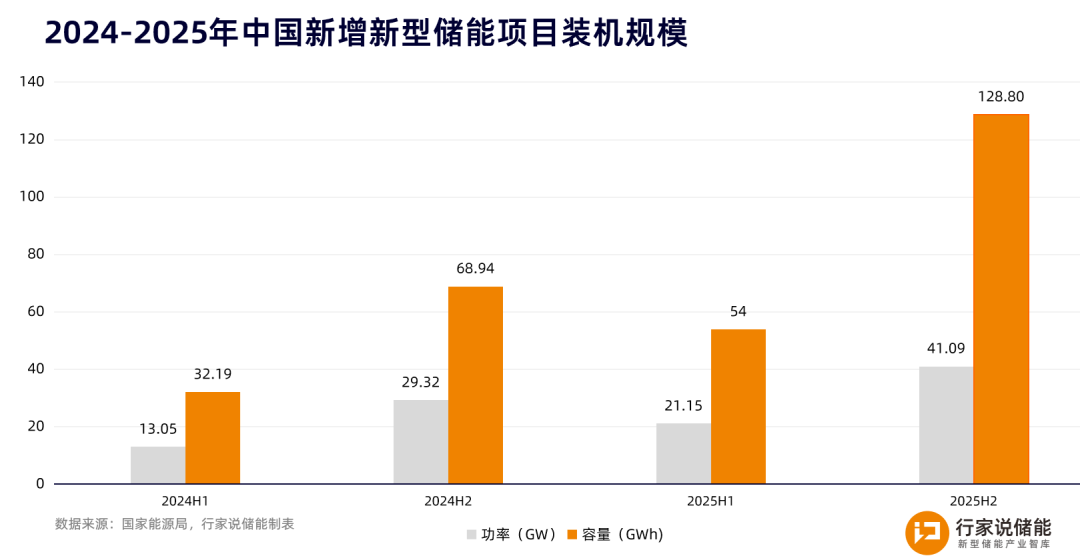
183GWh!国家能源局公布2025储能数据
Xin Lang Cai Jing· 2026-01-30 04:25
Core Insights - The new energy storage capacity in China is projected to reach 136 million kilowatts (351 GWh) by the end of 2025, marking an 84% increase from the end of 2024 and over a 40-fold growth compared to the end of the 13th Five-Year Plan [1][11][20] Capacity Growth - By the end of 2024, the cumulative installed capacity of new energy storage projects in China was 73.76 GW (168 GWh), with an estimated addition of 62.24 GW (183 GWh) in 2025 [3][14] - The average storage duration has increased to 2.58 hours, up by 0.30 hours from the end of 2024 [1][11] Regional Distribution - North China has the largest share of installed capacity, accounting for 32.5%, followed by Northwest China at 28.2%, East China at 14.4%, Southern China at 13.1%, Central China at 11.1%, and Northeast China at 0.7% [5][13] - The main growth regions for new energy storage in the past year were North and Northwest China, contributing 35.2% and 31.6% of the new installations, respectively [5][13] Provincial Development - Rapid development of new energy storage is observed in provinces such as Xinjiang, Inner Mongolia, Yunnan, Hebei, and Shandong, with new installations of 10.23 million, 10.03 million, 6.13 million, 5.69 million, and 4.04 million kilowatts, respectively [7][16] - The top three provinces by cumulative installed capacity are Inner Mongolia (20.26 million kW), Xinjiang (18.80 million kW), and Shandong (11.21 million kW) [7][16] Project Scale and Technology - Projects with capacities over 100,000 kW represent 72% of total installations, an increase of approximately 10 percentage points from 2024 [7][16] - Lithium-ion battery storage remains dominant, accounting for 96.1% of the installed capacity, while other technologies like compressed air and flow batteries make up 3.9% [7][16] Utilization and Future Plans - The equivalent utilization hours for new energy storage are expected to reach 1,195 hours in 2025, an increase of nearly 300 hours from 2024 [9][18] - The National Energy Administration plans to implement a comprehensive development plan for new energy storage, focusing on policy management, technological innovation, and high-quality development [9][18] Electricity Market Trends - The total electricity market transaction volume in China reached 664 billion kWh in 2025, a year-on-year increase of 7.4% [11][20] - Market-based transactions accounted for 64% of total electricity consumption, reflecting a 1.3 percentage point increase [11][20] - Cross-provincial electricity transactions reached a record 1.59 trillion kWh, growing by 11.6% year-on-year [11][20] - Green electricity transactions surged to 328.5 billion kWh, a 38.3% increase, representing 18 times the volume of 2022 [11][20]

截至去年底我国新型储能装机较2024年底增长84%
Yang Shi Xin Wen· 2026-01-30 02:54
Core Insights - By the end of 2025, China's new energy storage capacity is expected to grow by 84% compared to the end of 2024, achieving over 40 times the capacity compared to the end of the 13th Five-Year Plan, indicating significant development in the sector [1] - The average energy storage duration has increased by 0.30 hours to 2.58 hours compared to the end of 2024 [1] Group 1: Capacity and Utilization - The equivalent utilization hours of new energy storage nationwide are projected to reach 1195 hours in 2025, an increase of nearly 300 hours from 2024 [2] - The State Grid and Southern Power Grid have equivalent utilization hours of 1175 hours and 1294 hours, respectively [2] Group 2: Regional and Technical Developments - The North China region accounts for the largest share of installed capacity, with 32.5% of the national total, and has seen significant growth in new installations [3] - New installations in North and Northwest China were 21.88 million kW and 19.66 million kW, representing 35.2% and 31.6% of the national total, respectively [3] - Projects with a capacity of over 100,000 kW now account for 72% of total installations, an increase of about 10 percentage points from 2024 [3] - Lithium-ion battery storage remains dominant, comprising 96.1% of installed capacity, while other technologies like compressed air and flow batteries account for 3.9% [3]
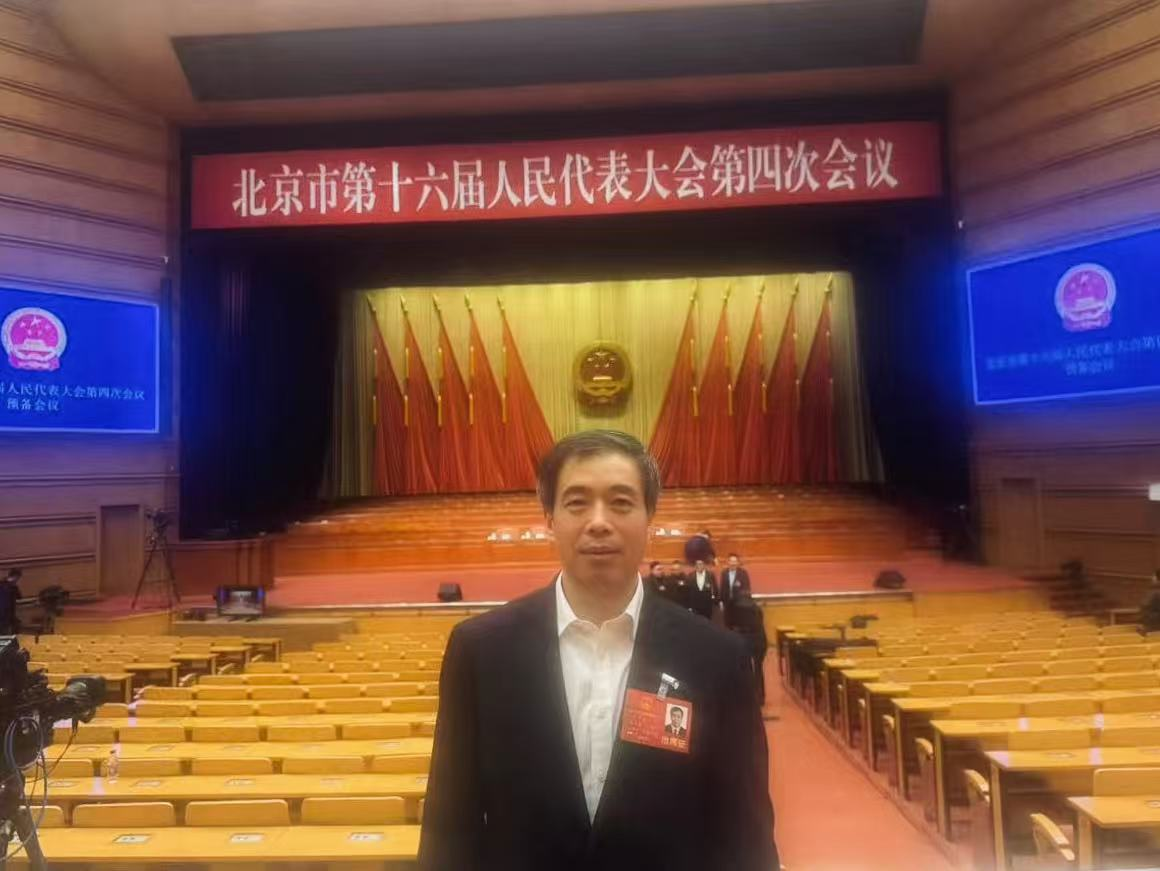
北京市人大代表张夕勇:建议加快推动北京新型储能产业发展
Bei Ke Cai Jing· 2026-01-26 03:19
Core Viewpoint - The proposals submitted by Zhang Xiyong emphasize the need for high-quality development of the new energy storage industry in Beijing and the continuous promotion of the fuel cell vehicle demonstration city cluster in the Beijing-Tianjin-Hebei region, aligning with national strategies and carbon reduction goals [2][3][5]. Group 1: New Energy Storage Industry - The development of the new energy storage industry in Beijing is crucial for enhancing energy security and driving regional collaboration, leveraging the capital's technological innovation and green electricity demand [3][4]. - Zhang Xiyong suggests using the Beijing-Tianjin-Hebei collaborative development as an opportunity to strengthen planning and industrial synergy, capitalizing on Beijing's advantages in innovation and regional resources [4]. Group 2: Fuel Cell Vehicle Demonstration City Cluster - The "14th Five-Year Plan" identifies hydrogen energy as a core direction for future industrial layout, highlighting its strategic significance for clean energy transition in transportation and industry [5]. - The fuel cell vehicle demonstration city cluster in the Beijing-Tianjin-Hebei region has established a self-controlled and efficient industrial ecosystem, significantly contributing to the development of core components, hydrogen infrastructure, and cost optimization [5]. - The completion of the four-year demonstration period presents challenges such as insufficient policy alignment and weakened regional collaboration, making the continued development of the fuel cell vehicle cluster essential for consolidating existing advantages and addressing development bottlenecks [5].
中原证券晨会聚焦-20260123
Zhongyuan Securities· 2026-01-23 01:10
Core Insights - The report highlights the ongoing recovery in the A-share market, with various sectors showing resilience and potential for growth, particularly in aerospace, telecommunications, and semiconductor industries [9][10][11][12][13][14] - The government is actively supporting sectors such as elderly care, pharmaceuticals, and renewable energy through financial initiatives and policy frameworks, which are expected to drive investment and growth [8][5][24][27] - The electric equipment industry is poised for significant growth due to the National Grid's planned investment of 4 trillion yuan during the 14th Five-Year Plan, focusing on green energy transition and technological innovation [24][25][26][27] Domestic Market Performance - The Shanghai Composite Index closed at 4,122.58 with a slight increase of 0.14%, while the Shenzhen Component Index rose by 0.50% to 14,327.05 [3] - The average price-to-earnings ratios for the Shanghai Composite and ChiNext indices are 16.88 and 52.98, respectively, indicating a favorable environment for medium to long-term investments [9][10][11] Industry Analysis - The new energy vehicle market is expected to see record production and sales in 2025, driven by policies encouraging vehicle upgrades and a strong demand for electric vehicles [21][22][23] - The semiconductor industry is experiencing robust growth, with a 45.07% increase in the sector's performance in 2025, driven by strong demand for AI-related hardware [31][32][33] - The storage battery sector is projected to maintain its dominance, with lithium-ion batteries expected to account for 97.5% of new energy storage technologies by 2024 [15][16] Investment Recommendations - The report suggests a "stronger than the market" rating for sectors such as AI, electric equipment, and new energy vehicles, emphasizing the importance of technological advancements and policy support in driving growth [19][23][27] - Investors are encouraged to focus on companies with strong positions in the semiconductor and electric equipment sectors, as well as those involved in the new energy vehicle supply chain [19][27][33]

坐拥九大万亿级产业集群,谁会成为广东的第十张王牌?
Sou Hu Cai Jing· 2026-01-21 01:58
Group 1: Overview of Guangdong's Manufacturing Industry - Guangdong's manufacturing industry is supported by trillion-level industrial clusters, with nine major clusters established, including new-generation electronic information and new energy vehicles [2] - In 2022, the automotive industry in Guangdong achieved revenue exceeding 1 trillion yuan, marking it as the eighth trillion-level industry, with the new energy industry expected to follow in 2024 [2] - The ultra-high-definition video display industry is projected to surpass 900 billion yuan in revenue by 2024, positioning it as a potential candidate for the next trillion-level industry [2] Group 2: Strategic Importance of Trillion-Level Clusters - The development of trillion-level industrial clusters is a strategic focus for Guangdong to adapt to global economic changes and technological revolutions, aiming to build a modern industrial system [3] - The existing trillion-level clusters are predominantly traditional industries, indicating a need for increased representation of strategic emerging industries [3] - Trillion-level clusters are characterized by significant scale effects, strong innovation capabilities, and resilient supply chains, serving as key drivers for economic growth [3] Group 3: Policy Support and Development Plans - The success of the new energy industry in Guangdong is attributed to strategic policies and frameworks established since 2020, aiming to develop it into a strategic emerging industry cluster [5] - The "Guangdong Province Action Plan for the Development of Ultra-High-Definition Video Industry" aims for the industry to achieve over 1 trillion yuan in revenue by 2025 [8] - The semiconductor and integrated circuit industry is a focus area, with plans to enhance its scale and capabilities, targeting over 4 trillion yuan in revenue by 2025 [10][12] Group 4: Emerging Industries and Growth Projections - The new energy storage industry is expected to reach 600 billion yuan in revenue by 2025, with an annual growth rate exceeding 50% [13] - The low-altitude economy is projected to become a trillion-level industry, with significant market potential and a comprehensive policy framework to support its development [18] - The ultra-high-definition video industry has shown remarkable growth, with a revenue of 900 billion yuan in 2024 and a significant increase in 4K program production [9] Group 5: Infrastructure and Market Development - Guangdong has established a robust infrastructure for the low-altitude economy, including numerous general airports and drone flight routes, facilitating industry growth [21][22] - The new energy storage sector has seen rapid advancements, with major projects being launched and significant increases in installed capacity [17] - The semiconductor industry in Guangdong is experiencing rapid growth, with a projected revenue of over 320 billion yuan in 2024 and a clear path towards achieving 400 billion yuan by 2025 [11]



湖北新型储能发展迈入“规范市场化”新阶段
Zhong Guo Dian Li Bao· 2026-01-20 01:58
其一,建立分类电价机制,覆盖全场景应用。按照电网侧、电源侧、用户侧三大类别,分别匹配"市场 主导+政府托底""新能源协同开发""用户自利运营"的定价逻辑,形成层次分明、导向清晰的支持架构。 此举有效避免电网侧储能依赖补贴、"吃政策饭",保障电源侧储能与新能源打捆开发的合理回报,同时 推动用户侧储能回归经济驱动本质,促进资源高效配置与可持续发展。 三维协同定方向:锚定战略、借鉴经验、贴合省情 政策立足国家战略导向、汲取先行地区经验、紧扣本省实际需求,体现了"国家战略—地方实践—省情 需求"三维协同的深层逻辑。 一是精准对接国家战略部署。政策全面贯彻国家"能放尽放、应放尽放"原则,坚持市场配置资源决定性 作用与政府适度调控有机结合。在电价形成机制上,引导市场化项目收益高于保底水平,推动储能主体 主动参与中长期交易、现货市场及辅助服务市场;在成本疏导方面,严格落实充电环节输配电价计收、 放电环节退减政策,切实降低运行负担,打通商业化运营关键堵点。 二是系统汲取先行经验并实现机制创新。面对广东、江苏等地"充放价差+容量补偿"模式的成熟实践, 湖北未简单复制,而是聚焦本地痛点精准施策:通过全国首创实施"清单制"严控项目 ...
深入推进“三生融合”“五城共建” 工业科技新城广东肇庆高新区正加速崛起
Zhong Guo Neng Yuan Wang· 2026-01-19 09:24
Core Viewpoint - The conference in Zhaoqing High-tech Zone showcased significant achievements in high-quality development and investment attraction, highlighting the region's commitment to becoming an industrial, technological, livable, vibrant, and progressive city [1] Group 1: Industrial Development - A total of 23 industrial projects were successfully signed, with a total investment exceeding 10.8 billion yuan; 23 projects commenced construction with a planned investment of 6.9 billion yuan; and 22 projects were completed and put into production with a planned investment of 6.5 billion yuan [2] - The industrial output value of the high-tech zone surpassed 100 billion yuan, with industrial technological transformation investment reaching 4.88 billion yuan, a year-on-year increase of 128% [2] - The region saw the addition of 3 national key "little giant" enterprises, marking a breakthrough in the city, and the number of provincial specialized and innovative enterprises reached 109 [2] Group 2: Technological Innovation - The conference awarded exemplary enterprises and signed the "Zhaoqing-Hong Kong Technology Empowerment Plan," aimed at integrating innovation resources from both regions to enhance industrial transformation [3] - The high-tech zone's ranking in the national high-tech zone comprehensive evaluation improved from 103rd to 86th, the largest increase in the province [3] - The number of high-tech enterprises reached 274, with the establishment of 3 provincial new-type R&D institutions and 3 national incubators [3] Group 3: Livability and Social Welfare - Key infrastructure projects such as the Xiaopeng Motors Industrial Park and a new hospital were launched to enhance the livability of the high-tech zone [4] - The total population of the area exceeded 300,000, with 375 manufacturing projects completed, accounting for 32% of the city's total industrial space [4] - Educational resources were expanded with the addition of 6,320 new quality school places and the construction of a new comprehensive hospital [4] Group 4: Urban Vitality - Several cultural and recreational projects were launched, including the Jiangonggang Grain Creative Industry Park and the Longhu Water Ecological Leisure Project, enhancing the urban charm [5] - The integration of public resources with leisure spaces is driving improvements in surrounding rural environments and industries [5] Group 5: Regional Collaboration - The signing of a project to promote an industrial chain supply and demand matching platform, which has served over 650 enterprises, marks a shift to a city-wide industrial collaboration hub [7] - The establishment of a human resources collaborative innovation project aims to replicate successful service models from the high-tech zone to surrounding areas [7] - The local human resources service model has been recognized at the national level, leading to rapid industry growth with a revenue increase of 177%, reaching 960 million yuan [7]
绿色能源与新材料成为房山“双引擎”
Xin Lang Cai Jing· 2026-01-17 21:49
Group 1 - The core industrial transformation in Fangshan District is driven by new productive forces, with an expected industrial output value exceeding 80 billion yuan by 2025, primarily from green energy and new materials industries, projected to contribute 22.5 billion yuan and 18 billion yuan respectively [1] - Fangshan District has gathered 91 green energy enterprises, showcasing a growing industrial cluster effect, particularly in the new energy storage sector with leading companies like Haibosi Chuang and Xinyuan Zhichu [1] - The establishment of a new energy storage power station application demonstration area and a green energy industry park in Fangshan is set to facilitate large-scale application and innovation in energy storage technology [1] Group 2 - The new materials industry is positioned as a "hardcore engine" for driving "new quality manufacturing," with the establishment of the Zhongguancun Materials Industry Park and Graphene Seed Park attracting 179 enterprises and achieving an output value of 18 billion yuan [2] - Fangshan District leverages the educational resources of Liangxiang University Town to create a unique technology transfer center for green energy, fostering a collaborative platform for industry and academia [2] - Continuous collaboration between schools, local governments, and enterprises has led to the identification of 473 technological achievements, with 25 successfully transformed into practical applications, accelerating the conversion of technological innovation into productive forces [2]
“五链”协同聚合力 改革破题促发展——陕西商洛经开区推进高质量发展的改革实践
Xin Lang Cai Jing· 2026-01-16 06:42
Core Viewpoint - The Shandong Economic Development Zone aims to enhance its economic quality and efficiency by focusing on a "3+1" industrial system, which includes new materials, health food and medicine, intelligent manufacturing, and new energy, while implementing a collaborative reform across five chains: industrial, innovation, service, funding, and talent [1] Group 1: Strengthening Resilient Industrial Chains - The development plan addresses issues of scattered industrial layout and weak chain connections by implementing a "three closed-loop, two agglomeration, one leading" strategy to eliminate industrial bottlenecks [2] - A closed-loop system for the silicon materials industry is being established, involving major enterprises and creating a comprehensive supply chain from silicon ore to glass products, targeting a hundred billion-level industry [2] - The molybdenum materials industry is also being upgraded through a closed-loop system, enhancing the production of high-end molybdenum products [2] - The traditional Chinese medicine industry is being developed into a full production process chain, promoting local medicinal materials and establishing a strong brand [2] Group 2: Activating Forward-looking Innovation Chains - The focus is on collaborative innovation through platforms, talent acquisition, and effective transformation to address resource dispersion and talent shortages [4] - Innovation resources are being centralized through the establishment of technology platforms and research centers, leading to significant advancements in key technologies [4] - A talent matching model is being implemented to align skilled personnel with industry needs, resulting in the creation of specialized teams to tackle technical challenges [4] - A closed-loop mechanism for innovation is being established to ensure that research outcomes meet industry demands, fostering a healthy cycle of technology commercialization [4] Group 3: Enhancing Quality Service Chains - Continuous optimization of the business environment is being pursued through innovative service models that enhance efficiency and reduce costs [6] - A dual-party signing model for joint investment is being implemented to facilitate major projects, alongside a comprehensive support system for new enterprises [6] - Customized services are being offered to reduce operational costs for businesses, including tailored facilities and energy supply solutions [6][7] Group 4: Streamlining Diverse Funding Chains - A multi-channel funding supply system is being constructed to meet the financial needs of enterprises at different development stages [8] - A robust investment strategy is being adopted, with a focus on attracting significant projects and ensuring substantial investments [8] - Financial support mechanisms are being established to facilitate easier access to funding for local enterprises [9] Group 5: Solidifying High-end Talent Chains - A comprehensive talent supply system is being developed to attract, utilize, and retain skilled professionals essential for high-quality industrial development [10] - Innovative personnel management practices are being introduced to enhance talent mobility and collaboration across regions [10] - Platforms for practical training and mentorship are being established to develop young professionals into key contributors [10][11]