
万亿级产业集群

Search documents
重庆将携手四川新增打造3个万亿级产业集群
Zhong Guo Xin Wen Wang· 2026-02-26 14:22
Group 1 - Chongqing aims to become a significant growth pole and new driving force in the Chengdu-Chongqing economic circle during the 14th Five-Year Plan, with plans to develop three new trillion-yuan industrial clusters: intelligent connected new energy vehicles, software information services, and food and agricultural product processing [1] - The city will collaborate with Sichuan to accelerate the establishment of a nationally influential economic center and technology innovation hub, as well as a western financial center and cultural tourism corridor [1] - Chongqing plans to enhance existing advantages in four trillion-yuan industrial clusters, including electronic information, while adding three new clusters to solidify regional development [1] Group 2 - The city will fully implement national regional strategies, including the New Era Western Development and the Yangtze River Economic Belt, while deepening connections with major regions such as the Yangtze River Delta and the Guangdong-Hong Kong-Macau Greater Bay Area [2] - Efforts will be made to strengthen innovation collaboration with universities, research institutions, and quality enterprises in the western provinces, particularly in aerospace and electronic information sectors [2] - Chongqing will optimize land use and productivity layout to enhance regional policy effectiveness, supporting the development of urban sub-centers and regional centers to achieve coordinated growth [2]
经济第一大省,再添一个“万亿级”
3 6 Ke· 2026-02-12 02:16
Core Insights - Guangdong's ultra-high-definition video industry cluster is projected to achieve a revenue of 1,080.306 billion yuan by 2025, marking it as the province's tenth trillion-level industry cluster and the first of its kind in the nation [1][2]. Group 1: Industry Development - The "chip shortage and screen shortage" previously hindered the development of China's electronic information industry, with display panels once ranking as the fourth largest import commodity [1]. - Since 2017, Guangdong has been at the forefront of developing the ultra-high-definition video industry, leveraging its comprehensive manufacturing supply chain and large-scale market [1]. - Guangdong has established a complete industry chain covering content production, network transmission, terminal presentation, core components, and industry applications, with over 60,000 related enterprises [1]. Group 2: Economic Impact - The trillion-level industry cluster is characterized by significant scale effects, outstanding innovation capabilities, and strong resilience in the supply chain, which can lower costs and enhance efficiency through upstream and downstream collaboration [1]. - The province has maintained a pace of one trillion-level industry cluster breakthrough per year, with the automotive industry becoming the eighth in 2023 and the new energy industry cluster surpassing one trillion yuan in 2024 [2]. Group 3: Future Prospects - The next potential trillion-level industry cluster is expected to be the biopharmaceutical and health industry cluster, aiming to exceed one trillion yuan by 2027, with the pharmaceutical industrial scale exceeding 500 billion yuan [3]. - Other industries such as semiconductors and integrated circuits, new energy storage, and low-altitude economy also show potential for advancement [3].
城市24小时 | 经济第一大省 再添一个“万亿级”
Mei Ri Jing Ji Xin Wen· 2026-02-11 15:51
Core Insights - Guangdong Province is set to achieve a revenue of 1,080.306 billion yuan from its ultra-high-definition video industry cluster by 2025, marking it as the first trillion-yuan industry cluster in this field in China and the tenth in the province overall [1][2] - The province has established a comprehensive industrial chain covering content production, network transmission, terminal presentation, core components, and industry applications, with over 60,000 related enterprises [1][2] - Guangdong's strategy has led to significant advancements in various sectors, with the automotive industry becoming the eighth trillion-yuan cluster in 2023 and the new energy industry achieving the same milestone in 2024 [2][3] Industry Development - The ultra-high-definition video industry cluster is characterized by significant scale effects, strong innovation capabilities, and resilient industrial chains, which enhance cost efficiency and accelerate technological advancements [1] - Guangdong's industrial strategy has focused on addressing challenges such as reliance on external technologies and insufficient support for emerging industries, leading to the identification of ten strategic pillar industry clusters for development [2][3] - Future potential for new trillion-yuan industry clusters includes the biopharmaceutical and health industry, with goals set for 2027, as well as semiconductor and integrated circuit sectors [3]

广东第十个万亿级产业集群诞生
Jing Ji Guan Cha Wang· 2026-02-11 03:14
Group 1 - The core viewpoint of the article highlights that the super high-definition video industry cluster in Guangdong Province is projected to achieve a revenue of 1,080.306 billion yuan by 2025, marking it as the province's tenth trillion-level industry cluster and the first of its kind in the nation [1] Group 2 - The establishment of this industry cluster is expected to serve as a new pillar for Guangdong's modern industrial system [1]
中国第一个40万亿大省,即将诞生
3 6 Ke· 2026-01-27 02:53
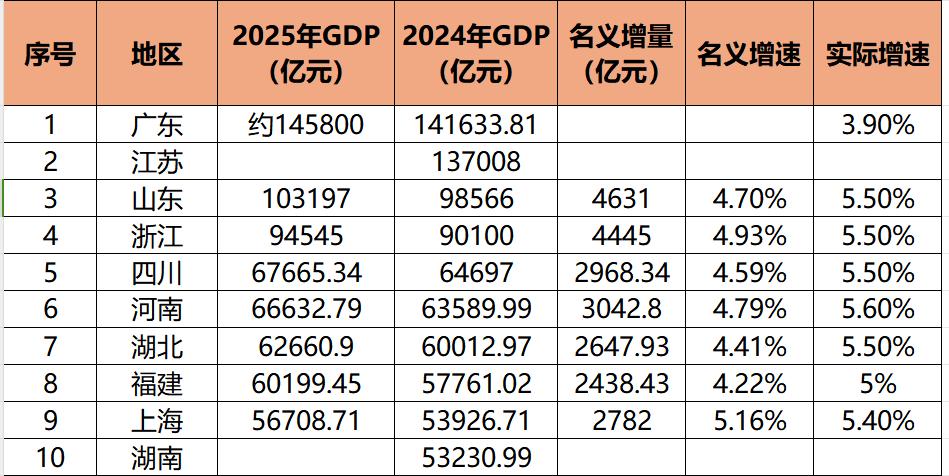
Core Insights - Guangdong's total deposits in domestic and foreign currencies are projected to reach 38.7 trillion yuan by the end of 2025, just shy of the 40 trillion mark, significantly outpacing Jiangsu by 10.82 trillion yuan [1] - The GDP of Guangdong is expected to be 14.58 trillion yuan in 2025, maintaining its position as the largest economy in China for 37 consecutive years, despite a modest growth rate of 3.9% [2][3] Economic Indicators - **Population Scale**: Guangdong has a resident population of 127 million, with a real-time population of 150 million, leading the nation. The province has over 30 million migrant workers, accounting for about 25% of its resident population [5] - **Business Environment**: By the end of 2025, Guangdong is expected to have over 20.37 million registered business entities, representing about 10% of the national total [6] - **Financial Sector**: Guangdong's financial institutions are projected to hold 38.72 trillion yuan in deposits by the end of 2025, maintaining a significant lead over other provinces [8] - **Foreign Trade**: In 2025, Guangdong's total goods trade import and export volume is expected to reach 9.49 trillion yuan, contributing 24.1% to the national foreign trade increment [9] - **Fiscal Revenue**: The local general public budget revenue for Guangdong is projected to be 1.3939 trillion yuan in 2025, marking a 3% increase and maintaining the top position in the country for 35 years [10] - **Capital Market**: Guangdong is expected to have 1,224 listed companies by the end of 2025, with a total market capitalization exceeding 30.75 trillion yuan, indicating a strong wealth creation capacity [11] - **Industry Clusters**: Guangdong has formed nine trillion-yuan industry clusters, including new-generation electronic information and green petrochemicals, showcasing its industrial strength [12][14]
坐拥九大万亿级产业集群,谁会成为广东的第十张王牌?
Sou Hu Cai Jing· 2026-01-21 01:58
Group 1: Overview of Guangdong's Manufacturing Industry - Guangdong's manufacturing industry is supported by trillion-level industrial clusters, with nine major clusters established, including new-generation electronic information and new energy vehicles [2] - In 2022, the automotive industry in Guangdong achieved revenue exceeding 1 trillion yuan, marking it as the eighth trillion-level industry, with the new energy industry expected to follow in 2024 [2] - The ultra-high-definition video display industry is projected to surpass 900 billion yuan in revenue by 2024, positioning it as a potential candidate for the next trillion-level industry [2] Group 2: Strategic Importance of Trillion-Level Clusters - The development of trillion-level industrial clusters is a strategic focus for Guangdong to adapt to global economic changes and technological revolutions, aiming to build a modern industrial system [3] - The existing trillion-level clusters are predominantly traditional industries, indicating a need for increased representation of strategic emerging industries [3] - Trillion-level clusters are characterized by significant scale effects, strong innovation capabilities, and resilient supply chains, serving as key drivers for economic growth [3] Group 3: Policy Support and Development Plans - The success of the new energy industry in Guangdong is attributed to strategic policies and frameworks established since 2020, aiming to develop it into a strategic emerging industry cluster [5] - The "Guangdong Province Action Plan for the Development of Ultra-High-Definition Video Industry" aims for the industry to achieve over 1 trillion yuan in revenue by 2025 [8] - The semiconductor and integrated circuit industry is a focus area, with plans to enhance its scale and capabilities, targeting over 4 trillion yuan in revenue by 2025 [10][12] Group 4: Emerging Industries and Growth Projections - The new energy storage industry is expected to reach 600 billion yuan in revenue by 2025, with an annual growth rate exceeding 50% [13] - The low-altitude economy is projected to become a trillion-level industry, with significant market potential and a comprehensive policy framework to support its development [18] - The ultra-high-definition video industry has shown remarkable growth, with a revenue of 900 billion yuan in 2024 and a significant increase in 4K program production [9] Group 5: Infrastructure and Market Development - Guangdong has established a robust infrastructure for the low-altitude economy, including numerous general airports and drone flight routes, facilitating industry growth [21][22] - The new energy storage sector has seen rapid advancements, with major projects being launched and significant increases in installed capacity [17] - The semiconductor industry in Guangdong is experiencing rapid growth, with a projected revenue of over 320 billion yuan in 2024 and a clear path towards achieving 400 billion yuan by 2025 [11]



准2万亿城市 终于“破零”了
Mei Ri Jing Ji Xin Wen· 2025-12-25 15:12
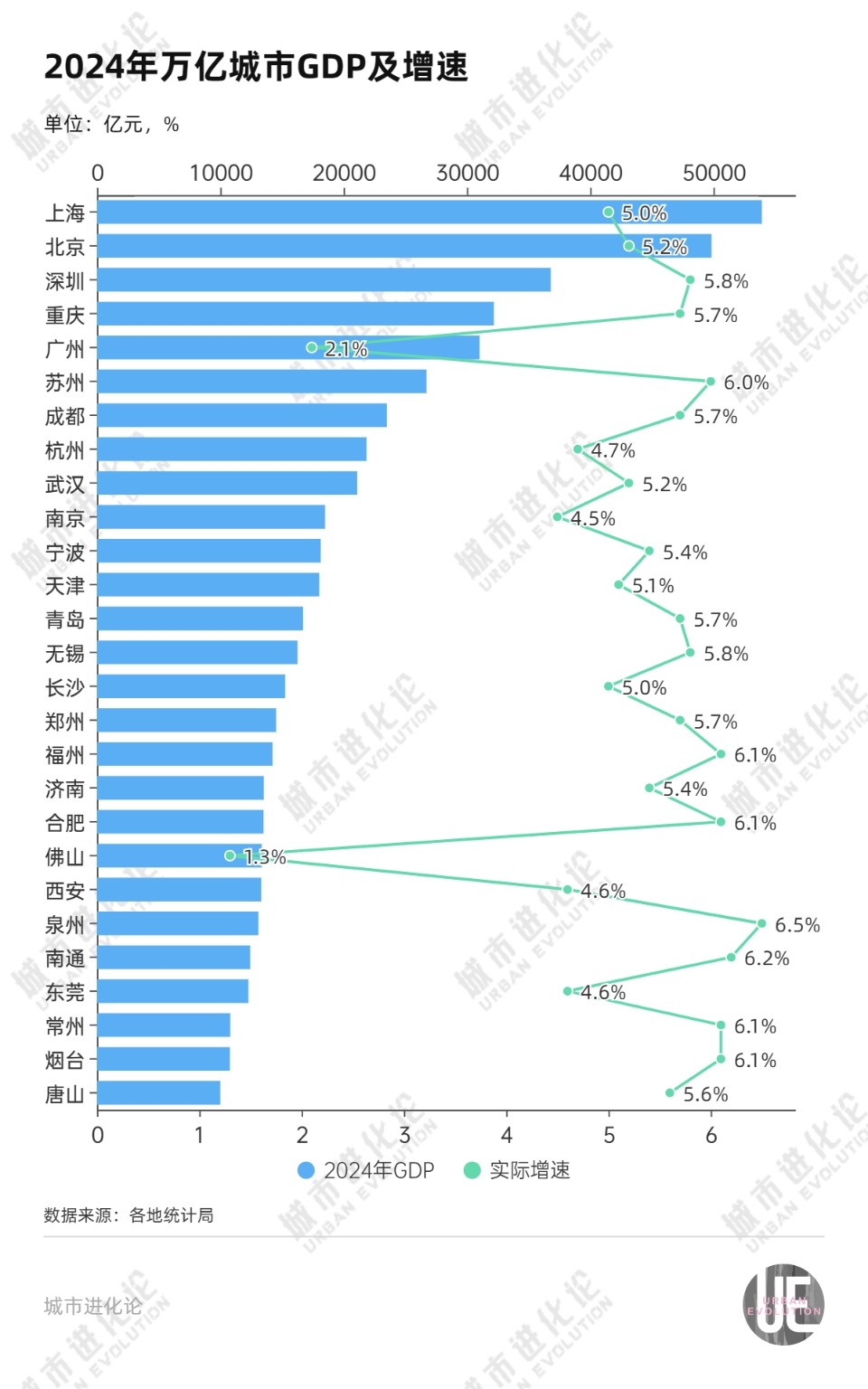
Core Viewpoint - Nanjing is on track to become the first city in Jiangsu province to achieve a trillion-yuan software industry, with expectations to surpass a total industry scale of 1 trillion yuan this year, marking a significant milestone for the city [1][6]. Group 1: Economic Goals and Competitiveness - Nanjing's GDP reached 1,850.08 billion yuan last year, making it a strong contender to become a 2 trillion yuan city by 2025, with an economic increment target of approximately 150 billion yuan for this year [1][5]. - The city faces increasing competition from other cities like Ningbo, Qingdao, and Wuxi, which have also set ambitious goals to reach 2 trillion yuan in GDP [2][7]. - The presence of a trillion-yuan industry is seen as a key indicator of urban economic strength, with Nanjing needing to enhance its industrial competitiveness to avoid falling behind [3][5]. Group 2: Challenges and Strategic Initiatives - Nanjing's software industry has faced challenges, with growth rates lagging behind other major cities, indicating a need for strategic improvements [6][12]. - The city has recognized the importance of bolstering its private sector, as it currently has fewer private enterprises compared to cities like Suzhou and Hangzhou, which impacts its overall economic dynamism [12][15]. - Recent initiatives include the introduction of policies to support high-quality development of headquarters economy, aiming to attract major tech companies to establish regional headquarters in Nanjing [15][16]. Group 3: Regional Integration and Future Directions - Nanjing's development is closely tied to the broader Yangtze River Delta integration strategy, which emphasizes collaborative economic growth and innovation [17][18]. - The city aims to enhance its role as a strategic hub, focusing on high-level openness and resource allocation within the Yangtze River Economic Belt [22][25]. - Plans are underway to improve infrastructure, such as the expansion of Nanjing Lukou Airport and other transport hubs, to strengthen its position as a supply chain center [24][25].
准2万亿城市,终于“破零”了
Mei Ri Jing Ji Xin Wen· 2025-12-25 15:07
Core Viewpoint - Nanjing is on track to become the first city in the region to achieve a trillion-yuan software industry, marking a significant milestone in its economic development as it aims to reach a GDP of 2 trillion yuan by 2025 [2][6]. Group 1: Economic Milestones - Nanjing's software industry is expected to exceed 1 trillion yuan this year, positioning it as the city's first trillion-yuan industry [2]. - The city aims to achieve a GDP of 2 trillion yuan by 2025, requiring an economic increment of approximately 150 billion yuan this year [2][5]. - As of 2024, Nanjing's GDP reached 1,850.08 billion yuan, making it one of the closest cities to the 2 trillion yuan threshold [2]. Group 2: Competitive Landscape - Nanjing faces increasing competition from cities like Ningbo, Qingdao, and Wuxi, all of which have set their sights on achieving 2 trillion yuan GDP targets [2][12]. - In 2024, Ningbo's GDP was 1,814.77 billion yuan, closely trailing Nanjing, while Qingdao's GDP was 1,671.95 billion yuan [8]. - The pressure to advance economically is evident, as Nanjing's lack of a trillion-yuan industry contrasts with other cities in the Yangtze River Delta region [3][12]. Group 3: Industry Development Challenges - Nanjing's software industry growth has been slower compared to other major cities, with several cities showing higher growth rates in software business revenue [8]. - The city has historically relied on traditional industries, which have seen a decline, while new industries have not developed at a comparable pace [13]. - The lack of a strong private sector is a significant barrier to Nanjing's industrial growth, with fewer private enterprises compared to cities like Suzhou and Hangzhou [16]. Group 4: Strategic Initiatives - Nanjing has launched several measures to support the development of its headquarters economy, aiming to attract major companies and enhance its industrial landscape [17]. - The city is focusing on innovative strategies to overcome bureaucratic hurdles and enhance its software industry [17]. - Plans are in place to improve transportation and logistics infrastructure, including the expansion of Nanjing Lukou Airport and other key projects, to strengthen its position as a regional hub [26]. Group 5: Regional Integration and Future Directions - Nanjing's development is aligned with the broader strategy of the Yangtze River Delta, emphasizing its role as a strategic hub for economic integration [19][20]. - The city aims to leverage its strengths in research and development to attract international technology and industry projects [23]. - Nanjing's growth strategy includes enhancing its service industry capabilities and becoming a center for innovation and supply chain management [26].
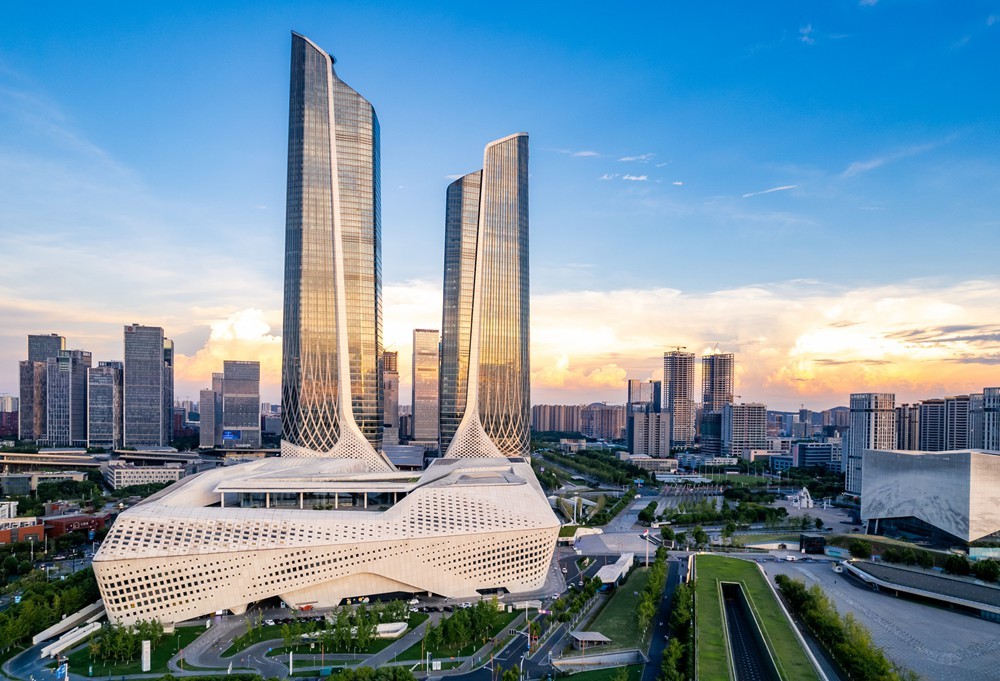
剑指万亿级产业集群!广东海洋渔业多项指标全国领先,海洋牧场建设成效显著
Nan Fang Nong Cun Bao· 2025-12-09 05:34
Core Viewpoint - Guangdong's marine fishery industry is set to become a trillion-level industrial cluster, with significant achievements in modern marine ranch construction and leading national indicators in various metrics [5][6][12]. Group 1: Industry Achievements - Guangdong's total aquatic product output is projected to reach 9.6637 million tons in 2024, a 10.34% increase from the end of the 13th Five-Year Plan (2020) [15]. - The marine aquaculture output is expected to hit 3.7683 million tons, marking a 13.76% growth, the highest since 2011 [15]. - The fishery output value is anticipated to be 209.781 billion yuan, reflecting a 30.4% increase compared to the end of the 13th Five-Year Plan [16]. - The average net income per fishing household is projected to be 27,381.84 yuan, up by 22.38% from the end of the 13th Five-Year Plan [17]. Group 2: Technological Innovations - Guangdong has maintained its position as a leading province in marine seed production, with a projected marine fish seed output of 6.796 billion tails in 2024, accounting for about half of the national total [21]. - The province has developed 18 nationally approved new marine species, leading the country in quantity [22]. - Breakthroughs in deep-sea aquaculture equipment have positioned Guangdong as a national leader, with significant advancements in technology and management systems [30][39]. Group 3: Future Development Plans - The province aims to focus on building a trillion-level modern marine ranch industrial cluster, emphasizing the integration of various industries and the modernization of traditional facilities [54]. - Plans include high-standard construction of seed and equipment innovation centers, and the promotion of ecological aquaculture models [55]. - Guangdong will enhance the integration of land and sea, and develop a modern industrial system that promotes the transformation and upgrading of marine fisheries [56].

加码“先进制造业基地”,成都再发力产业链建设
Mei Ri Jing Ji Xin Wen· 2025-09-23 08:50
Core Insights - Chengdu is intensifying its efforts in building advanced manufacturing bases and enhancing industrial chains as part of its strategic development plan [1][2] Group 1: Industrial Chain Development - Chengdu's industrial chain has become a crucial vehicle for driving industrial scale growth, structural optimization, and innovation breakthroughs, with a reported 8.2% year-on-year increase in revenue and a 12.2% increase in total profits among 7,268 monitored enterprises as of July 2025 [1][2] - The city has established a "9+9+10" modern industrial system, focusing on nine key advantageous industrial clusters, nine strategic emerging industrial clusters, and ten future industrial fields [2][3] - Chengdu has formed two trillion-level industrial clusters in electronic information and equipment manufacturing, along with 11 billion-level key industrial chains, and has built five national-level advanced manufacturing clusters [2][3] Group 2: Quality and Innovation - The quality of Chengdu's industrial chains has significantly improved, with coverage rates of 96% for new displays, rail transit, and biomedicine, and 95% for artificial intelligence [3] - The compound annual growth rate of patents from national-level innovation platforms in key industrial chains has reached 10.9% over the past five years, with local patent transfer rates exceeding 90% in several fields [3] Group 3: Future Growth and Expansion - Chengdu aims to create more trillion-level and billion-level industrial clusters, particularly in software and information services, and cultural tourism, over the next 3-5 years [4] - The city plans to add two new billion-level industrial chains this year, with significant growth expected in the new display industry, which is projected to exceed 100 billion yuan with a 20% year-on-year increase [3][4] Group 4: Infrastructure and Ecosystem - Chengdu is focusing on the development of industrial parks, with over 90% of new major projects landing in these areas, and 80% of enterprises concentrated in parks [6][7] - The city is implementing the "Establish Park, Fulfill Park" initiative to enhance the integration of industrial chains and parks, aiming to cultivate 50 specialized industrial parks and achieve over 7,000 billion yuan in revenue from these sectors [7]