机械工业

Search documents
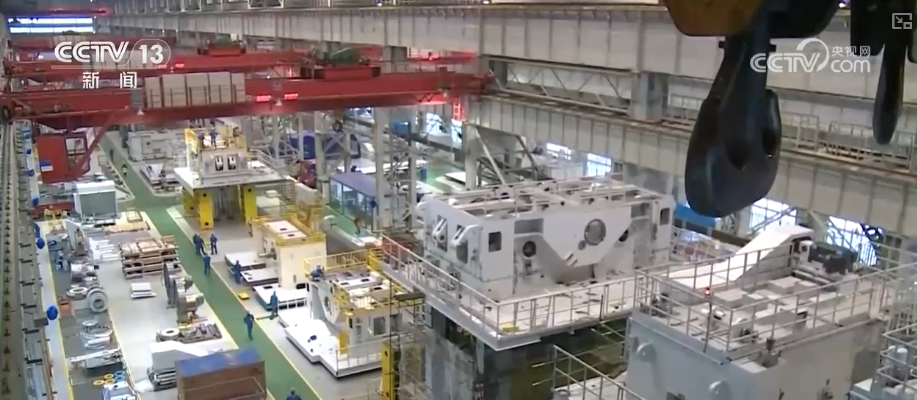
精准对标前沿产业 我国机械工业构建全方位、多层次高技能人才培养体系
Yang Shi Wang· 2025-12-19 03:02
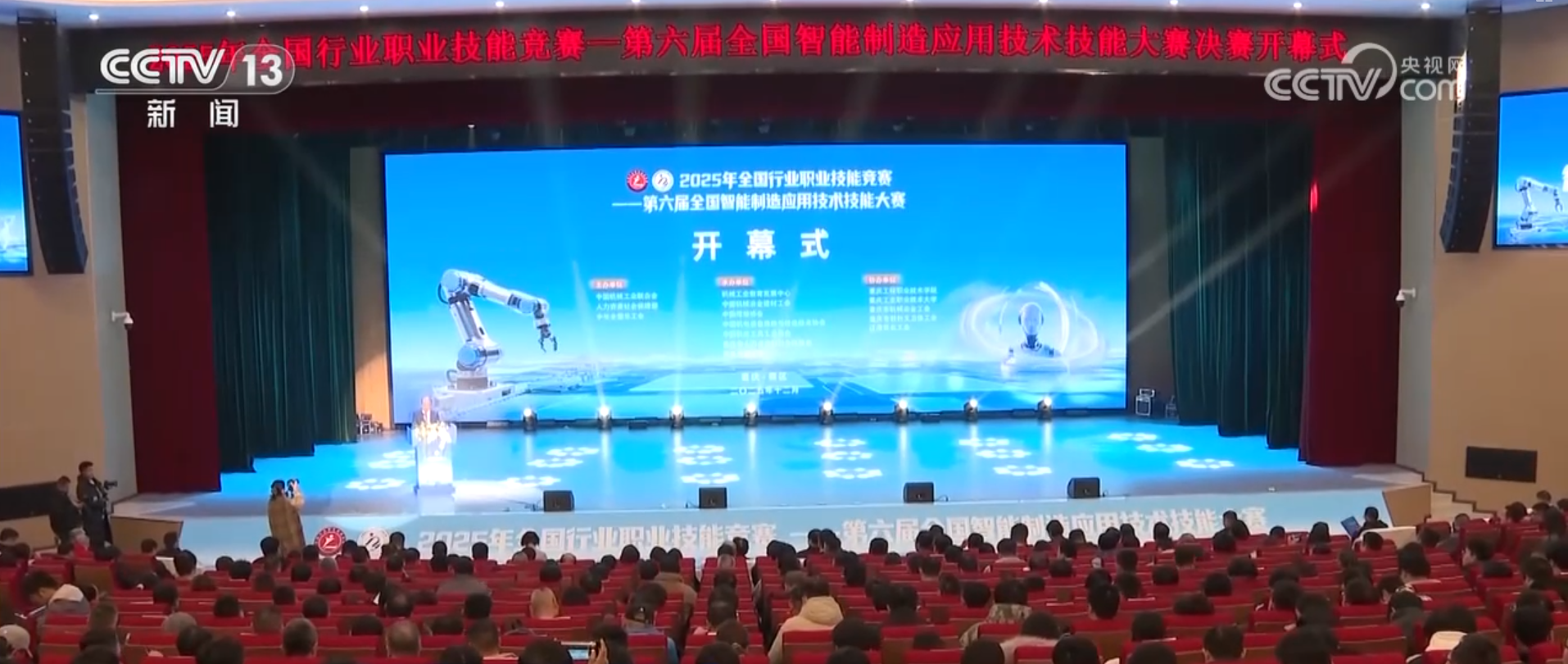
Group 1 - The core viewpoint is that the "14th Five-Year Plan" period is a critical phase for the transformation and upgrading of China's machinery industry, with continuous expansion of industry scale and the rapid rise of emerging fields such as high-end equipment manufacturing and intelligent robotics [1][4] - The national intelligent manufacturing application technology skills competition in Chongqing has over 1,000 participants, with many competition projects precisely aligned with the forefront of the intelligent manufacturing industry, including sensor and control technology, digital process technology, robotic welding technology, and intelligent remanufacturing technology [3] - The China Machinery Industry Federation emphasizes that new productive forces driven by technological innovation impose high demands for the cultivation of talents in the machinery industry, requiring digital, intelligent, and composite skills [4][6] Group 2 - The Federation's vice president, Li Qi, stated that through deepening the integration of industry and education, a number of higher education institutions, vocational schools, and enterprise training institutions with strong industry characteristics are collaborating to accelerate the cultivation of urgently needed talents for new productive force development [6] - The Federation's information indicates that during the "14th Five-Year Plan" period, a comprehensive and multi-level talent cultivation system has been established in the machinery industry, with over 130,000 large-scale units in the machinery industry and more than 19 million employees [8]

制造业出海,不能缺“服务腿”,从东南亚到美国的布局困局与破局
Sou Hu Cai Jing· 2025-12-18 10:18
Core Insights - The integration of service and manufacturing sectors is essential for high-quality development in China's economy, as highlighted in a recent forum discussing strategies for addressing shortcomings in service industries [1][2] - Despite statistics suggesting low service revenue in manufacturing, deeper analysis reveals that many manufacturing companies are increasingly relying on service components, which are often not reflected in traditional revenue metrics [3][7] Group 1: Service and Manufacturing Integration - The traditional view of manufacturing as purely product-based is evolving, with service components becoming integral to business models [5][27] - A case study of a gear company illustrates that significant expenditures on outsourced services are often categorized as costs rather than service revenue, indicating a shift in how manufacturing firms operate [7][10] - Companies like Beijing Jingdiao have successfully enhanced their market competitiveness by offering tailored services, such as prototyping and training, which have allowed them to capture market share from established foreign competitors [10][12] Group 2: Challenges and Opportunities - The service landscape in China is uneven, with small and medium enterprises facing challenges in accessing quality services, particularly in less developed regions [20][22] - There is a risk that companies may overemphasize service at the expense of their core manufacturing capabilities, which could undermine long-term competitiveness [18][27] - The potential for global expansion is significant, but companies must ensure that their service infrastructure keeps pace with their manufacturing growth to maintain competitiveness in international markets [20][28] Group 3: Market Dynamics - The shift towards service-oriented business models is changing competitive dynamics, where companies must now compete on service quality as well as product performance [8][14] - Successful examples of service innovation in manufacturing demonstrate that understanding customer needs and providing tailored solutions can lead to significant business growth [12][25] - The integration of digital technologies in service offerings can enhance efficiency and effectiveness, further solidifying the role of services in the manufacturing sector [27]
第十八届中国工业论坛在京召开
Zhong Guo Jing Ji Wang· 2025-12-18 02:22
Group 1 - The 18th China Industrial Forum emphasizes "integrated innovation" as a key driver for industrial upgrading and new competitive advantages, focusing on intelligent, green, and integrated development [1] - The forum highlights the importance of deep interaction and restructuring among different fields and elements to foster new technologies, business models, and systemic changes in production and organization [1] - Achieving a strong industrial base relies on core capabilities, quality branding, innovation capacity, green content, and international competitiveness, all driven by "integrated innovation" [1] Group 2 - The mechanical industry faces challenges such as the need for stronger foundational research and the enhancement of supply chain resilience and security, necessitating a focus on technological self-reliance and innovation [2] - The importance of technology innovation as a core driver for both traditional industry transformation and the growth of emerging industries is emphasized, alongside the need for deep integration of technology and industry [2] - The call for reform to break down barriers and activate internal dynamics for integration, as well as the need for a collaborative ecosystem to foster innovation and talent development, is highlighted [2] Group 3 - Recommendations include advancing artificial intelligence applications, enhancing foundational capabilities in data, networks, and algorithms, and promoting the scale development of emerging industries [3] - The necessity for a green low-carbon transition is stressed, with specific goals for carbon peak by the end of the 14th Five-Year Plan, and the promotion of green factories and low-carbon parks [3] - The integration of technological and industrial innovation is crucial, with an emphasis on converting scientific achievements into productive forces and enhancing effective supply across the industry [3] Group 4 - Manufacturing is identified as the core of building a modern industrial system and solidifying the foundation of the real economy, with an increasing share of Chinese manufacturing firms in the global top 500 [4] - The focus on intelligent manufacturing and the enabling role of technologies like AI and IoT for traditional industry upgrades is emphasized, alongside the need for collaboration across the industrial chain [4] - The "2025 New Quality Productivity Trends and Practices Report" indicates significant improvements in various aspects of productivity but also highlights challenges such as cognitive biases and insufficient foundational research [4]
融合创新提质效 工业图强启新程——第十八届中国工业论坛在京成功召开
Xin Lang Cai Jing· 2025-12-18 01:58
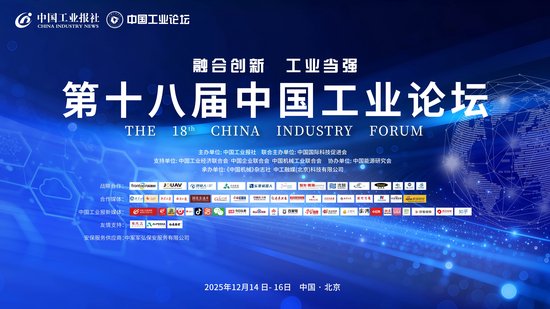
Core Viewpoint - The 18th China Industrial Forum emphasizes the theme of "Integration and Innovation for a Strong Industry," focusing on intelligent, green, and integrated development to enhance China's industrial quality and competitiveness [3][24]. Group 1: Forum Overview - The forum took place from December 14 to 16 in Beijing, featuring a main forum and seven sub-forums, gathering government leaders, experts, and industry leaders to discuss high-quality industrial development [3][24]. - Key topics included the promotion of new industrialization and the development of new productive forces [3][24]. Group 2: Key Speeches and Insights - Ma Peihua highlighted that "fusion innovation" is crucial for industrial upgrading and creating competitive advantages, emphasizing the need for deep interaction and restructuring across different fields [7][28]. - Zhang Wenhong reported an 8.7% year-on-year increase in the added value of the mechanical industry, which is above the national average, indicating strong support for industrial economic stability [8][29]. - Duan Siyi pointed out that China's manufacturing has become a global "golden card," stressing the importance of technological innovation for industrial security and competitiveness [9][30]. Group 3: Development Directions - Li Yizhong discussed four key areas for industrial development: enhancing AI applications, promoting green low-carbon transitions, integrating technological and industrial innovations, and understanding the concept of "high-end" supply [10][31]. - Zhu Hongren emphasized the need for intelligent manufacturing and the role of AI and IoT in transforming traditional industries, advocating for collaboration across the industrial chain [11][32]. Group 4: Challenges and Opportunities - The report from the China Industrial Journal indicated significant improvements in new productive forces but also highlighted challenges such as cognitive biases and insufficient basic research [17][37]. - The forum initiated a new round of research activities aimed at identifying leaders in new productive forces, focusing on areas like AI and industrial internet [17][37]. Group 5: Collaborative Efforts - A series of strategic cooperation agreements were signed during the forum, aimed at enhancing resource integration and deep collaboration in emergency response, industrial tourism, and green development [19][39]. - The forum included discussions on energy transition, equipment upgrades, and supply chain innovation, showcasing practical paths for industry renewal [35][36].
第十八届中国工业论坛在京举办 多维探讨工业发展融合创新之路
Zhong Zheng Wang· 2025-12-17 12:36
Group 1 - The 18th China Industrial Forum emphasized the need for industrial development to focus on intelligence, greenness, and integration, with a strong push for AI capabilities and new product development [1] - The mechanical industry saw a year-on-year increase of 8.7% in added value for the first three quarters, outperforming the national industrial average, indicating robust support for industrial economic stability [2] - The proportion of Chinese manufacturing enterprises in the global Fortune 500 continues to rise, showcasing solid strength and highlighting the importance of smart manufacturing and AI in traditional industry transformation [3] Group 2 - Challenges in the mechanical industry include the need for enhanced basic research, overcoming reliance on foreign core technologies, and improving supply chain resilience and security [2] - The establishment of a "government-industry-academia-research-application-finance" integration mechanism is suggested to support the development of the low-altitude economy, emphasizing the importance of an open low-altitude airspace [3] - The China Industrial Forum serves as a high-level dialogue platform for discussing industrial reform and innovation, having successfully held 17 previous sessions since its inception in 2005 [4]
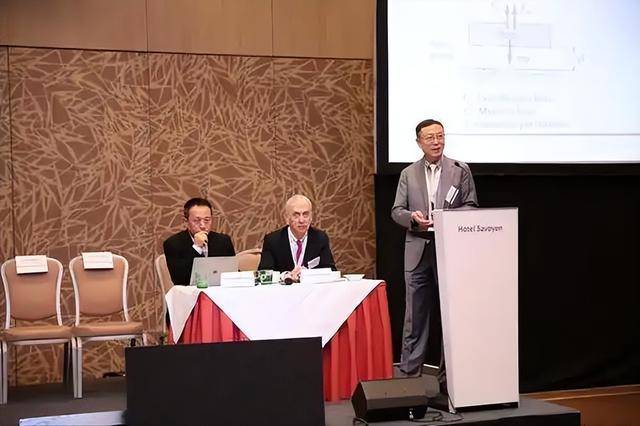
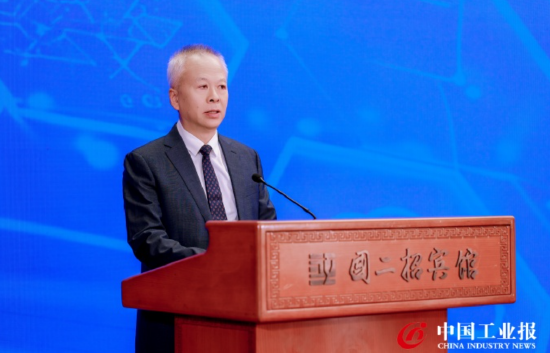
张文宏:机械工业必须坚持科技自立自强,加快推动科技创新和产业创新深度融合
Xin Lang Cai Jing· 2025-12-16 02:48
专题:第十八届中国工业论坛 第十八届中国工业论坛于12月16日在北京举办,主题为"融合创新 工业当强"。中国机械工业联合会党 委副书记、副会长张文宏出席并致辞。 张文宏表示,今年前三个季度,规模以上机械工业增加值同比增长8.7%,高于全国工业平均水平,有 力支撑了工业经济的平稳运行。机械工业必须坚持科技自立自强,加快推动科技创新和产业创新的深度 融合,坚持智能化、绿色化、融合化的方向。 新浪声明:所有会议实录均为现场速记整理,未经演讲者审阅,新浪网登载此文出于传递更多信息之目 的,并不意味着赞同其观点或证实其描述。 责任编辑:王翔 专题:第十八届中国工业论坛 第十八届中国工业论坛于12月16日在北京举办,主题为"融合创新 工业当强"。中国机械工业联合会党 委副书记、副会长张文宏出席并致辞。 责任编辑:王翔 张文宏表示,今年前三个季度,规模以上机械工业增加值同比增长8.7%,高于全国工业平均水平,有 力支撑了工业经济的平稳运行。机械工业必须坚持科技自立自强,加快推动科技创新和产业创新的深度 融合,坚持智能化、绿色化、融合化的方向。 新浪声明:所有会议实录均为现场速记整理,未经演讲者审阅,新浪网登载此文出于传递更 ...
申万期货品种策略日报:股指-20251215
Shen Yin Wan Guo Qi Huo· 2025-12-15 02:53
Report Industry Investment Rating - No relevant content provided Core View of the Report - In the context of multiple positive factors such as further improvement of the system, renewed expansion of funds, and continuous empowerment of industries, the long - term and steady - growth pattern of A - shares is expected to be consolidated, forming a triple resonance of "policy support, fund protection, and industry drive." The expected interest rate cut by the Fed in December is likely to boost global capital flow and risk appetite again, and continuous capital market reforms will further strengthen the foundation for the steady - growth trend. With the gradual implementation of the tone of important meetings in December, the positive policy signals and the Fed's interest rate cut will resonate, potentially increasing market risk appetite again [2] Summary by Relevant Catalogs 1. Stock Index Futures Market - **IF Contracts**: The previous two - day closing prices of IF contracts (current month, next month, next quarter, and the quarter after next) were 4539.60, 4522.80, 4496.60, and 4453.80 respectively, and the previous day's closing prices were 4574.00, 4555.60, 4531.00, and 4489.00 respectively. The price increases were 29.80, 27.40, 28.00, and 29.60 respectively, and the trading volumes were 74003.00, 8279.00, 35116.00, and 7056.00 respectively. The open interest was 113155.00, 20301.00, 118268.00, and 31235.00 respectively, with an increase of 1266.00, 3152.00, 8332.00, and 1133.00 respectively [1] - **IH Contracts**: The previous two - day closing prices of IH contracts were 2969.80, 2962.60, 2961.80, and 2948.00 respectively, and the previous day's closing prices were 2986.80, 2980.00, 2979.80, and 2966.40 respectively. The price increases were 21.20, 20.00, 22.80, and 22.20 respectively, and the trading volumes were 32570.00, 3336.00, 15385.00, and 2310.00 respectively. The open interest was 47489.00, 6153.00, 33343.00, and 10023.00 respectively, with a change of - 211.00, 704.00, 3314.00, and 60.00 respectively [1] - **IC Contracts**: The previous two - day closing prices of IC contracts were 7074.40, 7015.80, 6894.00, and 6691.00 respectively, and the previous day's closing prices were 7174.00, 7115.00, 6998.80, and 6795.40 respectively. The price increases were 90.20, 92.60, 96.20, and 99.20 respectively, and the trading volumes were 82739.00, 13122.00, 44665.00, and 11914.00 respectively. The open interest was 99631.00, 26329.00, 100787.00, and 37925.00 respectively, with an increase of 51.00, 4850.00, 9352.00, and 2326.00 respectively [1] - **IM Contracts**: The previous two - day closing prices of IM contracts were 7304.60, 7222.80, 7063.00, and 6820.60 respectively, and the previous day's closing prices were 7361.80, 7286.20, 7119.80, and 6880.00 respectively. The price increases were 49.40, 55.00, 52.80, and 56.80 respectively, and the trading volumes were 126483.00, 16755.00, 56716.00, and 17722.00 respectively. The open interest was 149811.00, 35293.00, 127987.00, and 65089.00 respectively, with a change of - 2749.00, 5989.00, 6429.00, and 154.00 respectively [1] - **Inter - month Spreads**: The current values of the inter - month spreads of IF, IH, IC, and IM contracts were - 18.40, - 6.80, - 59.00, and - 75.60 respectively, and the previous values were - 16.80, - 7.20, - 58.60, and - 81.80 respectively [1] 2. Stock Index Spot Market - **Major Indexes**: The previous values of the Shanghai - Shenzhen 300, Shanghai 50, CSI 500, and CSI 1000 indexes were 4580.95, 2994.64, 7169.79, and 7370.94 respectively, and the previous two - day values were 4552.18, 2977.03, 7082.89, and 7312.00 respectively. The price increases were 0.63, 0.59, 1.23, and 0.81 respectively [1] - **Industry Indexes**: Among different industries, the energy industry had a decline of - 0.52%, while the raw materials, industrial, and optional consumption industries had increases of 0.94%, 0.89%, and 0.58% respectively. The main consumption, medical and health, real - estate finance, and information technology industries had increases of 0.66%, 0.29%, 0.35%, and 0.93% respectively. The telecommunications business and public utilities industries had increases of 0.55% and 0.53% respectively [1] 3. Futures - Spot Basis - **IF Contracts**: The previous values of the basis between IF contracts and the Shanghai - Shenzhen 300 index were - 6.95, - 25.35, - 49.95, and - 91.95 respectively, and the previous two - day values were - 12.58, - 29.38, - 55.58, and - 98.38 respectively [1] - **IH Contracts**: The previous values of the basis between IH contracts and the Shanghai 50 index were - 7.84, - 14.64, - 14.84, and - 28.24 respectively, and the previous two - day values were - 7.23, - 14.43, - 15.23, and - 29.03 respectively [1] - **IC Contracts**: The previous values of the basis between IC contracts and the CSI 500 index were 4.21, - 54.79, - 170.99, and - 374.39 respectively, and the previous two - day values were - 8.49, - 67.09, - 188.89, and - 391.89 respectively [1] - **IM Contracts**: The previous values of the basis between IM contracts and the CSI 1000 index were - 9.14, - 84.74, - 251.14, and - 490.94 respectively, and the previous two - day values were - 7.40, - 89.20, - 249.00, and - 491.40 respectively [1] 4. Other Domestic Main Indexes and Overseas Indexes - **Domestic Indexes**: The previous values of the Shanghai Composite Index, Shenzhen Component Index, Small and Medium - sized Board Index, and ChiNext Index were 3889.35, 13258.33, 8020.01, and 3194.36 respectively, and the previous two - day values were 3873.32, 13147.39, 7947.12, and 3163.67 respectively. The price increases were 0.41%, 0.84%, 0.92%, and 0.97% respectively [1] - **Overseas Indexes**: The previous values of the Hang Seng Index, Nikkei 225, S&P 500, and DAX Index were 25976.79, 50148.82, 6827.41, and 24186.49 respectively, and the previous two - day values were 25530.51, 50602.80, 6901.00, and 24294.61 respectively. The price increases were 1.75%, - 0.90%, - 1.07%, and - 0.45% respectively [1] 5. Macroeconomic Information - The Ministry of Commerce, the People's Bank of China, and the National Financial Regulatory Administration issued a notice proposing 11 specific measures in three aspects: deepening cooperation between the business and financial systems, increasing financial support for key consumption areas, and expanding government - policy - bank - enterprise docking cooperation [2] - Multiple departments are deploying to implement the spirit of the Central Economic Work Conference, and more incremental policies will be introduced in 2026 to boost consumption, promote investment recovery, and cultivate new growth drivers [2] - The China Council for the Promotion of International Trade will hold important economic and trade activities in 2026 [2] - During the 14th Five - Year Plan period, China invested over 700 billion yuan in high - standard farmland construction, supporting the construction and renovation of 460 million mu of high - standard farmland [2] 6. Industry Information - China's artificial intelligence industry has been accelerating development in 2025, with the core industry scale expected to exceed one trillion yuan [2] - During the 14th Five - Year Plan period, the average annual growth rate of China's machinery industry added value was 7.1%, and the growth rate in the first three quarters of this year was 8.7% [2] - By 2030, China's natural gas production is expected to reach 300 billion cubic meters. By 2060, the proportions of fossil energy, hydropower and nuclear power, wind power, and photovoltaics will be 23%, 19%, 25%, and 30% respectively [2] - As the copper futures price exceeded $10,000 per ton this year, China is accelerating the promotion of "aluminum replacing copper" in air - conditioners and related standard formulation [2] 7. Stock Index Views - The three major US indexes declined, while the stock indexes in the previous trading session regained their upward momentum. The non - ferrous metals sector led the gains, and the commercial and retail sector led the losses. The market turnover was 2.12 trillion yuan [2] - On December 11, the margin trading balance decreased by 6.26 billion yuan to 2490.146 billion yuan [2]
第十八届中国工业论坛在北京举办 聚焦首台(套)重大技术装备
Zhong Guo Xin Wen Wang· 2025-12-14 15:03
宋志明也提醒,要清醒认识到首台(套)的技术攻关与推广应用之路依然任重道远。创新成果的首次工程 化、市场化应用,面临着技术成熟度、市场认可度、应用可靠性等多种考验。应集中力量攻克关键核心 技术,推动原创性、颠覆性科技创新,进一步完善创新生态,构建以企业为主体,产学研用经深度融合 的科技创新体系,优化从研发工程化到市场准入、推广应用的全链条的支撑体系,有效降低用户单位的 使用风险和成本顾虑,畅通"最初一公里"和"最后一公里"。同时,要加强知识产权保护,激发持续创新 的内生动力,让首台(套)从首台走向套系、从突破走向引领。 中国工业经济联合会党委委员、制造业单项冠军办公室主任郭嘉海在会议中表示,每一项首台(套)装备 的成功研制与应用,都是对产业链自主可控能力的一次有力提升,是对薄弱环节的一次坚实加固。谈及 下一步发展,郭嘉海建议,研发企业要勇当"智造领航员",主动将人工智能、工业互联网等智能技术融 入装备研发、制造、服务的全生命周期,紧盯用户痛点,打造真正好用、智能的高端装备。 中新网北京12月14日电(陈昊星)12月14日,第十八届中国工业论坛——"智能制造赋能首台(套)"大会在 北京举办。此次论坛以"数智赋能装 ...
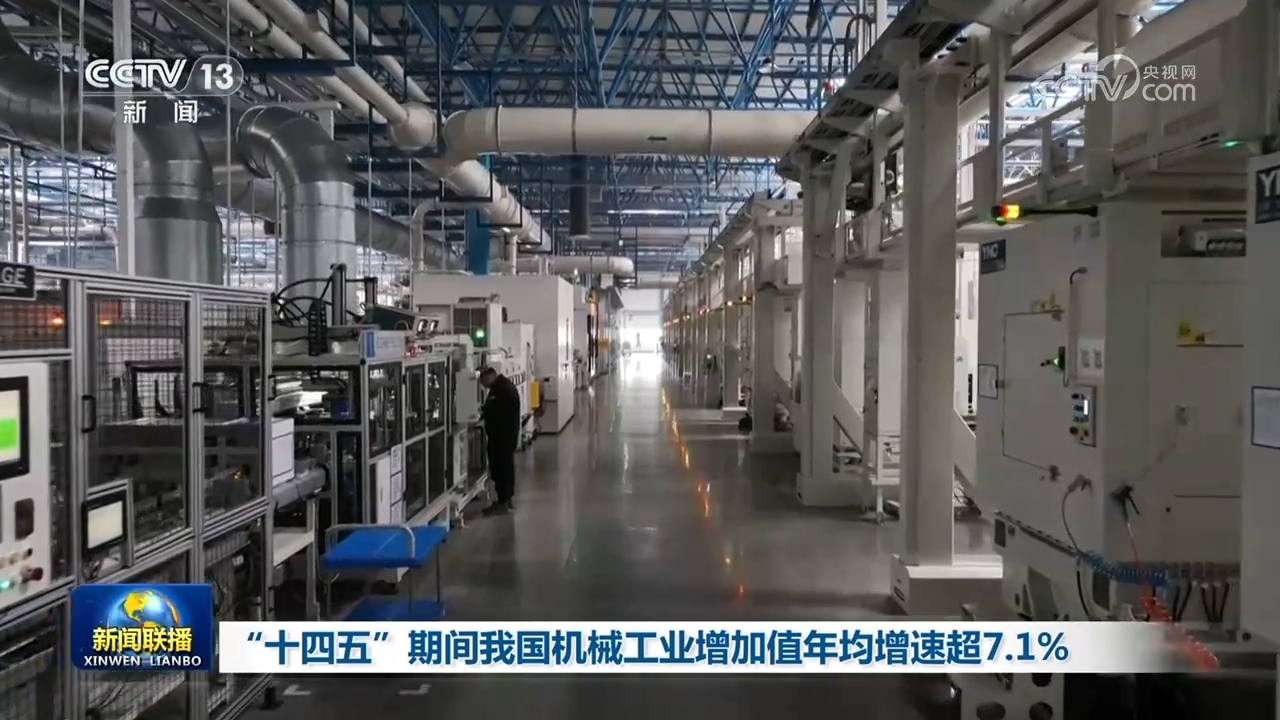
“十四五”期间我国机械工业增加值年均增速超7.1%
Yang Shi Wang· 2025-12-14 11:49
Core Insights - The mechanical industry in China has experienced rapid development during the "14th Five-Year Plan" period, establishing a solid foundation for advancing new industrialization [1] Group 1: Industry Growth - The average annual growth rate of the mechanical industry's added value exceeded 7.1%, surpassing the national average for industrial and manufacturing sectors during the same period [3] - The number of large-scale enterprises increased from 92,000 to 137,000 by the end of October 2025 [3] - The import and export volume has consistently exceeded $1 trillion for five consecutive years [3] Group 2: Innovation and Standards - The industry has enhanced its innovation capabilities, with 4,487 national and industry standards published during the "14th Five-Year Plan" period, achieving an international standard conversion rate of over 92% [5] - China has become one of the countries with the most comprehensive range of product categories, with 13 companies entering the global top 50 engineering machinery manufacturers [5] - The advantages of industrial clusters are increasingly prominent, with mechanical industry enterprises accounting for 25% of 300 national-level characteristic industrial clusters of small and medium-sized enterprises [5] Group 3: Future Directions - The focus for the mechanical industry during the "15th Five-Year Plan" period will be on enhancing the resilience and security of the industrial and supply chains, as well as accelerating the development of new productive forces, emphasizing the transformation towards intelligence, greenness, and integration [7]
7.1%、13.7万家,基础坚实!多维度“数”看机械工业新亮点、新成就
Yang Shi Wang· 2025-12-14 03:40
Core Viewpoint - During the "14th Five-Year Plan" period, China's machinery industry has achieved significant accomplishments in industrial scale, foreign trade, and innovation capabilities, laying a solid foundation for promoting new industrialization [1] Industrial Scale - The average annual growth rate of the added value of China's machinery industry during the "14th Five-Year Plan" period is 7.1%, with a growth rate of 8.7% in the first three quarters of 2025, both exceeding the national average levels for industry and manufacturing [4] - The number of enterprises above designated size increased from 92,000 to 137,000 by the end of October 2025 [4] Foreign Trade - The machinery industry has achieved a historic leap in foreign trade during the "14th Five-Year Plan," with import and export volumes exceeding $1 trillion for five consecutive years [6] - From January to October 2025, the total import and export volume of goods reached $1.03 trillion, a year-on-year increase of 7.6% [6] - The total import and export volume for the machinery industry in 2025 is expected to set a new record, becoming a key factor driving industry growth [6] Innovation Capability - The innovation capability of the machinery industry has continuously strengthened, with 4,487 national and industry standards planned for release during the "14th Five-Year Plan," and an international standard conversion rate exceeding 92% [12] - The advantages of industrial clusters are increasingly prominent, with machinery industry enterprises accounting for one-fourth of the 300 national-level characteristic industrial clusters for small and medium-sized enterprises [12] Product and Service Transformation - During the "14th Five-Year Plan," the production and sales of new energy vehicles, electric engineering machinery, and new energy agricultural machinery have significantly increased [15] - Enterprises are accelerating the transformation from single product manufacturing to integrated solutions of "products + services" [15] Future Outlook - Looking ahead to the "15th Five-Year Plan," the machinery industry will focus on enhancing the resilience and safety of the industrial supply chain, accelerating the cultivation of new productive forces, and emphasizing the transformation towards intelligence, greening, and integration [18] - The goal is to form a new development pattern characterized by the upgrading of traditional industries, the leadership of emerging industries, and the layout of future industries [18]