
生命科学

Search documents
独家专访麦楷亚洲联合主席:科技超级大国崛起,中国市场不可错过
21世纪经济报道· 2026-01-20 09:12
2025年全球前十大IPO中,亚太地区占据了七席,纳斯达克和纽约证券交易所的新上市名单 中,有一半是亚洲公司。伯斯汀看好亚太市场,IPO反映出人们如何看待未来,亚太地区对变 革有着强烈渴望,对风险持开放态度。 展望未来,伯斯汀预计, 2026年或将成为IPO市场创纪录的一年。 IPO市场的乐观情景包 括:美国经济保持稳定,美联储逐步放松政策,特朗普政府在关税政策上有所克制,企业之 间保持健康的科技竞争,一些大型私营公司排队等待上市。 记者丨吴斌 编辑丨李莹亮 2025年全球IPO市场显著升温,中国香港IPO市场更是募资超2858亿港元,重登全球榜首。 麦楷亚洲会计师事务所联合创始人和联合主席助·伯斯汀(Drew Bernstein)近日在接受21世 纪经济报道记者专访时分析称,过去,中国的创新公司往往先在美国上市并借此吸引融资。 如今,人工智能、半导体等行业的中国科技创新公司在美国上市的可能性很低,这为中国香 港创造了机会。 香港IPO市场2025年登上全球榜首,这是多重因素的共同作用: 首先,投资者的注意力转向了作为科技超级大国的中国,"DeepSeek时刻"证明,中国与 美国的创新差距已成为过去; 其次, ...


构建“有效市场”与“有为政府”新范式
Guo Ji Jin Rong Bao· 2026-01-19 14:55
党的二十大提出了中国式现代化的理论与战略方向,为我国区域经济发展描绘了崭新蓝图。 党的二十届四中全会为"十五五"时期擘画蓝图,并将"坚持有效市场和有为政府相结合"确立为经济 社会发展必须遵循的根本原则。这不仅是对社会主义市场经济规律认识的深化,更是在全球变局与国内 转型交织的关键阶段,推动区域经济实现系统性升级、支撑中国式现代化行稳致远的战略总纲。面向新 征程,如何将这一核心原则转化为构建优势互补、高质量发展区域经济新格局的具体实践,已成为支撑 中国式现代化行稳致远的时代命题与决胜关键。 中国式现代化开启了国家区域经济发展的崭新场景和复式赛道 第一,科技创新领域正以自立自强为重点,形成全球创新竞争新优势。通过构建教育、科技、人才 三位一体发展格局,强化基础研究布局,聚焦集成电路等"卡脖子"技术协同攻关,实施"人工智能+"行 动,推动技术赋能实体经济。 第二,产业发展领域正聚焦新质生产力,构建现代化产业体系新支柱。以智能化、绿色化、融合化 为方向,重点培育新能源、航空航天等战略性新兴产业,前瞻布局量子科技、生命科学等未来产业,深 入实施"专精特新"企业培育工程。 第三,改革开放领域正突出制度攻坚,激发高质量发展 ...
强生荣膺“2026中国杰出雇主”,以人才驱动定义雇主品牌
Xin Lang Cai Jing· 2026-01-17 07:28
荣膺2026年杰出雇主 颁奖现场 【新华企业资讯1月17日】近期,全球权威的杰出雇主调研机构颁布的"杰出雇主2026"榜单正式揭晓, 强生中国凭借其在雇主品牌建设、数字化体验及健康福利等多方面的卓越表现,再度荣膺"中国杰出雇 主"。这已是强生连续第四年摘得此项殊荣,不仅体现了行业对其在人才管理和打造卓越职场环境的高 度认可,更深度践行了强生 "以人才驱动创新、以关怀赋能价值" 核心理念。 作为全球人力资源领域最具权威性的雇主榜单之一,"中国杰出雇主"认证体系基于《人力资源最佳实践 调研》对企业人才策略、工作环境、招聘体系、学习发展、多元公平包容及员工福祉六大核心领域进行 了全面评估,是衡量企业人力资源管理水平与职场建设能力的核心标杆。 强生致力于营造一个开放包容的企业文化,并重视每一位员工的成长和发展。通过赋予员工更大的自主 权和决策能力,充分释放员工潜能,实现自我发展的目标,最大程度激发个人创造力和团队协作精神, 以更好地应对快速变化的市场环境与挑战。为支持每一位员工的持续成长,我们打造了系统化的人才发 展体系,特别设立 "全球学习日" ,倡导并鼓励员工作为学习者保持终身学习的热忱,围绕新兴趋势开 展多元主 ...


人工智能破解生命密码 | 两说
第一财经· 2026-01-15 06:41
Core Viewpoint - The article discusses the transformative impact of artificial intelligence (AI) on healthcare and longevity, suggesting that AI could revolutionize the treatment of diseases and extend human lifespan significantly in the coming years [4][10][39]. Group 1: AI in Healthcare - AI has successfully addressed the long-standing challenge of protein structure prediction, exemplified by AlphaFold, which achieved this in minutes, earning the 2024 Nobel Prize in Chemistry [9]. - Experts predict that within the next decade, AI could lead to groundbreaking advancements in treating various diseases, with the potential to make conditions like cancer chronic rather than terminal [10][36]. - The integration of AI in drug design and treatment methodologies is expected to yield significant results in managing diseases such as tumors, diabetes, and Alzheimer's [10][15]. Group 2: Longevity and Aging - By 2050, it is projected that one in six people will be over 65 years old, highlighting the urgency of addressing aging and healthspan [14]. - Advances in technology are redefining the relationship between lifespan and health, with the notion that for every three years lived, technology could add an additional year of healthy life [15]. - The World Health Organization has redefined aging as a manageable disease, indicating a shift in how society views longevity and health [15]. Group 3: AI and Biological Sciences - The convergence of AI and biology, termed "AIology," represents a new frontier in understanding and leveraging biological systems for advancements in health and medicine [19]. - The computational power of biological systems, such as the human brain, is vastly superior to current AI systems, suggesting that biological evolution has optimized efficiency over billions of years [20]. - The complexity of life sciences presents both challenges and opportunities for investment, with recent advancements in drug approvals indicating a potential for significant breakthroughs in treatment [36][39]. Group 4: Employment Landscape - The rise of AI has created a U-shaped employment market, where demand is high for top talent and basic skill jobs, while middle-tier positions are increasingly being replaced by AI [30]. - Jobs requiring strong social skills and emotional connections are less likely to be replaced by AI, indicating a shift in the types of skills that will be valued in the future workforce [32].

2026年市场展望与薪酬报告——中国大陆-任仕达
Sou Hu Cai Jing· 2026-01-11 07:08
Core Insights - The 2026 talent market in mainland China is characterized by a blend of "new" and "stable," with simultaneous challenges of "employment difficulty" and "recruitment difficulty" driven by factors such as industrial upgrades, human resource distribution, and demographic changes [8][9][19] - The demand for "immediate-use" and "composite" talents is urgent, particularly in fields like AI, 5G, and industrial internet, which are driving the development of Industry 5.0 [9][10] - The employment model is shifting towards a hybrid approach of "fixed employment + flexible supplementation," focusing on core functions for long-term positions while adapting to short-term needs [21] Job Demand and Employment Models - Companies are adopting a cautious and steady recruitment strategy, focusing on emerging sectors and revenue-driven areas [9][10] - The competition for high-level technical talents in advanced manufacturing, AIGC, and carbon neutrality is intense, while the demand for sales roles remains strong [9][10] - The hybrid employment model has become a strategic standard, balancing "strategic certainty" with "environmental uncertainty" [21] Salary Trends - Overall salary growth is moderate, with traditional manufacturing sectors seeing increases of 1%-2%, while healthcare and AI sectors may exceed 10% for core positions [2][24] - The expectation for year-end bonuses has shifted towards differentiated incentives, with flexible working hours and paid learning leave becoming more attractive [26][30] - The salary increase expectations are becoming more rational, with 59% of respondents targeting a 5%-15% increase when changing jobs [30][32] Talent Mobility - The talent market is entering a "low-initiative, high-observation" phase, with 43% of respondents willing to change jobs only for better opportunities [10][33] - Job stability and attractive compensation remain core demands, with non-monetary benefits gaining importance [10][30] - The confidence to switch jobs varies significantly across different sectors, with sales and IT roles showing higher confidence due to their demand and skill applicability [33] AI Impact and Skills Adaptation - AI is deeply restructuring the workplace, leading to challenges in skill adaptation, with 55% of workers feeling that AI training does not match job requirements [12][36] - Companies need to enhance AI applications and build flexible talent systems through partnerships with educational institutions and robust training frameworks [12][13][38] Strategic Recommendations - Companies should strengthen AI applications and provide timely training to enhance employee skills and maintain competitiveness [12][13] - Building organizational resilience and talent flexibility is crucial, with a focus on long-term strategic investments in talent development [13][14] - Establishing a new collaborative system that integrates human resources, AI, and robotics is essential for fostering trust and engagement in the workplace [15][19]

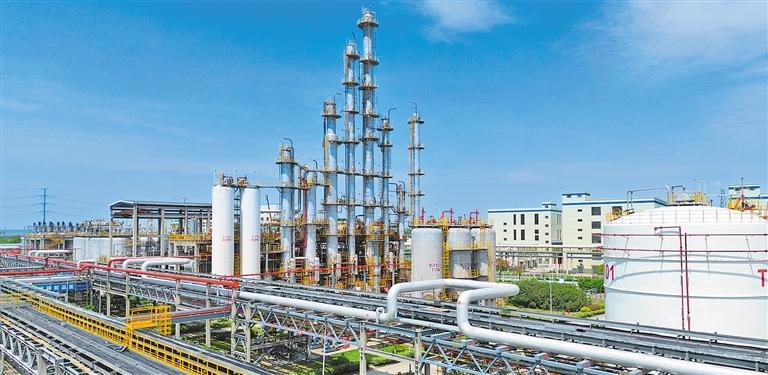
【牢记总书记的嘱托·企业调研记】传化致远
Jing Ji Ri Bao· 2026-01-07 00:06
Core Viewpoint - Transfar Group has evolved from a small family workshop into a modern industrial group with over 16,000 employees, covering various sectors and achieving significant growth, while focusing on high-quality development and innovation [1][19]. Group 1: Company Overview - Transfar Group started with humble beginnings, growing into a billion-dollar enterprise with operations in over 130 countries and regions, and ranking among China's top private enterprises [1]. - The company has two listed subsidiaries and numerous high-tech and specialized enterprises, reflecting its diverse business portfolio [1]. Group 2: Innovation and Technology - Transfar has developed the world's first flexible production facility for rare earth butadiene rubber, breaking foreign monopolies and serving major global tire manufacturers [3][4]. - The company invested over 200 million yuan in R&D over three years to overcome significant technical challenges in producing rare earth butadiene rubber [3][4]. - Transfar's innovation strategy emphasizes the importance of core technology and aims to lead in high-tech fields such as new materials, artificial intelligence, and biomanufacturing [6][7]. Group 3: Logistics and Supply Chain - Transfar established a "road port" logistics platform to address inefficiencies in China's logistics sector, significantly improving operational efficiency and reducing costs for manufacturers [11][12]. - The company has built 72 road ports across 27 provinces, serving millions of manufacturing enterprises and enhancing supply chain integration [13]. Group 4: Social Responsibility and Community Engagement - Transfar is actively involved in rural revitalization efforts, creating a collaborative platform that integrates technology and agriculture to modernize rural areas [17][18]. - The company has implemented initiatives to support farmers and enhance agricultural productivity, contributing to local economic development [18]. Group 5: Corporate Governance and Employee Relations - Transfar has integrated party governance with corporate governance, establishing a model that promotes employee participation and aligns corporate goals with social responsibilities [21][22]. - The company invests significantly in employee training and development, fostering a culture of innovation and shared success [24][25]. Group 6: Future Strategy and Global Expansion - Transfar aims to enhance its global presence by establishing production bases and R&D centers worldwide, with overseas sales accounting for 25% of its manufacturing revenue [41]. - The company is committed to high-quality development and innovation, aligning its strategies with national development goals and market demands [32][43].

三力齐发 助中国科技勇立潮头
Zheng Quan Ri Bao· 2026-01-06 23:31
Core Viewpoint - The International Consumer Electronics Show (CES) showcases China's technological advancements, highlighting a transition from "smart creation" to "ecological leadership" in the tech industry [1] Group 1: Technological Advancements - The exhibition features next-generation personal terminals with multi-modal interaction capabilities and embodied intelligent robots entering homes and businesses [1] - Smart vehicles are transforming driving experiences and reshaping human-vehicle relationships, while core computing chips and advanced solutions empower various industries [1] - Chinese tech companies are evolving from mere technology integrators to global leaders, launching defining technological architectures and open platforms [1] Group 2: Key Dimensions for Future Growth - Strengthening foundational research and frontier exploration is essential for maintaining a competitive edge in global technology, particularly in artificial intelligence, quantum information, and life sciences [2] - Enhancing the resilience and collaboration of the industrial chain is crucial, focusing on upgrading to high-end, intelligent, and green manufacturing, while addressing gaps in key components and advanced materials [2] - Optimizing capital supply to support technological innovation involves fostering "patient capital," ensuring smooth capital circulation, and enhancing global investment capabilities [2] Group 3: Future Outlook - The trajectory from "Made in China" to "Created in China" and now to "Leading in China" indicates a clear upward trend, positioning Chinese technology to significantly contribute to global economic development [3]
十年来,长江经济带创新动能更强劲
Ke Ji Ri Bao· 2026-01-06 01:51
Core Insights - The development of the Yangtze River Economic Belt is a major regional strategy personally planned, deployed, and promoted by General Secretary Xi Jinping, focusing on ecological protection and sustainable development [1] Environmental Protection - The proportion of water quality in categories I-III in the Yangtze River Economic Belt has increased from 67% in 2015 to 96.5% now, a rise of nearly 30 percentage points, with the main stream maintaining Class II water quality for six consecutive years [2] - The total phosphorus concentration in the Yangtze River basin has decreased by over 40% compared to ten years ago, and over 90% of black and odorous water bodies in county-level cities have been eliminated [2] Industrial Development - The Yangtze River Economic Belt is a crucial area for industrial aggregation, with 30 strategic emerging industry clusters cultivated, accounting for 45% of the national total [3] - The region contributes nearly half of the national GDP while accounting for about one-third of energy consumption and carbon emissions, emphasizing its role in green development [3] Transportation Infrastructure - The high-grade waterway mileage in the Yangtze River system has reached 11,500 kilometers, allowing for significant improvements in shipping capabilities [4] - By 2025, the port throughput along the Yangtze River is expected to reach 4.2 billion tons, with the number of major ports increasing to 18, reflecting substantial growth since 2015 [5]
人民日报头版文章:北京推动科技创新和产业创新深度融合,在发展新质生产力上奋勇争先
Xin Lang Cai Jing· 2026-01-03 23:23
Group 1 - The core viewpoint emphasizes the importance of technological and industrial innovation as fundamental paths to develop new productive forces, with Beijing accelerating the construction of a modern industrial system aligned with these innovations [1] - Beijing's high-tech industries contribute over 40% to economic growth, with the formation of three trillion-yuan industry clusters and seven hundred-billion-yuan industry clusters [1] - The "14th Five-Year Plan" suggests promoting deep integration of technological and industrial innovation, with a focus on establishing Beijing as an international technology innovation center [1] Group 2 - Beijing hosts four out of twenty-one national-level manufacturing pilot platforms, which are crucial for the transition of new products from trial production to industrialization [2] - The city aims to strengthen its pilot platform capabilities by 2027, focusing on enhancing public service functions and establishing clear construction paths [2] - Companies like Beijing Yuli Technology Co., Ltd. provide comprehensive services from research and development to mass production through their pilot platforms, indicating increased awareness and engagement from users [2] Group 3 - Over 1,000 national-level "little giant" enterprises exist in Beijing, with 1,475 companies establishing technology innovation centers, reflecting a steady increase in scale and strong technical demand [3] - Beijing utilizes a joint funding model involving enterprises and research institutions to drive innovation, ensuring a robust collaborative environment [3] - The city has implemented a "pay after use" model to support the high-quality development of small and micro enterprises, allowing them to access over 440 technology achievements from universities and research institutes [3] Group 4 - Beijing is actively creating a competitive open innovation ecosystem, with vibrant science parks and industrial bases like Zhongguancun Science City and Daxing Biomedical Industry Base [4] - The city encourages cross-field and cross-platform collaborative efforts, promoting the formation of innovation consortia to target future industrial directions [4] Group 5 - The Changping Laboratory in the life sciences field has achieved significant research results on Parkinson's disease, which are expected to be published in top journals and have already been applied in clinical trials [5] - The laboratory fosters an open innovation ecosystem by integrating clinical hospitals, research teams, and engineering units, facilitating smoother connections between industry and research [5]

特稿丨拓展认知 改变生活——2025年全球科研发展回眸
Xin Hua She· 2026-01-02 14:54
Group 1: Space Exploration - In 2025, more spacecraft will be sent into space, with China's Tianwen-2 successfully launched to explore asteroid 2016HO3 and comet 311P, enhancing human research capabilities in the solar system [2] - The commercial space sector is accelerating, exemplified by the successful landing of the lunar lander "Blue Ghost" by American company Firefly Aerospace, which aims to gather critical data for NASA's Artemis program [2] - The Artemis program faces delays, with multiple task modules behind schedule and the core launch vehicle, the Starship, experiencing three failed test flights in early 2025, although two successful tests occurred in August and October [2] Group 2: Gene Editing - A breakthrough in gene editing is highlighted by the case of a U.S. infant, KJ Mardun, who received the world's first personalized gene editing therapy for a rare metabolic disease, marking a significant advancement in customized gene treatments [3][4] - Chinese teams reported successful cases of organ transplantation using gene-edited pigs, including the first successful liver and lung transplants into brain-dead patients, showcasing advancements in xenotransplantation [3] - A U.S. patient with end-stage kidney disease received a gene-edited pig kidney transplant, which maintained function for 271 days, setting a new record [3] Group 3: Artificial Intelligence - Chinese AI company DeepSeek released an open-source model, DeepSeek-R1, achieving top-tier performance at lower resource costs, which helps reduce barriers to AI adoption in various industries [5] - Major AI firms, including OpenAI and Google's DeepMind, launched new versions of large models in 2025, making significant advancements in text understanding and multi-modal generation capabilities [5] - AI's potential in research is evident, with DeepMind's Gemini model scoring at a gold medal level in an international math competition and OpenAI's GPT-5 achieving breakthroughs in combinatorial mathematics [5] Group 4: Energy Transition - The global renewable energy sector is experiencing rapid growth, with China recognized as a key driver in the transition to renewable energy, according to a report by Science magazine [6] - The UN climate change conference in November 2025 achieved positive political outcomes, demonstrating a commitment to green and low-carbon transitions despite the absence of the U.S. government [6] - In fusion energy, the completion of components for the world's largest superconducting electromagnet system for the "artificial sun" marks a significant step towards achieving controllable nuclear fusion energy [7] Group 5: Technology Governance - The rapid development of technology, particularly AI, has raised new risks, including misinformation and intellectual property infringement, prompting a global consensus on the need for enhanced governance [8] - The UN has initiated global dialogues on AI governance, and China proposed the establishment of a World AI Cooperation Organization to promote beneficial AI development [8] - Experts emphasize the importance of stable research funding, international collaboration, and cross-disciplinary cooperation to ensure equitable and sustainable technological advancements [8]