
科创

Search documents
吴迪:留给科创企业的成长时间很短
Xin Lang Cai Jing· 2025-12-20 08:34
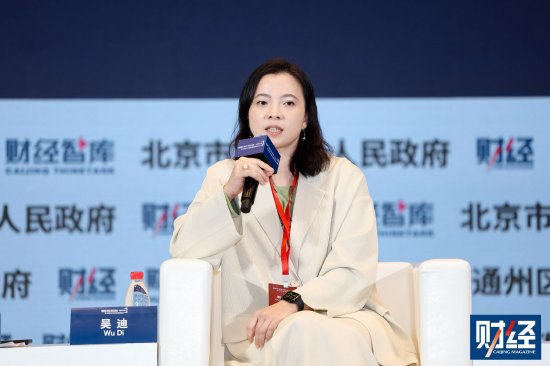
Core Insights - The 2026 Finance Annual Conference and 2025 Global Wealth Management Forum will be held in Beijing from December 18-20, 2025 [2][5] - Wu Di, a partner at Suzhou Equity Investment Fund and Secretary-General of Suzhou Fund Industry Association, discussed Suzhou's development, which began with the opening of the Singapore Industrial Park and the establishment of the first national mother fund [2][5] Group 1: Development and Challenges - Suzhou's development has leveraged advanced models from Israel and the United States despite lacking industrial foundations and policy advantages [2][5] - The core challenges identified include the high risk of source innovation and the lack of fault-tolerant capital, exacerbated by tightening regulations on state-owned fund scrutiny [2][5] - Market-oriented funds are showing decreased willingness to collaborate with state-owned institutions, leading to a reduction in purely fault-tolerant capital without additional requirements [2][5] Group 2: Innovation and Growth - The growth cycle of technology innovation enterprises is being compressed, necessitating early identification and support for these companies to avoid falling behind in competition [2][5] - Wu Di emphasized the urgency for early recognition of technology innovation enterprises as larger industries begin to compete aggressively [2][5] Group 3: Future Directions - Looking ahead, Suzhou aims to enhance its integrated ecosystem by leveraging the "14th Five-Year Plan" policy to attract long-term capital such as social security funds [2][5] - The goal is to address the shortfall in fault-tolerant capital and promote deeper integration of finance, technology, and industry [2][5]

【机构策略】2026年A股“慢牛”行情大概率延续
Zheng Quan Shi Bao Wang· 2025-12-17 01:21
财信证券认为,周二,A股大盘缩量调整。盘面上,零售板块逆势走强,无人驾驶板块活跃,数字货币 板块反弹;而科创方向继续调整,贵金属板块表现靠后。近期,海外两大利空反复冲击市场:一是市场 对AI产业链泡沫担忧加剧,导致全球科技线普遍调整;二是日本央行利率决议事件尚未落地,加息预 期升温持续扰动市场。这两大事件使得市场风险偏好受到压制,隔夜美股再度调整,当日包括日本、韩 国在内的亚太主要市场也延续调整。从技术面上看,沪指已经调整至前期低点,若无法及时企稳,指数 层面可能仍有小幅下探风险。因此短期内,适当控制仓位,等待大盘放量上涨信号出现,在此之前可围 绕近期强势方向轮动的思路适当参与市场。中长期而言,在"反内卷"改善上市公司业绩、居民储蓄资产 入市、全球流动性缓和、科技产业趋势加持下,2026年A股"慢牛"行情大概率延续。 中原证券认为,周二,A股市场低开低走,震荡整理,盘中消费、多元金融、汽车以及房地产等行业表 现较好;贵金属、船舶制造、电源设备以及风电设备等行业表现较弱。上周A股市场在国内外诸多事件 相继落地后呈现显著分化与震荡格局。中长期支撑本轮A股上涨的基础并未发生转变。预计上证指数围 绕4000点附近蓄势 ...
视频|预告片:《沪市汇·硬科硬客》“科创成长层‘成长记’”
Zhong Guo Jing Ying Bao· 2025-12-15 02:37
Group 1 - The article discusses the growth of unprofitable companies listed in the Sci-Tech Innovation Board and their advancements in research and development, as well as operational development [2] - It questions whether profitability is the sole objective for these companies and explores the secrets behind profitable companies that have delisted [2] - The article also examines whether there is a timeline or roadmap for companies still in the red to achieve profitability [2] Group 2 - It highlights the "toolbox" for growth that companies can utilize and assesses their effectiveness and sufficiency [2] - The article mentions the plans for the 14th Five-Year Plan period and how companies intend to enhance their growth potential [2]
破解科研成果转化难题,安徽合肥这样做
Yang Shi Wang· 2025-12-13 17:09
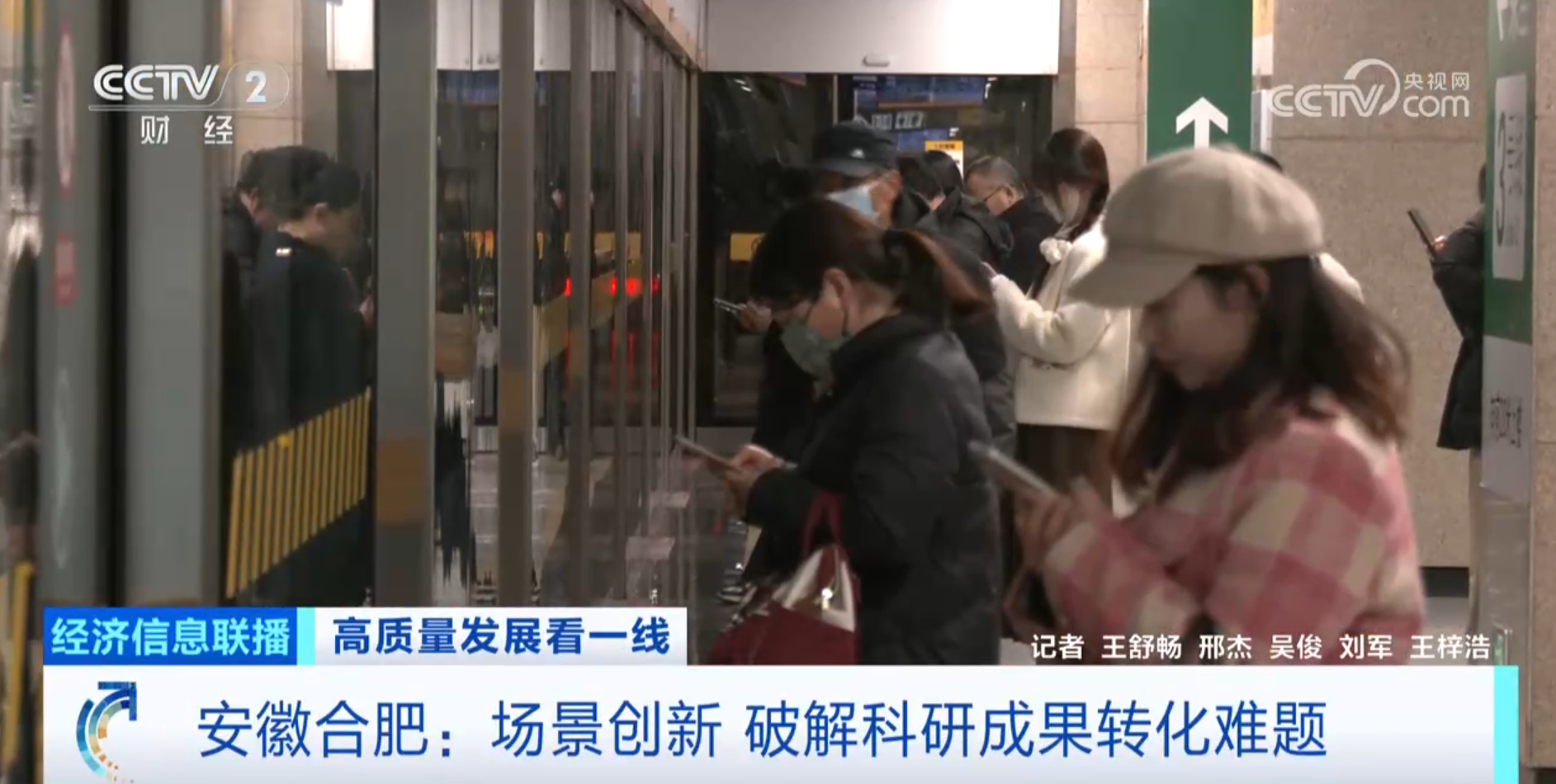
Core Viewpoint - The Chinese government is promoting the development of new application scenarios as a key driver for enhancing productivity, with Hefei actively facilitating the connection between innovative products and suitable application scenarios [1]. Group 1: Government Initiatives - The State Council issued implementation opinions to accelerate the cultivation and large-scale application of new scenarios, positioning them as crucial for developing new productive forces [1]. - Hefei has established a "scene working group" to identify and match technological capabilities with market needs, creating a bridge between supply and demand [7]. Group 2: Transportation Innovations - Hefei's Metro Line 4 transports over 250,000 passengers daily, supported by an intelligent system that utilizes quantum precision measurement technology and fiber optics for safety monitoring [3]. - The intelligent system can detect anomalies and deploy drones for safety inspections, showcasing the integration of innovative technology in public transport [5]. Group 3: Collaboration and Support - Hefei's government has invested initial funding to support technology companies in finding application scenarios, facilitating collaboration with state-owned enterprises for research and development [5]. - The city has published over 1,400 scenario opportunities and 1,500 capability listings, serving more than 4,100 technology enterprises and facilitating over 1,200 cooperative projects [9].
雄安新区举办科创企业高质量发展大会,物美荣获2025科创企业创新力TOP500
Jin Rong Jie· 2025-12-13 03:28
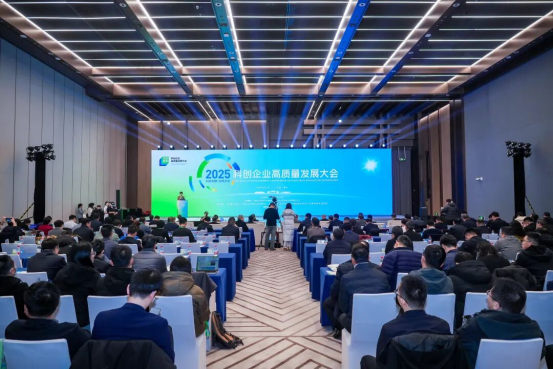
Group 1 - The "2025 High-Quality Development Conference for Sci-Tech Enterprises" was held in Xiong'an New Area, gathering over 300 guests including government leaders, experts, and representatives from leading sci-tech companies to explore new paths for deep integration of technological and industrial innovation [1][3] - The China Enterprise Evaluation Association released the "2025 China Sci-Tech Enterprises Innovation Power TOP500 Development Report" and the "2025 Sci-Tech Enterprises Innovation Power TOP500 List," highlighting the current development status, structural characteristics, and key challenges of China's sci-tech enterprises [3] - The report indicates that China's innovation system is undergoing a critical transformation from "factor-driven" to "organization-driven" and from "local breakthroughs" to "system leaps" [3] Group 2 - Wumart Group's CEO, Zhang Bin, emphasized the importance of AI new retail in promoting innovation in the retail industry, aligning with the spirit of the Fourth Plenary Session and the Central Economic Work Conference [5] - AI new retail is characterized by data intelligence and ecological collaboration, aiming to reshape the value creation mechanism in retail and achieve win-win outcomes for consumers, employees, suppliers, and partners [5] - Wumart is committed to enhancing efficiency and improving customer experience through the promotion of "six revolutions," positioning itself as a significant force in benefiting people's livelihoods, boosting consumption, and stabilizing employment [5] Group 3 - The conference also introduced the industrial development situation and related policies of Xiong'an, featuring keynote speeches, roundtable forums, and project displays to attract more innovation resources and accelerate the establishment of a key source for independent and original innovation [7]
滴灌“专精特新” 善本金融护航
Bei Jing Wan Bao· 2025-12-11 07:20
Core Insights - The article highlights how Zhejiang Merchants Bank's Beijing branch has transformed technology finance into an "ecological project" over five years, integrating a "good" gene into the entire lifecycle of innovative enterprises to provide precise financial support for small and beautiful tech companies [1] Group 1: Financial Solutions for Tech Enterprises - Zhejiang Merchants Bank's Beijing branch has developed a "10+N" financial advisor service system, which includes 10 types of "park loans" covering various financial needs from entry to transformation, along with additional customized services for precise empowerment [2] - The bank has introduced 30 types of financial products tailored to 15 major scenarios, including initial startup, R&D, and IPO, creating a comprehensive "toolbox" for tech enterprises [3] Group 2: Collaborative Ecosystem - The bank's "good financial" philosophy emphasizes a customer-centric approach, building a multi-party collaborative ecosystem involving government, banks, guarantee companies, and investment entities to support tech enterprises [4] - The bank has established a "risk-sharing pool" with local guarantee companies, providing up to 80% risk compensation for early-stage tech companies [5] Group 3: Digital Transformation - By 2025, the bank plans to launch the "Tech Innovation e-Station" digital platform, integrating 12 functions to streamline the loan process, significantly reducing processing time by 60% [6] - The bank aims to enhance service efficiency through a digital inclusive product system, allowing enterprises to complete the entire loan process online with minimal physical interaction [6]

绘就三产共兴的“沃野新篇”
Su Zhou Ri Bao· 2025-12-10 00:45
Core Viewpoint - The "Shishang Zhangpu" initiative aims to integrate high-end food industries with rural revitalization through a series of projects and policies, emphasizing the role of party leadership in driving development and collaboration between urban and rural areas [1][2][10]. Group 1: Project Developments - The "Shishang Zhangpu·Tianyuan Jinggu" rural creative base in Jinhua Village has commenced construction with an investment of approximately 60 million yuan, marking a significant step in the integration of primary, secondary, and tertiary industries [1][2]. - The project aims to enhance tourism and local culture by offering experiences such as live streaming and hands-on activities, thereby promoting the synergy of agriculture and tourism [2][3]. Group 2: Industry Integration - Zhangpu Town is focusing on the deep integration of high-end food industries with rural development, encouraging cooperation between leading enterprises and local farmers to create a sustainable growth model [3][9]. - The town has established a development model that combines party leadership with local enterprises, enhancing agricultural productivity and creating unique local brands [3][4]. Group 3: Talent Development - Zhangpu Town is fostering a talent ecosystem by creating diverse platforms for innovation and collaboration, aiming to attract and retain skilled individuals in the agricultural and food sectors [5][6]. - Initiatives include the establishment of a high-end food industry research institute and a vocational farmer's home to support talent cultivation and industry development [5][6]. Group 4: Service and Support - The town has implemented a comprehensive service model to streamline business operations for food enterprises, including a dedicated service window for food production licenses and proactive support for new businesses [10][11]. - Zhangpu Town has organized numerous events to facilitate connections between businesses and resources, ensuring effective responses to industry needs [11]. Group 5: Future Vision - The leadership emphasizes the importance of party guidance in achieving high-quality development and aims to create a model for rural revitalization and industrial upgrading that benefits the community [11].
“复制”长三角,东北机会来了?
3 6 Ke· 2025-12-04 12:04
Core Viewpoint - The recent "14th Five-Year Plan" proposals from the northeastern provinces of China signal a strategic shift towards regional economic restructuring, particularly emphasizing the establishment of influential regional science and technology innovation centers and the "Harbin-Changchun-Shenyang Industrial Innovation Corridor" [1][4]. Group 1: Innovation Corridor Development - The concept of "innovation corridors" is gaining traction, with over ten existing across China, including the well-established Yangtze River Delta G60 corridor, which has inspired similar initiatives nationwide [1]. - The northeastern region has historically struggled with technology transfer and innovation, often referred to as having a "thick base but thin transformation," indicating a need for a more integrated approach to innovation [1][5]. - The Harbin-Changchun-Shenyang corridor aims to integrate research resources, industry chains, and talent flow, potentially transforming the region into a science and technology innovation hub in Northeast Asia [4][10]. Group 2: Collaborative Efforts and Challenges - There is a growing consensus on the need for collaborative efforts among the three northeastern provinces to overcome issues of homogeneous competition and lack of synergy in industrial development [3][5]. - The region's automotive industry exemplifies both the potential for collaboration and the challenges faced, as major automotive parts companies are absent from the northeast despite the region's automotive strengths [3]. - Experts emphasize the importance of breaking the "each city for itself" mentality to facilitate resource optimization and enhance regional innovation capabilities [3][5]. Group 3: Strategic Focus on Industry - The Harbin-Changchun-Shenyang corridor distinguishes itself by prioritizing industrial integration alongside technological innovation, aiming to create a comprehensive innovation ecosystem that spans from basic research to industrial application [12][13]. - The corridor's strategy includes focusing on sectors where the northeast has existing strengths, such as new materials, intelligent manufacturing, and biomedicine, to foster differentiated innovation [15][16]. - The initiative is expected to attract talent and create new economic opportunities, addressing the region's talent outflow and enhancing its competitive edge [16].
复旦科创海外投资基金启动,首期目标规模为一亿美元
Guo Ji Jin Rong Bao· 2025-12-03 11:59
Core Insights - The 2025 Fudan Science and Technology Innovation Conference emphasizes Fudan University's commitment to fostering a collaborative ecosystem for technology transfer and industrialization, aiming to enhance its service capabilities for national and regional development [1] Group 1: Fudan University's Vision and Goals - Fudan University aims to deepen fundamental research to support scientists in exploring uncharted territories [1] - The university seeks to cultivate interdisciplinary talents with scientific literacy, industry vision, and entrepreneurial spirit [1] - Fudan plans to promote cross-disciplinary integration to break down barriers and build a collaborative innovation ecosystem [1] - The university emphasizes the importance of global collaboration to contribute Chinese wisdom and Fudan's strength to global technological progress [1] Group 2: Shanghai Guotou Company's Role - Shanghai Guotou Company focuses on "fund management + innovation incubation," targeting early-stage investments in hard technology and future industries [2] - The company aims to create a "tropical rainforest" style innovation ecosystem, integrating innovation chains, industry chains, capital chains, and talent chains [2] - Shanghai Guotou will collaborate with Fudan University to enhance innovation application scenarios and develop a model of "innovation + entrepreneurship + venture capital" [2] Group 3: Investment Funds Established - The Fudan Science and Technology Innovation Fund has been established to support outstanding scientists in transforming top-tier technological achievements and expanding market-leading innovation projects [4] - The Fudan Overseas Investment Fund has launched with an initial target size of $100 million, aiming to attract international enterprises and talents interested in China's development [6] - This fund focuses on early-stage projects in life health, artificial intelligence, and new energy materials, aiming to empower the commercialization of original technologies from Fudan's core research institutions [6]

“飞地引才”助力产才融合
Xin Hua Ri Bao· 2025-12-03 00:09
Group 1 - The core idea is that Yangzhou's Jiangdu District is actively enhancing its talent acquisition and innovation ecosystem by implementing a comprehensive strategy that includes competitions, platforms, and policies to attract high-level talent and technology projects [1][2][3] Group 2 - The district has successfully hosted the "Jiangdu Cup" innovation and entrepreneurship competition for seven consecutive years in major cities, attracting high-level talent projects and achieving recognition as a national innovative case in talent work [1] - A total of 58 technology innovation projects have been signed, with 30 successfully implemented, demonstrating the effectiveness of the district's talent recruitment and project landing initiatives [2] - The talent support policy has been upgraded to provide a comprehensive service chain, including financial support for startups and housing solutions, with plans to build 10,000 high-quality talent apartments by the end of the year [3]