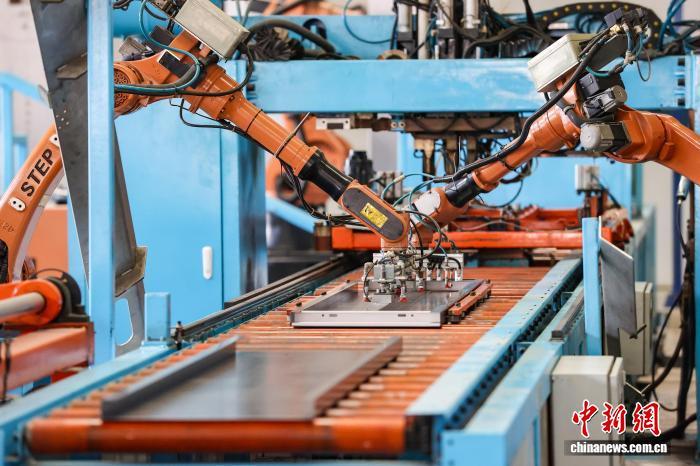
计算机通信和其他电子设备制造业

Search documents
2025年滨州经济运行总体平稳向好
Xin Lang Cai Jing· 2026-02-04 14:18
Economic Overview - The total GDP of the city reached 355.81 billion, with a year-on-year growth of 5.3% at constant prices [1] - The primary industry added value was 32.12 billion, growing by 4.1%; the secondary industry added value was 159.87 billion, growing by 4.6%; and the tertiary industry added value was 163.83 billion, growing by 6.1% [1] Agricultural Sector - The total output value of agriculture, forestry, animal husbandry, and fishery was 64.18 billion, with a growth of 4.3% at comparable prices [2] - Grain production reached 3.88 million tons, with significant increases in vegetable and melon planting areas and outputs [2] - Livestock production saw an 8.4% increase in meat output, while fishery production grew by 3.3% [2] Industrial Sector - The industrial added value for large-scale enterprises grew by 6.0%, with state-owned enterprises increasing by 10.1% and private enterprises by 5.6% [2] - The mining industry grew by 14.2%, and manufacturing increased by 6.7%, with equipment manufacturing growing by 12.6% [2] Service Sector - The revenue of large-scale service industries increased by 10.4%, with nine out of ten sectors showing growth [3] - The modern service industry revenue grew by 11.2%, contributing significantly to the overall service sector growth [3] Consumer Market - The total retail sales of consumer goods reached 114.78 billion, growing by 4.8% year-on-year [3] - Online sales through public networks increased by 14.3%, significantly outpacing overall retail growth [3] Investment Trends - Fixed asset investment grew by 0.9%, with infrastructure investment increasing by 5.9% and manufacturing investment by 4.8% [3] - Private investment rose by 12.0%, accounting for 73.2% of total investment, an increase of 7.2 percentage points from the previous year [3] Foreign Trade - The total import and export volume was 130.83 billion, with exports decreasing by 16.2% and imports increasing by 18.4% [4] - Private enterprises accounted for 90.1% of total trade, with a 3.7% growth in their import and export activities [4] Fiscal and Financial Performance - The general public budget revenue reached 31.83 billion, growing by 3.7%, with tax revenue increasing by 8.0% [4] - By the end of December, the balance of deposits in financial institutions was 594.36 billion, up by 11.2% from the beginning of the year [4] Consumer Prices and Income - The overall consumer price index decreased by 0.6%, with a 5.6% nominal increase in per capita disposable income, reaching 40,098 [4]
海信取得用于车路协同的加密通信方法专利
Sou Hu Cai Jing· 2026-01-31 00:45
Group 1 - The State Intellectual Property Office of China has granted a patent to Hisense Group Co., Ltd. and Guiyang Hisense Network Technology Co., Ltd. for a method of encrypted communication for vehicle-road collaboration and devices with encrypted communication functions, with the announcement number CN115119178B and application date in March 2021 [1] - Hisense Group Co., Ltd. was established in 2001 and is located in Qingdao, primarily engaged in the manufacturing of computers, communications, and other electronic devices, with a registered capital of 2,453.941254 million RMB [1] - Hisense Group has invested in 25 companies, participated in 44 bidding projects, holds 22 trademark records, 965 patent records, and has 9 administrative licenses [1] Group 2 - Guiyang Hisense Network Technology Co., Ltd. was established in 2015 and is located in Guiyang, primarily engaged in internet and related services, with a registered capital of 100 million RMB [1] - Guiyang Hisense has invested in 1 company, participated in 84 bidding projects, holds 12 patent records, and has 4 administrative licenses [1]

2025年亳州“期终”成绩单出炉
Sou Hu Cai Jing· 2026-01-30 07:06
Economic Overview - The GDP of Bozhou City is projected to exceed 260 billion yuan, reaching 262.1 billion yuan in 2025, with a year-on-year growth of 4.8% at constant prices [1] - The city's economic operation is generally stable, with 14 out of 24 major economic indicators showing growth rates above the provincial average [2] Sector Performance - The primary industry added value reached 31.32 billion yuan, growing by 3.5%, while the secondary industry added value was 87.49 billion yuan, growing by 3.7%, and the tertiary industry added value was 143.3 billion yuan, growing by 5.8% [1][3] - Manufacturing investment increased by 9.7%, outperforming the provincial average by 15.7 percentage points [2] - The agricultural sector's total output value was 55.02 billion yuan, with grain planting area at 13.194 million acres and total production at 10.4 billion jin, maintaining stability above 10 billion jin for six consecutive years [3] Investment and Consumption - Fixed asset investment decreased by 6.4%, but new projects contributed significantly, with 505 new projects and a planned total investment of 83.53 billion yuan, representing growth of 11.7% and 14.9% respectively [4] - The total retail sales of social consumer goods surpassed 140 billion yuan, reaching 141.56 billion yuan, with a year-on-year growth of 4.6% [4] Financial Stability - The general public budget revenue reached 17.39 billion yuan, with a year-on-year increase of 3.0%, ranking fifth in the province [5] - By the end of December 2025, the balance of various deposits in financial institutions was 424.27 billion yuan, an increase of 36.76 billion yuan from the beginning of the year, with a year-on-year growth of 9.5% [5] Employment and Income - Urban employment increased by 36,000, achieving 101.7% of the annual target, with a per capita disposable income of 31,106 yuan, growing by 5.3% year-on-year [7] - Social spending on people's livelihoods reached 36.46 billion yuan, accounting for 85.0% of the general public budget expenditure, an increase of 0.9 percentage points from the previous year [7]
3.87万亿元、同比增5.5%!深圳2025年GDP出炉
证券时报· 2026-01-30 06:25
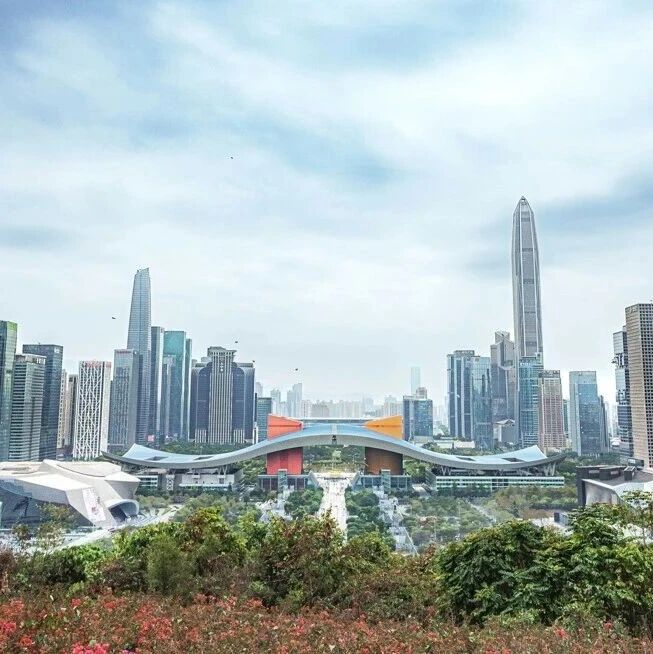
Core Viewpoint - Shenzhen's economy has achieved qualitative improvements and reasonable quantitative growth in 2025, with significant advancements in new momentum cultivation and urban competitiveness [1][3]. Economic Performance - Shenzhen's GDP reached 38,731.80 billion yuan in 2025, growing by 5.5% year-on-year at constant prices [1]. - The primary industry saw a decrease of 4.5%, with an added value of 28.04 billion yuan; the secondary industry grew by 4.1% to 14,482.54 billion yuan; and the tertiary industry increased by 6.3% to 24,221.22 billion yuan [1]. Industrial Growth - Industrial production in Shenzhen continued to grow steadily, with a year-on-year increase of 5.4% in industrial added value for large-scale enterprises [1]. - Key sectors such as general equipment manufacturing and computer, communication, and other electronic equipment manufacturing grew by 13.9% and 6.2%, respectively [1]. - High-tech product output saw rapid growth, with 3D printing equipment, industrial robots, and civilian drones increasing by 45.1%, 43.1%, and 40.1%, respectively [1]. Service Sector Performance - The service sector's added value reached 24,221.22 billion yuan, marking a 6.3% year-on-year growth [2]. - Financial services, information transmission, software, and IT services grew by 12.1%, 10.3%, and 5.9%, respectively [2]. Investment Trends - Fixed asset investment in Shenzhen decreased by 21.7% in 2025, with real estate development investment down by 31.0% and infrastructure investment down by 1.9% [2]. - Investment in key industries, particularly industrial technological transformation, grew by 19.2% [2]. Retail and Consumption - Shenzhen's total retail sales of consumer goods surpassed 1 trillion yuan, reaching 10,259.93 billion yuan, with a year-on-year growth of 2.3% [2]. - Online retail sales through large-scale enterprises increased by 10.5% [2]. Trade Performance - Shenzhen's total import and export volume reached 45,533.89 billion yuan, growing by 1.4% year-on-year [3]. - Exports totaled 27,387.81 billion yuan, down by 2.6%, while imports increased by 8.0% to 18,146.08 billion yuan [3]. - High-tech product exports grew by 10.1% [3]. Financial Sector - By the end of December, the balance of deposits in financial institutions (including foreign capital) reached 146,346.95 billion yuan, growing by 7.8% [3]. - The balance of loans in financial institutions (including foreign capital) was 99,658.76 billion yuan, with a year-on-year growth of 5.1% [3]. Future Outlook - Shenzhen's economy has maintained a steady development trend despite multiple pressures, with a focus on high-quality development moving forward [3].

新春“换将”潮:高管变动公告340份,31家上市公司董事长辞职
Sou Hu Cai Jing· 2026-01-28 08:47
马年新春的喜庆氛围尚未褪去,上市公司的人事布局已率先按下"刷新键"。 根据同花顺数据,1月1日至1月28日,A股公布董事长、总经理、财务总监等高管的辞职、离任公告达340份,涉及314家上市公司。其中,离职原因包括届 满、退休、个人生活变动等,也有部分管理人员是因触犯监管问题或涉法而辞去职务。 随着管理层的变更,公司的战略布局与经营举措或也将随之更新,进而影响企业活力与股价,这也成为马年新春后市场最大的变量之一。 通过梳理公告内容可得知,涉及公司董事长离任或辞职的公告共32个,涉及上市公司为31家,包括万东医疗、毅昌科技、妙可蓝多、长江投资、国际复材、 天坛生物、百傲化学、保变电气、宁夏建材、红星发展、天域生物、中国核建、*ST天龙、中科美菱、长虹美菱、博科测试、陕天然气、白银有色、许继电 气、富煌钢构、贵研铂业、永清环保、浪潮软件、越秀资本、汉嘉数智、中顺洁柔、兴蓉环境、华天酒店、润邦股份、北方国际、博科测试。 | 证券代码 · 证券简称 | | ▼ 公告日期 | ▼ 公告标题 | | --- | --- | --- | --- | | 600055.SH 万东医疗 | | 2026-01-27 | 万东医 ...

2025年1-12月工业企业效益数据点评:新动能及反内卷支撑下,全年工企利润实现增长
BOHAI SECURITIES· 2026-01-27 09:19
Group 1: Profit Growth Overview - In 2025, the profit growth rate of industrial enterprises increased by 0.5 percentage points to 0.6% year-on-year[2] - In December 2025, the profit of industrial enterprises grew by 5.3% year-on-year, reversing from negative to positive with an increase of 18.4 percentage points[2] - The industrial added value in December 2025 rose by 5.2% year-on-year, up 0.4 percentage points from November[2] Group 2: Factors Influencing Profitability - The recovery in profit growth was driven by resilient exports and the high-tech and equipment manufacturing sectors[2] - The Producer Price Index (PPI) in December 2025 improved by 0.3 percentage points to -1.9% year-on-year, influenced by new productive forces and rising international metal prices[2] - The revenue profit margin for industrial enterprises in 2025 was 5.31%, a year-on-year decline of 1.5%, but the decline was less severe than in the previous months[2] Group 3: Sector Performance and Future Outlook - Among 41 industrial sectors, 16 achieved positive profit growth in 2025, with notable increases in black metal smelting, non-ferrous metal mining, and high-tech manufacturing[3] - The profit growth in high-tech manufacturing, particularly in computer and communication equipment, accelerated, indicating strong sector performance[3] - The "anti-involution" policy and new growth drivers are expected to support profit growth in 2026, with continued price improvements anticipated[3] Group 4: Risks and Challenges - There is a risk that the effects of the "anti-involution" policy may not meet expectations, potentially impacting price improvements[4] - External uncertainties, including rising global trade protectionism, pose risks that could disrupt domestic economic performance[4]
上海规上工业总产值时隔两年再次迈上4万亿元台阶
Xin Lang Cai Jing· 2026-01-24 05:10
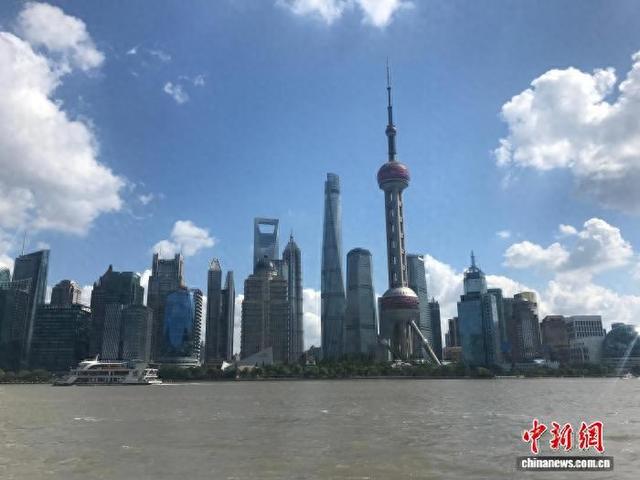
Core Viewpoint - Shanghai is projected to achieve a record industrial output value of 4.07 trillion yuan by 2025, marking a significant milestone in its industrial growth [1][3] Industry Overview - The overall industrial added value in Shanghai is expected to grow by 5.1% year-on-year, representing the fastest growth rate in the past four years [1][3] - The equipment manufacturing sector is accelerating, with notable growth in various sub-sectors: - Railway, shipbuilding, aerospace, and other transportation equipment manufacturing increased by 15.8% - Electrical machinery and equipment manufacturing rose by 11.1% - Automobile manufacturing grew by 7.8% - Computer, communication, and other electronic equipment manufacturing saw a growth of 7.7% [3] Key Industry Developments - The rapid development of the integrated circuit industry is a crucial driver for the growth of Shanghai's electronics sector, with revenue expected to exceed 480 billion yuan by 2025 [3] - Shanghai has cultivated leading enterprises in various segments of the chip design, manufacturing, and testing industries [3] - During the 14th Five-Year Plan period, the manufacturing output of Shanghai's leading industries, including integrated circuits, biomedicine, and artificial intelligence, increased by 85%, raising their share of Shanghai's industrial output from 7.8% to 12.4% [3]
京东方取得补偿数据的确定装置及方法专利
Sou Hu Cai Jing· 2026-01-23 12:53
Group 1 - BOE Technology Group Co., Ltd. has obtained a patent titled "Device, Method, Display Device, Equipment, Medium, and Program Product for Determining Compensation Data," with authorization announcement number CN118538133B, and the application date is May 2024 [1] - BOE Technology Group Co., Ltd. was established in 1993 and is located in Beijing, primarily engaged in the manufacturing of computers, communications, and other electronic devices. The registered capital of the company is approximately 37.41 billion RMB [1] - The company has invested in 73 enterprises, participated in 303 bidding projects, and has 775 trademark records and 5000 patent records, along with 47 administrative licenses [1] Group 2 - Chengdu BOE Optoelectronics Technology Co., Ltd. was established in 2007 and is located in Chengdu, primarily engaged in the manufacturing of instruments and meters. The registered capital of this company is approximately 2.5 billion RMB [1] - Chengdu BOE Optoelectronics Technology Co., Ltd. has participated in 921 bidding projects, holds 5000 patent records, and has 522 administrative licenses [1]

成都2025年GDP同比增长5.8% 新能源汽车产量增长181%
Zheng Quan Shi Bao Wang· 2026-01-23 04:59
Economic Overview - Chengdu's GDP for 2025 reached 2.48 trillion yuan, with a year-on-year growth of 5.8% [1] - The economic performance is characterized by stability and progress, with a focus on fostering new productive forces [1] Industry Performance - The industrial added value in Chengdu increased by 7.0% in 2025, with state-owned enterprises growing by 4.7%, foreign and Hong Kong-Macau-Taiwan enterprises by 16.5%, and private enterprises by 10.4% [2] - Among 37 major industries, 25 reported positive growth, with notable increases in non-ferrous metal smelting (49.0%), automobile manufacturing (17.8%), and electrical machinery (10.8%) [2] - High-tech manufacturing saw an 8.9% increase in added value, with significant production growth in new energy vehicles (181.0%), lithium-ion batteries (33.9%), and integrated circuits (23.3%) [2] Service Sector - The service sector's added value grew by 6.1%, with leasing and business services increasing by 13.6% and information technology services by 9.6% [2] - Revenue from large-scale service enterprises rose by 7.1% in the first eleven months of the year [2] Investment Trends - Fixed asset investment in Chengdu grew by 2.2%, with first and second industries seeing increases of 20.2% and 20.0%, respectively [3] - Investment in high-tech industries rose by 14.7%, with high-tech manufacturing investment increasing by 23.4% [3] - Private investment also showed a positive trend, growing by 9.6% [3] Consumer Market - The total retail sales of consumer goods reached 1.143 trillion yuan, marking a 5.5% increase [3] - Notable growth in retail categories included communication equipment (70.6%), gold and silver jewelry (59.0%), and new energy vehicles (45.8%) [3] - The overall consumer price index increased by 0.1%, with food prices decreasing by 0.6% and clothing prices rising by 2.4% [3] Future Outlook - Chengdu's economic operation is expected to maintain a stable and positive trend, with a focus on high-quality development [4] - The city aims to strengthen its economic foundation while addressing external challenges and pressures in certain sectors [4] - Future strategies include innovation-driven development, expanding domestic demand, and optimizing supply [4]
2025年贵州省规模以上工业增加值比上年增长7.0%
Zhong Guo Xin Wen Wang· 2026-01-22 03:24
Group 1 - The core viewpoint of the article highlights the economic performance of Guizhou Province in 2025, showcasing significant growth in various industrial sectors and overall GDP [1][3][4] Group 2 - In 2025, Guizhou's industrial added value for large-scale enterprises increased by 7.0%, surpassing the national average by 1.1 percentage points [1] - The province's industrial electricity consumption grew by 7.9%, an increase of 2.0 percentage points compared to the previous year [1] - The added value of the equipment manufacturing industry surged by 26.6% [1] - Guizhou's GDP reached 23,562.17 billion yuan, reflecting a year-on-year growth of 4.9% [3] - The automotive manufacturing industry saw an impressive growth of 42.3%, while electrical machinery and equipment manufacturing and computer communication and other electronic device manufacturing increased by 41.1% and 35.9%, respectively [3] - Production figures included 253,300 new energy vehicles, 8.963 billion electronic components, and 22.1665 million kilowatt-hours of lithium-ion batteries, which stimulated upstream raw material industries such as phosphate rock and alumina, with production increases of 17.3% and 15.9% [3] - The "Six Major Industrial Bases" in Guizhou experienced an 8.2% increase in industrial added value, accounting for 83.3% of the total industrial output [4] - The non-ferrous metal smelting and rolling processing industry saw a 26.1% increase in added value, while the chemical raw materials and chemical products manufacturing industry grew by 17.0% [4] - Investment in the information transmission, software, and information technology service industry rose by 10.8%, with an average annual growth of 21.8% over the past five years [4]