
金融分析

Search documents
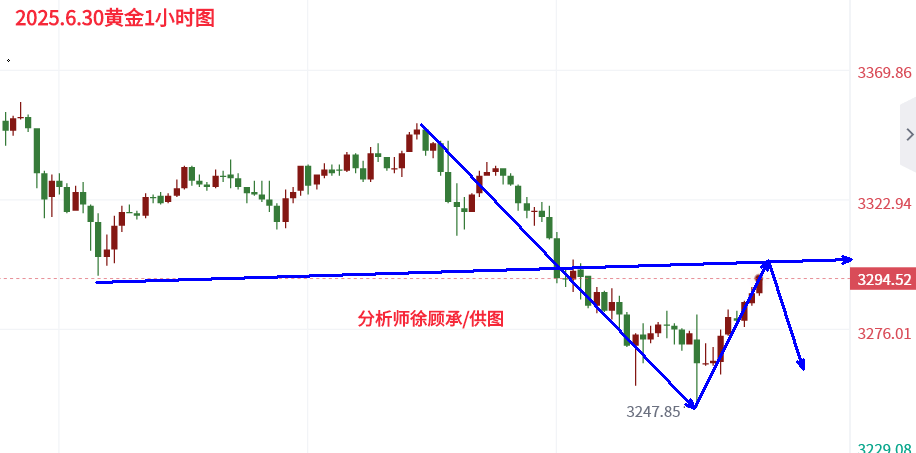
分析师:美5月消费降通胀升,欧盘黄金行情走势分析
Sou Hu Cai Jing· 2025-06-30 06:57
Group 1 - The economic data for May in the U.S. shows a stark contrast between consumer spending and inflation, leading to unexpected market reactions. Consumer spending unexpectedly declined by 0.1%, contrary to the anticipated increase of 0.1%, indicating a significant cooling in the consumption market [1] - In contrast, the core PCE year-on-year rate surged to 2.7%, the highest since February 2025, with a month-on-month increase of 0.2%, far exceeding market expectations of stagnation. This combination of weak consumer data and high inflation places the Federal Reserve in a difficult position [1] Group 2 - Traders are predicting that the Federal Reserve may be forced to cut interest rates three times in 2025 to balance the economy. Following this, the gold market experienced a brief rebound after an initial drop, but this was seen as a temporary phenomenon due to short covering [3] - Technically, the gold market shows a bearish arrangement in the 1-hour moving average, indicating that bearish forces are dominant. Gold is currently facing resistance around the key level of 3295, which has become a short-term dividing line for bulls and bears [3]

【环球财经】6月澳大利亚综合PMI反弹回升至51.2点
Xin Hua Cai Jing· 2025-06-23 03:09
Core Insights - The S&P Global Flash Australia PMI Composite Output Index rose from 50.5 in May to 51.2 in June 2025, indicating accelerated growth in Australia's private sector, primarily driven by the service sector [1][2] - Manufacturing output also showed signs of recovery in June, although export orders significantly declined [1][2] - Business confidence improved in June, with an increase in employment numbers, while input costs and product prices saw a decrease, reaching the lowest level in over four and a half years [1] Economic Indicators - The June PMI data indicates that the private sector is expanding, as the index remains above the 50-point threshold [2] - The manufacturing PMI output index increased from 49.8 in May to 50.4 in June, while the services PMI rose from 50.6 to 51.3 [2] - The overall economic activity is supported by domestic demand, despite a notable contraction in export orders, marking the most significant decline in nearly a year [1][2] Future Outlook - Forward-looking indicators suggest that manufacturing output is expected to continue increasing, although there are significant differences in new orders and business confidence between manufacturing and services [1] - The rising uncertainty is particularly impacting the manufacturing sector, leading to expectations of further interest rate cuts by the Reserve Bank of Australia in the latter half of 2025 [2]

【环球财经】5月Judo Bank速览澳大利亚综合PMI小幅下降
Xin Hua Cai Jing· 2025-05-22 06:23
Core Insights - The S&P Global Flash Australia PMI Composite Output Index decreased from 51 in April to 50.6 in May 2025, indicating a slowdown in the growth of Australia's private sector business activity [1][2] - Despite a recovery in exports, the overall growth rate of new business also declined, reflecting a mixed outlook for the private economy [1] - Business confidence among private enterprises weakened in May, although hiring continued at a steady pace, suggesting a cautious but optimistic short-term outlook [1] Summary by Category Economic Activity - The private sector in Australia continued to grow in May, but the pace of growth slowed due to a decline in both manufacturing output and service sector activity [1] - The manufacturing PMI output index fell from 51 in April to 50.6 in May, while the services PMI activity index dropped from 51 to 50.5, marking a six-month low [2] Business Confidence - Business confidence in the private sector showed signs of weakening, yet companies maintained a steady hiring pace, indicating a level of optimism about short-term prospects [1] - The report suggests that the upcoming Australian elections may have contributed to the slowdown in new order growth, with expectations for a rebound in the coming months [1]
穆迪分析:马来西亚或于9月降息,前提有两个
news flash· 2025-05-13 03:26
Core Viewpoint - Moody's analysis indicates that Malaysia may lower interest rates in September if two conditions are met: inflation remains below 3% and the Federal Reserve resumes a loose monetary policy [1] Group 1: Economic Indicators - Malaysia's central bank recently reduced the statutory reserve requirement ratio by 100 basis points to 1.0%, signaling a move towards policy easing and supporting economic growth [1] - A potential interest rate cut of 25 basis points to 2.75% could alleviate pressure on the ringgit and lessen the impact on Malaysia's export sector if the Federal Reserve begins to cut rates [1] Group 2: Risks and Conditions - If U.S. interest rates remain high or if domestic inflation in Malaysia unexpectedly rises, the central bank may choose to maintain the current rate at 3% to protect currency stability [1]
【环球财经】2025年4月标普全球澳大利亚综合PMI小幅下降
Xin Hua Cai Jing· 2025-05-05 11:18
Core Insights - The S&P Global Australia Composite PMI decreased from 51.6 to 51 in April 2025, indicating a slight reduction in the growth rate of Australia's private sector output, which has been increasing for seven consecutive months [1] Group 1: Economic Indicators - The number of new export orders in Australia's private sector declined again in April, but the overall growth rate of new orders reached its highest level since May 2022 [1] - The average input costs in Australia's private sector grew at the fastest pace since September of the previous year, leading businesses to raise selling prices to the highest level in nine months [2] - The services sector's business activity index fell from 51.6 to 51, marking the 15th consecutive month above the 50-point threshold, indicating ongoing expansion [2] Group 2: Business Sentiment and Employment - Despite the increase in business activity, the optimism level among private enterprises remains low, falling to a five-month low and below historical averages [1][2] - The services sector experienced a significant increase in new business and backlog of work, with the fastest growth in nearly three years, suggesting a positive outlook for the coming months [2] - Companies are continuing to hire at a steady pace to manage increased workloads, although concerns over trade uncertainties, particularly related to U.S. tariff measures, have dampened business sentiment [2]
【环球财经】4月Judo Bank速览澳大利亚综合PMI小幅回落
Xin Hua Cai Jing· 2025-04-23 02:05
Group 1 - The S&P Global Flash Australia PMI Composite Output Index decreased from 51.6 in March to 51.4 in April 2025, indicating continued growth in Australia's private sector but at a slower pace [1][3] - The private sector's business activity in April was supported by an increase in new business, with the fastest growth in manufacturing and services since April 2022 [1][2] - Despite a stable increase in employment, the backlog of work in private enterprises saw the largest growth in nearly three years, driven by rising demand [1][2] Group 2 - The overall sales price increase in Australia's private sector reached a nine-month high due to rising demand, although costs are also increasing rapidly [2] - Geopolitical uncertainties and the impact of U.S. tariff policies have weakened export performance and affected business confidence in April [2][3] - The manufacturing PMI output index fell from 51.8 in March to 51.5 in April, while the services PMI activity index decreased from 51.6 to 51.4 [3]
蔡崇信最新访谈全文:为什么我们对AI如此兴奋?
YOUNG财经 漾财经· 2025-03-17 10:55
Group 1 - The core viewpoint of the article is that AI is expected to create a market space of up to $10 trillion by potentially replacing 20% of human labor and reducing costs by 20% [2][9] - Key industries that will benefit from the AI revolution include e-commerce, cloud computing, advertising, and financial analysis [2][10] - The company aims to adopt a startup mentality to enhance agility and responsiveness in a competitive e-commerce landscape [3][4] Group 2 - The company emphasizes the importance of empowering younger management team members to make decisions and learn from mistakes [5][7] - The AI strategy is closely linked to the company's cloud computing business, which will benefit from AI deployment across various use cases [10][11] - The pursuit of Artificial General Intelligence (AGI) is seen as a philosophical challenge, with implications for understanding human intelligence limits [12][19] Group 3 - The article discusses the diminishing value of developing the smartest AI in isolation, emphasizing the need for practical applications in real-world scenarios [20][21] - Open-source models are highlighted as a means to democratize AI capabilities, allowing a wider range of developers to innovate [20][21] - The company believes that AI will enhance rather than replace human jobs, improving the quality of work in fields like equity research and law [22]


Moody’s(MCO) - 2024 Q4 - Earnings Call Transcript
2025-02-13 19:22
Financial Data and Key Metrics Changes - Moody's reported a record year in 2024, with revenue growth of 20% to over $7 billion and a 26% adjusted diluted EPS growth [9][37] - Adjusted operating margin expanded by over 400 basis points, reaching 51.3% in Q4 [9][38] - Q4 revenues were nearly $1.7 billion, up 13% year on year, with adjusted diluted EPS at $2.69, up 20% year on year [37][38] Business Line Data and Key Metrics Changes - Moody's Investors Service (MIS) achieved 18% total revenue growth, with a 29% growth in transactional revenue in Q4 [10][38] - Ratings revenue grew by 33% for the full year, with a 51.3% adjusted operating margin in Q4 [10][38] - Moody's Analytics (MA) reported Q4 revenue of $863 million, up 8% year on year, with recurring revenue growth of 10% [41][40] Market Data and Key Metrics Changes - MIS revenue growth was driven by a 134% increase in leveraged loan issuance activity in Q4 [39] - Strong performance in structured finance, particularly in U.S. CLOs and CMBS, contributed to revenue growth [39] - MA's Decision Solutions segment led with 12% ARR growth, driven by strong demand in banking, insurance, and KYC [41][42] Company Strategy and Development Direction - The company is focusing on strategic investments in technology, including Gen AI, to enhance operational efficiency and market position [13][17] - Moody's aims to capitalize on trends in private credit and transition finance, with significant investments in these areas [15][16] - The company plans to simplify its organizational structure and implement an efficiency program to enhance profitability [52][53] Management's Comments on Operating Environment and Future Outlook - Management expressed confidence in the ongoing expansion of debt capital markets and the increasing pace of digital transformation [29][30] - The company anticipates continued strong demand for its services, particularly in understanding financial impacts of extreme weather events [30][34] - Management highlighted the importance of maintaining robust internal controls while pursuing growth opportunities [20][34] Other Important Information - Moody's was named the best rating agency for the thirteenth consecutive year, reinforcing its leadership position in the market [14] - The company plans to incur restructuring charges of $200 to $250 million over two years, with expected annualized cost savings of $250 to $300 million [53] Q&A Session Summary Question: Clarification on medium-term guidance and organic numbers - Management confirmed that the medium-term guidance reflects organic growth, with less reliance on M&A than initially expected [64][67] Question: Insights on MIS margins and earnings growth - Management indicated that higher incentive compensation in 2024 would provide a tailwind for margins in 2025, while continuing investments in efficiency would support long-term growth [69][72] Question: Demand environment and sales cycles in MA - Management noted that sales cycles have not changed materially, with strong new business production and retention rates in 2024 [90][91] Question: Revenue growth expectations despite ARR growth - Management explained that the difference is driven by transactional revenue dynamics, which are expected to narrow as customers migrate to the platform [94][96] Question: Impact of federal government exposure and policy changes - Management stated that federal government exposure is minimal, accounting for less than 1% of consolidated revenue, with potential impacts from policy changes being sector-specific [106][107]
