锌冶炼

Search documents
长江有色:高锌价抑制消费但供紧托底 23日锌价或涨跌有限
Xin Lang Cai Jing· 2025-12-23 03:34
Core Viewpoint - The geopolitical situation and interest rate cut expectations are in a tug-of-war, leading to a stable overnight performance in zinc prices, with tight supply and declining processing fees impacting the market dynamics [1][2]. Group 1: Market Performance - Overnight London zinc showed weak fluctuations, closing at $3078 per ton, with a trading volume of 7997 lots, a decrease of 497 lots, and an open interest increase of 449 lots to 227,461 lots [1]. - The Shanghai zinc market also experienced weak fluctuations, with the main contract closing at 23,025 yuan per ton, down 50 yuan, a decline of 0.22% [1]. Group 2: Supply and Demand Dynamics - Domestic and international ore supply is tightening, with processing fees reduced by 1250 yuan per metal ton since early September, indicating a reality of supply tightness [2]. - The actual output of smelters in November did not meet expectations due to raw material supply constraints and low processing fees affecting profits, with further production declines expected in December [2]. - Domestic social inventory continues to decrease, providing support for zinc prices, but demand remains lackluster, particularly in the galvanizing sector where operating rates are average [2]. Group 3: Industry Challenges - Environmental policies in northern regions are restricting the operation of heavy trucks below the National VI standard, leading to extended raw material and finished product turnover cycles, which is expected to keep operating levels stable [2]. - In the die-casting zinc alloy sector, poor end-user demand has resulted in inventory buildup, with high zinc prices suppressing consumption and downstream buyers only maintaining essential purchases [2].


成县:全年锌锭产量突破10万吨大关
Xin Lang Cai Jing· 2025-12-22 09:04
Core Insights - The company has achieved a significant milestone by surpassing an annual zinc ingot production of 100,000 tons, supported by a record of 1,738 days without burning plates and a high-quality zinc ingot purity of 99.997% [1][3] - The company emphasizes a development strategy focused on "lean, digital, and green" practices, enhancing production efficiency and product quality through advanced technologies [1][4] Production and Management - Lean management is central to the company's stable operations, with a rigorous "five determinations" management system ensuring accountability and standardization [2] - The implementation of a precise production scheduling and closed-loop control model has strengthened organizational collaboration and standardized management processes, leading to continuous capacity improvement [2] Quality and Innovation - The company has achieved a balance between quantity and quality, with a zinc recovery rate that ranks among the best in the country, and has established a technical team for targeted research and development [3] - The "Red Heron-V" zinc ingot has received a brand value certificate, with a brand strength of 761 and a brand value of 2.482 billion yuan, ranking 31st among Chinese product brands [3] Environmental Sustainability - The company has invested 364 million yuan in green smelting upgrades, creating a comprehensive environmental protection system that significantly reduces emissions and waste [4] - The comprehensive energy consumption for zinc production is at an industry-leading level, with a reduction of 150 kWh per ton of zinc produced, resulting in annual energy cost savings exceeding 6 million yuan [4] Future Outlook - The company aims to continue its strong growth trajectory by integrating digitalization, lean collaboration, and green leadership, aspiring to set benchmarks in excellent operations, quality, smart management, and ecological development [4]
锌:多空因素交织,沪锌价格宽幅震荡
Yin He Qi Huo· 2025-12-22 01:28
1. Report's Investment Rating for the Industry - No investment rating for the industry is provided in the report. 2. Core Viewpoint of the Report - The zinc market is currently influenced by a mix of bullish and bearish factors, causing the Shanghai zinc price to fluctuate widely. In the short term, the expected reduction in domestic smelter production and the continuous decline in domestic social inventories support the zinc price. However, the weakening consumption and continuous inventory build - up overseas put pressure on the LME zinc price, which in turn affects the Shanghai zinc price. Traders should focus on the start - up of domestic smelters and macro factors [5]. 3. Summary by Relevant Catalogs 3.1 Comprehensive Analysis and Trading Strategy 3.1.1 Trading Logic - **Supply - side**: In the mining sector, domestic zinc concentrate processing fees have stabilized. The import window for zinc concentrate has reopened, and the price difference between imported and domestic zinc concentrates has narrowed, reducing the smelters' enthusiasm for domestic zinc concentrates. The trading volume of imported zinc ore has been light recently. On the smelting side, the reduction in zinc concentrate processing fees and lower zinc prices have shrunk the profits of most domestic smelters, and there is an expected further increase in the reduction of domestic refined zinc production in December [5]. - **Demand - side**: The operating rate of galvanized enterprises has continued to decline, while the operating rates of die - casting and zinc oxide enterprises are acceptable. Domestic refined zinc consumption has gradually weakened as the consumption season approaches [5]. - **Inventory**: As of December 18, the total zinc ingot inventory in seven major regions monitored by SMM was 122,200 tons, a decrease of 6,100 tons from December 11 and 3,500 tons from December 15. The continuous decline in domestic inventories provides some support for the zinc price [5]. 3.1.2 Trading Strategy - **Single - side trading**: The zinc price is expected to fluctuate widely. - **Arbitrage trading**: It is recommended to wait and see [5]. 3.2 Market Data - The report mentions aspects such as spot premiums, basis in major consumption areas, absolute prices, monthly spreads, trading volume, and open interest of Shanghai zinc, as well as social inventories, bonded area inventories, LME inventories, LME cancelled warrant ratios, and LME inventory distribution by region, but no specific numerical analysis is provided [7][13][16][17]. 3.3 Fundamental Data 3.3.1 Zinc Ore Supply - **Global and Domestic Production**: From January to October 2025, global zinc concentrate production was 10.4892 million tons, a year - on - year increase of 737,600 tons or 7.56%. Overseas zinc concentrate production was 7.0222 million tons, a year - on - year increase of 532,600 tons or 8.21%, and Chinese zinc concentrate production was 3.467 million tons, a year - on - year increase of 205,000 tons or 6.28%. In November, domestic zinc concentrate production was 311,400 tons, a month - on - month decrease of 2.86% and a year - on - year increase of 5.24%. It is expected that December production will increase by 2.76% month - on - month to 320,000 tons [28]. - **Raw Material Inventory**: As of November, domestic smelter raw material inventory increased by 0.48 days year - on - year to 20.8 days, but has been decreasing month by month recently. The inventory of zinc concentrates in major domestic ports increased by 12,000 tons month - on - month to 312,000 tons [28][43]. 3.3.2 Zinc Ore Import - **Import Volume**: In October 2025, the import volume of zinc concentrates was 340,900 tons (physical tons), a month - on - month decrease of 32.56% (164,500 physical tons) and a year - on - year increase of 2.97%. From January to October, the cumulative import volume of zinc concentrates was 4.3489 million tons (physical tons), a cumulative year - on - year increase of 36.59%. In November, the import volume is expected to recover [30]. - **Import Source**: In October 2025, the top three import sources were Peru (95,700 physical tons, accounting for 28.1%), Australia (49,800 physical tons, accounting for 14.6%), and Russia (32,400 physical tons, accounting for 9.5%) [30]. 3.3.3 Domestic Ore Supply - Overall, domestic ore supply has decreased, and imported zinc concentrates are expected to decline. It is expected that the supply of domestic zinc concentrates in November may decrease [42]. 3.3.4 Zinc Ore Processing Fees - In December, the monthly processing fee for domestic Zn50 zinc concentrates was 2,000 yuan/ton. On December 19, the weekly processing fee for domestic Zn50 zinc concentrates was 1,600 yuan/metal ton, and the SMM imported zinc concentrate index was adjusted down by 0.43 US dollars/dry ton to 50.13 US dollars/dry ton [47]. 3.3.5 Global Refined Zinc Production - From January to October 2025, global refined zinc production was 11.5147 million tons, a year - on - year increase of 159,500 tons or 1.4%; consumption was 11.3905 million tons, a year - on - year increase of 102,900 tons or 0.91%. There was a cumulative surplus of 124,200 tons. In October, global refined zinc production was 1.2187 million tons, a year - on - year increase of 9.76%, and demand was 1.2193 million tons, a year - on - year increase of 3.76%, with a shortage of 600 tons [51]. 3.3.6 Domestic Refined Zinc Supply - **Smelter Operating Rate**: In November, the operating rate of domestic refined zinc enterprises was 87.1%, a month - on - month decrease of 3.06%. Large - scale enterprises had an operating rate of 91.56%, a month - on - month increase of 0.55%; medium - scale enterprises had an operating rate of 85.83%, a month - on - month decrease of 7.23%; small - scale enterprises had an operating rate of 76.05%, a month - on - month decrease of 4.81% [54]. - **Production Volume**: In November, SMM's domestic refined zinc production was 595,200 tons, a month - on - month decrease of 3.56% and a year - on - year increase of 16.75%. It is expected that December production will be 570,900 tons, a month - on - month decrease of 4.08% and a year - on - year increase of 10.49% [55]. 3.3.7 Zinc Ingot Import and Export - **Import**: In October 2025, the import volume of refined zinc was 18,800 tons, a month - on - month decrease of 16.94% and a year - on - year decrease of 67.39%. From January to October, the cumulative import volume was 277,000 tons, a cumulative year - on - year decrease of 26.63%. - **Export**: In October, the export volume of refined zinc was 8,500 tons, with a net import of 10,300 tons. The export volume is expected to increase in December, which will alleviate the domestic surplus situation to some extent [58][59]. 3.3.8 Downstream Consumption - **Primary Processing**: The operating rate of galvanized enterprises has continued to decline, while the operating rates of die - casting and zinc oxide enterprises are acceptable. The report also mentions the raw material and finished product inventories of primary processing enterprises, but no specific data is provided [5][66][67]. - **End - use Industries**: The report covers real - estate construction data, infrastructure investment, domestic automobile production, and domestic white - goods production, but specific numerical analysis is not provided [73][84][94][97].
南华期货有色金属锌2026年度展望:外援破局,韧性重估
Nan Hua Qi Huo· 2025-12-21 12:25
Report Industry Investment Rating - Not provided in the content Core Viewpoints of the Report - The zinc price will maintain a wide - range oscillation throughout 2026. The price will be relatively strong in the first half of the year due to the structural shortage of domestic raw materials, and the center of gravity may move slightly downward in the second half as the incremental supply is fully transmitted to zinc ingots [1]. - The global zinc mine is entering an expansion cycle (with an expected increase of 290,000 tons), but the domestic market will still be in a tight - balance state in the first half of the year. Driven by the repair of TC, the smelting output will show a trend of "first decreasing and then increasing", with an expected year - on - year growth of over 4.5% for the whole year, and the supply pressure will gradually shift from the mine end to the ingot end [1]. - Although affected by the real estate industry, at the beginning of the "15th Five - Year Plan", infrastructure (UHV, wind power) and high - end manufacturing (new energy vehicle exports) will significantly increase the zinc consumption density, effectively offsetting the decline in real estate. The actual consumption is expected to maintain positive growth and achieve a soft landing [1]. - The core fluctuation range of the SHFE Shanghai zinc main contract in 2026 is predicted to be between 21,500 - 24,800 yuan/ton, and the LME zinc will fluctuate between 2,750 - 3,350 US dollars/ton. In the first half of the year, the domestic market will be stronger than the overseas market, and the price is likely to rise. In the second half, with the arrival of imported ores, the increase in TC will drive smelters to release production. Coupled with the potential drag from the real estate completion end, supply - demand pressure will gradually emerge, and the price center of gravity may decline under pressure [1]. Summary by Relevant Catalog Chapter 2: Market Review - In the first three quarters of 2025, zinc prices fluctuated widely due to repeated macro - expectations and mismatches in industrial supply - demand rhythms. In Q1, the shortage of mines supported the price increase. In Q2, trade frictions and the strong US dollar led to a significant price correction. In Q3, the supply - demand mismatch between domestic and overseas markets led to a resistance - style upward trend with the overseas market stronger than the domestic one [3]. - In Q4, the structural contradiction in the global zinc market reached an extreme. The market shifted from unilateral gambling to cross - market arbitrage. The large gap between domestic and overseas inventories opened the export profit window for Chinese zinc ingots. The export - driven marginal inventory reduction became the core variable affecting price fluctuations, and the market established a pattern of re - balance through exports [5]. Chapter 3: Supply Side 3.1 Zinc Concentrate - In 2025, global zinc mine supply recovered. The annual output is expected to reach 12.51 million tons, a year - on - year increase of 4.6%. In 2026, the output is expected to continue to grow by 2.27% to 12.61 million tons [12]. - Overseas mine production is growing steadily, driven by the resumption of old capacities and the ramping - up of new mines. Key mining enterprises such as Glencore, Ivanhoe Mines, and Teck Resources have good production performance. In 2026, the global new zinc mine increment is about 290,000 tons, and the market will be in a tight - balance state [14][15]. - The overall cost center of global zinc mines has shifted upward. The 90 - percentile line (about $2,400 - $2,550/ton) is considered a long - term "price bottom". If the zinc price falls below this line, about 10% of high - cost mines will face cash - flow losses and trigger passive production cuts [17]. - In 2025, domestic zinc concentrate supply was sufficient in general, but production was affected by environmental and safety inspections at the end of the year. In 2026, new and resumed projects are expected to contribute about 60,000 tons of output (excluding Huoshaoyun). The Huoshaoyun lead - zinc mine needs attention regarding the commissioning of supporting smelters [22]. 3.2 Smelting End - From 2024 to the first half of 2025, the global zinc smelting industry was in a difficult situation due to the extreme shortage of mine supply. In the second half of 2025, with the supplement of imported ores and the increase in TC, domestic smelters' production willingness was positive. The cumulative zinc ingot output from January to October was 5.686 million tons, a year - on - year increase of 10.1%, and the annual output is expected to be 5.9 million tons, a year - on - year increase of 11.5% [35]. - In 2026, the long - term benchmark TC is expected to rise significantly. Domestic smelting capacity can be released with high elasticity, but the supply pressure is expected to be less than that in 2025 [35]. - For overseas smelters, high and volatile energy costs in Europe are a major risk. Other regions such as South Korea, Japan, and Canada are expected to maintain high and stable operating rates. Globally, the refined zinc output is expected to grow by 3% to 14.12 million tons in 2026, indicating a gradual entry into the inventory accumulation cycle [38]. 3.3 Import and Export and Internal - External Price Ratio - In 2025, the zinc import window was mostly in a deep - loss state, especially in the second half of the year. From January to October, China's cumulative refined zinc imports were 2.77 million tons, a year - on - year decrease of 26.6%. The reason is the difference in the fundamentals of domestic and overseas markets, with overseas smelters having difficulty in restoring production due to high costs [39]. - In the future, the repair of the price ratio may be a prerequisite for the reversal of TC. With the increase in overseas mine supply and the resumption of smelter production, the shortage of LME zinc will be alleviated, the premium will decline, the price structure will turn to Contango, and the SHFE - LME price ratio will rise, narrowing the import loss [40][41]. Chapter 4: Demand Side - In 2026, China's refined zinc consumption is expected to show a slight increase of 0.5% - 1.5%, and the demand side is expected to be more resilient than the market's concerns about the drag from the real estate industry, achieving a soft landing [43]. 4.1 Real Estate - In 2025, real estate indicators such as new construction, construction, and completion areas all declined. In 2026, the real estate market will continue to drag down the zinc market. The new construction area is expected to maintain a negative growth of - 10% to - 15%, and the decline in the completion area is expected to narrow significantly to about - 10%. The direct drag on zinc consumption is expected to be about - 2.3% to - 2.7% [47][48]. 4.2 Infrastructure - In 2026, infrastructure investment will benefit from the "15th Five - Year Plan" and is expected to maintain a year - on - year growth of 6.8%. UHV grid construction will be a major highlight, and the demand for high - quality hot - dip galvanized pipes will increase significantly, making the infrastructure sector a key factor in stabilizing the demand base [50]. 4.3 Automobile - In 2025, the Chinese automobile market grew strongly, especially in terms of exports and new energy vehicle penetration. In 2026, although the new energy vehicle purchase tax will be reduced from full exemption to half exemption, the decline in battery costs and price competition among car companies will offset the impact of the policy. The output of new energy vehicles is expected to grow by 22.0%. The high - growth of automobile exports will reshape the zinc consumption structure, as export - oriented vehicles have a higher demand for zinc [52][53][54]. 4.4 Home Appliances - In 2026, the home appliance sector is expected to show a stable growth in zinc consumption, with an expected growth rate of 2.5% - 3.0%. This is mainly due to policy - driven replacement demand, the lagging dividend of real - estate completion, and the increasing demand for anti - corrosion materials in emerging markets [59][60]. 4.5 Photovoltaic and Emerging Fields - In 2026, although the growth rate of new photovoltaic installations is expected to decline to 18.0%, the absolute increment is still high. The penetration rate of Zn - Al - Mg alloy - coated brackets will further increase, and the expansion of application scenarios will ensure that the photovoltaic sector continues to contribute to zinc consumption [69]. 4.6 Downstream High - Frequency Demand Indicators - Various downstream high - frequency demand indicators such as galvanized sheet coil inventory, production, and zinc downstream consumption index show certain seasonal trends, which reflect the real - time demand situation in the zinc market [75][77]. 4.7 Inventory - In the first half of 2025, the inventory was at a historical low, and in the second half, the social inventory began to accumulate, but the accumulation rate was lower than expected. This is mainly due to stronger - than - expected demand, the integration of zinc alloy smelting capacity, and the opening of the export window. In 2026, factors affecting inventory include the recovery of the internal - external price ratio and the increase in overseas smelter production due to the rise in TC [79]. Chapter 5: Supply - Demand Balance Sheet 5.1 Global Zinc Concentrate Balance - In 2026, the global zinc concentrate supply is expected to be 12.6094 million tons, a year - on - year increase of 2.27%, and the demand is expected to be 12.6342 million tons, a year - on - year increase of 2.59%. The market will be in a tight - balance state [81]. 5.2 Global Refined Zinc Balance - In 2026, the global refined zinc output is expected to be 14.1215 million tons, a year - on - year increase of 3.01%, and the consumption is expected to be 13.9837 million tons, a year - on - year increase of 1.49%. The market will turn from a shortage to a surplus [82]. 5.3 China's Refined Zinc Balance - In 2026, China's refined zinc output is expected to be 7.172 million tons, a year - on - year increase of 4.55%. The net import is expected to decrease by 100%. The apparent consumption is expected to be 7.172 million tons, a year - on - year increase of 0.84%, and the actual consumption is expected to be 7.07 million tons, a year - on - year increase of 1.00%. The supply - demand surplus is expected to decrease by 8.92% [83].
锌产业链周度报告-20251221
Guo Tai Jun An Qi Huo· 2025-12-21 08:42
Report Industry Investment Rating No relevant information provided. Core Viewpoints of the Report - Zinc is relatively balanced around the 23,000 level, waiting for new drivers, with a neutral strength analysis [2]. - Domestic supply is decreasing, and the consumption situation is weak. The overseas squeeze - out market is over, and short - term prices may enter a consolidation phase. In the long run, supply - side contradictions will continue to dominate prices [5]. - The zinc mine expansion cycle is coming to an end. Next year, the increase in global zinc mines is limited, and zinc prices have the potential to rise. Pay attention to opportunities for buying on dips [5]. Summary by Relevant Catalogs 1. Market Review and Data Changes - **Price and Spread** - The closing price of SHFE zinc last week was 23,065, with a weekly decline of 2.29%. The closing price of the night session was 23,070, with a night - session increase of 0.02%. The closing price of LmeS - zinc3 last week was 3,078, with a weekly decline of 1.94% [6]. - The LME zinc cash - to - three - month spread changed from a backwardation to a contango structure, and the SHFE zinc contango structure flattened [17][19]. - **Inventory** - SHFE zinc warehouse receipts decreased by 6,104 tons, and the total inventory decreased by 4,560 tons; the social inventory decreased by 6,000 tons; the LME zinc inventory increased by 37,975 tons; the bonded - area inventory remained unchanged [6]. - Globally, the total visible zinc inventory increased significantly [35]. - **Trading Volume and Open Interest** - The trading volume of SHFE zinc main contract decreased by 125,408 lots, and the open interest decreased by 44,565 lots. The trading volume of LmeS - zinc3 decreased by 9,880 lots, and the open interest increased by 3,962 lots [6]. - The domestic open interest is at the median of the same period in history [36]. 2. Industry Chain Analysis - **Inventory** - Zinc ore and smelter finished - product inventories have declined from high levels, and visible zinc ingot inventories have decreased [8]. - **Profit** - Zinc mine profits are at the forefront of the industry chain, while smelting profits are at historical lows [10]. - Mining enterprise profits have rebounded and are at a medium - to - high level in history; smelting profits have declined and are at a historical low; galvanized pipe enterprise profits are stable and at a medium - to - low level in the same period [11]. - **Operating Rate** - The zinc concentrate and refined zinc operating rates have declined and are at the median of the same period in history. Downstream galvanizing, zinc die - casting, and zinc oxide operating rates have declined and are at a medium - to - low level in history [13]. 3. Supply - side Analysis - **Zinc Concentrate** - Zinc concentrate imports have rebounded significantly, while domestic zinc mine production has decreased [39]. - Imported ore processing fees have decreased, and domestic ore processing fees have decreased significantly [39]. - The arrival volume of zinc ore at ports is at a low level, and smelter raw - material inventories have decreased [40]. - **Refined Zinc** - Smelting output has declined and is at a high level in the same period in history. Smelter finished - product inventories have decreased and are at a high level in the same period in history [46][47]. - Zinc alloy production is at a high level [47]. 4. Demand - side Analysis - **Refined Zinc Consumption** - The consumption growth rate of refined zinc is positive [52]. - **Downstream Industry** - The monthly operating rate of downstream industries has rebounded slightly and is mostly at a medium - to - low level in the same period in history [55]. - The raw - material and finished - product inventories of downstream industries show different trends [58][61]. - **Terminal Demand** - The real - estate market remains at a low level, while the power grid shows structural increments [71]. 5. Overseas Factors - The prices of European natural gas, carbon emissions, and electricity show different trends, which affect the profitability of overseas zinc smelters [74][75][77].
长江有色:19日锌价上涨 整体交投局面冷清
Xin Lang Cai Jing· 2025-12-19 08:09
Core Viewpoint - The recent slight rebound in zinc prices is attributed to the interplay between U.S. inflation data and market sentiment, while poor domestic physical trading further constrains the market, indicating that short-term zinc prices will primarily experience high-level fluctuations and adjustments [3]. Group 1: Market Performance - The Shanghai zinc futures market showed volatility today, with the main contract (2602) opening at 22,985 CNY/ton, reaching a high of 23,090 CNY/ton, and closing at 23,075 CNY/ton, up 40 CNY, or 0.17% [1]. - The trading volume for the Shanghai zinc 2602 contract was 88,361 lots, an increase of 2,041 lots, while the open interest rose by 2,640 lots to 86,365 [1]. - The latest price for London zinc was reported at 3,072.5 USD, an increase of 14.5 USD [1]. Group 2: Price Statistics - The ccmn comprehensive zinc price for 0 zinc was reported between 23,110-23,210 CNY/ton, with an average of 23,160 CNY, up 40 CNY; 1 zinc was between 23,030-23,130 CNY/ton, averaging 23,080 CNY, up 50 CNY [1]. - In Guangdong, the 0 zinc price ranged from 22,770-23,070 CNY/ton, averaging 22,920 CNY, also up 50 CNY, while 1 zinc was between 22,700-23,070 CNY/ton, averaging 22,850 CNY, up 50 CNY [1]. - The current spot zinc market quotes 0 zinc between 23,100-23,210 CNY/ton and 1 zinc between 23,030-23,130 CNY/ton [1]. Group 3: Macro and Fundamental Analysis - The U.S. Labor Department reported that the Consumer Price Index (CPI) for November increased by 2.7% year-on-year, lower than market expectations and down from 3.0% in September, indicating a potential underestimation of actual inflation levels [2]. - Domestic smelters are experiencing increased maintenance, while downstream consumption shows resilience, leading to a continuous decline in social inventory [2]. - The import volume of zinc ore has decreased due to unfavorable price differentials, resulting in expanded losses for Chinese imports of zinc concentrate [2]. - Domestic smelters are beginning winter raw material reserves, favoring domestic zinc concentrate procurement, but competition among smelters is intensifying, leading to a significant drop in processing fees and reduced profits [2]. - The demand side is weakening, particularly in the real estate sector, with only the automotive sector showing some support due to policy backing [2].
五角大楼入股韩国炼锌厂 藏着美国战略野心
Xin Jing Bao· 2025-12-18 06:10
Core Viewpoint - The U.S. Department of Defense (DoD) is increasingly acting like an investment bank by acquiring stakes in key mineral companies, aiming to reduce reliance on foreign sources, particularly China, for critical minerals [2][3][8]. Group 1: Investment in Key Minerals - The DoD will invest $7.4 billion to build a smelter in Tennessee in partnership with Korea Zinc, acquiring a 40% stake and becoming the largest shareholder [1]. - The smelter is expected to produce approximately 540,000 tons annually, and Korea Zinc will sell $1.9 billion worth of new shares to the U.S. government and a joint venture controlled by U.S. strategic investors [1]. - The DoD has previously invested $400 million for a 15% stake in MP Materials, the only operating rare earth mine in the U.S., and plans to acquire 10% of Intel [1][3]. Group 2: Legislative Background - The recent acquisitions stem from the "Big and Beautiful" Act, which aims to reshape U.S. industry by increasing debt by approximately $4.1 trillion over ten years through cuts in public healthcare and green industry subsidies [3]. - The Act provides the DoD's Strategic Capital Office with $500 million in credit subsidies, creating up to $100 billion in available loan funds for critical mineral production and related projects [3]. Group 3: Strategic Shift - The Strategic Capital Office, led by Deputy Secretary of Defense Steve VanBeurden, is shifting its investment strategy from mid-term investments to a model that includes controlling stakes in key industries, reflecting concerns over supply chain stability [3][5]. - The DoD's entry into the Korean smelter market marks its first role as a government shareholder in a foreign critical mineral enterprise, indicating a significant strategic shift [5]. Group 4: Broader Implications - The DoD's actions are part of a broader strategy to establish new strategic supply chains outside of China, as indicated by the White House's commitment to ending U.S. dependence on foreign critical minerals [8]. - However, there are challenges, such as opposition from Korea Zinc's major shareholders against the dilution of their stakes, and the fact that South Korea also relies heavily on Chinese mineral supplies [8][6]. - Despite the ambitious plans, experts suggest that the U.S. may not resolve the technical challenges of rare earth refining within the next decade [8].
铜冠金源期货商品日报-20251216
Tong Guan Jin Yuan Qi Huo· 2025-12-16 02:34
1. Report Industry Investment Rating No relevant content provided. 2. Core Viewpoints of the Report - Overseas markets are concerned about the US non - farm payrolls, with weak risk appetite, while the domestic economic data continues to be weak, and the A - share market is expected to be weak in the short term, and the bond market remains on the sidelines [2][3] - Precious metals may have a technical correction, but platinum and palladium are expected to rise; copper prices will fluctuate in the short term; aluminum prices will fluctuate at a high level; alumina's upward space is limited; casting aluminum will fluctuate at a high level; zinc prices are adjusting and waiting for macro - guidance; lead prices will fluctuate weakly; tin prices will continue to adjust at a high level; industrial silicon prices are expected to rebound; steel prices will fluctuate weakly; iron ore prices will be under pressure; coking coal and coke prices will fluctuate weakly; soybean and rapeseed meal prices will fluctuate; palm oil prices will fluctuate in a range [4][6][8][10][11][12][14][15][16][18][19][20][22][24] 3. Summary by Relevant Catalogs 3.1 Macroeconomics - Overseas: Fed officials' remarks affect market expectations, Japan's manufacturing confidence supports central bank rate hikes, and before important data releases, overseas market risk appetite is weak [2] - Domestic: November economic data is cold, with production showing resilience and demand cooling further. The A - share market is expected to be weak in the short - term, and the bond market remains on the sidelines [3] 3.2 Precious Metals - International precious metals futures generally rose on Monday, with platinum hitting the daily limit in the domestic market. There is a risk of a technical correction in gold and silver, while platinum and palladium are expected to rise. Pay attention to the US non - farm payrolls and retail data [4][5] 3.3 Copper - On Monday, Shanghai copper's main contract fluctuated at a high level. With a weak US dollar and various macro and industrial factors, copper prices are expected to fluctuate in the short term [6][7] 3.4 Aluminum - On Monday, Shanghai aluminum's main contract fell, and LME aluminum was flat. The market is waiting for the US non - farm payrolls data, and with inventory accumulation and seasonal demand slowdown, aluminum prices are expected to fluctuate at a high level [8][9] 3.5 Alumina - On Monday, the alumina futures main contract rose. Although the price has rebounded, there is a lack of continuous upward momentum, and the upward space is limited [10] 3.6 Casting Aluminum - On Monday, the casting aluminum alloy futures main contract fell. Affected by raw materials and environmental protection, both supply and demand are weakening, but with cost support, it will fluctuate at a high level [11] 3.7 Zinc - On Monday, Shanghai zinc's main contract fluctuated weakly. With the approach of the US non - farm payrolls data, the market is cautious. In the long - term, overseas supply will improve, and currently, the supply pressure is decreasing, so zinc prices will adjust in the short term [12] 3.8 Lead - On Monday, Shanghai lead's main contract fluctuated weakly. With the improvement of overseas supply in the medium - long term and the increase in inventory, the support of low inventory is weakening, but the downward space is limited [13][14] 3.9 Tin - On Monday, Shanghai tin's main contract adjusted downward. With the release of multiple economic data and the increase in Indonesian tin exports, the macro and micro support for tin prices is weakening, and it will continue to adjust at a high level [15] 3.10 Industrial Silicon - On Monday, industrial silicon rebounded at a low level. Supported by cost and market sentiment, it is expected to continue to rebound in the short term [16][17] 3.11 Steel (Rebar and Hot Rolled Coil) - On Monday, steel futures fluctuated. With weak terminal demand data, steel prices are expected to fluctuate weakly [18] 3.12 Iron Ore - On Monday, iron ore futures fluctuated weakly. With the increase in supply and weak demand, iron ore prices are expected to be under pressure [19] 3.13 Coking Coal and Coke (Double - Coking) - On Monday, double - coking futures fluctuated weakly. With weak supply - demand fundamentals, prices are expected to fluctuate weakly [20][21] 3.14 Soybean and Rapeseed Meal - On Monday, soybean and rapeseed meal contracts fluctuated. With positive South American crop prospects and concerns about US soybean exports, the domestic market will maintain a short - term pattern of near - strong and far - weak, and the main contracts will fluctuate [22][23] 3.15 Palm Oil - On Monday, palm oil contracts fell. With weak export demand and expected inventory increase, palm oil prices are expected to fluctuate in a range. Pay attention to the support at the lower limit of the previous low range [24][26] 3.16 Metal Trading Data - Provides the closing prices, price changes, price change percentages, trading volumes, and open interest of various metal futures contracts in the main domestic and international markets on December 15, 2025 [27] 3.17 Industry Data Perspective - Compares the prices, inventories, and other data of various metals on December 15, 2025, with those on December 12, 2025, including copper, nickel, zinc, lead, aluminum, alumina, tin, precious metals, steel, iron ore, coking coal, coke, lithium carbonate, industrial silicon, and soybean meal [28][31][33]
罗平锌电:为全资子公司1000万元贷款提供担保
Xin Lang Cai Jing· 2025-12-12 12:10
Core Viewpoint - The company has approved a resolution to provide a full joint liability guarantee for a 10 million yuan working capital loan applied by its wholly-owned subsidiary, New Materials Company, from China Bank, with a guarantee period of one year and no counter-guarantee required [1] Financial Summary - New Materials Company was established in September 2023 and is 100% owned by the company, with Jin Xian as the legal representative [1] - As of December 31, 2024, the asset-liability ratio of the company is 3.44%, with revenue of 190 million yuan and a net profit of -1.54 million yuan [1] - As of the announcement date, the total external guarantee amount for the company and its subsidiaries is 181 million yuan, with an actual guarantee balance of 1.3878 million yuan, accounting for 14.72% of the most recent audited net assets, and there are no overdue guarantees [1]

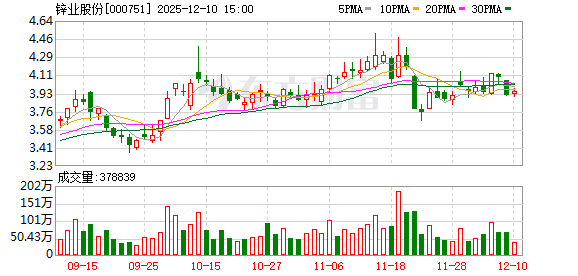
锌业股份:公司锌产品有精锌、锌合金等产品,目前尚未开展锌电池业务研究工作
Mei Ri Jing Ji Xin Wen· 2025-12-10 07:20
Group 1 - The company has not yet initiated research into zinc battery business [2] - The company's zinc products include refined zinc and zinc alloys [2]