
咖啡

Search documents
7家消费公司拿到新钱;霸王茶姬三季度GMV79.3亿元;2026年我国即时零售规模将破万亿|创投大视野
36氪未来消费· 2025-11-29 12:23
Group 1: Investment and Financing Activities - "Bixing Coffee" completed a Series B financing round of several tens of millions, led by Suzhou Agricultural Development Industry Science and Technology Fund, following previous rounds in 2022 and 2024 [4][5] - "Tuozhu Technology" is nearing completion of a new financing round with a valuation potentially reaching $10 billion, although the company has denied the accuracy of this information [6] - "Ruiyun Cold Chain" recently completed an A+ round financing of nearly 100 million RMB, aimed at enhancing cold chain logistics efficiency through digitalization [7] - "TianTian BaiYing" completed a Series A financing round of several tens of millions, focusing on providing intelligent maintenance services to B-end clients [8] - "Laimou Technology" completed a Series A+ financing round of several tens of millions, marking its fourth round of financing since 2025 [9] - "Hypershell" completed two financing rounds totaling $70 million, with a post-investment valuation approaching $400 million [10] - "Smart Doubling Digital Human" received strategic investment from Zhiyuan Robotics [11][12] Group 2: Company Performance and Market Trends - "Bawang Tea Ji" reported a GMV of 79.3 billion RMB in Q3 2025, with a year-on-year decline of 4.5%, while overseas GMV grew by 75.3% [13][14] - "Mandi International" submitted an IPO application to Hong Kong Stock Exchange, aiming to become the first stock focused on hair loss prevention, with a projected revenue growth from 9.82 billion RMB in 2022 to 14.55 billion RMB in 2024 [15] - "Jasmine Milk White" has expanded its overseas presence, opening new stores in Indonesia and the US, with total stores exceeding 2000 globally [16][17] - "Lucky Coffee" announced its global store count surpassed 10,000, achieving rapid growth in the coffee market [18] Group 3: Industry Insights and Future Projections - The instant retail market in China is projected to exceed 1 trillion RMB by 2026, with a compound annual growth rate of 12.6% during the 14th Five-Year Plan period [21] - Global luxury goods consumption is expected to grow at a rate between -1% and 1% in 2025, with a recovery anticipated in 2026 [22] - High-net-worth individuals are shifting their gift-giving behavior, with travel becoming the preferred way to celebrate success, rising from 50% in 2024 to 64% in 2025 [23]


退市5年还敢杀回美股?瑞幸CEO放话,门店超星巴克,底气在哪?
Sou Hu Cai Jing· 2025-11-29 10:06
Core Viewpoint - Luckin Coffee aims to return to the US stock market after being delisted due to a $310 million fraud scandal five years ago, despite the challenges posed by its historical issues and the need for compliance [1][10]. Group 1: Company Background - Luckin Coffee was delisted from NASDAQ in June 2020 after a fraud scandal that emerged shortly after its IPO in May 2019, resulting in a $180 million fine [4]. - The company has shown remarkable recovery, with Q2 2025 financial results reporting total net revenue of 12.359 billion yuan, a year-on-year increase of 47.1%, and operating profit of 1.7 billion yuan, up 61.8% [4]. Group 2: Business Strategy - The company underwent significant operational changes post-scandal, including a strategic reduction of underperforming stores while opening new locations in high-demand areas, leading to improved store density and profitability [6][8]. - A new management team was established, emphasizing transparency and employee engagement through stock incentives, which has enhanced operational efficiency [8]. Group 3: Challenges to Return - Returning to the US market is complicated by stringent regulations from the SEC regarding companies with a history of fraud, requiring Luckin to demonstrate compliance and present clean financial reports for at least three years [10]. - The company faces ongoing challenges related to US-China audit regulations, which could impact its ability to regain investor trust [10]. Group 4: Future Prospects - Luckin Coffee's motivation to return to the US market is driven by the need for capital to support expansion into lower-tier cities and global initiatives, as US markets offer higher financing efficiency and valuations [10].
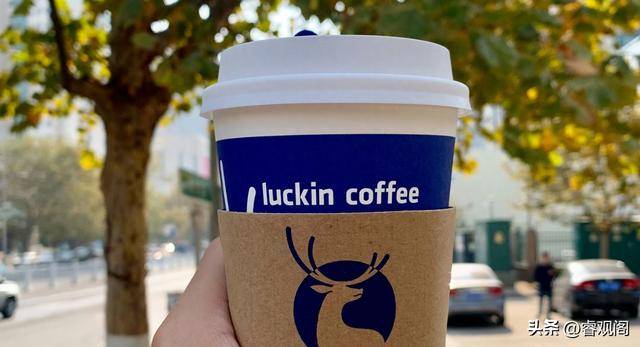
上任不到5个月的雀巢大中华区CEO到访 云南咖啡藏不住了
Mei Ri Jing Ji Xin Wen· 2025-11-29 05:38
Core Insights - The newly appointed Chairman and CEO of Nestlé Greater China, Mark Schneider, visited a coffee plantation in Xishuangbanna, Yunnan, which is a major coffee bean production area for the company [1] - The annual agricultural output value of coffee in Yunnan reached nearly 5 billion yuan last year, highlighting the region's significant contribution to the coffee industry [1] - The journey from coffee cherries in the field to a rich cup of coffee represents a success story for Yunnan, showcasing the potential for growth and development in the local coffee sector [1]

海南自贸港加工增值免关税政策内销货值超110亿元
Xin Hua She· 2025-11-29 05:10
Core Insights - The Hainan Free Trade Port's processing and value-added goods domestic sales tax exemption policy has been approved for 129 pilot enterprises by October 2025, with a total domestic sales value of approximately 11.096 billion yuan and a tax exemption amounting to about 860 million yuan [1] Group 1: Policy Overview - The processing and value-added goods domestic sales tax exemption policy is one of the core tax policies of the Hainan Free Trade Port [1] - Initially covering industries within the customs special supervision area, the policy has expanded to include sectors outside the area such as pharmaceuticals, coffee, and jewelry [1] Group 2: Future Directions - Haikou Customs will continue to explore the expansion of the policy's applicability and enhance the convenience of business operations [1] - The focus will be on meeting enterprise needs while improving regulatory and service measures to further release policy dividends [1]
上海播咖师咖啡有限公司成立 注册资本10万人民币
Sou Hu Cai Jing· 2025-11-28 21:11
天眼查App显示,近日,上海播咖师咖啡有限公司成立,法定代表人为顾炜,注册资本10万人民币,经 营范围为一般项目:食品销售(仅销售预包装食品);食品互联网销售(仅销售预包装食品);食用农 产品批发;食用农产品零售;组织文化艺术交流活动;日用百货销售;技术服务、技术开发、技术咨 询、技术交流、技术转让、技术推广;会议及展览服务;包装服务;项目策划与公关服务;市场营销策 划;品牌管理。(除依法须经批准的项目外,凭营业执照依法自主开展经营活动)。 ...
比星咖啡完成数千万元B轮融资,明年计划扩张至1000家店
Sou Hu Cai Jing· 2025-11-28 10:28
Group 1 - The coffee brand "Bixing Coffee" has recently completed a Series B financing round of several tens of millions of yuan, led exclusively by the Suzhou Agricultural Development Industry Science and Technology Innovation Fund [1] - The financing will primarily be used for expanding offline stores and brand promotion [1] - The founder, Wu Binbin, aims to establish a franchise model for boutique coffee shops, leveraging his extensive background in chain beverage franchises [2] Group 2 - Bixing Coffee targets a main consumer demographic of women aged 25-35, focusing on unique coffee flavors to retain customers beyond price competition [2] - The brand's business model is reportedly validated, with plans to accelerate expansion to 1,000 stores next year [2] - Successful brands in the industry, such as Luckin Coffee, Kudi, and Lucky Coffee, have rapidly scaled using a franchise model [2]
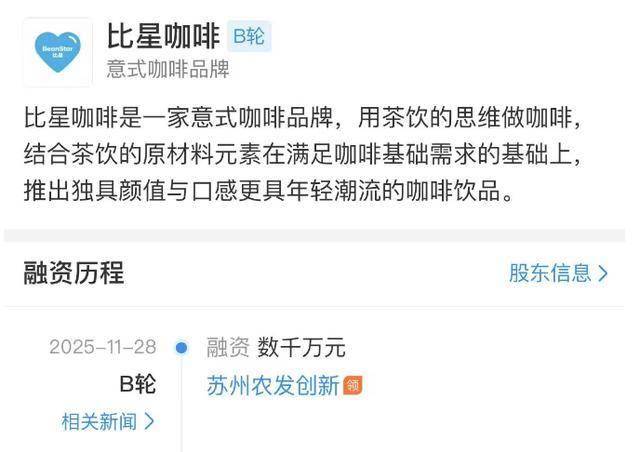
贵阳市云岩区何以成为咖啡产业投资“潜力股”?
Sou Hu Cai Jing· 2025-11-28 09:28
Core Insights - Guizhou's Guiyang City, particularly Yunyan District, is transforming into a significant coffee consumption hub with strong industrial ecology and investment potential [1] Group 1: Consumer Base - Yunyan District has a resident population of 1.176 million in 2024, providing a solid consumer base for coffee [4] - Nearly 20,000 college graduates enter the local job market annually, enhancing the demand for coffee among the youth [4] - In 2024, the total number of tourists received in Yunyan District increased by 18.29%, with some coffee shops seeing up to 90% of customers being tourists during peak seasons [4] - By October 2025, there are 339 coffee market entities in Yunyan District, accounting for 24.93% of the total in Guiyang City [4] Group 2: Event-Driven Brand Influence - Yunyan District is positioning itself as a "Coffee Champion City" by hosting coffee competitions and events, attracting significant attention within the industry [5] - Notable coffee champions have emerged from the area, enhancing its reputation and influence in various coffee-related fields [5] - The district has been hosting coffee skill competitions and showcases since 2024, drawing thousands of participants and solidifying its professional standing in the coffee sector [5] Group 3: Innovative Consumption Scenarios - Coffee consumption in Yunyan District is evolving beyond traditional storefronts, integrating with tourism and commercial areas [6] - Projects like "Wenchang Pavilion Coffee Maze" and "Yunyan Slow Life" theme routes are designed to enhance the coffee experience for visitors [6] - The second season of coffee culture activities in 2025 attracted 200,000 participants and generated over 8 million yuan in revenue, revitalizing local commerce [7] Group 4: Optimized Business Environment - Yunyan District is actively implementing policies to support the coffee industry, including the first "coffee loan" in Guizhou Province [8] - Three special coffee loans have been issued, totaling 500,000 yuan, to assist coffee businesses with cash flow and customer attraction [8] - The district has introduced a streamlined process for coffee shop registration, reducing the time for obtaining necessary permits from 10 days to as little as 2 days [9] - Training programs for industry professionals have been established, with over 200 individuals trained in various coffee-related roles [9]
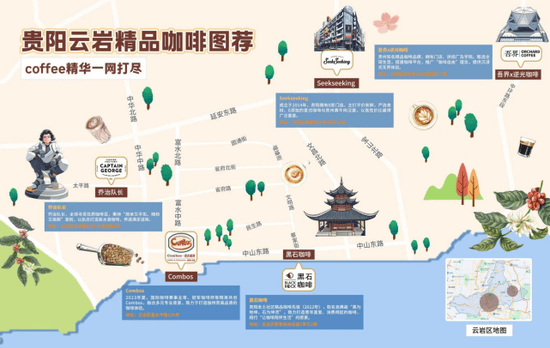
「比星咖啡」完成数千万元 B 轮融资,明年将开到1000家店丨36氪首发
3 6 Ke· 2025-11-28 07:00
Core Insights - "Bixing Coffee," a chain of boutique coffee franchise, recently completed a Series B financing round of several tens of millions, led solely by the Suzhou Agricultural Development Industry Science and Technology Innovation Fund, aimed at expanding offline stores and brand promotion [1] - The company has opened 300 stores since its first store in Suzhou in 2022, achieving its target for the year [1] - The founder, Wu Binbin, aims to capitalize on the growing coffee consumption market, similar to the tea beverage franchise model, which has seen significant growth [2] Financing and Expansion - The recent financing will primarily be used for expanding physical stores and enhancing brand visibility [1] - Bixing Coffee has previously secured angel funding and Series A financing, indicating a strong backing from investors [1] - The company plans to accelerate its expansion to 1,000 stores by next year, leveraging a successful franchise model [6] Market Position and Product Strategy - Bixing Coffee's product pricing ranges from 15 to 25 yuan, positioning it in the mid-range of the coffee market, competing with brands like Manner [2] - The company categorizes its products into four types: market products, strategic products, trending products, and profitable products, focusing on high-quality offerings [3] - The founder emphasizes that product quality is crucial for retaining customers, especially among the primary demographic of women aged 25-35 [5] Operational Model and Profitability - The store types include selected and light enjoyment models, with investment costs of 400,000 and 200,000 yuan respectively [6] - Bixing Coffee reports a gross margin of around 70%, with over 80% of its stores being profitable [6] - The company has a structured revenue model for franchisees, charging a fee based on monthly sales [6] International Expansion - Starting in 2024, Bixing Coffee plans to enter international markets, focusing on Indonesia, Italy, and Japan, with a significant presence already established in Indonesia [7] - The company aims to adapt its business model for long-term growth in these markets, contrasting with the short-term focus often seen in domestic expansions [7] - The investment partner sees potential in the Chinese coffee market and values Bixing Coffee's operational expertise and market positioning [7]
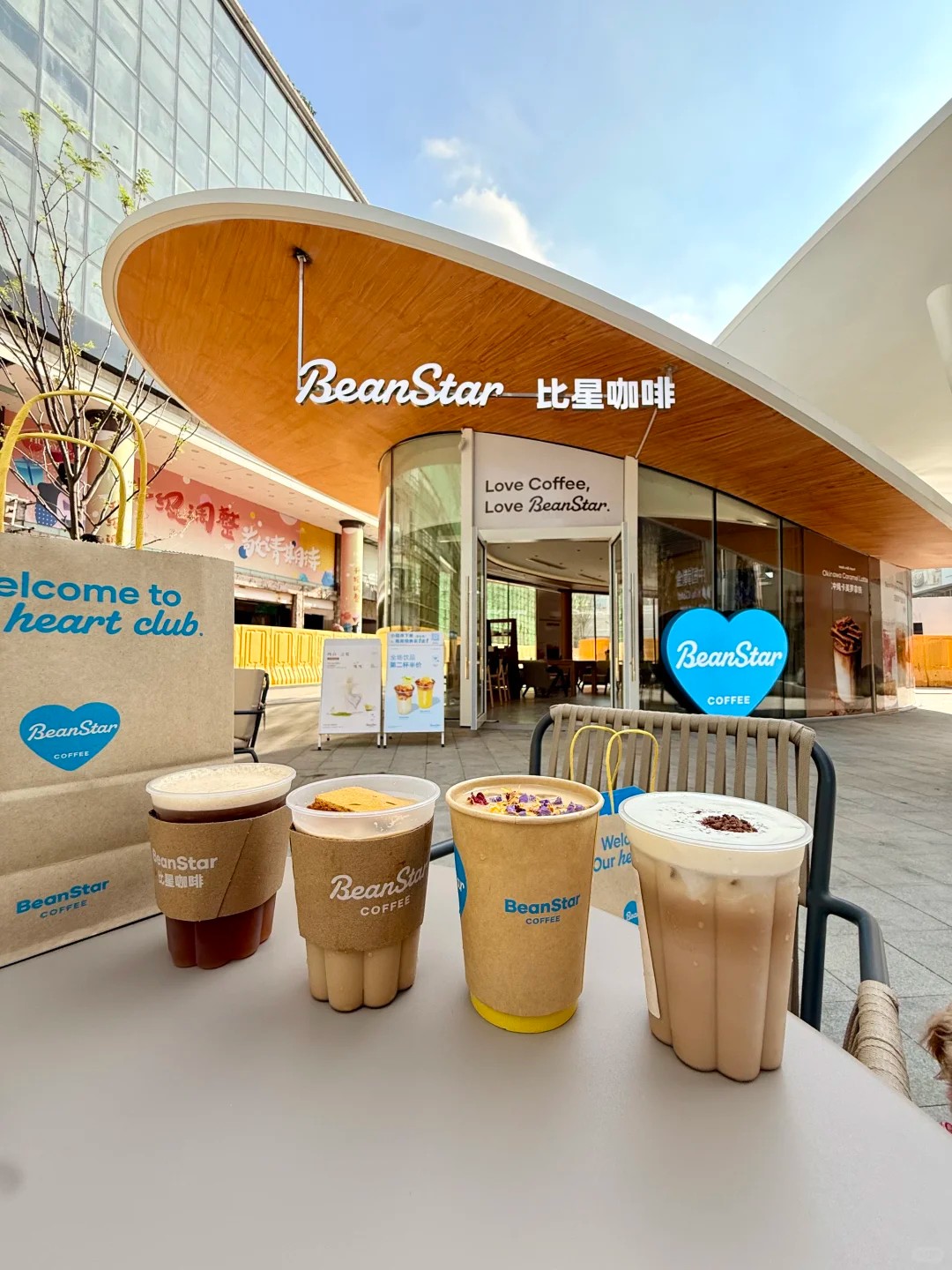
瑞幸凶猛,爽文霸总准备夺回一切
盐财经· 2025-11-27 10:01
Core Viewpoint - Luckin Coffee has accelerated its product launches and collaborations with popular IPs, successfully regaining market attention and consumer trust after past controversies [2][4][6]. Group 1: Market Performance and Strategy - Luckin Coffee has partnered with major IPs like "Demon Slayer" and "Zootopia 2," leading to significant consumer engagement and product demand [2]. - The company reported a revenue of over 15.2 billion yuan in Q3 2025, marking a year-on-year growth of 50.2% [22]. - As of September 2023, Luckin Coffee has expanded its store count to 29,214 globally, with a market share of approximately 35%, surpassing Starbucks' 14% and Kudi Coffee's 18% [8][10]. Group 2: Consumer Trust and Brand Image - Luckin Coffee has established a strong consumer base, particularly among younger demographics, by offering high-quality products at competitive prices [10][14]. - The brand's trust is characterized by a utilitarian approach, where consumers prioritize product value and discounts over brand loyalty [13][16]. - The company has successfully shifted from a narrative of aggressive expansion to one focused on product quality and operational efficiency [21]. Group 3: Governance and Future Prospects - Luckin Coffee is actively pursuing a return to the U.S. stock market, signaling a commitment to improved governance and transparency [25][29]. - The company aims to rebuild trust with investors and consumers by demonstrating compliance with high standards of governance and financial transparency [29][30]. - The potential return to the U.S. market is seen as a critical step in establishing Luckin Coffee as a credible global brand, especially in light of its past controversies [32].

跨品类搭售创造消费新需求 品牌共创激活市场增量
Mei Ri Shang Bao· 2025-11-26 22:20
Group 1 - The article highlights the growing trend of cross-category product combinations in the convenience store and supermarket sectors, particularly the pairing of fresh milk with concentrated coffee liquid, which appeals to consumers' desire for convenience and value [1][2] - Brands are increasingly engaging in scenario-based marketing by launching popular combination products, such as the "Yuexian Yueli" latte set from Yuexian Milk and Yongpu Coffee, which offers a cost-effective alternative to purchasing items separately [1][2] - This new sales model differs from traditional promotions like "buy one get one free," as it focuses on the complementary nature of products, fulfilling consumer needs for both convenience and taste [1] Group 2 - Various innovative product combinations are emerging, such as the collaboration between Asahi Dairy and Ningbo's traditional brand, Gangyagou, which offers a unique "good milk wine brew" product [2] - The core competitive advantage of cross-category combinations lies in their ability to precisely address specific consumer scenarios, making them appealing to targeted demographics like office workers [2] - Industry experts believe that the market potential for such cross-border combinations is still largely untapped, as evidenced by successful examples like chia seeds with coconut water and nuts with yogurt, demonstrating the robust vitality of the combination sales model [2]