
智能网联汽车

Search documents
应用场景再上新!我国智能网联汽车又有新突破
Yang Shi Xin Wen· 2025-10-18 01:37
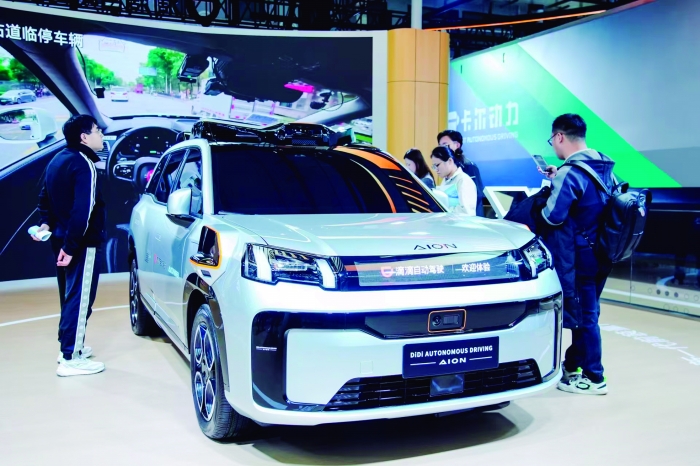
Core Insights - The 2025 World Intelligent Connected Vehicle Conference is being held in Beijing, showcasing the expansion of intelligent connected applications such as smart buses and unmanned delivery vehicles, indicating a new phase of multi-scenario applications in China's intelligent connected vehicle sector [1][9] Industry Developments - In Chongqing, a technology company's intelligent assisted driving has been tested in increasingly complex scenarios, including steep curves and crowded areas [3] - In Guangzhou, a Level 4 autonomous bus line has accumulated over 2.1 million kilometers of travel, demonstrating the integration of intelligent connected vehicles into daily life [5] - In Xinjiang, over 140 unmanned mining trucks are operating in challenging weather conditions, utilizing 5G and intelligent cloud control platforms, marking a significant step in industrial automation [7][9] Safety and Security Measures - The concept of "safety redundancy" is gaining attention, with many companies focusing on multi-layered backup designs to enhance vehicle safety [11] - A technology company is implementing algorithmic, software, and hardware redundancies to ensure product safety, conducting comprehensive testing in various challenging conditions [13] - Didi's autonomous driving CEO highlighted the importance of an independent module for collision detection, emphasizing safety as a non-negotiable priority for companies [15][17] Global Perspectives - The conference attracted representatives from multiple countries, with international experts expressing optimism about China's intelligent connected vehicle development and its potential to influence the global industry [19][21] - Companies like BMW are establishing significant R&D bases in China, aiming to leverage local technological advancements for mutual growth [23] - Countries such as Germany are investing heavily in digitalization and infrastructure, with plans to collaborate with China on various technological fronts [24][26]


合力筑牢安全底线成智能驾驶辅助技术发展共识
Zhong Guo Zheng Quan Bao· 2025-10-17 20:19
Core Insights - The 2025 World Intelligent Connected Vehicle Conference highlighted the rapid development and future prospects of the intelligent connected vehicle industry, emphasizing its role in overcoming industrial bottlenecks and fostering new growth drivers [1] - Despite achievements, challenges remain in legal frameworks, key technology breakthroughs, and infrastructure development, with a consensus on the need for a strong safety foundation in intelligent driving assistance technology [1] Industry Development Acceleration - The penetration rate of new passenger cars with combined driving assistance functions in China reached 62.6%, while those with navigation driving assistance functions stood at 21.5% [1] - Over 3 million vehicles are equipped with 5G and C-V2X technology, and 88 national and industry standards have been established [1] - Intelligent connected vehicles integrate various technologies, significantly enhancing traffic safety, travel efficiency, and driving industry upgrades [1] Transformation of Automotive Value Models - AI is reshaping the automotive product value model, with software-defined vehicles becoming a key trend, leading to new value increments through subscription services, data monetization, and personalized services [2] - By 2030, the expected value distribution of automotive products will be 40% hardware, 40% software, and 20% content services [2] - The traditional competitive focus is shifting from one-time hardware sales to a lifecycle operation model combining software and services [2] Challenges in Driving Assistance Systems - The current "human-machine co-driving" business model faces challenges due to usability issues, with low adoption rates of driving assistance systems despite marketing efforts [2][3] - Driving assistance systems must be trained to respond as effectively as experienced human drivers to improve user experience and safety [3] Safety and Regulatory Concerns - The intelligent connected vehicle industry is at a critical stage of technological growth and commercialization, with L2-level driving assistance safety compliance being crucial for consumer safety and industry sustainability [4] - The number of recalls related to driving assistance systems has increased, with 2.5561 million vehicles recalled in 2024 due to such issues, accounting for 23% of total recalls [4] - The complexity of safety issues is rising with new technologies and market changes, necessitating stricter regulatory measures and standards [4] Corporate Initiatives for Safety Enhancement - Companies are actively working to improve the safety levels of driving assistance systems, with efforts to enhance emergency response capabilities in extreme situations [4][5] - The introduction of satellite communication aims to create an integrated safety system, reinforcing the importance of safety in the commercial deployment of autonomous driving [5] - Companies are encouraged to be role models for compliance and to clearly communicate to consumers that driving assistance does not equate to full automation [5]
中国汽车产业汇“智”逐“网” 出海从“选择题”变成“必答题”
Shang Hai Zheng Quan Bao· 2025-10-17 18:38
Core Insights - The global automotive industry is undergoing unprecedented transformation, entering a "new automotive" era where intelligence is the core engine driving industry change [2] - The integration of AI technology is reshaping the automotive value chain, enhancing user experience and ensuring vehicle safety [3][4] - China is positioned with competitive advantages in the smart connected vehicle sector, making international expansion a necessity rather than an option [7][8] Group 1: AI and Technological Advancements - AI technology is leading a revolution in the automotive industry, significantly enhancing production efficiency and product quality through automation [3] - The integration of AI into various stages of the automotive value chain is crucial for improving user experience and safety [3] - AI models will provide vast opportunities for innovation in smart connected vehicles, transforming cars into intelligent mobile spaces [4] Group 2: Vehicle Infrastructure and Safety - The integration of vehicle, road, and cloud technologies is essential for the safe operation of autonomous driving systems, with China leading in this area [5] - The development of a "digital track" enhances the safety of autonomous vehicles by providing comprehensive data support for AI applications [5] - Safety remains a primary concern in the development of smart connected vehicles, especially for companies expanding internationally [9] Group 3: Policy and Industry Support - The Chinese government is actively promoting the development of smart connected vehicles through strategic planning and policy support [6] - The establishment of a credible data space and the promotion of integrated applications are key focuses for future development [6] Group 4: Global Expansion and Market Strategy - China's automotive industry is expected to progress through three stages of international expansion: establishing trade channels, local production, and global brand value [8] - The rapid advancement of AI in Chinese automotive companies is paving the way for global competitiveness [7]

智能网联汽车驶入“深水区”,体系化安全如何破题?
Zhong Guo Xin Wen Wang· 2025-10-17 15:57
Group 1 - The focus of competition in the intelligent connected vehicle industry is shifting from visible aspects like computing power and functionality to the invisible "safety foundation" [1] - The Deputy Director of the Cybersecurity Administration of the Ministry of Industry and Information Technology emphasized the need for a systematic approach to safety, addressing the complexities and cross-border nature of security issues in the industry [1] - The rapid development of intelligent connected vehicles has led to new safety challenges, necessitating a robust safety system that aligns with innovation in the industry [1] Group 2 - Many automotive companies view safety as a cost burden rather than a competitive advantage, which is a misguided perspective as consumers and governments prioritize safety [2] - The demand for automotive-grade chips has increased as companies recognize the importance of safety in complex vehicle systems, moving beyond consumer-grade chips [2] - The safety of intelligent connected vehicles must be approached holistically, transitioning from point defenses to a systematic defense strategy to counter systemic attacks [2]
地平线吕鹏:物理安全+心理安全才达到城区辅助驾驶“好用”标准
Bei Ke Cai Jing· 2025-10-17 14:57
Core Insights - The current urban assisted driving technology has not yet met user expectations and faces numerous challenges, including the need for both physical and psychological safety [1] - Urban assisted driving systems have gradually penetrated lower-priced vehicle segments, with expectations for widespread adoption by 2025 [1] - The industry is under pressure to develop "user-friendly" systems while achieving cost advantages through scale [1] Industry Developments - The competition in the urban assisted driving sector is intense, with system costs decreasing to the 100,000-150,000 RMB range, impacting automotive manufacturers [1] - The future of autonomous driving is expected to see significant advancements in the next three to five years, with L4 capabilities anticipated by 2028 and full support for L4 in all scenarios by 2030 [2] - The key to future intelligent driving development lies in achieving high performance and broad operational areas, relying on algorithmic and engineering advancements [2]
智能网联汽车安全引热议,不能“因噎废食”减慢智能驾驶技术发展
Xin Jing Bao· 2025-10-17 14:41
Group 1 - The importance of safety in intelligent connected vehicles is receiving unprecedented attention, with a focus on ensuring safety while advancing AI technology in a scientific and orderly manner [1][2] - The automotive industry is urged to balance safety and development, addressing potential issues such as auxiliary driving safety, battery safety, data security, and privacy concerns [2] - The need for clear communication regarding the functional boundaries and correct usage of intelligent connected vehicles is emphasized to enhance public awareness and reduce safety risks caused by misunderstandings [1][2] Group 2 - The industry has experienced significant reflection following recent events, which is expected to promote progress in the intelligent driving sector [2] - There is a recognition that while machine driving has advantages over human driving, it also has inherent limitations, such as the inability to handle "long-tail scenarios" and risks associated with the black box effect [2] - Continuous innovation is essential for the development of safe autonomous vehicles, and a balance must be struck between safety and innovation to avoid hindering technological advancement [3]
中国智能网联汽车产业发展取得显著成效
Zhong Guo Xin Wen Wang· 2025-10-17 13:49
Core Insights - The Chinese intelligent connected vehicle industry has made significant progress, with 7.56 million new passenger cars equipped with combined driving assistance functions sold from January to July 2025, achieving a penetration rate of 62.6% [1] - The sales of new passenger cars with navigation driving assistance functions reached 2.669 million, with a penetration rate of 21.5% [1] - Over 400 specialized small and medium-sized enterprises in the intelligent connected vehicle sector have been cultivated [1] Group 1: Industry Achievements - A total of 17 national-level testing demonstration zones have been established, with 35,000 kilometers of testing roads opened and over 10,000 testing demonstration licenses issued [1] - The total mileage of road testing has exceeded 200 million kilometers, with over 3 million vehicles equipped with 5G and C-V2X technology [1] - More than 4.5 million 5G base stations have been opened across various regions [1] Group 2: Challenges Faced - The industry still faces challenges such as inadequate legal regulations, difficulties in overcoming long-tail effects of technology, unbroken key technologies, and insufficient infrastructure development [1] Group 3: Future Initiatives - The Ministry of Industry and Information Technology will enhance support for high-quality industry development, focusing on continuous technological innovation, improving policy and regulatory standards, accelerating industrial application, and deepening international cooperation [2][3] - Key areas of focus include breakthroughs in automotive chips, operating systems, artificial intelligence, and electronic architecture, as well as the development of new features that meet consumer demands [2] - Collaboration with relevant departments will be strengthened to improve regulations on access management, traffic management, cybersecurity, and data security [2]
工信部部长李乐成在2025世界智能网联汽车大会巡展并调研
Zheng Quan Shi Bao Wang· 2025-10-17 13:09
Core Insights - The Ministry of Industry and Information Technology of China acknowledges significant achievements in the development of the intelligent connected vehicle industry, highlighting the establishment of a complete industrial system covering the entire value chain [1] - The global intelligent connected vehicle sector is at a critical juncture, focusing on enhancing technological maturity and moving towards large-scale development [1] - There is a call for companies to strengthen collaboration across the entire industry chain and to deepen the integration of artificial intelligence with the automotive industry [1] Industry Development - The intelligent connected vehicle industry in China has reached advanced levels in terms of technology and promotion scale [1] - Emphasis is placed on accelerating breakthroughs in technologies such as large models, AI chips, and steer-by-wire chassis [1] - The importance of collaborative standard-setting is highlighted, with a focus on safety and quality across all automotive application ecosystem segments [1] Market Environment - Companies are urged to resist irrational competition and enhance industry self-discipline to maintain a healthy and orderly market environment [1]
新能源汽车事故冲击公众信心,业界呼吁对用户安全怀敬畏之心
Nan Fang Du Shi Bao· 2025-10-17 12:38
Group 1 - The recent traffic accidents in the electric vehicle sector have raised significant concerns about safety, impacting public confidence in advanced autonomous driving technologies [1] - Industry leaders emphasize the need for manufacturers to prioritize user safety and address the various issues that have been exposed [1] - Current safety controversies in the electric vehicle industry include mechanical design flaws and potential hazards in driver assistance and autonomous driving software systems [1] Group 2 - The former Minister of Industry and Information Technology highlighted the inherent limitations of machine driving compared to human drivers, particularly in rare scenarios not covered by training data [2] - There is a call for the industry to provide concrete data to demonstrate the safety of machine driving, rather than relying solely on conceptual discussions [2] - Recommendations include advancing artificial intelligence technology in a safe manner, expanding the application of driver assistance and autonomous driving, and enhancing public communication about the functionalities and proper use of smart connected vehicles [2] Group 3 - The management of defective product recalls is a key regulatory focus for ensuring safety in smart connected vehicles, with a notable increase in recalls related to driver assistance systems [3] - In 2024, 2.5561 million vehicles were recalled due to driver assistance system issues, accounting for 23% of total recalls [3] - Regulatory bodies are working to improve recall management systems and enhance risk assessment capabilities related to new technologies in the automotive sector [3]
工信部郭守刚:深化推进智能网联准入和上路通行试点工作
Zhong Guo Qi Che Bao Wang· 2025-10-17 10:09
Core Viewpoint - The Ministry of Industry and Information Technology emphasizes the acceleration of the industrial application of intelligent connected vehicles, focusing on integrated vehicle-road-cloud trials and infrastructure development [1] Group 1: Industry Development - The initiative aims to deepen the integration of intelligent connected vehicles with road and cloud systems, promoting the construction of networked infrastructure and cloud control platforms [1] - There is encouragement for the adoption of high-performance communication modules such as V2X and 5G in new vehicles, as well as the expansion of cross-regional collaborative applications in key areas [1] Group 2: Regulatory Framework - The ministry plans to advance the trial work for the access and road use of intelligent connected vehicles, with conditional approval for the production access of L3 level vehicles [1] - Based on pilot projects, there will be a focus on summarizing management experiences and continuously refining the access management requirements, approval processes, and management mechanisms for intelligent connected vehicles [1] Group 3: Business Model Innovation - The initiative supports companies in the automotive, information communication, and transportation sectors to explore new business models linked by data, aiming to accelerate the cultivation of diversified value chains [1]