游戏

Search documents
字节砍掉的“麻烦”,沙特483亿接盘了
Xin Lang Cai Jing· 2026-02-16 02:46
Core Viewpoint - ByteDance is in final negotiations to sell Moonton Technology to Savvy Games Group, a subsidiary of the Saudi Public Investment Fund, with a transaction valuation between $6 billion and $7 billion, marking a significant profit from its initial acquisition price of around $4 billion in 2021 [2][3][31] Group 1: Transaction Details - The deal includes multiple in-development games from Moonton's Shanghai studio and all assets from the Guangzhou Lighthouse studio, indicating a comprehensive divestment [2][31] - The transaction is expected to be signed in February, with completion anticipated by the first quarter of 2026 [3][31] Group 2: Strategic Shift - ByteDance's overall strategy has shifted from "boundaryless expansion" to "focusing on core areas" under new leadership, emphasizing resource allocation towards high-return sectors like AI, e-commerce, and short videos [12][40] - The gaming sector, characterized by high uncertainty and long-term investment needs, has been deprioritized as it does not align with ByteDance's strengths in rapid monetization and algorithmic distribution [40][41] Group 3: Moonton's Performance - Moonton has maintained a healthy financial performance, with its flagship game, "Mobile Legends: Bang Bang," generating nearly $2.4 billion in global revenue and showing a 122% increase in overseas revenue in January 2026 [10][38][48] - The game has established a robust esports ecosystem in Southeast Asia, contributing to its cultural significance and market dominance [7][35] Group 4: Market Context - The gaming industry in China has faced a turning point, with a decline in growth rates and a shift towards international markets as domestic competition intensifies [4][32] - ByteDance's aggressive acquisition strategy from 2019 to 2021 aimed to leverage its traffic advantages but ultimately did not yield the expected blockbuster games, highlighting the importance of content quality in the gaming sector [25][53] Group 5: Sale Rationale - The decision to sell Moonton to a non-competitive entity like Saudi Arabia's Savvy Games Group allows ByteDance to avoid regulatory hurdles and secure a favorable exit strategy [16][44] - The sale aligns with Saudi Arabia's Vision 2030, which aims to diversify its economy away from oil dependency by investing in gaming and esports [18][46]

字节砍掉的“麻烦”,沙特483亿接盘了
虎嗅APP· 2026-02-16 02:42
Core Viewpoint - ByteDance is selling Moonton Technology to Savvy Games Group for an estimated valuation of $6-7 billion, marking a significant profit from its initial acquisition price of around $4 billion in 2021, reflecting over 50% book profit [5][6][12]. Group 1: Sale Details - The sale is expected to be finalized with a share purchase agreement in February, with completion anticipated by Q1 2026 [5]. - The deal includes multiple in-development games and assets from various studios, indicating a strategic divestment while retaining other core gaming teams [5][7]. Group 2: Strategic Shift - ByteDance's strategy has shifted from "boundaryless expansion" to "focusing on core areas," emphasizing resource allocation towards high-return sectors like AI, e-commerce, and short videos [18][22]. - The gaming sector, characterized by high uncertainty and long-term investment needs, has been deprioritized in favor of sectors that align better with ByteDance's strengths in traffic distribution and algorithmic recommendations [18][19]. Group 3: Moonton's Performance - Moonton has maintained a healthy performance, with its flagship game, "Mobile Legends: Bang Bang," generating nearly $2.4 billion in revenue since launch and showing a 122% quarter-over-quarter revenue growth as of January 2026 [12][17][29]. - The game has established a robust esports ecosystem in Southeast Asia, further enhancing its market position [12]. Group 4: Market Context - The Chinese gaming industry faced a turning point in 2021, with a significant slowdown in domestic market growth, prompting companies to seek international expansion [9][11]. - ByteDance's aggressive acquisition strategy during this period aimed to leverage its traffic advantages to reshape the gaming industry, but the anticipated synergies with Moonton did not materialize as expected [11][34]. Group 5: Acquisition Rationale - The choice to sell to Saudi Arabia's Savvy Games Group rather than domestic competitors like Tencent was driven by the need for a swift transaction and the avoidance of regulatory hurdles associated with domestic competition and international scrutiny [24][25][27]. - Savvy Games Group's acquisition aligns with Saudi Arabia's Vision 2030, aiming to diversify its economy and develop a robust gaming and esports sector [27][28].
艺电公布股息支付安排及最新财报业绩
Xin Lang Cai Jing· 2026-02-15 19:04
Core Viewpoint - Electronic Arts (EA) is set to pay a quarterly cash dividend of $0.19 per share on March 18, 2026, as part of its regular shareholder return program [1] Financial Performance - For the third quarter of fiscal year 2026 (covering April 1 to December 31, 2025), EA reported revenue of $5.411 billion, a decrease of 2.82% year-over-year [1] - The net profit for the same period was $426 million, reflecting a significant decline of 50.87% year-over-year [1] - Despite the pressure on overall performance, the company achieved bookings of $3.05 billion in the third quarter, marking a year-over-year increase of 38%, primarily driven by sales of "Battlefield 6" [1] - Market attention is focused on whether EA can improve profitability and maintain the momentum of booking growth in subsequent quarters [1]

中东主权财富基金如何重塑全球私募游戏规则?
Xin Lang Cai Jing· 2026-02-15 12:44
Core Insights - The Saudi Public Investment Fund (PIF) led a consortium to privatize Electronic Arts (EA) in a landmark $55 billion all-cash deal, marking the largest all-cash privatization in history and redefining the perception of sovereign wealth funds (SWFs) as strategic industry leaders rather than passive investors [1][10] - In 2025, the total value of mergers and acquisitions involving sovereign wealth funds surged to $200 billion, a nearly 200% increase from $67 billion in 2024, with Gulf funds like PIF and Mubadala driving nearly half of this value [10] - The shift from financial investors to strategic operators among Middle Eastern LPs is driven by national strategies aimed at diversifying economies away from oil dependency [2][11] Group 1: Transition of Middle Eastern Sovereign Wealth Funds - Traditional roles of sovereign wealth funds as limited partners (LPs) are evolving, with a focus on national strategies such as Saudi Arabia's Vision 2030 and the UAE's industrial diversification agenda [2][11] - Investments are now aligned with national priorities, focusing on technology transfer, industry establishment, talent acquisition, and job creation [2][11] - The strategic shift is evident in their investment behavior, moving from indirect investments to leading transactions, as seen in the EA acquisition and Mubadala's $40 billion acquisition of Aligned Data Centers [3][11] Group 2: Investment Behavior Changes - Middle Eastern funds are increasingly focusing on strategic asset control, seeking core technologies and intellectual property [3][11] - There is a shift from global acquisitions to targeted regional investments, with China becoming a key focus for Middle Eastern capital, highlighted by PIF's plans to establish a Beijing office and a $50 billion memorandum with six Chinese financial institutions [3][11] - The collaboration model has evolved from mere funding to a deeper integration of investment and technology transfer, as exemplified by Saudi firms assisting Chinese companies in establishing joint ventures in Saudi Arabia [3][12] Group 3: Impact on Global Private Equity (PE) Firms - Global PE firms are adapting their fundraising strategies to align with the strategic objectives of Middle Eastern LPs, emphasizing the importance of strategic collaboration over historical performance metrics [14] - Establishing local offices and specialized funds has become essential for PE firms to engage with Middle Eastern LPs, with firms like Hillhouse Capital and CPE Yuanfeng setting up offices in Abu Dhabi [14][15] - The partnership model has shifted towards strategic alliances, as seen in Mubadala's collaboration with KKR to create a long-term capital pool for private credit opportunities in the Asia-Pacific region [15] Group 4: Industry Dynamics and Challenges - The rise of Middle Eastern strategic capital is intensifying the "Matthew effect" in the private equity industry, concentrating funds among top firms like Blackstone and KKR, making it harder for smaller GP firms to gain visibility [7][15] - The competitive landscape for transactions involving strategic assets has changed, with sovereign wealth funds now seen as active bidders or co-investors, often willing to offer higher bids due to their long-term investment horizon [7][15] - Sovereign wealth funds face challenges such as geopolitical concerns and regulatory scrutiny, particularly in markets like the U.S., where foreign investment reviews are becoming more stringent [16] - The transition from passive investors to active acquirers necessitates the development of advanced due diligence and operational capabilities within sovereign wealth funds [16]

诺泰生物(688076)索赔案持续推进,世纪华通(002602)索赔案再提交法院立案
Xin Lang Cai Jing· 2026-02-15 11:49
Group 1 - The core issue involves investor claims against Nuotai Bio (688076) due to false statements leading to ongoing legal proceedings [1][5] - The Shanghai Financial Court has accepted the case for investor claims against Nuotai Bio, with further claims being processed [1][5] - Nuotai Bio's 2021 annual report was found to contain false records, including a reported revenue of 30 million yuan from a technology transfer that lacked commercial substance, inflating total revenue by 30 million yuan and profit by 25.95 million yuan, which accounted for 20.64% of the reported profit [1][5] Group 2 - Investors who purchased Nuotai Bio shares between April 28, 2022, and October 24, 2024, and sold or held shares after October 24, 2024, are eligible to file claims [2][6] - The law firm is also handling claims for Century Huatong (002602), with a recent filing submitted to the Shaoxing Intermediate People's Court [2][6] - Century Huatong was found to have false records in its annual reports from 2018 to 2022, including fabricated software copyright transfer transactions and premature revenue recognition [3][7] Group 3 - Investors who bought Century Huatong shares between April 27, 2019, and July 25, 2023, and sold or held shares after July 25, 2023, can initiate claims [4][8] - The law firm has a history of successfully representing investors in similar cases, with many having received compensation [4][8]


字节跳动 , 刚刚一笔赚140亿
3 6 Ke· 2026-02-15 07:56
Group 1 - The core point of the article is that ByteDance is in advanced negotiations to sell its gaming division, Shanghai Mutong Technology, to Saudi Savvy Games Group, with an estimated valuation of $6-7 billion (approximately 42-49 billion RMB) [2] - Mutong Technology is known for developing the popular mobile game "Mobile Legends: Bang Bang" (known as "决胜巅峰" in China), which was acquired by ByteDance for $4 billion five years ago, indicating a potential profit of over $2 billion (140 billion RMB) from this sale [2][3] - The sale reflects ByteDance's strategic shift away from heavy investment in gaming, as the company has been focusing more on AI and casual gaming since the second half of 2023 [6][10] Group 2 - Mutong Technology was founded in 2014 by former Tencent employees, who aimed to create a world-class gaming company and initially focused on overseas markets, avoiding the saturated domestic market [3][4] - The company gained significant traction with its first self-developed game, "Magic Rush: Heroes," which achieved a peak monthly revenue of 47 million RMB and established its presence in overseas markets [3] - The turning point for Mutong came in 2016 when it launched "Mobile Legends: Bang Bang," which became a phenomenon in Southeast Asia, leading to its recognition as a "national-level" mobile game in countries like Indonesia and the Philippines [4][5] Group 3 - The buyer, Savvy Games Group, is a subsidiary of the Saudi Public Investment Fund (PIF), which focuses on investments in the gaming and esports industry [5] - Despite the initial success of "Mobile Legends: Bang Bang," the game struggled to penetrate the Western markets, and Mutong has not launched another major hit since [6][7] - The current management team of Mutong will remain in place after the acquisition, and the company has over 2,000 employees with 86% of its revenue coming from "Mobile Legends: Bang Bang," which has surpassed 1.5 billion downloads globally [7]

对话《苍翼:混沌效应》制作人:对于中国游戏未来的20年,我充满信心
Guan Cha Zhe Wang· 2026-02-15 07:51
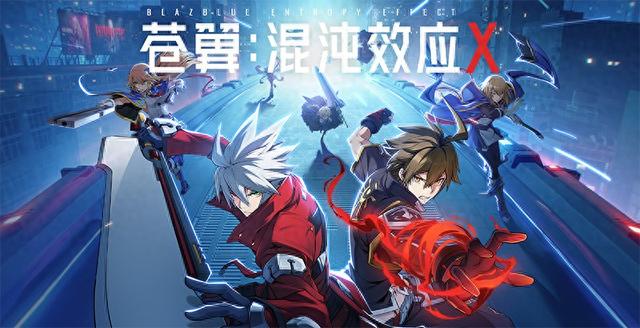
Core Viewpoint - Chengdu Fighting Technology Co., Ltd. (91ACT) has successfully launched the action game "BlazBlue: Chaos Effect" on PC and mobile platforms, achieving over 1 million sales on PC and more than 1.2 million paid users on mobile by March 2025, marking it as a significant success in the domestic gaming industry [1][3]. Game Development and Challenges - "BlazBlue: Chaos Effect" is a derivative work of the 2D fighting game series "BlazBlue" developed by Arc System Works, praised for its quality and ability to attract both original fans and new players [1][3]. - The development team faced significant challenges, including a near-disbandment in February 2024, but through perseverance and player feedback, they managed to revitalize the game and achieve impressive sales [3][4]. - The upcoming release of "BlazBlue: Chaos Effect X" on PlayStation 5, Nintendo Switch, and Xbox Series X|S will include new playable characters, game modes, and a storyline supervised by the original creators [1][3][4]. Future Outlook - The company aims to develop original action game IPs, aspiring to create higher quality and more extreme action games, reflecting confidence in the future of the Chinese gaming industry [4][20]. - The success of "BlazBlue: Chaos Effect" has positioned 91ACT as a model for long-term operation of buyout games, with plans for continuous updates and new content post-launch [3][15]. - The company believes that as Chinese developers mature, they can establish a strong presence in the global buyout game market, similar to the dominance seen in other industrial sectors [20][21].
字节怎么了?一边卖游戏资产,一边狂招芯片人才
程序员的那些事· 2026-02-14 15:57
Group 1 - ByteDance plans to sell its gaming subsidiary, Mu Tong Technology, for over $6 billion, with the buyer being Savvy Games Group, a subsidiary of the Saudi Public Investment Fund [1] - The core product of Mu Tong is the overseas MOBA mobile game "Decisive Peak," which ByteDance acquired in 2021 for approximately $4 billion, indicating asset appreciation [1] - This sale is viewed as ByteDance's strategy to continue shrinking its non-core gaming business and refocus on AI and cloud computing [1] Group 2 - ByteDance's chip team is undergoing large-scale recruitment across cities like Beijing, Shanghai, and Shenzhen, focusing on key positions in chip architecture and SoC design [2] - The chip team has grown to over a thousand members, covering multiple product lines including AI inference chips, server CPUs, VPU, and DPU [2] - Several chips have successfully completed the tape-out process and are advancing towards mass production to support the computational needs of large models, Douyin, and Volcano Engine [2] Group 3 - The sale of Mu Tong is aimed at capital recovery, while the expansion of the chip team signifies a deepening commitment to computational power [3]

字节跳动或出售沐瞳科技
Shen Zhen Shang Bao· 2026-02-14 11:46
Group 1 - ByteDance is reportedly selling Moonton to Saudi Arabia's Public Investment Fund (PIF) subsidiary Savvy Games Group for over $6 billion (approximately 414.52 billion RMB), with a share purchase agreement expected to be signed in February this year [1] - The acquisition includes Moonton's main entity and the game "Mobile Legends: Bang Bang" (MLBB), along with other projects such as a first-person shooter game from the Shanghai studio, an ARPG competitive game, a PC action game, a PvPvE casual competitive game, a DC IP Team RPG titled "Code A02," and the Guangzhou Lighthouse studio [1] Group 2 - The news of ByteDance's plan to sell Moonton has been circulating for several years, with Moonton being a wholly-owned subsidiary of ByteDance's gaming brand "Zhaoxi Guangnian" [2] - ByteDance initially acquired Moonton for 10 billion RMB in cash and 15 billion RMB in equity, totaling approximately $4 billion, while Moonton has maintained independent operations post-acquisition [2] - In November 2023, ByteDance made significant adjustments to its gaming business, leading to project shutdowns and layoffs at Zhaoxi Guangnian, which reignited rumors about the sale of Moonton [2]
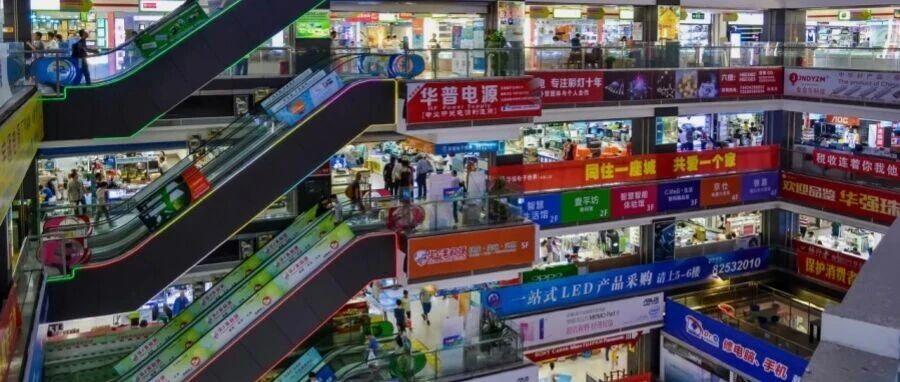
外国人涌入深圳爆买
21世纪经济报道· 2026-02-14 10:30
Core Viewpoint - Shenzhen is actively promoting the construction of a comprehensive payment demonstration zone to meet the growing demand for non-cash payments, with significant growth projected in transaction volume and value by 2025 [1]. Group 1: Payment Trends and Projections - By 2025, the number of non-cash payment transactions in Shenzhen is expected to reach 21.9 billion, a year-on-year increase of 15%, with a transaction value of 2.5 trillion yuan, up 10% year-on-year [1]. - Overall consumer spending in Shenzhen is projected to grow by 10% due to effective consumption promotion policies [1]. Group 2: International Consumer Activity - In 2025, the total number of inbound and outbound travelers in Shenzhen is expected to reach 274 million, a 14% increase year-on-year, marking a historical high [2]. - Non-cash payment transactions by foreign consumers in Shenzhen are projected to reach 190 million, totaling 26.46 billion yuan, representing year-on-year growth of 28% and 31% respectively [2]. - Hong Kong, Macau, and Taiwan residents account for 82% of the total transaction value from foreign consumers, with Hong Kong residents showing a significant increase in spending [2]. Group 3: Tax Refund System - Shenzhen has established a convenient tax refund system that includes multiple channels such as cash, bank cards, and electronic wallets, with innovative measures like refunds to domestic and foreign electronic wallets [4]. - The number of stores eligible for tax refunds has surpassed 2,000, with over 1,000 new stores added in 2025 [4]. - The total number of tax refund transactions in Shenzhen is expected to reach 68,000 in 2025, a 13-fold increase year-on-year, with the total refund amount increasing by 2.4 times [4]. Group 4: Consumer Spending Patterns - Foreign consumers in Shenzhen primarily spend in supermarkets and restaurants, accounting for over 70% of total spending [6]. - The tourism and entertainment sectors are emerging as significant growth areas, with transaction volume and value increasing by 327% and 219% year-on-year, respectively [6]. Group 5: Payment Methods - The acceptance of mobile payments among foreign consumers has significantly increased, with over 70% of transaction values attributed to mobile payment methods [7]. - Transactions using foreign cards linked to domestic wallets have seen a year-on-year increase of 48.2% in transaction volume and 51.9% in transaction value [7]. - The use of foreign cards for large transactions remains prevalent, with 5% of transaction volume and 26% of transaction value coming from card payments [7].