
智能制造

Search documents
南安市领导前往深圳招商考察
Sou Hu Cai Jing· 2025-12-19 21:17
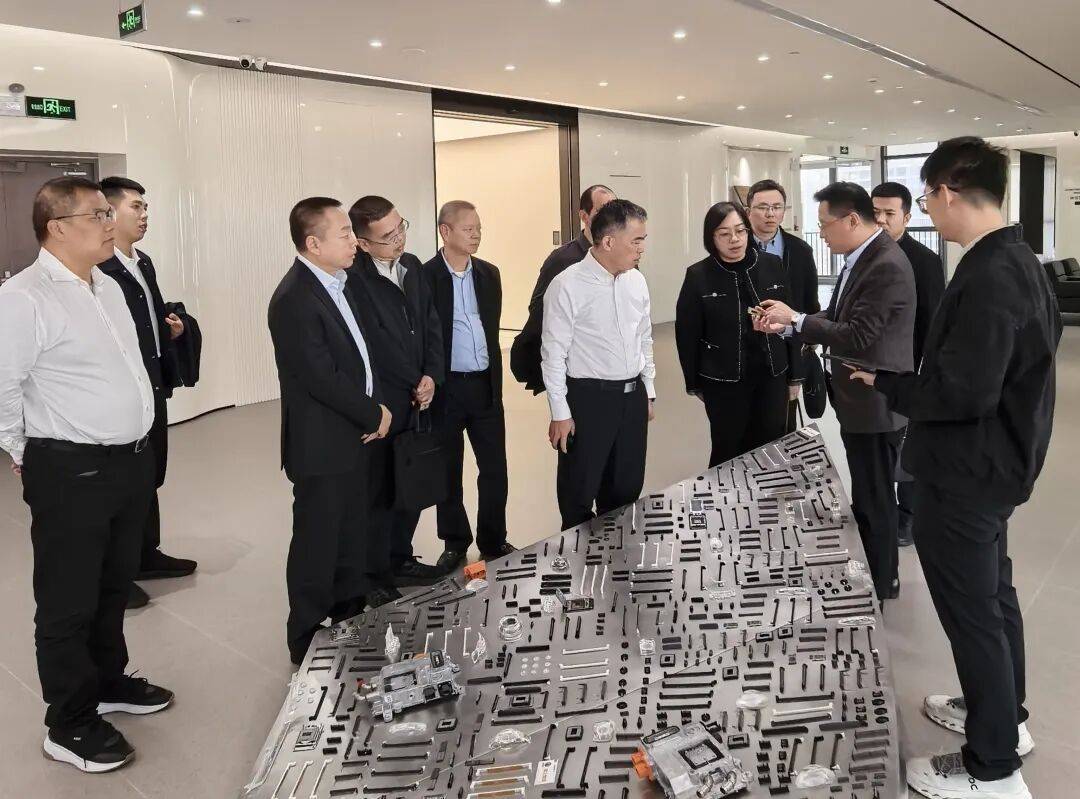
Group 1 - The delegation from Nan'an City, led by Secretary Zhang Guisen, visited Shenzhen to explore cooperation in new production capabilities, focusing on smart manufacturing, new energy, and digitalization [1] - The first stop was at Derun Electronics Co., a leading company in electronic connectors and precision components, which is also a core supplier in the global electric vehicle power management sector [1] - The delegation also visited Unstoppable Technology Co., which specializes in AI digital kitchen solutions and smart dining upgrades, discussing potential collaboration projects [1] Group 2 - XINWANDA Electronics Co. is a leading global player in lithium-ion batteries, with existing cooperative projects in Nan'an progressing smoothly [4] - The delegation toured XINWANDA and engaged in discussions with founder Wang Mingwang about advancing existing projects and zero-carbon initiatives [4] - The delegation expressed a desire to expand cooperation areas and deepen collaboration to support high-quality development [4] Group 3 - The delegation visited Shenzhen Craftsmanship Robot Technology Co., a benchmark in AI interactive robots and smart programming education robots, and Ailing Network Co., which focuses on smart manufacturing [7] - They explored the companies' development plans and product systems while promoting Nan'an's industrial foundation and regional advantages [7] - The delegation invited these companies to visit Nan'an for further discussions on multi-field and in-depth cooperation opportunities [7]

江苏协和电子股份有限公司关于与私募基金合作投资暨认购基金合伙份额的公告
Shang Hai Zheng Quan Bao· 2025-12-19 19:35
Core Viewpoint - Jiangsu Xiehe Electronics Co., Ltd. has invested 5 million yuan as a limited partner in the Wuxi Xingqi Yuzheng Venture Capital Partnership, acquiring approximately 2.2936% of the partnership shares, which totals 218 million yuan [2][3][28] Group 1: Investment Details - The company has subscribed to the partnership shares using its own funds, amounting to 5 million yuan [2][3] - The total capital commitment of the target fund, Wuxi Xingqi Yuzheng, is 218 million yuan [2][3] - The investment does not constitute a related party transaction or a major asset restructuring [2][4] Group 2: Approval Process - The transaction was approved within the authority of the company's general manager's office and does not require board or shareholder approval [2][4] Group 3: Purpose and Scope of Partnership - The partnership aims to protect the rights of all partners and generate returns through equity investment management [7] - The fund will primarily invest in high-tech sectors such as automotive, semiconductors, and intelligent manufacturing [21] Group 4: Financial Impact - The investment is made while ensuring the company's main business remains stable, aiming to enhance understanding and interaction with high-tech industries [28] - The investment will not significantly impact the company's financial and operational status, aligning with the overall development needs of the company [28]

聚焦转型创新 深化多链合作
Xin Lang Cai Jing· 2025-12-19 18:23
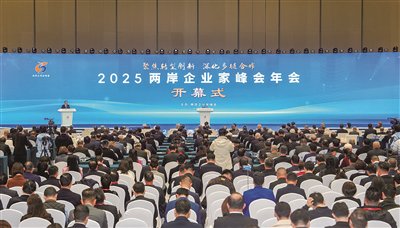
Group 1 - The 2025 Cross-Strait Entrepreneurs Summit will be held on December 16-17, focusing on "Transformation and Innovation, Deepening Multi-Chain Cooperation," with around 800 participants from various sectors [3][4] - The summit emphasizes the importance of collaboration in industries such as new energy, smart manufacturing, information technology, cultural creativity, and biotechnology, highlighting the need for supply chain, industrial chain, and talent chain integration [4][5] - The summit's discussions reflect a strong belief in the complementary strengths of Taiwan and mainland China, with a focus on leveraging these advantages for mutual benefit in various sectors [5][6] Group 2 - The "14th Five-Year Plan" proposed by the Chinese government is seen as a significant opportunity for cross-strait enterprises, outlining key areas such as artificial intelligence, green energy, and biomedicine for future collaboration [6][7] - Taiwanese entrepreneurs express optimism about the plan, viewing it as a roadmap for industrial transformation and a chance to tap into the growing mainland market [6][7] - The summit serves as a platform for fostering high-quality economic cooperation between the two sides, emphasizing the importance of maintaining strong ties despite external challenges [7][8] Group 3 - Participants at the summit advocate for enhanced cross-strait exchanges and high-quality economic cooperation as essential for a prosperous future [7][8] - The summit highlights the role of entrepreneurs as pioneers in integration and innovation, contributing to the revitalization of the national economy [8][9] - There is a collective sentiment among attendees that collaboration between cross-strait enterprises can yield greater results, reinforcing the idea of "one family across the strait" [7][8]
五洋自控:公司一直深耕智能制造业务
Zheng Quan Ri Bao Wang· 2025-12-19 15:45
证券日报网讯12月19日,五洋自控(300420)在互动平台回答投资者提问时表示,公司一直深耕智能制 造业务,并持续关注市场发展趋势,将结合公司实际情况进行相应的战略规划和业务拓展。涉及未来发 展规划情况,请关注公司后续披露的年度报告或临时公告。 ...

中国信通院:城市制造业高质量发展研究报告(2025年)
Xin Lang Cai Jing· 2025-12-19 12:44
Core Viewpoint - The report emphasizes the importance of high-quality development in urban manufacturing, highlighting the need for innovation, coordination, green practices, openness, and sharing as guiding principles for future growth in the sector [5][17]. Group 1: Opportunities and Challenges in Urban Manufacturing - Urban manufacturing is entering a new phase driven by innovation, with cities increasingly recognized as innovation hubs [13][14]. - The integration of smart, green, and collaborative practices is becoming a new direction for industrial upgrades, expanding growth opportunities in urban manufacturing [15]. - Urban manufacturing faces new challenges amid rapid transformation, including pressures to boost domestic demand and adapt to changing market conditions [16]. Group 2: Characteristics of Strong Manufacturing Cities - The distribution of strong manufacturing cities remains stable, with a notable concentration in the eastern region of China, while central regions are experiencing localized growth [22][25]. - Strong manufacturing cities are characterized by high-end, intelligent, and green development, leading to significant transformation outcomes [29][30]. - Technological innovation and industrial reform are driving forces, with strong cities concentrating innovation resources and achieving substantial advancements in key sectors [38][40]. Group 3: Issues in High-Quality Development - There are significant disparities in the quality of manufacturing development across regions, necessitating improved coordination and development levels [8][17]. - The efficiency of technology transfer and the proportion of basic research and original innovation remain relatively low, indicating areas for improvement [8][17]. - Structural contradictions in external openness and the need for enhanced effectiveness in foreign investment are evident [8][17]. Group 4: Outlook for Urban Manufacturing Development - Optimizing regional spatial layouts for manufacturing and focusing on collaborative development paths among key city clusters are essential for future growth [8][17]. - Building an integrated innovation ecosystem that connects industry, academia, research, finance, and application is crucial for enhancing the conversion of research outcomes [8][17]. - There is a strong emphasis on elevating levels of intelligence, greenness, and integration in manufacturing practices to drive deep industrial transformation [8][17].
澳门回归26周年,前三季度“四新”产业占GDP66.1%
Nan Fang Du Shi Bao· 2025-12-19 12:10
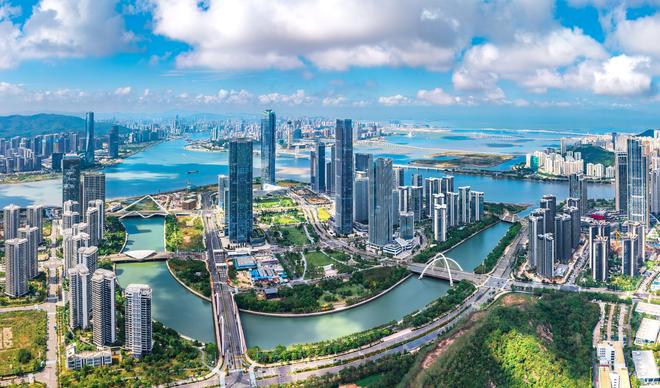
Core Insights - The construction of the University of Macau's Hengqin campus has commenced, alongside the ongoing development of the Qinao Innovation Industrial Park, marking a new phase in the collaborative development of "Macau + Hengqin" [1][3] - In the first three quarters of this year, the added value of the "four new" industries in the cooperation zone reached 25.964 billion yuan, a year-on-year increase of 14.6%, accounting for 66.1% of GDP, indicating rapid growth in Macau's diversified economy [3][14] - The cooperation zone has registered 7,555 Macau-funded enterprises, a 62.93% increase since its establishment, showcasing the synergistic effects of "Macau + Hengqin" [14] Economic Development - The cooperation zone's "four new" industries, including high-end manufacturing and traditional Chinese medicine, have significantly contributed to Macau's economic diversification [3][12] - The establishment of the Hengqin front cargo station at Macau International Airport aims to enhance logistics and supply chain efficiency in the Greater Bay Area [12][14] Policy and Infrastructure Initiatives - The launch of the Hengqin Macau Enterprise Government Affairs Secretary Service Platform has facilitated cross-border business operations for Macau enterprises, providing comprehensive support [4][6] - The cooperation zone has introduced a "seedling cultivation" plan to support the rapid growth of enterprises, with several local companies recognized as "cultivated" enterprises [6][12] Cross-Border Collaboration - The cooperation zone has implemented measures to enhance cross-border living experiences for residents, including a smart "face recognition" customs clearance system that has benefited over 640,000 travelers [15][18] - The introduction of a cross-border student bus service has improved accessibility for students commuting between Macau and Hengqin [17][18] Future Outlook - The cooperation zone plans to focus on industries closely related to Macau, such as cultural tourism, higher education, and healthcare, to further enhance competitiveness and international recognition [14][20] - The 2026 policy guidelines emphasize the importance of developing new transportation channels between Hengqin and Macau to support resource flow and integration [20]
一流的企业家赚钱能力远大于融钱能力
创业家· 2025-12-19 10:52
Core Viewpoint - The article emphasizes that successful entrepreneurs prioritize their ability to generate profits over merely raising funds, highlighting that many founders learn to manage spending through painful experiences, and it is crucial to be frugal when necessary [1]. Group 1: Event Overview - The event led by Wu Shichun will take place from January 22 to 24, 2026, focusing on the technology manufacturing industry and exploring opportunities in a trillion-dollar market [5]. - Participants will engage in a deep learning journey, including interactions with leading companies and investors, aimed at enhancing their understanding of industry dynamics and capital trends [7][9]. Group 2: Learning and Networking Opportunities - The program includes immersive learning experiences, such as lectures on technology innovation and industry breakthroughs, as well as case studies on satellite manufacturing and commercialization [16][18]. - Attendees will have the chance to network with 100 elite entrepreneurs, fostering collaboration and problem-solving in real-time [7][19]. Group 3: Target Industries - The event targets various sectors, including robotics, smart manufacturing, low-altitude economy, aerospace, and hard technology combined with consumer products [20][22][24].

武汉科技大学启动科创种子基金
FOFWEEKLY· 2025-12-19 09:59
Group 1 - The "Wuhan University of Science and Technology Innovation Seed Fund" has been launched with a total scale of 200 million RMB, aimed at accelerating the transformation of scientific achievements from "shelves" to "market" and from "laboratories" to "application fields" [1] - The fund is initiated by Wuhan University of Science and Technology in collaboration with Changjiang Industrial Group and Qingshan Investment Group, leveraging capital and industry insights from provincial strategic investment platforms, as well as policy and application scenarios from regional industrial bases [1] - The fund will focus on key areas such as materials science, intelligent manufacturing, and life health, adhering to the principle of "investing early, investing small, and investing in technology" to address the funding bottleneck in the initial stage of technology achievement transformation [1]

宝馨科技:12月19日召开董事会会议
Mei Ri Jing Ji Xin Wen· 2025-12-19 09:46
2025年1至6月份,宝馨科技的营业收入构成为:智能制造占比92.76%,新能源占比7.24%。 每经AI快讯,宝馨科技(SZ 002514,收盘价:6.36元)12月19日晚间发布公告称,公司第六届第二十 三次董事会会议于2025年12月19日在公司会议室以通讯表决的方式召开。会议审议了《关于拟变更会计 师事务所的议案》等文件。 每经头条(nbdtoutiao)——海南封关首日直击:为中国探路,全球最大自贸港如何重塑开放边界? (记者 曾健辉) 截至发稿,宝馨科技市值为46亿元。 ...

城市制造业高质量发展研究报告(2025年)
中国信通院· 2025-12-19 08:43
Group 1: Manufacturing Industry Development Overview - The manufacturing industry in China is transitioning to a high-quality development phase, emphasizing innovation and efficiency over mere expansion[8] - Major cities are identified as key innovation hubs, contributing significantly to technological advancements and industrial upgrades[9] - The average labor productivity of industrial enterprises in strong manufacturing cities increased by 21.7% compared to the previous year, with total profits accounting for 47.3% of the national total[10] Group 2: Regional Distribution and Characteristics - The distribution of strong manufacturing cities remains stable, with 36 in the eastern region, 10 in the central region, and only 2 each in the northeastern and western regions[26] - Strong manufacturing cities collectively completed an export total of 14.3 trillion yuan, representing 59.6% of the national total[11] - The number of national-level manufacturing innovation centers in strong manufacturing cities accounts for 69.7% of the national total, indicating a concentration of innovation resources[10] Group 3: Challenges and Opportunities - Despite achievements, challenges include widening development gaps, low efficiency in technology transfer, and structural contradictions in foreign trade[11] - The shift towards smart, green, and integrated manufacturing is seen as a new direction for industrial upgrades, expanding growth opportunities in urban areas[18] - The report highlights the need for cities to enhance their manufacturing capabilities and foster a collaborative ecosystem among enterprises, academia, and research institutions[11]