生猪养殖

Search documents
财经深一度|从“稳起步”到“深扎根”,生猪期货迎来上市五周年
Sou Hu Cai Jing· 2026-01-08 08:55
Core Viewpoint - The launch of live pig futures in China has significantly contributed to the stability and development of the pig farming industry, providing essential tools for risk management and price stabilization over the past five years [1][9]. Group 1: Market Performance - Since its launch, live pig futures have seen a steady increase in trading volume, with total trading volume reaching 17.993 million contracts and average daily trading volume at 74,000 contracts by 2025 [3]. - The average daily open interest has also risen, maintaining above 300,000 contracts since November 2025, indicating improved market liquidity [3]. Group 2: Industry Participation - Over 3,000 industry enterprises are now participating in live pig futures trading, with 24 out of 32 major pig farming companies involved in futures transactions [4]. - Companies like Sichuan Dekang Agricultural and Animal Husbandry Food Group have integrated futures trading into their regular operations, using it as a tool for hedging and profit stabilization [4][6]. Group 3: Risk Management and Support - The "insurance + futures" model has been adopted by many small and medium-sized farmers to secure feed costs and pig selling prices, allowing for better production planning and risk mitigation [6]. - The Dalian Commodity Exchange has supported 774 "insurance + futures" projects, covering over 15.4 million pigs and providing compensation of 748 million yuan to 28,700 farming households [6]. Group 4: Market Functionality and Future Outlook - The live pig futures market has effectively facilitated price discovery and helped stabilize supply-demand dynamics in the industry, reducing the volatility associated with price fluctuations [9]. - The Dalian Commodity Exchange has continuously improved the futures contract by adjusting delivery quality standards and introducing options to enhance risk management tools [9][10].

财经深一度丨从“稳起步”到“深扎根”,生猪期货迎来上市五周年
Xin Hua Wang· 2026-01-08 08:48
Core Viewpoint - The launch of live pig futures in China has significantly contributed to the stability and development of the pig farming industry, providing essential tools for risk management and price stabilization over the past five years [1]. Group 1: Market Performance - Since its launch on January 8, 2021, live pig futures have seen steady market operation and increasing liquidity, becoming a crucial tool for the industry to manage cyclical fluctuations [1]. - In 2021, the average daily trading volume of live pig futures was 25,000 contracts, with an average open interest of 60,000 contracts. By 2025, the total trading volume reached 17.993 million contracts, with an average daily trading volume of 74,000 contracts and an average open interest of 213,000 contracts [4]. - As of November 2025, the average open interest has consistently remained above 300,000 contracts, indicating a significant increase in market participation [4]. Group 2: Industry Participation - Over 3,000 industry enterprises have engaged in live pig futures trading, with 24 out of 32 major pig farming companies participating in futures trading or delivery [4]. - Sichuan Dekang Agricultural and Animal Husbandry Food Group has actively utilized futures for hedging since the product's launch, helping to secure profits and serve as a reference for pricing in various stages of pig farming [4]. - Shaanxi Shiyang Agricultural Technology Co., Ltd. has also leveraged live pig futures to stabilize its operational performance, using futures contracts for hedging and securing future sales prices [6]. Group 3: Risk Management and Support - Small and medium-sized farmers are utilizing "insurance + futures" strategies to lock in feed costs and pig selling prices, allowing for better production planning and risk mitigation [6]. - The Dalian Commodity Exchange has supported 774 "insurance + futures" projects, covering over 15.4 million pigs and providing compensation of 748 million yuan to 28,700 farming households [6]. - The integration of futures with innovative pricing and sales services by commodity service providers has further enhanced risk management for farming enterprises [8]. Group 4: Market Functionality and Future Outlook - The live pig futures market has effectively played a role in price discovery, helping industry participants analyze future supply and demand dynamics [8]. - The futures market aids in stabilizing the industry by preventing erratic production adjustments and aligning with national capacity regulation policies [8]. - The Dalian Commodity Exchange continues to improve the futures contract by enhancing delivery quality standards and introducing options to enrich risk management tools [9].
年度复盘丨2025年零售圈十大IPO事件
Sou Hu Cai Jing· 2026-01-08 03:57
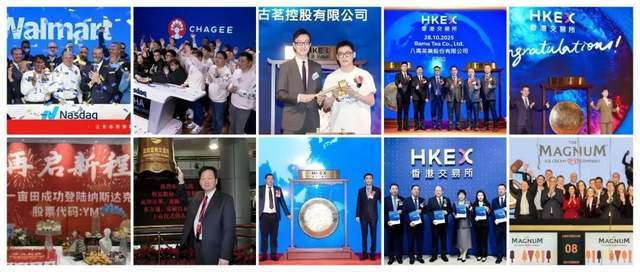
Group 1: IPO Trends in Hong Kong - In 2025, Hong Kong saw a surge in IPOs from retail and consumer companies, with over 23 listings by the end of November, making it the leading sector for IPOs [2][3] - Notable companies that went public include Mixue Group, Shuhang Ayi, and Bama Tea, with Mixue Group setting a record with a frozen capital scale of HKD 1.84 trillion [2] - Despite the IPO excitement, market volatility is evident, with companies like Bama Tea experiencing significant stock price drops shortly after their listings [2][3] Group 2: Performance of Key Companies - Mixue Group reported a closing price increase of over 40% on its first trading day, achieving a market capitalization exceeding HKD 100 billion [2] - Bama Tea's stock price fell dramatically, reaching around HKD 30 by December 30, 2025, reflecting a "roller coaster" performance since its IPO [2][19] - The financial performance of these companies shows mixed results, with Mixue Group achieving a net profit of CNY 3.5 billion in the first nine months of 2024, a 42.3% increase year-on-year [10] Group 3: Market Dynamics and Challenges - The retail and consumer sector in Hong Kong is characterized by a strong IPO presence but lower fundraising amounts compared to other sectors, with the retail sector raising HKD 36.9 billion, ranking fourth overall [3] - The competitive landscape for new beverage brands is intensifying, with many companies facing challenges such as declining same-store sales and increased competition [14][20] - The overall market for tea beverages is highly fragmented, with the top five brands holding only about 5.6% market share, indicating significant competition and challenges for brand differentiation [20] Group 4: Strategic Moves by Major Players - Walmart's transition from the NYSE to NASDAQ marks a significant strategic shift towards a technology-driven retail model, with a stock price increase of 1.32% on its first day on NASDAQ [6][7] - The company aims to enhance its market valuation by aligning itself with technology-focused retail giants like Amazon, leveraging automation and AI in its operations [6][7] - Other companies, such as Anjuke Foods and Haitian Flavor, are also pursuing dual listings to enhance their capital structure and market presence [21][25] Group 5: Future Outlook - The IPO market in Hong Kong is expected to remain active, with projections of 180-200 listings in 2026, potentially raising HKD 350 billion [41][43] - However, the increasing focus on profitability and growth metrics may pose challenges for retail and consumer companies seeking to go public [43] - Regulatory concerns regarding the quality of IPO applications have been raised, indicating a need for companies to demonstrate strong financial health and growth potential [43]

为生猪企业经营装上“导航仪”
Qi Huo Ri Bao Wang· 2026-01-08 01:53
5年来,生猪期货的故事始终与另一个更庞大、更生动的市场——现货市场进行着同频共振。生猪期货 上市的意义远不只是增添了一个金融交易工具,而在于它如同一种"催化剂"和"重构力",正在悄然改变 生猪这一传统产业的思维方式与行为逻辑。 当价格风险在一定程度上被"锁住",企业的精力和资源便自然流向"真正的核心竞争力"。调研中一个极 为鲜明的感受是:善用期货的企业家,谈行情的时间少了,谈育种、智能化、疫病防控、饲料效率的时 间明显多了。德康集团深耕数字化养殖,石羊农科专注于疫病净化,他们的关注点正回归产业创新的本 源。可以预见,随着期货工具被更广泛地认知与使用,企业竞争必将更多地围绕无法被金融工具替代 的"硬实力"展开。 5年前,生猪期货诞生于产业剧烈变革之际。非洲猪瘟重塑产业格局,价格波动如"过山车",大型企业 迅速扩张,行业向标准化、规模化转型。带来的一个直接结果是:养殖户对传统"猪周期"峰谷的押 注"失灵",产业对平滑周期、管理风险的需求变得空前强烈。期货正是在这样的土壤中应时而生,回应 了行业从"靠天吃饭"向"理性经营"转型的迫切呼唤。 展望未来,道阻且长,挑战仍存。如何让生猪期货的流动性更好地匹配现货市场的庞大 ...
驭“期”五载 生猪产业向“新”而生
Qi Huo Ri Bao Wang· 2026-01-08 01:36
Core Insights - The perception of the pig farming industry towards futures trading has shifted from skepticism to reliance, with companies increasingly recognizing the importance of hedging against price risks through futures contracts [1][2][3] Group 1: Industry Evolution - In the early days of pig futures trading, many companies were hesitant and viewed it as abstract and risky, preferring traditional cost-cutting methods [1] - By 2023, companies that utilized futures for hedging demonstrated greater financial stability amidst operational losses, leading to a significant increase in participation in futures contracts [2] - The volume of pig futures contracts has surged, with companies like Zhongji Trading seeing a rise from 20,500 pigs in 2024 to over 1.5 million in 2025 [2] Group 2: Hedging Practices - Early adopters like Dekang Group successfully implemented hedging strategies, which helped them avoid losses during market downturns, establishing a consensus that futures can stabilize operations [3][4] - Companies faced challenges in their hedging journeys, but those that maintained a commitment to hedging strategies, even during periods of floating losses, ultimately achieved profitability [5] - The approach to hedging has evolved from a speculative mindset to a strategic cost management perspective, emphasizing the importance of viewing hedging as a cost item rather than a profit item [5][6] Group 3: Systematic Changes - Mature pig farming enterprises have developed comprehensive hedging systems involving multiple departments, enhancing decision-making and risk management [6] - Companies have established internal controls and dedicated teams to ensure effective hedging practices, separating business operations from risk management [6] Group 4: Industry Collaboration - Futures trading has become a critical component in the pig industry, facilitating collaboration across the supply chain and driving innovation [7][8] - Leading companies are taking on market cultivation responsibilities, sharing successful case studies to promote wider adoption of futures trading [8][9] - Innovative service models have emerged to assist smaller enterprises in accessing futures markets, thereby enhancing overall industry stability [9] Group 5: Future Outlook - The development of a healthy futures market relies on the interaction between market builders and industry participants, with ongoing improvements in market conditions being essential [10][11] - The introduction of pig options in 2024 is expected to provide more flexible risk management tools for companies [11] - Companies are encouraged to adopt a strategic approach to hedging, integrating it into overall business strategies and ensuring adequate funding and risk management practices [12]
建信期货生猪日报-20260108
Jian Xin Qi Huo· 2026-01-08 01:31
Report Information - Report Name: Pig Daily Report [1] - Date: January 8, 2026 [2] Industry Investment Rating - Not provided Core View - On the supply side, pig slaughter is expected to increase slightly until the first half of next year. The enthusiasm for second - round fattening has increased, and the utilization rate of second - round fattening pens has slightly risen. In January, the monthly slaughter of breeding enterprises may continue to increase slightly, and the current slaughter rhythm of the breeding side is controllable. On the demand side, second - round fattening has increased, and there is a rolling restocking demand. Post - holiday consumption is slowly recovering, and there is still room for cured meat and sausage demand. Terminal consumer consumption remains high, but the orders of slaughtering enterprises are average after the festival. The operating rate and slaughter volume of slaughtering enterprises are slowly increasing after the festival. Overall, on the spot market, post - holiday consumption is slowly recovering, the overall volume is still high, supply is relatively loose, and the spot price fluctuates. In the futures market, pig supply is expected to maintain a slight increase. The demand elasticity before the Spring Festival is strong, and the pressure of second - round fattening is still higher than the same period last year, which continues to put pressure on the market, but the previous epidemic in the north has continued to boost the 03 contract. Currently, the market feedback shows that the epidemic has not continued to spread and remains sporadically seasonal. [9] Summary by Directory 1. Market Review and Operational Suggestions - **Futures Market**: On the 7th, the main 2603 contract of live pigs opened slightly higher, then rose and fell back, fluctuating downward, and closed with a negative line. The highest price was 11,925 yuan/ton, the lowest was 11,740 yuan/ton, and the closing price was 11,785 yuan/ton, up 0.60% from the previous day. The total open interest of the index increased by 8,459 lots to 363,111 lots. [8] - **Spot Market**: On the 7th, the average price of ternary pigs nationwide was 12.55 yuan/kg, up 0.07 yuan/kg from the previous day. [8] - **Supply - demand Analysis**: As mentioned in the core view, the supply is expected to increase slightly, and demand is slowly recovering. On January 7, the slaughter volume of sample slaughtering enterprises was 191,100 heads, an increase of 1,300 heads from the previous day, a decrease of 9,700 heads week - on - week, and an increase of 9,000 heads month - on - month. [9] 2. Industry News - According to Yongyi Information, in the week of January 4, the overall slaughter proportion of small - weight pigs under 90 kg was 5.44%, a decrease of 0.07% from the previous week. Due to the seasonal sporadic occurrence of the epidemic, the slaughter volume of small - weight pigs in many places has decreased compared with the previous period, and currently, the market feedback shows that the epidemic has not continued to spread. [10][11] 3. Data Overview - **15kg Piglet Price**: In the week of January 4, the average market sales price of 15kg piglets was 319 yuan/head, an increase of 12 yuan/head from the previous week. [18] - **Breeding Profit**: As of January 4, the average profit per self - bred and self - raised pig was - 28.3 yuan/head, an increase of 96 yuan/head week - on - week; the average profit per pig purchased as a piglet was - 160.8 yuan/head, an increase of 95 yuan/head week - on - week. [18] - **Average Slaughter Weight**: As of the week of January 4, the average slaughter weight of live pigs was 128.66kg, a decrease of 1.04kg from the previous week (a week - on - week decrease of 0.80%), a decrease of 1.16kg from the previous month (a month - on - month decrease of 0.89%), and an increase of 2.6kg from the same period last year (a year - on - year increase of 2.06%). [18]
乐山巨星农牧股份有限公司 2025年12月养殖业务销售情况简报
Zheng Quan Ri Bao· 2026-01-07 22:39
证券代码:603477 证券简称:巨星农牧 公告编号:2026-002 债券代码:113648 债券简称:巨星转债 乐山巨星农牧股份有限公司(以下简称"公司")现将2025年12月养殖业务销售情况披露如下: 3、 生猪市场价格的大幅波动(下降或上升)与动物疫病是生猪养殖行业的系统性风险,对任何一家生 猪养殖生产者来讲都是客观存在的、不可控制的外部风险,可能会对公司的经营业绩产生重大影响。 敬请广大投资者审慎决策,理性投资,注意风险。 特此公告。 一、2025年12月养殖业务销售情况 二、2025年1至12月养殖业务销售情况 三、特别说明与风险提示 1、 上述披露信息仅包含公司养殖业务的生猪销售情况,不包括其他业务和其他产品。 2、 上述销售数据来源于公司内部统计,未经审计,与定期报告披露的数据之间可能存在差异,上述销 售数据仅作为阶段性数据供投资者参考。因四舍五入,以上数据可能存在尾差。商品肥猪销价为当月销 售均价。 本公司董事会及全体董事保证本公告内容不存在任何虚假记载、误导性陈述或者重大遗漏,并对其内容 的真实性、准确性和完整性承担法律责任。 乐山巨星农牧股份有限公司 董事会 2026年1月8日 ...

唐人神集团股份有限公司 2025年12月生猪销售简报
Zheng Quan Ri Bao· 2026-01-07 22:33
登录新浪财经APP 搜索【信披】查看更多考评等级 证券代码:002567 证券简称:唐人神 公告编号:2026-002 本公司及董事会全体成员保证信息披露的内容真实、准确、完整,没有虚假记载、误导性陈述或重大遗 漏。 一、生猪销售情况 唐人神集团股份有限公司(以下简称"公司")2025年12月生猪销量49.46万头(其中商品猪45.74万头, 仔猪3.72万头),2024年12月生猪销量55.24万头(其中商品猪50.37万头,仔猪4.87万头),同比下降 10.46%,环比上升8.35%;销售收入合计62,711万元,同比下降35.65%,环比下降0.28%。 2025年12月公司生猪销售收入同比下降的主要原因是生猪销售价格同比大幅下降及生猪出栏量减少。 三、风险提示 (一)上述披露仅包含公司生猪养殖业务销售情况,不含饲料、肉品等业务情况。 (二)生猪市场价格波动的风险是整个生猪生产行业的系统风险,对任何一家生猪生产者来说,都是客 观存在的、不可控制的外部风险。生猪市场价格的大幅波动(下降或上升),都可能会对公司的经营业 绩产生较大影响。 四、其他提示 公司信息披露媒体为《证券时报》、《上海证券报》、《证券 ...

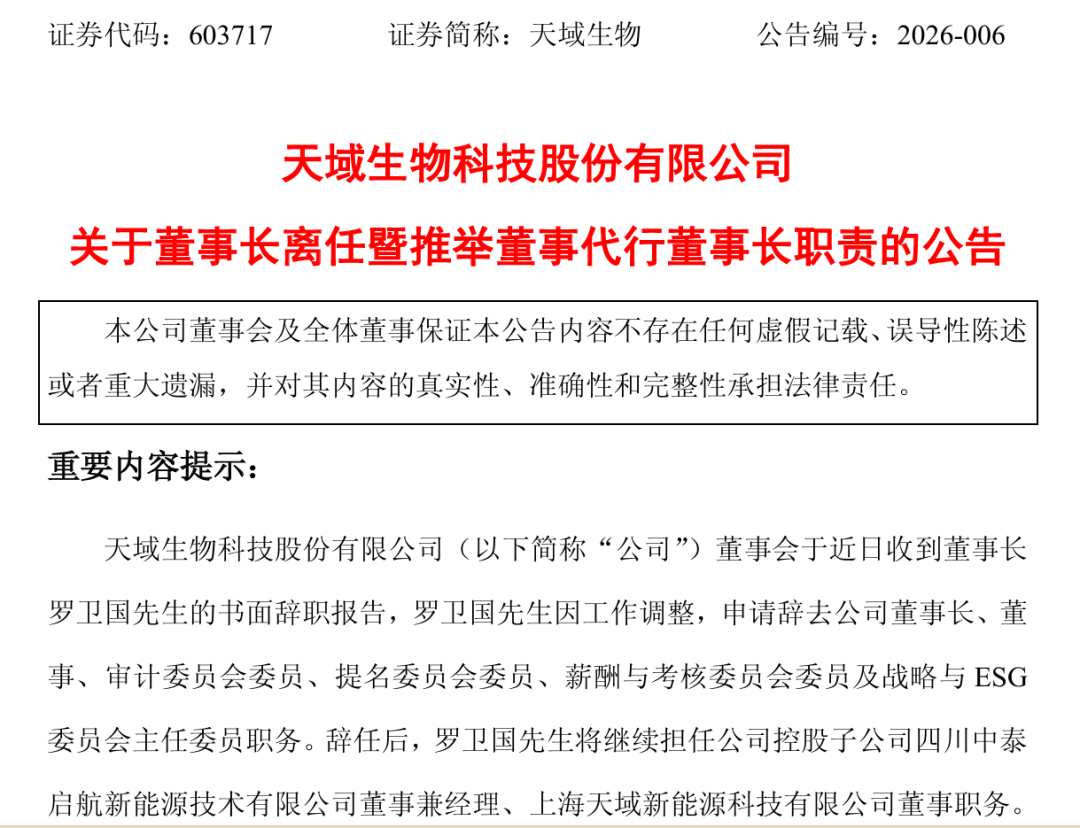
立案仅6天!掌舵12年天域生物董事长火速辞职
Shen Zhen Shang Bao· 2026-01-07 15:01
Group 1 - The chairman of Tianyu Bio, Luo Weiguo, has resigned from his positions due to work adjustments, but will continue to serve as a director and manager of the company's subsidiaries [1] - Meng Zhuowei, a board member and the current president, will temporarily assume the role of chairman until a new chairman is elected [1] - Luo Weiguo has been the chairman of Tianyu Bio for over 12 years and currently holds approximately 37.25 million shares, accounting for 12.84% of the company's total equity [4] Group 2 - Six days prior to the resignation announcement, Tianyu Bio disclosed that Luo Weiguo was under investigation by the China Securities Regulatory Commission (CSRC) for suspected illegal stock reduction [4] - The company has faced continuous financial losses over the past five years, with cumulative losses reaching 1.25 billion CNY [5] - For the first three quarters of 2025, Tianyu Bio reported total revenue of 536 million CNY, a year-on-year decrease of 14.23%, and a net loss of 1.61 million CNY [5] Group 3 - As of January 7, 2026, Tianyu Bio's stock price was 7.80 CNY per share, with a total market capitalization of 2.26 billion CNY [6]

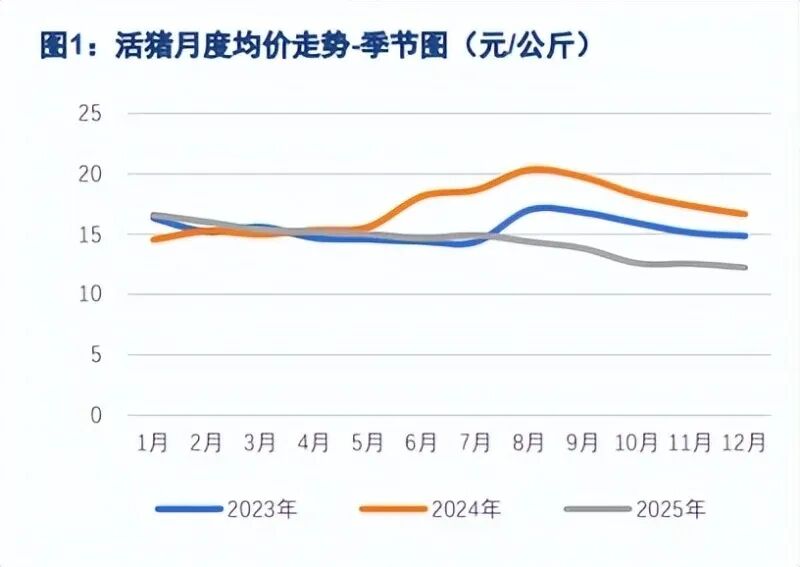
农林牧渔行业2026年策略:产业转型升级,静候周期拐点(附下载)
Xin Lang Cai Jing· 2026-01-07 13:17
Core Viewpoint - The swine breeding industry is experiencing a gradual capacity reduction, with expectations for improved supply-demand dynamics in the future, despite ongoing short-term oversupply and industry losses [1][5][14]. Group 1: Supply and Demand Dynamics - The supply-demand situation for swine is expected to improve, with continued oversupply pressure in the first half of 2026, leading to sustained industry losses [1][5][17]. - The average price of live pigs in China for January to November 2025 was 14.64 CNY/kg, with a projected annual average of 14.5 CNY/kg, down from 17 CNY/kg in 2024 [15]. - The number of breeding sows in China decreased to 39.9 million by October 2025, marking a 1.1% month-on-month decline and a 2.2% year-on-year decline, indicating a confirmed trend of capacity reduction [6][18]. Group 2: Policy and Regulatory Environment - The capacity reduction is driven by a combination of industry losses and policy regulations, with the Ministry of Agriculture holding multiple meetings to discuss capacity control measures [7][18]. - Key regulatory measures include reducing the number of breeding sows, maintaining a slaughter weight limit of 120 kg, and restricting financial support for new capacity projects [18][20]. Group 3: Industry Structure and Efficiency - The concentration of the swine breeding industry has increased, with the market share of the top ten listed companies rising to 24.98% in the first half of 2025, up 1.27 percentage points from 2024 [20]. - The average pigs per sow (PSY) is expected to improve, with a projected increase to 24.03 heads in 2024, and leading companies like Muyuan Foods achieving a PSY of 29 by September 2025 [20]. Group 4: Cost and Profitability - Cost management is identified as a critical factor for companies to achieve excess returns and long-term growth, especially during down cycles [1][14]. - The industry is expected to see significant differentiation in performance, with companies that have cost advantages likely to maintain moderate expansion, while less efficient producers face further elimination [1][14]. Group 5: Market Outlook and Consumer Demand - The demand for pork is projected to remain stable, with 2024 pork production and sales estimated at 57.06 million tons, and a slight increase in consumption expected in 2026 due to government policies aimed at boosting domestic demand [22][23]. - Seasonal fluctuations in demand are anticipated, with a notable increase in piglet numbers in early 2025, but supply pressures are expected to persist into the first half of 2026, particularly around the Lunar New Year [23].