
信息技术

Search documents
魅视科技:公司为中国载人航天工程和探月工程的指挥控制中心提供了“光纤KVMS解决方案”
Zheng Quan Ri Bao· 2025-12-25 13:17
Core Viewpoint - Meishijia Technology has provided a "fiber optic KVMS solution" for China's manned space program and lunar exploration, contributing to the successful launch of the Tianwen-1 Mars probe and other rocket projects like Chang'e 5 [2] Group 1 - The fiber optic KVMS solution is scalable, low-latency (less than 2ms), features a dual backup mechanism, high security, and high intelligence [2] - This solution enables visual scheduling, seamless splicing, KVMS seat collaboration, and fiber optic interconnectivity, making it suitable for applications with high demands on latency, image quality, and security [2]


北纬科技:海南北纬乐澄主要投资布局“物联网+”等早期创新项目
Zheng Quan Ri Bao Wang· 2025-12-25 12:13
Group 1 - The core viewpoint of the article is that Beiwai Technology (002148) is actively investing in early-stage innovative projects, particularly in the "Internet of Things+" and "Information Technology+" sectors through its wholly-owned subsidiary, Hainan Beiwai Lecheng Venture Capital Co., Ltd. [1] Group 2 - The company aims to empower the financing and management of the enterprises it invests in [1]

科创综指运行近一年:涨幅超48%,撬动中长线资金抢滩硬科技
Di Yi Cai Jing· 2025-12-25 12:12
Core Insights - The STAR Market Composite Index (科创综指) has significantly increased by 48.35% since its launch on January 20, 2025, outperforming major broad market indices [1][4][5] - The index currently includes 576 sample stocks, covering 96% of the STAR Market companies, with a market capitalization coverage exceeding 91% [3][4] - The total market capitalization of the STAR Market has reached 11.14 trillion yuan, with the 576 stocks in the index accounting for 10.18 trillion yuan, or 91.38% of the total [3][5] Index Performance and Structure - The STAR Market Composite Index has a diverse representation across various sectors, with 202 stocks from the industrial sector, 199 from information technology, and 107 from healthcare [3] - The index's top ten stocks represent 27.5% of its total market capitalization, with ten stocks exceeding 100 billion yuan in market value [3][4] - The index has been supported by improved industry fundamentals, policy benefits, and active capital inflows, reflecting a shift from emotional recovery to trend-driven growth [4][5] Investment Products and Ecosystem - As of December 24, 2025, 45 fund managers have launched 77 STAR Market Composite Index funds, with a total scale of 27 billion yuan [6] - The average return of these products since their launch has been 42%, indicating strong investor interest and confidence in the index [6] - The index serves as a convenient investment tool for institutional investors, allowing them to efficiently allocate capital to the "hard technology" sector [6][7] Future Development and Optimization - Experts suggest that the STAR Market Composite Index should continuously optimize its dynamic adjustment and maintenance mechanisms to reflect the latest developments in the hard technology sector [2][7] - There is a need to enhance the scientific and representative nature of the index, focusing on key indicators such as R&D intensity and technology transfer capabilities [6][10] - The index is expected to play a crucial role in guiding long-term capital allocation and enhancing recognition of China's technological strength among domestic and foreign investors [9][10]
森远股份(300210.SZ):与关联方签订算力集群集成建设合同
Ge Long Hui A P P· 2025-12-25 10:54
格隆汇12月25日丨森远股份(300210.SZ)公布,公司于2025年12月25日与北京中科信控创新创业科技发 展有限公司(简称"中科信控")签署了《算力集群集成建设合同》,合同总价款合计为26,783,852元。 中科信控为公司控股股东,且公司董事担任中科信控董事,因此中科信控为公司关联法人,根据《深圳 证券交易所创业板股票上市规则》有关规定,本次交易构成关联交易。 ...

扬州经开区创新生态赋能产业发展
Xin Hua Ri Bao· 2025-12-24 23:46
Core Insights - The article highlights the successful collaboration between Yangzhou Hengxin Seat Co., Ltd. and the National Automotive Lightweight Technology Research Institute, resulting in a 15% weight reduction in automotive seat frames and over 5 million yuan in new orders this year [1] - Yangzhou Economic Development Zone is advancing five major innovation projects to integrate technology innovation with advanced manufacturing, aiming for high-quality development [1] Group 1: R&D Platforms and Industry Upgrades - The National Automotive Lightweight (Jiangsu) Technology Co., Ltd. has established four major platforms for R&D, trial production, testing, and services, collaborating with over 10 vehicle manufacturers [2] - The company has attracted 7 projects with a total investment exceeding 3 billion yuan, promoting the development of over 30 supporting enterprises in the automotive parts industry [2] - The Yangzhou Economic Development Zone is implementing a collaborative model involving government, industry, academia, research, finance, and services to connect innovation sources with industry needs [2] Group 2: Core Technology and Industrial Transformation - Huacarb Technology (Yangzhou) Co., Ltd. is set to launch a CCUS demonstration project, which will capture and purify 1,000 tons of CO2 annually, contributing to significant emissions reduction [3] - Jiangsu Ruifeng Information Technology Co., Ltd. has developed a pioneering agricultural machine that improves farming efficiency by nearly 20% and increases yield by 10%-20% per acre [3] - The region is witnessing breakthroughs in key technologies, enhancing the strength of advanced manufacturing and the supply capacity of high-quality technology [3] Group 3: Innovation Ecosystem and Industry Clusters - The Yangzhou Economic Development Zone is fostering deep integration between innovation platforms and industry clusters, successfully attracting teams led by academicians and industry leaders [4] - The introduction of advanced technologies, such as the 2000 MPa steel laser welding technology, has led to product adoption by several high-end domestic automotive brands [4] - The zone has implemented a talent policy that has attracted over 10,000 professionals, with a focus on enhancing the innovation ecosystem [4] Group 4: Future Development Plans - The "14th Five-Year Plan" emphasizes the establishment of mechanisms to cultivate leading technology enterprises with global competitiveness [5] - The Yangzhou Economic Development Zone aims to strengthen the construction of innovation platforms and integrate innovation chains, industry chains, capital chains, and talent chains for sustainable growth [5]
科创平台架桥 先进制造提速
Xin Hua Ri Bao· 2025-12-24 23:21
Core Insights - The article highlights the successful collaboration between Yangzhou Hengxin Seat Co., Ltd. and the National Automotive Lightweight Technology Research Institute, resulting in a 15% weight reduction in automotive seat frames and over 5 million yuan in new orders this year [1] - Yangzhou Economic Development Zone is advancing five major innovation projects to integrate technology innovation with advanced manufacturing, aiming for high-quality development [1] Group 1: Innovation Platforms - The National Automotive Lightweight (Jiangsu) Technology Co., Ltd. has established four major platforms for research, testing, and service, collaborating with over 10 major automotive manufacturers [2] - The company has attracted 7 projects with a total investment exceeding 3 billion yuan, promoting the development of over 30 supporting enterprises in the automotive parts sector [2] - The Yangzhou Economic Development Zone has introduced several innovation platforms, including a provincial concept verification center for automotive lightweight technology, enhancing the region's technological capabilities [2] Group 2: Core Technology Development - Huacarb Technology (Yangzhou) Co., Ltd. is set to launch a CCUS demonstration project, which is the first of its kind in China, capable of capturing and purifying 1,000 tons of CO2 annually [3] - Jiangsu Ruifeng Information Technology Co., Ltd. has developed a pioneering agricultural machine that improves farming efficiency by nearly 20% and increases yield by 10%-20% per acre [3] - Key technological breakthroughs in various sectors are strengthening the advanced manufacturing industry and enhancing the region's high-quality technological supply capabilities [3] Group 3: Collaborative Development - The Yangzhou Economic Development Zone is fostering deep integration between innovation platforms and industrial clusters, successfully attracting teams led by academicians and industry leaders [4] - The introduction of advanced technologies, such as the 2000 MPa steel laser welding technology, has been adopted by several high-end domestic automotive brands [4] - The zone has implemented a talent policy that has attracted over 10,000 professionals, with a focus on building a complete incubation chain for technology startups [4] Group 4: Future Development - The Yangzhou Economic Development Zone aims to strengthen the integration of innovation chains, industrial chains, financial chains, and talent chains to continuously nourish advanced manufacturing [5] - The region is committed to accelerating high-quality development and enhancing its technological and industrial influence [5]
增长的盛夏,就业的寒冬
SINOLINK SECURITIES· 2025-12-24 15:24
Economic Growth - The US GDP for Q3 recorded an annualized growth rate of 4.3%, exceeding the expected 3.3%[2] - Year-on-year growth increased to 2.3%, but remains below last year's 2.8%[2] - Key contributors to the 4.3% growth were personal consumption (2.4 percentage points) and net exports (1.6 percentage points)[2] Employment and Consumption - There is a divergence in economic performance, characterized as "growth in summer" and "employment in winter"[2] - Non-cyclical sectors showed strong growth, while cyclical sectors experienced increased weakness[10] - Private consumption remains strong overall, but there is a notable disparity within consumption categories, with disposable income growth slowing[19] Investment Trends - AI-related investments contributed 0.8 percentage points to GDP, while private consumption added 1.1 percentage points, indicating a dual-engine growth model[10] - Despite strong AI investment, traditional sectors like residential investment remain weak, questioning the effectiveness of interest rate cuts[15] Risks and Uncertainties - Increased policy uncertainty under Trump may lead to greater market volatility and faster capital flight from the dollar[32] - Global economic impacts from tariffs could lead to unexpected synchronized easing in 2026, alleviating long-term interest rate pressures[32] - The potential for significant manufacturing cost reductions due to technological breakthroughs could increase credit demand[32]
云上营家:从“黑灯工厂”到全球餐桌,数字冷链如何重塑云南农业
Xin Lang Cai Jing· 2025-12-24 14:20
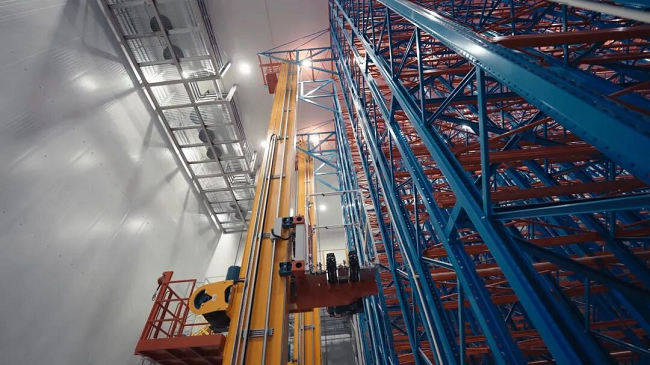
在云南产业变革的宏大图景中,一场关乎温度、数据与风味的系统性重塑正悄然发生。云南建投物流旗 下"云上营家·国际供应链示范中心",将积淀于大宗物流领域的数字能力,系统注入高原特色农业的产 业肌理。以一座"黑灯工厂"为起点,一条横跨温区、联通内外的智慧冷链网络徐徐展开。这不仅是技术 能力的升维,更是一场关于农业价值重构、农民持续增收与消费体验焕新的深度实践。当物理灯光熄 灭,数字之光渐次亮起——云南的山野之鲜,正沿着这条由数据照亮的通道,开启从静谧高原到全球餐 桌的全新旅程。 步入-25℃的"黑灯工厂",物理灯光尽灭,数字驱动的生机却在静谧中流动:华为F5G-A与Wi-Fi融合组 网构建高密度、低延时通信环境,确保AGV、分拣机器人、堆垛机等数百台设备调度"永不掉线";24 米高立体货架间,堆垛机于黑暗中静默移载,为每箱货物匹配最优"休眠位";遍布全库的智能传感器, 将环境温度精准锁定在0°C至-25°C区间。 智能化分 拣配送中心 这座占地206亩、总投资16.6亿元的智慧园区,是云南省"新基建"与"双十"重大工程。其冷库仓储面积 达4.1万平方米,总库容约30万立方米,6万个货位,最大仓储量可达5.2万吨,温 ...
2026美国经济与大类资产展望(1220)
2025-12-24 12:57
1、2025年的回顾与教训 我们在年初展望中的宏观和资产判断基本正确 2026美国经济与大类资产展望: 从金发姑娘到温和再通胀 GMF Research 2025/12 但低估了(宏大)叙事对市场的影响 • 前10个月的主题:左手AI,右手(贵)金属 53.75% 27.08% 22.86% 17.18% 16.30% 16.07% 15.65% 15.31% 11.42% 7.55% 2.47% 2.04% 1.34% -5.77% -14.97% 伦敦金 COMEX铜 纳斯达克 比特币 标普50 高盛工业… 欧洲STOX… 以太坊 欧元 10年期美… 离岸人民币 日元 高盛大宗… WSJ美元… WTI原油 2025年1-10月的主要大类资产的累计回报 数据来源:GMF Research | | | 基准情形 | 风险情形1 | 风险情形2 | 风险情形3 | | --- | --- | --- | --- | --- | --- | | | 概率 | 50% | 30% | 15% | 5% | | | 宏观情景与主题 | 延续2024年软着陆走势,美国 经济温和放缓,美联储25年降 息2-3次然后停止降 ...
聚焦6个关键领域 加快制造业中试平台高水平建设
Ren Min Ri Bao· 2025-12-24 03:22
Core Viewpoint - The article emphasizes the importance of high-level construction of manufacturing pilot platforms to accelerate the transformation and application of major scientific and technological achievements in China. Group 1: Manufacturing Pilot Platforms - The Chengdu High-tech Zone's pilot base has successfully assisted over 300 products in reaching mass production by providing a full-chain service for product finalization, process optimization, and reliability verification [3] - The Ministry of Industry and Information Technology (MIIT) aims to establish a modern pilot platform system by the end of 2027, with a focus on multi-entity participation and multi-level service networks [3][4] - Currently, over 2,400 pilot platforms have been established in China, with 241 selected as key cultivation platforms by MIIT, which have undertaken 25,000 pilot service projects [5] Group 2: Importance of Pilot Testing - Pilot testing is identified as a critical link connecting the innovation chain, technology chain, and industrial chain, with an 80% success rate for industrialization when pilot testing is conducted, compared to only 30% without it [4] - The MIIT has released guidelines to address key issues in pilot platform construction, focusing on strategic positioning, basic capabilities, and future potential [6] Group 3: Development Strategies - The MIIT's strategy includes strengthening, activating, and supplementing pilot platforms to enhance their development and competitiveness, with a focus on key industries such as artificial intelligence, quantum technology, and biomedicine [6][7] - To avoid redundant construction and competition, the guidelines emphasize the need for complementary functions, resource sharing, and business promotion based on actual industrial development conditions [7]
