核能

Search documents
浙富控股:2018年8月,华都公司与中科院上海应物所签订关于“2MWt液态燃料钍基熔盐实验堆”控制棒系统采购合同
Ge Long Hui· 2025-11-06 07:12
Core Viewpoint - Zhejiang Fu Holdings (002266.SZ) announced that its subsidiary Sichuan Huadu Nuclear Equipment Manufacturing Co., Ltd. has successfully completed key equipment procurement contracts related to thorium-based molten salt reactor projects with the Shanghai Institute of Applied Physics, Chinese Academy of Sciences [1] Group 1 - The company signed a procurement contract for the key equipment of the "Thorium-based Molten Salt Reactor Comprehensive Simulation Experimental Platform Project" in December 2015, with the equipment being accepted and delivered in June 2017 [1] - In August 2018, the company entered into a procurement contract for the control rod system of the "2MWt Liquid Fuel Thorium-based Molten Salt Experimental Reactor (TMSR-LF1)," with all engineering supplies now fully completed [1] - The control rod system is reported to be operating normally and stably [1]

浙富控股(002266.SZ):2018年8月,华都公司与中科院上海应物所签订关于“2MWt液态燃料钍基熔盐实验堆”控制棒系统采购合同
Ge Long Hui· 2025-11-06 07:05
Core Viewpoint - Zhejiang Fu Holdings (002266.SZ) announced that its subsidiary Sichuan Huadu Nuclear Equipment Manufacturing Co., Ltd. has successfully completed the procurement contracts for key equipment related to thorium-based molten salt reactor projects with the Shanghai Institute of Applied Physics, Chinese Academy of Sciences [1] Group 1 - The company signed a procurement contract for the key equipment of the "Thorium-based Molten Salt Reactor Comprehensive Simulation Experimental Platform Project" in December 2015, which was accepted and delivered in June 2017 [1] - In August 2018, the company entered into a procurement contract for the control rod system of the "2MWt Liquid Fuel Thorium-based Molten Salt Experimental Reactor (TMSR-LF1)," and the engineering supply has been fully completed [1] - The control rod system is reported to be operating normally and stably [1]
中俄总理联合公报:加强氢能、储能等新兴领域的合作
Xin Hua She· 2025-11-06 03:00
Core Viewpoint - The joint statement from the 30th regular meeting of Chinese and Russian Prime Ministers highlights the significant achievements in energy cooperation and the commitment to further explore energy collaboration potential, ensuring energy security and promoting a fair global energy transition [1][2]. Energy Cooperation - Both countries will support enterprises in deepening cooperation in oil, natural gas, coal, and electricity sectors, while enhancing energy infrastructure connectivity and ensuring the safe and stable operation of cross-border energy channels [1]. - There will be a focus on emerging fields such as renewable energy, low-carbon energy, hydrogen, and energy storage, along with collaboration on carbon capture, utilization, and storage systems [1]. Nuclear Energy Projects - The construction of the Tianwan and Xudabao nuclear power plants will continue, with an emphasis on timely completion and operation, alongside deepening cooperation in peaceful nuclear energy applications [1]. - There is a plan to gradually advance cooperation in areas such as thermonuclear fusion, fast reactors, and closed nuclear fuel cycle, exploring collaborative opportunities for nuclear fuel cycle front-end and new nuclear power projects based on mutual benefits [1]. Market Stability and Dialogue - The commitment to maintaining global energy market stability will be reinforced, with an expansion of dialogue between energy-producing and consuming countries, supporting an open, fair, non-discriminatory, and free energy market [1][2].
中俄平等互利务实合作典范,为什么是能源?
中国能源报· 2025-11-06 01:41
Core Viewpoint - The article emphasizes the importance of Sino-Russian energy cooperation as a cornerstone for practical collaboration between the two countries, particularly in the context of global energy security and the evolving international landscape [1][10]. Group 1: Energy Cooperation and Market Dynamics - Sino-Russian energy cooperation is built on natural complementary advantages, with Russia possessing abundant energy resources and China being one of the largest energy consumption markets globally [3]. - In 2024, China is expected to import 108.47 million tons of crude oil from Russia, accounting for 19.6% of China's total crude oil imports, making Russia the largest supplier [3]. - Russia has supplied 31 billion cubic meters of natural gas to China via pipelines and exported 8.6 million tons of liquefied natural gas (LNG) [3]. - Key cross-border energy infrastructure projects, such as the China-Russia oil pipeline and the East Route Gas Pipeline, are being developed to enhance energy connectivity [3]. Group 2: Transition to Comprehensive Cooperation - The focus of Sino-Russian cooperation is shifting from merely expanding trade volume to building a comprehensive industrial chain collaboration, emphasizing quality over quantity [4]. - Future areas of interest include stabilizing Russian oil supply to China, ensuring full operation of the Siberian Power Gas Pipeline, and enhancing financial cooperation to increase the proportion of local currency settlements in oil and gas trade [4]. - The cooperation is evolving to include infrastructure interconnectivity, emerging fields, and financial standards, indicating a more resilient and in-depth partnership [4]. Group 3: Clean Energy and Technological Collaboration - Both countries are accelerating cooperation in clean energy, with a focus on renewable energy, hydrogen, and energy storage [6]. - Russia is seeking to diversify its energy exports and modernize its economic structure, while China excels in renewable energy equipment manufacturing [6]. - There is a push for bilateral investments and cooperative development in green energy sectors such as wind, solar, and biomass [6][7]. - The two nations are also collaborating on new-generation small nuclear reactors and planning hydrogen energy industrial chains [7]. Group 4: Global Energy Governance Impact - Sino-Russian energy cooperation has implications beyond bilateral relations, significantly influencing global energy governance and transition processes [8]. - The partnership aims to ensure energy security at national, regional, and global levels, promoting affordable, reliable, and sustainable modern energy [9]. - The cooperation is seen as a stabilizing factor for regional and global energy security, contributing to the low-carbon transition of energy supply chains and the upgrading of industrial chains [9][10].

中俄商定支持两国企业深化煤炭等能源领域合作
Xin Hua She· 2025-11-06 01:39
——持续巩固全球能源市场的稳定性,扩大能源生产国与消费国之间的对话。支持保障开放、公平竞 争、非歧视和自由的能源市场。 ——持续加强中国国家核安全局与俄罗斯联邦环境、工业与核监督局在核安全监管领域的合作。 根据新华社发布的中俄总理第三十次定期会晤联合公报,双方高度评价中俄能源合作取得的丰硕成果, 将进一步挖掘能源合作潜力,持续巩固全面能源合作伙伴关系,巩固深化全方位、宽领域、深层次的能 源合作格局,共同维护国家、地区和全球能源安全,推动保障所有人获得可负担、可靠且可持续的现代 能源,推动公正、均衡的全球能源转型。为此,双方商定: ——支持两国企业深化石油、天然气、煤炭、电力等能源领域合作,持续推进能源基础设施互联互通, 共同保障跨境能源通道安全稳定运行。 ——加强可再生能源、低碳能源、氢能、储能等新兴领域与碳捕集、碳利用和碳封存体系方面的合作。 ——继续推进田湾核电站和徐大堡核电站建设项目,确保按时完成建设并投入运行。在此基础上深化和 平利用核能领域合作,逐步推进热核聚变、快堆和闭式核燃料循环领域合作,基于互利共赢和利益均衡 原则,探讨通过"一揽子"方式开展核燃料循环前端和新核电项目建设合作。 应中华人民共和 ...
中德能源对决炸场!钍堆狂飙2兆瓦VS德国核爆自废武功
Sou Hu Cai Jing· 2025-11-05 14:03
Group 1 - The core of the article highlights the contrasting energy strategies of China and Germany, with China advancing its thorium molten salt reactor technology while Germany dismantles its nuclear power infrastructure [1][4][10] - China's thorium molten salt reactor, TMSR-LF1, operates at a stable power of 2 megawatts and utilizes liquid molten salt as both coolant and fuel carrier, achieving high operational temperatures of up to 700°C [3][6] - China possesses 30% of the world's thorium reserves, exceeding 1 million tons, which is projected to meet energy demands for thousands of years, showcasing a significant advantage over its limited uranium resources [3][6] Group 2 - Germany's decision to decommission the Gundremmingen nuclear power plant, which previously supplied 5% of the nation's electricity, is framed as a consequence of populism and public fear surrounding nuclear energy [4][6] - Following the nuclear phase-out, Germany saw an increase in coal power generation from 35% to 46%, leading to a rise in carbon emissions, contradicting the environmental goals of the energy transition [4][6] - The cost of electricity in Germany rose from €0.3 to €0.5 per kilowatt-hour post-phase-out, negatively impacting industrial competitiveness, while China's thorium reactor approaches a cost of approximately ¥0.2 per kilowatt-hour [6][7] Group 3 - The article emphasizes that China's strategic approach to thorium molten salt technology is a culmination of 50 years of research, contrasting with Germany's retreat from nuclear energy driven by populist sentiments [6][7] - The thorium molten salt reactor produces nuclear waste with a half-life of only 300 years, significantly shorter than the millennia-long waste from uranium reactors, presenting a safer alternative [6][7] - The global nuclear energy landscape is shifting, with countries like the US and Japan also reviving nuclear projects, while China explores innovative applications of nuclear energy beyond traditional uses [7][10]
多次提及能源!中俄总理第三十次定期会晤联合公报(全文)发布
Xin Hua She· 2025-11-05 02:41
Energy Cooperation - Both countries highly value the achievements in energy cooperation and aim to further explore potential in this area, reinforcing a comprehensive energy partnership to ensure national, regional, and global energy security [1][34] - Agreement to support deepening cooperation in oil, natural gas, coal, and electricity sectors, while enhancing energy infrastructure connectivity and ensuring the safe and stable operation of cross-border energy channels [34] - Commitment to strengthen collaboration in renewable energy, low-carbon energy, hydrogen, energy storage, and carbon capture, utilization, and storage systems [34][35] Nuclear Energy - Continued progress on the Tianwan and Xudabao nuclear power plant projects, ensuring timely completion and operation, while deepening peaceful nuclear energy cooperation [35] - Exploration of cooperation in advanced nuclear technologies such as thermonuclear fusion, fast reactors, and closed nuclear fuel cycle [35][36] Trade and Investment - Both countries will work to improve trade structure and explore growth points in e-commerce, agricultural products, and intermediate goods, while promoting cross-border e-commerce [10][11] - Support for the 2026 investment cooperation framework to enhance investment quality and efficiency across various sectors including machinery, automotive, forestry, and digital economy [30][31] Financial Cooperation - Continued progress in local currency settlement and practical cooperation in banking and capital markets to support economic stability [32] - Emphasis on enhancing cooperation in insurance and reinsurance sectors to promote trade and tourism [32] Climate Change and Environmental Cooperation - Commitment to strengthen communication and collaboration on climate change within various multilateral frameworks, focusing on the implementation of the Paris Agreement [4][55] - Joint efforts to ensure that measures taken to address climate change do not become unjust discrimination in international trade [55] Cultural and Human Exchange - Expansion of bilateral educational exchanges and high-quality inter-university cooperation, including support for Chinese language education in Russia and Russian language education in China [37] - Continued collaboration in cultural events, including arts performances and cultural festivals, to deepen mutual understanding [37][41] Regional Cooperation - Support for local and border region cooperation in trade, investment, and cultural exchanges, enhancing the legal framework for cooperation [42][43] - Promotion of cross-border e-commerce and service trade development to tap into local trade potential [43]
【解放日报】茫茫戈壁见证上海又一大科学装置新纪录
Jie Fang Ri Bao· 2025-11-05 02:34
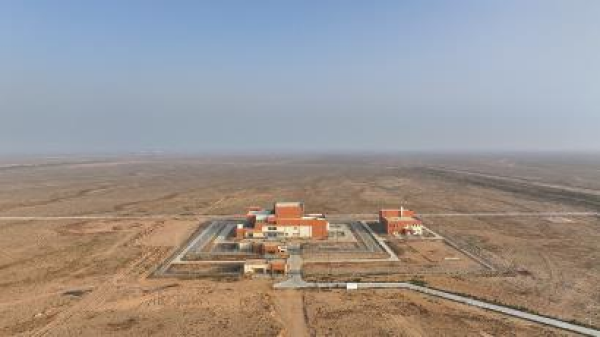
Core Viewpoint - The establishment of the world's first operational thorium-based molten salt reactor in Gansu, China, marks a significant advancement in nuclear energy technology, enabling the diversification of nuclear fuel from uranium to thorium [6][10]. Group 1: Technology Overview - The thorium-based molten salt reactor operates using thorium as fuel and high-temperature molten salt as a coolant, representing a fourth-generation advanced nuclear energy system [5]. - This technology allows for a sustainable "thorium-uranium fuel cycle," where thorium-232 absorbs neutrons and transforms into uranium-233, releasing substantial energy with reduced nuclear waste [9][10]. - The reactor's output temperature ranges from 650°C to 700°C, with a thermal-to-electric conversion efficiency of 40% to 60% [9]. Group 2: Advantages and Integration - Thorium is a naturally occurring, less radioactive metal, which can be efficiently converted into usable nuclear fuel, addressing China's reliance on imported uranium [5][9]. - The molten salt reactor can be integrated with renewable energy sources such as solar and wind, creating a low-carbon composite energy system [5][9]. Group 3: Domestic Development and Supply Chain - The overall domestic production rate of the molten salt reactor exceeds 90%, with all key equipment being 100% domestically produced, ensuring a self-sufficient supply chain [10]. - Significant advancements have been made in the development of critical materials, such as high-temperature nickel-based alloys and nuclear graphite, which are essential for reactor safety and longevity [10]. Group 4: Historical Context and Future Prospects - The project has a historical background dating back to the 1971 "728" project, which initially aimed to develop molten salt reactors but was shelved due to technological limitations at the time [11]. - The current experimental reactor is the first step in a planned three-phase development, with future goals including a 30 MW research reactor and a 100 MW demonstration reactor for efficient power generation [15].
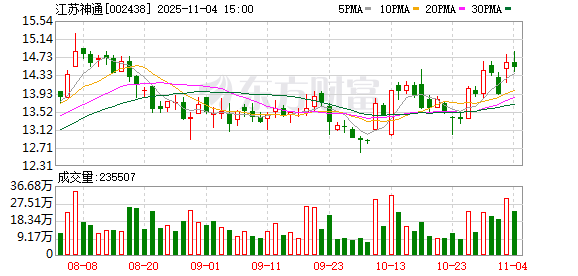
江苏神通:目前已开展钍基熔盐堆中所需各类阀门产品的研发和技术储备
Mei Ri Jing Ji Xin Wen· 2025-11-05 01:01
Group 1 - The company is actively involved in the research and supply of valves required for the nuclear power industry, particularly focusing on advanced technologies in nuclear energy applications [2] - The company has initiated the development and technical reserve of various valve products needed for thorium-based molten salt reactors [2]

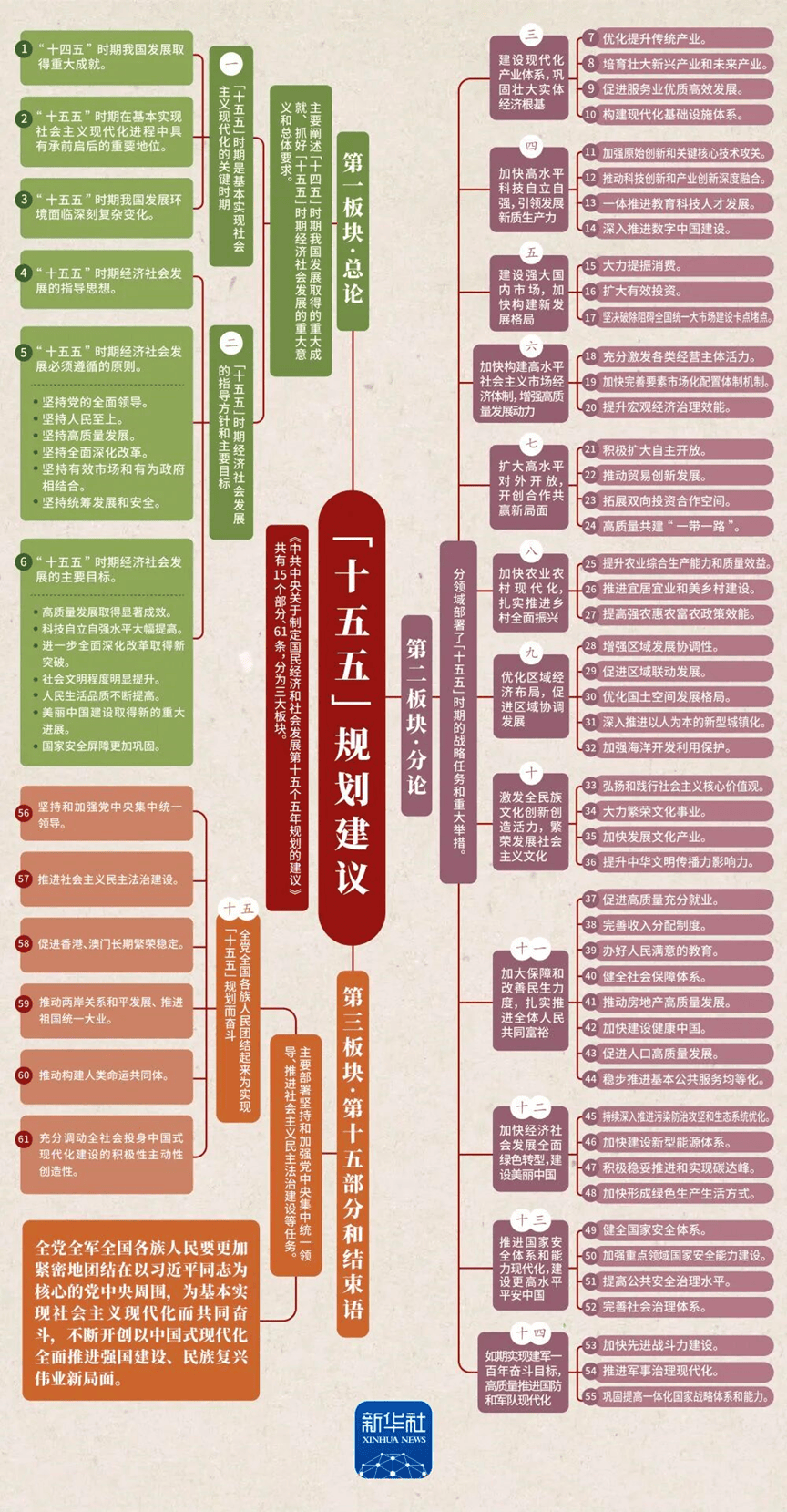
十五五规划,释放的9大信号!
Sou Hu Cai Jing· 2025-11-04 18:30
Core Insights - The "15th Five-Year Plan" is a critical roadmap for China's socio-economic development from 2026 to 2030, focusing on high-quality growth and strategic deployment towards modernization by 2035 [3][5]. Group 1: Economic Performance and Goals - During the "14th Five-Year Plan," China's GDP grew at an average rate of 5.5%, reaching 134 trillion RMB, with per capita GDP increasing from $10,632 in 2020 to $13,445 in 2024 [5]. - The "15th Five-Year Plan" aims for significant milestones, including a 70% urbanization rate by 2028, achieving carbon peak by 2030, and a 90% penetration rate for AI applications [3][5]. Group 2: Development Priorities - The plan outlines five main development lines: infrastructure, technology, finance, consumption, and livelihood [4]. - Infrastructure development will focus on major projects like the Sichuan-Tibet Railway and the national water network, which are expected to stabilize the economy [8]. - Technology will shift from factor-driven to innovation-driven growth, emphasizing high-end manufacturing, AI, and energy reform [9][10]. Group 3: Financial Sector - The financial sector is deemed essential for national competitiveness, with a focus on building a robust financial system characterized by strong institutions and regulatory frameworks [10][11]. Group 4: Consumption and Livelihood - The plan addresses insufficient domestic demand, proposing measures to increase household income and reduce consumption burdens, aiming for a consumption rate of 39.9% by 2024 [14][15]. - It emphasizes the importance of public investment in education, healthcare, and social security to stimulate consumption [17][18]. Group 5: Social Policies - The "15th Five-Year Plan" will tackle challenges in public service equality, income stability, and aging population issues, with a focus on health and education [21][22]. - It aims to enhance the quality of life through initiatives in healthcare, childcare, and social welfare, including the introduction of a national childcare subsidy [88][90]. Group 6: Market and Global Integration - The plan emphasizes the establishment of a unified national market to eliminate local protectionism and market fragmentation, which is crucial for enhancing internal stability [40][66]. - It encourages global integration through the "China + N" strategy, promoting international collaboration and investment [72]. Group 7: Key Signals for the Future - The plan reiterates the importance of economic construction, aiming for per capita GDP to reach the level of a moderately developed country by 2035 [74]. - It highlights the commitment to common prosperity, with specific targets for income distribution and social welfare improvements [76][78]. - The focus on "anti-involution" aims to streamline competition and improve industry standards, particularly in emerging sectors like renewable energy and technology [87].