网约车

Search documents
滴滴国际出行业务前三季度累计盈利 巴西外卖已上线30余城
Xin Lang Ke Ji· 2025-11-26 09:17
Core Insights - Didi's Q3 2025 performance report shows steady growth, with core platform order volume increasing by 13.8% year-on-year to 4.685 billion orders [1] - The core platform's Gross Transaction Value (GTV) rose by 14.8% year-on-year to 115.8 billion yuan, with a net profit of 1.5 billion yuan for the quarter [1] - Didi's domestic and international businesses are experiencing robust growth, with daily average orders surpassing 50 million [1] Domestic Business Performance - In Q3 2025, Didi's domestic ride-hailing orders reached 3.523 billion, a year-on-year increase of 10.7%, with daily average orders at 38.3 million [2] - The GTV for domestic services grew by 10.1% year-on-year to 86 billion yuan, and adjusted EBITA profit was 3 billion yuan [1][2] International Business Performance - Didi's international business saw over 20% growth, with order volume increasing by 24.3% year-on-year to 1.162 billion orders [2] - The GTV for international operations grew by 31% year-on-year to 29.8 billion yuan, with adjusted EBITA achieving cumulative profitability in the first three quarters of 2025 [2] Expansion and New Services - Didi is expanding its service offerings in Brazil, having launched food delivery services in over 30 cities since April 2025, with plans to reach 100 cities by mid-2026 [2] - The company has a significant presence in Brazil, with 55 million active users and 1.5 million drivers, covering over 3,300 towns [2] Strategic Initiatives - Didi is focusing on enhancing its domestic travel ecosystem through differentiated services to stimulate potential travel demand [2] - The company has launched various services such as Didi Light Enjoy, Select Fast Car, and pet travel to cater to diverse consumer needs [2] - Didi has also introduced a standardized ride-hailing service in Mexico using 500 electric vehicles, marking a commitment to green transportation [3]

滴滴三季度实现净利润15亿元,日均订单突破5000万单
Zheng Quan Shi Bao Wang· 2025-11-26 09:13
Core Insights - Didi's Q3 2025 performance report shows continued growth in both order volume and Gross Transaction Value (GTV) [1] Group 1: Order Volume - In Q3 2025, Didi's total order volume reached 4.685 billion, representing a year-on-year increase of 13.8% [1] - The average daily order volume surpassed 50 million for the first time in the quarter [1] - The Chinese ride-hailing segment saw a 10.7% year-on-year growth, totaling 3.523 billion orders with a daily average of 38.3 million [1] - The international business experienced a significant growth of 24.3%, reaching 1.162 billion orders with a daily average of 12.63 million [1] Group 2: Financial Performance - Didi's GTV for Q3 2025 amounted to 115.8 billion yuan [1] - The company achieved a net profit of 1.5 billion yuan during the same quarter [1]
优步(UBER.US)与文远知行(WRD.US)合作升级,将在阿布扎比推出无人自动驾驶出租车服务
Zhi Tong Cai Jing· 2025-11-26 08:24
Group 1 - Uber will begin offering fully autonomous ride-hailing services in select areas of Abu Dhabi, marking a significant milestone since the introduction of drivered services nearly a year ago [1] - Passengers using the Uber app can select the new "autonomous driving" ride type, which is priced similarly to Uber Comfort, increasing their chances of being matched with a self-driving vehicle [1] - The current service area includes a 30-square-mile region where rides from Abu Dhabi airport and other routes will still have safety drivers [1] Group 2 - Uber sold its autonomous driving division in 2020 but has since formed over 20 partnerships to expand autonomous ride-hailing services globally, investing hundreds of millions in companies like WeRide [2] - The company has indicated that these investments may take years to yield returns due to the current scale of autonomous vehicles being far from the number of traditional taxis and ride-hailing vehicles in operation [2] - WeRide reported a net loss of 307 million RMB (approximately 43 million USD) in Q3, a reduction from a loss of 1.04 billion RMB in the same period last year, and has obtained autonomous driving permits in eight countries [2]


天津:拟注销3家网约车平台公司经营许可
Sou Hu Cai Jing· 2025-11-26 04:22
Core Viewpoint - The Tianjin Municipal Transportation Committee announced the intention to revoke the operating licenses of certain ride-hailing companies due to the expiration of their permits without renewal [2] Group 1: Announcement Details - The announcement was made on November 25, indicating that the licenses for the following companies are set to be revoked: 1. Hunan Xihang Tianxia Technology Co., Ltd. Tianjin Branch (License No. 100048) 2. Chongqing Huo Wo Chuxing Network Technology Co., Ltd. Tianjin Branch (License No. 100062) 3. Hainan Yingtu Technology Co., Ltd. Tianjin Branch (License No. 100063) [2] Group 2: Legal Framework - The revocation process is based on Article 70, Item 1 of the Administrative Licensing Law of the People's Republic of China, which states that administrative licenses that have expired and are not renewed must be legally revoked [2] Group 3: Response Mechanism - Companies affected by the announcement have a 10-day period from the date of the announcement to present their statements or defenses via email. If no response is received within this timeframe, the licenses will be revoked as per legal requirements [2]

网约车“一口价” 为何从创新走到困局?
Zheng Quan Shi Bao· 2025-11-24 22:28
Core Viewpoint - The "one-price" model in the ride-hailing industry, initially favored for its price transparency, is now facing controversy due to the suspension of this pricing strategy in multiple regions, highlighting a shift from innovation to a dilemma caused by a singular focus on price competition, neglecting driver rights, service quality, and sustainable industry development [1] Group 1 - The "one-price" model has led to a price war among platforms, resulting in prices being driven below operational costs, which ultimately shifts the cost burden onto drivers, reducing their income and service motivation [1][2] - The normalization of "more work for less pay" among drivers has led to a decline in service quality and passenger experience, contradicting the original intent of the "one-price" model to ensure transparent consumption [1][2] Group 2 - To resolve the current dilemma, it is essential to abandon the singular focus on price and establish a multi-dimensional value balance, including a minimum income guarantee for drivers to ensure fair compensation and service stability [2][3] - Platforms should eliminate mandatory order acceptance rules, allowing drivers to choose whether to accept "one-price" orders based on their circumstances, thus respecting their autonomy and preventing forced low pricing [2] Group 3 - There is a need to promote a reasonable match between service value and price, replacing low-price competition with differentiated competition by designing various products tailored to different passenger needs [2][3] - Regulatory bodies should guide the market to prevent platforms from abusing their market position to enforce low prices while allowing space for reasonable value innovation, ensuring that market competition occurs within a regulated framework [3] Group 4 - The value of the ride-hailing industry should not be defined solely by price but should also encompass fair driver rights, quality passenger experiences, and sustainable industry development, aiming for a win-win ecosystem among platforms, drivers, and passengers [3]
【管理锦囊】 网约车“一口价” 为何从创新走到困局?
Zheng Quan Shi Bao· 2025-11-24 18:43
Core Viewpoint - The "one-price" model in the ride-hailing industry, initially favored for its price transparency, is now facing controversy due to its suspension in multiple regions, highlighting a shift from innovation to a dilemma caused by a singular focus on price competition, neglecting driver rights, service quality, and sustainable industry development [1] Group 1: Issues with the Current Model - The "one-price" model has devolved into a low-price competition logic, where platforms continuously lower fixed prices, sometimes below operational costs, leading to a "price spiral" [1] - This model, while seemingly benefiting consumers with lower prices, transfers cost pressures onto drivers, resulting in reduced income and service motivation [1] - The normalization of "more work for less pay" forces drivers to either reduce their working hours or lower service quality, ultimately harming passenger experience and long-term industry growth [1] Group 2: Proposed Solutions - To resolve the current dilemma, it is essential to abandon the "price-only" mindset and reconstruct a multi-dimensional value balance system [2] - Establishing a minimum income guarantee for drivers, as explored in cities like Nanjing, is crucial for ensuring fair compensation and stabilizing service supply and quality [2] - Platforms should eliminate mandatory order acceptance rules, allowing drivers to choose whether to accept "one-price" orders based on their circumstances, thus respecting their autonomy [2] Group 3: Enhancing Service Value - There is a need to promote a reasonable match between service value and price, replacing low-price competition with differentiated competition [2] - Platforms can segment service scenarios based on passenger needs, creating diverse products such as a "commuter one-price" for price transparency, a "fast comfort order" for business travel with higher service standards, and a "barrier-free travel order" for specialized services [2] - This differentiation can create a positive correlation between price and service quality, catering to various consumer groups and steering market competition back to rationality [2] Group 4: Regulatory Role - Regulatory bodies should guide the market to prevent platforms from abusing their market position to enforce low prices while allowing space for reasonable value innovation [3] - The government can refer to guidelines from the National Development and Reform Commission and the State Administration for Market Regulation to clarify service standards and the relationship between price and service quality [3] - Encouraging platforms to explore pricing mechanisms based on service quality and passenger feedback can facilitate the industry's transition from "price competition" to "value competition" [3] Group 5: Long-term Vision - The value of the ride-hailing industry should not be defined solely by price but should also encompass reasonable driver rights, quality passenger experiences, and sustainable industry development [3] - Breaking free from the constraints of a singular value perspective is key to creating a win-win ecosystem for platforms, drivers, and passengers [3] - Achieving high-quality development in the ride-hailing industry requires balancing multiple values to provide convenient, quality, and sustainable transportation services to the public [3]
GoTo:CEO卸任或促与Grab合并,市值将超240亿
Sou Hu Cai Jing· 2025-11-24 07:20
Group 1 - GoTo, an Indonesian ride-hailing company, has replaced its CEO Patrick Walujo after over two years in the role, amid ongoing merger discussions with its main competitor Grab [1] - Shareholders have urged for a swift resolution to the merger talks, which have been ongoing for years, due to increasing competition in the market [1] - Since its IPO in 2022, GoTo's stock price has declined by over 80%, highlighting the company's struggles in the market [1] Group 2 - The merged entity is expected to dominate the Indonesian ride-hailing and food delivery market, capturing 90% market share and achieving a valuation exceeding $24 billion [1] - Hans Patuwal, the group's Chief Operating Officer, is set to succeed Walujo, pending approval at a special shareholders' meeting on December 17 [1]
“镇合意·工暖‘新’”服务品牌织密保障网 新业态劳动者有了“暖心巢”
Zhen Jiang Ri Bao· 2025-11-22 23:25
Core Points - The article highlights the launch of the "Zhenheyi·Gongnuan'xin'" service brand by the Zhenjiang Municipal Federation of Trade Unions to enhance the influence, cohesion, and service capacity of labor unions for new employment forms [1][7] - The service system includes a comprehensive organizational network and five service packages aimed at improving the sense of gain, happiness, and belonging among new employment form workers [1][7] Group 1: Organizational Network - The establishment of a city-level union for internet, road transport, and delivery workers in Zhenjiang is a pioneering move in the province, with full coverage of county-level unions planned by 2024 [2] - The "scan to join" initiative and the launch of a comprehensive service center for new employment form workers have made it easier for workers to join unions and access services [2] - The municipal union has equipped new industry unions with social workers and provided subsidies to stimulate grassroots activity [2] Group 2: Service Infrastructure - The construction of a "15-minute service circle" with 25 24-hour smart service stations has been implemented to provide convenient rest and refreshment options for outdoor workers [3] - The new comprehensive service center integrates various resources to offer one-stop services, becoming a "spiritual home" for new employment form workers [3] - Initiatives like "one yuan noodles" and the establishment of "union canteens" aim to enhance the welfare of workers [3] Group 3: Rights Protection - The introduction of the "Courier Workers Care Day" and the "Courier Workers Care Subsidy Measures" has provided financial support and emotional care for workers facing difficulties [4][5] - Legal aid stations have been established to protect the legal rights of new employment form workers, with significant financial assistance provided [5] - A democratic consultation mechanism has been created to address workers' grievances and improve management practices [5] Group 4: Growth Empowerment - Various activities and competitions have been organized to enhance the skills and personal development of new employment form workers, fostering a sense of community and growth [6] - The union has implemented programs for educational advancement and mental health support, contributing to the overall development of workers [6] - The focus on both material support and personal growth reflects a commitment to improving the quality of life for workers in new employment forms [6]
滴滴司机节发布“携手同行”十年司机激励计划 100名司机每人获18888元奖励
Xin Lang Cai Jing· 2025-11-22 22:27
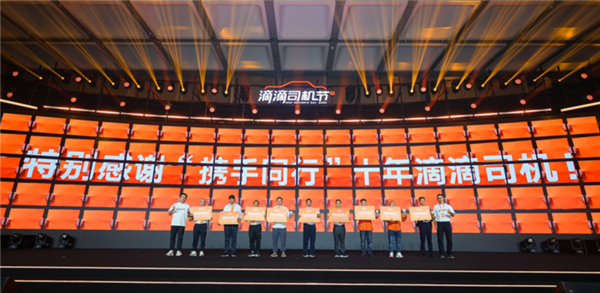
快科技11月19日消息,据媒体报道,近日,在滴滴司机节深圳主会场上,有100名服务满十年且综合贡 献突出的司机荣获"携手同行"十年激励计划特别奖励,每人获得18888元现金及定制奖杯。 同时,针对师傅们关心的收入奖励、打击作弊、体验改善、福利保障等问题,滴滴进行了现场回应与解 答。 活动期间,滴滴创始人、CEO程维向全国司机表达感谢,并介绍了"十年司机激励计划"。 滴滴网约车平台公司CEO、司机生态发展委员会主任孙枢表示:"收入是司机师傅们最关心的事,只有 拼服务、拼创新、拼质量,才能拉动乘客打车需求,一起做大市场蛋糕。" ...
网约车竞争加剧,今年收入增长止步,享道出行靠啥冲上市?
Nan Fang Du Shi Bao· 2025-11-21 14:32
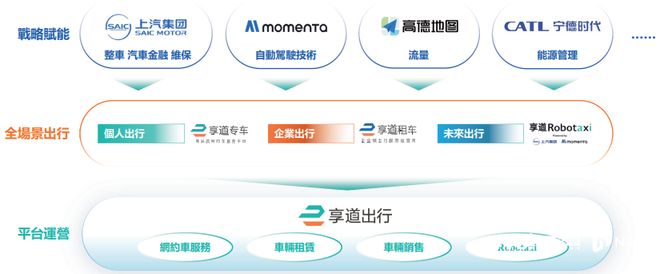
Core Viewpoint - Xiangdao Mobility is preparing for an IPO in Hong Kong to raise funds for autonomous driving research, Robotaxi operations, and expanding its user and driver base, amidst increasing competition in the ride-hailing market [1][2] Group 1: Company Overview - Xiangdao Mobility, a subsidiary of SAIC Group, was established in 2018 and offers various transportation services including ride-hailing, car rentals, and ride-sharing [2] - The company has raised multiple rounds of financing, achieving a valuation of $1 billion after its 2022 funding round [2] - As of June 30, 2025, Xiangdao Mobility's ride-hailing services are expected to cover 26 provinces and 85 cities in China, with over 2 million registered users and 106,200 drivers [2] Group 2: Financial Performance - The company has reported cumulative losses exceeding 1.9 billion yuan over the past three and a half years, with revenues primarily driven by ride-hailing services [5][6] - Revenue figures for 2022, 2023, and 2024 were 4.729 billion yuan, 5.718 billion yuan, and 6.395 billion yuan respectively, with losses of 781 million yuan, 604 million yuan, and 407 million yuan [6] - In the first half of 2025, revenue declined by 2.8% to 3.013 billion yuan, resulting in a loss of 115 million yuan due to increased competition and operational costs [6] Group 3: Market Dependency and Risks - Xiangdao Mobility's order volume is heavily reliant on aggregation platforms, with over 98% of orders sourced from platforms like Didi and Meituan, leading to increased commission costs [4][5] - The company paid commissions of 273 million yuan, 327 million yuan, and 442 million yuan in 2022, 2023, and 2024 respectively, with the proportion of sales expenses attributed to these commissions rising from 52% to 75.3% [5] Group 4: Robotaxi Strategy - The company views Robotaxi as a strategic core for future growth, aiming to establish a fleet of 200 L4-level Robotaxis by 2026 [9][11] - The global Robotaxi market is projected to grow significantly, reaching 2.1 billion yuan by 2025 and 25.3 trillion yuan by 2035, with the Chinese market expected to reach 11 billion yuan by 2025 [8][9] - Xiangdao Mobility is developing a comprehensive ecosystem for autonomous driving, integrating vehicles, technology, and platforms to enhance operational efficiency [9][11] Group 5: Industry Trends - The ride-hailing market is experiencing intense competition, with a shift from aggressive pricing strategies to a focus on optimizing unit economics [12] - The industry is moving towards a decentralized model, providing growth opportunities for emerging platforms as user traffic distribution becomes more fragmented [12]