
茶叶

Search documents
杭州到底算一线还是二线呢?很多人都在讨论这个问题吧!其实这事儿挺有意思的
Sou Hu Cai Jing· 2025-09-10 11:22
Core Insights - Hangzhou is recognized as a new first-tier city, distinct from traditional first-tier cities, due to its economic vitality, technological innovation, and livable environment [1][2] - The city boasts a rich cultural heritage, with historical significance dating back to the Southern Song Dynasty, and is known for its traditional customs and festivals [1][2] - The real estate market in Hangzhou has seen steady price increases, attracting numerous investors and homebuyers, while local specialties like Longjing tea have gained national acclaim [1] Cultural Integration - Hangzhou uniquely blends traditional culture with modern life, featuring ancient temples and gardens alongside contemporary skyscrapers, creating a harmonious urban landscape [2] - The city's spirit is characterized by its open and inclusive attitude, maintaining a balance between traditional customs and modern technological advancements [2] Health and Lifestyle - Health is emphasized in Hangzhou, where residents enjoy a balanced diet and engage in outdoor activities, supported by ample parks and green spaces [4] - The city promotes a healthy lifestyle through various fitness activities like yoga and Tai Chi, alongside a combination of modern healthcare facilities and traditional Chinese medicine [4] - Overall, health is viewed not just as a physical state but as a lifestyle attitude, deeply integrated into the city's identity [4]


福建省宁德市食品安全监督抽检信息公告(2025年第6期)
Zhong Guo Zhi Liang Xin Wen Wang· 2025-09-10 09:28
Summary of Key Points Core Viewpoint - The announcement from Ningde City Market Supervision Administration highlights the results of food safety supervision and sampling inspections for 2025, indicating a total of 202 batches tested, with 197 passing and 5 failing the safety standards [2]. Group 1: Inspection Results - A total of 202 food samples were tested, including tea products, vegetable products, and edible agricultural products [2]. - Out of the 202 batches, 197 were found to be compliant with safety standards, while 5 batches were deemed non-compliant [2]. Group 2: Actions Taken - The local market supervision departments have been instructed to investigate and handle the non-compliant samples, ensuring that producers and operators fulfill their legal responsibilities to mitigate food safety risks [2]. - Consumers are advised to report any non-compliant food products listed in the announcement by calling the complaint hotline 12315 [2].
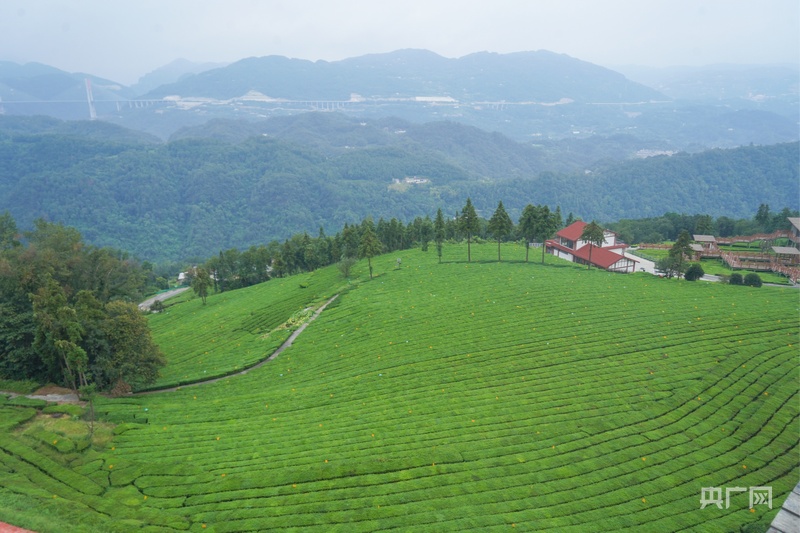
活力中国调研行|从 “卖茶叶” 到 “卖体验” 一片绿叶的增值之道
Yang Guang Wang· 2025-09-07 11:13
Core Insights - The article highlights the transformation of Wufeng Tujia Autonomous County's tea industry, emphasizing the integration of tea production, tourism, and cultural experiences to drive economic growth and rural revitalization [1][11]. Group 1: Tea Industry Development - Wufeng County has initiated a social service reform in the tea industry, forming 72 service teams that have grown from 155 to 3,294 members, addressing labor shortages in tea harvesting and management [2][4]. - The "Qinggangling Service Team," consisting of 231 members, has improved tea quality and yield, with fresh leaf production increasing by 30% and the quality rate rising by 50% [4][8]. - The county has established 31 "tea garden hospitals" to provide comprehensive services, including direct supply of fertilizers and free pesticide residue testing, ensuring a 100% compliance rate in tea quality inspections for three consecutive years [8][10]. Group 2: Quality Improvement and Branding - The "Wufeng 212" tea variety, developed in collaboration with the Chinese Academy of Agricultural Sciences, has been promoted across 40,000 acres, boasting higher amino acid and polyphenol content compared to regular varieties [9][10]. - The county has nearly 300,000 ancient tea trees, with over 7,000 available for online adoption, enhancing brand value and consumer engagement [10]. - Wufeng's tea production is projected to exceed 30,000 tons in 2024, generating an estimated output value of 1.4 billion yuan [10]. Group 3: Tourism and Cultural Integration - The Yihong Tea Industrial Heritage Exhibition Hall has been transformed into a cultural park, attracting over 12,000 visitors this year and serving as a platform for promoting tea culture [11][14]. - The county has developed a comprehensive tea tourism experience, with projected visitor numbers reaching 4.357 million and tourism revenue of 3.999 billion yuan in 2024 [17]. - The integration of tea production and tourism has created a new economic model, shifting from selling tea leaves to offering immersive experiences, contributing to a combined value of over 5 billion yuan in tea-related cultural tourism [17].
双江县凡炙茶叶店(个体工商户)成立 注册资本10万人民币
Sou Hu Cai Jing· 2025-09-06 09:14
天眼查App显示,近日,双江县凡炙茶叶店(个体工商户)成立,法定代表人为薛莲,注册资本10万人 民币,经营范围为许可项目:茶叶制品生产(依法须经批准的项目,经相关部门批准后方可开展经营活 动,具体经营项目以相关部门批准文件或许可证件为准) 一般项目:茶叶种植;农副产品销售;食用农 产品批发;食用农产品零售;食品销售(仅销售预包装食品);食品互联网销售(仅销售预包装食 品);初级农产品收购;日用百货销售;日用品销售;保健食品(预包装)销售(除依法须经批准的项 目外,凭营业执照依法自主开展经营活动)。 ...
白沙:优化法治化营商环境 厚植投资兴业沃土
Hai Nan Ri Bao· 2025-09-06 00:01
Core Viewpoint - The article discusses the optimization of the business environment in Baisha, Hainan, through the implementation of various regulatory reforms aimed at reducing the burden on enterprises and enhancing market vitality [2][8]. Group 1: Regulatory Reforms - Baisha has introduced a "comprehensive check once" system, reducing the frequency of inspections from monthly to biannual, significantly alleviating the pressure on enterprises [2]. - The "approval and regulation" mechanism has been strengthened, ensuring seamless integration between approval processes and regulatory oversight through the "Hainan Internet + Regulation" system [3]. - The "bright code check" system has been fully implemented, allowing businesses to easily access information about inspections, thereby increasing transparency and reducing arbitrary checks [4]. Group 2: Joint Inspections - The "comprehensive check once" model has been applied across various sectors, including elderly care and healthcare, allowing multiple regulatory bodies to conduct joint inspections, thus minimizing disruptions to business operations [5][6]. - Since the implementation of the "comprehensive check once" model, over 110 joint inspections have been conducted, reducing the number of inspections by 270 and cutting the time enterprises spend preparing for inspections by over 60% [6]. Group 3: Innovative Application Scenarios - The regulatory framework has been tailored to local industries, such as tea production, creating personalized inspection scenarios that enhance the quality and safety of products while supporting local economic development [7]. - The reforms aim to shift from traditional single-department inspections to collaborative multi-department inspections, fostering a more efficient regulatory environment [7][8].
“英德红茶,世界高香红茶!”英德红茶全新广告即将上线
Nan Fang Nong Cun Bao· 2025-09-05 13:34
Core Viewpoint - The article highlights the promotional efforts and market expansion of Yingde Black Tea, emphasizing its unique qualities and increasing brand value in the tea industry [9][18][28]. Group 1: Advertising and Promotion - Starting from September 6, Yingde Black Tea will launch a new advertisement across multiple channels of Guangdong Radio and Television, running until September 21, with a total of 72 broadcasts planned [9][10][11]. - The promotional strategy includes high-frequency exposure to showcase the unique charm of Yingde Black Tea [11]. - The brand has previously engaged in diverse promotional activities, including advertising in subways and high-speed trains, and has appeared on major platforms like CCTV [14][15]. Group 2: Brand Value and Recognition - Yingde Black Tea has been recognized as "World High Aroma Black Tea" and has a regional public brand value of 5.178 billion yuan, marking an 8.5% increase [28]. - The tea is celebrated for its quality, characterized by "rich, mellow, sweet, and fragrant" attributes, and has been awarded the title "Oriental Golden Beauty" [26][27]. Group 3: Production and Market Expansion - By the end of 2024, the tea plantation area in Yingde is expected to reach 181,600 acres, with an annual production of 18,000 tons of dry tea, achieving a comprehensive output value of 9.045 billion yuan [31][32]. - Yingde Black Tea aims to enhance its industry scale and output value, with expectations to surpass 10 billion yuan in comprehensive output value [33]. - The brand will participate in the 2025 Xinjiang International Tea Culture Expo from September 19-22 to showcase its products and cultural heritage, aiming to expand its market presence [36][37].

第四届福州茶叶交易会启幕 台企踊跃参展
Zhong Guo Xin Wen Wang· 2025-09-05 07:05
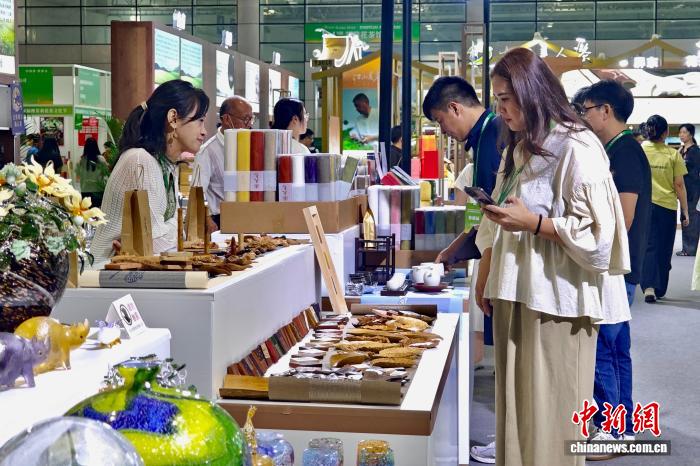
Group 1 - The fourth Fuzhou Tea Trade Fair opened on September 5 at the Fuzhou Strait International Conference and Exhibition Center [3][4][6] - The theme of the event is "Chinese Tea, Enjoyed Worldwide," with an exhibition area exceeding 30,000 square meters [3][4][6] - The event attracted numerous Taiwanese enterprises to participate, showcasing various tea-related products [3][4][6][11]
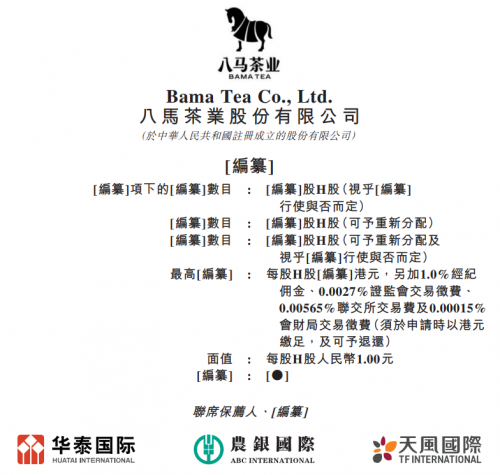
八马茶业更新上市申请书 为中国最大的高端茶企
Sou Hu Wang· 2025-09-05 06:53
Core Viewpoint - Baima Tea Co., Ltd. has submitted an application for listing on the Hong Kong Stock Exchange, with Huatai International, Agricultural Bank of China International, and Tianfeng International as joint sponsors [1] Company Overview - Baima Tea is a leader in the high-end tea market in China, ranking first in sales volume in the high-end Chinese tea sector for 2024 and recognized as the most well-known tea brand in China [3] - The company operates a comprehensive product range covering six major tea categories, including Oolong, black, red, green, white, and yellow teas, as well as tea-related products [6] Market Position - As of 2024, Baima Tea holds the largest number of tea chain stores in China and ranks first in sales revenue in the high-end tea market, Oolong tea, and black tea markets [3][4] - The company's market share in the high-end tea market increased from approximately 1.1% in 2020 to about 1.7% in 2024 [4] Industry Growth - The overall Chinese tea market is projected to grow from approximately 288.9 billion RMB in 2020 to about 325.8 billion RMB in 2024, with a compound annual growth rate (CAGR) of around 3.0% [3] - The high-end tea market is expected to grow from approximately 89 billion RMB in 2020 to about 103.1 billion RMB in 2024, with a CAGR of approximately 3.7% [4] Sales Channels - The high-end tea market heavily relies on offline customer experiences, with offline sales expected to increase from approximately 83.8 billion RMB in 2020 to about 97.5 billion RMB in 2024, reflecting a CAGR of around 3.9% [9] - The offline high-end tea segment is projected to reach approximately 128.7 billion RMB by 2029, with a CAGR of about 5.7% from 2024 to 2029 [9] Production and Technology - Baima Tea has established two tea processing bases in China, with advanced automated production lines, including a seventh-generation intelligent production line in Wuyishan [9] - The company has a strong focus on brand value, product development, and supply chain management, contributing to its leading market position [5] IPO Fund Utilization - The funds raised from the IPO will be used for expanding production bases, enhancing brand value, expanding the product portfolio, and increasing the number of offline stores [10]
浙江加力“浙茶出海” 目标2027年茶叶出口额5亿美元
Zhong Guo Xin Wen Wang· 2025-09-04 15:41
Core Viewpoint - Zhejiang Province is implementing a set of ten policies to support the internationalization of its tea industry, aiming to enhance the export of Zhejiang tea products globally [1][3]. Group 1: Export Performance - Zhejiang is a major tea-exporting province in China, with an export volume of 156,000 tons and an export value of 470 million USD in 2024, maintaining a leading position nationally [3]. - The first half of this year has shown diversification in tea product exports, including matcha, premium teas, and new-style tea beverages, in addition to traditional varieties [3]. Group 2: Policy Measures - The ten policies cover various aspects such as building standard tea gardens, developing diverse products, improving tea quality, enhancing service for tea events, nurturing leading enterprises, creating international brands, expanding global markets, optimizing the industrial ecosystem, promoting cultural dissemination, and establishing support mechanisms [3][5]. - In product development, Zhejiang aims to deepen collaboration between industry, academia, and research to advance new technologies and products, supporting the development of convenient tea products and high-value-added tea processing [3]. Group 3: Brand Development - The province plans to leverage platforms like the "China International Tea Expo" to enhance international cooperation in the tea industry and establish a brand system that includes regional public brands, leading enterprise brands, and specialty product brands [4]. - By 2027, the goal is to cultivate five internationally influential tea brands [4]. Group 4: Sustainability and Standards - The policies also emphasize supporting the transformation of tea gardens to organic practices and promoting low-carbon management techniques [5]. - There is a focus on involving research institutions in the formulation of international standards and encouraging financial institutions to increase support for technological upgrades and overseas warehouse construction [5].
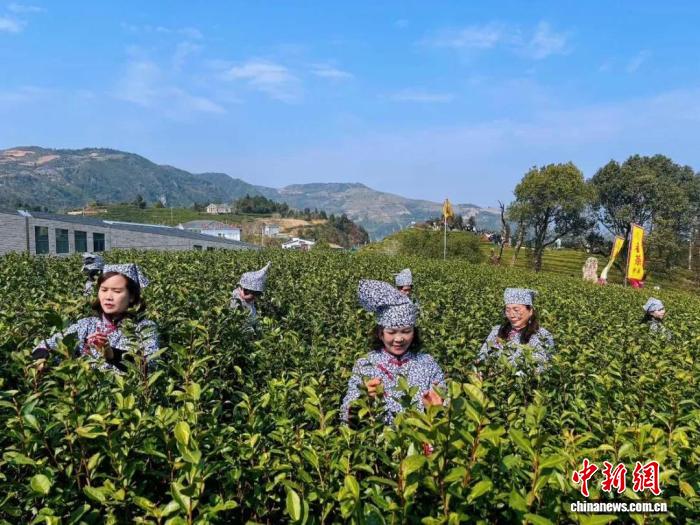
我国首个“全国茶叶碳足迹数字化平台”发布
Xin Hua Wang· 2025-09-04 14:05
Core Viewpoint - The launch of the "National Tea Carbon Footprint Digital Platform" aims to establish a unified carbon footprint management system for agricultural products, focusing on the tea industry [1][2]. Group 1: Digital Platform and Carbon Footprint Management - The platform is designed to achieve precise quantification and management of the carbon footprint across the entire tea industry chain [1]. - It is part of a broader initiative by the National Development and Reform Commission to develop a product carbon footprint management system that aligns with national conditions [1]. - The platform will facilitate the application of carbon footprint certification results, allowing consumers to easily access information about the environmental impact of tea products [1]. Group 2: Eco-Low-Carbon Tea Initiative - Eco-low-carbon tea refers to tea products that are certified for their quality, safety, and low carbon characteristics, requiring tea companies to manage their tea gardens and surrounding ecosystems scientifically [2]. - The initiative has been recognized by the Food and Agriculture Organization of the United Nations as part of the "One Country, One Product" project, which aims to improve food access and reduce environmental impacts [2]. - Currently, eco-low-carbon tea has been promoted in 16 provinces, with 131 certified tea companies covering 10.3 million mu (approximately 6,867 square kilometers) of tea gardens, impacting over 1 million mu (approximately 666.67 square kilometers) [2].