工业机器人

Search documents
2026投资主线已现?华泰张继强:新开局下的三大叙事重构
Wind万得· 2025-11-19 22:43
Core Viewpoint - The year 2026 marks the beginning of a systematic restructuring rather than a simple continuation of the next cycle, with a focus on macroeconomic changes, policy logic, and asset pricing shifts [1]. Group 1: Macroeconomic Narrative - The narrative is shifting from "stabilizing growth" to "high-quality development," with a new focus on fiscal leadership and precise monetary support, emphasizing targeted investments in technology, green initiatives, and public welfare [3]. - The new paradigm features enhanced debt constraints, with local government debt resolution entering a critical phase and market-oriented transformations of city investment platforms becoming an irreversible trend [3]. - Growth drivers are transitioning, with increased resilience in exports, manufacturing upgrades, and the emergence of new energy sectors, while real estate is no longer the economic anchor [3][4]. Group 2: Industry Main Lines - Three structural opportunities are identified for asset allocation in 2026: 1. High-end manufacturing going global, transitioning from cost advantages to a dual drive of technology and brand [5]. 2. Technological self-sufficiency, supported by policies that create a long-term dividend in sectors like semiconductors and AI infrastructure [7]. 3. Green transformation and ESG financialization, where carbon trading and green bonds reshape industry valuation, leading to premium reassessment of low-carbon assets [9][10]. Group 3: Asset Allocation - In a declining interest rate environment, the focus should be on relative value rather than absolute returns, with specific strategies for different asset classes: - For interest rate bonds, attention to duration structure and policy rhythm is crucial [12]. - In credit bonds, differentiation in city investment bonds is increasing, necessitating careful evaluation of regional fiscal capabilities and debt structures [13]. - For equity assets, emphasis on profit quality, cash flow stability, and sustainable ROE is recommended, moving away from PE speculation [13]. - Alternative assets like REITs and infrastructure public funds are emerging as new opportunities for institutional allocation [13]. Conclusion - The essence of investment lies in understanding change, with opportunities in 2026 favoring those who comprehend structural transformations rather than those seeking short-term policy stimuli [17][18].


“人工智能+制造”推动生产智能化跃升
Zheng Quan Ri Bao· 2025-11-19 16:11
Core Insights - The Ministry of Industry and Information Technology has issued the "Guidelines for High-Standard Digital Park Construction," emphasizing the exploration of "AI + manufacturing" applications and the large-scale deployment of industrial robots [1][3] - The industrial robot industry in China is experiencing a period of policy guidance, technological breakthroughs, and market expansion, leading to continuous growth in industry scale [1][2] - The rapid increase in industrial robot production is driven by the urgent need for improved production efficiency and precision in domestic manufacturing, particularly in the automotive, electronics, and new energy sectors [2][3] Industry Growth - The revenue of the national robot industry grew by 29.5% year-on-year in the first three quarters of 2025, with industrial robot production reaching 595,000 units, surpassing the total production for 2024 [1][2] - Industrial robots are now applied across 71 major industries and 236 sub-industries, indicating significant potential for future expansion in various sectors [2][3] Technological Advancements - AI technology is becoming a key driver for the iteration of industrial robots, enabling a shift from repetitive mechanical arms to intelligent systems with cognitive capabilities [2][3] - Domestic leading industrial robot companies have achieved parity with foreign counterparts in terms of core functions and technical indicators, with increasing domestic production of critical components [3][4] Policy Support - A supportive framework has been established, combining national guidance with local initiatives to promote the development of the robot industry [3][4] - Various provinces have set up robot innovation centers to leverage regional industrial strengths and promote technology sharing [3][4] Differentiated Strategies - Companies across the industrial robot supply chain are adopting differentiated strategies in technology development and application scenarios [4][5] - Recent disclosures from multiple listed companies highlight advancements in core component development and specific application scenarios, showcasing diverse growth strategies [4][5] Market Applications - Companies like Guangdong Liying Intelligent Manufacturing have successfully implemented robots in industrial production, covering areas such as goods handling and precision electronic assembly [5] - Firms are focusing on quality control and have established international standard quality management systems to ensure product excellence [5]
资本聚力 工业机器人跑出“中国速度”
Zheng Quan Ri Bao Zhi Sheng· 2025-11-19 16:08
全球制造业向智能化、柔性化转型的浪潮中,工业机器人已成为产业升级的核心驱动力。数据显示, 2024年,我国工业机器人市场销量达30.2万套,连续12年占据全球最大工业机器人市场宝座。今年,我 国工业机器人市场产量继续"疾驰猛进",前三季度全国总产量已达59.5万套。 在机器人产业的核心技术赛道上,中国企业正展现出强劲的实力与巨大的发展潜力。工业和信息化部数 据显示,"十四五"以来,中国工业机器人新增装机量占全球比重超过了50%。日前,中国机械工业联合 会秘书长、机器人分会执行副理事长兼秘书长宋晓刚在2025中国机器人产业发展大会上披露,今年前三 季度,全国机器人行业营收同比劲增29.5%,工业机器人产量达59.5万台,已超越2024年全年产量。 在智能制造的浪潮席卷全球之际,工业机器人作为产业升级的核心引擎,正重塑着制造业的竞争格局。 而在中国这片创新热土上,资本的持续注入与技术的迭代突破形成共振,让工业机器人产业跑出了令人 瞩目的"中国速度"。 从车间里精准运转的机械臂,到生产线中高效协同的自动化系统,越来越多"钢铁工友"的身影,不仅见 证着中国制造业从"规模优势"向"质量优势"的跨越,也彰显了资本为实体经 ...

华亚智能(003043):半导体设备细分龙头,固态电池、智能机器人铸造第二、三成长曲线
CHINA DRAGON SECURITIES· 2025-11-19 13:47
Investment Rating - The investment rating for the company is "Buy" (首次覆盖) [1] Core Views - The company is a leading player in the semiconductor equipment sector, with growth momentum injected by the acquisition of Guan Hong Intelligent. The company has transitioned through various phases, including product upgrades, rapid expansion post-IPO, and now entering a diversified growth phase focusing on smart robotics and solid-state battery equipment [3][4] - The domestic semiconductor equipment market is experiencing significant growth, driven by increasing demand and a push for localization. The company is well-positioned to benefit from this trend, with a strong competitive edge in the precision metal structural components sector [3][4] - The company is strategically positioning itself in the solid-state battery market, which is expected to see substantial growth due to its high energy density and safety features. The global solid-state battery shipment is projected to reach 614.1 GWh by 2030, with the equipment market size expected to be between 718-958 billion yuan [3][4] - The company is also expanding into the smart industrial robotics sector, leveraging its existing technology and understanding of customer needs in manufacturing [3][4] Summary by Sections Semiconductor Equipment Sector - The company has established itself as a leader in the semiconductor equipment sector, with a CAGR of 19.7% in the semiconductor equipment structural components from 2019 to 2024. The revenue from this segment is closely tied to the demand in the semiconductor industry [19][23] - The acquisition of Guan Hong Intelligent is expected to enhance the company's revenue growth, with Guan Hong's revenue projected to contribute significantly in 2025 [19][23] Domestic Semiconductor Equipment Market - The semiconductor market is recovering, with a projected sales increase of 20.1% in 2024 and 11.7% in the first three quarters of 2025. The global semiconductor equipment market is expected to reach $125.5 billion in 2025 [29][32] - The company is benefiting from the increasing localization of semiconductor equipment, with domestic revenue and market share expected to rise as the domestic equipment penetration rate increases [42] Solid-State Battery Equipment - The solid-state battery market is anticipated to grow significantly, with the company focusing on dry process equipment for solid-state batteries. The transition from traditional liquid batteries to solid-state technology is expected to drive demand for new equipment [53][64] - The company is developing solutions for dry electrode technology, which is more efficient and cost-effective compared to traditional methods, and has already secured orders from leading battery manufacturers [53][64] Smart Industrial Robotics - The company is expanding into the smart industrial robotics market, leveraging its existing technology and expertise in automated systems. This move is expected to capitalize on the growing demand for intelligent logistics solutions [3][4]

北极光投资的「卡诺普机器人」申请港股18C上市,国泰君安独家保荐
Xin Lang Cai Jing· 2025-11-19 10:35
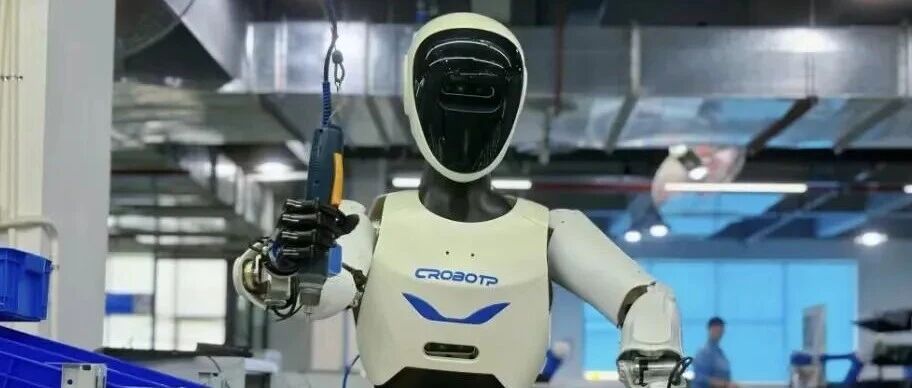
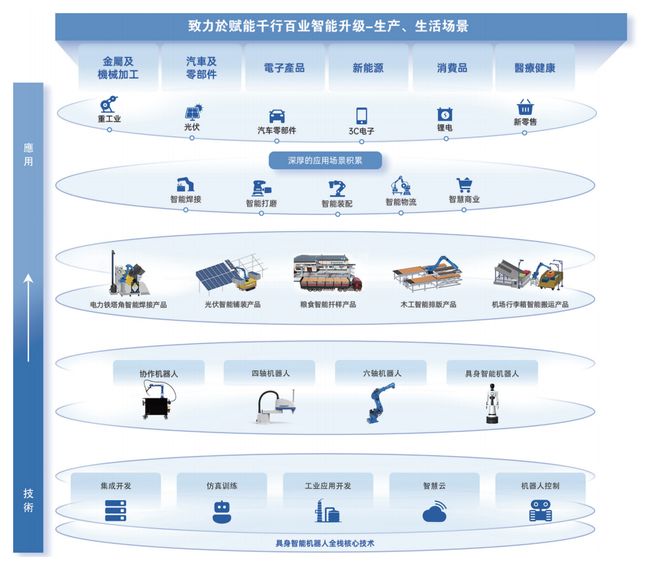
公司是中国先进的工业机器人公司,也是具身智能机器人的先锋。依托全栈自主核心技术与多场景智能 应用能力,成功构建了主要涵盖工业机器人、协作机器人、具身智能机器人的三大类全自主研发产品矩 阵。 根据弗若斯特沙利文的资料,以2024年的收入计算,(i)公司在所有中国焊接机器人制造商中排名第一; (ii)公司在关键焊接机器人细分领域(包括激光焊接及切割机器人)中的所有中国制造商中排名第一; 及(iii)在金属及机械加工行业机器人应用方面,公司在中国企业中居于领先地位。在实现工业机器人规 模化的中国企业中,公司在盈利能力方面是领导者之一。 公司已在工业机器人行业建立起中国同业中最强大的全球布局之一,按2024年收入计,公司是中国最大 的焊接机器人出口商。 公司是业内少数拥有全栈自主核心技术及全自主研发产品矩阵的企业之一,可实现工业机器人的全系列 覆盖。公司专注于基础机器人技术,于2012年成立后不久迅速成为中国工业机器人控制器及完整电气系 统的领先供应商。 来源:活报告 2025年11月17日,卡诺普首次向港交所递交招股书,拟在香港主板上市,该公司为18C公司,独家保荐 人为国泰君安国际。 公司是中国先进的工业机器人公 ...
卡诺普机器人冲击IPO,2023及2024年净利润下滑
Sou Hu Cai Jing· 2025-11-19 09:45
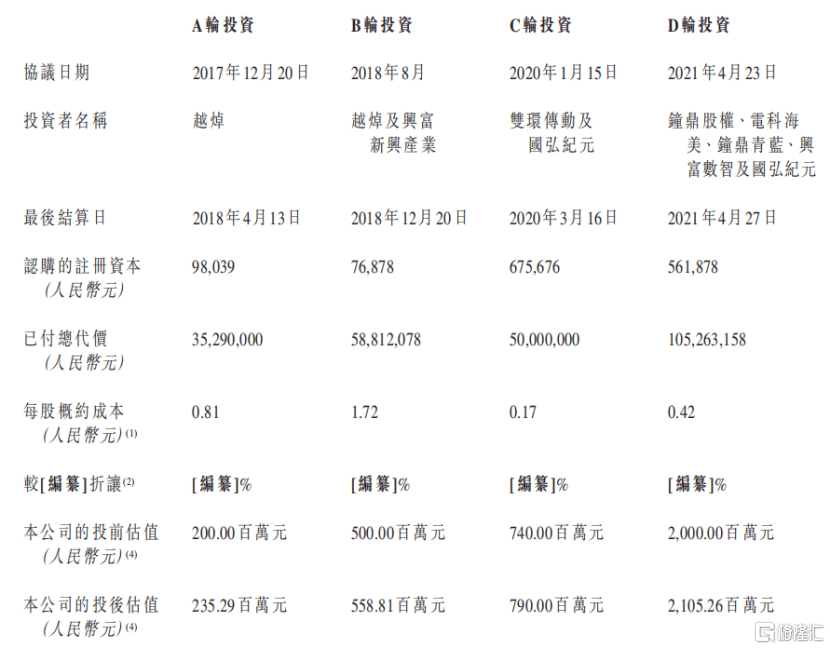
Core Viewpoint - The company, Chengdu Kanopu Robot Technology Co., Ltd., is seeking to go public on the Hong Kong Stock Exchange, joining a growing trend of robotics companies entering the capital market in 2023 [2][3]. Company Overview - Chengdu Kanopu Robot was established in September 2012 and focuses on the industrial robotics sector, with a significant shareholding structure involving multiple stakeholders [3]. - The company has a diverse product portfolio, including over 70 models of industrial robots, with a strong emphasis on welding robots [6][11]. Financial Performance - The company's revenue has shown growth, with figures of RMB 197.44 million in 2022, RMB 222.37 million in 2023, and projected RMB 234.04 million in 2024 [11][15]. - Net profit has fluctuated, with a profit of RMB 28.27 million in 2022, a drop to RMB 1.69 million in 2023, and a projected loss of RMB 12.94 million in 2024 [11][15]. - The gross profit margin has improved from 27.5% in 2022 to a projected 32.4% in 2025, indicating better cost management and product mix [12][14]. Market Position - Kanopu Robot ranks first among Chinese welding robot manufacturers and third in the metal and machinery processing industrial robot sector [29]. - The Chinese industrial robot market is expected to grow from RMB 315 billion in 2020 to RMB 467 billion in 2024, with a compound annual growth rate (CAGR) of 10.4% [26][28]. Product and Technology - The company offers a range of robots, including six-axis and four-axis industrial robots, collaborative robots, and embodied intelligent robots, catering to various applications such as welding, cutting, and assembly [6][10][19]. - The company is investing in research and development, with R&D expenses accounting for 17.1% of revenue in 2022 [18]. Challenges - The company faces challenges with increasing sales expenses and accounts receivable pressure, with trade receivables rising from RMB 75 million in 2022 to RMB 142 million in 2024 [20]. - Despite a strong market position, the company has not yet achieved economies of scale, leading to unstable profit margins [29].
卡诺普、东山精密、诺比侃递表港交所 申请香港主板上市
Sou Hu Cai Jing· 2025-11-19 06:06
Group 1: Company Overview - Kanop focuses on the research, manufacturing, and sales of industrial robots, covering core components, complete machines, and intelligent equipment development [3] - Dongshan Precision engages in precision manufacturing and electronic components, including precision sheet metal parts, precision casting, and flexible circuit board design and production [5] - Nobikang specializes in the industrial application of AI technologies and digital twins in sectors such as AI+ transportation, AI+ energy, and AI+ urban governance [9] Group 2: Financial Performance - Kanop's revenue for 2022 to 2024 is projected to be 197 million, 222 million, and 234 million CNY, with net profits of 28.27 million, 1.69 million, -12.94 million, and 8.44 million CNY respectively [3] - Dongshan Precision's revenue for 2022 to 2024 is expected to be 31.58 billion, 33.65 billion, and 36.77 billion CNY, with net profits of 2.368 billion, 1.965 billion, and 1.085 billion CNY [5] - Nobikang's revenue from 2021 to 2024 is anticipated to be 101 million, 253 million, 364 million, and 186 million CNY, with net profits of 25.74 million, 63.16 million, 88.57 million, and 50.74 million CNY [9] Group 3: IPO Applications - Kanop submitted its IPO application to the Hong Kong Stock Exchange on November 17 [1] - Dongshan Precision filed its IPO application on November 18 [2] - Nobikang re-submitted its IPO application on November 18 after previously filing on November 12, 2024 [6]

黑芝麻智能:与江苏智驰致远控股有限公司订立战略合作协议
Xin Lang Cai Jing· 2025-11-19 04:20
Core Viewpoint - Black Sesame Intelligence Technology Co., Ltd. has entered into a strategic cooperation agreement with Jiangsu Zhichi Zhiyuan Holdings Co., Ltd. to collaborate in various advanced technology fields related to automotive and intelligent terminals [1] Group 1: Areas of Cooperation - The partnership will focus on the application of optical communication technology in automotive and intelligent terminal sectors [1] - Joint development of optical-electrical co-packaging applications for next-generation vehicle central computing platforms will be pursued [1] - Development of auxiliary driving domain controller products suitable for passenger and commercial vehicles based on existing automotive-grade auxiliary driving chips [1] - Collaboration will also include the development of AI industrial robot solutions tailored for various industrial production scenarios, leveraging Zhichi Zhiyuan's diverse industrial production capabilities [1]

深圳新增独角兽企业全国第一 政策赋能助企业勇闯科创赛道
Sou Hu Cai Jing· 2025-11-19 01:16
Core Insights - Shenzhen has 42 unicorn companies in 2024, with a total valuation of $159.9 billion and an average valuation of $3.71 billion, marking a significant increase in unicorn numbers compared to other major cities in China [1][7] - The city has produced 13 new unicorns, accounting for 25% of the national total, making it the leading city in terms of new unicorns [1][7] - Shenzhen's unicorns are primarily concentrated in hard technology sectors, with 66.7% of them focusing on this area, showcasing strong innovation capabilities [3][9] Growth Factors - The rapid growth of unicorns in Shenzhen is attributed to a shift in policy from "single-point support" to "ecological empowerment," creating a comprehensive support system [4][10] - The "20+8" strategic emerging industry cluster policy has been pivotal in supporting sectors like integrated circuits, robotics, and clean energy, aligning with the distribution of unicorns in hard tech [4][10] - Shenzhen aims to cultivate 80 unicorns by 2027 through a multi-dimensional support system encompassing finance, talent, and innovation ecosystems [4][10] Innovation and Patents - Shenzhen unicorns hold an average of 141 authorized invention patents per company, significantly higher than Beijing (74) and Shanghai (81), indicating a robust innovation environment [3][9] - The city has a total of 151 invention applications per company, nearly double that of Beijing and Shanghai [3][9] Global Expansion - Over 80% of Shenzhen's unicorns are global companies, actively expanding into international markets through overseas factories and marketing networks [5][11] - Companies like XREAL and欣旺达动力 are seizing opportunities in the global market, with XREAL's AR device achieving significant overseas revenue [6][11] - The establishment of cross-border research environments and support for overseas technology acquisitions are facilitating this global expansion [6][11]
从50万初创到冲击港股!成都硬核机器人企业凭全栈自研征服全球40国
机器人大讲堂· 2025-11-18 15:00
Core Viewpoint - Chengdu Kanopu Robot Technology Co., Ltd. (Kanopu) is making headlines as it prepares to list on the Hong Kong Stock Exchange, marking a significant milestone for Chinese private tech companies in breaking international monopolies and achieving technological exports [1]. Group 1: Company Background and Growth - Founded in 2012, Kanopu emerged during a time when the industrial robot market in China was dominated by foreign brands, which held over 90% market share [3]. - The founding team, with over a decade of experience in the CNC machine tool industry, identified a gap in the domestic market for high-quality controllers, which are essential components of industrial robots [3][4]. - Kanopu started with an initial capital of 500,000 yuan and has since developed a comprehensive technology system covering hardware, operating systems, applications, and cloud services [1][3]. Group 2: Technological Advancements - The successful development of Kanopu's first controller allowed the company to penetrate the previously monopolized market, leading to its first formal order from a Guangdong manufacturer [6][8]. - By 2014, Kanopu had become a key supplier for major companies like BYD and Foxconn, significantly expanding its market share in the domestic industrial robot controller sector [8][9]. - By 2018, Kanopu had captured 50% of the domestic market for industrial robot controllers, establishing itself as a hidden champion in the field [9]. Group 3: Transition to Complete Machines - In 2017, Kanopu faced a critical decision to either continue focusing on components or transition to manufacturing complete robots, ultimately choosing the latter to fulfill its vision of becoming a leader in the industrial robot sector [13][14]. - The company targeted the welding robot market, addressing the challenges faced by small and medium enterprises, and successfully launched its first complete welding robot in 2018 [17]. - By 2020, Kanopu ranked third in overall industrial robot shipments in China and first in the arc welding segment among domestic manufacturers [18]. Group 4: International Expansion - Kanopu has expanded its reach to over 40 countries, establishing a global sales network and positioning itself as the largest exporter of welding robots in China [22]. - The company has developed a comprehensive suite of process packages tailored to various manufacturing scenarios, enhancing its competitiveness in international markets [20][22]. - Kanopu aims to establish a high-end brand image in the global market, distancing itself from low-cost competition [23]. Group 5: Financial Performance - Kanopu's revenue has shown consistent growth, with figures of 197 million yuan in 2022, 222 million yuan in 2023, and projected 234 million yuan in 2024, alongside improving gross margins [24]. - The company has maintained a gross margin of over 30% in recent years, reflecting its ability to command a premium for its technology-driven products [24]. Group 6: Future Outlook - Kanopu is focusing on the emerging field of embodied intelligence, with plans to invest heavily in AI-driven robotics, anticipating significant market growth in this area [29][30]. - The company aims to leverage its technological advancements to further penetrate both domestic and international markets, contributing to the transformation of China's manufacturing sector [35].