数据中心

Search documents
高盛眼中的下一轮建筑繁荣:数据中心、电力与医疗将领跑2026
Hua Er Jie Jian Wen· 2026-01-16 12:53
Group 1 - The core viewpoint of the article is that private non-residential construction spending in the U.S. is expected to return to growth by 2026, driven primarily by data centers, power infrastructure, and healthcare projects [1][2]. - Goldman Sachs maintains a positive outlook for the market, predicting a nominal growth of 2% in private non-residential construction spending in 2026, followed by an acceleration to 5% in 2027 [1][2]. - The anticipated recovery in the construction sector is expected after a period of adjustment in 2025, with strong demand in specific industries offsetting broader cyclical weaknesses [1][2]. Group 2 - The Dodge Momentum Index indicates a significant increase in data center expansion plans for 2026, supporting Goldman Sachs' assessment of a resurgence in construction activity [1][2]. - Key sectors such as data centers, power infrastructure, and healthcare are projected to dominate the market in 2026, marking a clear turning point compared to 2025 [2][3]. - Structural forces and stimulus measures are expected to drive this rebound, contrasting with traditional cyclical factors that are currently weak [3].

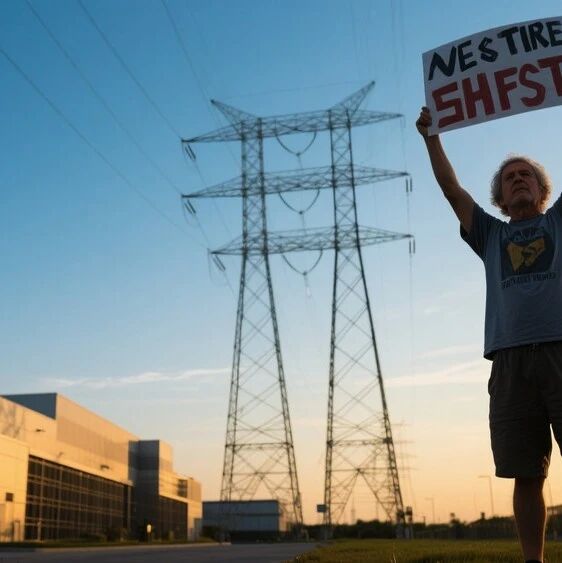
数据中心背后民怨沸腾,微软给马斯克上了一课
创业邦· 2026-01-16 10:14
Core Viewpoint - The article discusses the growing tension between tech giants' data center expansions and local community resources, highlighting Microsoft's new commitments to responsible infrastructure development as a potential model for the industry [5][6][10]. Group 1: Microsoft's Commitments - Microsoft President Brad Smith announced the "Community-First AI Infrastructure" plan, which includes five commitments: no electricity subsidies, reduced water usage, no tax breaks, job creation, and community feedback [6][9]. - The company promises not to raise local electricity prices and to cover additional electricity costs incurred by data centers, while also investing in local water systems to offset water usage [9][10]. - Microsoft has already implemented some of these commitments in Arizona, collaborating with local authorities to reduce freshwater loss and testing closed-loop cooling systems to minimize water consumption [9][10]. Group 2: Data Center Investment Trends - Major tech companies are engaged in an unprecedented data center investment race, with projected capital expenditures reaching $400 billion by 2025, primarily for AI infrastructure [12]. - The total capital expenditure for the five largest cloud service providers is expected to exceed $600 billion this year, marking a 36% increase from the previous year [12][13]. - Data center electricity consumption is projected to rise dramatically, with estimates suggesting it could exceed 400-426 terawatt-hours by 2030, accounting for 6.7-12% of the total U.S. electricity consumption [13][15]. Group 3: Community Concerns - Communities are increasingly concerned about the rising electricity costs and resource burdens associated with data centers, with wholesale electricity prices in densely populated areas increasing by up to 267% over five years [15][16]. - The water consumption of data centers is also alarming, with estimates indicating that by 2028, water usage for cooling could double, reaching between 129 million to 258 million tons [16]. - Local residents express dissatisfaction with the limited long-term job opportunities provided by data centers, as they typically require only 50 to 100 full-time employees once operational [16][20]. Group 4: Case Studies - Arizona exemplifies the resource tension, where data centers consume significant resources while nearby communities, such as the Navajo Nation, lack basic electricity [18][20]. - The approval process for data center projects in Arizona has faced community protests due to concerns over water usage and environmental impact, highlighting the conflict between short-term economic benefits and long-term community welfare [20][21]. - In contrast, Elon Musk's xAI company in Tennessee has taken extreme measures to meet energy demands, including deploying portable gas turbines without necessary permits, raising significant environmental concerns [23][24]. Group 5: Industry Response and Future Outlook - The article emphasizes the need for a new social contract between tech companies and communities, where companies must bear the costs of their resource consumption and contribute positively to local economies [35][36]. - Microsoft's commitments serve as a potential framework for the industry, but the article questions whether other tech giants will follow suit and whether these commitments will be fulfilled [36].



科士达发预增,预计2025年度归母净利润同比增长52.21%—67.43%
Zhi Tong Cai Jing· 2026-01-16 09:59
Core Viewpoint - Keda (002518.SZ) forecasts a net profit attributable to shareholders of 600 million to 660 million yuan for the year 2025, representing a year-on-year growth of 52.21% to 67.43% [1] Group 1: Business Segments - The company is focusing on the "data center + new energy" business model, with both segments expected to show growth in 2025 [1] - The data center business serves as the company's foundation, benefiting from a new wave of infrastructure investment in the data center industry, which has boosted growth rates [1] - The new energy business is characterized by significant performance elasticity, with a recovery in demand in the European energy storage market and strong demand in emerging markets, leading to a return to growth for this segment [1] Group 2: Performance Drivers - Continuous increase in orders and shipment volumes across both business segments has contributed to the rapid year-on-year growth of the company's overall performance [1]

数据中心背后民怨沸腾,微软给马斯克上了一课
虎嗅APP· 2026-01-16 09:52
Core Viewpoint - The article discusses the growing tension between tech giants, particularly Microsoft, and local communities regarding the construction of data centers, emphasizing the need for responsible practices that benefit both technological advancement and community welfare [4][6][26]. Group 1: Microsoft's Community-Focused AI Infrastructure Plan - Microsoft President Brad Smith announced the "Community-First AI Infrastructure" plan, which includes five commitments: no electricity subsidies, reduced water usage, no tax breaks, job creation, and community feedback [5]. - The company aims to ensure that the benefits of AI infrastructure development outweigh the costs for local residents, promising not to raise local electricity prices and to cover additional electricity costs incurred by data centers [5][25]. - Microsoft has already implemented some of these commitments in Arizona, collaborating with local authorities to repair pipeline leaks and reduce freshwater loss [5][8]. Group 2: The Data Center Investment Surge - Major tech companies are engaged in an unprecedented data center investment race, with projected capital expenditures reaching $400 billion by 2025, primarily for AI infrastructure [8]. - The total capital expenditure for the five largest cloud service providers is expected to exceed $600 billion this year, marking a 36% increase from the previous year [8][9]. - Data centers' electricity consumption is projected to rise dramatically, with estimates suggesting that by 2026, consumption will exceed 250 terawatt-hours, and by 2030, it could reach 400-426 terawatt-hours, accounting for 6.7%-12% of the total U.S. electricity consumption [9][10]. Group 3: Community Challenges Amid Data Center Growth - Communities are facing significant challenges due to the rapid expansion of data centers, including rising electricity prices and water resource depletion [9][10]. - In areas with dense data center activity, wholesale electricity prices have surged by up to 267% over five years, with residential electricity costs projected to rise by 13% in 2025 [9][10]. - The water consumption for cooling data centers is also alarming, with estimates suggesting that by 2028, it could double to between 129 million and 258 million tons [10]. Group 4: Local Community Reactions - In Arizona, local residents have expressed strong opposition to data center projects due to concerns over water usage and environmental impact, leading to the rejection of certain proposals [13]. - The disparity between resource consumption by data centers and the lack of basic utilities for nearby communities, such as the Navajo reservation, highlights the inequities created by tech investments [12]. Group 5: Other Tech Giants' Practices - Other tech companies like Google and Meta are also facing scrutiny for their resource consumption, with Google using approximately 24.2 million tons of water globally in 2023, 95% of which was for data centers [21]. - Critics argue that the water compensation strategies employed by these companies are insufficient and that transparency regarding water usage is lacking [22]. Group 6: The Need for a New Social Contract - The article emphasizes the necessity for a new social contract between tech companies and communities, where the costs of resource consumption are shared more equitably, and local benefits are prioritized [26]. - Microsoft's commitments serve as a potential model for other tech giants, suggesting that responsible practices can lead to a more sustainable relationship with local communities [28].
科士达:2025年净利润同比预增52.21%—67.43%
Zheng Quan Shi Bao Wang· 2026-01-16 09:49
人民财讯1月16日电,科士达(002518)1月16日发布业绩预告,预计2025年归母净利润6亿元—6.6亿元, 同比增长52.21%—67.43%。公司布局"数据中心+新能源"业务,2025年度双板块业务呈现增长态势。近 年数据中心行业掀起新一轮基建热潮,公司数据中心业务增速提振。随着欧洲储能市场需求回暖,新兴 市场需求旺盛,公司新能源业务板块重回增长通道。双板块业务订单及出货量持续增加,致公司整体业 绩同比增速较快。 (原标题:科士达:2025年净利润同比预增52.21%—67.43%) ...
科士达:2025年净利同比预增52.21%-67.43%
Jin Rong Jie· 2026-01-16 09:45
Core Viewpoint - Keda (002518.SZ) forecasts a net profit attributable to shareholders of 600 million to 660 million yuan for the year 2025, representing a year-on-year growth of 52.21% to 67.43% [1] Group 1: Business Performance - The company is expanding its "Data Center + New Energy" business, with continuous increases in orders and shipment volumes across both sectors [1] - The data center segment is benefiting from a new wave of infrastructure investment, while the new energy business is experiencing a recovery in demand from the European market and growth in emerging markets [1]
科士达:预计2025年净利润同比增长52.21%—67.43%
Xin Lang Cai Jing· 2026-01-16 09:27
Core Viewpoint - The company expects a net profit of 600 million to 660 million yuan for the year 2025, representing a year-on-year growth of 52.21% to 67.43% [1] Group 1: Business Segments - The company is focusing on the "data center + new energy" business layout, with both segments showing growth trends for 2025 [1] - The data center business serves as the company's foundation, benefiting from a new wave of infrastructure investment in the data center industry [1] - The new energy business is characterized by significant performance elasticity, with a recovery in demand in the European energy storage market and strong demand in emerging markets [1] Group 2: Performance Indicators - The company is experiencing a rapid year-on-year growth rate due to the continuous increase in orders and shipment volumes across both business segments [1]
算力硬件集体狂欢!20CM涨停潮引爆赛道,多重政策+需求共振催生超级风口
Jin Rong Jie· 2026-01-16 08:06
Core Insights - The computing hardware sector is experiencing significant growth, driven by multiple favorable industry developments and strong market recognition of its long-term potential, particularly in the context of accelerating AI model deployment [1][2] Group 1: Industry Developments - In January 2026, several authoritative policies and industry benefits are set to inject strong momentum into the computing hardware industry, including the Ministry of Industry and Information Technology's action plan for green low-carbon development, which mandates specific energy efficiency standards for new intelligent computing centers and supercomputing centers [2] - The national infrastructure plan includes the integration of a nationwide computing network, with the National Data Bureau establishing multiple functional nodes and expanding coverage to 80% of provinces and cities, which will directly stimulate demand for AI servers and computing clusters [2] - The demand for AI servers is projected to grow by 50% year-on-year, with a significant increase in the number of intelligent computing centers and a persistent computing gap of 30%, indicating a continuously optimizing supply-demand landscape for computing hardware [2] Group 2: Beneficiary Sectors - The liquid cooling equipment sector is expected to benefit significantly from policy requirements and increased computing density, with the global liquid cooling data center market projected to exceed $20 billion in 2026, reflecting a 60% year-on-year growth [3] - The data center (IDC) industry is poised for a value reassessment in 2026, driven by the synergy of computing, models, and applications, with increased demand for construction and operation of intelligent computing centers and related supply chain components [3] - The AI sensor market is also anticipated to grow, with a projected market size of $30 billion in 2026, representing a 35% year-on-year increase, driven by increased procurement from companies like Tesla [3]
光伏50ETF(159864)涨超1.1%,关注海外需求与技术迭代
Mei Ri Jing Ji Xin Wen· 2026-01-16 05:14
Group 1 - The core viewpoint is that the domestic data center industry in China is entering a phase of explosive growth by 2025, with the overall scale and growth rate exceeding market expectations [1] - The market size is expected to surpass 318 billion RMB in 2025, representing a year-on-year growth of approximately 14.7%, and could reach 1.2 trillion RMB by 2030 [1] - The demand for AI computing power is driving significant acceleration in capital expenditures among leading internet companies [1] Group 2 - Domestic leading internet companies are increasingly focusing on HVDC, indicating a shift in data center power supply architecture towards direct current and digital iterations to enhance energy efficiency and support high-density AI loads [1] - The overall industry expansion is exceeding expectations, and technological upgrades in infrastructure are creating investment opportunities in IDC supporting direct current power supply equipment [1] - The photovoltaic 50 ETF tracks the photovoltaic industry index, which selects listed companies involved in the entire solar energy photovoltaic power generation chain, reflecting the overall performance of related securities [1]
高盛王亚军:2026年港股IPO热度有望延续 国际资金持续关注优质中国企业
Sou Hu Cai Jing· 2026-01-16 03:23
Core Viewpoint - The Hong Kong capital market is expected to be "vibrant" in 2025, with total financing reaching $96 billion, more than doubling from $35.2 billion in 2024 [1][2]. Financing Trends - Total financing in the Hong Kong market for 2025 is projected to exceed historical averages by approximately 20%, with a continuation of this trend into 2026 [2][4]. - The IPO and refinancing markets in Hong Kong are expected to remain active in 2026, with total financing still above historical averages despite a high base in 2025 [4]. Structural Changes in Financing - In 2026, the contribution of A+H companies to the IPO market is expected to decline, while the number and absolute scale of newly listed companies will increase [5]. - The refinancing scale in Hong Kong is anticipated to surpass $40 billion in 2026, although the growth rate may slow down [5]. Convertible Bonds - The financing scale of convertible bonds reached $19.8 billion in 2025, accounting for about 20% of total financing, which is above the historical average of 15%. This proportion is expected to remain between 20% and 25% in 2026 [6]. International Investment Interest - The recent listing of MiniMax (Xiyu Technology) on the Hong Kong Stock Exchange saw significant oversubscription, indicating strong interest in AI-related stocks [7]. - There is a growing recognition and acceptance of Chinese technology companies by international investors, with expectations for more AI companies to list in Hong Kong in 2026 [7]. - High-quality consumer assets are also attracting international funds due to their understandable business models and predictable future profitability [7]. Investor Participation - The participation rate of major international long-term investors in Chinese issuer IPO projects has increased from 10-15% at the market low in early 2024 to 85-90% currently [8].