
软件服务

Search documents
港股大爆发创近17年来最强开局 十大顶流机构提前预判,恒指最高有望再涨1万点?
Mei Ri Jing Ji Xin Wen· 2026-01-02 12:35
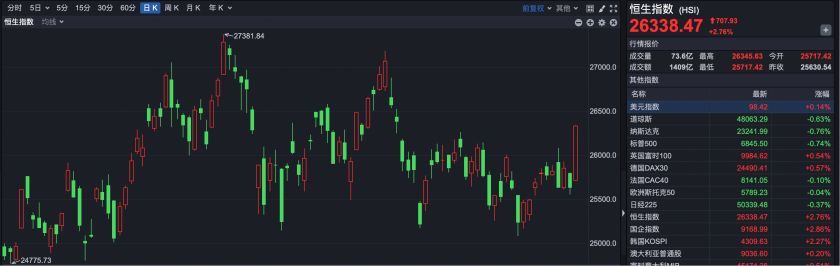
Market Overview - The Hong Kong stock market has experienced its strongest opening in nearly 17 years, with the Hang Seng Index rising by 707.93 points to close at 26,338.47, marking a 2.76% increase, the best performance since 2009 [1] - The Hang Seng Tech Index performed even better, closing at 5,736.44 points, up 220.46 points, a 4% increase [3] Sector Performance - All sectors showed positive performance, with semiconductors, defense, software services, and home appliances leading the gains [5] - Specific sector gains included: - Semiconductors: 7.87% - Defense: 7.78% - Software Services: 4.18% - Home Appliances: 3.99% [6] Key Stocks - Notable stocks in the tech sector included: - Hua Hong Semiconductor and Baidu Group both surged over 9% - NetEase increased by over 6% - Ctrip rose over 5% - Other significant gains were seen in companies like SMIC and Li Auto, both up over 4% [6] Analyst Predictions - Analysts noted that the strong performance of the Hong Kong market was driven by local and foreign funds, despite the absence of southbound capital [7] - DBS Bank predicts the Hang Seng Index could reach 36,500 points in the most optimistic scenario, representing an increase of over 10,000 points from current levels [8] - Morgan Stanley forecasts a target of 34,700 points for the Hang Seng Index by the end of 2026, supported by stable earnings growth and a favorable valuation environment [9] - UBS sets a target of 30,000 points for the Hang Seng Index, driven by continued positive factors from 2025 [11] - JPMorgan anticipates a near 20% increase in the MSCI China Index, supported by stable global economic growth and improved corporate earnings [12] Investment Strategies - Analysts suggest a balanced investment strategy for 2026, focusing on sectors with high dividend yields and growth potential in AI and technology [14] - The focus should be on sectors like insurance, public utilities, and quality bank stocks, as well as traditional industry leaders in steel, machinery, and chemicals [20] - The importance of strategic asset allocation is emphasized to mitigate uncertainties in the global market [21] Market Sentiment - The overall sentiment for the Hong Kong market remains optimistic, with expectations of continued upward momentum driven by favorable domestic and international policies [24] - Analysts highlight the need for careful stock selection and timing in the market, as volatility is expected to persist [16]

港股大爆发!十大顶流机构提前预判,恒指最高有望再涨1万点?
Mei Ri Jing Ji Xin Wen· 2026-01-02 12:00
Market Performance - The Hong Kong stock market has experienced its strongest opening in nearly 13 years, with the Hang Seng Index rising by 707.93 points to close at 26,338.47, marking a 2.76% increase, the best performance since January 2, 2013 [1] - The Hang Seng Tech Index performed even better, closing at 5,736.44 points, up 220.46 points, with a 4% increase [3] Sector Performance - All sectors showed positive performance, with semiconductors, defense, software services, and home appliances leading the gains [5] - Specific sector gains included: - Defense and military industry: 7.87% - Software services: 7.78% - Home appliances: 4.18% - Consumer discretionary retail: 3.53% [6] Key Stocks - Notable stocks in the Hang Seng Tech Index included: - Hua Hong Semiconductor and Baidu Group, both rising over 9% - NetEase up over 6% - Ctrip up over 5% - Core companies Alibaba and Tencent both up over 4% [6] Analyst Predictions - Analysts noted that the strong performance of the Hong Kong market was driven by local and foreign funds, despite the absence of southbound capital [7] - DBS Bank predicts the Hang Seng Index could reach 36,500 points in the most optimistic scenario, representing an increase of over 10,000 points from current levels [7][8] - Morgan Stanley forecasts a target of 34,700 points for the Hang Seng Index, supported by stable earnings growth and a favorable global economic environment [9][10] - UBS sets a target of 30,000 points for the Hang Seng Index, driven by continued positive factors from 2025 [11] Investment Strategies - Analysts suggest a balanced investment strategy for 2026, focusing on sectors with growth certainty such as AI hardware while maintaining high-dividend assets for hedging [14] - The market is expected to see a second round of valuation recovery, driven by internal and external factors, including policy support and improved corporate earnings [18] - Key investment themes include technology, healthcare, and resource sectors, with a focus on companies with strong earnings visibility and valuation flexibility [18][19]
金蝶软件取得行覆盖率确定方法专利
Jin Rong Jie· 2026-01-02 07:43
Group 1 - The core point of the article is that Kingdee Software (China) Co., Ltd. has obtained a patent for a method and device related to determining coverage rate, with the patent number CN119690850B and an application date of December 2024 [1] - Kingdee Software was established in 1993 and is located in Shenzhen, primarily engaged in software and information technology services [1] - The company has a registered capital of 1.4 billion RMB [1] Group 2 - Kingdee Software has invested in 66 companies and participated in 3,675 bidding projects [1] - The company holds 800 trademark registrations and 1,910 patent records [1] - Additionally, Kingdee Software has obtained 97 administrative licenses [1]
恒生科指午后持续走强涨超4%,华虹半导体涨超10%,百度集团涨近9%
Jin Rong Jie· 2026-01-02 06:29
Group 1 - The Hang Seng Technology Index rose over 4%, with the Hang Seng Index up 2.68% at 26,317.5 points, and the Hang Seng Technology Index at 5,743.7 points, reflecting strong performance in sectors such as electric equipment, domestic retail, gaming software, semiconductors, and military industry stocks [1] - Major technology stocks saw significant gains, including Alibaba up 4.62%, Tencent up 4.09%, JD.com up 3.32%, Xiaomi up 2.85%, NetEase up 6.62%, Meituan up 1.84%, Kuaishou up 3.83%, and Bilibili up 3.42% [1] - Hua Hong Semiconductor surged over 10% after announcing plans to acquire a 97.4988% stake in Huali Micro for a transaction price of 8.268 billion RMB, along with plans to raise 7.556 billion RMB through a stock issuance [1] - Baidu Group increased nearly 9% following the announcement that Kunlun Chip submitted a listing application to the Hong Kong Stock Exchange, aiming for approval by January 1, 2026 [1] Group 2 - Guolian Minsheng Securities predicts that the Hong Kong stock market will benefit from a weak recovery in the domestic economy, ongoing Federal Reserve easing, and continued industry catalysts in the first half of 2026 [2] - There is an expected incremental capital inflow of 630 billion to 1,050 billion HKD from southbound funds in 2026, with passive index funds and insurance capital having significant potential [2] - The valuation of major Hong Kong technology stocks is currently aligned with earnings, and any further valuation increase will require earnings growth or an unexpected improvement in the funding environment [2] - Western Securities anticipates a short-term trend of RMB appreciation driven by substantial pending settlement funds and cross-border capital, with long-term support from China's strong industrial competitiveness [2]
SaaS概念股早盘涨幅居前 狮腾控股涨逾9%金蝶国际涨逾7%
Xin Lang Cai Jing· 2026-01-02 02:55
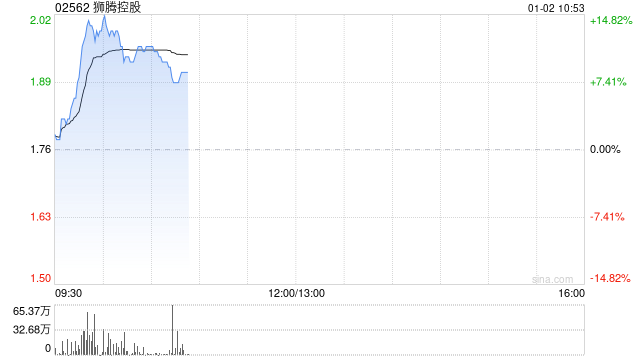
Group 1 - SaaS concept stocks showed significant gains in early trading, with Lion Group (02562) rising by 8.52% to HKD 1.91 [1][3] - Kingdee International (00268) increased by 6.85%, reaching HKD 14.20 [1][3] - Huoliang Technology (01860) saw a rise of 5.89%, trading at HKD 16.18 [1][3] - Chinasoft International (00354) climbed by 4.63%, priced at HKD 5.20 [1][3]
港股异动 | SaaS概念涨幅居前 重磅收购为Agent重新定价 机构称关注传统SaaS向Agent化的范式转移
智通财经网· 2026-01-02 02:38
Group 1 - The SaaS sector is experiencing significant stock price increases, with notable gains from companies such as Lion Group (10.8% increase), Kingdee International (5.04% increase), and Huily Technology (4.71% increase) [1] - Meta announced a multi-billion dollar acquisition of Manus, a company that has achieved an annual recurring revenue (ARR) of over $100 million, marking it as the fastest startup to reach this milestone [1] - Dongwu Securities highlights that Meta's acquisition indicates a revaluation of AI agents, suggesting that market funds are likely to concentrate on companies with real-world applications and sustainable subscription revenues [1] Group 2 - Northeast Securities released a report emphasizing the shift from traditional SaaS to agent-based models, where vertical software giants are restructuring workflows by leveraging AI [1] - This transition is expected to transform AI from a peripheral tool into a core productivity engine, significantly enhancing research and operational efficiency [1] - The report suggests that this shift will allow companies to capture the largest benefits following the foundational investment in computing power [1]

2025年超2800亿港元,港股IPO募资额重登全球冠军宝座
Sou Hu Cai Jing· 2026-01-02 01:10
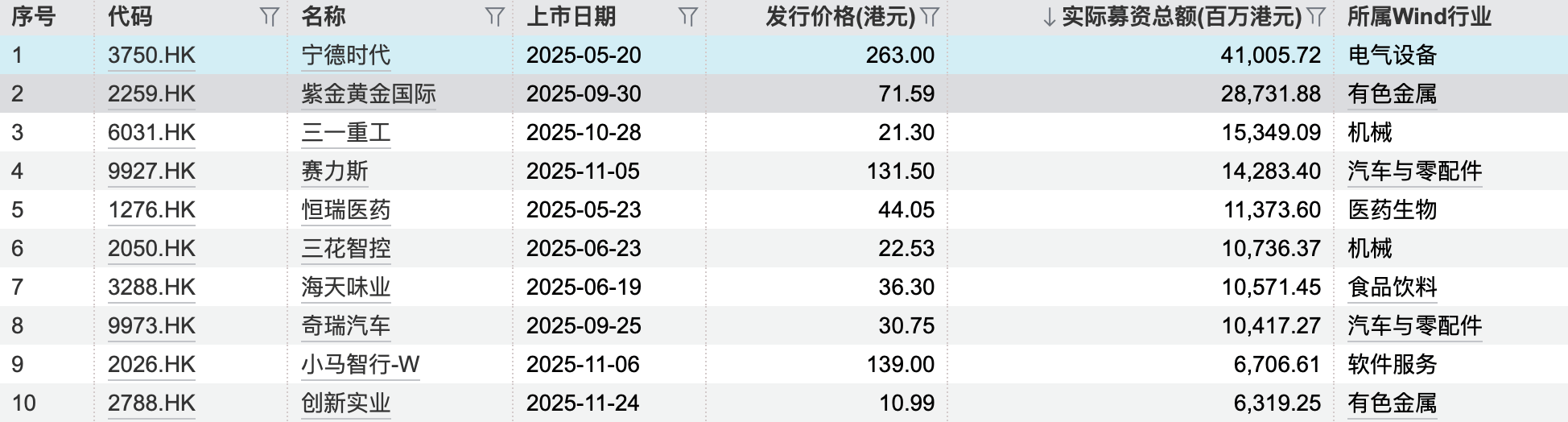
Core Insights - The Hong Kong IPO market achieved a significant milestone in 2025, with total fundraising reaching HKD 285.69 billion, marking a 224% increase from HKD 88.15 billion in 2024, and reclaiming the top position globally for IPO fundraising [2][5] - A total of 117 companies went public in Hong Kong in 2025, representing a 67.14% increase compared to the previous year [2][5] - The market saw a strong influence from mega IPOs, with eight companies raising over HKD 10 billion each, collectively accounting for 52.75% of the total fundraising [2][4] IPO Market Performance - The average daily trading volume in the Hong Kong IPO market reached a historical high in 2025, driven by robust investor interest [2] - The top eight IPOs included notable companies such as CATL (HKD 41.01 billion), Zijin Mining (HKD 28.73 billion), and Sany Heavy Industry (HKD 15.35 billion) [2][4] - The influx of A-share companies contributed significantly, with 19 A-share firms raising a total of HKD 139.99 billion, nearly half of the total IPO fundraising [5][6] Sectoral Insights - The leading sectors for new listings included renewable energy, AI, and biotechnology, reflecting a strong trend towards technology-driven companies [2][8] - The IPO landscape in 2025 was characterized by a notable presence of technology innovation firms, with a significant number of listings in the pharmaceutical and software services sectors [8][9] Regulatory Environment - The Hong Kong Stock Exchange implemented several regulatory changes to facilitate the listing of A-share companies, including adjustments to public holding requirements and streamlined application processes [7][9] - The introduction of the "Specialized Technology Company" listing mechanism and the reduction of minimum market capitalization thresholds have made it easier for early-stage tech companies to go public [9] Future Outlook - Projections for 2026 indicate a continued recovery in the Hong Kong IPO market, with expectations of around 160 new listings and fundraising of at least HKD 300 billion [12] - Major sectors anticipated to drive future listings include technology, media, telecommunications, and healthcare, alongside a strong interest in companies listed in the U.S. [12]
“港交所的锣都不够用了"!香港IPO募资额领跑全球,重回全球冠军宝座
Hua Er Jie Jian Wen· 2026-01-01 05:45
Core Insights - The Hong Kong capital market is set for a full recovery in 2025, with total IPO fundraising exceeding HKD 285.8 billion, reclaiming its position as the leading global exchange, indicating a significant rebound in Hong Kong's attractiveness as an international financial center [1][2] Group 1: IPO Market Performance - In 2025, a total of 119 companies went public in Hong Kong, representing a 63% increase from the previous year, with total fundraising amounting to HKD 285.8 billion, a staggering 2.25 times increase year-on-year [2] - The top ten IPOs of the year included eight companies that raised over HKD 10 billion, with CATL leading at HKD 41.0 billion and Zijin Mining at HKD 42.8 billion, making them the largest and second-largest IPOs globally [2] - A-share companies played a crucial role in the Hong Kong IPO market, with 19 A-share firms raising approximately HKD 140 billion, nearly half of the total IPO fundraising in Hong Kong [2] Group 2: Market Drivers - The surge in IPO activity is driven by the concentrated listing of Chinese tech companies, a wave of A-share companies listing in Hong Kong, and a significant improvement in market liquidity [1][2] - The introduction of the "Specialized Technology Company Fast Track" service and the ongoing appeal of Listing Rules Chapter 18A and Chapter 18C have opened up listing avenues for unprofitable biotech and specialized tech companies [1][3] Group 3: Institutional Reforms - Continuous institutional innovations have been pivotal for the strong performance of the Hong Kong stock market, including the introduction of Chapter 18A in April 2018, allowing unprofitable biotech companies to apply for listings [3] - By the end of 2025, 88 biotech and specialized tech companies had listed under these new rules, with 16 companies listing in 2025 alone [3] - The average daily trading volume in the first 11 months of 2025 was HKD 255.8 billion, a year-on-year increase of approximately 95%, enhancing the attractiveness of Hong Kong for international capital [3] Group 4: Future Outlook - Deloitte forecasts that with over 300 listing applications, the Hong Kong IPO market could see fundraising of at least HKD 300 billion in 2026, with around 160 new stocks expected to be issued [5] - Factors such as potential interest rate cuts by the Federal Reserve, increased support for mainland Chinese companies, and ongoing capital market reforms in Hong Kong are expected to attract more large-scale IPOs [5]



北森控股(09669)12月31日斥资36.3万港元回购5万股
智通财经网· 2025-12-31 09:40
智通财经APP讯,北森控股(09669)发布公告,于2025年12月31日斥资36.3万港元回购5万股。 ...
人工智能被频繁写进裁员理由,AI 真的在大规模取代人类工作吗? | 声动早咖啡
声动活泼· 2025-12-31 09:04
Core Viewpoint - The article discusses the recent trend of companies attributing layoffs to artificial intelligence (AI), questioning whether this is a genuine cause or a cover for poor management and economic conditions [3][5][9]. Group 1: Layoff Trends and AI Attribution - Many companies have recently cited AI as a significant reason for layoffs, with an estimated 50,000 jobs in the U.S. being cut this year due to AI-related factors [4]. - Major companies like Amazon and Salesforce have announced substantial layoffs, with Amazon planning to cut approximately 14,000 jobs and Salesforce reducing 4,000 customer service positions, both attributing these decisions to AI [4]. - Despite these claims, experts and media outlets caution against directly linking the current wave of layoffs to AI, suggesting that other factors are at play [5][9]. Group 2: Employment Data and AI Impact - A study by Vanguard covering over 5 million people found that jobs in sectors most susceptible to AI automation actually saw a 1.7% increase in employment from mid-2023 to mid-2025, outpacing pre-pandemic growth rates [5]. - Research from the Brookings Institution indicates that the practical implementation of AI in workplaces is still challenging, which may explain the lack of significant impact on employment [6]. - McKinsey's report highlights that two-thirds of surveyed companies have not deeply integrated AI into their workflows, limiting its potential benefits [6]. Group 3: Economic Context and Layoff Reasons - The surge in layoffs is also attributed to economic factors such as consumer spending fatigue and a correction following the pandemic hiring boom, rather than solely AI [8]. - Companies are currently in a phase of cost-cutting and hiring freezes in response to economic conditions, which is not directly linked to AI [8]. - Some firms are using AI as a convenient narrative for layoffs, as it is a contemporary topic that resonates with investors, even if it is not the primary cause of job cuts [9]. Group 4: Future Employment Landscape - AI's influence on job roles is complex; positions where AI can automate core tasks may see a reduction in workforce by an average of 14%, while roles with partial automation may actually increase employment due to freed-up time for other tasks [10]. - A report from ManpowerGroup indicates that 72% of organizations still struggle to find skilled talent, particularly in AI model development and application, highlighting a skills gap in the labor market [11].

